Explanation Texts
Language features

                                                                   1. Present tense
                                                                   2.Causal language e.g. if...then..., this results in, the reason
                 Writing stimulus                                  that
                                                                   3. Sequential connectives e.g. firstly, then, next, later
                                                                   4. Impersonal language e.g. The liquid was placed in the
  1. Using a film clip to write an                                 container (passive voice)
  explanation of how a tsunami occurs                              5. Technical vocabulary e.g. layers of the earth's crust
  for a geography text book
  2. Using a set of pictures to sequence
  the life cycle of a plant and then write
  an explanation of this                                                                            Organisation
  3. Using a film clip of a doctor explaining
  to his patient how he has repaired a               Explanation                                  1. A series of logical steps
  broken
  finger                                                                                          2. Clear layout
                                                                                                  3. Use of labelled diagrams, keys,
           Audience and                                                                           colour coding etc
                                                                                                  4. Use of boxes for extra informati
           purpose
                                                                      1. Write up of a
                                                                      science experiment
Purpose -to help the reader
understand a process as
                                          Examples                    2. leaflet or article e.g.
                                                                      why do ...
easily as possible                                                    3. parts of a non-fiction
                                                                                                          Text types
Audience - someone who wants                                          book e.g. geography, science
to understand a process - how         1. Explanation of how
                                                                      4. Technical manual
or why something happens/works                                        e.g. to explain how
                                      a toaster works from            something works
                                      a technical manual              5. encyclopedia entry
                                      2. Explanation of how a         6. parts of a non-fiction
                                      spider spins a web from an      book e.g. geography, science
                                      encyclopaedia
Purpose


                                       Audience

to help the reader
understand a process as
easily as possible

                          someone who wants to understand
                           a process - how or why something
                          happens/works
encyclopedia entry                 parts of a non-fiction
                                                     book e.g.
                                                     geography,science

Technical manual
e.g. to explain how
something works

                      Explanation Texts


                                                           leaflet or
                                                           article e.g.
                                                           why do...
           Write up of a
           science experiment    science text book
Based on work by Sue Palmer


This happens...                   this...                       this...


                  leading to...             leading to...


A series of logical steps...                Labelled diagrams
Based on work by Sue Palmer
An alternative planning frame
Based on work by Sue Palmer


Layout Features

1. Clear layout

2. use of labelled diagrams, keys, colour
coding etc

3. use of boxes for extra information
Explanation Language Features
                                        Based on work by Sue Palmer

1. Present tense

2.Causal language e.g. if...then..., this results in,
the reason that

3. Sequential connectives e.g. firstly, then, next,
later

4. Impersonal language (see next page for more
examples)

5. Technical vocabulary e.g. layers of the earth's
crust
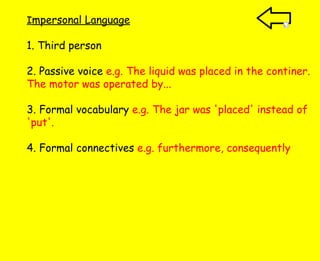
Impersonal Language

1. Third person

2. Passive voice e.g. The liquid was placed in the continer.
The motor was operated by...

3. Formal vocabulary e.g. The jar was 'placed' instead of
'put'.

4. Formal connectives e.g. furthermore, consequently
Based on work by Sue Palmer
Heading outlining aim     Clear layout                Diagram   Information in boxes
of instructions


           Cearly sequenced paragraphs - sometimes numbered
Sequential
connectives


               Technica
               l
               language


              Impersonal
              language -
              e.g passive
              voice
Click here to watch a short video clip of a tsunami.


 Can you use this clip to help you to plan and
 write an explanation of how a tsunami
 occurs.

 These pictures may also help you to include
 some of your own diagrams.


  Remember to use the organisation and language features you have learnt.


   http://www.pbs.org/wnet/savageearth/animations/tsunami/main.htm
   l
These statements are in the wrong order. Can you
sequence them to help you write you explanation?
Click here to watch an animated diagram of
the life cycle of a plant


Here are some pictures which show the
different stages of the life cycle of a bean
plant. Can you sequence the pictures into the
correct order and then use them to plan and
write an explanation of the life cycle of a
plant for a science text book.


Remember to use the organisation and
language features you have learnt.


http://www.bbc.co.uk/schools/ks2bitesize/science/revision_bites/life_cycles1.shtml
Click here to watch an short clip of a doctor
explaining to his patient what he has done in order
to repair her broken fingers.


 The problem is that the film clip is faulty and there
 is no sound!

 Can you work with your partner to plan and write the
 explanation to go with the film clip? Maybe you could
 record your voices reading it out over the film clip
 to see if it fits?

 Don't forget to use the language features you have
 learnt.
Why is the sky blue?

Why are leaves green?

Why do feet smell?


 http://www.howstuffworks.com/

Explanation texts

  • 1.
  • 2.
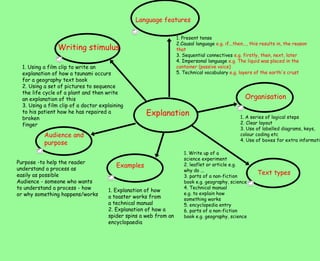
    Language features 1. Present tense 2.Causal language e.g. if...then..., this results in, the reason Writing stimulus that 3. Sequential connectives e.g. firstly, then, next, later 4. Impersonal language e.g. The liquid was placed in the 1. Using a film clip to write an container (passive voice) explanation of how a tsunami occurs 5. Technical vocabulary e.g. layers of the earth's crust for a geography text book 2. Using a set of pictures to sequence the life cycle of a plant and then write an explanation of this Organisation 3. Using a film clip of a doctor explaining to his patient how he has repaired a Explanation 1. A series of logical steps broken finger 2. Clear layout 3. Use of labelled diagrams, keys, Audience and colour coding etc 4. Use of boxes for extra informati purpose 1. Write up of a science experiment Purpose -to help the reader understand a process as Examples 2. leaflet or article e.g. why do ... easily as possible 3. parts of a non-fiction Text types Audience - someone who wants book e.g. geography, science to understand a process - how 1. Explanation of how 4. Technical manual or why something happens/works e.g. to explain how a toaster works from something works a technical manual 5. encyclopedia entry 2. Explanation of how a 6. parts of a non-fiction spider spins a web from an book e.g. geography, science encyclopaedia
  • 3.
    Purpose Audience to help the reader understand a process as easily as possible someone who wants to understand a process - how or why something happens/works
  • 4.
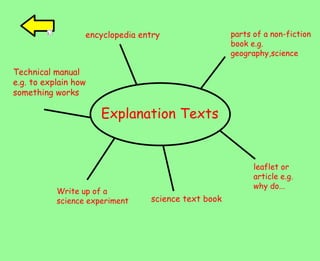
    encyclopedia entry parts of a non-fiction book e.g. geography,science Technical manual e.g. to explain how something works Explanation Texts leaflet or article e.g. why do... Write up of a science experiment science text book
  • 5.
    Based on workby Sue Palmer This happens... this... this... leading to... leading to... A series of logical steps... Labelled diagrams
  • 6.
    Based on workby Sue Palmer An alternative planning frame
  • 7.
    Based on workby Sue Palmer Layout Features 1. Clear layout 2. use of labelled diagrams, keys, colour coding etc 3. use of boxes for extra information
  • 8.
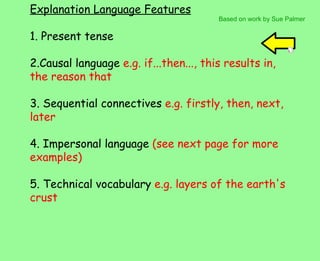
    Explanation Language Features Based on work by Sue Palmer 1. Present tense 2.Causal language e.g. if...then..., this results in, the reason that 3. Sequential connectives e.g. firstly, then, next, later 4. Impersonal language (see next page for more examples) 5. Technical vocabulary e.g. layers of the earth's crust
  • 9.
    Impersonal Language 1. Thirdperson 2. Passive voice e.g. The liquid was placed in the continer. The motor was operated by... 3. Formal vocabulary e.g. The jar was 'placed' instead of 'put'. 4. Formal connectives e.g. furthermore, consequently
  • 10.
    Based on workby Sue Palmer
  • 11.
    Heading outlining aim Clear layout Diagram Information in boxes of instructions Cearly sequenced paragraphs - sometimes numbered
  • 12.
    Sequential connectives Technica l language Impersonal language - e.g passive voice
  • 13.
    Click here towatch a short video clip of a tsunami. Can you use this clip to help you to plan and write an explanation of how a tsunami occurs. These pictures may also help you to include some of your own diagrams. Remember to use the organisation and language features you have learnt. http://www.pbs.org/wnet/savageearth/animations/tsunami/main.htm l
  • 14.
    These statements arein the wrong order. Can you sequence them to help you write you explanation?
  • 15.
    Click here towatch an animated diagram of the life cycle of a plant Here are some pictures which show the different stages of the life cycle of a bean plant. Can you sequence the pictures into the correct order and then use them to plan and write an explanation of the life cycle of a plant for a science text book. Remember to use the organisation and language features you have learnt. http://www.bbc.co.uk/schools/ks2bitesize/science/revision_bites/life_cycles1.shtml
  • 16.
    Click here towatch an short clip of a doctor explaining to his patient what he has done in order to repair her broken fingers. The problem is that the film clip is faulty and there is no sound! Can you work with your partner to plan and write the explanation to go with the film clip? Maybe you could record your voices reading it out over the film clip to see if it fits? Don't forget to use the language features you have learnt.
  • 17.
    Why is thesky blue? Why are leaves green? Why do feet smell? http://www.howstuffworks.com/