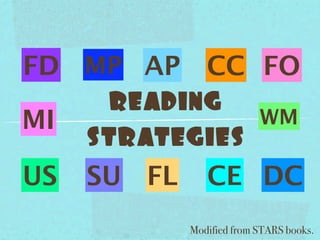
FD MP AP        CC FO
      reading
MI                         WM
     strategies
US   SU FL      CE DC
             Modified from STARS books.
FINDING THE MAIN IDEA

The main idea of a text is a sentence that tells
you what the passage is mostly about.
Questions about the main ideas might:

 What is the text mostly or mainly about?

 What is the best title for the text.

 When answering ask yourself, What is the
 passage mostly about?
                                            MI
RECALLING FACTS AND
       DETAILS

Every text has facts, details and information.

 These facts tell us more about the main
 idea.

 Questions about facts and details ask you
 something that was stated in the text.

 Look back at the text to find the answer.
                                            F
understanding sequence
A text can sometimes be told in sequence or
order.

 Different things happen in the beginning/
 middle and end.

 Questions about sequence ask you to put
 details in order.

 Words often used, first, then, last, after or

                                            US
 before.
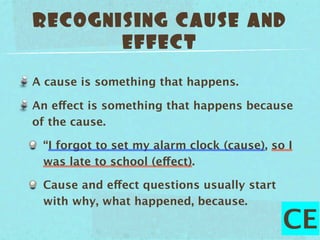
RECOGNISING CAUSE AND
       EFFECT

A cause is something that happens.

An effect is something that happens because
of the cause.

 “I forgot to set my alarm clock (cause), so I
 was late to school (effect).

 Cause and effect questions usually start
 with why, what happened, because.

                                            CE
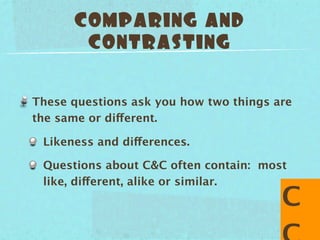
COMPARING AND
       CONTRASTING


These questions ask you how two things are
the same or different.

 Likeness and differences.

 Questions about C&C often contain: most
 like, different, alike or similar.
                                        C
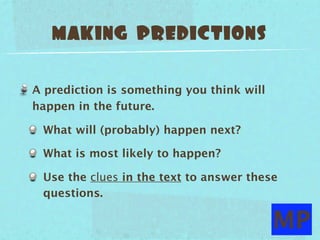
making predictions

A prediction is something you think will
happen in the future.

 What will (probably) happen next?

 What is most likely to happen?

 Use the clues in the text to answer these
 questions.

                                           MP
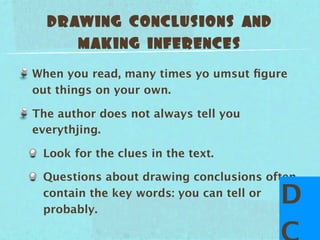
drawing conclusions and
     making inferences
When you read, many times yo umsut figure
out things on your own.

The author does not always tell you
everythjing.

 Look for the clues in the text.

 Questions about drawing conclusions often
 contain the key words: you can tell or
 probably.
                                       D
finding word meaning in
          context
Sometimes you may not know a word when
reading.
Often you can tell the meaning of the word by
the way the word is used in the sentence. This
is called understanding word meaning in
context.
 If you have trouble choosing an answer, try
 each answer choice in the sentence where the
 word appears in the passage.
 See which answer choice makes the most
 sense.                                    WM
distinguishign between fact
         and opinion

Find which statements in the text are fact.

Find which statements in the text are opinion.

 A FACT is something true.

 A FACT you can prove.

 An OPINION tells you how someone feels
 about something.
                                              F
 You cannot prove OPINIONS.
SUMMARISING

Questions about the best summary of a
passage ask you about the main points of the
passage.

 Ask yourself what is the main idea about
 the text.

 A good summary is closer ot the main idea
 than to any single detail found in the
 passage.
                                        SU
SUMMARISING

Questions about the best summary of a
passage ask you about the main points of the
passage.

 Ask yourself what is the main idea about
 the text.

 A good summary is closer ot the main idea
 than to any single detail found in the
 passage.
                                        SU
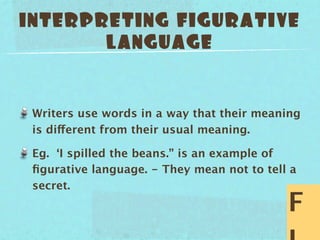
INTERPRETING FIGURATIVE
       LANGUAGE


 Writers use words in a way that their meaning
 is different from their usual meaning.

 Eg. ‘I spilled the beans.” is an example of
 figurative language. - They mean not to tell a
 secret.
                                            F

Stars strategy info

  • 1.
    FD MP AP CC FO reading MI WM strategies US SU FL CE DC Modified from STARS books.
  • 2.
    FINDING THE MAINIDEA The main idea of a text is a sentence that tells you what the passage is mostly about. Questions about the main ideas might: What is the text mostly or mainly about? What is the best title for the text. When answering ask yourself, What is the passage mostly about? MI
  • 3.
    RECALLING FACTS AND DETAILS Every text has facts, details and information. These facts tell us more about the main idea. Questions about facts and details ask you something that was stated in the text. Look back at the text to find the answer. F
  • 4.
    understanding sequence A textcan sometimes be told in sequence or order. Different things happen in the beginning/ middle and end. Questions about sequence ask you to put details in order. Words often used, first, then, last, after or US before.
  • 5.
    RECOGNISING CAUSE AND EFFECT A cause is something that happens. An effect is something that happens because of the cause. “I forgot to set my alarm clock (cause), so I was late to school (effect). Cause and effect questions usually start with why, what happened, because. CE
  • 6.
    COMPARING AND CONTRASTING These questions ask you how two things are the same or different. Likeness and differences. Questions about C&C often contain: most like, different, alike or similar. C
  • 7.
    making predictions A predictionis something you think will happen in the future. What will (probably) happen next? What is most likely to happen? Use the clues in the text to answer these questions. MP
  • 8.
    drawing conclusions and making inferences When you read, many times yo umsut figure out things on your own. The author does not always tell you everythjing. Look for the clues in the text. Questions about drawing conclusions often contain the key words: you can tell or probably. D
  • 9.
    finding word meaningin context Sometimes you may not know a word when reading. Often you can tell the meaning of the word by the way the word is used in the sentence. This is called understanding word meaning in context. If you have trouble choosing an answer, try each answer choice in the sentence where the word appears in the passage. See which answer choice makes the most sense. WM
  • 10.
    distinguishign between fact and opinion Find which statements in the text are fact. Find which statements in the text are opinion. A FACT is something true. A FACT you can prove. An OPINION tells you how someone feels about something. F You cannot prove OPINIONS.
  • 11.
    SUMMARISING Questions about thebest summary of a passage ask you about the main points of the passage. Ask yourself what is the main idea about the text. A good summary is closer ot the main idea than to any single detail found in the passage. SU
  • 12.
    SUMMARISING Questions about thebest summary of a passage ask you about the main points of the passage. Ask yourself what is the main idea about the text. A good summary is closer ot the main idea than to any single detail found in the passage. SU
  • 13.
    INTERPRETING FIGURATIVE LANGUAGE Writers use words in a way that their meaning is different from their usual meaning. Eg. ‘I spilled the beans.” is an example of figurative language. - They mean not to tell a secret. F

Editor's Notes