GUIDED BY              SUBMITTED BY
MR. PRASHANT BENIWAL   VIKRAMJEET SINGH
ASST. PROFESSOR
INTRODUCTION

HYPHENATED TECHNIQUES

ADVANTAGES

1. Shorter analysis time
2. Higher degree of automation
3. Higher sample throughput
4. Better reproducibility
TYPE OF DIFFERENT HYPHENATED
ANALYTICAL TECHNIQUES
 Gas chromatography- Mass spectrometry (GC-MS)
 Gas chromatography-Infra red spectroscopy
 Gas chromatography- Infra red spectroscopy- Mass
  spectrometry
 Gas chromatography-Thin layer chromatography
 Liquid chromatography- Mass spectrometry
 Capillary electrophoresis- Mass spectrometry
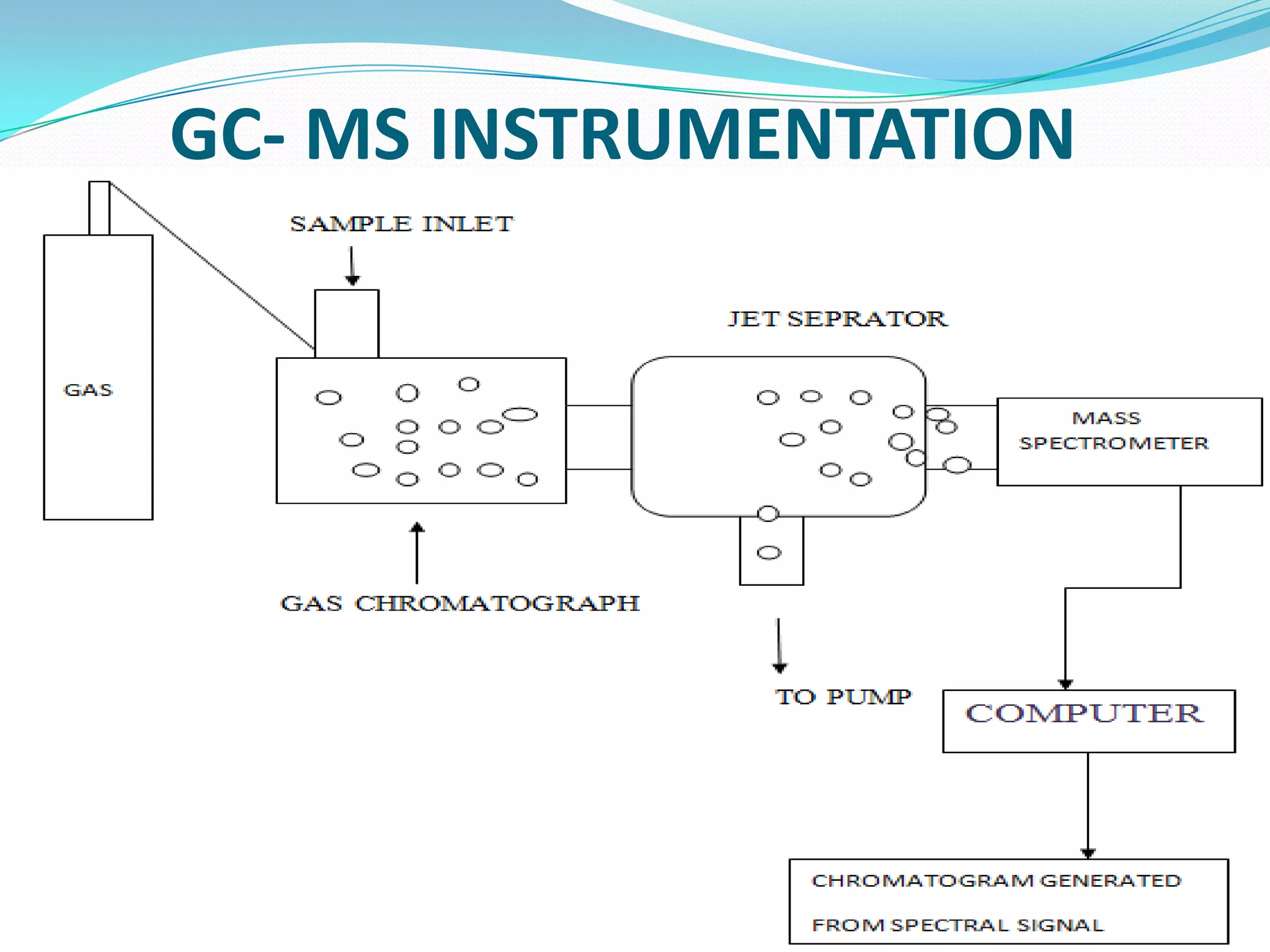
GAS CHROMATOGRAPHY- MASS
SPECTROMETRY (GC-MS)
 INTRODUCTION


 PRINCIPLE
GAS CHROMATOGRAPH – MASS
SPECTROMETER INTERFACE
 Effusion Separator


 Jet/Orifice Separator


 Membrane Separator
GC- MS INSTRUMENTATION
GC-MS APPLICATIONS
   Metabolite profiling
   Detection of lipophilic compounds in diverse plant tissues
   Analysis of biologically important aromatic amines.
   Application to human dosimetry.
   For the sensitive and quantitative single-run analysis of acidic
    phytohormones. and related compounds, and its application
    to Arabidopsis thaliana
   Identification of volatile components
   For the determination of pyrethroid residues in vegetable
    samples
   Analysis of Pesticides in Foodstuffs
   Environmental and forensic applications
    Miscellaneous
Metabolite profiling

 Toxicity assessment/toxicology
  e.g. a specific lesion in liver or kidney
 Functional genomics


 Nutrigenomics:
  e.g. Arabidopsis thaliana leaf extracts
Detection of lipophilic compounds
in diverse plant tissues
 liphophilic profiling of red and green tomato
Analysis of biologically important
aromatic amines and Application
to human dosimetry
e.g. Exposure to 2, 4-difluoroaniline (DFA) was
  monitored by GC-MS of DFA adducts bound to
  hemoglobin (Hb)
For the analysis of acidic phyto
hormones and related compounds
(i) Often, there is a highly local and controlled
  production of enzymes of phytohormone bio
  synthesis.
  Examples; ethylene biosynthetic enzymes in
  abscission zones Gibberellins biosynthetic enzymes in
  embryo s (seeds) or meristems.

(ii) phytohormone production has unveiled an amazing
   degree of interactions
Identification of volatile components
and For the determination of
pyrethroid residues in vegetable
samples
 volatile components in certified brand of origin (CBO)
 Rias Baixas white wines
Environmental and forensic
                applications
Types of analysis systems :
 photo ionization detectors (PIDs) with and without a
  GC
 electrochemical and catalytic bead gas detection
  systems
 colorimetric tube systems
 ion mobility based systems (IMS)
 GC-MS
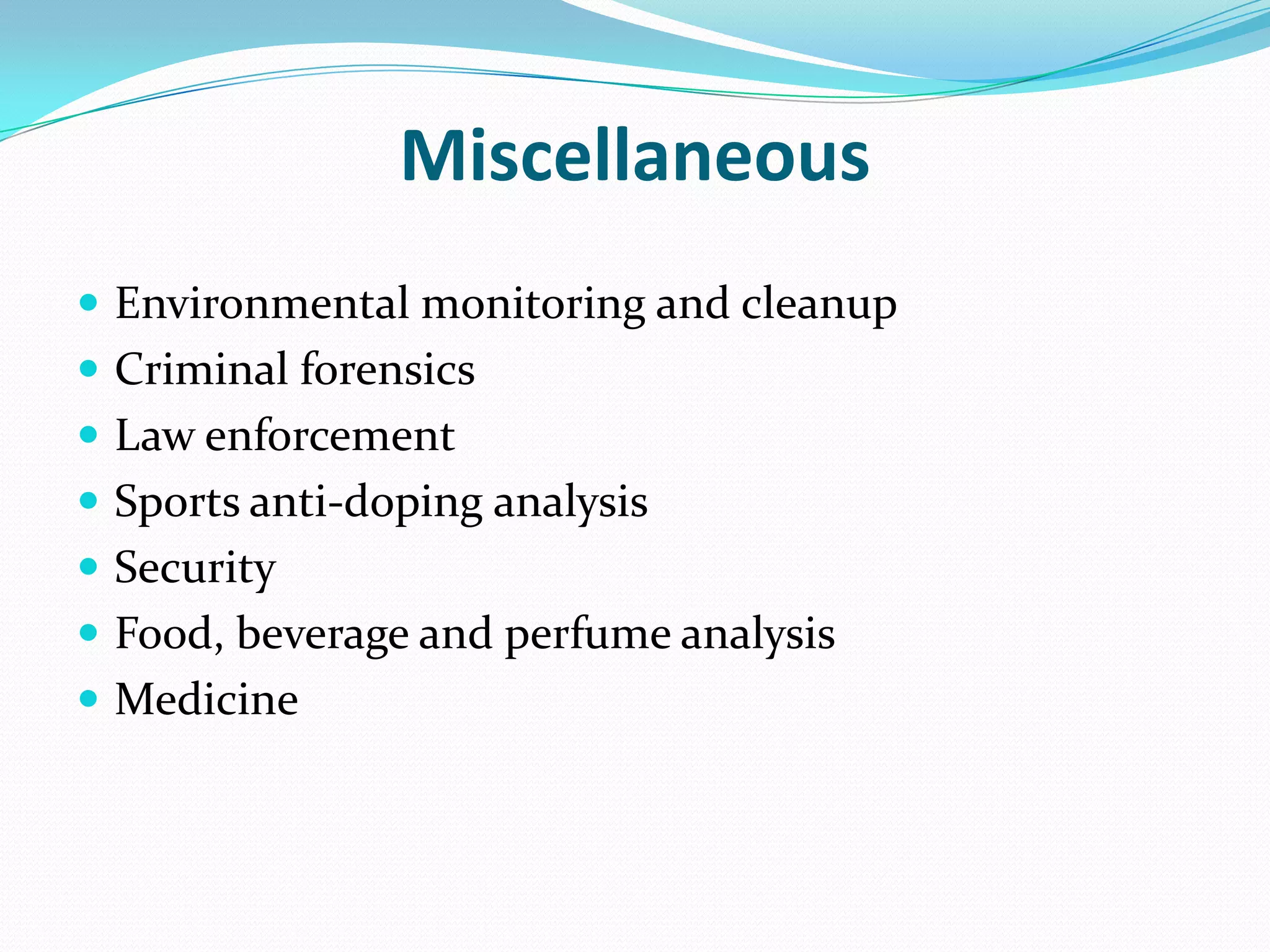
Miscellaneous
 Environmental monitoring and cleanup
 Criminal forensics
 Law enforcement
 Sports anti-doping analysis
 Security
 Food, beverage and perfume analysis
 Medicine
Gc ms applications

Gc ms applications

  • 1.
    GUIDED BY SUBMITTED BY MR. PRASHANT BENIWAL VIKRAMJEET SINGH ASST. PROFESSOR
  • 2.
    INTRODUCTION HYPHENATED TECHNIQUES ADVANTAGES 1. Shorteranalysis time 2. Higher degree of automation 3. Higher sample throughput 4. Better reproducibility
  • 3.
    TYPE OF DIFFERENTHYPHENATED ANALYTICAL TECHNIQUES  Gas chromatography- Mass spectrometry (GC-MS)  Gas chromatography-Infra red spectroscopy  Gas chromatography- Infra red spectroscopy- Mass spectrometry  Gas chromatography-Thin layer chromatography  Liquid chromatography- Mass spectrometry  Capillary electrophoresis- Mass spectrometry
  • 4.
    GAS CHROMATOGRAPHY- MASS SPECTROMETRY(GC-MS)  INTRODUCTION  PRINCIPLE
  • 5.
    GAS CHROMATOGRAPH –MASS SPECTROMETER INTERFACE  Effusion Separator  Jet/Orifice Separator  Membrane Separator
  • 6.
  • 7.
    GC-MS APPLICATIONS  Metabolite profiling  Detection of lipophilic compounds in diverse plant tissues  Analysis of biologically important aromatic amines.  Application to human dosimetry.  For the sensitive and quantitative single-run analysis of acidic phytohormones. and related compounds, and its application to Arabidopsis thaliana  Identification of volatile components  For the determination of pyrethroid residues in vegetable samples  Analysis of Pesticides in Foodstuffs  Environmental and forensic applications  Miscellaneous
  • 8.
    Metabolite profiling  Toxicityassessment/toxicology e.g. a specific lesion in liver or kidney  Functional genomics  Nutrigenomics: e.g. Arabidopsis thaliana leaf extracts
  • 9.
    Detection of lipophiliccompounds in diverse plant tissues  liphophilic profiling of red and green tomato
  • 10.
    Analysis of biologicallyimportant aromatic amines and Application to human dosimetry e.g. Exposure to 2, 4-difluoroaniline (DFA) was monitored by GC-MS of DFA adducts bound to hemoglobin (Hb)
  • 11.
    For the analysisof acidic phyto hormones and related compounds (i) Often, there is a highly local and controlled production of enzymes of phytohormone bio synthesis. Examples; ethylene biosynthetic enzymes in abscission zones Gibberellins biosynthetic enzymes in embryo s (seeds) or meristems. (ii) phytohormone production has unveiled an amazing degree of interactions
  • 12.
    Identification of volatilecomponents and For the determination of pyrethroid residues in vegetable samples  volatile components in certified brand of origin (CBO) Rias Baixas white wines
  • 13.
    Environmental and forensic applications Types of analysis systems :  photo ionization detectors (PIDs) with and without a GC  electrochemical and catalytic bead gas detection systems  colorimetric tube systems  ion mobility based systems (IMS)  GC-MS
  • 14.
    Miscellaneous  Environmental monitoringand cleanup  Criminal forensics  Law enforcement  Sports anti-doping analysis  Security  Food, beverage and perfume analysis  Medicine