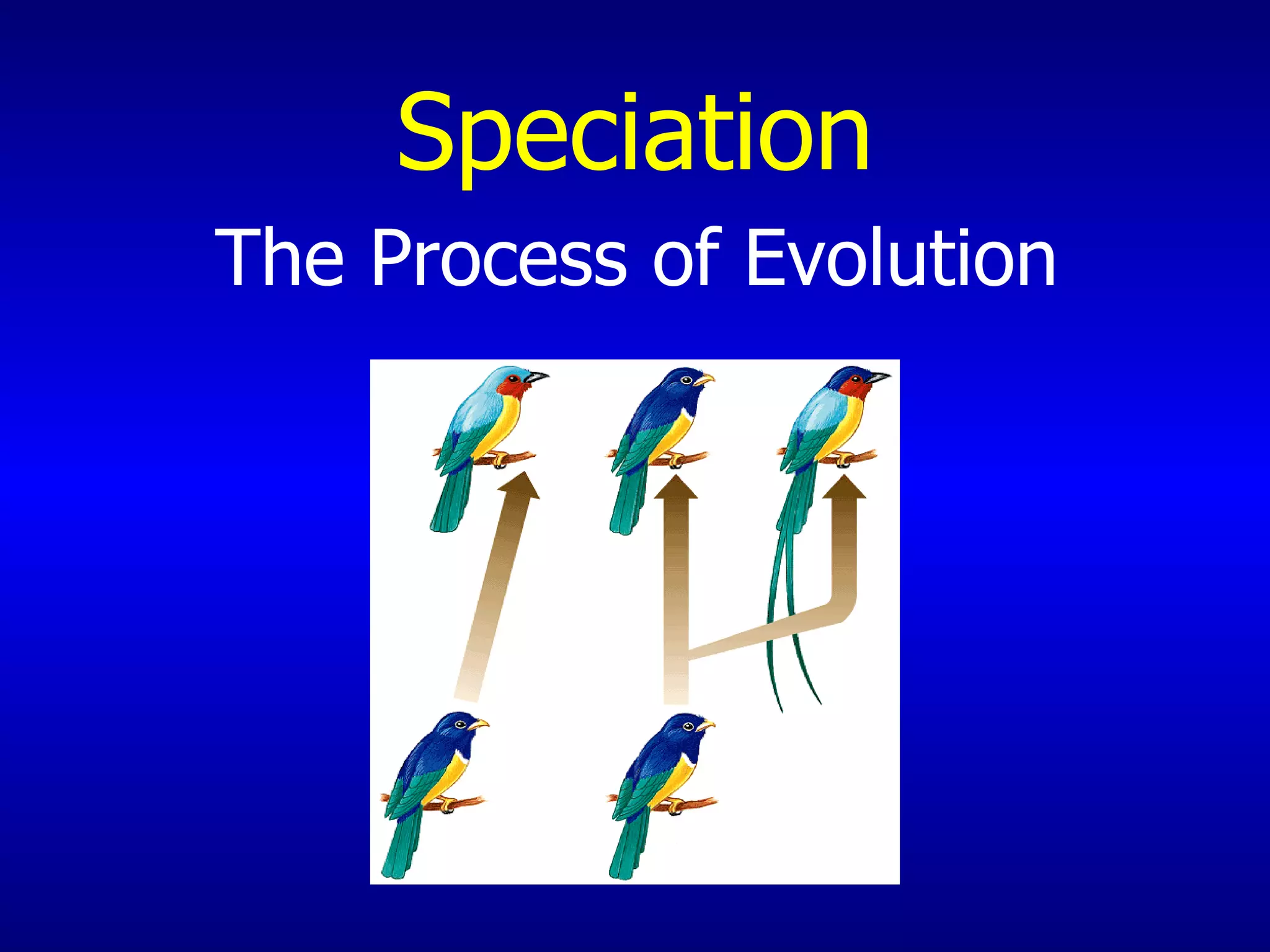
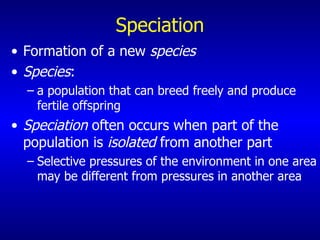
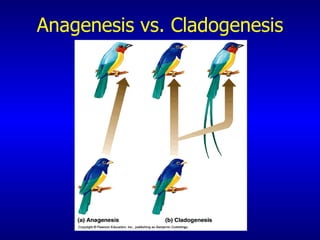
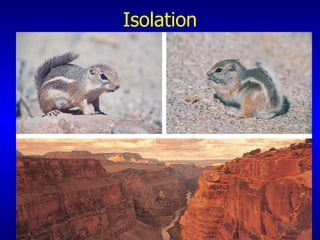
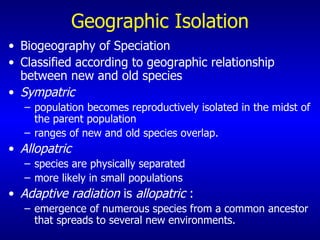
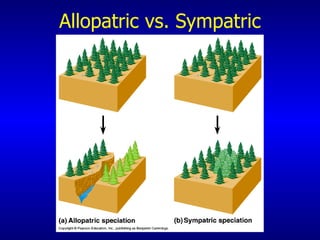
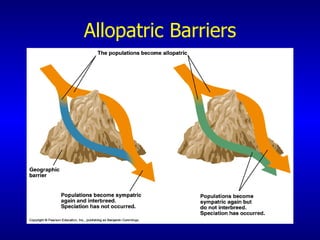
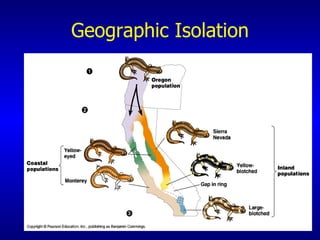
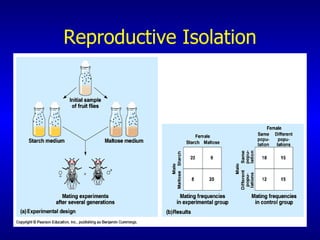
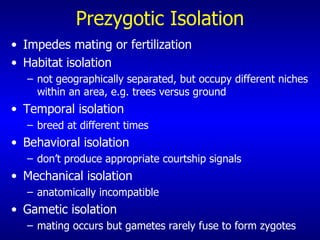
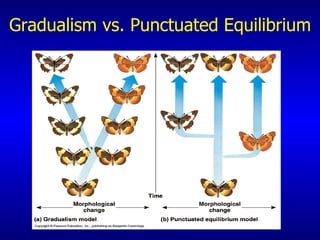
Speciation is the process by which new biological species evolve. It often occurs when a population becomes geographically isolated from another population, resulting in different selective pressures in each area that can drive the evolution of reproductive barriers between the populations over time. There are two main patterns of speciation: anagenesis, where a single lineage gradually transforms into a new species, and cladogenesis, where a new species branches off from an existing species. Geographic isolation is the most common cause of speciation, but reproductive isolation can also drive populations apart even without a physical barrier between their ranges.



![Biology 16 3 the process of speciation[1]](https://cdn.slidesharecdn.com/ss_thumbnails/biology16-3theprocessofspeciation1-110817154217-phpapp02-thumbnail.jpg?width=640&height=640&fit=bounds)


