FUNCTIONS,
SECRETION AND
REGULATION OF
BILE GROUP E
 Bile is a bitter-tasting, dark green to
yellowish brown fluid, produced by the
liver.
 Bile aids the process of digestion of
lipids in the small intestine.
 Bile is stored in the gallbladder and
upon eating is discharged into the
duodenum.
 Daily secretion : 500 – 1000 ml
 Transparent alkaline fluid, light yellow in
colour.
 pH : 7.8 – 8.6
 Water
 Bile Salts – These are sodium & potassium
salts of bile acid.
 Bile pigments –These are biliverdin & bilirubin
Secretion occurs in three stages :-
A) Formation & Secretion of constituents of bile by the liver:
• Bile salts are synthesized in hepatocytes and transferred
into bile canaliculi .
• Bile salts along with glucose, amino acids and bile
pigments are actively secreted into canaliculi .
B) Filling of gall bladder :-
• Bile then passes through the biliary tree and ultimately to
the hepatic duct
• And then it reaches the gall bladder where it is
concentrated and stored temporarily.
C) Discharge of bile in intestine :-
• When there is chyme in the intestine sphincter of Oddi and
sphincter of Boyden are relaxed and bile flows into the
intestine.
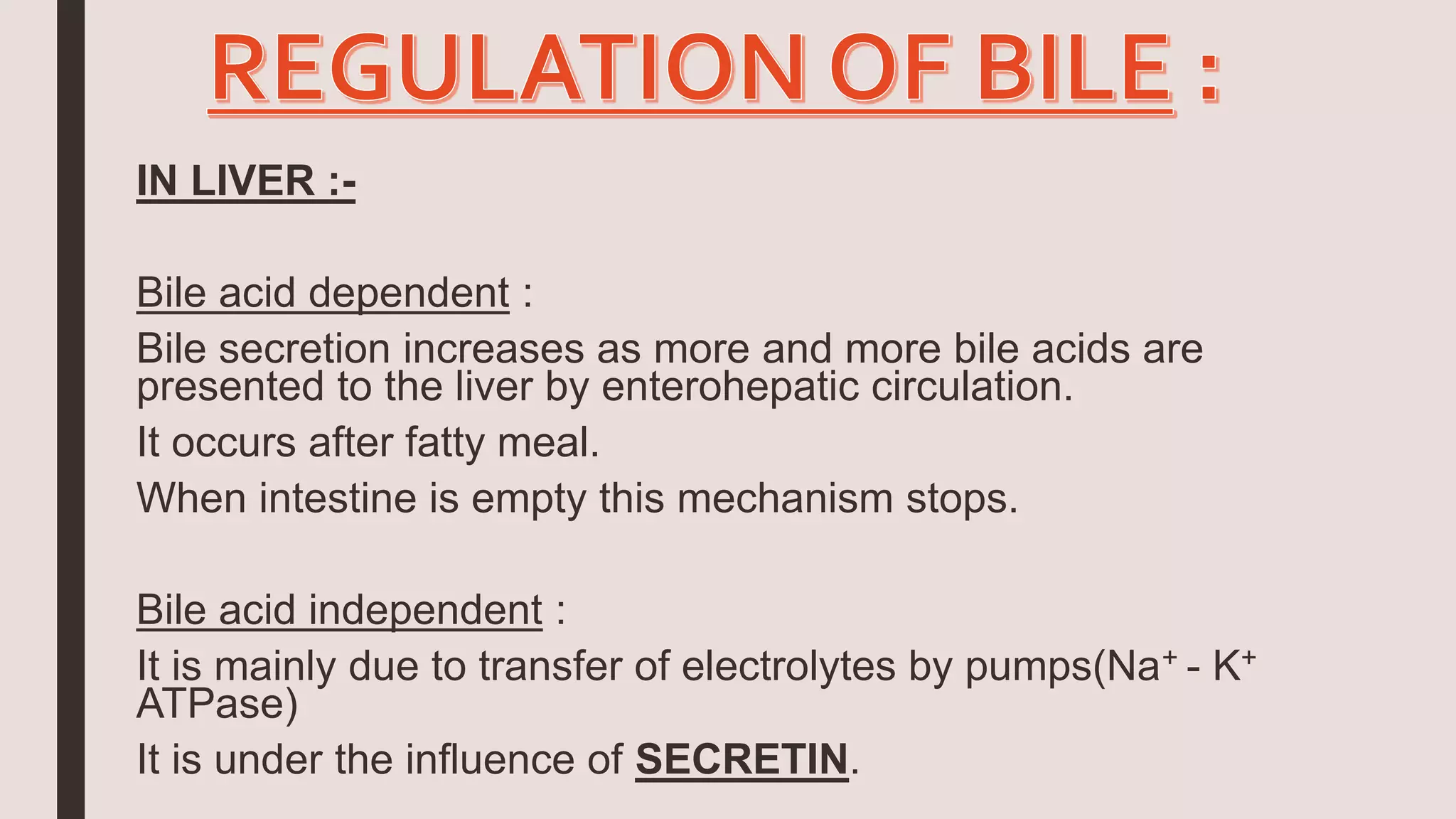
• Entero-hepatic circulation is a
continuous circulation of bile
salts from liver to bile and there
passage into the duodenum.
• Their absorption in the ileum
and then return to the liver as a
mixture of bile acids and salts. 95% of bile salts are
reabsorbed by the
small intestine 5% of bile salts are
lost in feces (500 -
600 mg /day
IN LIVER :-
Bile acid dependent :
Bile secretion increases as more and more bile acids are
presented to the liver by enterohepatic circulation.
It occurs after fatty meal.
When intestine is empty this mechanism stops.
Bile acid independent :
It is mainly due to transfer of electrolytes by pumps(Na+ - K+
ATPase)
It is under the influence of SECRETIN.
IN THE INTESTINE :-
• Bile flows to intestine when sphincter of oddi is relaxed
.
• It is increased further due to simultaneous contraction
of gall bladder and occurs in response to meal
• This process involves parasympathetic impulses,
CCK- Pz secretion and tone of duodenal wall which
aid in flow of bile into intestine .
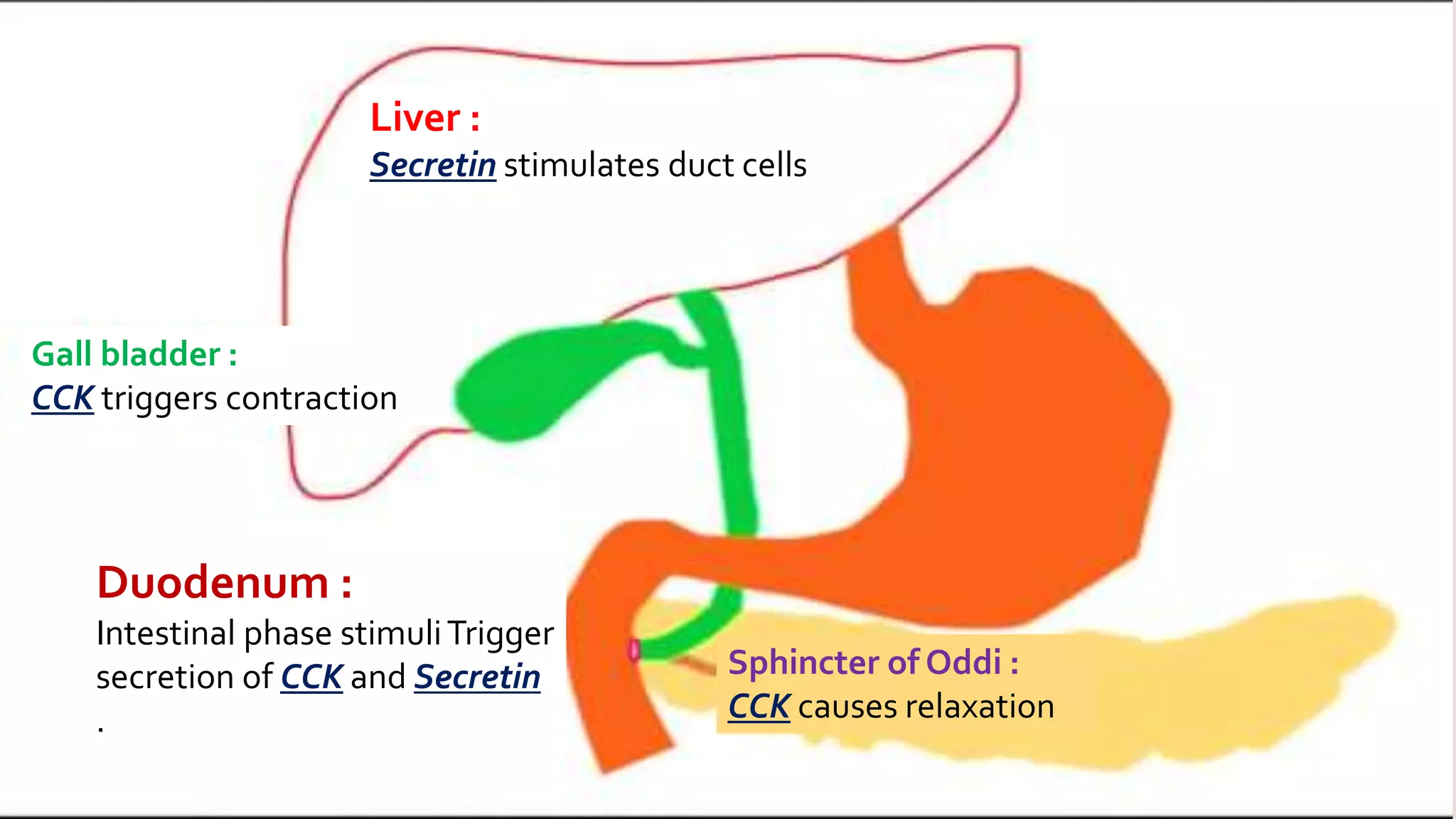
Liver :
Secretin stimulates duct cells
Gall bladder :
CCK triggers contraction
Duodenum :
Intestinal phase stimuliTrigger
secretion of CCK and Secretin
.
Sphincter of Oddi :
CCK causes relaxation
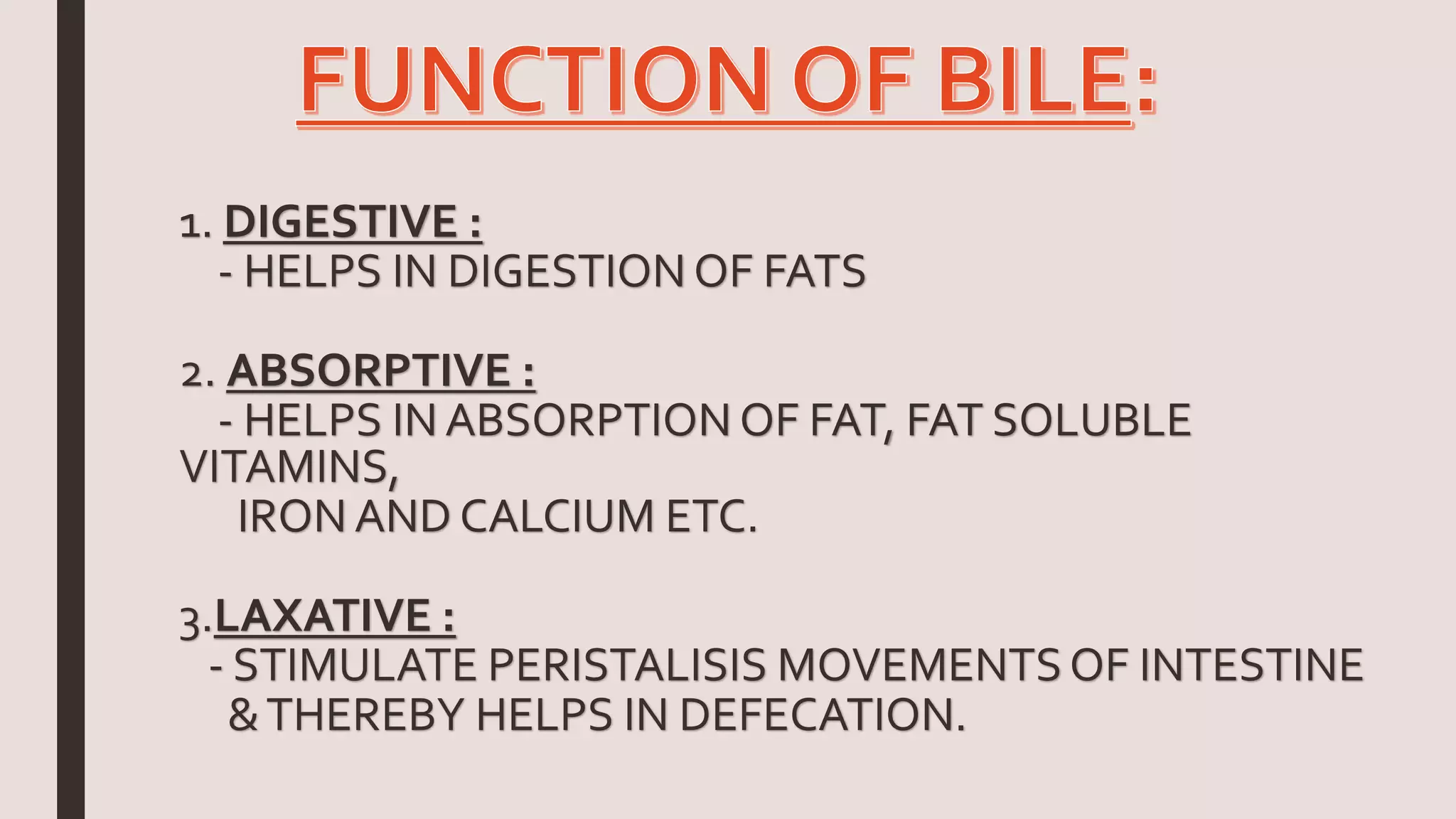
1. DIGESTIVE :
- HELPS IN DIGESTION OF FATS
2. ABSORPTIVE :
- HELPS IN ABSORPTION OF FAT, FAT SOLUBLE
VITAMINS,
IRON AND CALCIUM ETC.
3.LAXATIVE :
- STIMULATE PERISTALISIS MOVEMENTSOF INTESTINE
&THEREBY HELPS IN DEFECATION.
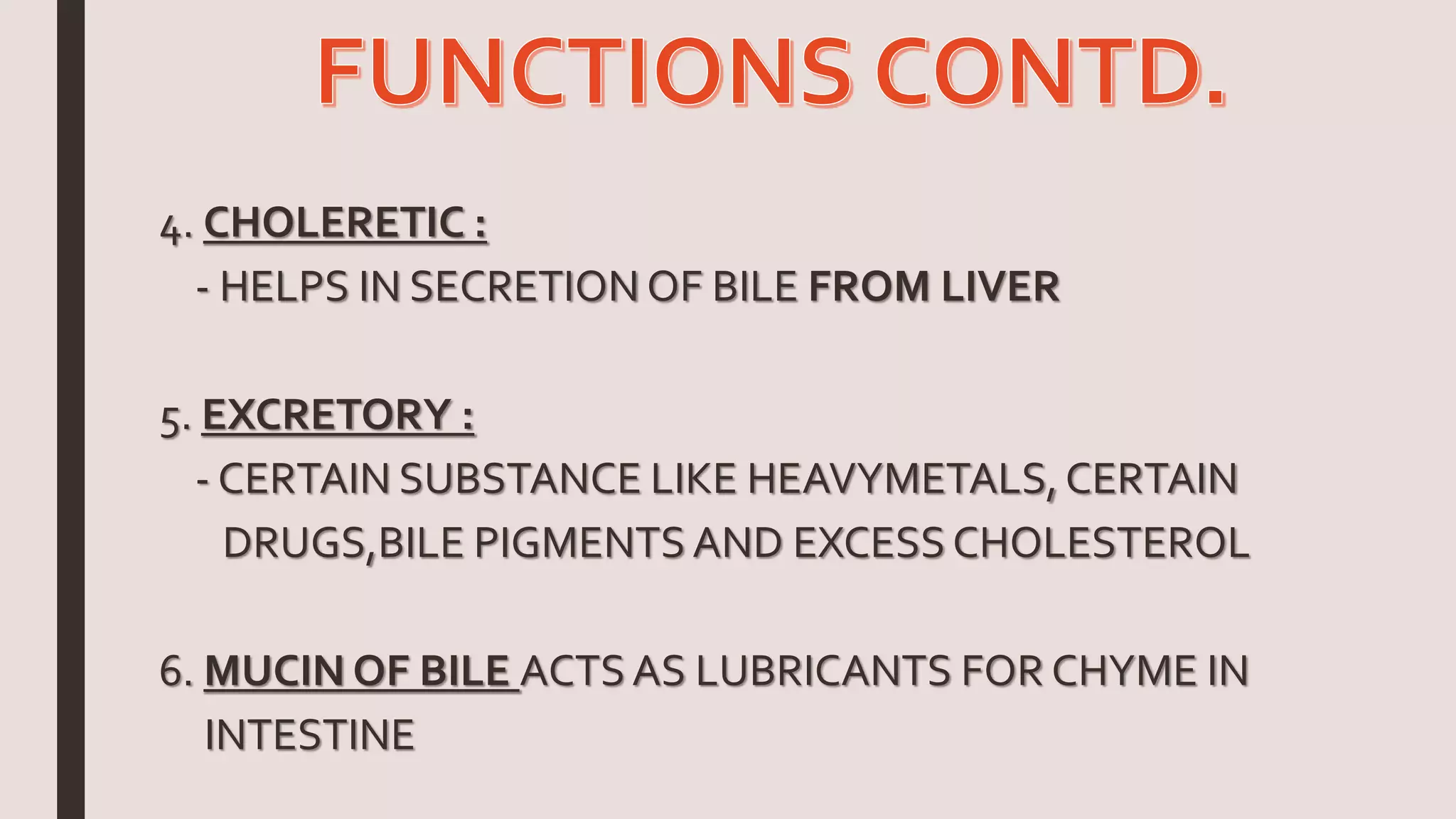
4. CHOLERETIC :
- HELPS IN SECRETION OF BILE FROM LIVER
5. EXCRETORY :
- CERTAIN SUBSTANCE LIKE HEAVYMETALS,CERTAIN
DRUGS,BILE PIGMENTS AND EXCESS CHOLESTEROL
6. MUCIN OF BILE ACTSAS LUBRICANTS FOR CHYME IN
INTESTINE
Functions,Secretion and Regulation of  Bile

Functions,Secretion and Regulation of Bile

  • 1.
  • 2.
     Bile isa bitter-tasting, dark green to yellowish brown fluid, produced by the liver.  Bile aids the process of digestion of lipids in the small intestine.  Bile is stored in the gallbladder and upon eating is discharged into the duodenum.
  • 3.
     Daily secretion: 500 – 1000 ml  Transparent alkaline fluid, light yellow in colour.  pH : 7.8 – 8.6  Water  Bile Salts – These are sodium & potassium salts of bile acid.  Bile pigments –These are biliverdin & bilirubin
  • 4.
    Secretion occurs inthree stages :- A) Formation & Secretion of constituents of bile by the liver: • Bile salts are synthesized in hepatocytes and transferred into bile canaliculi . • Bile salts along with glucose, amino acids and bile pigments are actively secreted into canaliculi .
  • 5.
    B) Filling ofgall bladder :- • Bile then passes through the biliary tree and ultimately to the hepatic duct • And then it reaches the gall bladder where it is concentrated and stored temporarily. C) Discharge of bile in intestine :- • When there is chyme in the intestine sphincter of Oddi and sphincter of Boyden are relaxed and bile flows into the intestine.
  • 6.
    • Entero-hepatic circulationis a continuous circulation of bile salts from liver to bile and there passage into the duodenum. • Their absorption in the ileum and then return to the liver as a mixture of bile acids and salts. 95% of bile salts are reabsorbed by the small intestine 5% of bile salts are lost in feces (500 - 600 mg /day
  • 7.
    IN LIVER :- Bileacid dependent : Bile secretion increases as more and more bile acids are presented to the liver by enterohepatic circulation. It occurs after fatty meal. When intestine is empty this mechanism stops. Bile acid independent : It is mainly due to transfer of electrolytes by pumps(Na+ - K+ ATPase) It is under the influence of SECRETIN.
  • 8.
    IN THE INTESTINE:- • Bile flows to intestine when sphincter of oddi is relaxed . • It is increased further due to simultaneous contraction of gall bladder and occurs in response to meal • This process involves parasympathetic impulses, CCK- Pz secretion and tone of duodenal wall which aid in flow of bile into intestine .
  • 9.
    Liver : Secretin stimulatesduct cells Gall bladder : CCK triggers contraction Duodenum : Intestinal phase stimuliTrigger secretion of CCK and Secretin . Sphincter of Oddi : CCK causes relaxation
  • 10.
    1. DIGESTIVE : -HELPS IN DIGESTION OF FATS 2. ABSORPTIVE : - HELPS IN ABSORPTION OF FAT, FAT SOLUBLE VITAMINS, IRON AND CALCIUM ETC. 3.LAXATIVE : - STIMULATE PERISTALISIS MOVEMENTSOF INTESTINE &THEREBY HELPS IN DEFECATION.
  • 11.
    4. CHOLERETIC : -HELPS IN SECRETION OF BILE FROM LIVER 5. EXCRETORY : - CERTAIN SUBSTANCE LIKE HEAVYMETALS,CERTAIN DRUGS,BILE PIGMENTS AND EXCESS CHOLESTEROL 6. MUCIN OF BILE ACTSAS LUBRICANTS FOR CHYME IN INTESTINE