Unit 7: Water Cycle & Climate
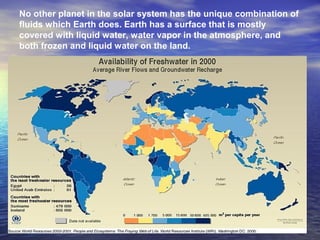
No other planet in the solar system has the unique combination of
fluids which Earth does. Earth has a surface that is mostly
covered with liquid water, water vapor in the atmosphere, and
both frozen and liquid water on the land.
A. Earth’s Water
• The continuous interchange of water

between the atmosphere and Earth ’s
surface.

• Includes the phase changes of water and
the movements of water above, on, and
below the Earth’s surface.
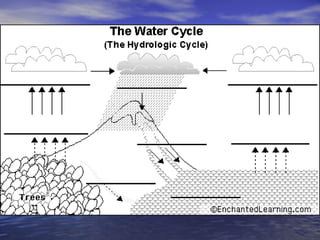
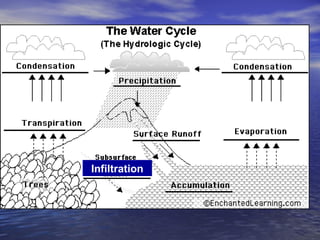
Water (or Hydrologic) Cycle
1. Precipitation : The falling of water as

liquid (rain) or solid (ice, hail, and snow).

– It can:

Infiltrate the Earth’s surface
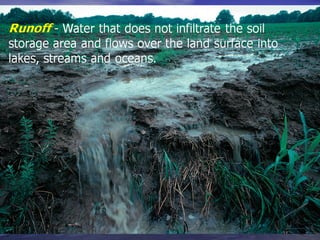
 Runoff

from the surface into streams, lakes or

ocean
 Be stored in the form of ice and snow
 Be evapotranspired back into the atmosphere
from large bodies of water, soil, plants and animals
Infiltration
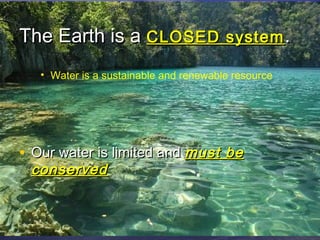
The Earth is a CLOSED system .
• Water is a sustainable and renewable resource

• Our water is limited and must be
conserved
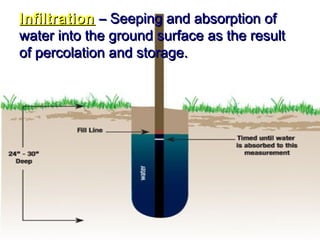
Infiltration – Seeping and absorption of
water into the ground surface as the result
of percolation and storage.
The Water Cycle
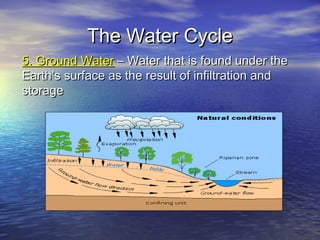
5. Ground Water – Water that is found under the
Earth’s surface as the result of infiltration and
storage
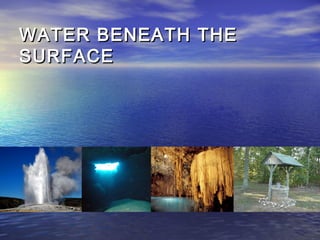
WATER BENEATH THE
SURFACE
• Underground water provides drinking water for

more than 50% of the US population, 40% of
irrigation water and more than 25% of industry’s
needs.

• The amount of water underground depends on:
– Steepness of slope
– Nature of surface materials
– Intensity of rainfall
– Type and amount of vegetation
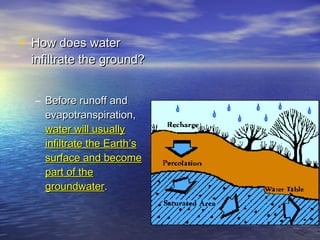
• How does water

infiltrate the ground?
– Before runoff and
evapotranspiration,
water will usually
infiltrate the Earth’s
surface and become
part of the
groundwater.
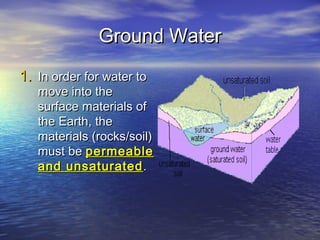
Ground Water
1. In order for water to

move into the
surface materials of
the Earth, the
materials (rocks/soil)
must be permeable
and unsaturated .
Ground Water
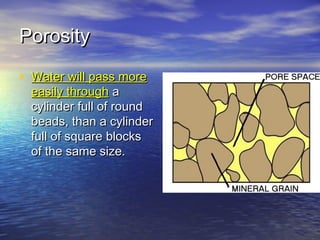
2. Porosity – The ratio of the volume of
openings compared to the volume of the
material.

• Depends on:




Shape of the particles
Looseness of the particles.
How well sorted the material is
Porosity
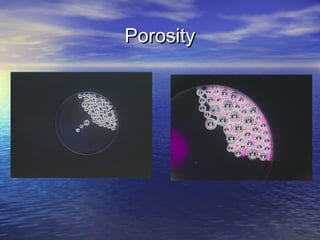
• Water will pass more

easily through a
cylinder full of round
beads, than a cylinder
full of square blocks
of the same size.
Porosity
Ground Water
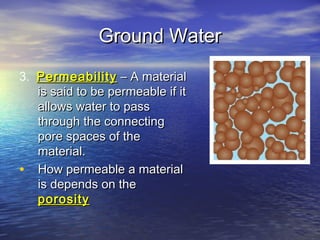
3. Permeability – A material
is said to be permeable if it
allows water to pass
through the connecting
pore spaces of the
material.
• How permeable a material
is depends on the
porosity
Ground Water
• The larger the pore spaces between the
particles that make up a material, the
greater the permeability of that material.
–
–

Gravel (large) = High permeability
Clay (very small) = Low permeability
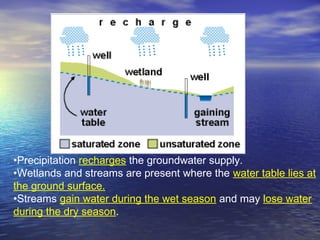
•Precipitation recharges the groundwater supply.
•Wetlands and streams are present where the water table lies at
the ground surface.
•Streams gain water during the wet season and may lose water
during the dry season.
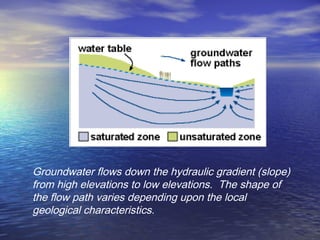
Groundwater flows down the hydraulic gradient (slope)
from high elevations to low elevations. The shape of
the flow path varies depending upon the local
geological characteristics.
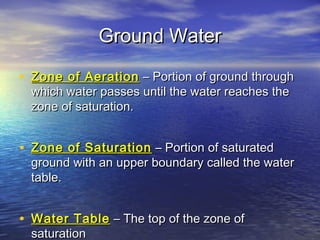
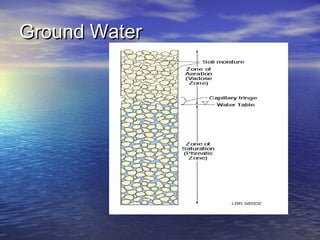
Ground Water
• Zone of Aeration – Portion of ground through
which water passes until the water reaches the
zone of saturation.

• Zone of Saturation – Portion of saturated

ground with an upper boundary called the water
table.

• Water Table – The top of the zone of
saturation
Ground Water
Water Beneath the Surface
• Aquifers : Permeable rock layers that
allow groundwater to move freely.

• Aquitard : Impermeable layers that do not
let water pass through.
Water Beneath the Surface
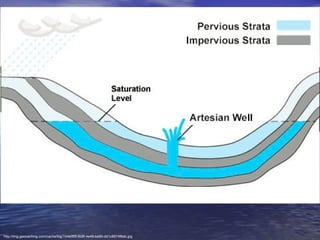
• An artesian well is any formation in

which groundwater rises on its own under
pressure .
– Conditions:
• Aquifer that is tilted and exposed to the
surface
• Aquitards both above and below the aquifer
(which increases pressure )
http://img.geocaching.com/cache/log/154e0f0f-6b9f-4e49-be90-dd1c6974f8ab.jpg
Water Beneath the Surface
• Aquitards can block upward movement of

water causing it to move sideways. When
the water in the water table approaches
the ground surface, a spring is formed.
• Spring : Flow of water that emerges
naturally at the surface.
Water Beneath the Surface
• Hot springs : Groundwater is heated at

great depths and then quickly flows to the
surface (there are more than 1000 in the
US).
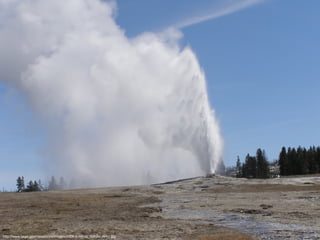
• Geyser : A hot spring/fountain that shoots
up with great force at intervals.
http://www.usgs.gov/newsroom/images/2008-5-30/old_faithful_hires.jpg
Ground Water
• Ground Water can be easily contaminated
•
•
•
•
•
•

by:
Landfills
Herbicides
Fertilizers
Underground Storage Tanks (gasoline)
Oils
Failed Septic Systems
Ground Water
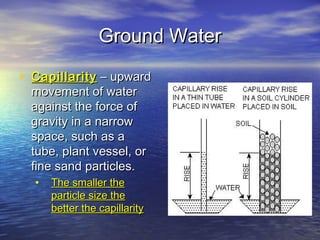
• Capillarity – upward
movement of water
against the force of
gravity in a narrow
space, such as a
tube, plant vessel, or
fine sand particles.
•

The smaller the
particle size the
better the capillarity
6.3: Water Beneath the Surface
• Formations associated with Groundwater:
– Caverns : Naturally formed underground chambers.

• Most are formed by water erosion with limestone
at or below the water table in the zone of
saturation.

• Dripstone features (dripping water leaves behind
minerals):

– Stalactites : Hang from the ceiling.
– Stalagmites : Build up from the floor.
– May join together to form a column .

Freshwater

  • 1.
    Unit 7: WaterCycle & Climate
  • 2.
    No other planetin the solar system has the unique combination of fluids which Earth does. Earth has a surface that is mostly covered with liquid water, water vapor in the atmosphere, and both frozen and liquid water on the land.
  • 3.
    A. Earth’s Water •The continuous interchange of water between the atmosphere and Earth ’s surface. • Includes the phase changes of water and the movements of water above, on, and below the Earth’s surface.
  • 4.
    Water (or Hydrologic)Cycle 1. Precipitation : The falling of water as liquid (rain) or solid (ice, hail, and snow). – It can: Infiltrate the Earth’s surface  Runoff from the surface into streams, lakes or ocean  Be stored in the form of ice and snow  Be evapotranspired back into the atmosphere from large bodies of water, soil, plants and animals
  • 6.
  • 8.
    The Earth isa CLOSED system . • Water is a sustainable and renewable resource • Our water is limited and must be conserved
  • 10.
    Infiltration – Seepingand absorption of water into the ground surface as the result of percolation and storage.
  • 11.
    The Water Cycle 5.Ground Water – Water that is found under the Earth’s surface as the result of infiltration and storage
  • 12.
  • 13.
    • Underground waterprovides drinking water for more than 50% of the US population, 40% of irrigation water and more than 25% of industry’s needs. • The amount of water underground depends on: – Steepness of slope – Nature of surface materials – Intensity of rainfall – Type and amount of vegetation
  • 14.
    • How doeswater infiltrate the ground? – Before runoff and evapotranspiration, water will usually infiltrate the Earth’s surface and become part of the groundwater.
  • 15.
    Ground Water 1. Inorder for water to move into the surface materials of the Earth, the materials (rocks/soil) must be permeable and unsaturated .
  • 16.
    Ground Water 2. Porosity– The ratio of the volume of openings compared to the volume of the material. • Depends on:    Shape of the particles Looseness of the particles. How well sorted the material is
  • 17.
    Porosity • Water willpass more easily through a cylinder full of round beads, than a cylinder full of square blocks of the same size.
  • 18.
  • 19.
    Ground Water 3. Permeability– A material is said to be permeable if it allows water to pass through the connecting pore spaces of the material. • How permeable a material is depends on the porosity
  • 20.
    Ground Water • Thelarger the pore spaces between the particles that make up a material, the greater the permeability of that material. – – Gravel (large) = High permeability Clay (very small) = Low permeability
  • 21.
    •Precipitation recharges thegroundwater supply. •Wetlands and streams are present where the water table lies at the ground surface. •Streams gain water during the wet season and may lose water during the dry season.
  • 22.
    Groundwater flows downthe hydraulic gradient (slope) from high elevations to low elevations. The shape of the flow path varies depending upon the local geological characteristics.
  • 23.
    Ground Water • Zoneof Aeration – Portion of ground through which water passes until the water reaches the zone of saturation. • Zone of Saturation – Portion of saturated ground with an upper boundary called the water table. • Water Table – The top of the zone of saturation
  • 24.
  • 25.
    Water Beneath theSurface • Aquifers : Permeable rock layers that allow groundwater to move freely. • Aquitard : Impermeable layers that do not let water pass through.
  • 26.
    Water Beneath theSurface • An artesian well is any formation in which groundwater rises on its own under pressure . – Conditions: • Aquifer that is tilted and exposed to the surface • Aquitards both above and below the aquifer (which increases pressure )
  • 27.
  • 28.
    Water Beneath theSurface • Aquitards can block upward movement of water causing it to move sideways. When the water in the water table approaches the ground surface, a spring is formed. • Spring : Flow of water that emerges naturally at the surface.
  • 29.
    Water Beneath theSurface • Hot springs : Groundwater is heated at great depths and then quickly flows to the surface (there are more than 1000 in the US). • Geyser : A hot spring/fountain that shoots up with great force at intervals.
  • 30.
  • 31.
    Ground Water • GroundWater can be easily contaminated • • • • • • by: Landfills Herbicides Fertilizers Underground Storage Tanks (gasoline) Oils Failed Septic Systems
  • 32.
    Ground Water • Capillarity– upward movement of water against the force of gravity in a narrow space, such as a tube, plant vessel, or fine sand particles. • The smaller the particle size the better the capillarity
  • 33.
    6.3: Water Beneaththe Surface • Formations associated with Groundwater: – Caverns : Naturally formed underground chambers. • Most are formed by water erosion with limestone at or below the water table in the zone of saturation. • Dripstone features (dripping water leaves behind minerals): – Stalactites : Hang from the ceiling. – Stalagmites : Build up from the floor. – May join together to form a column .