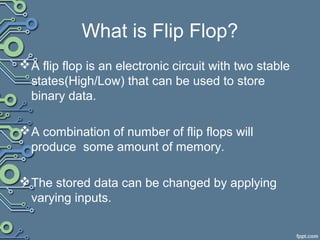
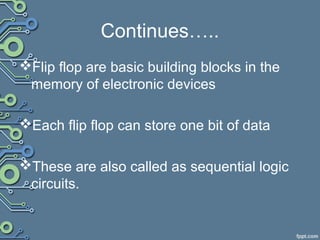
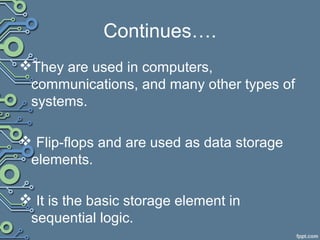
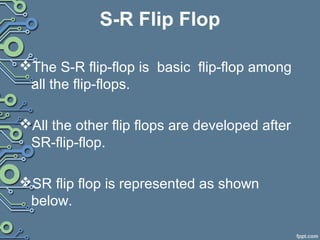
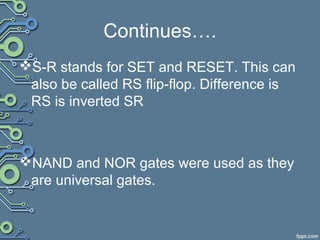
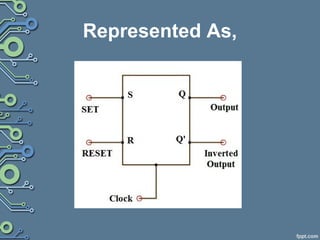
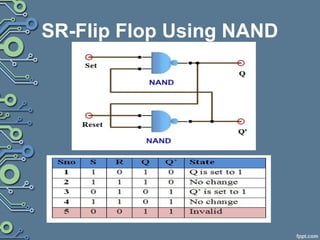
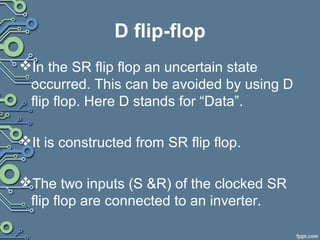
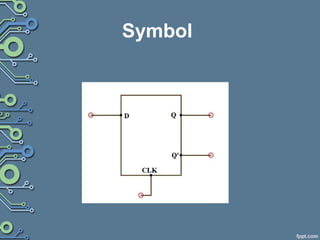
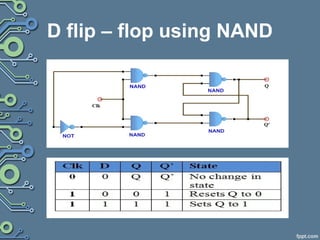
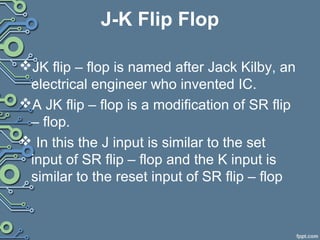
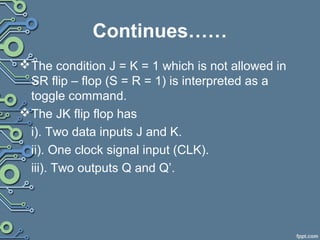
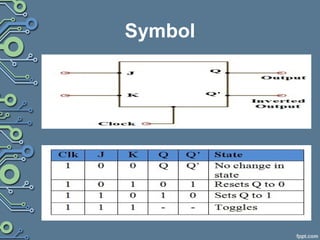
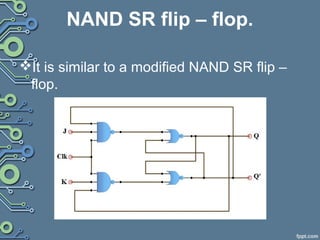
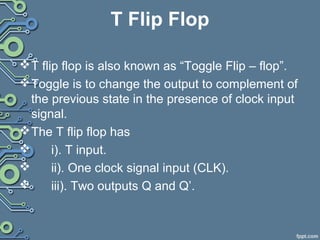
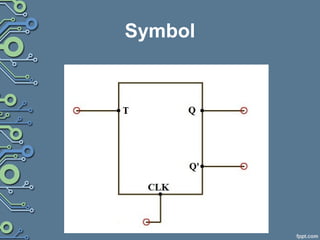
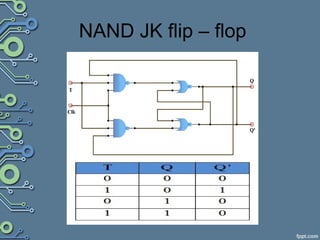
A flip-flop is an electronic circuit that stores binary data, functioning as a basic memory building block in devices like computers and calculators. There are four main types of flip-flops: R-S, D, J-K, and T, each serving different functions, with D flip-flops commonly used to avoid uncertain states in R-S flip-flops. Flip-flops are essential for applications in memory elements, counters, and frequency division circuits.





![SEQUENTIAL CIRCUITS [Flip-flops and Latches]](https://cdn.slidesharecdn.com/ss_thumbnails/sequentialcircuits-211217082412-thumbnail.jpg?width=640&height=640&fit=bounds)


![Flip_flops_in_digital_electronics[1].pptx](https://cdn.slidesharecdn.com/ss_thumbnails/flipflopsindigitalelectronics1-250805201548-623d4f88-thumbnail.jpg?width=640&height=640&fit=bounds)
![Flip_flops_in_digital_electronics[1].pptx](https://cdn.slidesharecdn.com/ss_thumbnails/flipflopsindigitalelectronics1-250805201909-5c7c72ae-thumbnail.jpg?width=640&height=640&fit=bounds)


