HMC Plastic
                              & reconstruction
                                 mansoor khan
                                      Dec, 2011


       Injuries & Repair of
Flexor Tendons of the Hand !!
Presentation:                               Questions to consider:
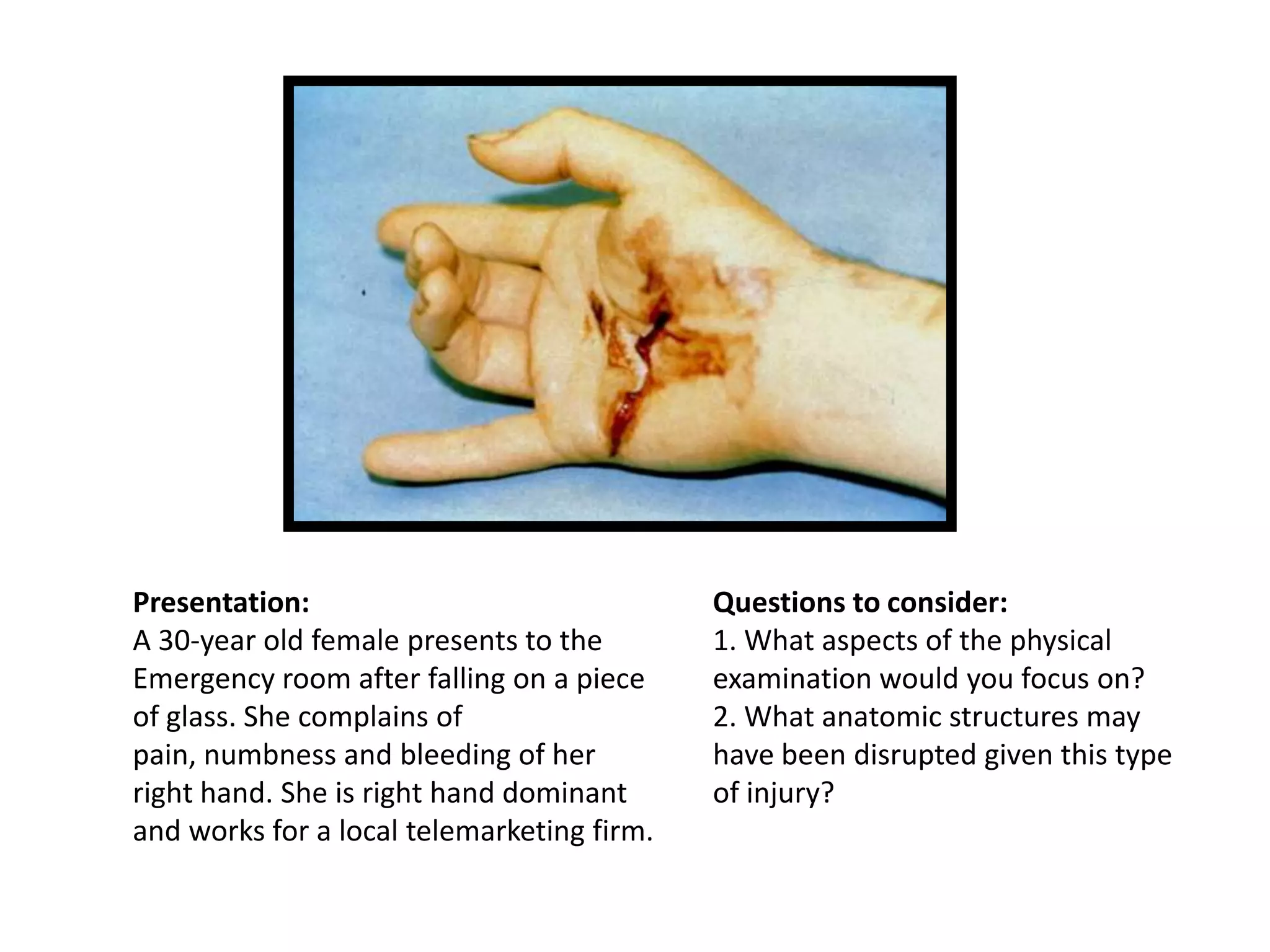
A 30-year old female presents to the        1. What aspects of the physical
Emergency room after falling on a piece     examination would you focus on?
of glass. She complains of                  2. What anatomic structures may
pain, numbness and bleeding of her          have been disrupted given this type
right hand. She is right hand dominant      of injury?
and works for a local telemarketing firm.
“
glistening structure
 between muscle
     & bone which


                     ”
      transmit force from
        muscle to the bone
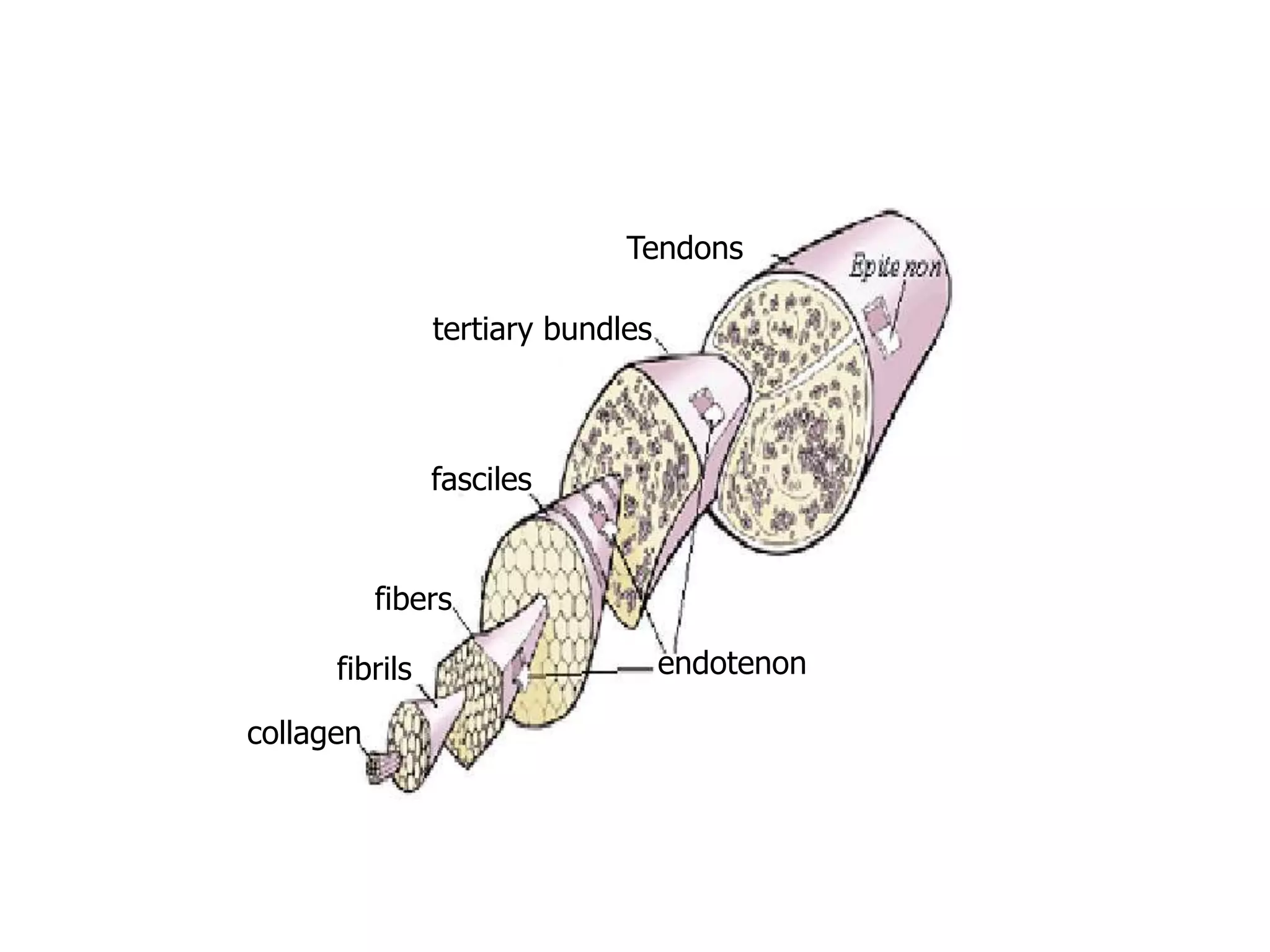
Tendons

                tertiary bundles


                fasciles


           fibers

      fibrils                      endotenon

collagen
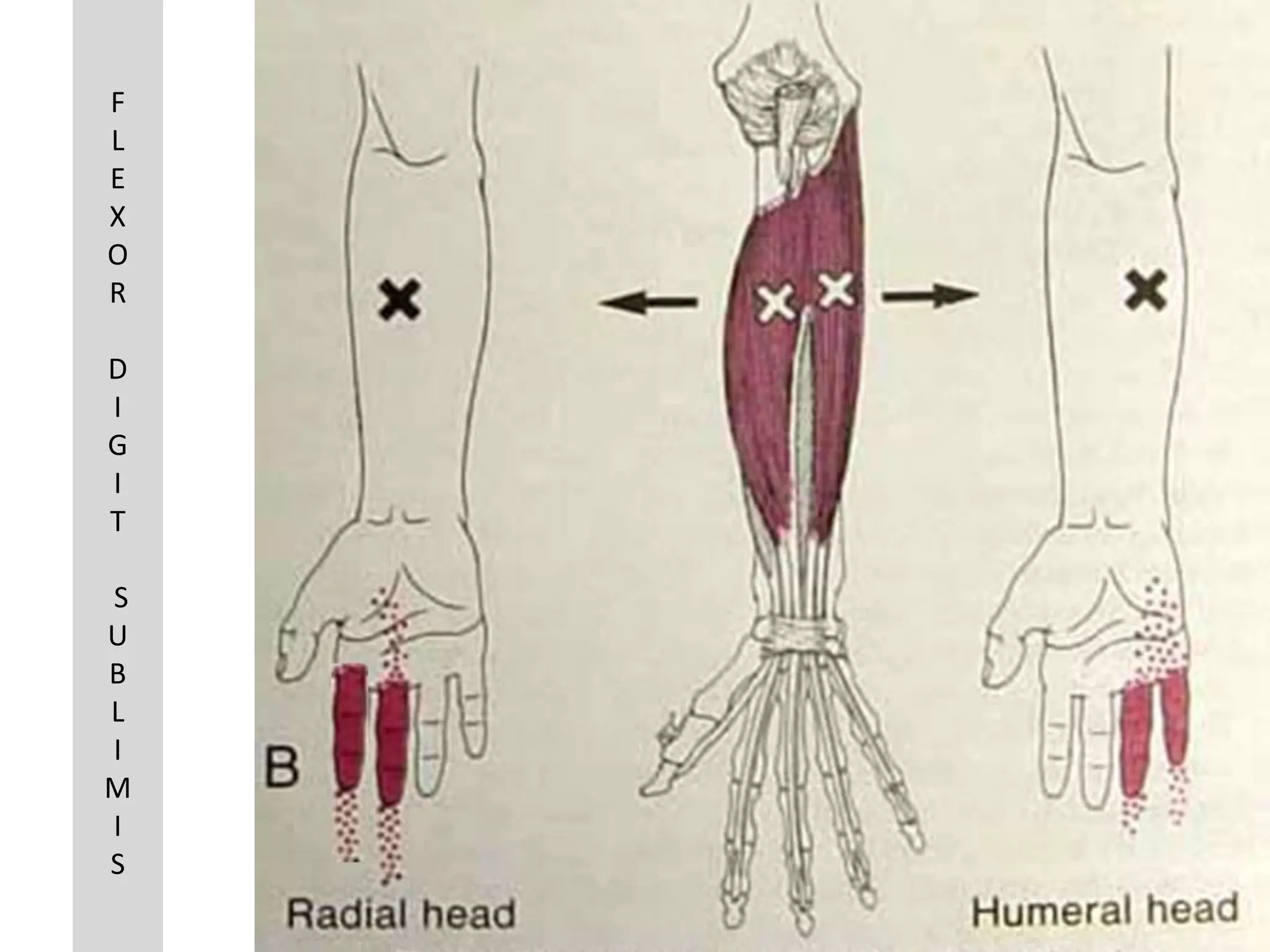
F
L
E
X
O
R

D
I
G
I
T

S
U
B
L
I
M
I
S
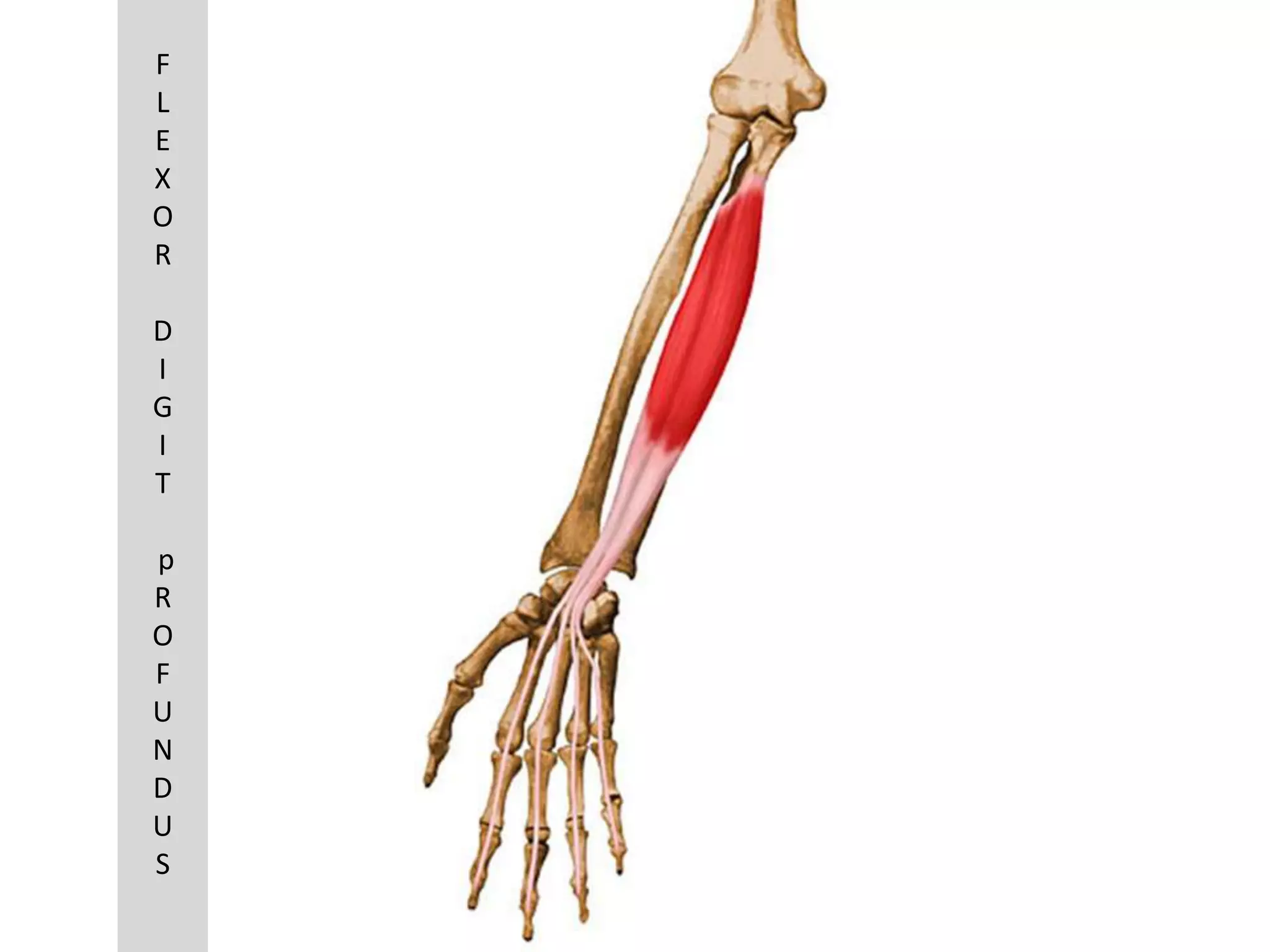
F
L
E
X
O
R

D
I
G
I
T

p
R
O
F
U
N
D
U
S
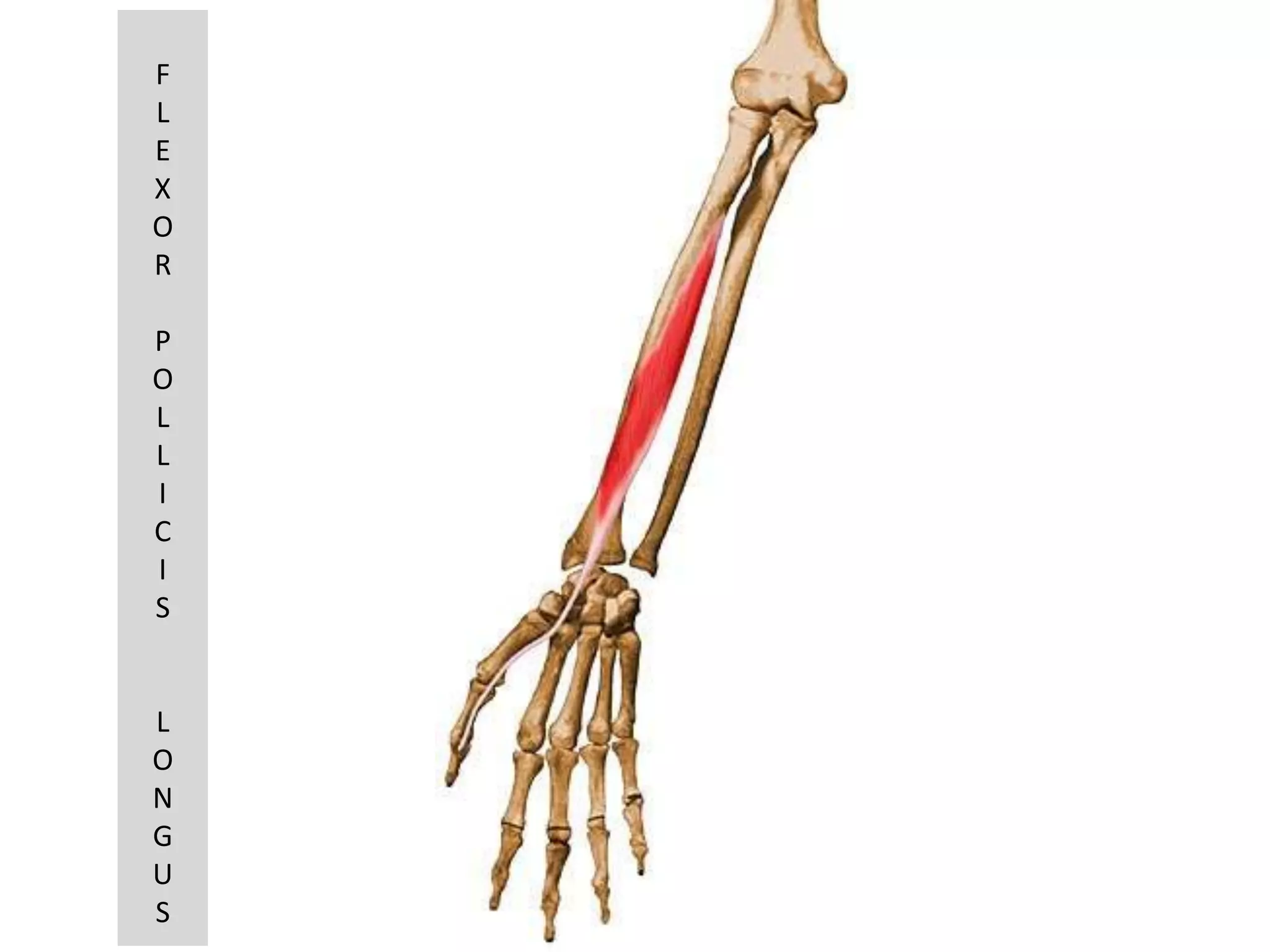
F
L
E
X
O
R

P
O
L
L
I
C
I
S


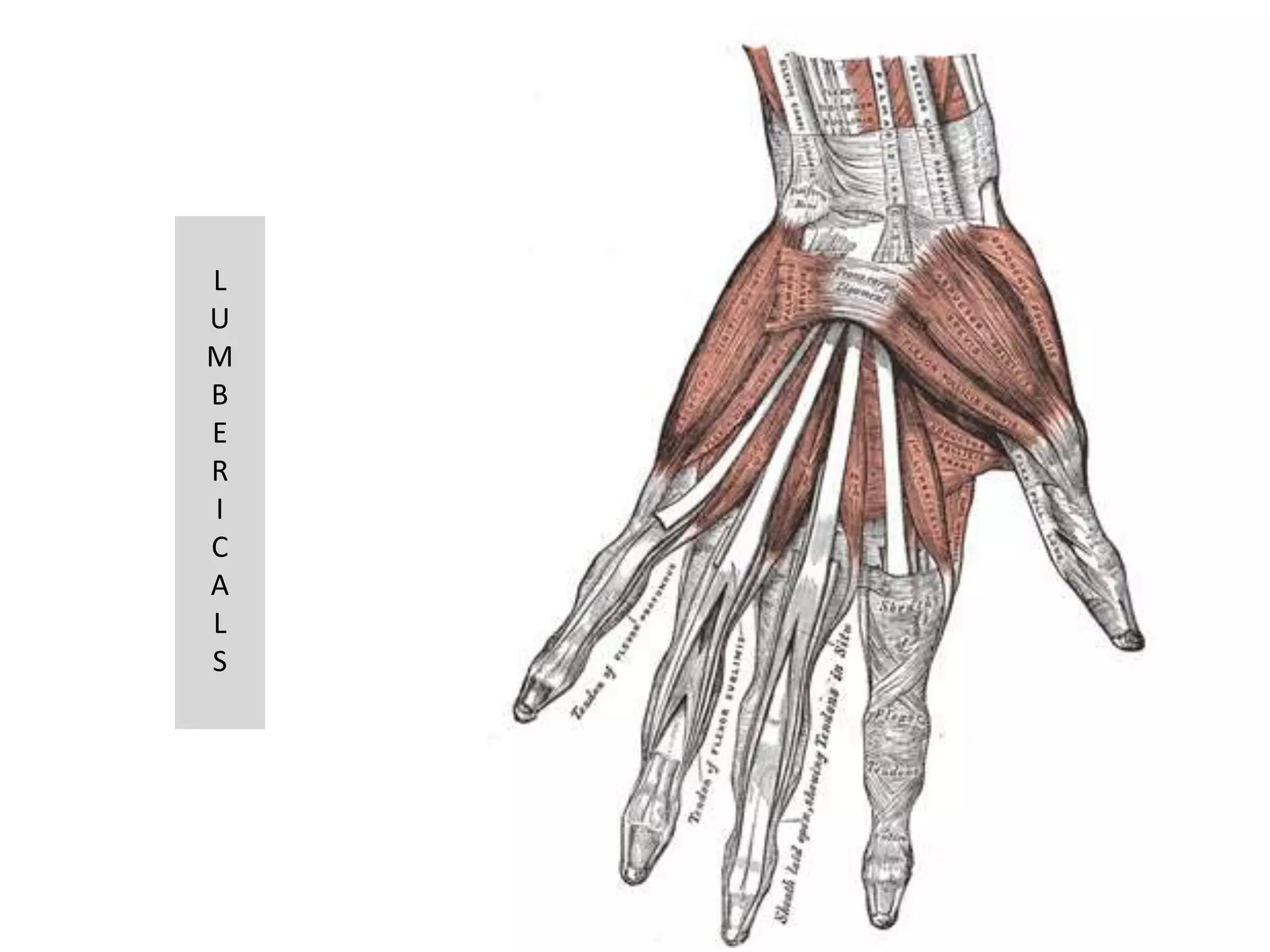
L
O
N
G
U
S
L
U
M
B
E
R
I
C
A
L
S
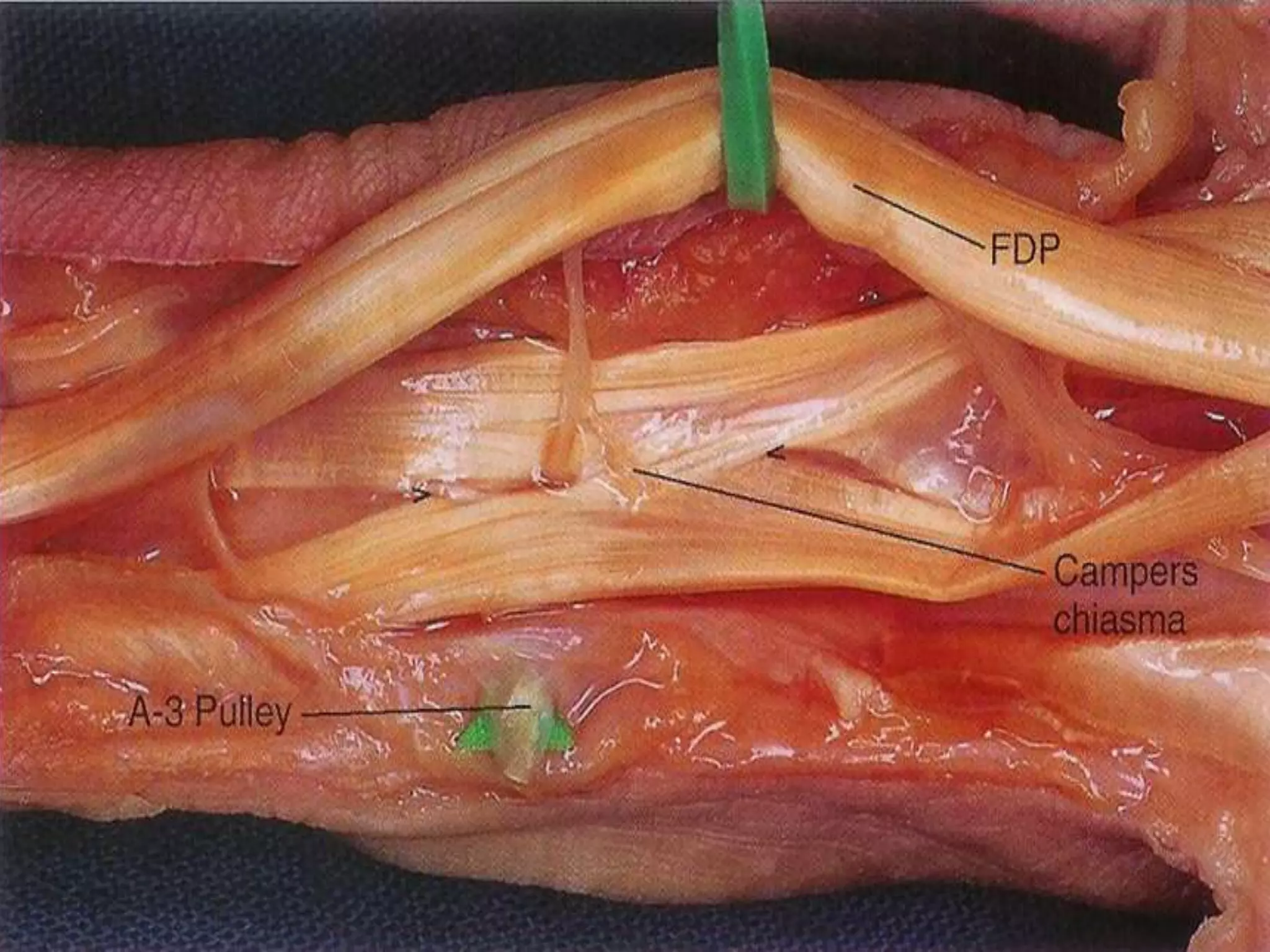
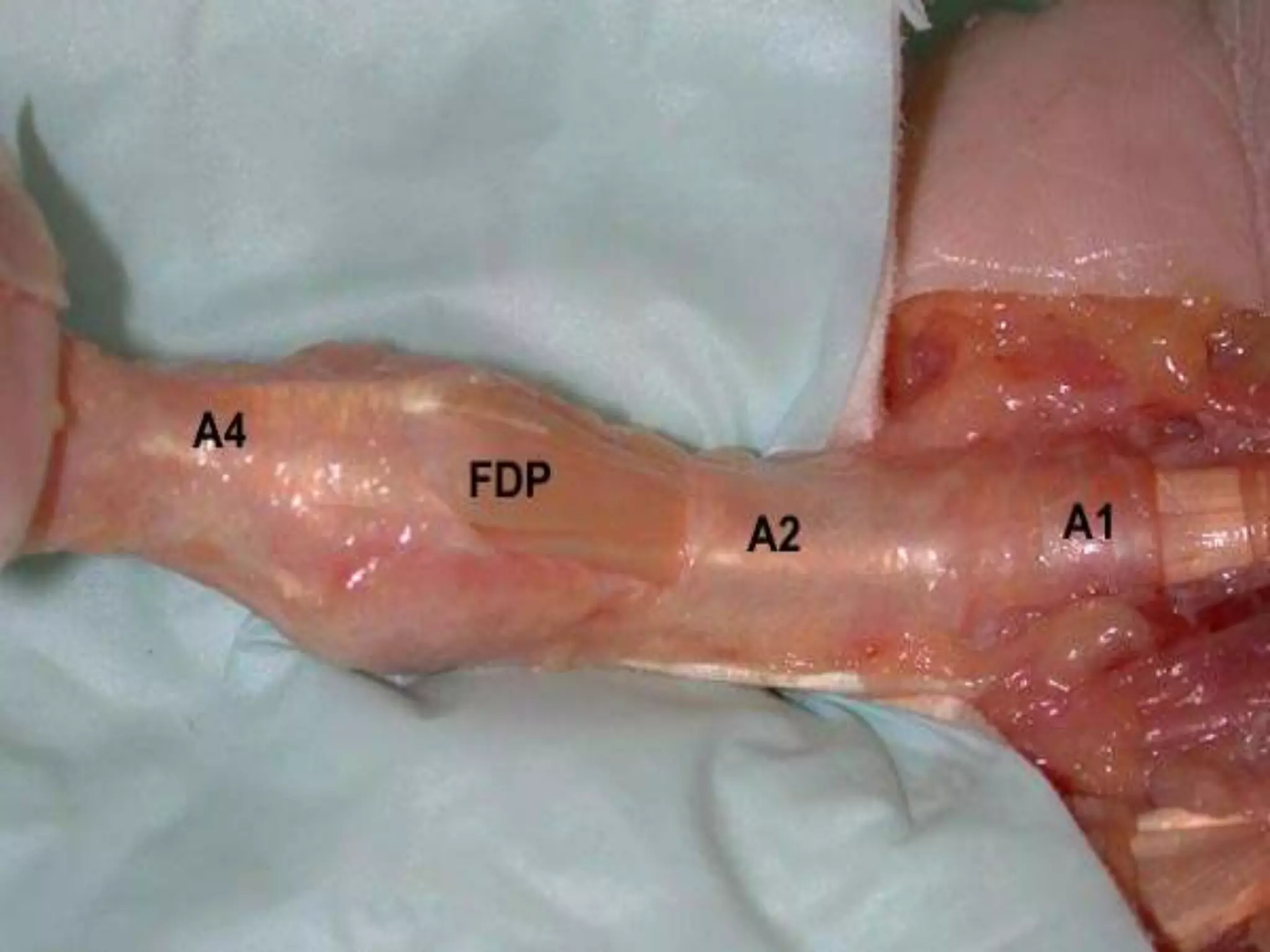
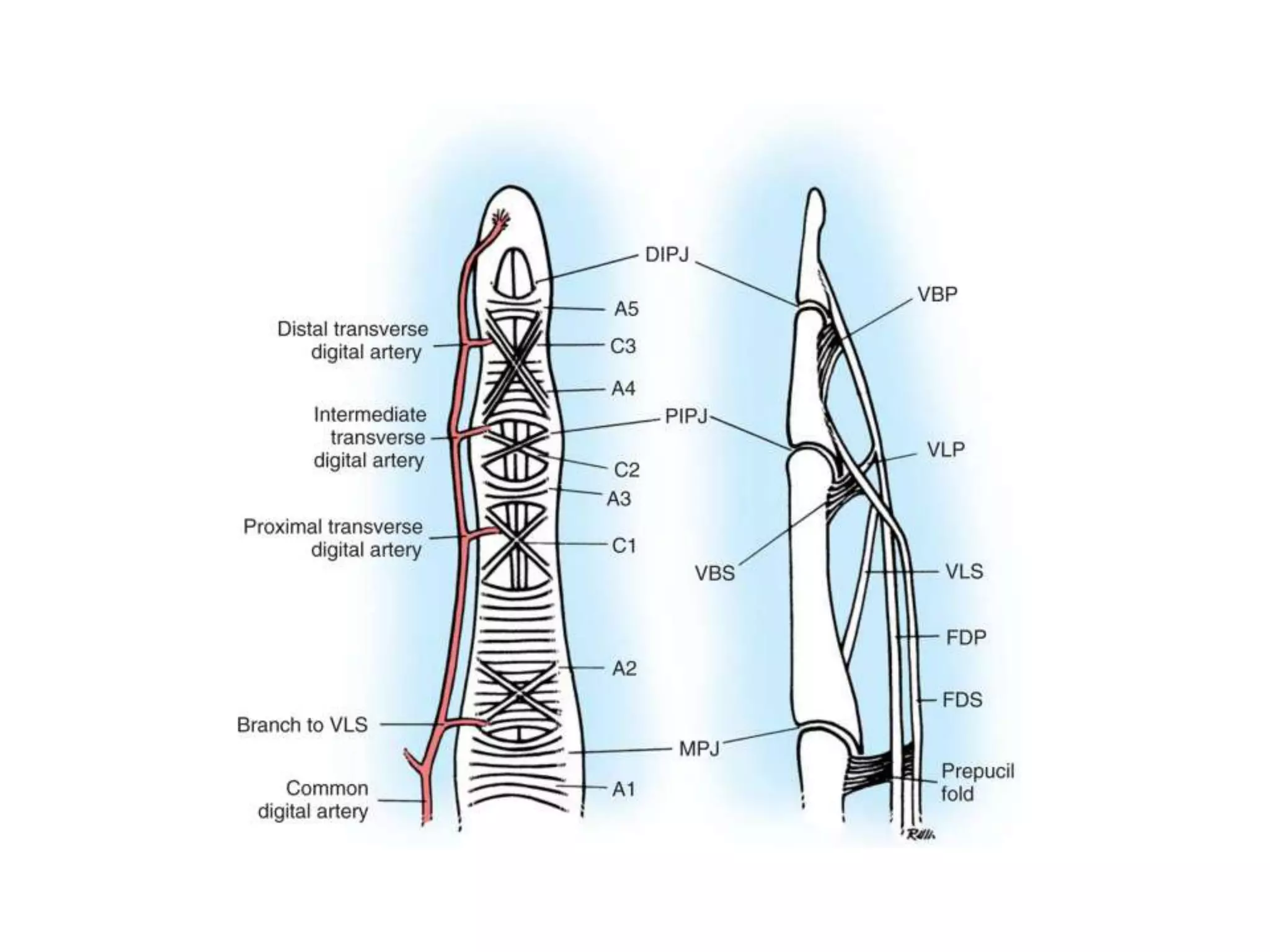
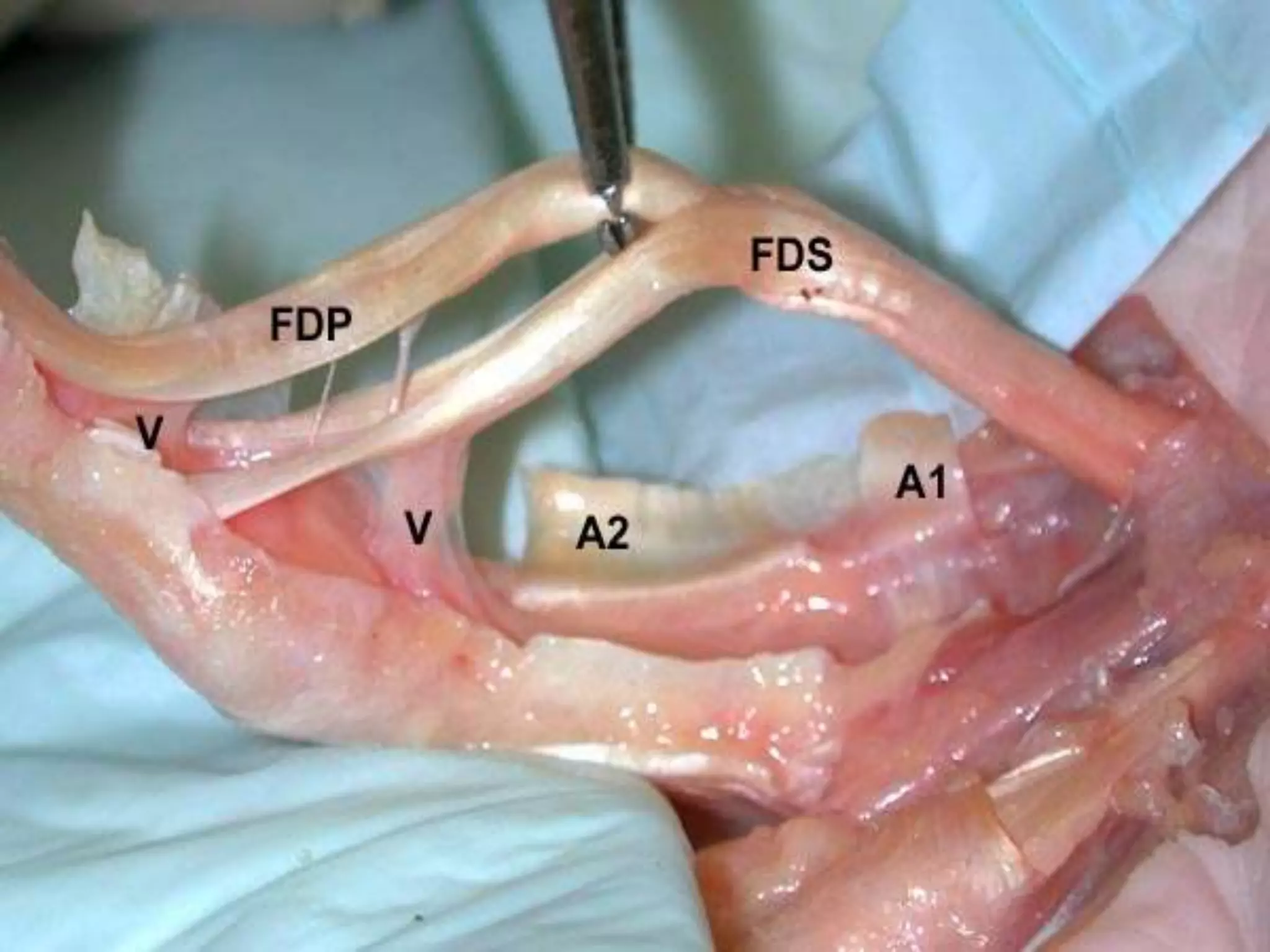
PULLEYS
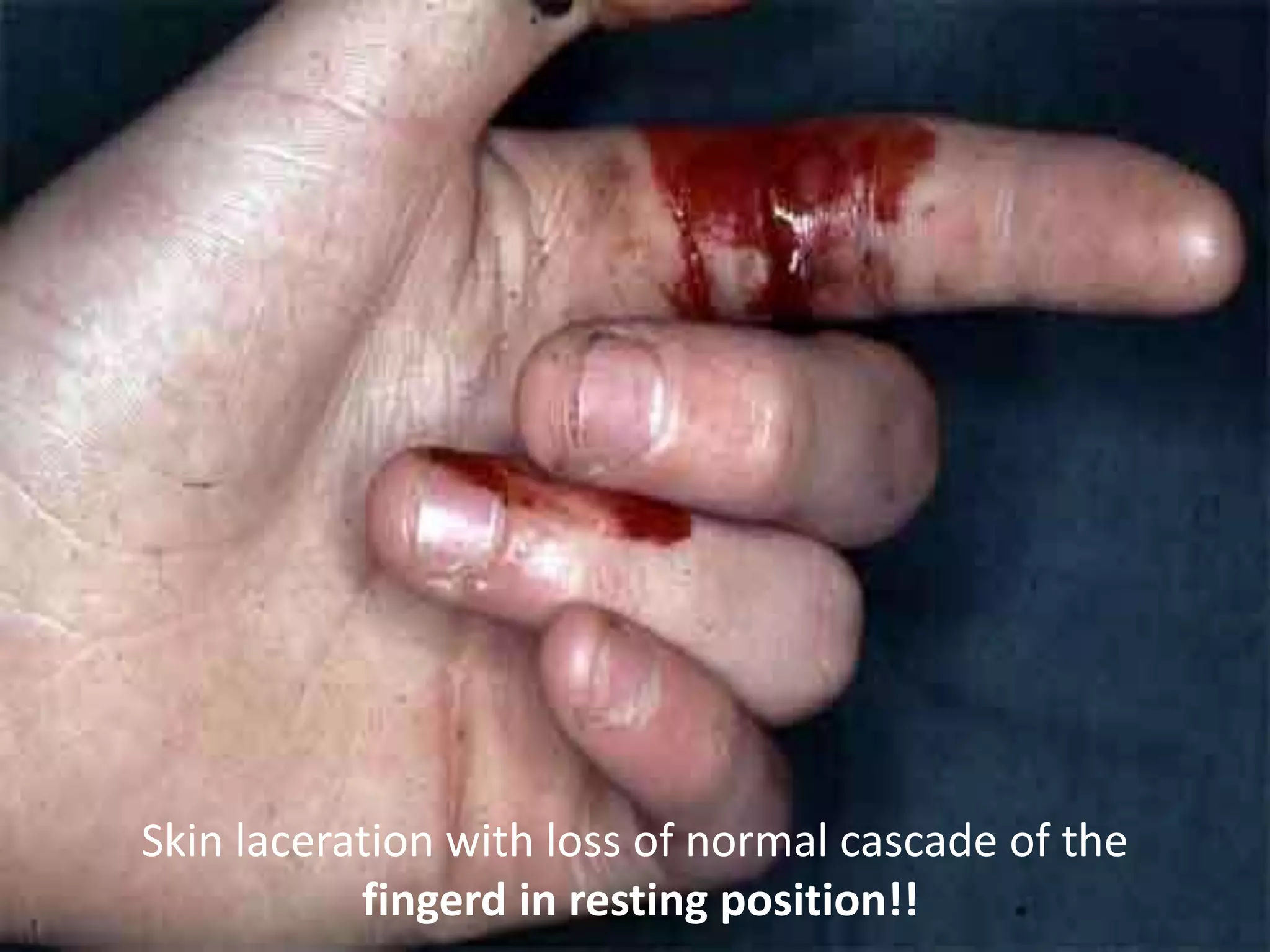
Skin laceration with loss of normal cascade of the
           fingerd in resting position!!
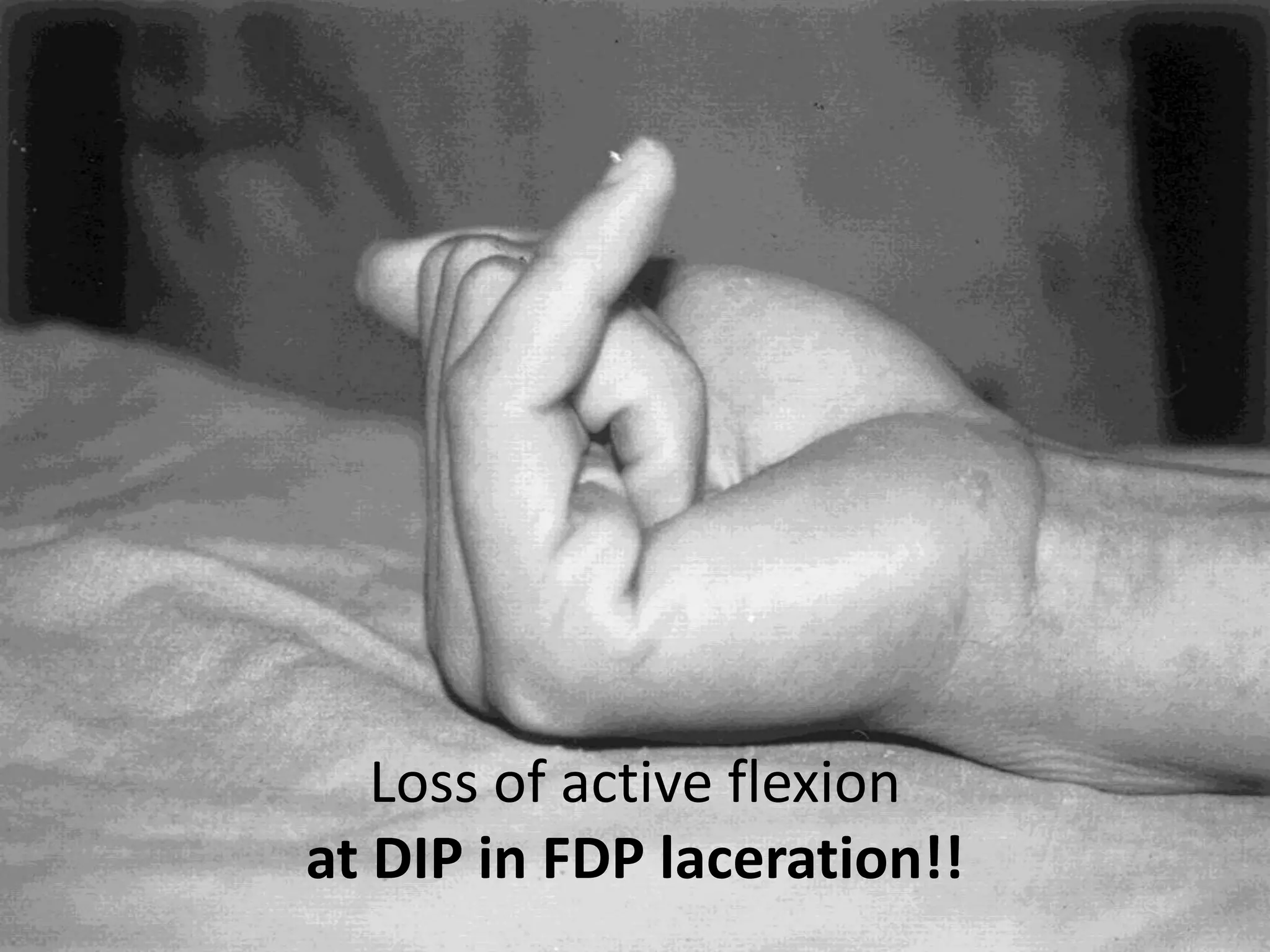
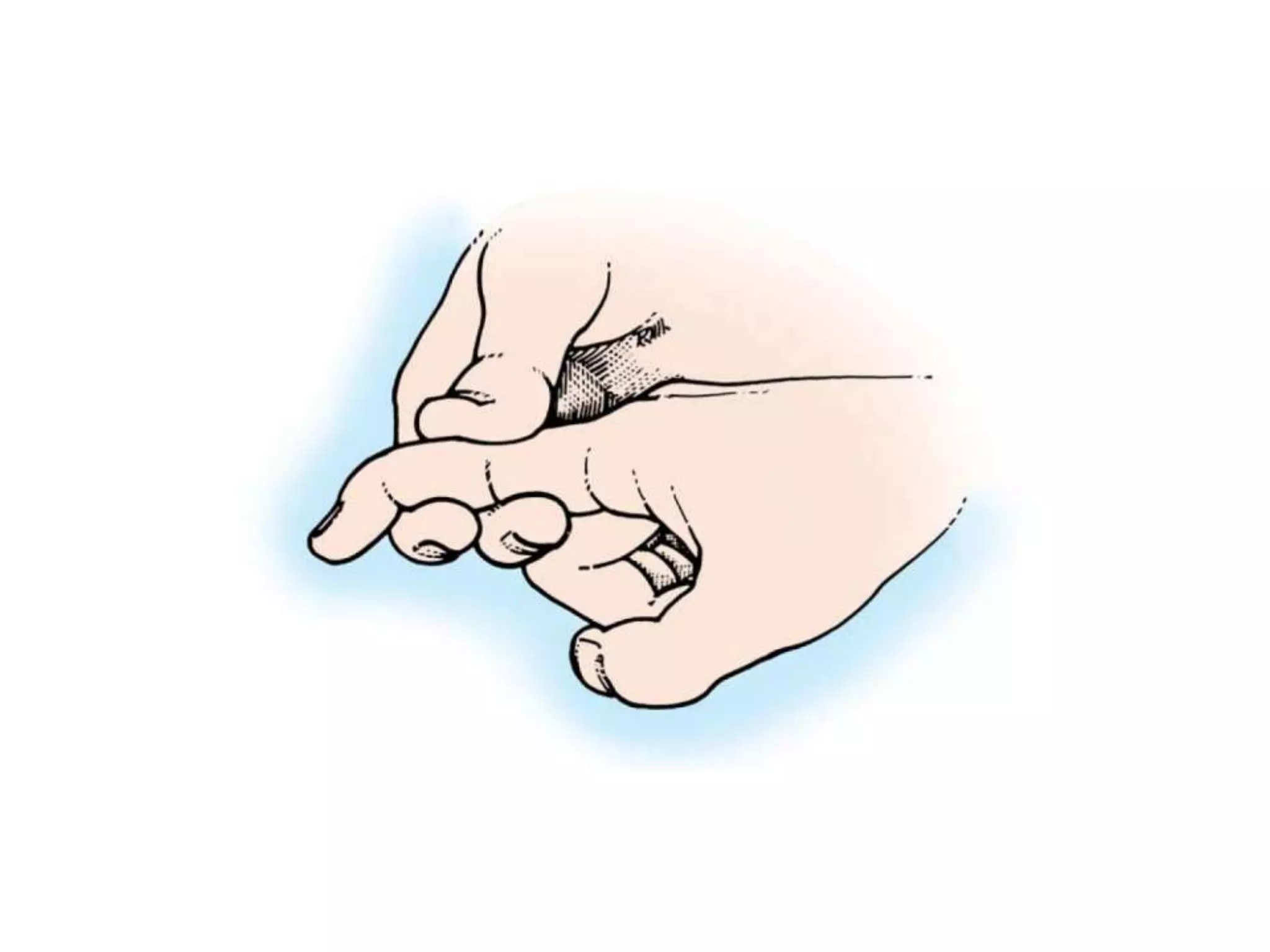
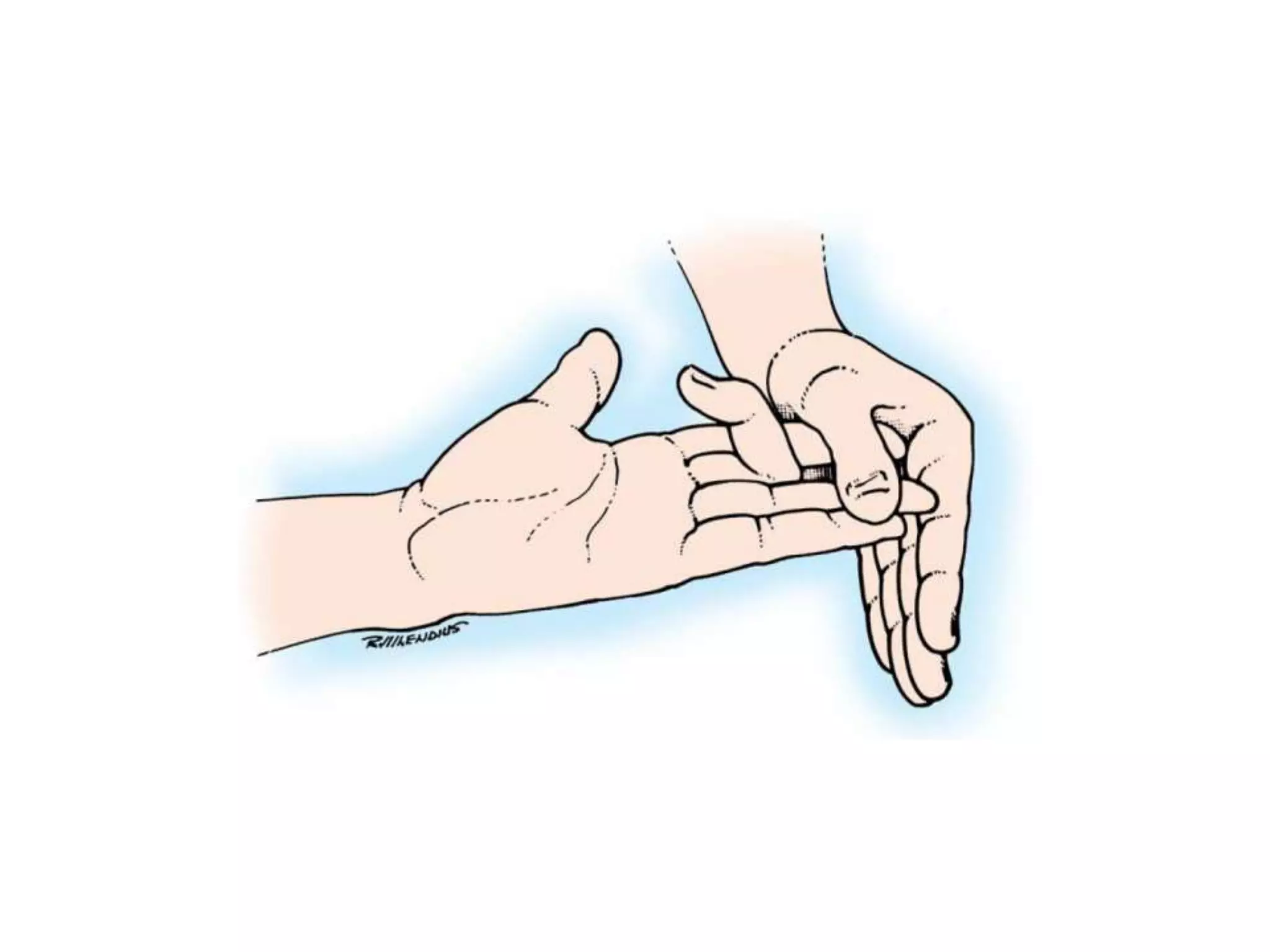
Loss of active flexion
at DIP in FDP laceration!!
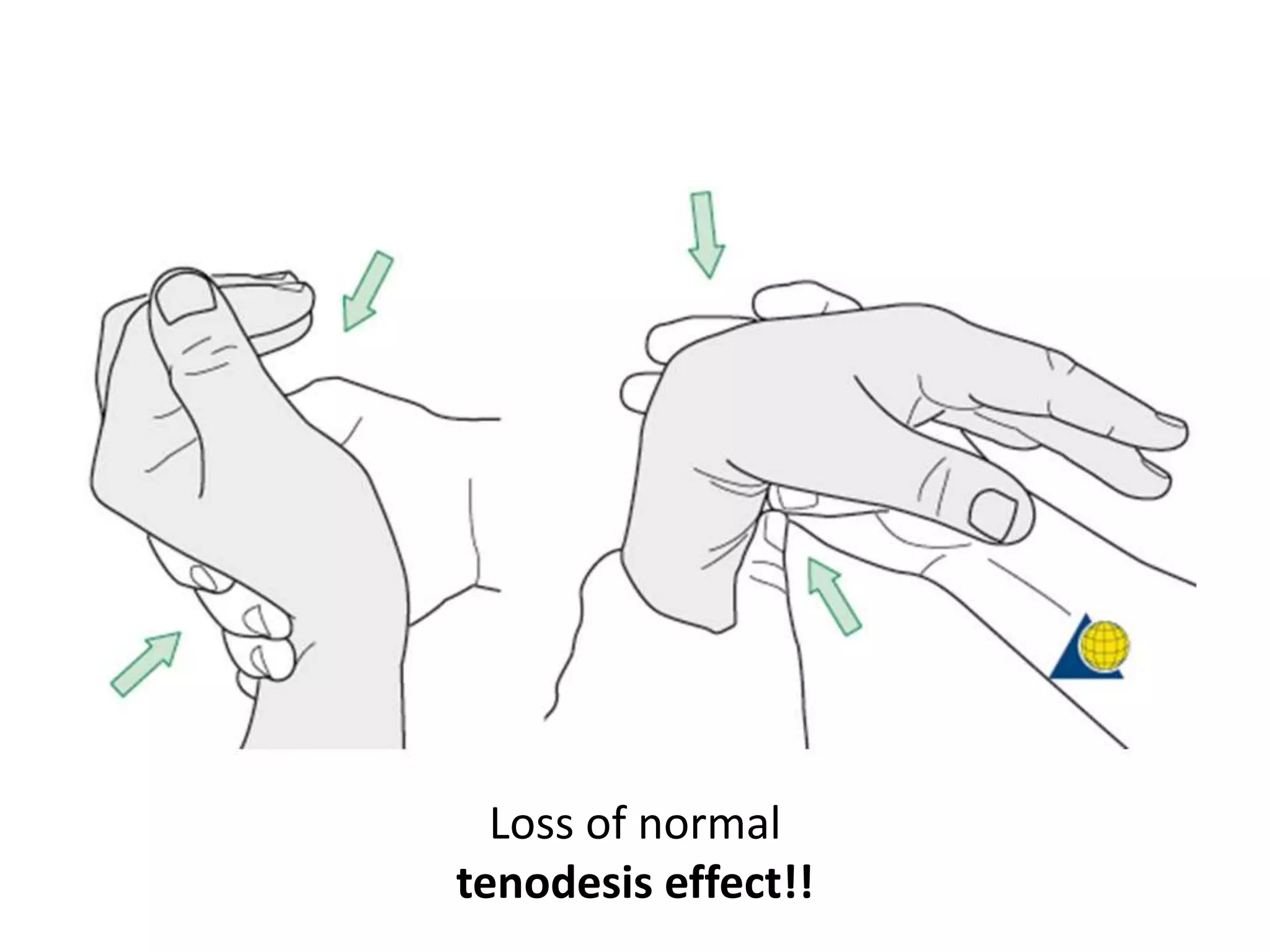
Loss of normal
tenodesis effect!!
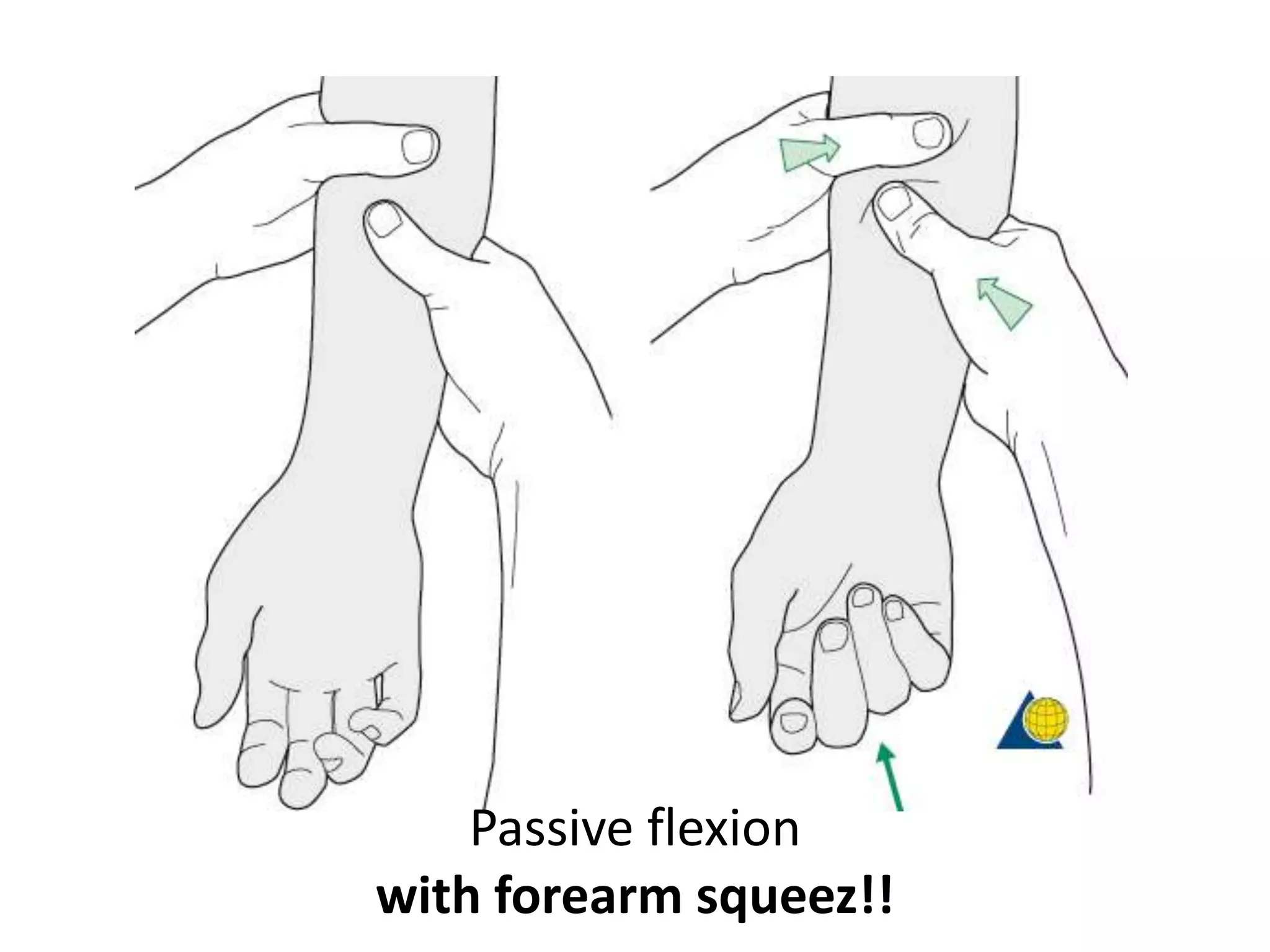
Passive flexion
with forearm squeez!!
Complain of numbness
     preceeded by execissive bleed
Concider neurovascular insult!!
Goals of reconstruction:
  Coaptation of tendons, anatomical repair with a
limited accordion effect at the repair site, multiple
  strand drepair to permit active range of motion
                    rehabilitation
       Pully reconstruction to minimize bow-
     stringing, atraumatic surgical technique to
      minimize adhesionns, strict adherence to
               rehabilitation protocole.
Timing of flexor tendon injuries:
       Primary: repair within 24 hours
    (contraindicated in case of high grade
 condtamination i.e. human bites, infection)
Delayed Primary: 1-14 days when the wound
   can be still pulled open without incision
         Early Secondary: 2-5 weeks.
  Late Secondary : after 5 weeks i.e. tendon
   substitution techniques/salvage process.
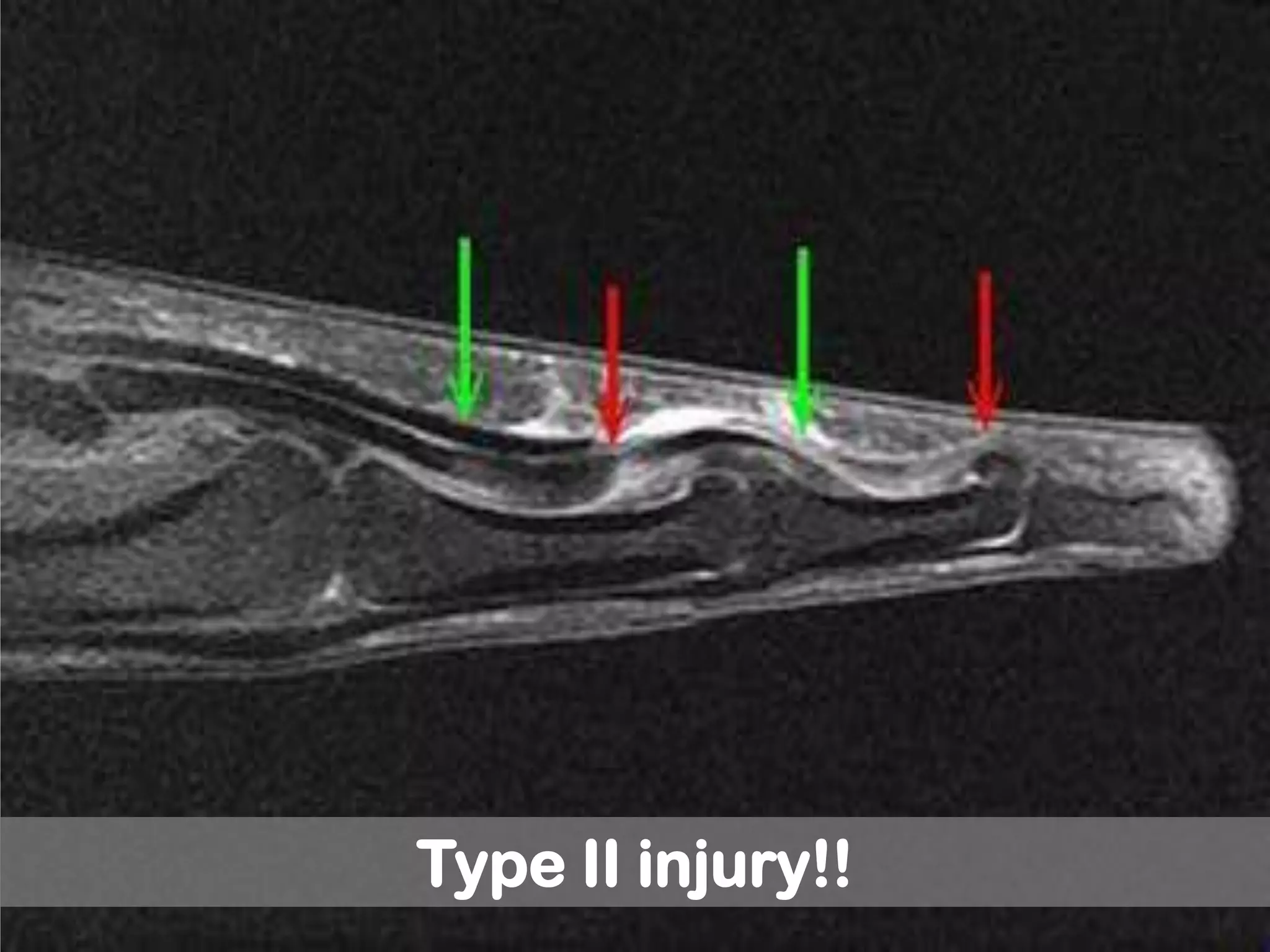
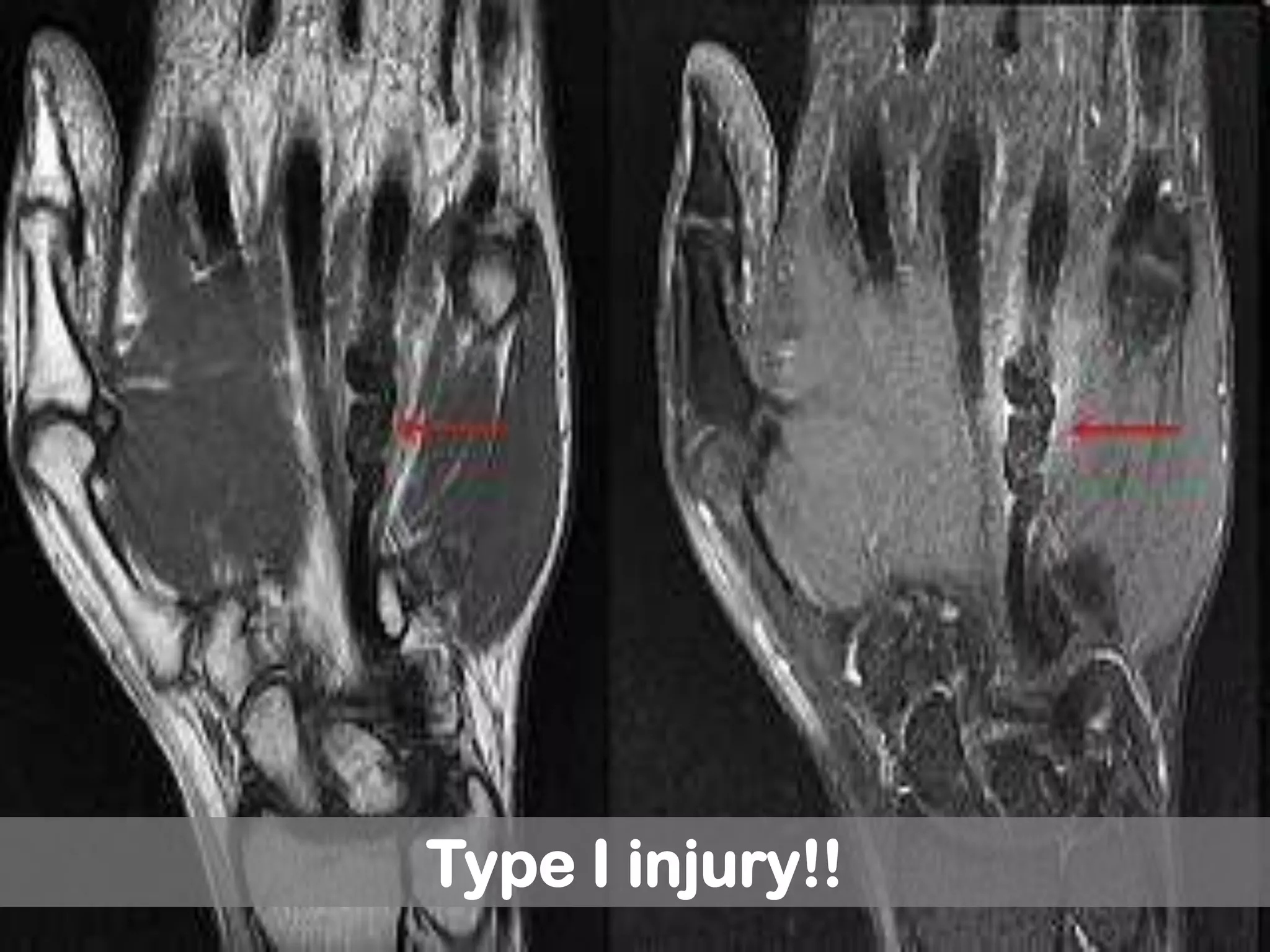
Leddy classification of zone I flexor
         tendon injuries!!

  Type I: tendon retracted into palm
           (fullness in palm)
    Type II: tendon traped in the
  sheath at PIP (unable to flex PIP)

   Type III: tendon traped in A4 pully
Type II injury!!
Type I injury!!
Direct repair:
if laceration is more than 1 cm
       from FDP insertion


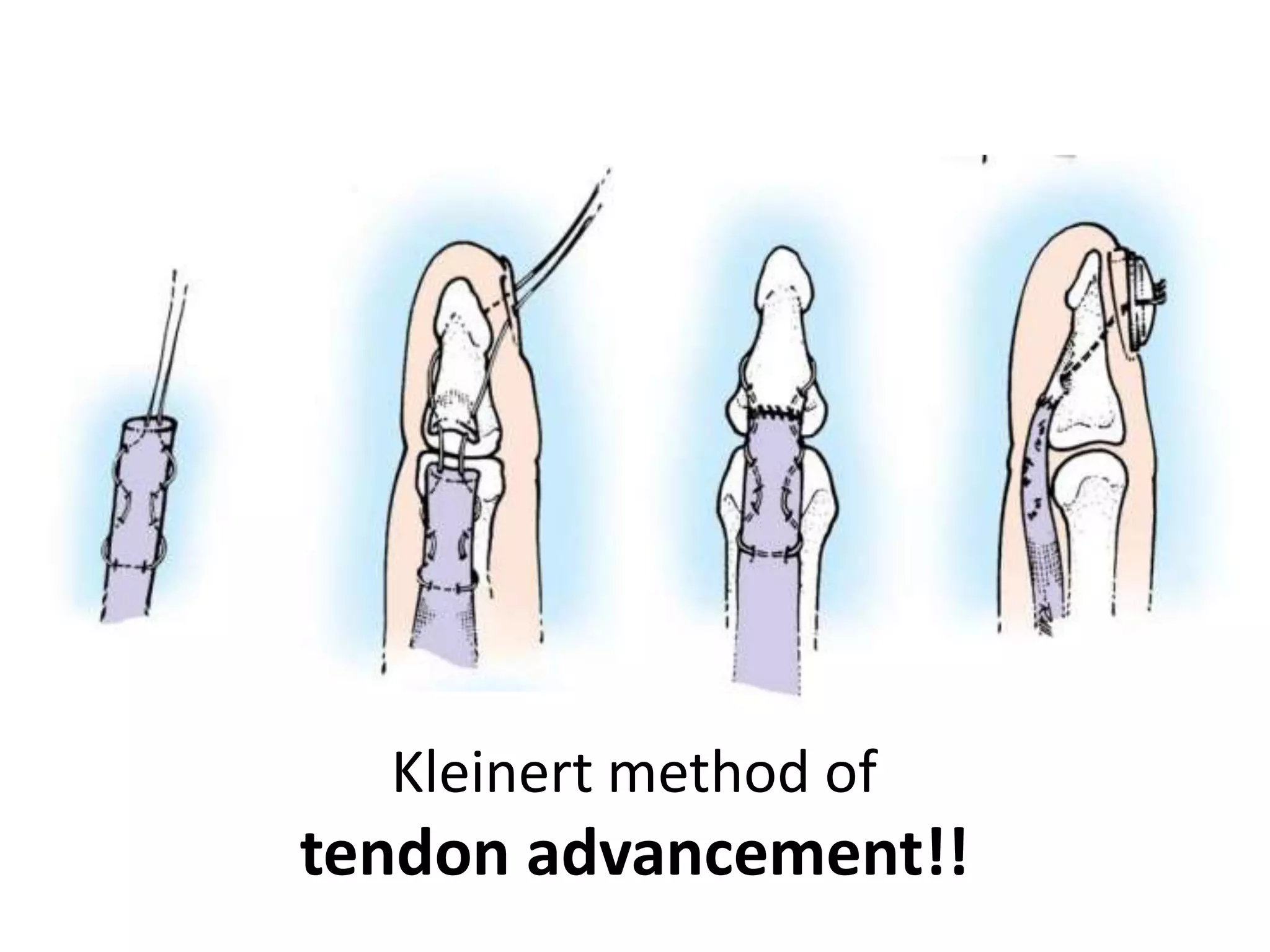
    Tendon advancement:
if the laceration is less then 1
      cm from insertion.
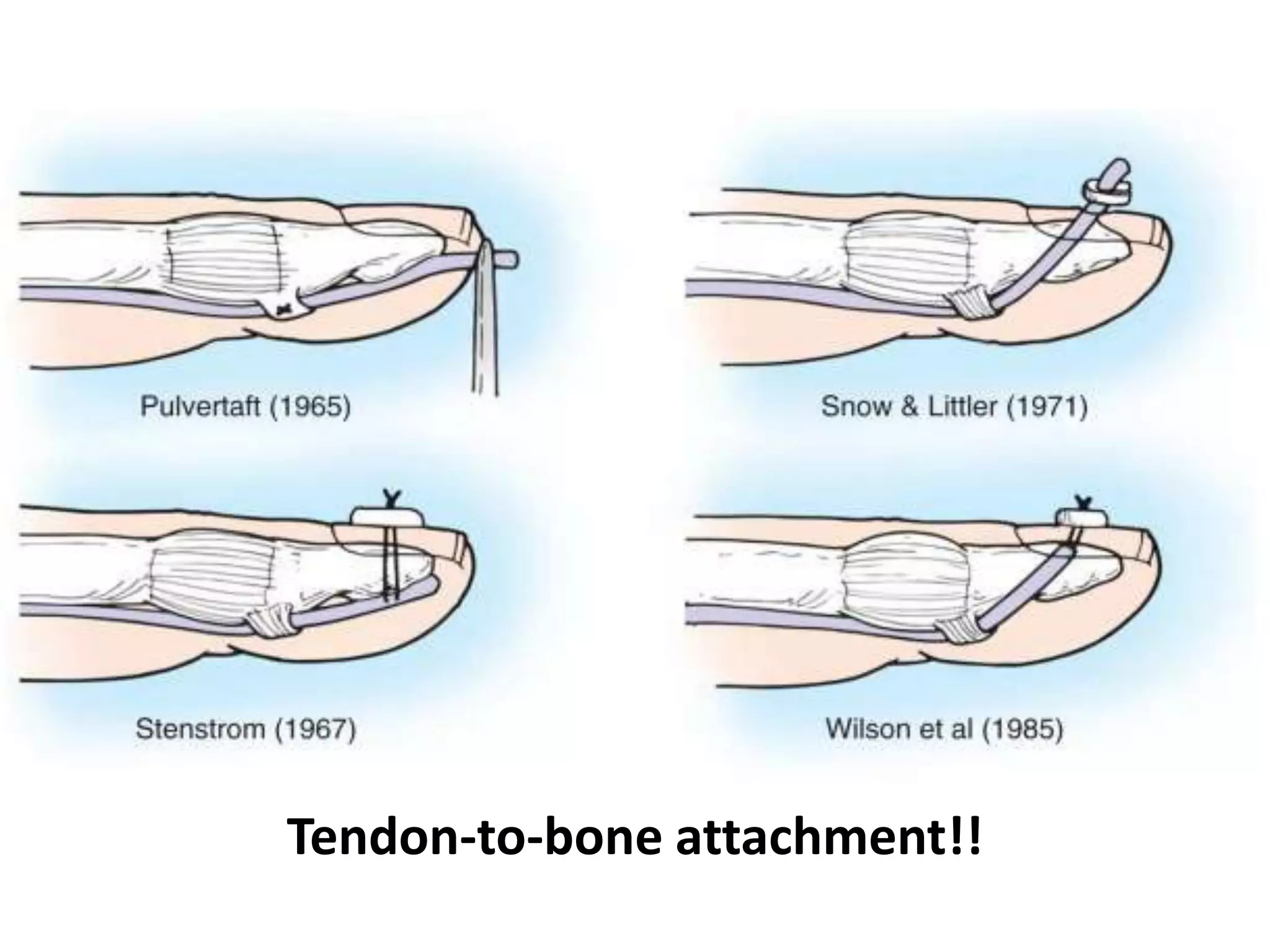
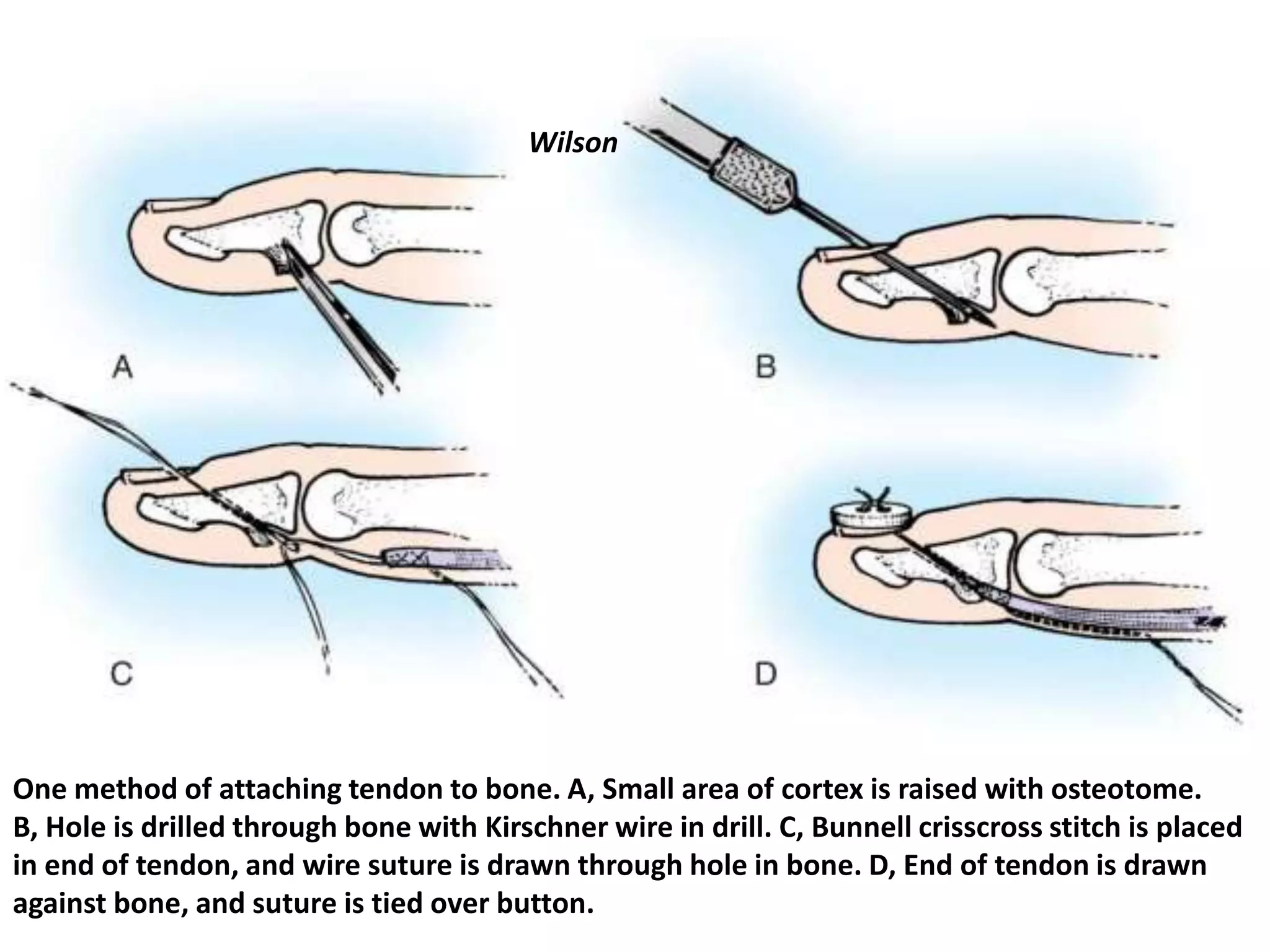
Tendon-to-bone attachment!!
Wilson


One method of attaching tendon to bone. A, Small area of cortex is raised with osteotome.
B, Hole is drilled through bone with Kirschner wire in drill. C, Bunnell crisscross stitch is placed
in end of tendon, and wire suture is drawn through hole in bone. D, End of tendon is drawn
against bone, and suture is tied over button.
Kleinert method of
tendon advancement!!
Tendon advancement shortens the FDP & completes
  the grip before the normal fingerd and limit their
              flexion and thus week grip

             Quadrigia effect!!
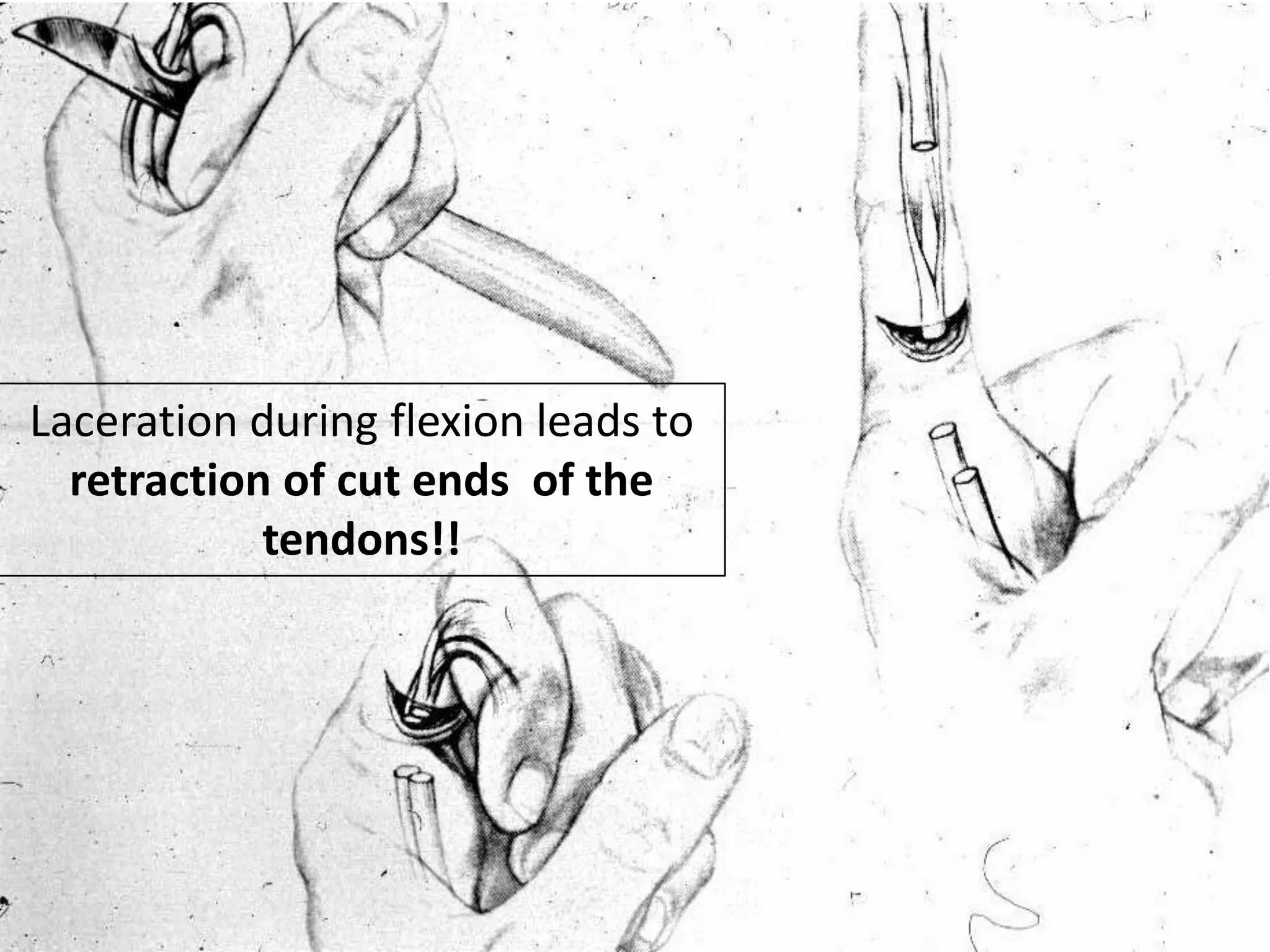
Laceration during flexion leads to
  retraction of cut ends of the
            tendons!!
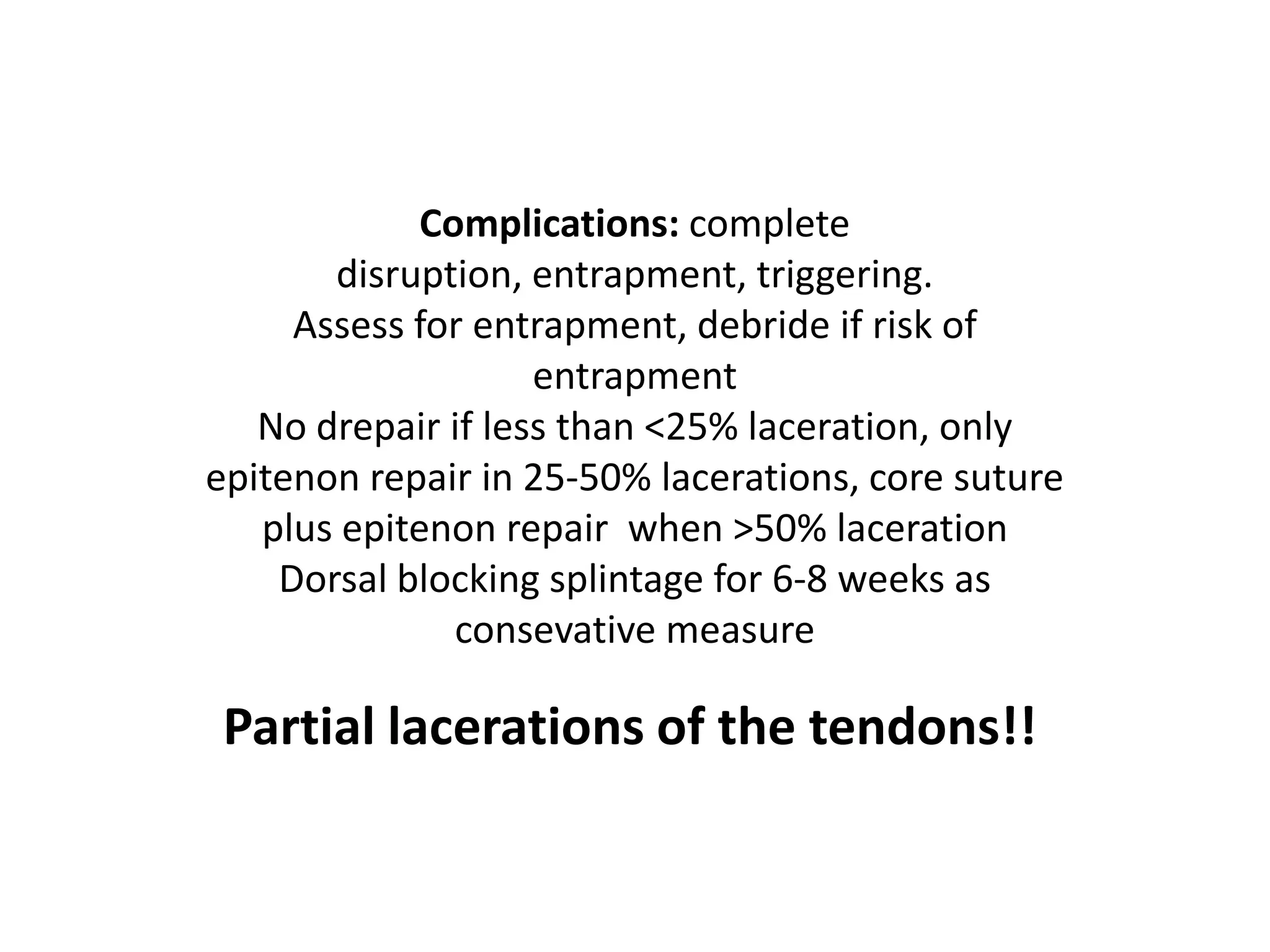
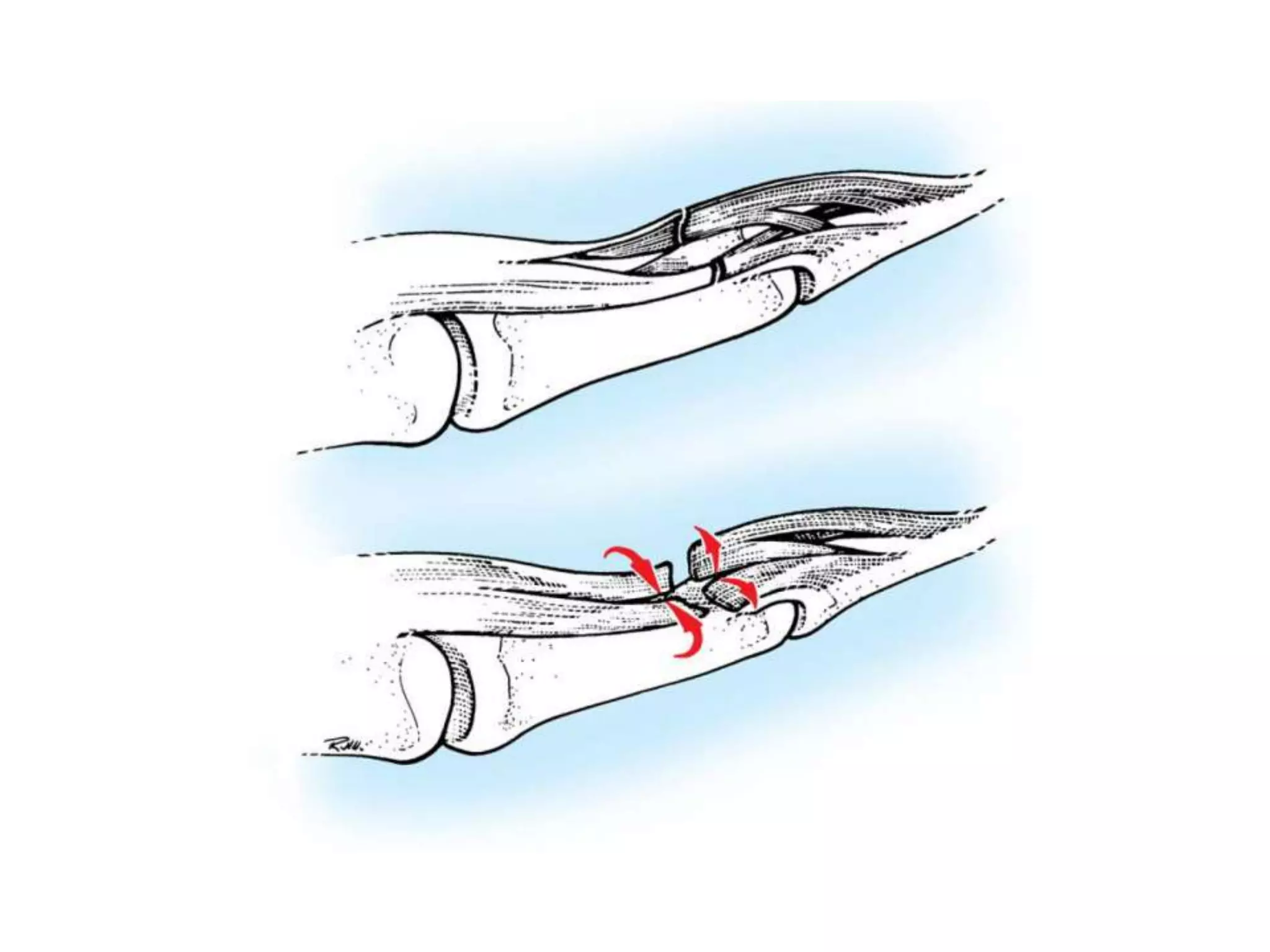
Complications: complete
       disruption, entrapment, triggering.
     Assess for entrapment, debride if risk of
                    entrapment
   No drepair if less than <25% laceration, only
epitenon repair in 25-50% lacerations, core suture
   plus epitenon repair when >50% laceration
    Dorsal blocking splintage for 6-8 weeks as
               consevative measure

 Partial lacerations of the tendons!!
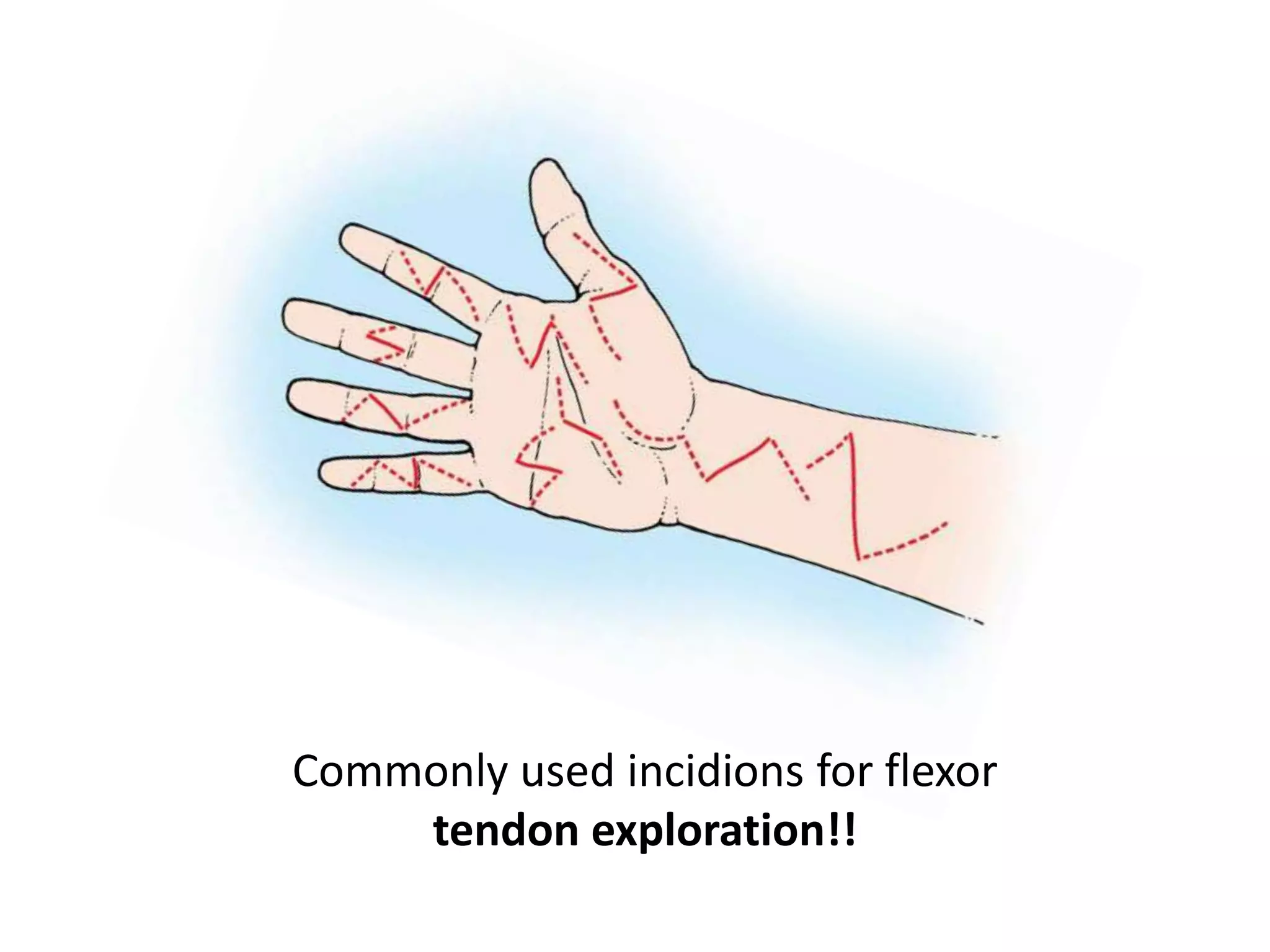
Commonly used incidions for flexor
    tendon exploration!!
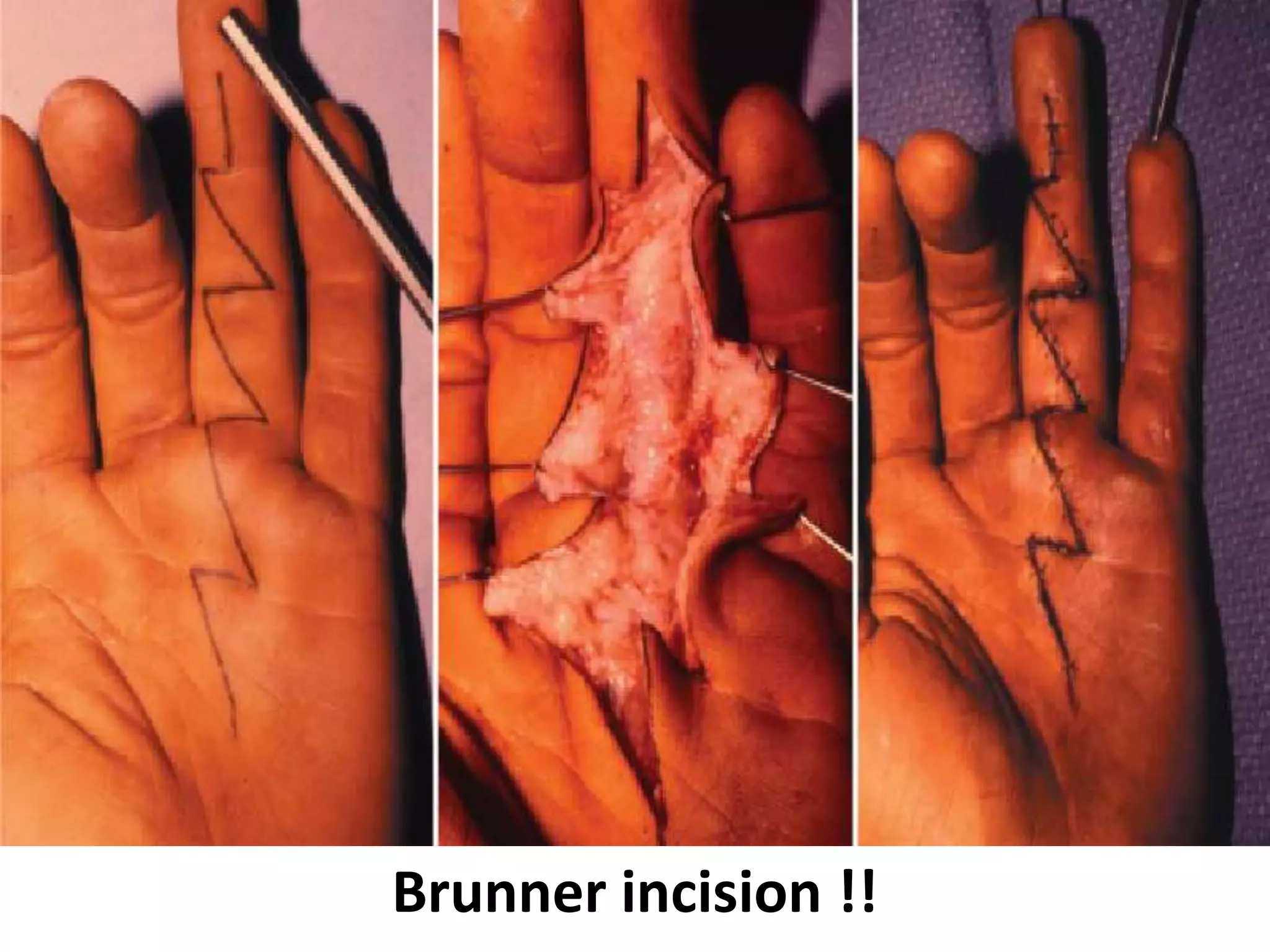
Brunner incision !!
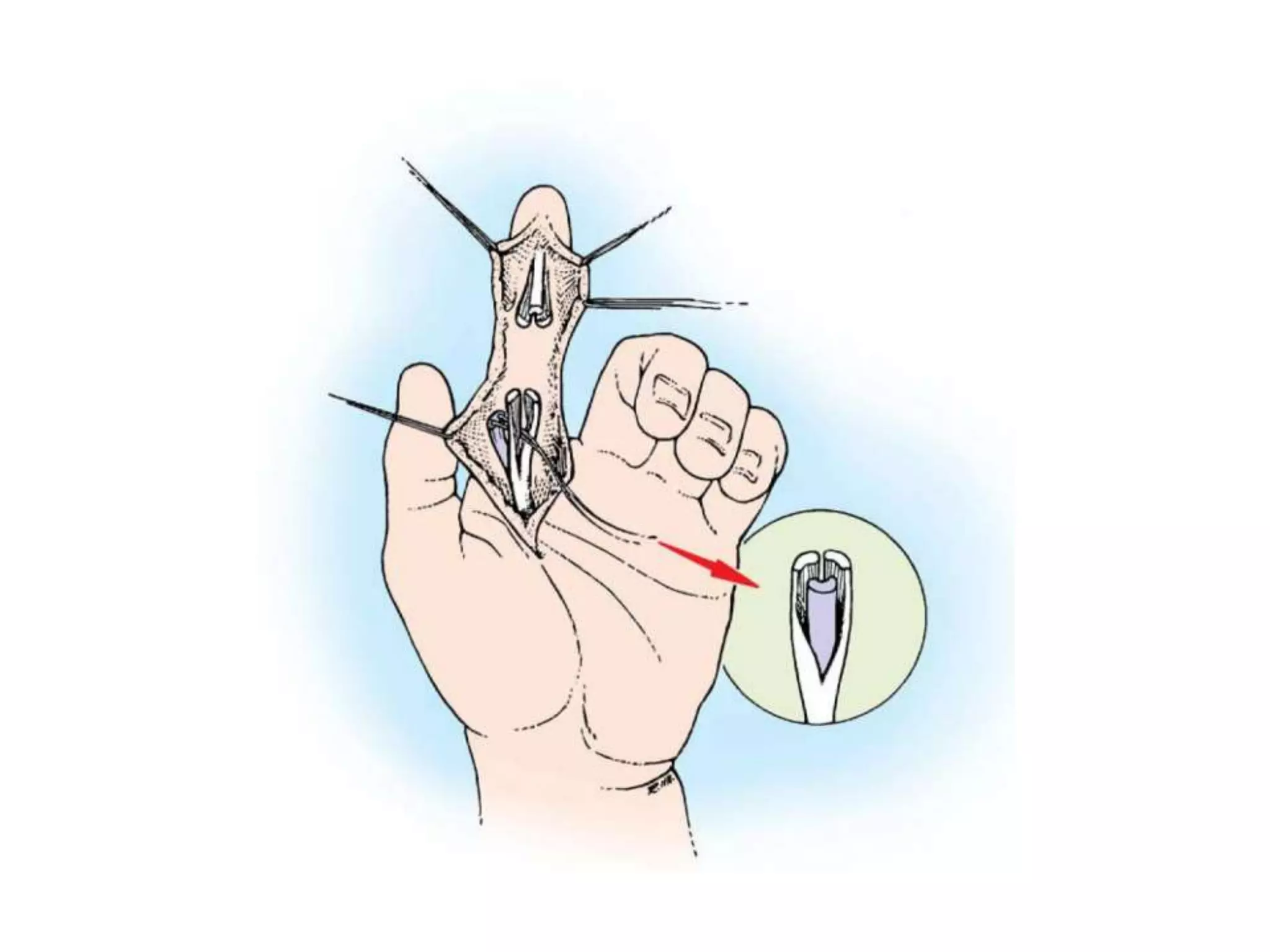
Because the blood supply to the FDP
 tendon is jeopardized if the FDS is not
also fixed (due to the vinculae anatomy)

      Repair both tendons:
Complications:
   Adhesions & stiffness requiring
      tenolysis in 18-25% cases
Tenolysis is indicated after 3 months if
  no improvement is noted for 1-2
  months extensive physiotherapy.
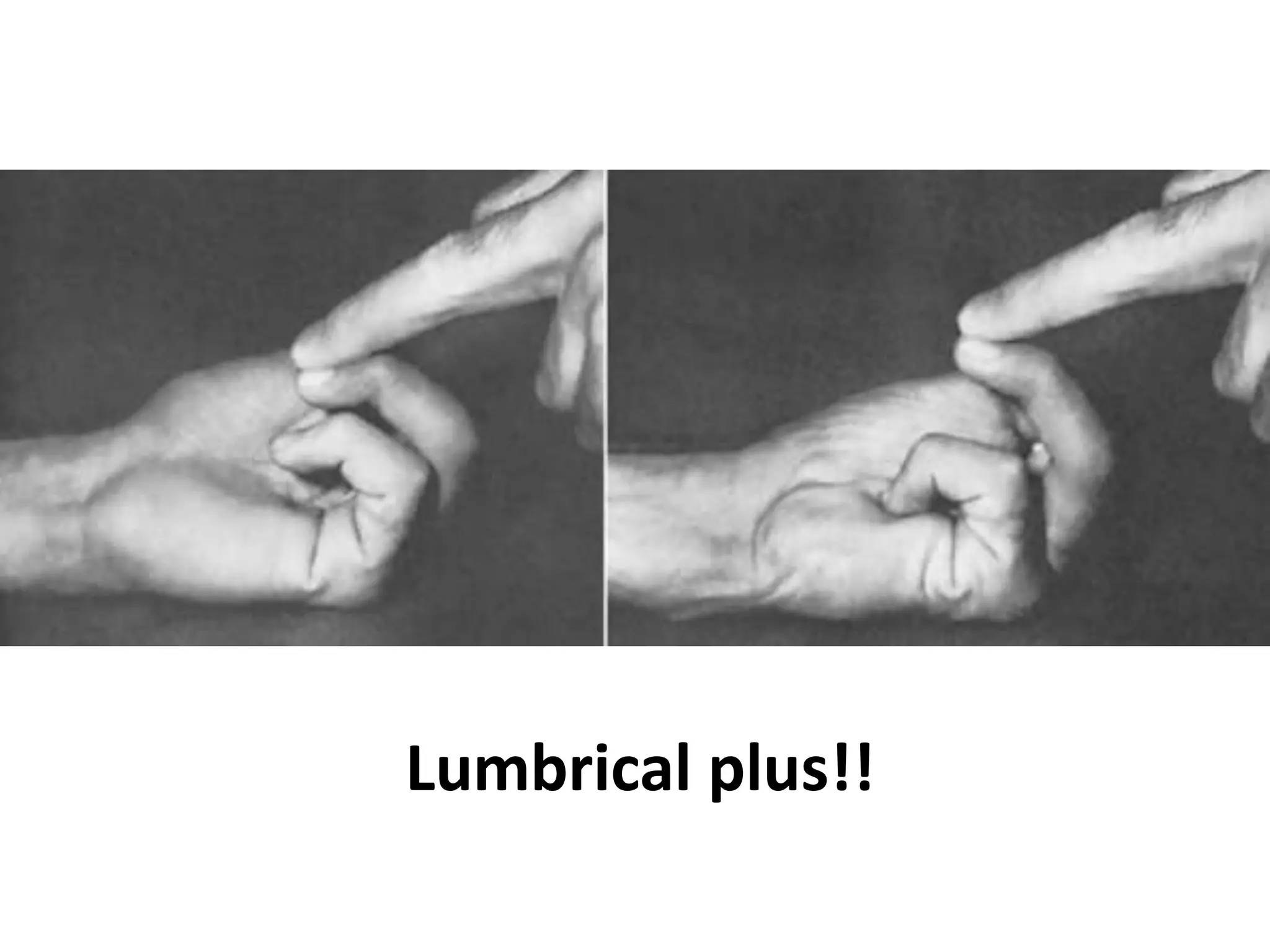
Lumbrical muscle bellies usually are not sutured
 because this can increase the tension of these
 muscles and result in a “lumbrical plus” finger
(paradoxical proximal interphalangeal extension
      on attempted active finger flexion).

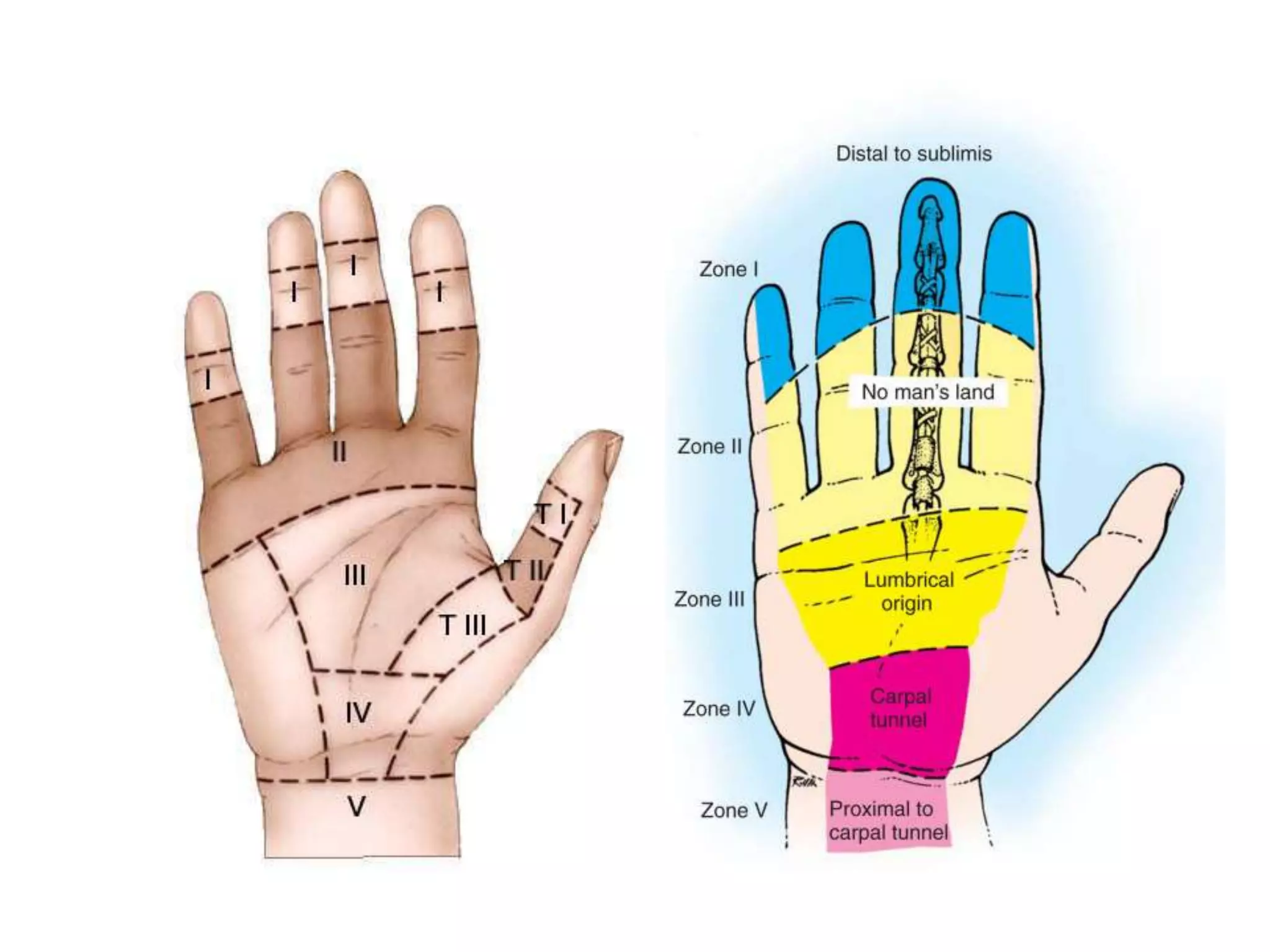
              Zone 3 injuries
Tendon repair strength:
             Core suture:
     Material, caliber, number of
strands, knot location, dorsal vs ventral
                location
         Epitendinous suture:
 Depth, locking, cross hatching, simple
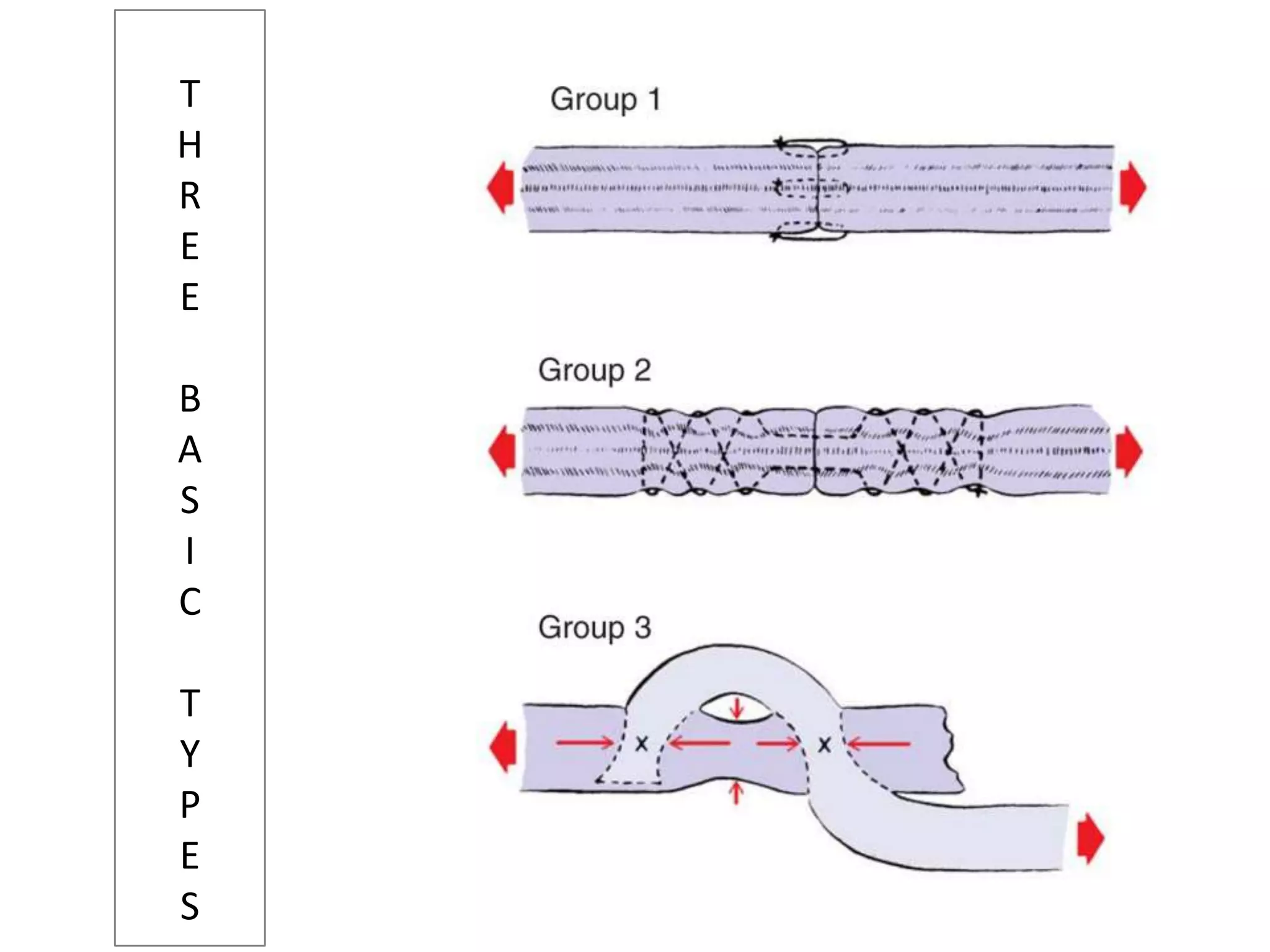
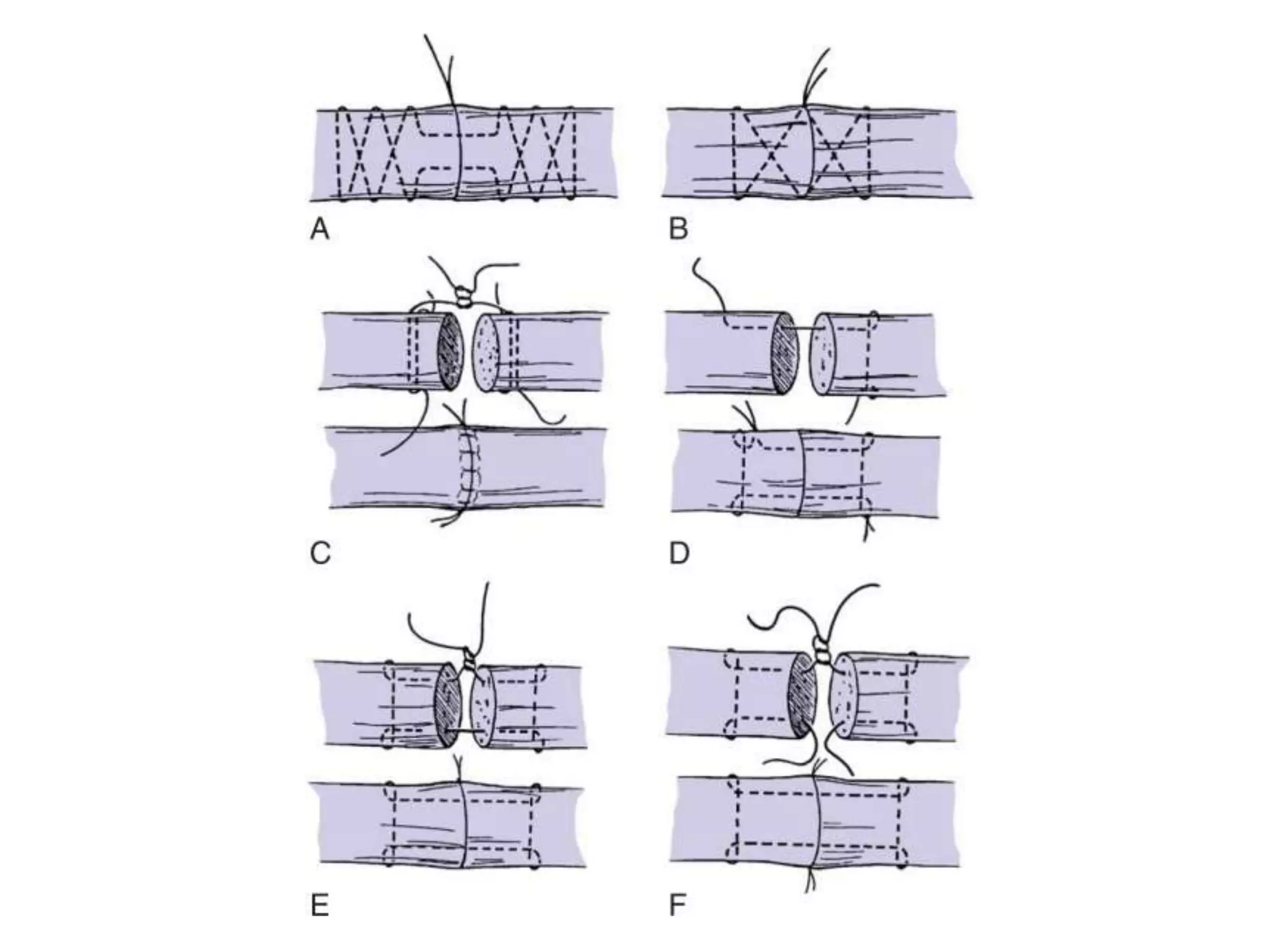
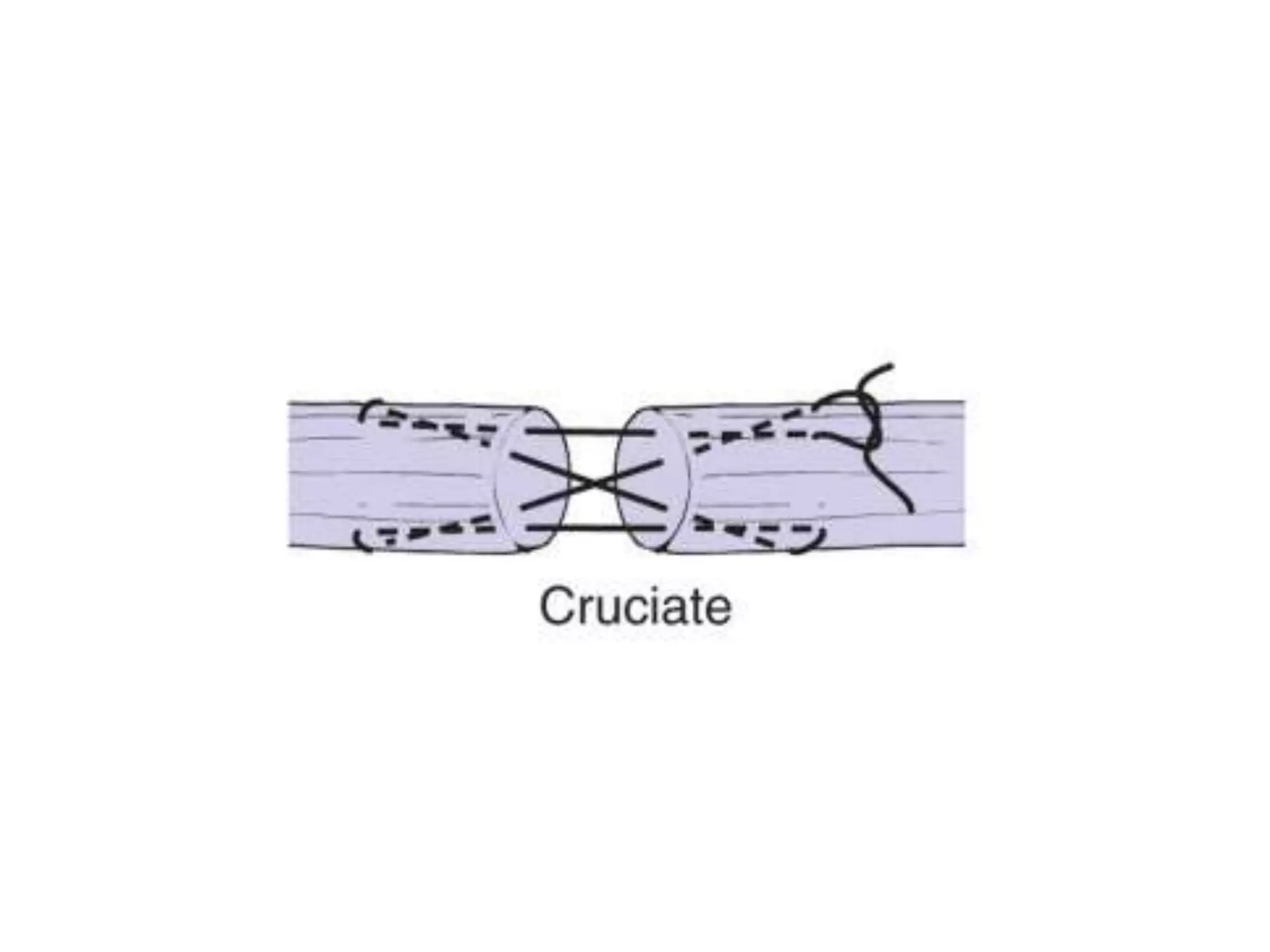
T
H
R
E
E

B
A
S
I
C

T
Y
P
E
S
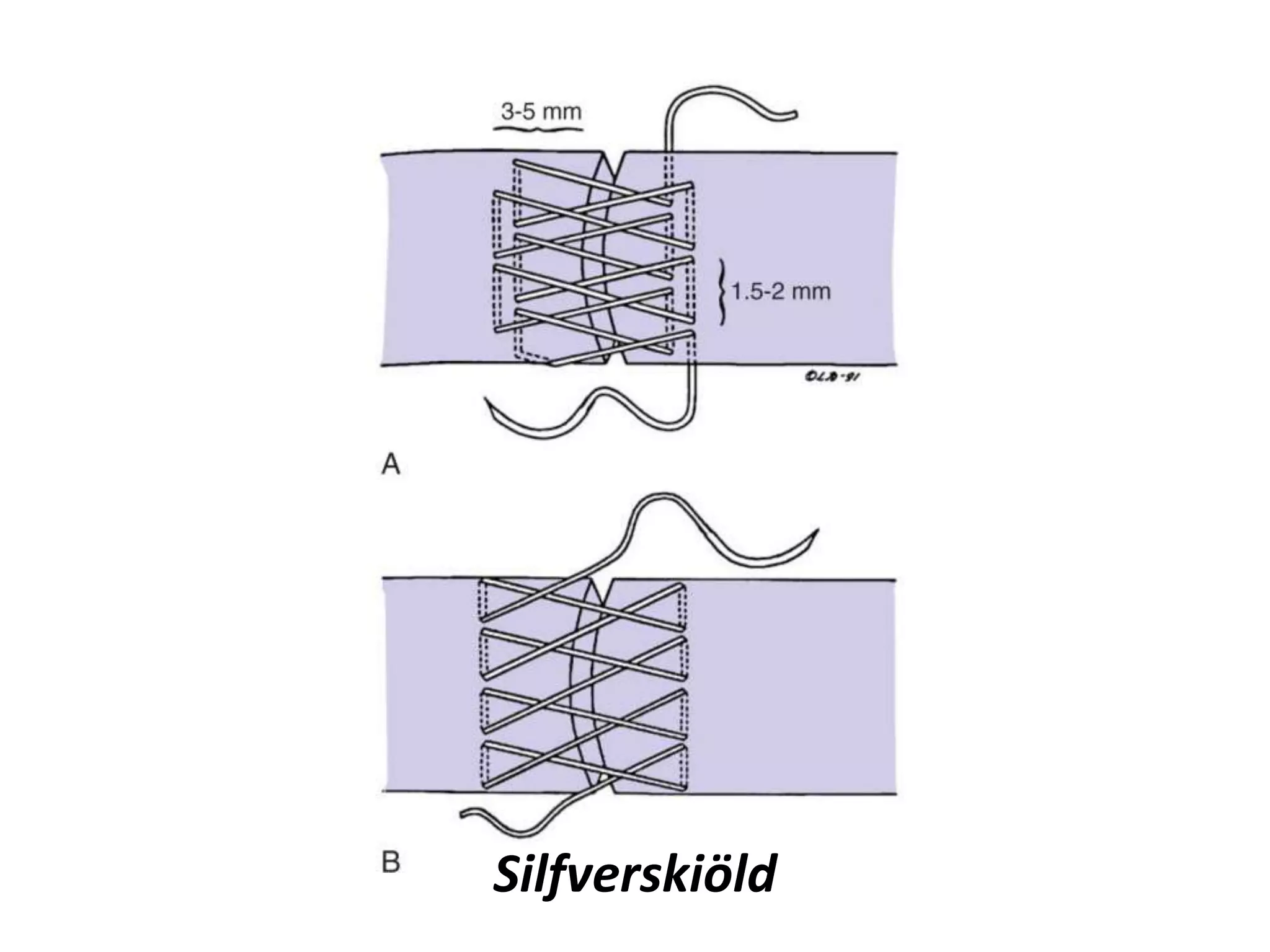
Silfverskiöld
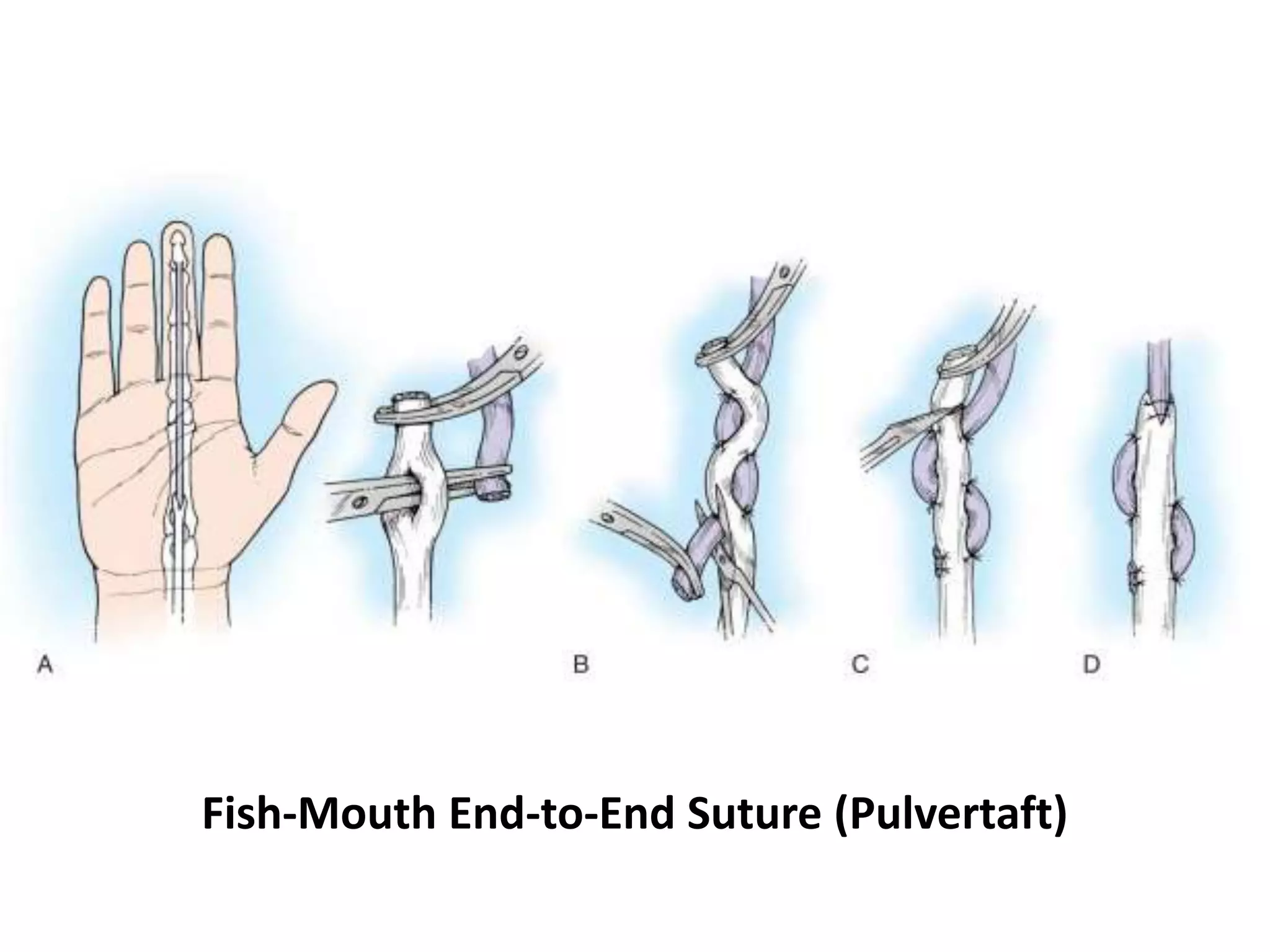
Fish-Mouth End-to-End Suture (Pulvertaft)
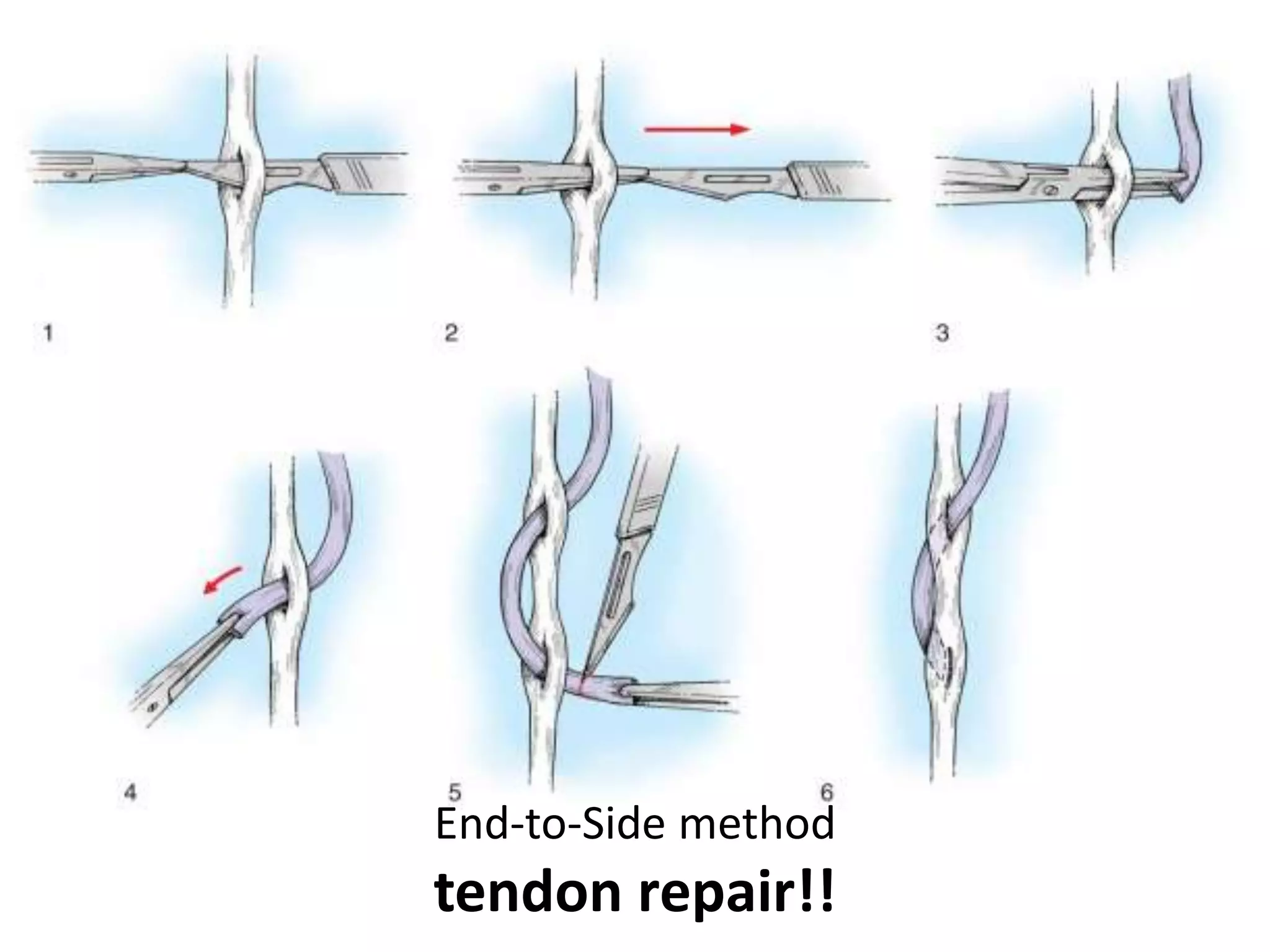
End-to-Side method
tendon repair!!
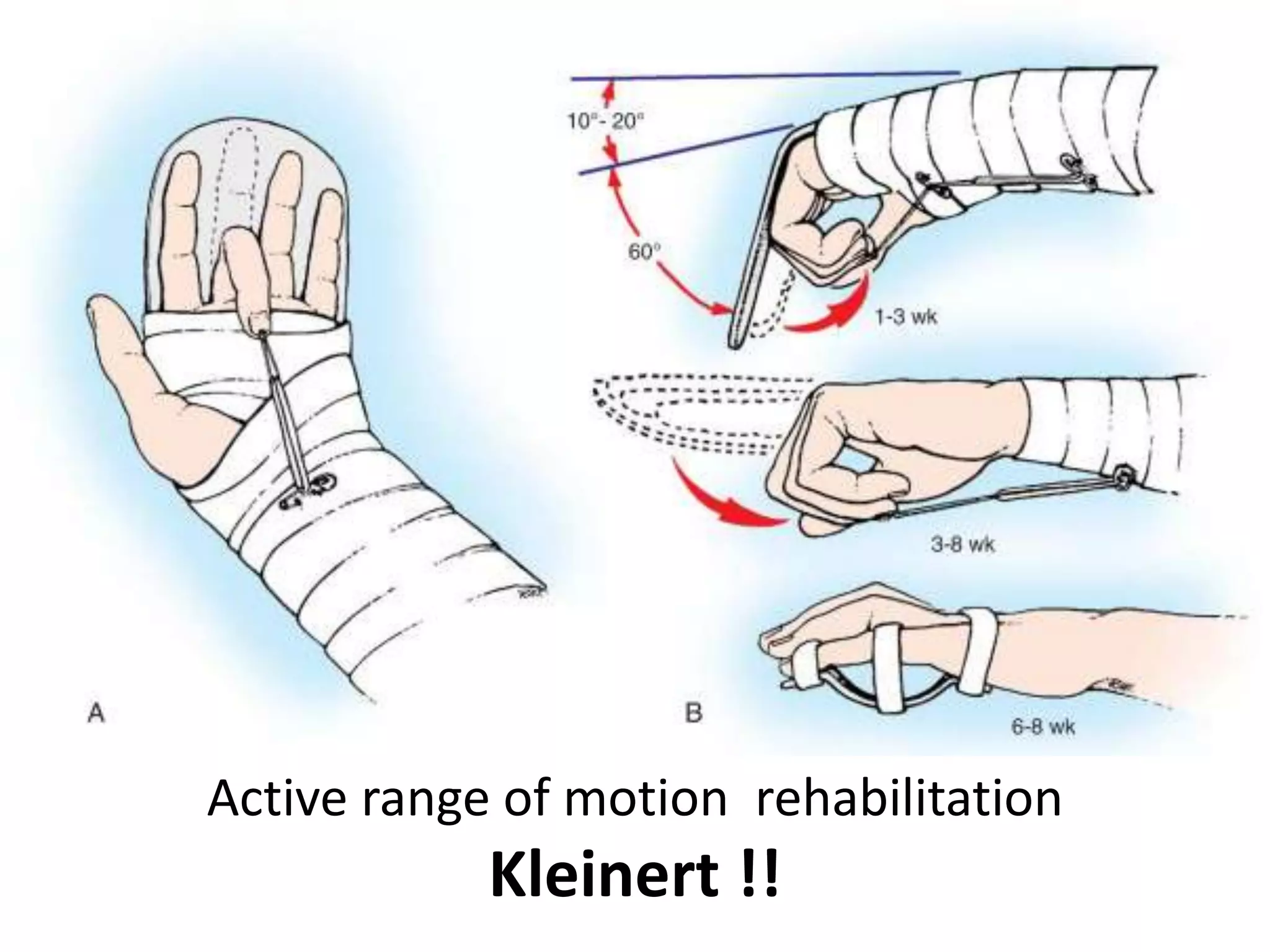
Active range of motion rehabilitation
            Kleinert !!
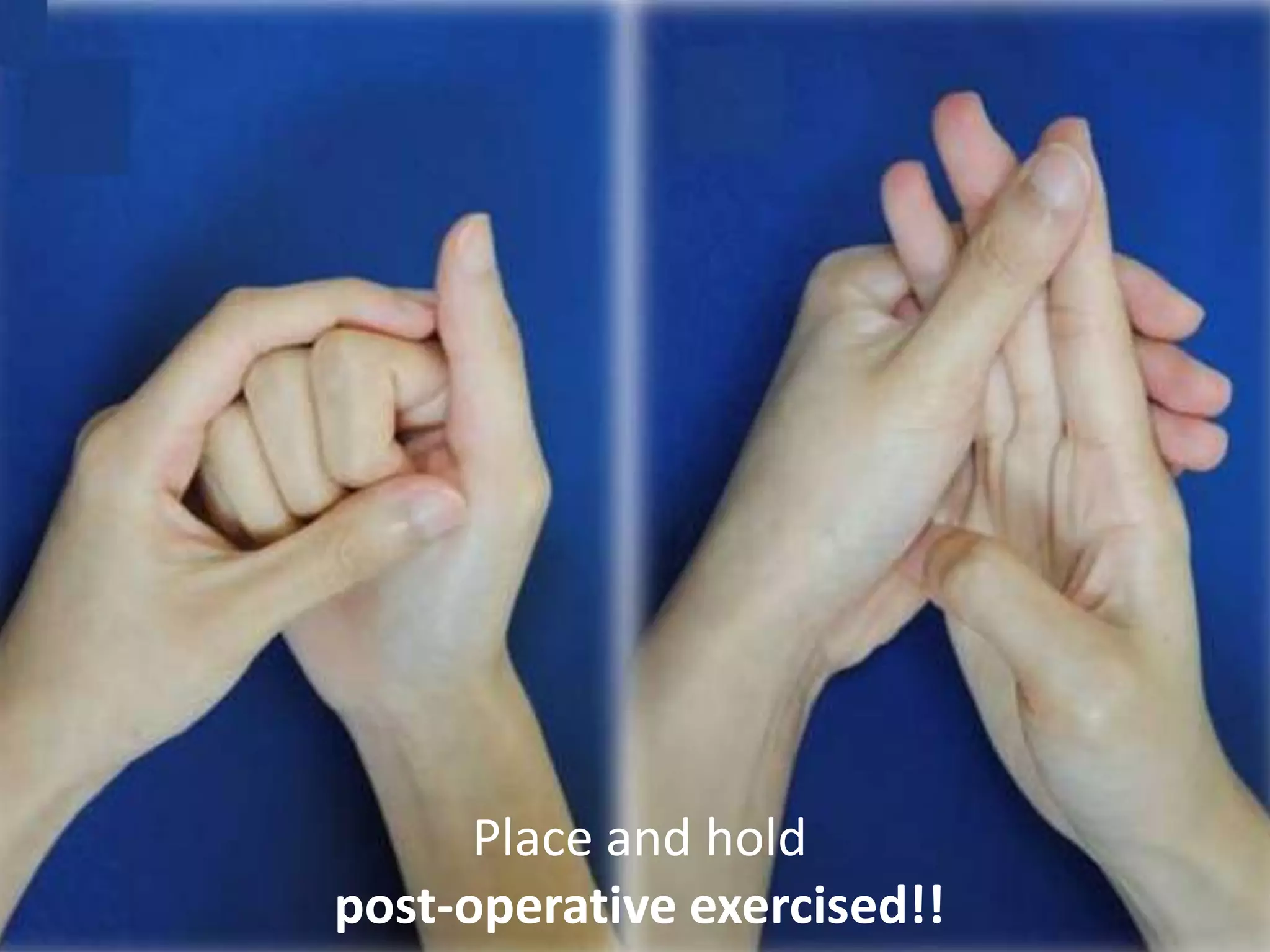
Place and hold
post-operative exercised!!
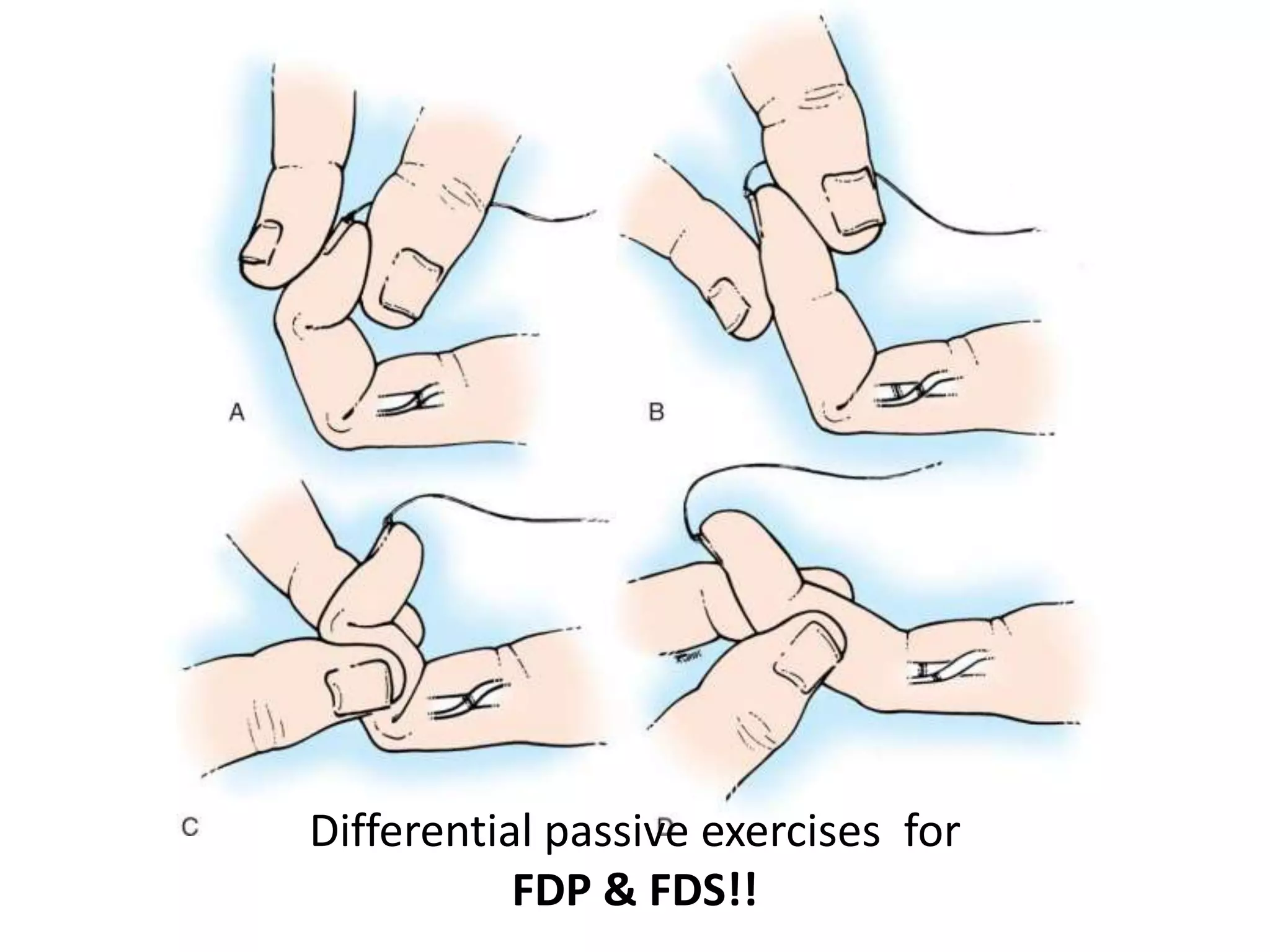
Differential passive exercises for
           FDP & FDS!!
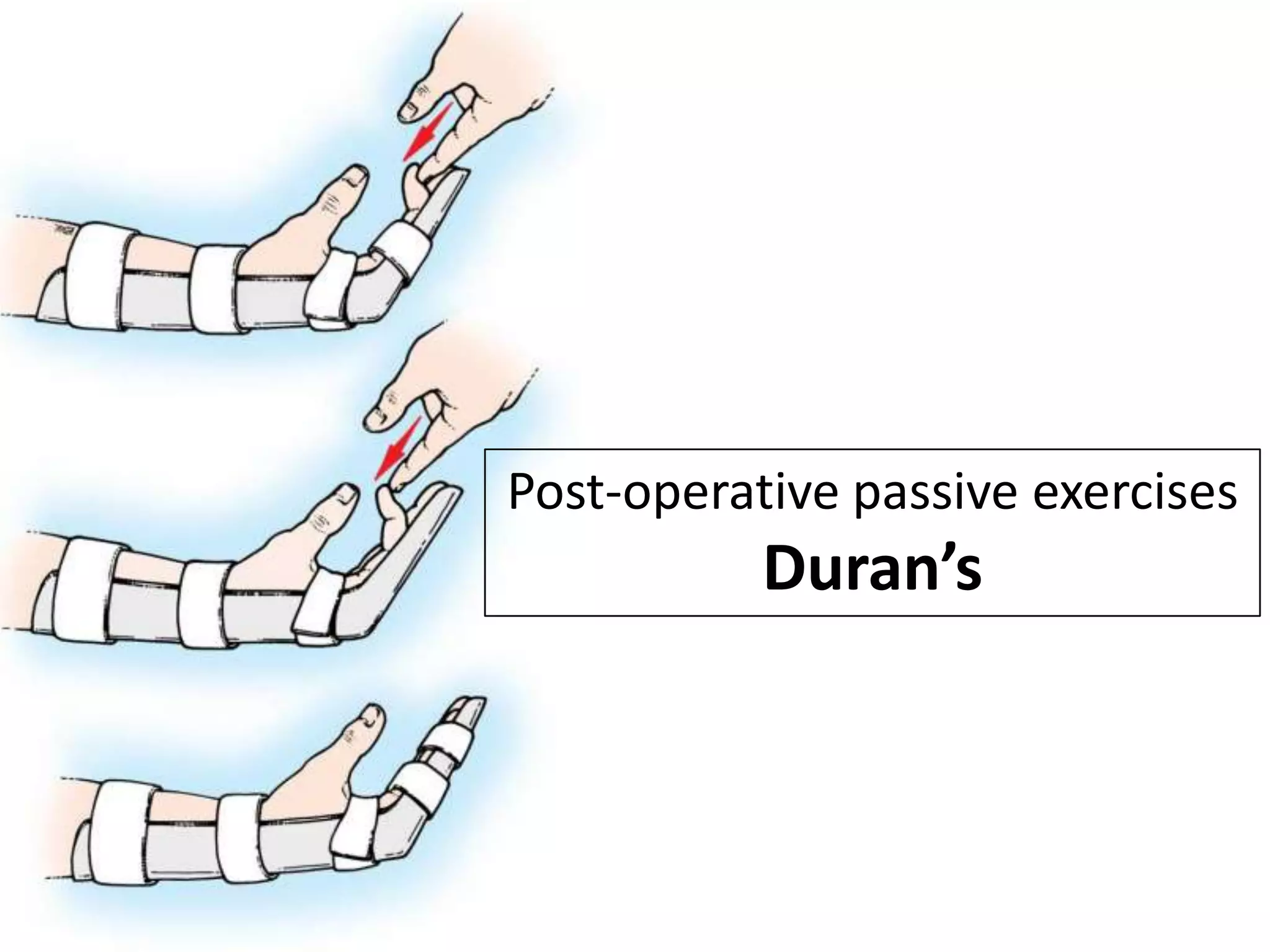
Post-operative passive exercises
           Duran’s
Lumbrical plus!!
Risk factors for adhesions:
  Composite tendon/tissue
           damage
         Gap formation
    Ischaemia due to over
 mobalizations of tendon ends
        Immobalization
   Persistant inflammation
      Secondary trauma

Flexor tendon injuries.m