PERIPHERAL NERVE INJURIES Dr. Mansoor Khan, MBBS, FCPS I, Resident Surgery, KTH, Peshawar
A N A T O M Y Connective tissue  (epineurium, perineurium, endoneurium)  Nerve tissue (axon, schwann cell)
 
A N A T O M Y EPINEURIUM PERINEURIUM ENDONEURIUM VESSELS
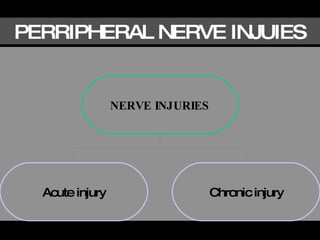
PERRIPHERAL NERVE INJUIES NERVE INJURIES Acute injury Chronic injury
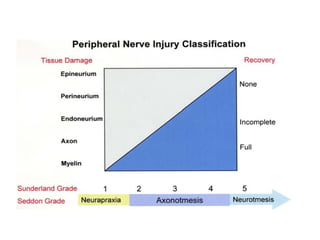
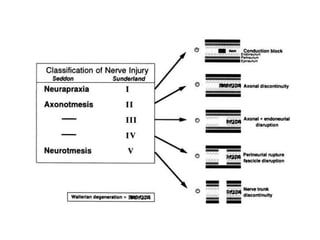
N  e  u  r  o  p r a  x  i  a Mildest form, reversible conduction block (function loss), for hours or days due to direct mechanical compression, ischemia, mild burn  trauma or stretch
A  x  o  n  t  m  e  s  i  s Axonal and myelin sheath disruption while fascicular integrity is maintained--Wallerian degeneration occurs (prognosis is good—days, weeks)
N  e  u  r  o  t  m  e  s  i  s Laceration from sharp or blunt forces causing complete disruption of the axon and supporting connective tissue---very poor prognosis without surgical repair
 
 
C l i n i c a l  S i g n s Motor function, Tinel’s sign (positive-sensory function negative (after 4-6weeks)-total interruption, Sweating-sympathetic fiber, Sensory function
Muscle atrophy start : post-injury 1 month peak : 3rd - 4th month
C h r o n i c  N e r v e  E n t r a p m e n t Paresthesia Loss  of function Pain
P a t h o p h y s i o l o g y Direct compression Segmental demyelination Wallerian degeneration(distal) Ischemia Swelling of nerve Microcompartment SD
 
C a r p a l  T u n n e l  S y n d r o m e
PREGNANCY TYPE WRITING
PAIN & PARASTHESIA DISTRIBUSION
RELEASE SURGERY
 
SUPRA-CONDYLAR FRACTURE anterior displacement   M E D I A N N E R V E
Radial Nerve  Entrapment Posterior Interosseous Nerve Syndrome
RADIAL NERVE INJURY Fracture of shaft of humrus
RADIAL NERVE INJURY WRIST DROP
GUYON’S CANNAL SYNDROME   U L N A R N E R V E
CUBITAL TUNNEL SYNDROME   U L N A R N E R V E
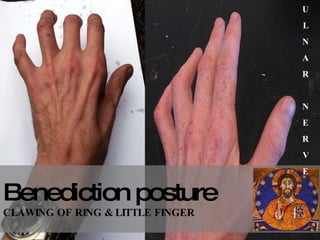
Benediction posture CLAWING OF RING & LITTLE FINGER U L N A R N E R V E
FROMENT’S SIGN   Flexior pollicus longus (median nerve) compensates for a weak adductor pollicis (ulnar nerve)   U L N A R N E R V E
CUBITAL TUNNEL SYNDROME   Ulnar nerve Release surgery   U L N A R N E R V E
COMMON PERONEAL Fracture of the head of fibula
PERONEAL NERVE INJURY SYMPTOMS Decreased sensation, Slapping gait, foot drop, toes drag
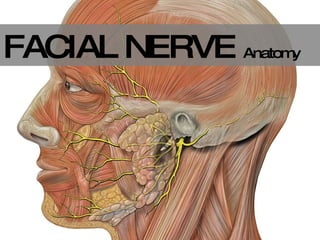
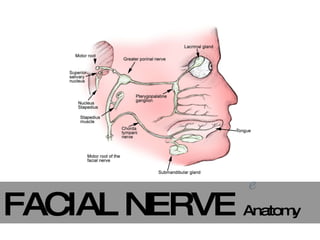
FACIAL NERVE  Anatomy
FACIAL NERVE PALSY  LOSS OF FRONING, DROOPING, EYEBROW DROP
C o n s e r v a t i v e  t r e a t m e n t  Indications Short history, mild-moderate, intermittent,  reversible cause (pregnancy, oral contraceptive, endocrine abnormalities, type writer)  Method Non-steroidal anti-inflammatory drugs, splint
T  r  e  a  t  m  e  n  t Time of operation Open injury Closed injury Early intervention Delayed intervention Delayed intervention
S u r g i c a l  I n d i c a t i o n s Failed conservative treatment Severe injury (sensory loss, muscle atrophy, motor weakness)
E p i n e u r a l  R e p a i r
F a s c i c u l a r  R e p a i r
N e r v e  G r a f t

peripheral nerve lesions

  • 1.
    PERIPHERAL NERVE INJURIESDr. Mansoor Khan, MBBS, FCPS I, Resident Surgery, KTH, Peshawar
  • 2.
    A N AT O M Y Connective tissue (epineurium, perineurium, endoneurium) Nerve tissue (axon, schwann cell)
  • 3.
  • 4.
    A N AT O M Y EPINEURIUM PERINEURIUM ENDONEURIUM VESSELS
  • 5.
    PERRIPHERAL NERVE INJUIESNERVE INJURIES Acute injury Chronic injury
  • 6.
    N e u r o p r a x i a Mildest form, reversible conduction block (function loss), for hours or days due to direct mechanical compression, ischemia, mild burn trauma or stretch
  • 7.
    A x o n t m e s i s Axonal and myelin sheath disruption while fascicular integrity is maintained--Wallerian degeneration occurs (prognosis is good—days, weeks)
  • 8.
    N e u r o t m e s i s Laceration from sharp or blunt forces causing complete disruption of the axon and supporting connective tissue---very poor prognosis without surgical repair
  • 9.
  • 10.
  • 11.
    C l in i c a l S i g n s Motor function, Tinel’s sign (positive-sensory function negative (after 4-6weeks)-total interruption, Sweating-sympathetic fiber, Sensory function
  • 12.
    Muscle atrophy start: post-injury 1 month peak : 3rd - 4th month
  • 13.
    C h ro n i c N e r v e E n t r a p m e n t Paresthesia Loss of function Pain
  • 14.
    P a th o p h y s i o l o g y Direct compression Segmental demyelination Wallerian degeneration(distal) Ischemia Swelling of nerve Microcompartment SD
  • 15.
  • 16.
    C a rp a l T u n n e l S y n d r o m e
  • 17.
  • 18.
    PAIN & PARASTHESIADISTRIBUSION
  • 19.
  • 20.
  • 21.
    SUPRA-CONDYLAR FRACTURE anteriordisplacement M E D I A N N E R V E
  • 22.
    Radial Nerve Entrapment Posterior Interosseous Nerve Syndrome
  • 23.
    Radial Nerve Entrapment Posterior Interosseous Nerve Syndrome
  • 24.
    RADIAL NERVE INJURYFracture of shaft of humrus
  • 25.
  • 26.
    GUYON’S CANNAL SYNDROME U L N A R N E R V E
  • 27.
    CUBITAL TUNNEL SYNDROME U L N A R N E R V E
  • 28.
    CUBITAL TUNNEL SYNDROME U L N A R N E R V E
  • 29.
    Benediction posture CLAWINGOF RING & LITTLE FINGER U L N A R N E R V E
  • 30.
    FROMENT’S SIGN Flexior pollicus longus (median nerve) compensates for a weak adductor pollicis (ulnar nerve) U L N A R N E R V E
  • 31.
    CUBITAL TUNNEL SYNDROME Ulnar nerve Release surgery U L N A R N E R V E
  • 32.
    COMMON PERONEAL Fractureof the head of fibula
  • 33.
    PERONEAL NERVE INJURYSYMPTOMS Decreased sensation, Slapping gait, foot drop, toes drag
  • 34.
  • 35.
  • 36.
    FACIAL NERVE PALSY LOSS OF FRONING, DROOPING, EYEBROW DROP
  • 37.
    C o ns e r v a t i v e t r e a t m e n t Indications Short history, mild-moderate, intermittent, reversible cause (pregnancy, oral contraceptive, endocrine abnormalities, type writer) Method Non-steroidal anti-inflammatory drugs, splint
  • 38.
    T r e a t m e n t Time of operation Open injury Closed injury Early intervention Delayed intervention Delayed intervention
  • 39.
    S u rg i c a l I n d i c a t i o n s Failed conservative treatment Severe injury (sensory loss, muscle atrophy, motor weakness)
  • 40.
    E p in e u r a l R e p a i r
  • 41.
    F a sc i c u l a r R e p a i r
  • 42.
    N e rv e G r a f t