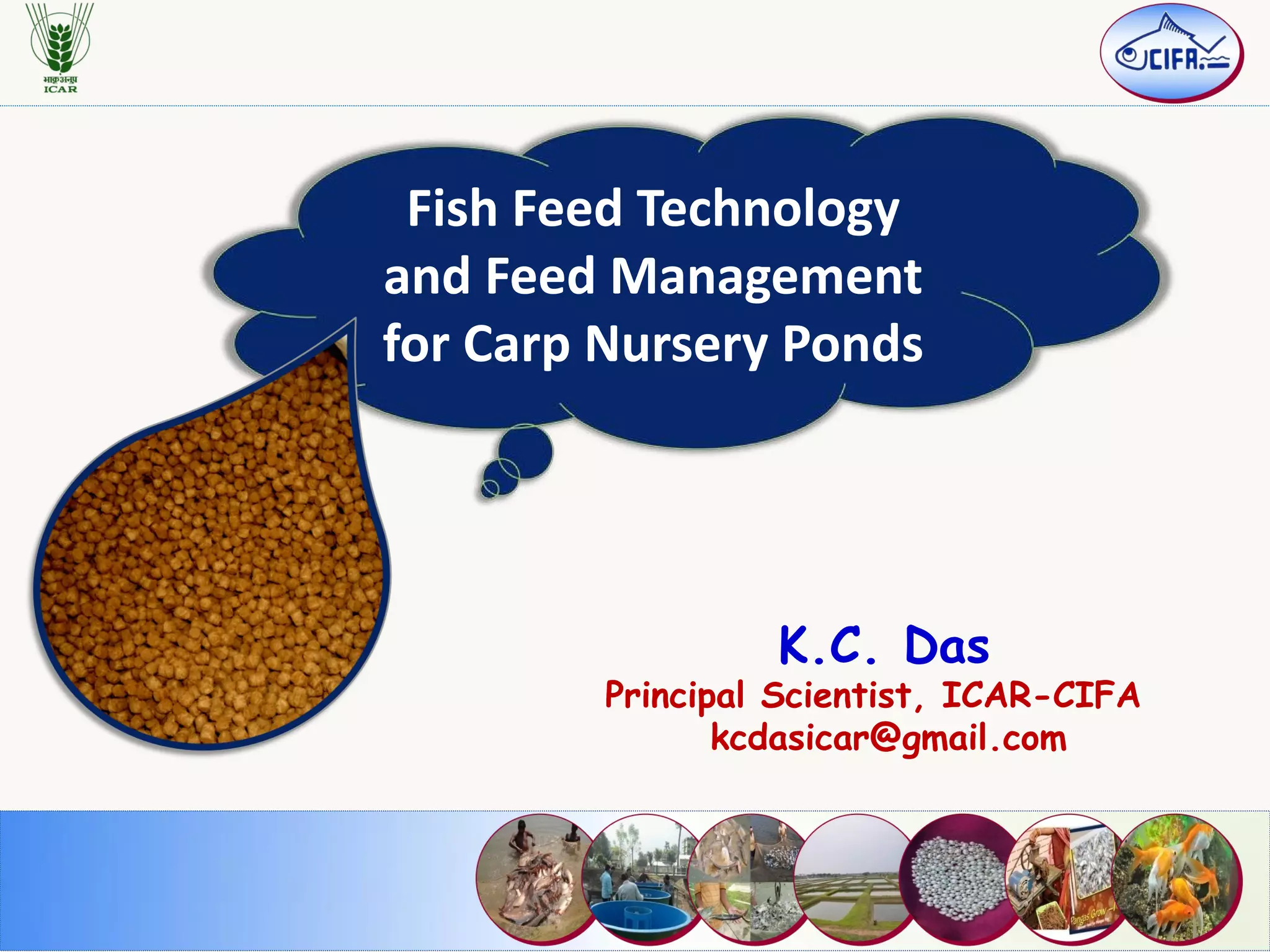
Fish Feed Technology
and Feed Management
for Carp Nursery Ponds
K.C. Das
Principal Scientist, ICAR-CIFA
kcdasicar@gmail.com
Aquaculture
Fish production in India has grown more than 14-folds from
0.752 MT in 1950-51 to 10.79 MT in 2015-16 (DAHDF, 2016-17).
Indian aquaculture which contributed about 36% of total fish
production in 1980 has increased more than 53%.(FAO, 2016)
Aquaculture share may rise up to 62% by 2030 (FAO, Projected)
As the aquaculture grows, there is increasing aqua feed demand
in the market. This has also given rise to the wide expansion of
feed industry.
India, Fish feed
scenario
It is estimated that, 1.50 MT is used as industrially manufactured
feeds and 3.50 MT is used as farm made feed during 2017-18.
Requirement of manufactured feed was 7 MT during 2017-18
(Yes Bank report) and requirement is high during 2019-20.
There is huge scope of aqua feed Industry in India. Feed based
aquaculture improves FCR there by improves production.
Fish feed ingredients for freshwater
aquaculture
Feed ingredients like rice bran, wheat bran, cottonseed cake and
groundnut cake are extensively used in freshwater aquaculture .
Feed ingredients are mixed, placed in fertilizer bags and then
tied to feeding poles or ropes
No consideration of nutrient requirement and availability.
limitations of using this type of feeding are poor utilization by
fish either due to presence of anti-nutritional factors/high crude
fibre or because of insufficient processing.
Manufactured feeds are produced in Feed mill and non-
conventional feed ingredients are used in less quantity for
production of manufactured feeds.
Use of manufactured feeds are very less because of high cost.
Strategy for aquaculture production
Upgrade to feed based aquaculture more nos of
feed mill
Use of locally available ingredients for fish feed
production .
DDGS, Insect meal, Algae, til oil cake, mahua oil
cake, Babool pods, Jatropha meal, Dhanicha seeds
Use of natural growth promoters
Feed analysis laboratory for quality check up
Use of appropriate feed technology
Extrusion, Soaking, Steaming, fermentation etc.
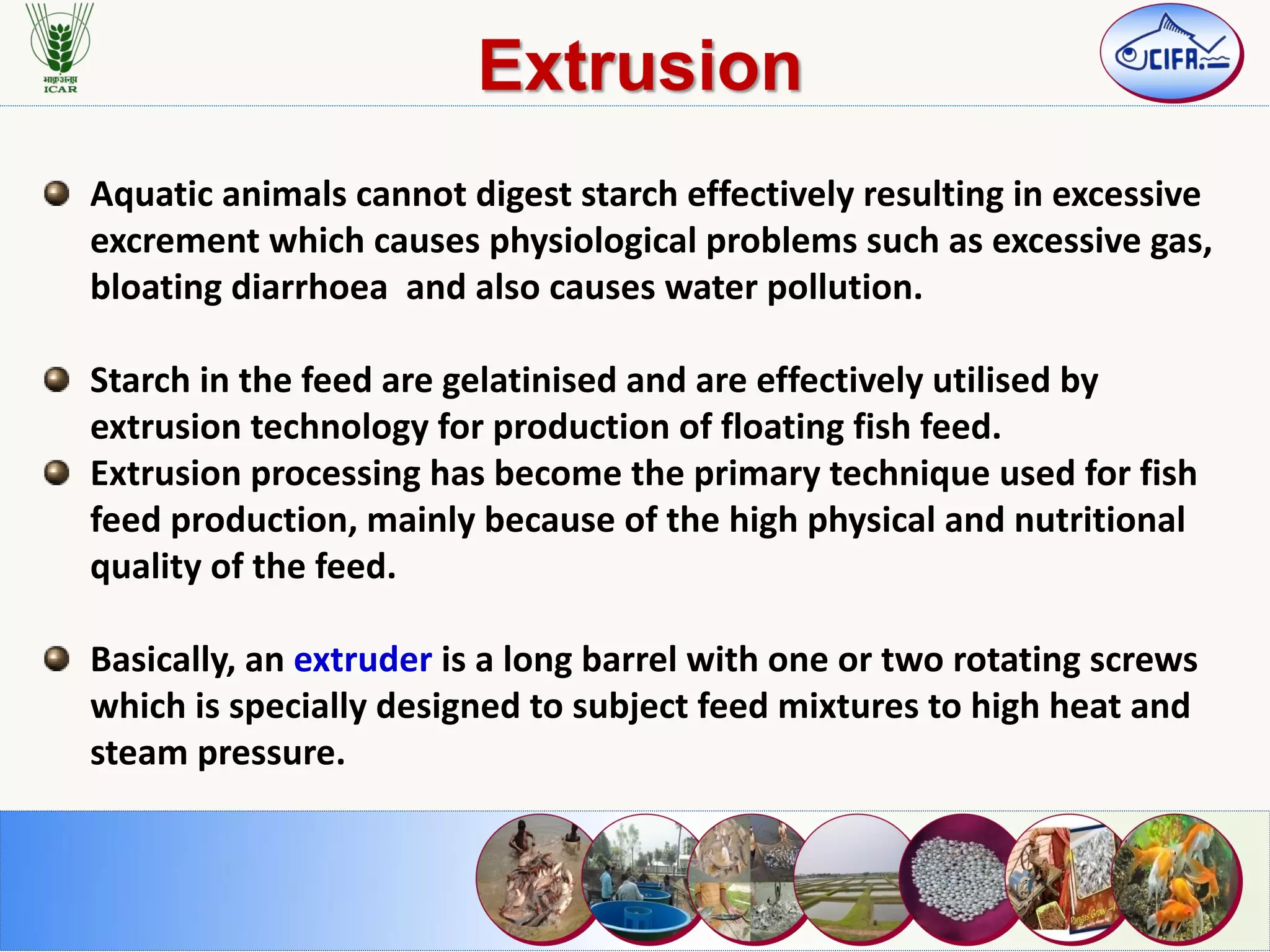
Aquatic animals cannot digest starch effectively resulting in excessive
excrement which causes physiological problems such as excessive gas,
bloating diarrhoea and also causes water pollution.
Starch in the feed are gelatinised and are effectively utilised by
extrusion technology for production of floating fish feed.
Extrusion processing has become the primary technique used for fish
feed production, mainly because of the high physical and nutritional
quality of the feed.
Basically, an extruder is a long barrel with one or two rotating screws
which is specially designed to subject feed mixtures to high heat and
steam pressure.
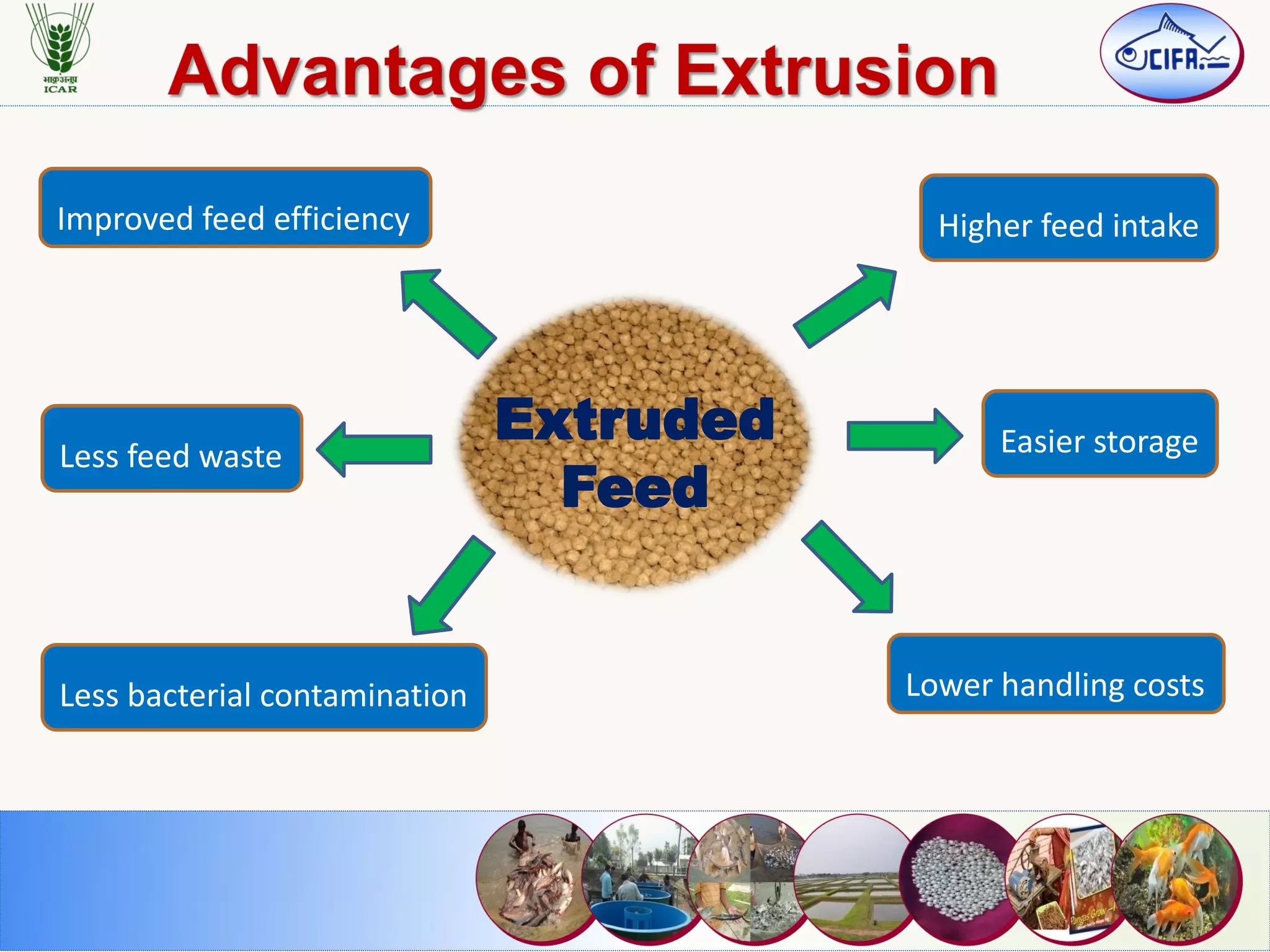
Less feed waste
Higher feed intake
Improved feed efficiency
Lower handling costs
Easier storage
Less bacterial contamination
Extruded
Feed
Floating feed by inclusion of local ingredients
Extruded Soybean feed Extruded TOC feed
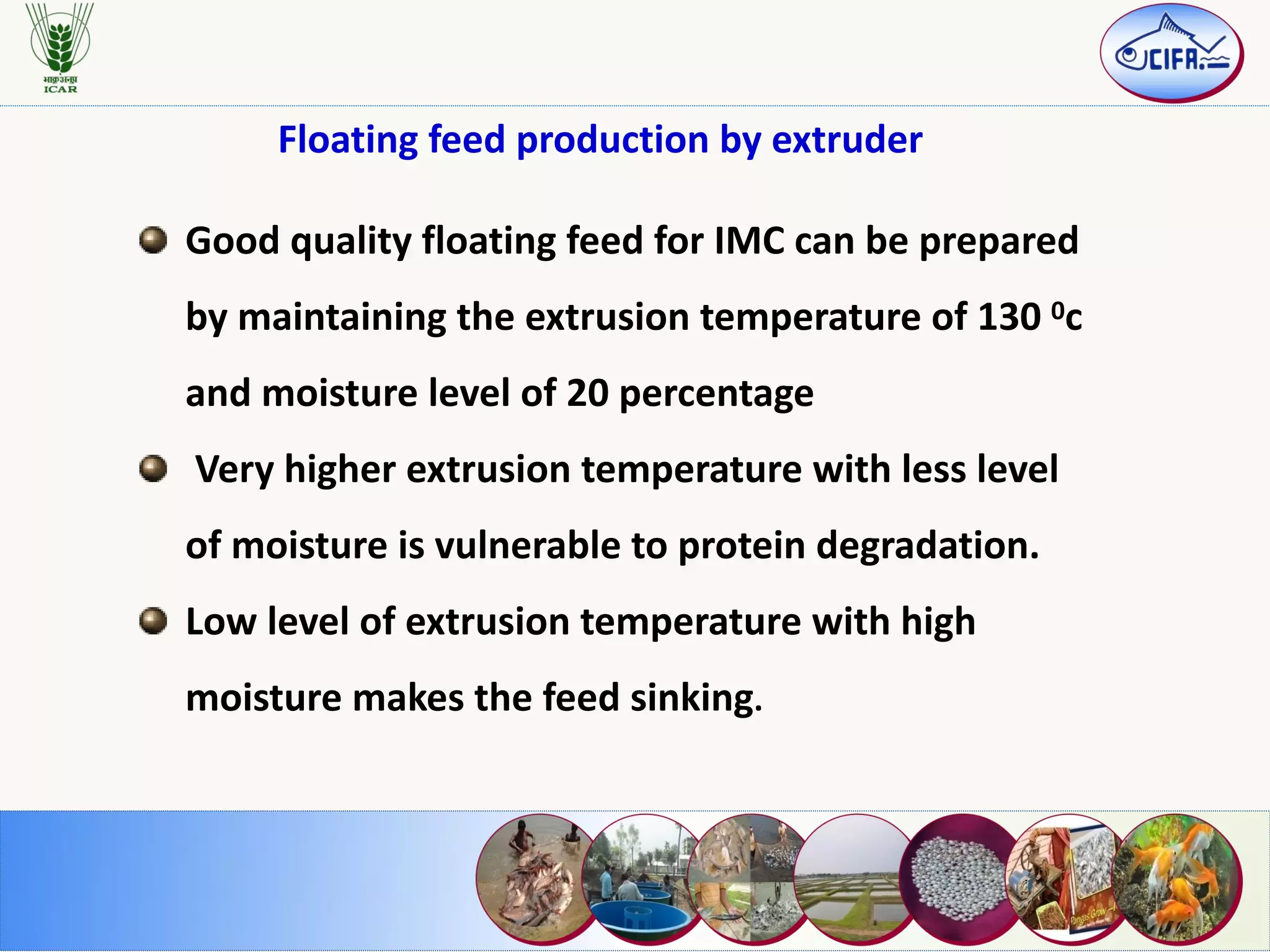
Good quality floating feed for IMC can be prepared
by maintaining the extrusion temperature of 130 0c
and moisture level of 20 percentage
Very higher extrusion temperature with less level
of moisture is vulnerable to protein degradation.
Low level of extrusion temperature with high
moisture makes the feed sinking.
Floating feed production by extruder
Soaking feed for 2 to 3 hours in water reduces
crude fiber while slightly reducing the crude
protein.
However, improved digestibility and reduction
of anti-nutritional factors are some of the
important benefits in soaking.
Feed may be soaked while preparing farm
made feeds and manufactured feeds.
Steaming feed for 1 to 2 minutes reduces
crude fiber while slightly reducing the
crude protein.
However, improved digestibility and
reduction of anti-nutritional factors are
some of the important benefits in soaking.
Feed may be steamed while preparing
farm made feeds and manufactured feeds.
Solid state fermentation can be defined as a
fermentation process carried out by
microorganisms grown on solid substrate without
the presence of free water or less water.
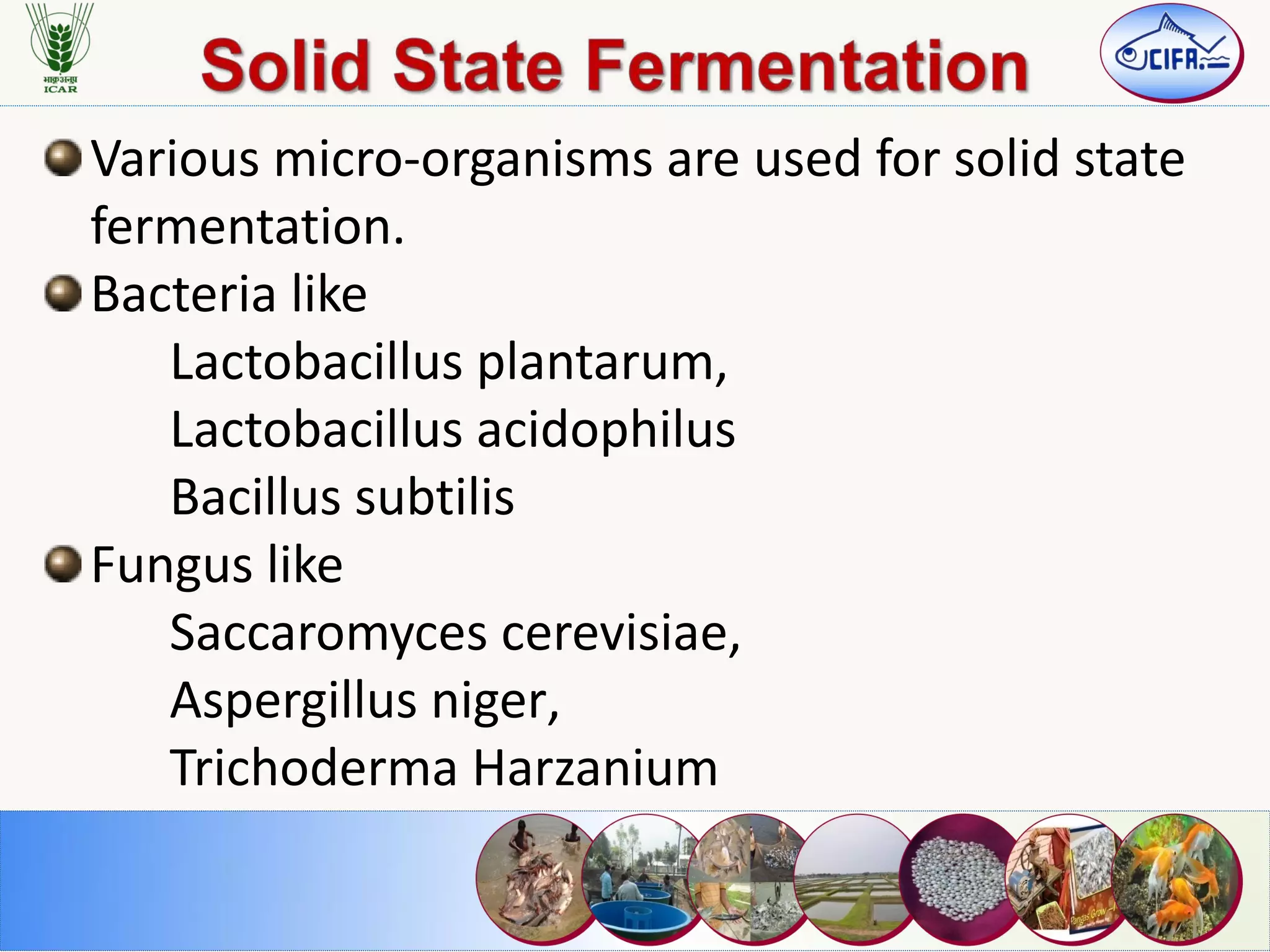
Various micro-organisms are used for solid state
fermentation.
Bacteria like
Lactobacillus plantarum,
Lactobacillus acidophilus
Bacillus subtilis
Fungus like
Saccaromyces cerevisiae,
Aspergillus niger,
Trichoderma Harzanium
ØSSF is adaptable for use in small scale processes
Ø It is a cheaper & simple technique for value addition
of local ingredients and agricultural wastes
ØMicroorganisms utilize soluble sugars and organic
acids & biosynthesize essential amino acids,
ØSynthesize fatty acids and vitamins thus enhancing
the nutrient
ØSSF e n h a n c e s d i ge st i b i l i t y by i m p rov i n g
bioavailability of nutrients
ØReduces anti-nutritional factors
Advantages of SSF in Nutrition
Fermentation of fish feed from locally
available ingredients
Fish Feeds developed by ICAR-CIFA,
Bhubaneswar
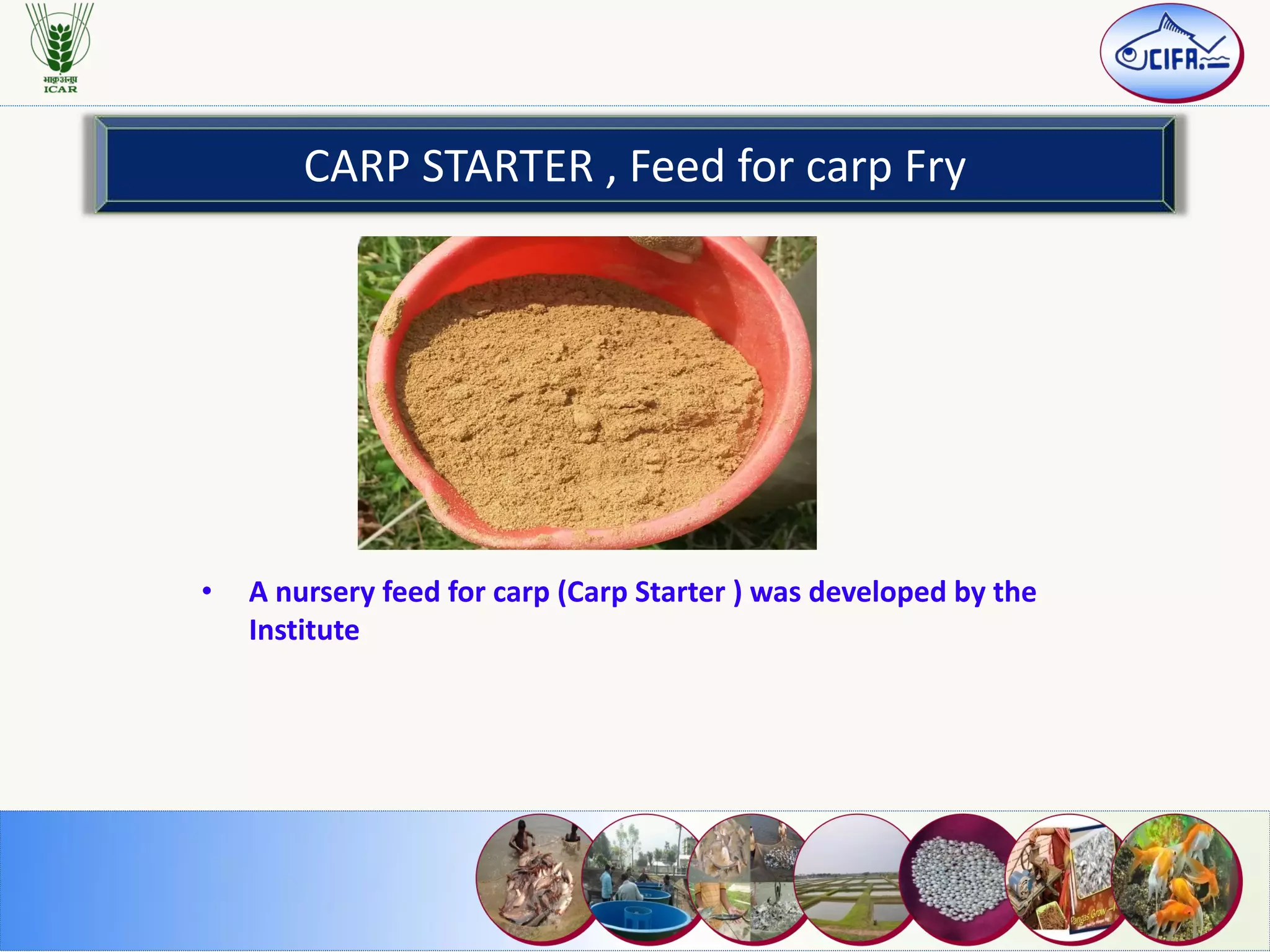
CARP STARTER , Feed for carp Fry
• A nursery feed for carp (Carp Starter ) was developed by the
Institute
Feed specifications:
Moisture: 8-10%
Crude protein: 34-35%
Crude fat:5-6%
Crude fibre:4-5%
Benefits of using CARP STARTER
Faster growth rate
Better survival
Uniform growth of fry
Production of healthy fingerlings
Demonstration in Subarnapur, Gop, Odisha
Survival was increased 20 % (40 vs 60%),
and growth 1.5 times than control
Demonstration in Boisinga, Balasore, Odisha
Survival was increased 20 % (45 vs 65%),
Growth 2 times than control
Experiment at Duba, Ganjam, Odisha
Survival was increased 30 % (35 vs 65%),
Growth 2 times than control
Experiment at Rambhila, Bhadrak , Odisha
Survival was increased 20 % (45 vs 65%),
Growth 2 times than control
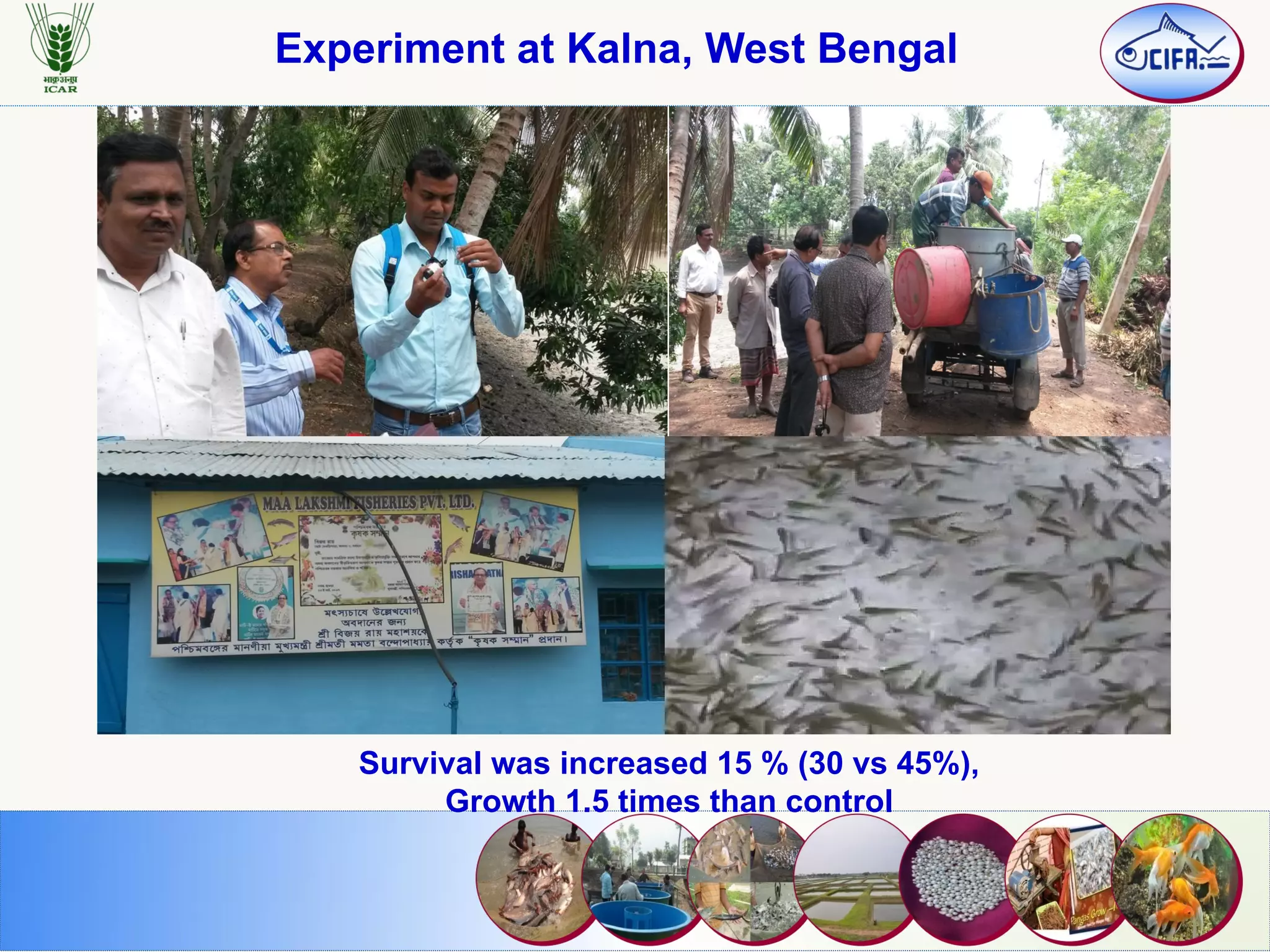
Experiment at Kalna, West Bengal
Survival was increased 15 % (30 vs 45%),
Growth 1.5 times than control
Experiment at Kapsi, Kanker (Chatisgarh)
Survival was increased 25 % (30 vs 55%),
Growth 2 times than control
Experiment at Tirga, Durg, Chatisgarh
Survival was increased 15 % (30 vs
45%),
Growth 1.5 times than control
Field Trial of Carp Starter during Phase II
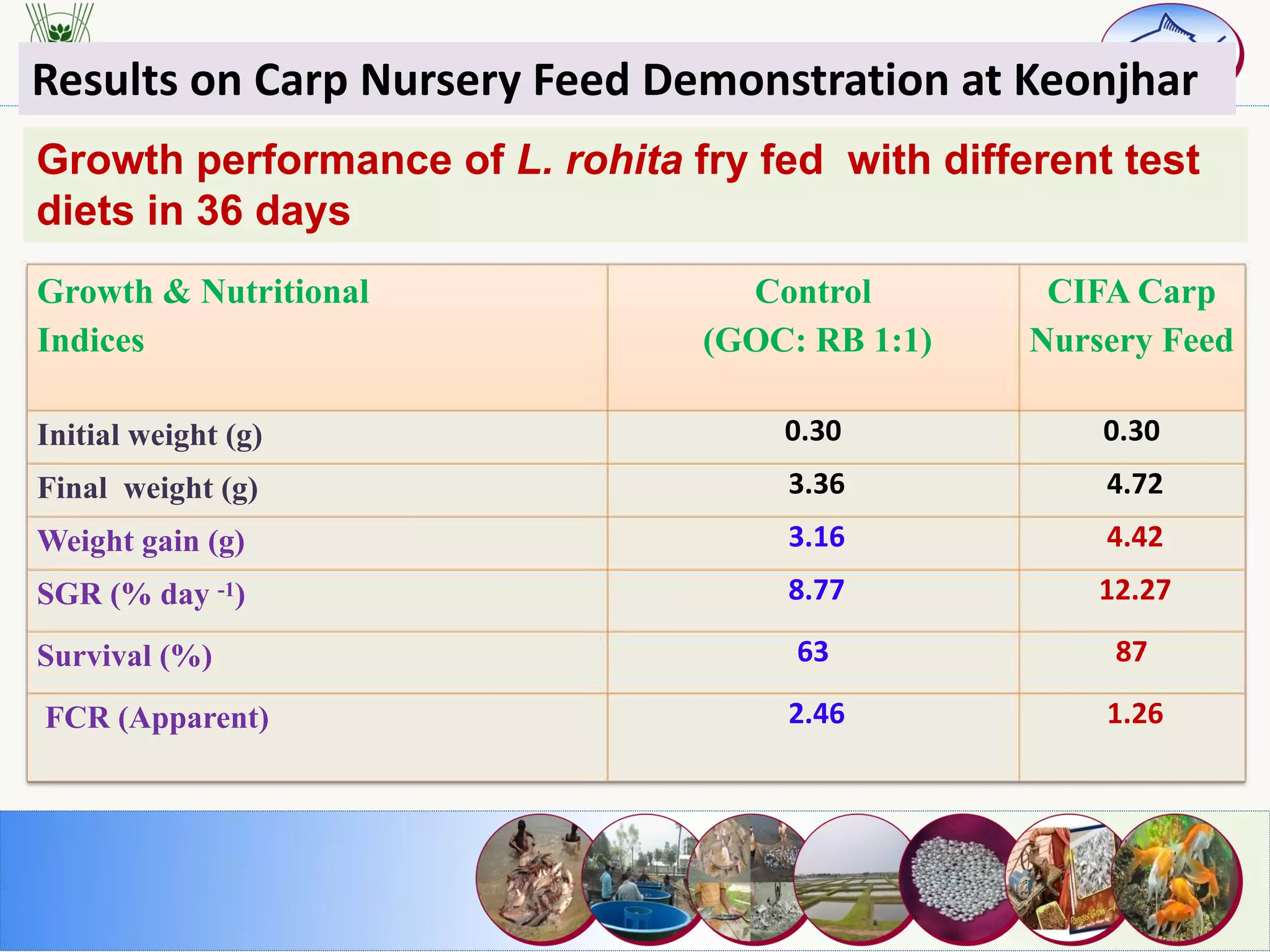
Growth performance of L. rohita fry fed with different test
diets in 36 days
Growth & Nutritional
Indices
Control
(GOC: RB 1:1)
CIFA Carp
Nursery Feed
Initial weight (g) 0.30 0.30
Final weight (g) 3.36 4.72
Weight gain (g) 3.16 4.42
SGR (% day -1) 8.77 12.27
Survival (%) 63 87
FCR (Apparent) 2.46 1.26
Results on Carp Nursery Feed Demonstration at Keonjhar
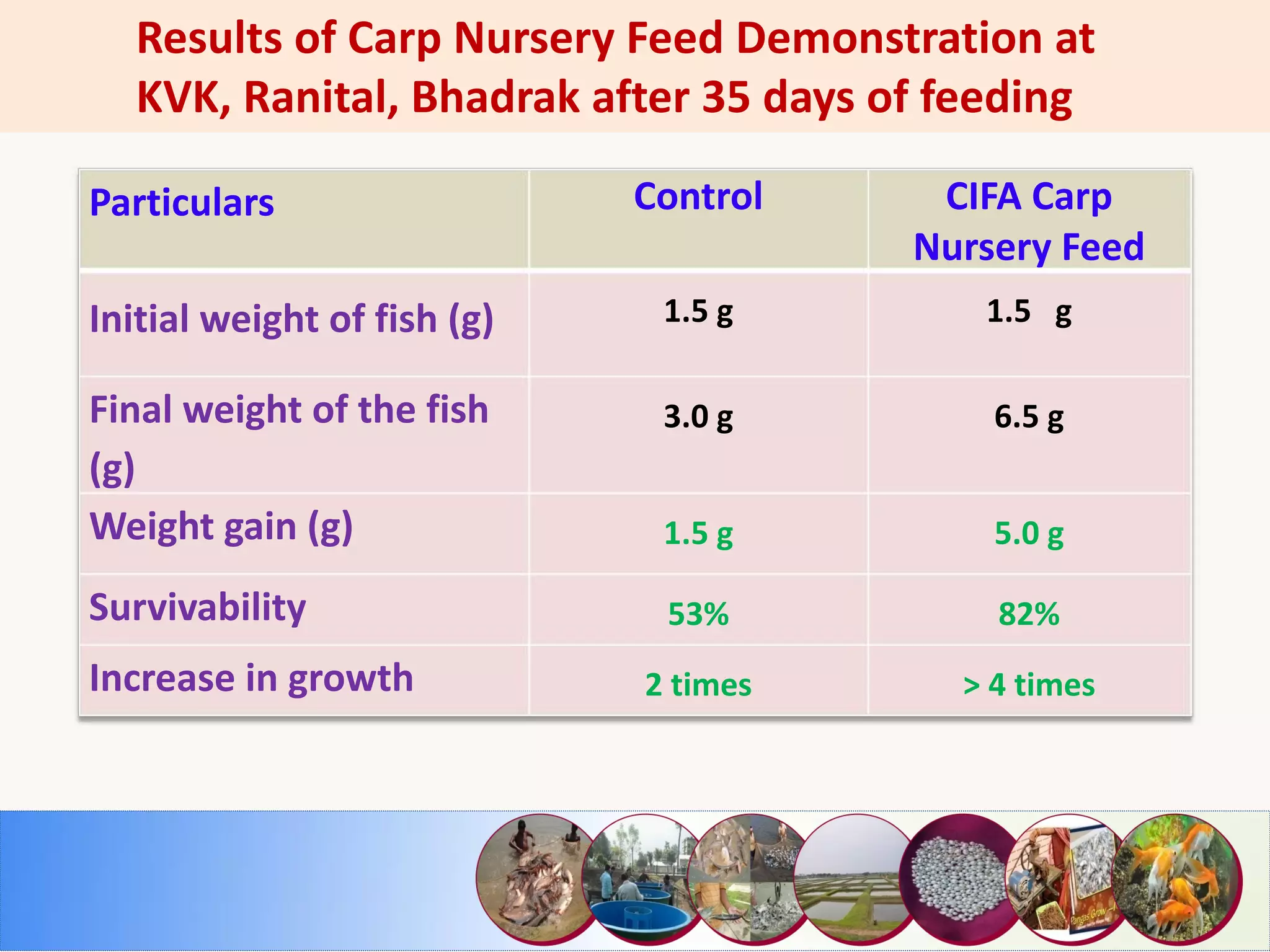
Particulars Control CIFA Carp
Nursery Feed
Initial weight of fish (g) 1.5 g 1.5 g
Final weight of the fish
(g)
3.0 g 6.5 g
Weight gain (g) 1.5 g 5.0 g
Survivability 53% 82%
Increase in growth 2 times > 4 times
Results of Carp Nursery Feed Demonstration at
KVK, Ranital, Bhadrak after 35 days of feeding
Performance of Carp Starter-II after 30 days of
feeding at ICAR-CIFA, Bhubaneswar
Feed Initial
weight
(g)
Final
weight(g)
Weight
gain(g)
SGR FCR survival
Control 0.93±0.01 5.07±0.13 4.1±0.13 4.8±0.08 1.57±0.05 80
carp
Nursery
Feed
0.93±0.01 6.12±0.07 5.1±0.07 5.3±0.03 1.25±0.01 95
Experimental results at College of Fisheries (OUAT),
Rangailunda, Berhampur after 30 days of culture
Growth & Nutritional
Indices
Control CIFA Carp
Nursery Feed
Initial weight (g) 0.70 0.70
Final weight (g) 1.45 3.64
Weight gain (g) 0.75 2.94
Survival (%) 80 100
FCR 6.91 3.01
Carp Nursery Feed Demonstration at
Office of the Deputy Director,
Keonjhar
Sampling of fish at ICAR-CIFA, Bhubaneswar
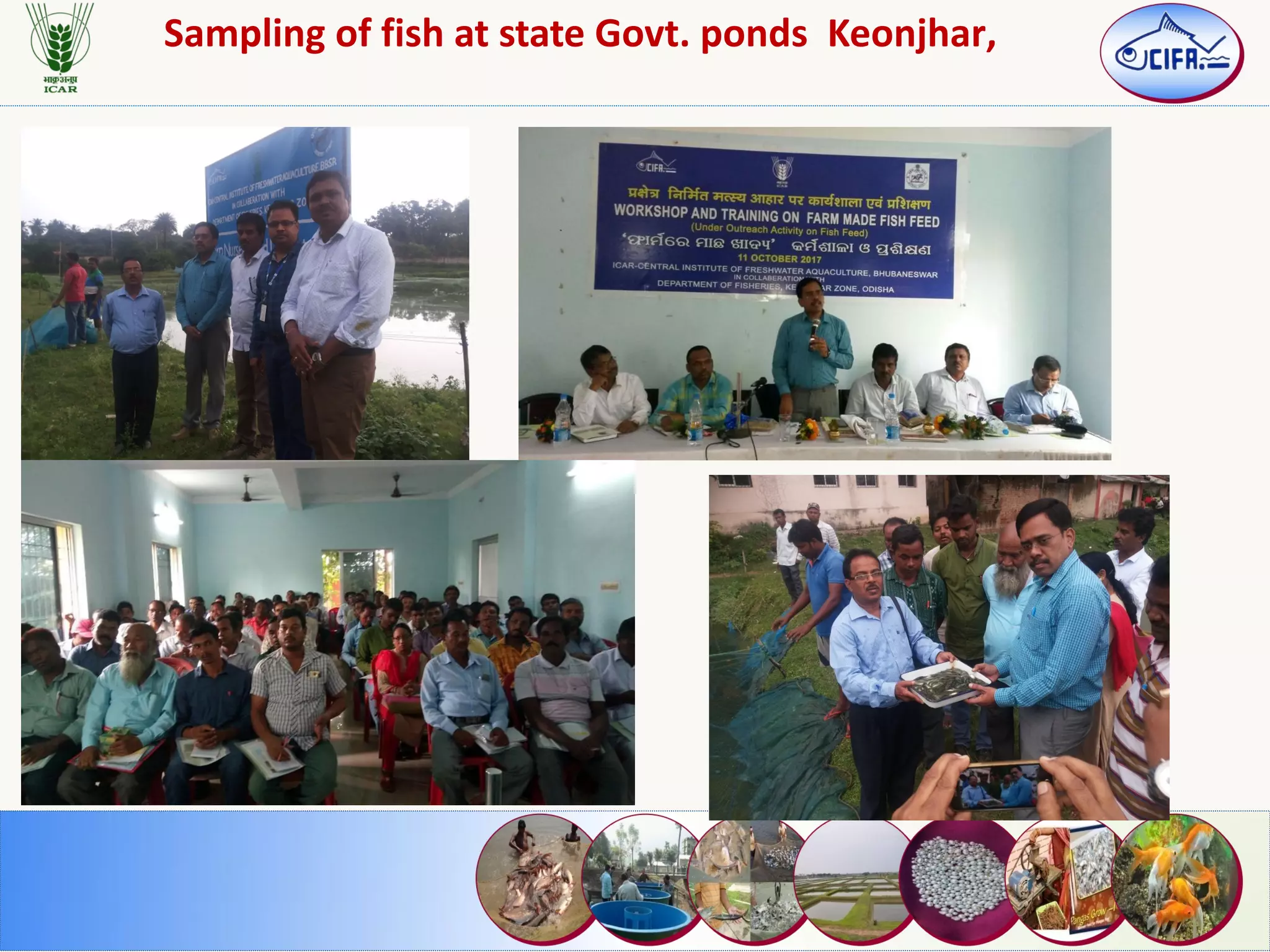
Sampling of fish at state Govt. ponds Keonjhar,
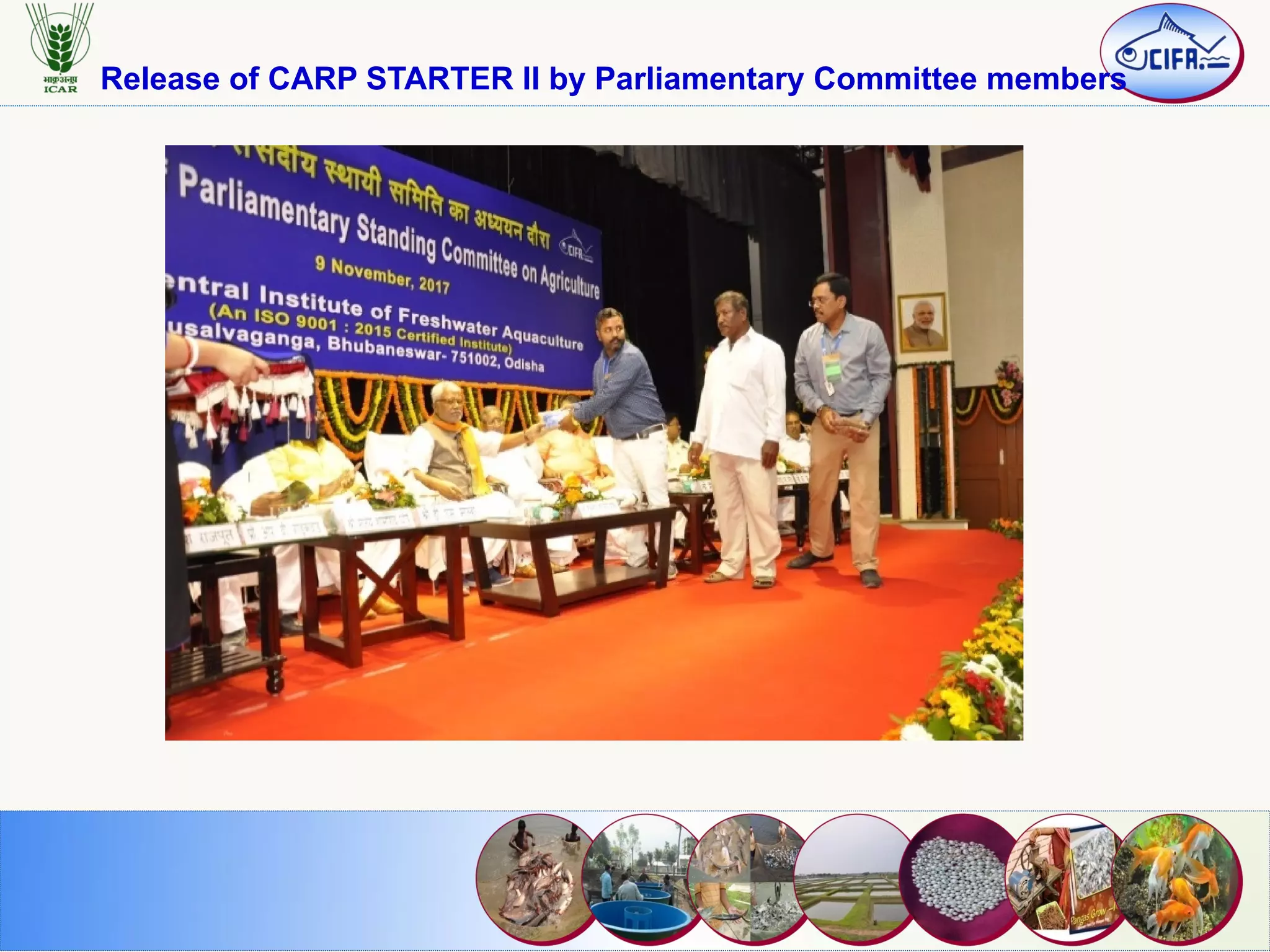
Release of CARP STARTER II by Parliamentary Committee members
Leaflet of CARP STARTER II and release at KVK, Bhadrak
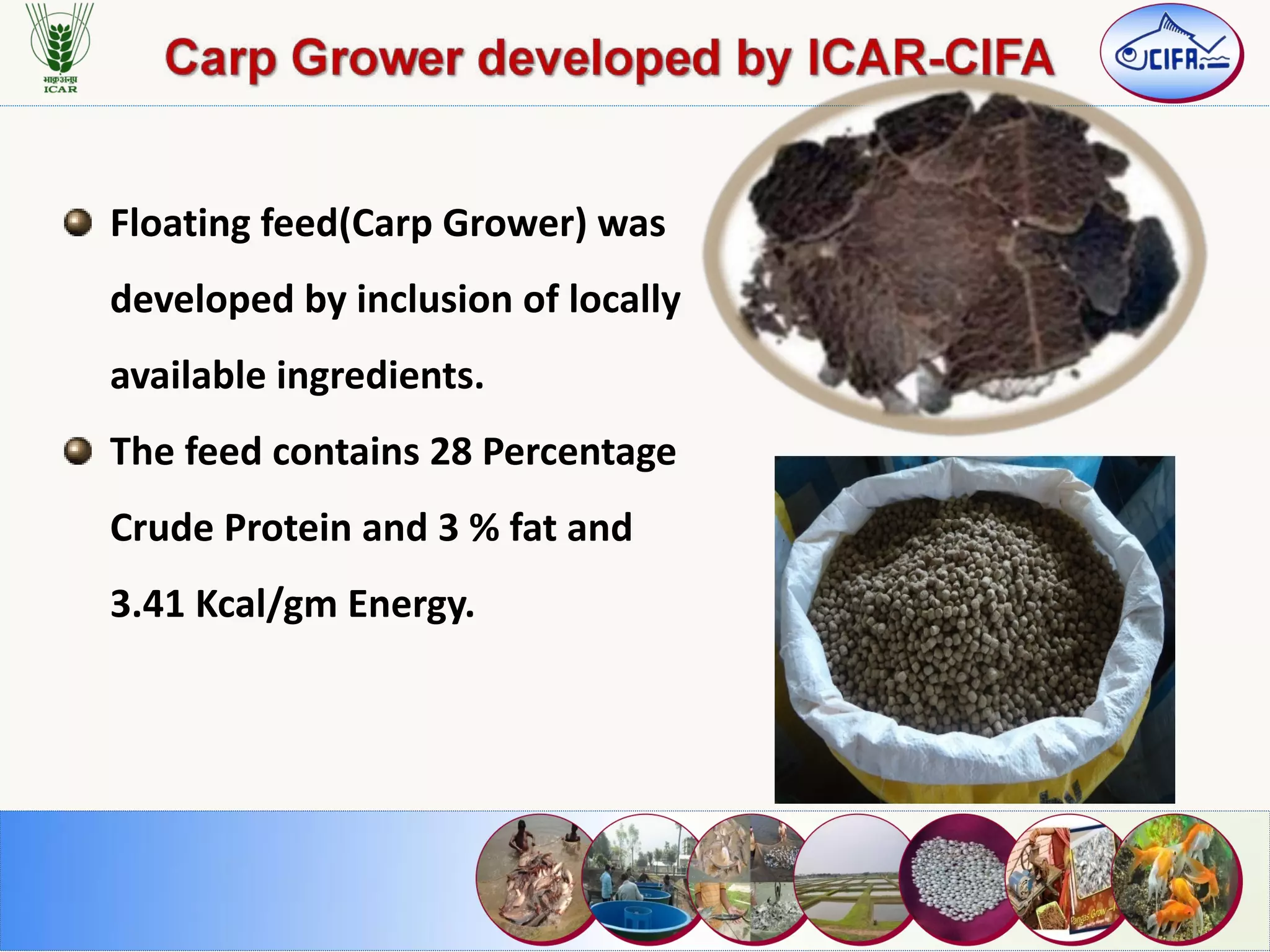
Floating feed(Carp Grower) was
developed by inclusion of locally
available ingredients.
The feed contains 28 Percentage
Crude Protein and 3 % fat and
3.41 Kcal/gm Energy.
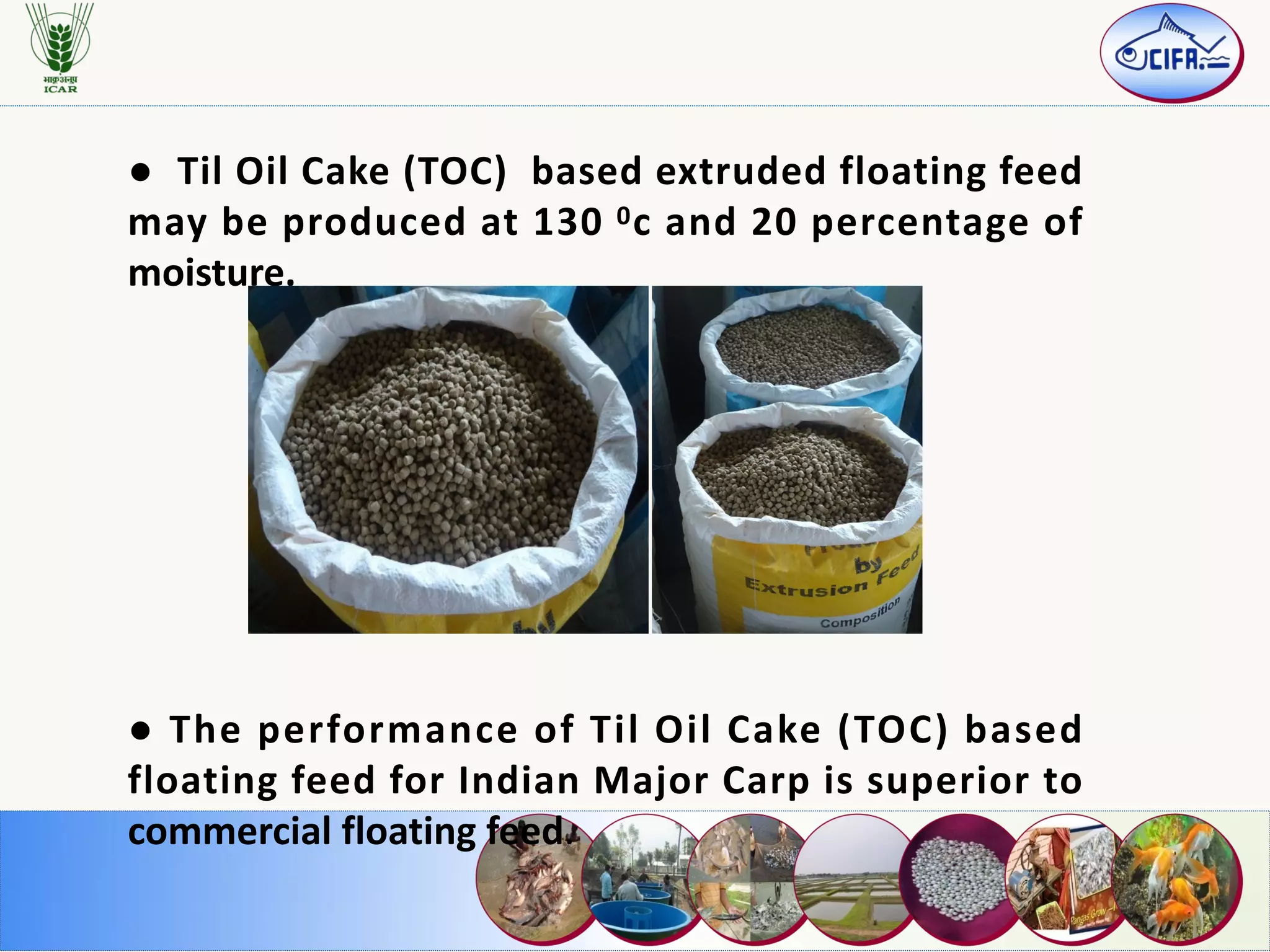
● Til Oil Cake (TOC) based extruded floating feed
may be produced at 130 0c and 20 percentage of
moisture.
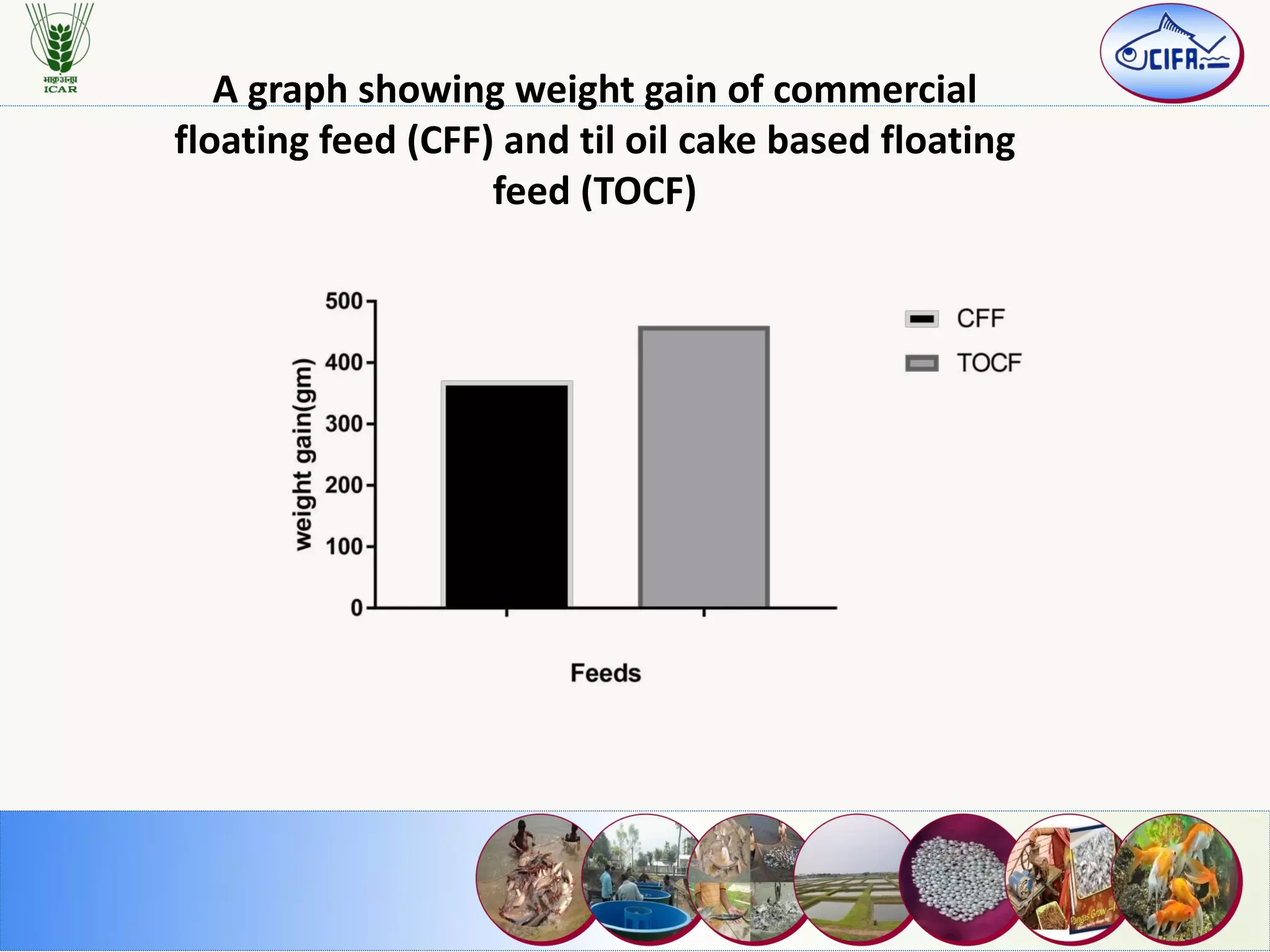
● The performance of Til Oil Cake (TOC) based
floating feed for Indian Major Carp is superior to
commercial floating feed.
Field
Field trial in the farmer’s field has been done
Field trial of Carp Grower in Gop, Odisha
• Each pond was stocked with rohu, catla and
mrigal at the rate of 600 fish (4:1:1) weighing
100, 200 and 100 g, respectively.
• Fishes were fed at the rate of 3 percent of body
weight for 1st month followed by 2.5 percent
for 2 months and 2.0 percent for rest 2 months.
• At the end of 5 months of feeding period, rohu,
catla and mrigal attained 521, 1003 and 450g
Field trial in the farmer’s field
A graph showing weight gain of commercial
floating feed (CFF) and til oil cake based floating
feed (TOCF)
Sensory Evaluation of rohu (labeo rohita )
on til oil cake based floating feed (TOCF) vs
commercial floating feed (CFF) was done
The results showed that, colour, flavour,
texture, juiciness, sweetness and overall
acceptability of fish was superior when carp
Grower compared to a commercial floating
feed
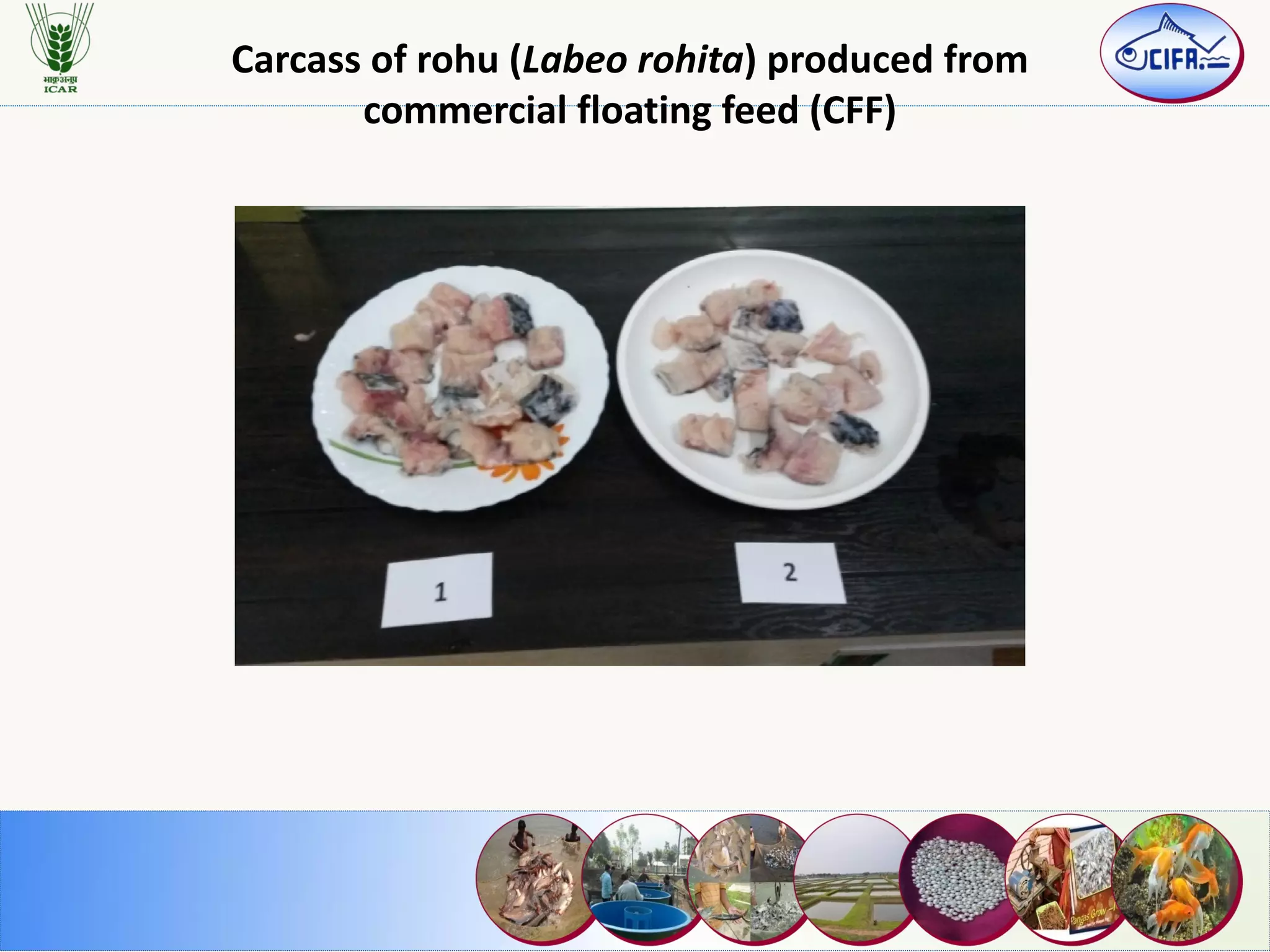
Carcass of rohu (Labeo rohita) produced from
commercial floating feed (CFF)
Carcass of rohu (Labeo rohita) showing
excellent marbling and pigmentation produced
from til oil cake based floating feed (TOCF)
For more details contact:
Director
ICAR-Central Institute of Freshwater
Aquaculture,
(An ISO 9001: 2015 Certified Institute)
Kausalyaganga, Bhubaneswar,
751002, Odisha
Email: director.cifa@icar.gov.in
Website: www.cifa.nic.in
Tel: 0674-2465421, 2465446;
Fax: 0674-2465407
Fish Feed Technology and Feed Management for Carp-nursery-ponds

Fish Feed Technology and Feed Management for Carp-nursery-ponds

  • 1.
    Fish Feed Technology andFeed Management for Carp Nursery Ponds K.C. Das Principal Scientist, ICAR-CIFA kcdasicar@gmail.com
  • 2.
    Aquaculture Fish production inIndia has grown more than 14-folds from 0.752 MT in 1950-51 to 10.79 MT in 2015-16 (DAHDF, 2016-17). Indian aquaculture which contributed about 36% of total fish production in 1980 has increased more than 53%.(FAO, 2016) Aquaculture share may rise up to 62% by 2030 (FAO, Projected) As the aquaculture grows, there is increasing aqua feed demand in the market. This has also given rise to the wide expansion of feed industry.
  • 3.
    India, Fish feed scenario Itis estimated that, 1.50 MT is used as industrially manufactured feeds and 3.50 MT is used as farm made feed during 2017-18. Requirement of manufactured feed was 7 MT during 2017-18 (Yes Bank report) and requirement is high during 2019-20. There is huge scope of aqua feed Industry in India. Feed based aquaculture improves FCR there by improves production.
  • 4.
    Fish feed ingredientsfor freshwater aquaculture Feed ingredients like rice bran, wheat bran, cottonseed cake and groundnut cake are extensively used in freshwater aquaculture . Feed ingredients are mixed, placed in fertilizer bags and then tied to feeding poles or ropes No consideration of nutrient requirement and availability. limitations of using this type of feeding are poor utilization by fish either due to presence of anti-nutritional factors/high crude fibre or because of insufficient processing. Manufactured feeds are produced in Feed mill and non- conventional feed ingredients are used in less quantity for production of manufactured feeds. Use of manufactured feeds are very less because of high cost.
  • 5.
    Strategy for aquacultureproduction Upgrade to feed based aquaculture more nos of feed mill Use of locally available ingredients for fish feed production . DDGS, Insect meal, Algae, til oil cake, mahua oil cake, Babool pods, Jatropha meal, Dhanicha seeds Use of natural growth promoters Feed analysis laboratory for quality check up Use of appropriate feed technology Extrusion, Soaking, Steaming, fermentation etc.
  • 6.
    Aquatic animals cannotdigest starch effectively resulting in excessive excrement which causes physiological problems such as excessive gas, bloating diarrhoea and also causes water pollution. Starch in the feed are gelatinised and are effectively utilised by extrusion technology for production of floating fish feed. Extrusion processing has become the primary technique used for fish feed production, mainly because of the high physical and nutritional quality of the feed. Basically, an extruder is a long barrel with one or two rotating screws which is specially designed to subject feed mixtures to high heat and steam pressure.
  • 7.
    Less feed waste Higherfeed intake Improved feed efficiency Lower handling costs Easier storage Less bacterial contamination Extruded Feed
  • 8.
    Floating feed byinclusion of local ingredients Extruded Soybean feed Extruded TOC feed
  • 9.
    Good quality floatingfeed for IMC can be prepared by maintaining the extrusion temperature of 130 0c and moisture level of 20 percentage Very higher extrusion temperature with less level of moisture is vulnerable to protein degradation. Low level of extrusion temperature with high moisture makes the feed sinking. Floating feed production by extruder
  • 10.
    Soaking feed for2 to 3 hours in water reduces crude fiber while slightly reducing the crude protein. However, improved digestibility and reduction of anti-nutritional factors are some of the important benefits in soaking. Feed may be soaked while preparing farm made feeds and manufactured feeds.
  • 11.
    Steaming feed for1 to 2 minutes reduces crude fiber while slightly reducing the crude protein. However, improved digestibility and reduction of anti-nutritional factors are some of the important benefits in soaking. Feed may be steamed while preparing farm made feeds and manufactured feeds.
  • 12.
    Solid state fermentationcan be defined as a fermentation process carried out by microorganisms grown on solid substrate without the presence of free water or less water.
  • 13.
    Various micro-organisms areused for solid state fermentation. Bacteria like Lactobacillus plantarum, Lactobacillus acidophilus Bacillus subtilis Fungus like Saccaromyces cerevisiae, Aspergillus niger, Trichoderma Harzanium
  • 14.
    ØSSF is adaptablefor use in small scale processes Ø It is a cheaper & simple technique for value addition of local ingredients and agricultural wastes ØMicroorganisms utilize soluble sugars and organic acids & biosynthesize essential amino acids, ØSynthesize fatty acids and vitamins thus enhancing the nutrient ØSSF e n h a n c e s d i ge st i b i l i t y by i m p rov i n g bioavailability of nutrients ØReduces anti-nutritional factors Advantages of SSF in Nutrition
  • 15.
    Fermentation of fishfeed from locally available ingredients
  • 16.
    Fish Feeds developedby ICAR-CIFA, Bhubaneswar
  • 17.
    CARP STARTER ,Feed for carp Fry • A nursery feed for carp (Carp Starter ) was developed by the Institute
  • 18.
    Feed specifications: Moisture: 8-10% Crudeprotein: 34-35% Crude fat:5-6% Crude fibre:4-5%
  • 19.
    Benefits of usingCARP STARTER Faster growth rate Better survival Uniform growth of fry Production of healthy fingerlings
  • 20.
    Demonstration in Subarnapur,Gop, Odisha Survival was increased 20 % (40 vs 60%), and growth 1.5 times than control
  • 21.
    Demonstration in Boisinga,Balasore, Odisha Survival was increased 20 % (45 vs 65%), Growth 2 times than control
  • 22.
    Experiment at Duba,Ganjam, Odisha Survival was increased 30 % (35 vs 65%), Growth 2 times than control
  • 23.
    Experiment at Rambhila,Bhadrak , Odisha Survival was increased 20 % (45 vs 65%), Growth 2 times than control
  • 24.
    Experiment at Kalna,West Bengal Survival was increased 15 % (30 vs 45%), Growth 1.5 times than control
  • 25.
    Experiment at Kapsi,Kanker (Chatisgarh) Survival was increased 25 % (30 vs 55%), Growth 2 times than control
  • 26.
    Experiment at Tirga,Durg, Chatisgarh Survival was increased 15 % (30 vs 45%), Growth 1.5 times than control
  • 27.
    Field Trial ofCarp Starter during Phase II
  • 28.
    Growth performance ofL. rohita fry fed with different test diets in 36 days Growth & Nutritional Indices Control (GOC: RB 1:1) CIFA Carp Nursery Feed Initial weight (g) 0.30 0.30 Final weight (g) 3.36 4.72 Weight gain (g) 3.16 4.42 SGR (% day -1) 8.77 12.27 Survival (%) 63 87 FCR (Apparent) 2.46 1.26 Results on Carp Nursery Feed Demonstration at Keonjhar
  • 29.
    Particulars Control CIFACarp Nursery Feed Initial weight of fish (g) 1.5 g 1.5 g Final weight of the fish (g) 3.0 g 6.5 g Weight gain (g) 1.5 g 5.0 g Survivability 53% 82% Increase in growth 2 times > 4 times Results of Carp Nursery Feed Demonstration at KVK, Ranital, Bhadrak after 35 days of feeding
  • 30.
    Performance of CarpStarter-II after 30 days of feeding at ICAR-CIFA, Bhubaneswar Feed Initial weight (g) Final weight(g) Weight gain(g) SGR FCR survival Control 0.93±0.01 5.07±0.13 4.1±0.13 4.8±0.08 1.57±0.05 80 carp Nursery Feed 0.93±0.01 6.12±0.07 5.1±0.07 5.3±0.03 1.25±0.01 95
  • 31.
    Experimental results atCollege of Fisheries (OUAT), Rangailunda, Berhampur after 30 days of culture Growth & Nutritional Indices Control CIFA Carp Nursery Feed Initial weight (g) 0.70 0.70 Final weight (g) 1.45 3.64 Weight gain (g) 0.75 2.94 Survival (%) 80 100 FCR 6.91 3.01
  • 32.
    Carp Nursery FeedDemonstration at Office of the Deputy Director, Keonjhar
  • 33.
    Sampling of fishat ICAR-CIFA, Bhubaneswar
  • 34.
    Sampling of fishat state Govt. ponds Keonjhar,
  • 36.
    Release of CARPSTARTER II by Parliamentary Committee members
  • 37.
    Release of CARPSTARTER II by Parliamentary Committee members
  • 38.
    Leaflet of CARPSTARTER II and release at KVK, Bhadrak
  • 39.
    Floating feed(Carp Grower)was developed by inclusion of locally available ingredients. The feed contains 28 Percentage Crude Protein and 3 % fat and 3.41 Kcal/gm Energy.
  • 40.
    ● Til OilCake (TOC) based extruded floating feed may be produced at 130 0c and 20 percentage of moisture. ● The performance of Til Oil Cake (TOC) based floating feed for Indian Major Carp is superior to commercial floating feed.
  • 41.
    Field Field trial inthe farmer’s field has been done
  • 42.
    Field trial ofCarp Grower in Gop, Odisha
  • 43.
    • Each pondwas stocked with rohu, catla and mrigal at the rate of 600 fish (4:1:1) weighing 100, 200 and 100 g, respectively. • Fishes were fed at the rate of 3 percent of body weight for 1st month followed by 2.5 percent for 2 months and 2.0 percent for rest 2 months. • At the end of 5 months of feeding period, rohu, catla and mrigal attained 521, 1003 and 450g Field trial in the farmer’s field
  • 44.
    A graph showingweight gain of commercial floating feed (CFF) and til oil cake based floating feed (TOCF)
  • 45.
    Sensory Evaluation ofrohu (labeo rohita ) on til oil cake based floating feed (TOCF) vs commercial floating feed (CFF) was done The results showed that, colour, flavour, texture, juiciness, sweetness and overall acceptability of fish was superior when carp Grower compared to a commercial floating feed
  • 46.
    Carcass of rohu(Labeo rohita) produced from commercial floating feed (CFF)
  • 47.
    Carcass of rohu(Labeo rohita) showing excellent marbling and pigmentation produced from til oil cake based floating feed (TOCF)
  • 48.
    For more detailscontact: Director ICAR-Central Institute of Freshwater Aquaculture, (An ISO 9001: 2015 Certified Institute) Kausalyaganga, Bhubaneswar, 751002, Odisha Email: director.cifa@icar.gov.in Website: www.cifa.nic.in Tel: 0674-2465421, 2465446; Fax: 0674-2465407