Fish Nutrition
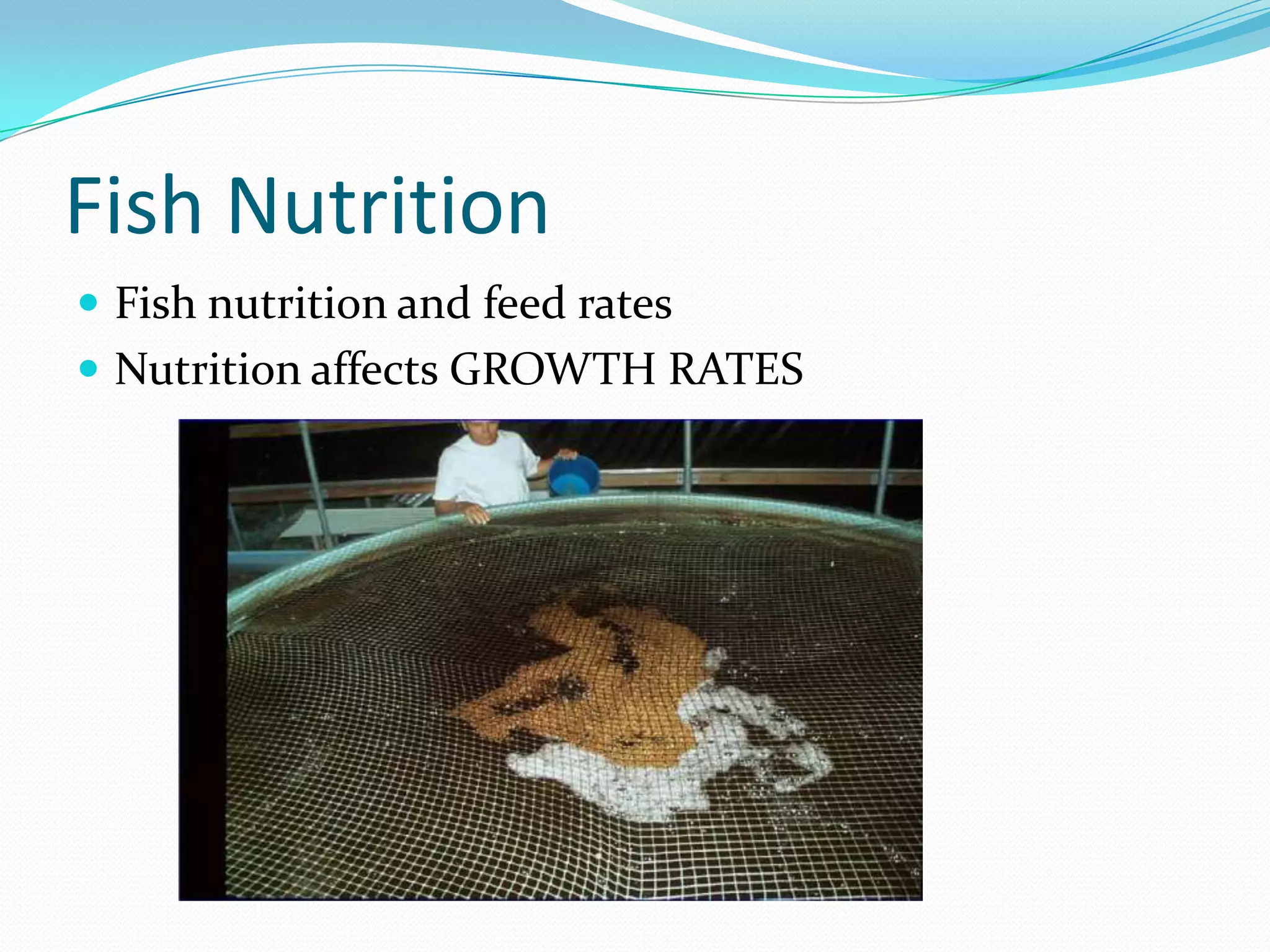
 Fish nutrition and feed rates
 Nutrition affects GROWTH RATES
Fish Nutrition
 Important component for whole production system
 Target species production
 Growth, FCR, Water Quality, Disease
 Economics
 Overfeed and Underfeed
 Species specific formulations available
 Pond production
 Closed recirculations systems (such as aquaponics)
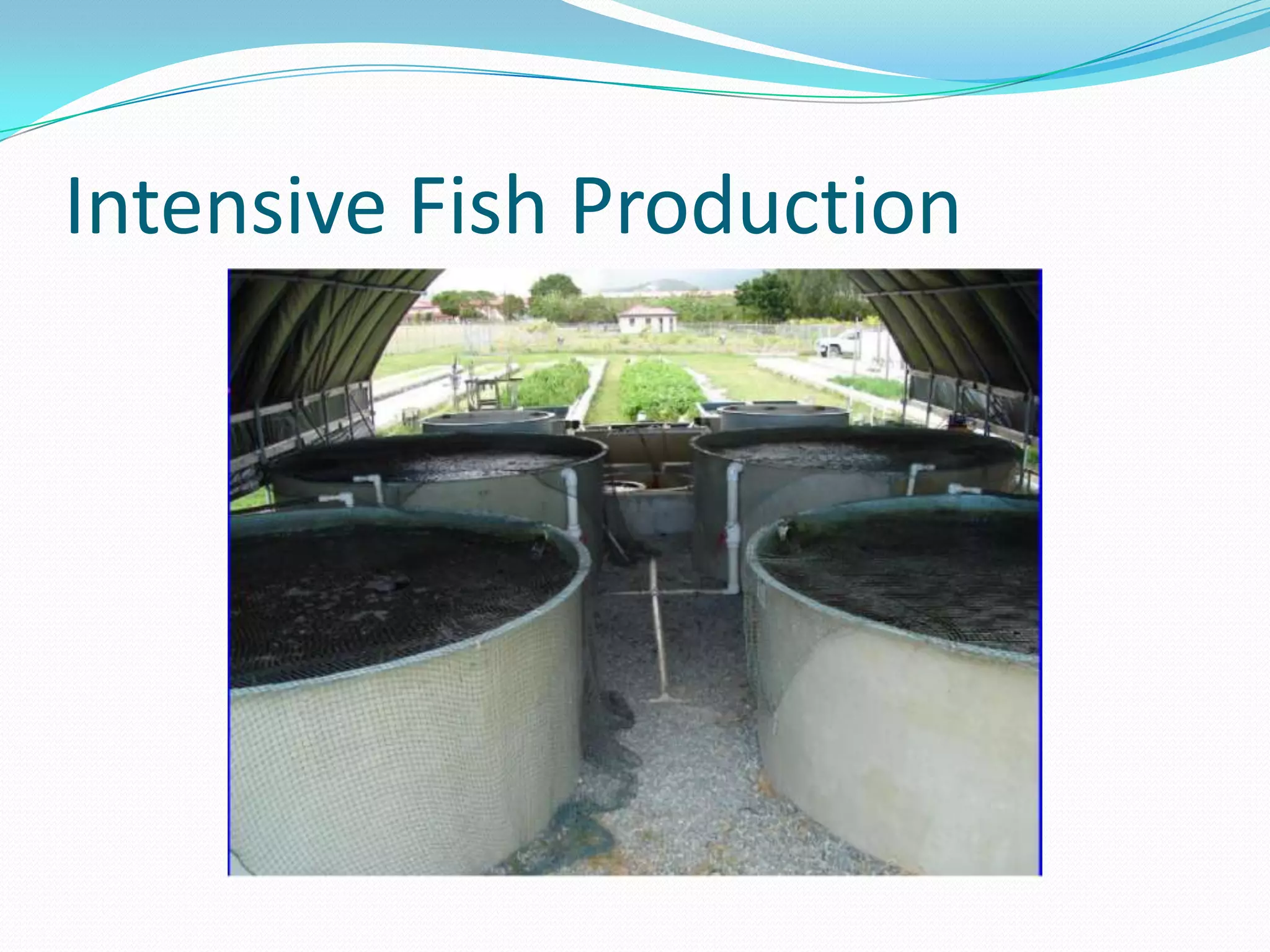
Intensive Fish Production
Why feed fish?
 Intensification reduces natural food organisms in
pond
 Some culture methods have little chance of natural
food sources
 Aquaponics, cages, raceways
 Reduce reliance on natural foods
 Have control of what fish eats
Essential Ingredients
 Protein
 Fat
 Carbohydrate
 Minerals
 Vitamins
Protein
 Composed of amino acids
 Ten can be synthesized by vertebrates, including fish
 Essential: Must supply = protein quality
 Important component in diet
 Expensive
 Small quantity of good protein produces large amount of fingerlings
 Used for FISH GROWTH
 A fish does not have a minimum protein requirement; it has a
minimum amino acid requirement
 Nutritionist should know AA composition and digestibility
 Poor quality protein is burned for energy or deposited as fat
Factors Affecting Protein
Requirement
 Size of fish: Small fish require more protein than larger
fish
 Protein quality: Protein needs to be of good quality
(such as from grain amaranth or black soldier fly
larvae)
 Natural foods: Some fish use natural foods effectively.
 Depends on stocking density
Factors Affecting Protein
Requirement
 Protein: Energy Ratio:
 If energy level of diet low, you will waste protein to meet
metabolic needs. Inefficient and expensive.
 If protein level low and energy moderate, then fish will
get fat.
 If energy level too high, it suppresses food intake and
fish don’t meet protein requirement. Results in low
growth rate over time and undersized fish.
Typical Protein Requirements For
Tilapia
First feeding fry 45-50%
0.02-2.0 g 40%
2.0-35.0 g 35%
35.0 g - Harvest 30-32%
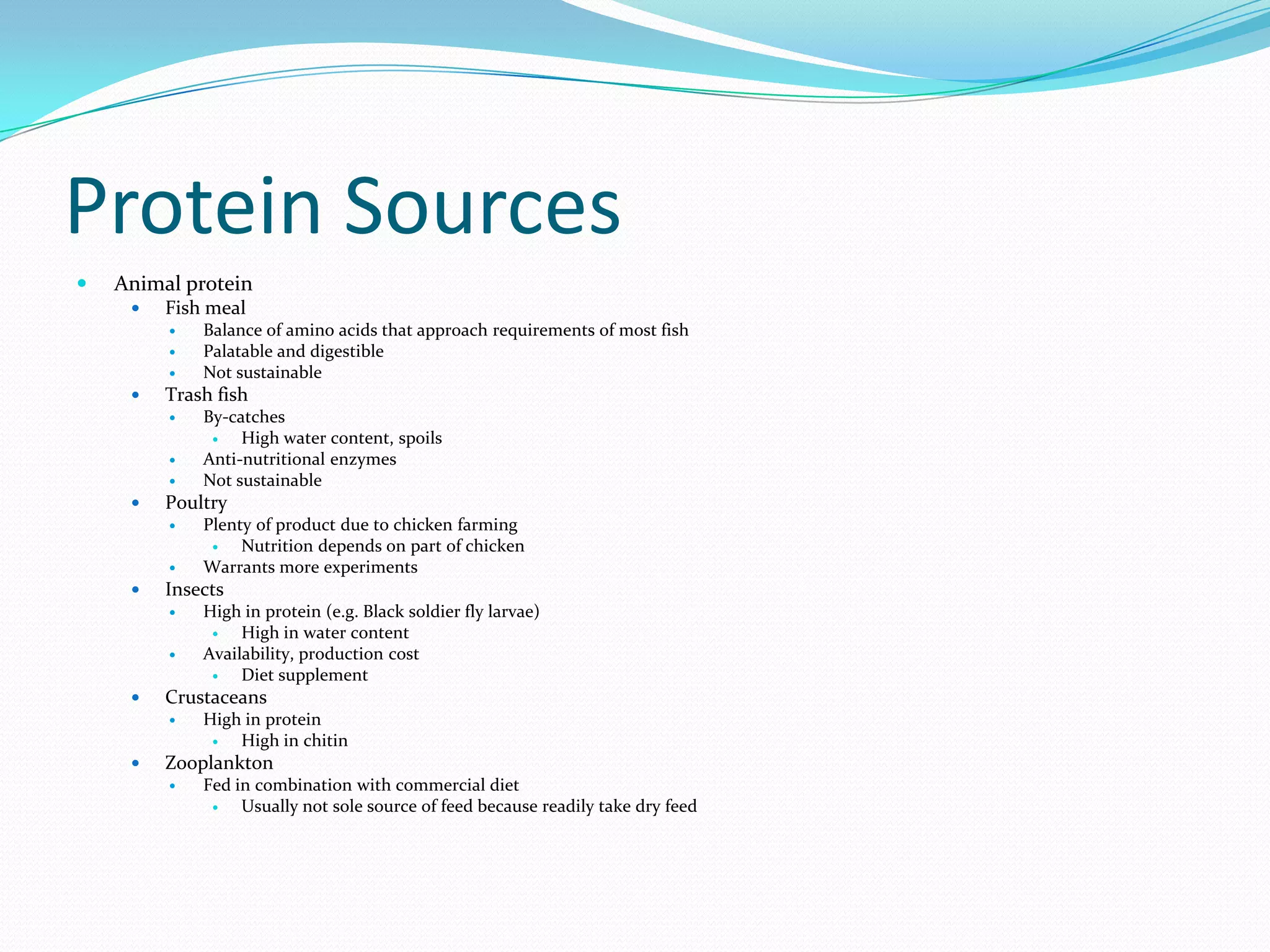
Protein Sources
 Animal protein
 Fish meal
 Balance of amino acids that approach requirements of most fish
 Palatable and digestible
 Not sustainable
 Trash fish
 By-catches
 High water content, spoils
 Anti-nutritional enzymes
 Not sustainable
 Poultry
 Plenty of product due to chicken farming
 Nutrition depends on part of chicken
 Warrants more experiments
 Insects
 High in protein (e.g. Black soldier fly larvae)
 High in water content
 Availability, production cost
 Diet supplement
 Crustaceans
 High in protein
 High in chitin
 Zooplankton
 Fed in combination with commercial diet
 Usually not sole source of feed because readily take dry feed
Protein sources
 Plant Protein
 Usually lacks in AA content
 Must add additional AA
 Many contain anti-nutritional factors and/or toxins
 Deactivated or destroyed by soaking or heat
 Soybean (30-50%)
 Farmed all over
 Amino acid imbalance
 Inclusion of other ingredients
 Palatability
 Attractants
 Trypsin inhibitor
 Heated during processing
 Partial replacement probable
Protein Sources
 Cottonseed Meal (20%)
 Contains toxin gossypol
 Direct and indirect effects of gossypol
 Direct
 Liver
 Indirect
 Binding to AA
 Binds to lysine making it
neutral, supplemental lysine
needed
 Palatable, economical in areas of
US that produce cotton
 Glandless cotton contains no
gossypol. Difficult to find in US
 Rice (<75% inclusion)
 Nutrient value limiting
 Algae (10-20%)
 Production expensive
 Dry meals are expensive
 Best ‘in situ’.
 Some are toxic
 High in carotenoids
 Duckweed (<20%)
 Very common in ponds
 High in water
 Dietary supplement
Lipids
 Source of energy and essential fatty acids
 One gram of lipid contains 2x the energy of 1 gram
carbohydrates or 1 gram protein
 Spare the protein for growth
 Maintain cell fluidity
 Globular proteins transport things in and out of the cell
membrane
Lipids
 Dietary lipids
 Provide HUFAs for good growth and reproduction
 Cannot be synthesized, must supply the basic ones
 Oleic acid
 Linoleic acid
 Ecosapentenoic acid
 Docasahexaenoic acid
 Arachodonic acid
 tilapia
Energy-Why does a fish need it?
 Energy is not a food stuff
 Formed from breakdown of feed
 Protein, lipids and carbohydrates
 Activity
 Chemical reactions
 Nervous system
 Osmoregulation
 Growth
 Energy reserves
 Excretion of wastes
 Reproduction
Energy
 Fish eat to satisfy their energy demands
 Too much energy
 Get fat or do not satisfy their protein requirement = don’t
grow
 Too little energy
 Utilize protein as energy source = $ costly
 Require less energy than land mammals
 Cold-blooded
 Live in water
 Waste excretion
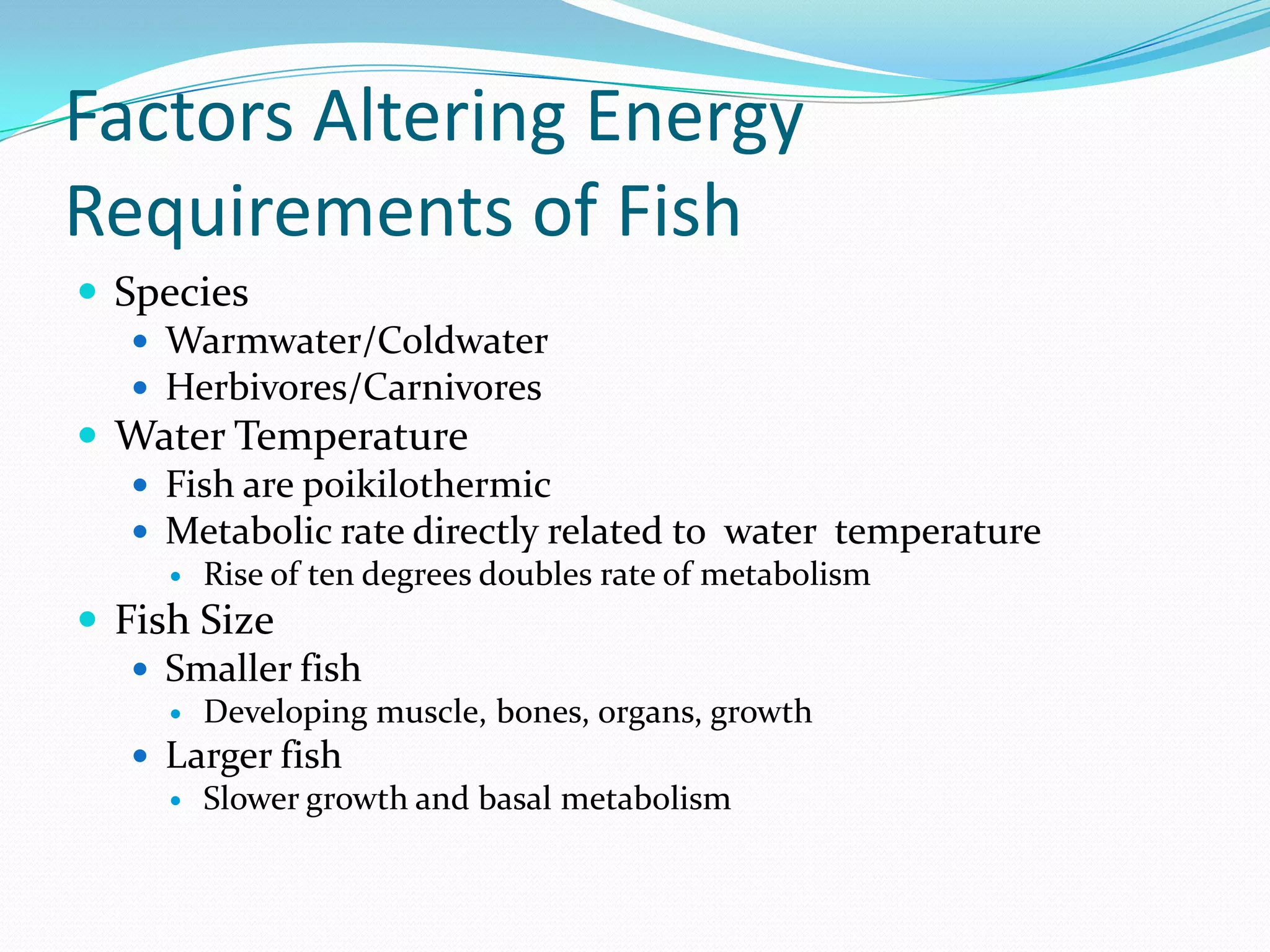
Factors Altering Energy
Requirements of Fish
 Species
 Warmwater/Coldwater
 Herbivores/Carnivores
 Water Temperature
 Fish are poikilothermic
 Metabolic rate directly related to water temperature
 Rise of ten degrees doubles rate of metabolism
 Fish Size
 Smaller fish
 Developing muscle, bones, organs, growth
 Larger fish
 Slower growth and basal metabolism
Factors Altering Energy
Requirements Of Fish
 Fish Age
 Energy requirement decreases as age increases
 Physiological Activity
 Spawning activity and formation of reproductive systems
 Environmental Factors
 Water current
 Swimming and positioning
 Water quality
 Diet Composition
 Fry/broodfish
 High protein and fats
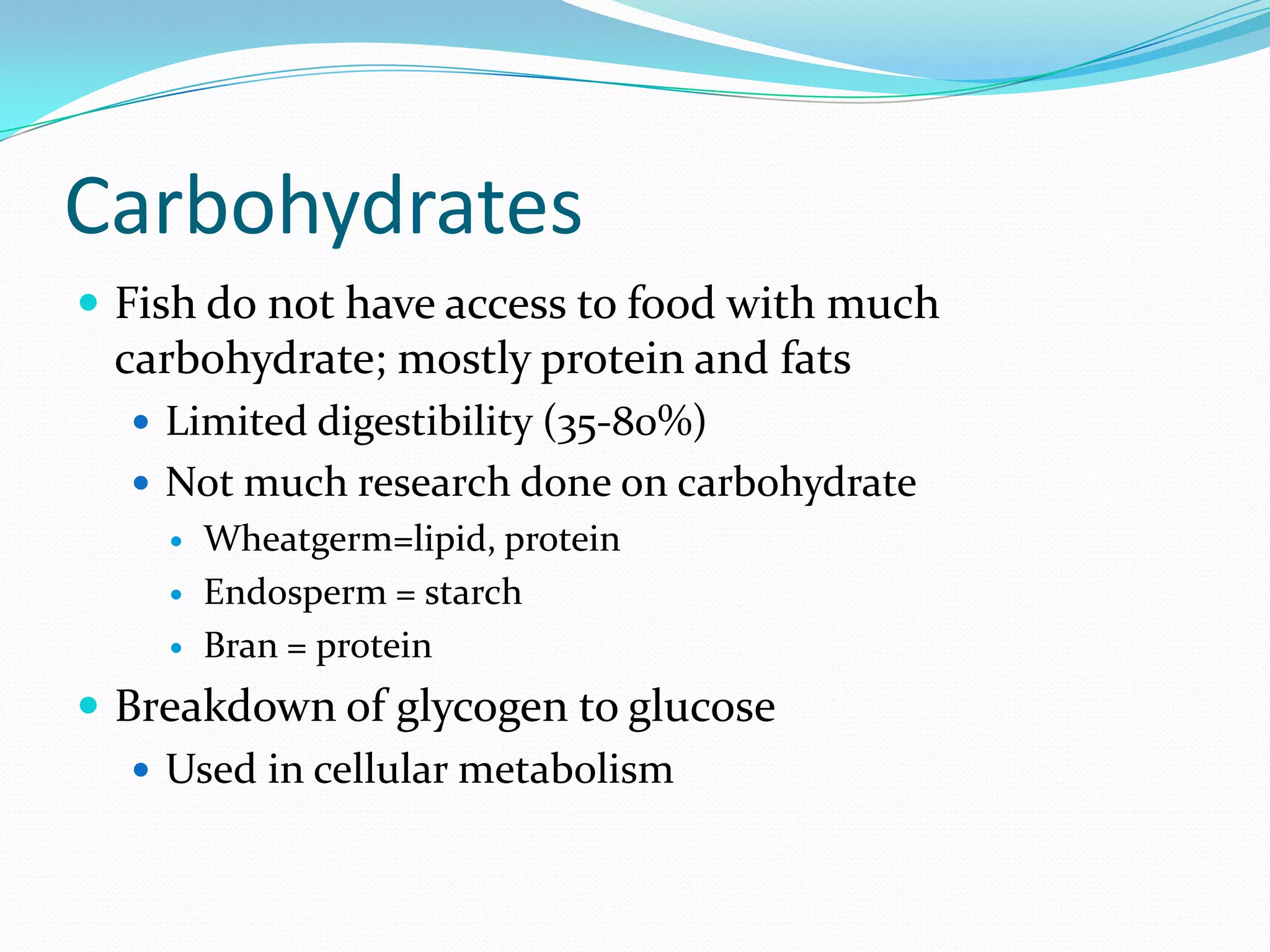
Carbohydrates
 Fish do not have access to food with much
carbohydrate; mostly protein and fats
 Limited digestibility (35-80%)
 Not much research done on carbohydrate
 Wheatgerm=lipid, protein
 Endosperm = starch
 Bran = protein
 Breakdown of glycogen to glucose
 Used in cellular metabolism
Minerals
 Inorganic elements
 Not much known
 Inexpensive to add: premixes
 Fish can obtain some from the water
 Two groups
 Major minerals
 Ca, P, Mg, Na, K, Cl, S
 Trace minerals
 Nothing to do with importance
 Fe, I, Mn, Cu, Co, Zn, Se, Al
Minerals
 Calcium
 Bones and scales
 Muscle function, blood clotting, osmoregulation
 98% of Ca in form of bones, teeth, scales, spines
 Phosphorus
 Bones, nucleic acids, enzyme systems
 Hard to find in water; tied up in muds
 Osmoregulation
 Maintain constant osmotic pressure with body fluids
 Sodium
 Extracellular cation
 Chloride
 Extracellular cation
 Potassium
 Intracellular cation
Vitamins
 Essential but don’t supply energy
 Normal metabolism
 Must supply because cannot be synthesized at all or fast enough
 Two groups
 Water soluble
 Deficiency common
 Vitamin C
 Fish cannot synthesize
 Fat soluble
 Deficiency rare
 Vitamin A=mucous secretion
 Vitamin D=Calcium/phosphorus adsorbtion
Feed Preparation
 Steam pelleting
 Produces dense pellet that sinks in water
 Extrusion process
 Produces floating pellet
 Good for feeding behaviour observation
 Holds together well in water
 Fines
 Small feed particles that deteriorate water quality (< 1%)
Artificial Diets
 Complete Diet
 Provides ‘all’ essential ingredients for species growth
 Required in:
 Semi-intensive to intensive systems
 Closed Recirculation Systems
 Cage Reproduction
 Temperate Climates
 Short growing season
 Aquaponics
 Greenwater
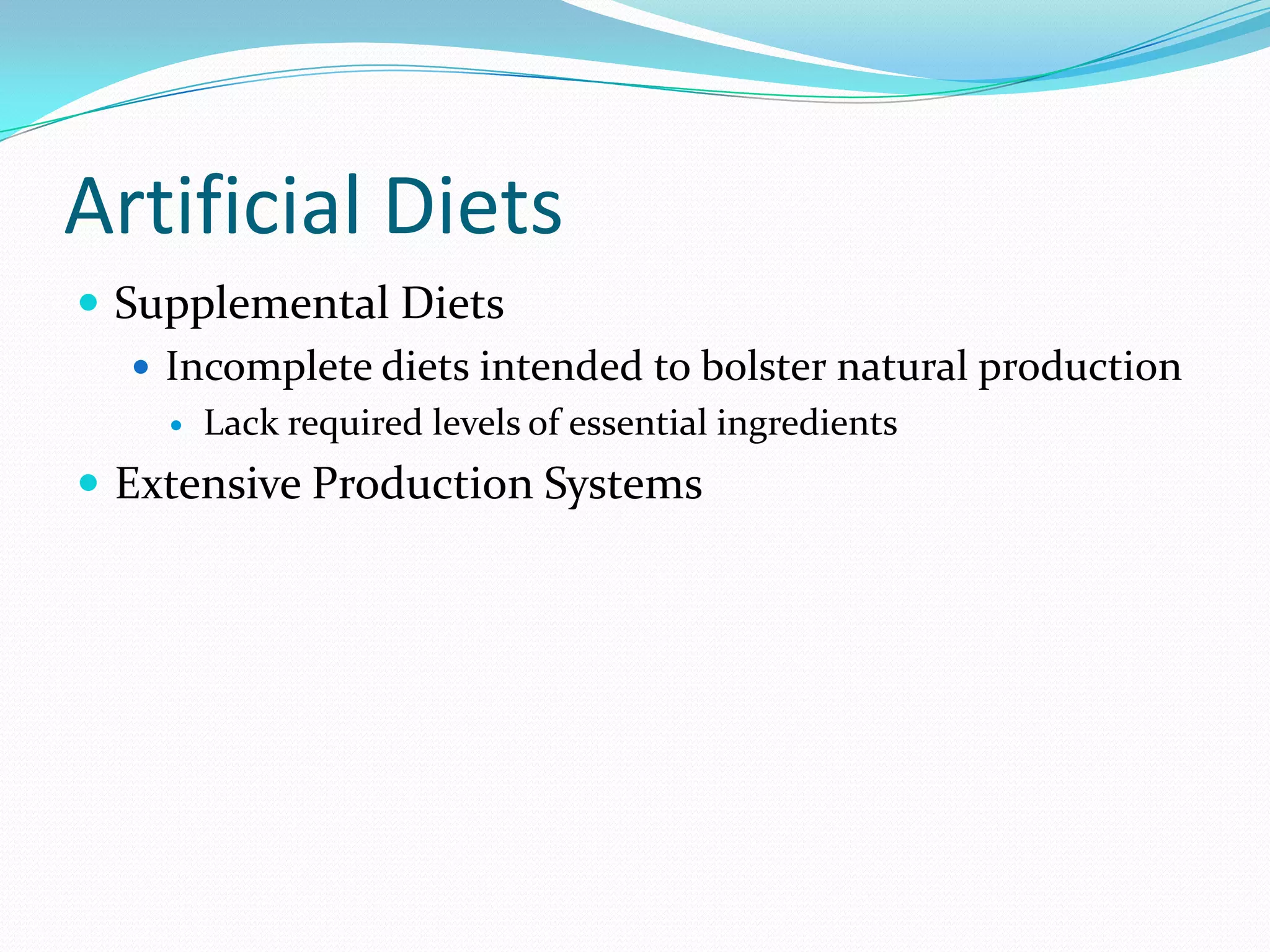
Artificial Diets
 Supplemental Diets
 Incomplete diets intended to bolster natural production
 Lack required levels of essential ingredients
 Extensive Production Systems
Feed Rates
 Dependent on:
 Management strategy
 Feed type and size
 Species size and density
 Water temperature and quality
 Weather
Feeding Strategies
 Ad libitum or Satiation
 Feed all fish will eat during timed period
 2-4x/day
 Farmer understands his/her ‘fish personalities’
 Percent Body Weight/Day
 Based on growth rate, FCR, and survival
 Requires frequent sampling
 Divide daily ration; fed 2-4x/day
Feed Conversion Ratio (FCR)
 How much feed is converted to fish flesh?
 FCR
 <1.5=doing well
 1.5=average
 1.5-2.0=fair
 >2.0=something’s up
 Calculated as:
 FCR=Amount of feed fed
Fish weight gain
 Example:
 FCR = 50 kg = 1.7
30 kg
Feed Presentation
 Hand feeding
 Advantages
 Fish behavior observation by feeders detecting problems at source
 Healthy, vigorous feeding and only just enough fed at any one
time since humans can detect when fish have had enough
 Disadvantages
 Labor intensive
 Demand feeder
 Advantages
 Ad libitum, less labor
 Disadvantages
 Nature, higher FCR, fish bullies eat more than others, frequently
breaks and fouls water causing mass fish die-off, capital costs
Types of fish pellets
 Sinking
 Must be fed slower
 Hard to observe fish behavior
 Floating
 Has air pockets
 Easier to observe fish behavior
Size of Fish Feed
 Very important
 Fish will not consume
 Water quality issues
 Economics
 Increase in energy
requirements when
eating wrong size
 Mixing two feed types
important during feed
size transition
1
• Feed size #1
2
• Feed size # 1 mixed with
• Feed size #2
3
• Feed size # 2
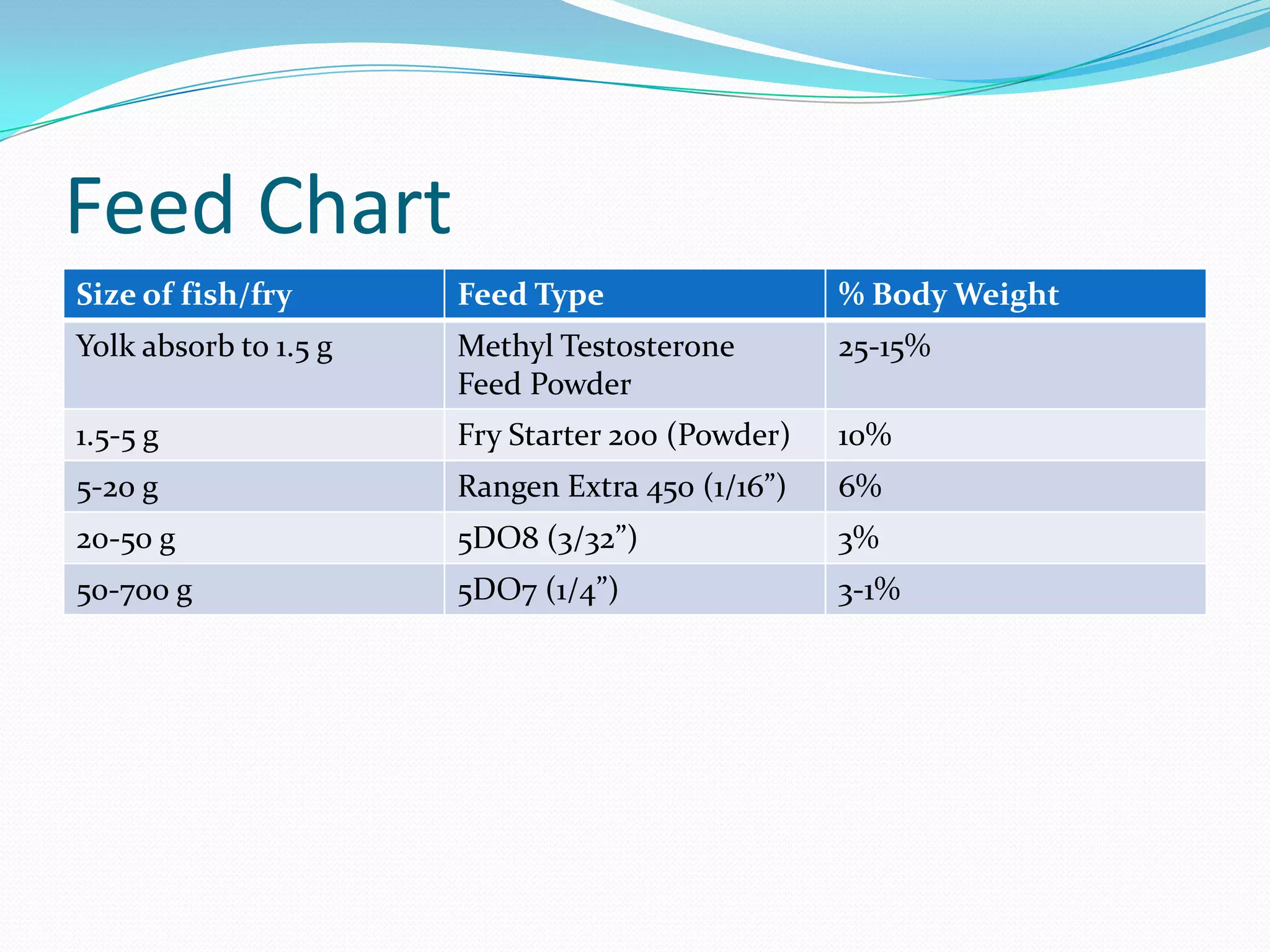
Feed Chart
Size of fish/fry Feed Type % Body Weight
Yolk absorb to 1.5 g Methyl Testosterone
Feed Powder
25-15%
1.5-5 g Fry Starter 200 (Powder) 10%
5-20 g Rangen Extra 450 (1/16”) 6%
20-50 g 5DO8 (3/32”) 3%
50-700 g 5DO7 (1/4”) 3-1%
Feeding Protocol
 Tilapia have a modified stomach
 At UVI we found 3 feedings each day
 Divide daily ration up accordingly
 Ad lib accordingly (hand feed and observe fish behavior
for signs of trouble and bullying)
Feeding Protocol
 Reduce feedings if temperature not optimum
 Optimum temperature is 23-31°C
 Oxygen
 > 5 ppm for feeding tables
 < 3 ppm do not feed
 Lowest oxygen reading can be just after feeding
 Feeding response-watch fish behavior for feeding/not
feeding/bullying/sateity. When fish stop eating, STOP
FEEDING
 High solids or organics (ROTTEN FEED LEFT OVER IN
TANK or filtration failure)
 Water quality (high ammonia/nitrites = fish not
feeding, gasping at surface, emergency)
Feed Fish Properly
 Water quality closely controlled
 High growth rate and low FCR
 Uniform
 Bullies/runts eliminated
 Dress-out even weight
 Nutrition-linked diseases eliminated
 Scoliosis, cataracts, fat deposits, etc
Feed Fish Improperly
 Poor water quality
 High levels of ammonia, nitrite, wrong pH, low
dissolved oxygen
 Slow growth and high FCR
 Nutrition-linked diseases prevalent
 Less uniformity
 Size variation
 Dress-out percentage low
Feed Storage
 Inadequate storage leads to nutrient loss
 Sunlight = vitamin loss
 Heat = rancid fats
 Damp = molds
 Cool, dry place
 Air-conditioned room
 Use before expiration date (3 months)
 Don’t stack higher than 10 on pallet
 First in, first out strategy
 Rodent resistant
 Rodents eat feed and defecate on it, introducing pathogens.
Recommended Reading
 Chhorn Lim and Carl D. Webster, 2006
 Tilapia: Biology, Culture, and Nutrition
 Chhorn Lim and Carl D. Webse,r 2002
 Nutrient Requirements and Feeding of Finfish for Aquaculture
 Kim Jauncey, 1988
 Tilapia feeds and feeding.
This information courtesy Jason Danaher, UVI with
minor embellishments Charlotte Appleton, World Tree
Solutions.

Fish nutrition

  • 1.
    Fish Nutrition  Fishnutrition and feed rates  Nutrition affects GROWTH RATES
  • 2.
    Fish Nutrition  Importantcomponent for whole production system  Target species production  Growth, FCR, Water Quality, Disease  Economics  Overfeed and Underfeed  Species specific formulations available  Pond production  Closed recirculations systems (such as aquaponics)
  • 3.
  • 4.
    Why feed fish? Intensification reduces natural food organisms in pond  Some culture methods have little chance of natural food sources  Aquaponics, cages, raceways  Reduce reliance on natural foods  Have control of what fish eats
  • 5.
    Essential Ingredients  Protein Fat  Carbohydrate  Minerals  Vitamins
  • 6.
    Protein  Composed ofamino acids  Ten can be synthesized by vertebrates, including fish  Essential: Must supply = protein quality  Important component in diet  Expensive  Small quantity of good protein produces large amount of fingerlings  Used for FISH GROWTH  A fish does not have a minimum protein requirement; it has a minimum amino acid requirement  Nutritionist should know AA composition and digestibility  Poor quality protein is burned for energy or deposited as fat
  • 7.
    Factors Affecting Protein Requirement Size of fish: Small fish require more protein than larger fish  Protein quality: Protein needs to be of good quality (such as from grain amaranth or black soldier fly larvae)  Natural foods: Some fish use natural foods effectively.  Depends on stocking density
  • 8.
    Factors Affecting Protein Requirement Protein: Energy Ratio:  If energy level of diet low, you will waste protein to meet metabolic needs. Inefficient and expensive.  If protein level low and energy moderate, then fish will get fat.  If energy level too high, it suppresses food intake and fish don’t meet protein requirement. Results in low growth rate over time and undersized fish.
  • 9.
    Typical Protein RequirementsFor Tilapia First feeding fry 45-50% 0.02-2.0 g 40% 2.0-35.0 g 35% 35.0 g - Harvest 30-32%
  • 10.
    Protein Sources  Animalprotein  Fish meal  Balance of amino acids that approach requirements of most fish  Palatable and digestible  Not sustainable  Trash fish  By-catches  High water content, spoils  Anti-nutritional enzymes  Not sustainable  Poultry  Plenty of product due to chicken farming  Nutrition depends on part of chicken  Warrants more experiments  Insects  High in protein (e.g. Black soldier fly larvae)  High in water content  Availability, production cost  Diet supplement  Crustaceans  High in protein  High in chitin  Zooplankton  Fed in combination with commercial diet  Usually not sole source of feed because readily take dry feed
  • 11.
    Protein sources  PlantProtein  Usually lacks in AA content  Must add additional AA  Many contain anti-nutritional factors and/or toxins  Deactivated or destroyed by soaking or heat  Soybean (30-50%)  Farmed all over  Amino acid imbalance  Inclusion of other ingredients  Palatability  Attractants  Trypsin inhibitor  Heated during processing  Partial replacement probable
  • 12.
    Protein Sources  CottonseedMeal (20%)  Contains toxin gossypol  Direct and indirect effects of gossypol  Direct  Liver  Indirect  Binding to AA  Binds to lysine making it neutral, supplemental lysine needed  Palatable, economical in areas of US that produce cotton  Glandless cotton contains no gossypol. Difficult to find in US  Rice (<75% inclusion)  Nutrient value limiting  Algae (10-20%)  Production expensive  Dry meals are expensive  Best ‘in situ’.  Some are toxic  High in carotenoids  Duckweed (<20%)  Very common in ponds  High in water  Dietary supplement
  • 13.
    Lipids  Source ofenergy and essential fatty acids  One gram of lipid contains 2x the energy of 1 gram carbohydrates or 1 gram protein  Spare the protein for growth  Maintain cell fluidity  Globular proteins transport things in and out of the cell membrane
  • 14.
    Lipids  Dietary lipids Provide HUFAs for good growth and reproduction  Cannot be synthesized, must supply the basic ones  Oleic acid  Linoleic acid  Ecosapentenoic acid  Docasahexaenoic acid  Arachodonic acid  tilapia
  • 15.
    Energy-Why does afish need it?  Energy is not a food stuff  Formed from breakdown of feed  Protein, lipids and carbohydrates  Activity  Chemical reactions  Nervous system  Osmoregulation  Growth  Energy reserves  Excretion of wastes  Reproduction
  • 16.
    Energy  Fish eatto satisfy their energy demands  Too much energy  Get fat or do not satisfy their protein requirement = don’t grow  Too little energy  Utilize protein as energy source = $ costly  Require less energy than land mammals  Cold-blooded  Live in water  Waste excretion
  • 17.
    Factors Altering Energy Requirementsof Fish  Species  Warmwater/Coldwater  Herbivores/Carnivores  Water Temperature  Fish are poikilothermic  Metabolic rate directly related to water temperature  Rise of ten degrees doubles rate of metabolism  Fish Size  Smaller fish  Developing muscle, bones, organs, growth  Larger fish  Slower growth and basal metabolism
  • 18.
    Factors Altering Energy RequirementsOf Fish  Fish Age  Energy requirement decreases as age increases  Physiological Activity  Spawning activity and formation of reproductive systems  Environmental Factors  Water current  Swimming and positioning  Water quality  Diet Composition  Fry/broodfish  High protein and fats
  • 19.
    Carbohydrates  Fish donot have access to food with much carbohydrate; mostly protein and fats  Limited digestibility (35-80%)  Not much research done on carbohydrate  Wheatgerm=lipid, protein  Endosperm = starch  Bran = protein  Breakdown of glycogen to glucose  Used in cellular metabolism
  • 20.
    Minerals  Inorganic elements Not much known  Inexpensive to add: premixes  Fish can obtain some from the water  Two groups  Major minerals  Ca, P, Mg, Na, K, Cl, S  Trace minerals  Nothing to do with importance  Fe, I, Mn, Cu, Co, Zn, Se, Al
  • 21.
    Minerals  Calcium  Bonesand scales  Muscle function, blood clotting, osmoregulation  98% of Ca in form of bones, teeth, scales, spines  Phosphorus  Bones, nucleic acids, enzyme systems  Hard to find in water; tied up in muds  Osmoregulation  Maintain constant osmotic pressure with body fluids  Sodium  Extracellular cation  Chloride  Extracellular cation  Potassium  Intracellular cation
  • 22.
    Vitamins  Essential butdon’t supply energy  Normal metabolism  Must supply because cannot be synthesized at all or fast enough  Two groups  Water soluble  Deficiency common  Vitamin C  Fish cannot synthesize  Fat soluble  Deficiency rare  Vitamin A=mucous secretion  Vitamin D=Calcium/phosphorus adsorbtion
  • 23.
    Feed Preparation  Steampelleting  Produces dense pellet that sinks in water  Extrusion process  Produces floating pellet  Good for feeding behaviour observation  Holds together well in water  Fines  Small feed particles that deteriorate water quality (< 1%)
  • 24.
    Artificial Diets  CompleteDiet  Provides ‘all’ essential ingredients for species growth  Required in:  Semi-intensive to intensive systems  Closed Recirculation Systems  Cage Reproduction  Temperate Climates  Short growing season  Aquaponics  Greenwater
  • 25.
    Artificial Diets  SupplementalDiets  Incomplete diets intended to bolster natural production  Lack required levels of essential ingredients  Extensive Production Systems
  • 26.
    Feed Rates  Dependenton:  Management strategy  Feed type and size  Species size and density  Water temperature and quality  Weather
  • 27.
    Feeding Strategies  Adlibitum or Satiation  Feed all fish will eat during timed period  2-4x/day  Farmer understands his/her ‘fish personalities’  Percent Body Weight/Day  Based on growth rate, FCR, and survival  Requires frequent sampling  Divide daily ration; fed 2-4x/day
  • 28.
    Feed Conversion Ratio(FCR)  How much feed is converted to fish flesh?  FCR  <1.5=doing well  1.5=average  1.5-2.0=fair  >2.0=something’s up  Calculated as:  FCR=Amount of feed fed Fish weight gain  Example:  FCR = 50 kg = 1.7 30 kg
  • 29.
    Feed Presentation  Handfeeding  Advantages  Fish behavior observation by feeders detecting problems at source  Healthy, vigorous feeding and only just enough fed at any one time since humans can detect when fish have had enough  Disadvantages  Labor intensive  Demand feeder  Advantages  Ad libitum, less labor  Disadvantages  Nature, higher FCR, fish bullies eat more than others, frequently breaks and fouls water causing mass fish die-off, capital costs
  • 30.
    Types of fishpellets  Sinking  Must be fed slower  Hard to observe fish behavior  Floating  Has air pockets  Easier to observe fish behavior
  • 31.
    Size of FishFeed  Very important  Fish will not consume  Water quality issues  Economics  Increase in energy requirements when eating wrong size  Mixing two feed types important during feed size transition 1 • Feed size #1 2 • Feed size # 1 mixed with • Feed size #2 3 • Feed size # 2
  • 32.
    Feed Chart Size offish/fry Feed Type % Body Weight Yolk absorb to 1.5 g Methyl Testosterone Feed Powder 25-15% 1.5-5 g Fry Starter 200 (Powder) 10% 5-20 g Rangen Extra 450 (1/16”) 6% 20-50 g 5DO8 (3/32”) 3% 50-700 g 5DO7 (1/4”) 3-1%
  • 33.
    Feeding Protocol  Tilapiahave a modified stomach  At UVI we found 3 feedings each day  Divide daily ration up accordingly  Ad lib accordingly (hand feed and observe fish behavior for signs of trouble and bullying)
  • 34.
    Feeding Protocol  Reducefeedings if temperature not optimum  Optimum temperature is 23-31°C  Oxygen  > 5 ppm for feeding tables  < 3 ppm do not feed  Lowest oxygen reading can be just after feeding  Feeding response-watch fish behavior for feeding/not feeding/bullying/sateity. When fish stop eating, STOP FEEDING  High solids or organics (ROTTEN FEED LEFT OVER IN TANK or filtration failure)  Water quality (high ammonia/nitrites = fish not feeding, gasping at surface, emergency)
  • 35.
    Feed Fish Properly Water quality closely controlled  High growth rate and low FCR  Uniform  Bullies/runts eliminated  Dress-out even weight  Nutrition-linked diseases eliminated  Scoliosis, cataracts, fat deposits, etc
  • 36.
    Feed Fish Improperly Poor water quality  High levels of ammonia, nitrite, wrong pH, low dissolved oxygen  Slow growth and high FCR  Nutrition-linked diseases prevalent  Less uniformity  Size variation  Dress-out percentage low
  • 37.
    Feed Storage  Inadequatestorage leads to nutrient loss  Sunlight = vitamin loss  Heat = rancid fats  Damp = molds  Cool, dry place  Air-conditioned room  Use before expiration date (3 months)  Don’t stack higher than 10 on pallet  First in, first out strategy  Rodent resistant  Rodents eat feed and defecate on it, introducing pathogens.
  • 38.
    Recommended Reading  ChhornLim and Carl D. Webster, 2006  Tilapia: Biology, Culture, and Nutrition  Chhorn Lim and Carl D. Webse,r 2002  Nutrient Requirements and Feeding of Finfish for Aquaculture  Kim Jauncey, 1988  Tilapia feeds and feeding. This information courtesy Jason Danaher, UVI with minor embellishments Charlotte Appleton, World Tree Solutions.