CAGE CULTURE
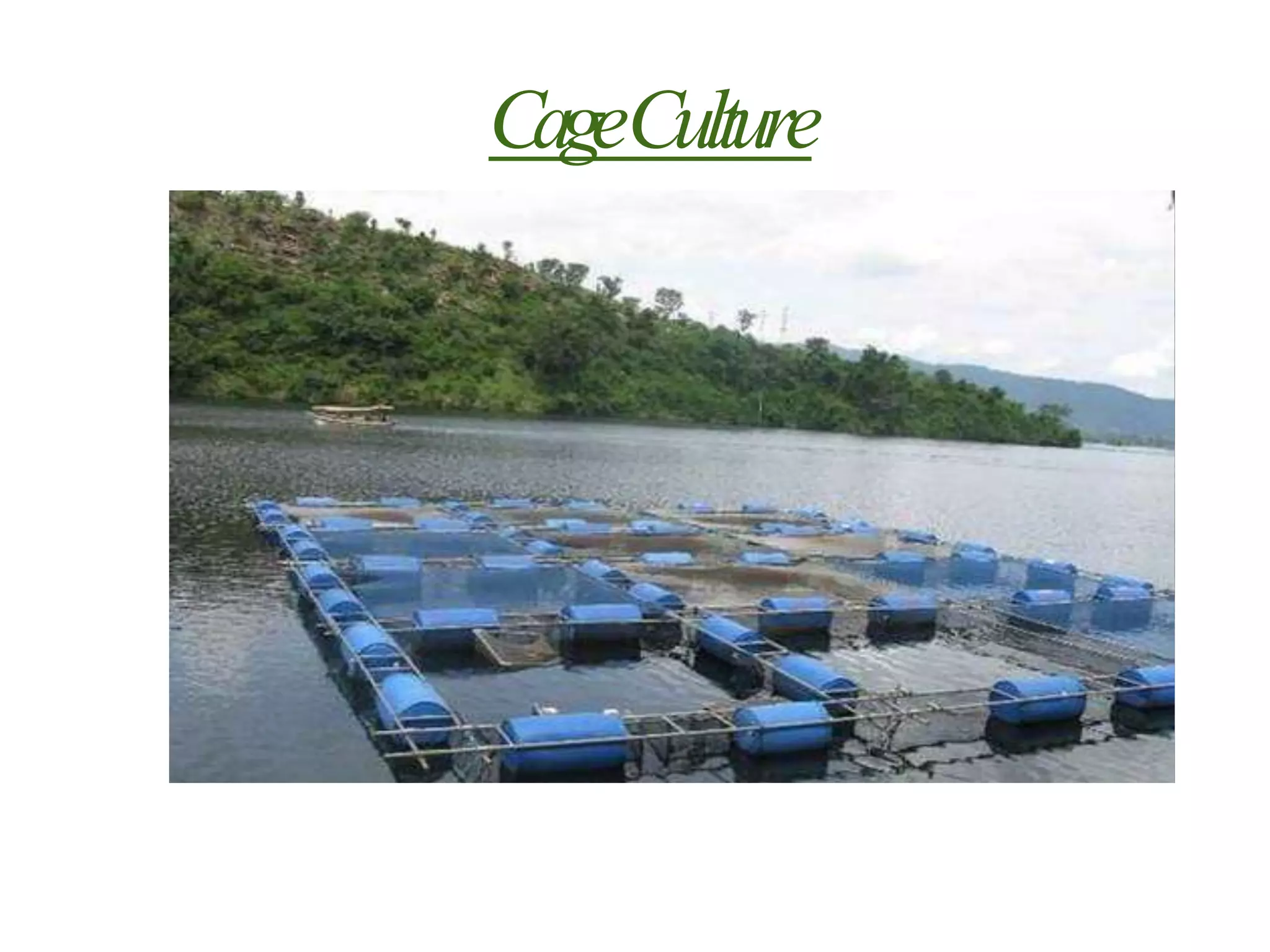
CageCulture
INTRODUCTION
• Culture of fishes in meshed boxes
placed in water is called cage culture.
• It is an intensive method of aquaculture.
• Cage culture is practiced in areas where
there is sufficient water movement.
• It is done in river, lakes, estuaries & seas.
HISTORY
• Cage culture originated in kampuchia
about 200 years ago.
• Originally cages were used to transport
fishes alive from the capture area to the
market area.
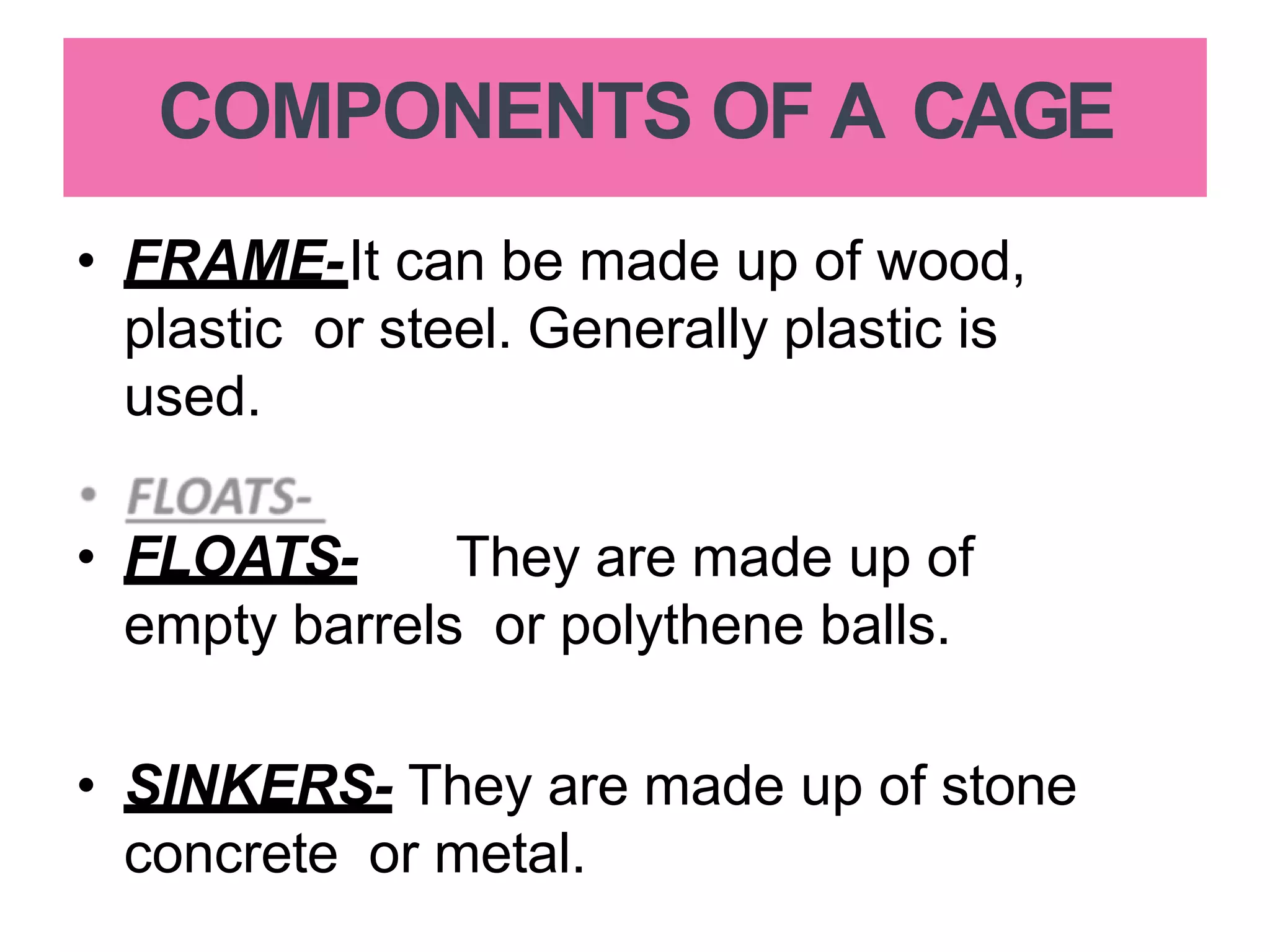
COMPONENTS OF A CAGE
• FRAME-It can be made up of wood,
plastic or steel. Generally plastic is
used.
• FLOATS- They are made up of
empty barrels or polythene balls.
• SINKERS- They are made up of stone
concrete or metal.
• NET -Three types of nets are present
inner net, outer net & cover net.
• It is made up nylon, weld mesh or wooven
split bamboo.
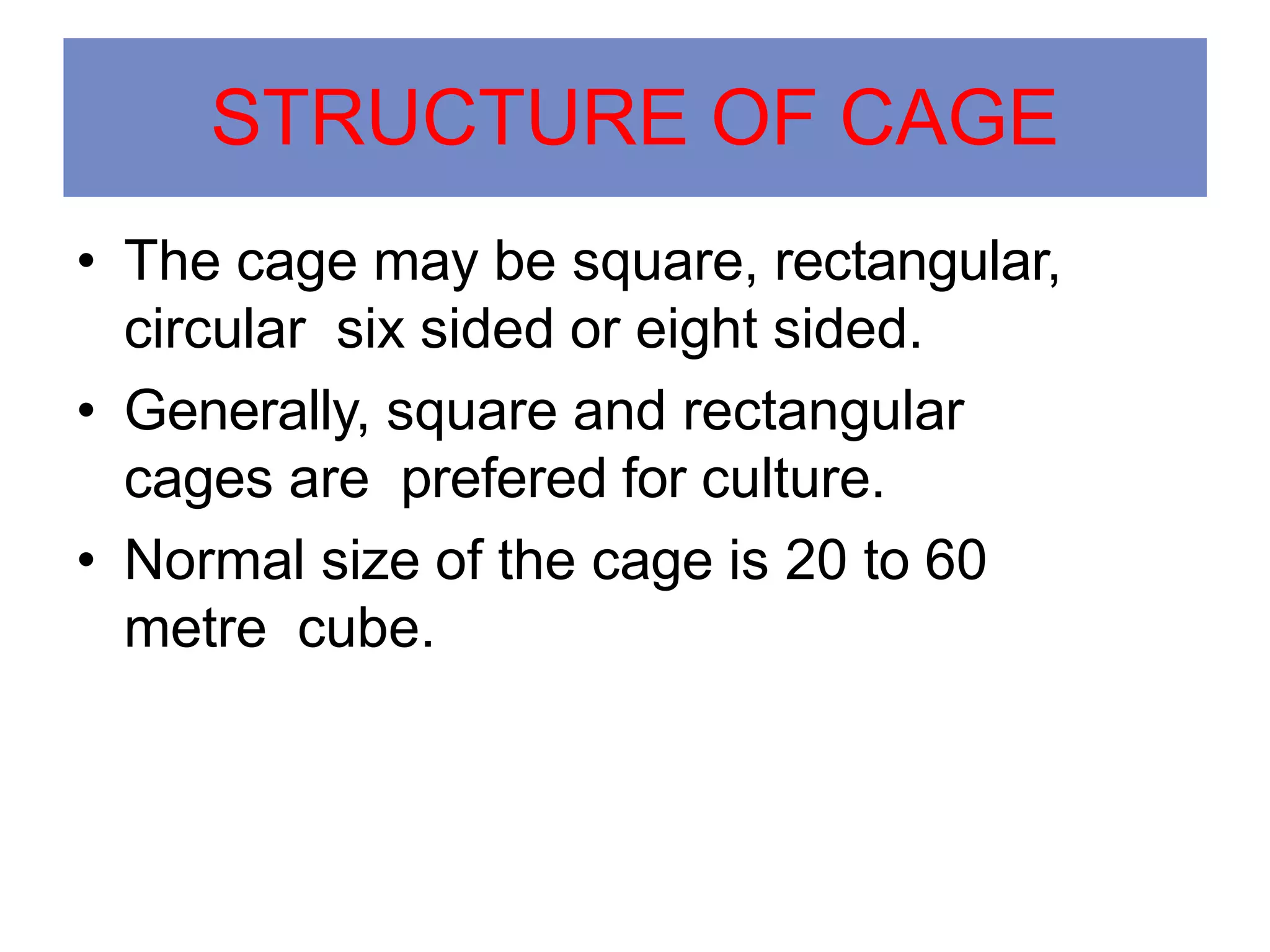
STRUCTURE OF CAGE
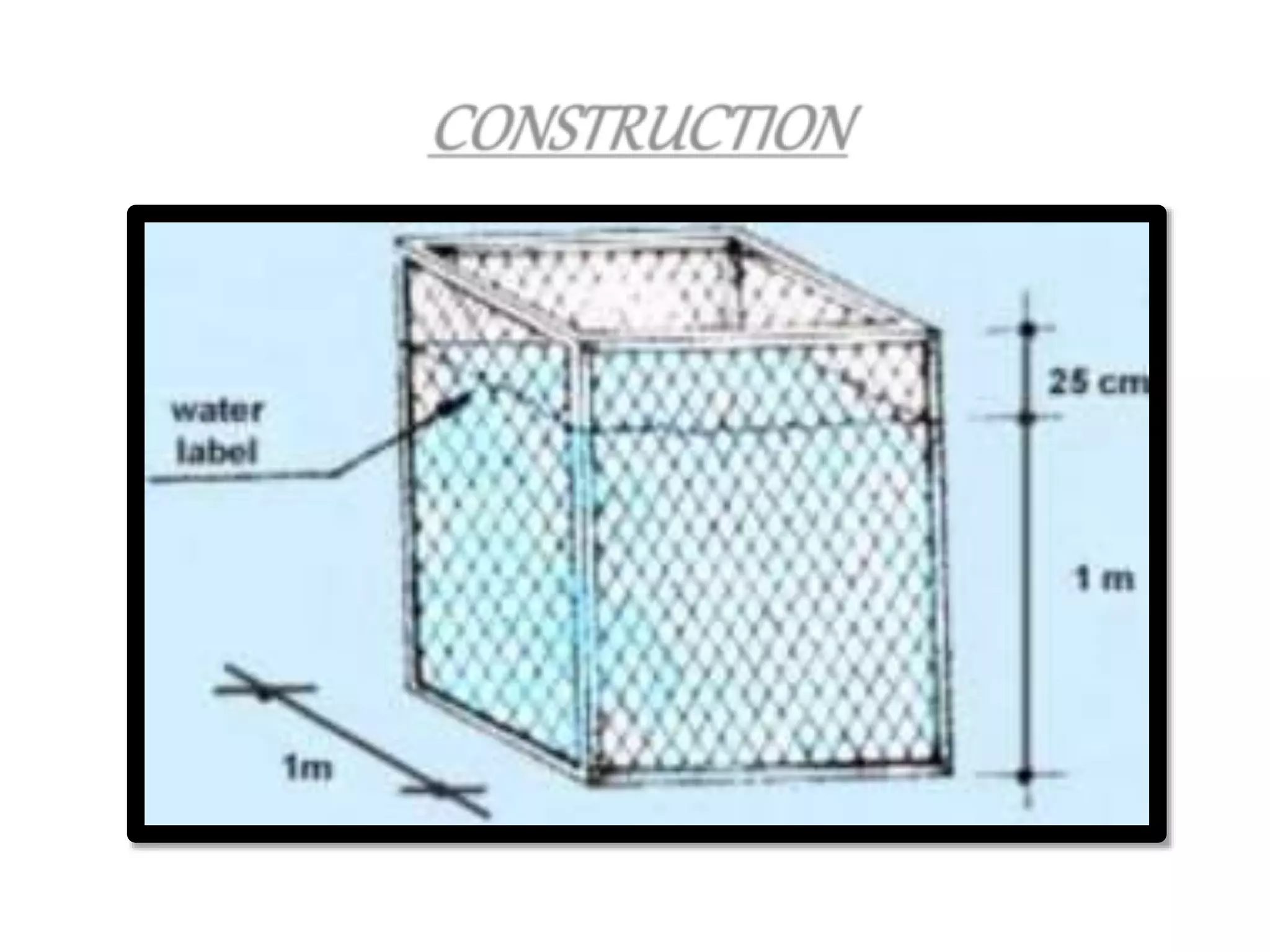
• The cage may be square, rectangular,
circular six sided or eight sided.
• Generally, square and rectangular
cages are prefered for culture.
• Normal size of the cage is 20 to 60
metre cube.
TYPESOFCAGES
• Based on installation cages are
categorised into following types-
• FIXED CAGES- Installed in running
water
• FLOATING CAGES- Lakes,rivers &
offshore water.
• SUBMERGED & MOVABLE CAGES-
Areas affected by cyclone.
FEEDING
• The water movement bring in
nutrients & natural feed.
• In addition artificial feed is also given.
• Example-
• Rice bran
• Fish meal
• Soyabean cake
FISH PRODUCTION
• The fish production ranges from
3000 to 25,000 kg/ha/year in large
cages.
STOCKING DENSITY
• There is no standard stocking density for
cages. The probable stocking density is
given below-
• Carp fry- 210/metre cube
• Carp fingerlings – 40/metre cube
• Tilapia 150/metre cube
• Murrel – 40/metre cube
MANAGEMENT OF CAGES
• LOCATION
• PLANNING
• CAGE PREPRATION
• WATER QUALITY CONTROL
• SEED QUALITY
ASSURANCE
• DISEASE ISSUE &
MANAGEMENT
• HARVESTING
Advantages & limitations of cage culture
Advantages Limitations
• Relatively low investment • Risk of theft
• High production, faster growth • Risk of fish lost
• Easy observation & management • Disease outbreak & control
• Treatment of disease • Low tolerance to poor water quality
• Movement and relocation of cages • Difficult to operate in rough
weather
• Use available water resources • Water exchange is essential
• Easy harvest • Rapid fouling
• Optimum use of feed • Feed lost
• High stocking density culture • Environmental impacts (feed lost,
fish waste
• Reduce pressure on land
• Control reproduction
• Control predators and competitors
CAGE CULTURE

CAGE CULTURE

  • 1.
  • 2.
  • 3.
    INTRODUCTION • Culture offishes in meshed boxes placed in water is called cage culture. • It is an intensive method of aquaculture. • Cage culture is practiced in areas where there is sufficient water movement. • It is done in river, lakes, estuaries & seas.
  • 4.
    HISTORY • Cage cultureoriginated in kampuchia about 200 years ago. • Originally cages were used to transport fishes alive from the capture area to the market area.
  • 7.
    COMPONENTS OF ACAGE • FRAME-It can be made up of wood, plastic or steel. Generally plastic is used. • FLOATS- They are made up of empty barrels or polythene balls. • SINKERS- They are made up of stone concrete or metal.
  • 8.
    • NET -Threetypes of nets are present inner net, outer net & cover net. • It is made up nylon, weld mesh or wooven split bamboo.
  • 9.
    STRUCTURE OF CAGE •The cage may be square, rectangular, circular six sided or eight sided. • Generally, square and rectangular cages are prefered for culture. • Normal size of the cage is 20 to 60 metre cube.
  • 10.
    TYPESOFCAGES • Based oninstallation cages are categorised into following types- • FIXED CAGES- Installed in running water • FLOATING CAGES- Lakes,rivers & offshore water. • SUBMERGED & MOVABLE CAGES- Areas affected by cyclone.
  • 11.
    FEEDING • The watermovement bring in nutrients & natural feed. • In addition artificial feed is also given. • Example- • Rice bran • Fish meal • Soyabean cake
  • 12.
    FISH PRODUCTION • Thefish production ranges from 3000 to 25,000 kg/ha/year in large cages.
  • 13.
    STOCKING DENSITY • Thereis no standard stocking density for cages. The probable stocking density is given below- • Carp fry- 210/metre cube • Carp fingerlings – 40/metre cube • Tilapia 150/metre cube • Murrel – 40/metre cube
  • 14.
    MANAGEMENT OF CAGES •LOCATION • PLANNING • CAGE PREPRATION • WATER QUALITY CONTROL • SEED QUALITY ASSURANCE • DISEASE ISSUE & MANAGEMENT • HARVESTING
  • 15.
    Advantages & limitationsof cage culture Advantages Limitations • Relatively low investment • Risk of theft • High production, faster growth • Risk of fish lost • Easy observation & management • Disease outbreak & control • Treatment of disease • Low tolerance to poor water quality • Movement and relocation of cages • Difficult to operate in rough weather • Use available water resources • Water exchange is essential • Easy harvest • Rapid fouling • Optimum use of feed • Feed lost • High stocking density culture • Environmental impacts (feed lost, fish waste • Reduce pressure on land • Control reproduction • Control predators and competitors