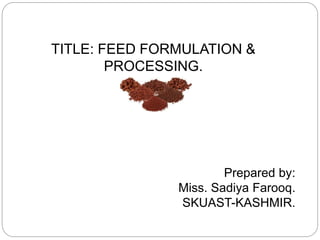
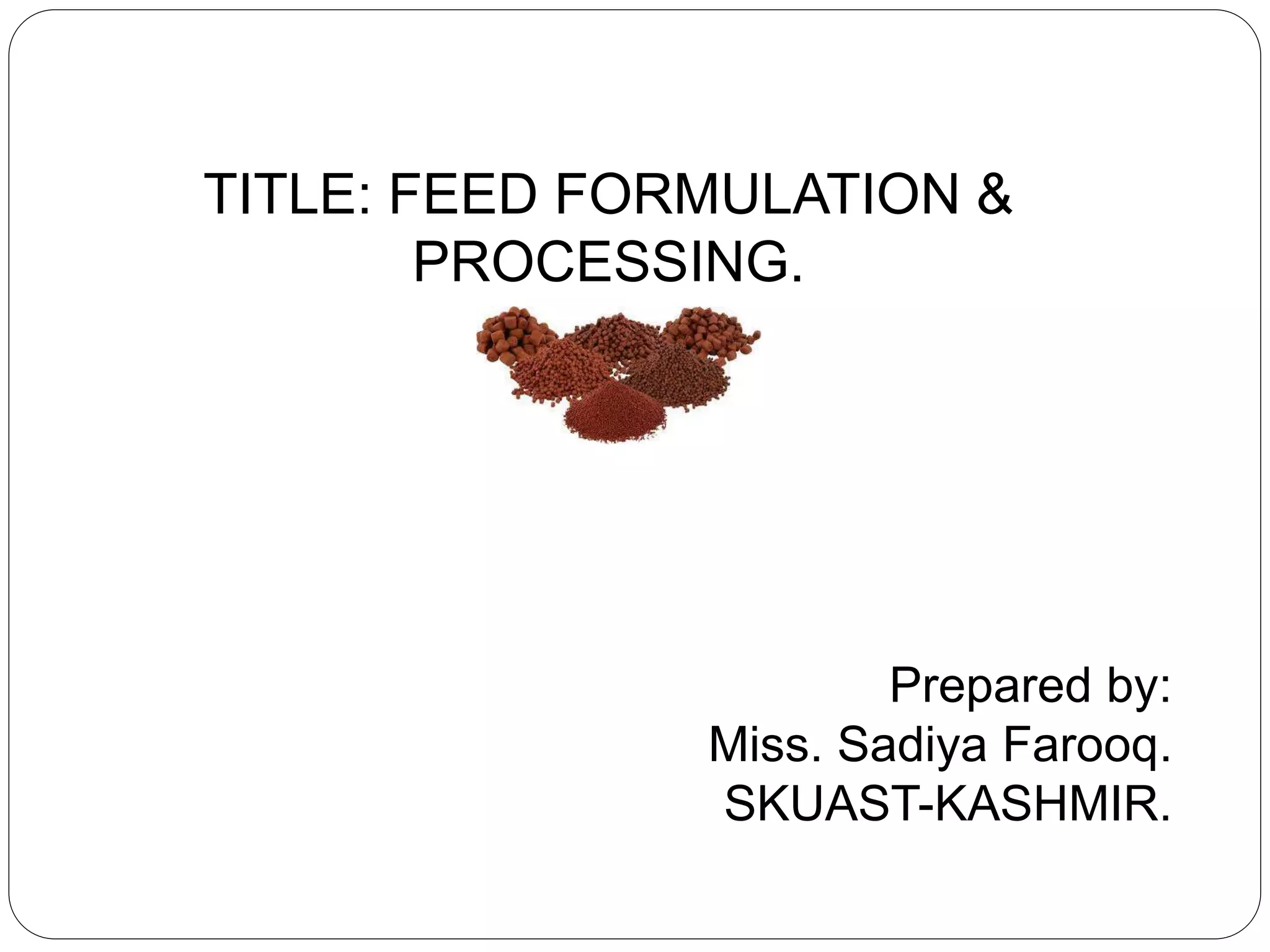
TITLE: FEED FORMULATION &
PROCESSING.
Prepared by:
Miss. Sadiya Farooq.
SKUAST-KASHMIR.
FORMULATION &
PROCESSING:
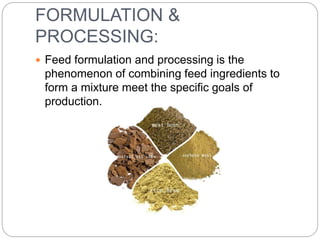
 Feed formulation and processing is the
phenomenon of combining feed ingredients to
form a mixture meet the specific goals of
production.
FEED FORMULATION:
 A diet may be formulated to supplement natural
foods already available in the production system
or as a complete formulation when no other foods
are provided. A complete diet must be nutritionally
balanced, palatable, water stable, and have the
proper size and texture.
Continued...
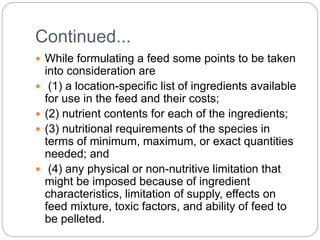
 While formulating a feed some points to be taken
into consideration are
 (1) a location-specific list of ingredients available
for use in the feed and their costs;
 (2) nutrient contents for each of the ingredients;
 (3) nutritional requirements of the species in
terms of minimum, maximum, or exact quantities
needed; and
 (4) any physical or non-nutritive limitation that
might be imposed because of ingredient
characteristics, limitation of supply, effects on
feed mixture, toxic factors, and ability of feed to
be pelleted.
FEED PROCESSING:
 Feed processing usually means altering the
physical (and sometimes chemical) nature of
feed commodities to optimise utilisation by
animals and to enhance mixing and stability of
the diet.
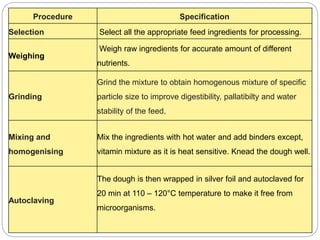
Procedure Specification
Selection Select all the appropriate feed ingredients for processing.
Weighing
Weigh raw ingredients for accurate amount of different
nutrients.
Grinding
Grind the mixture to obtain homogenous mixture of specific
particle size to improve digestibility, pallatibilty and water
stability of the feed.
Mixing and
homogenising
Mix the ingredients with hot water and add binders except,
vitamin mixture as it is heat sensitive. Knead the dough well.
Autoclaving
The dough is then wrapped in silver foil and autoclaved for
20 min at 110 – 120°C temperature to make it free from
microorganisms.
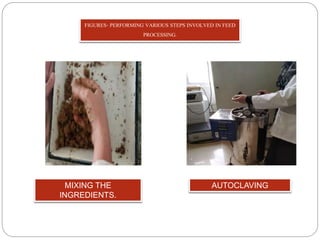
MIXING THE
INGREDIENTS.
AUTOCLAVING
FIGURES- PERFORMING VARIOUS STEPS INVOLVED IN FEED
PROCESSING.
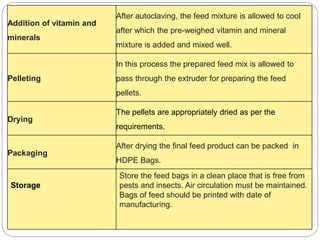
Addition of vitamin and
minerals
After autoclaving, the feed mixture is allowed to cool
after which the pre-weighed vitamin and mineral
mixture is added and mixed well.
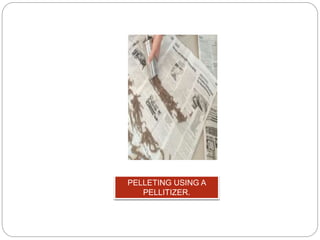
Pelleting
In this process the prepared feed mix is allowed to
pass through the extruder for preparing the feed
pellets.
Drying
The pellets are appropriately dried as per the
requirements.
Packaging
After drying the final feed product can be packed in
HDPE Bags.
Storage
Store the feed bags in a clean place that is free from
pests and insects. Air circulation must be maintained.
Bags of feed should be printed with date of
manufacturing.
PELLETING USING A
PELLITIZER.
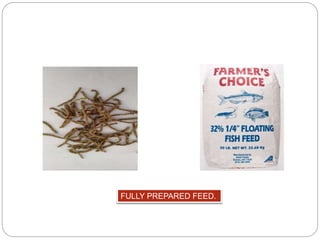
FULLY PREPARED FEED.
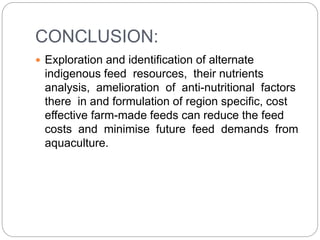
CONCLUSION:
 Exploration and identification of alternate
indigenous feed resources, their nutrients
analysis, amelioration of anti-nutritional factors
there in and formulation of region specific, cost
effective farm-made feeds can reduce the feed
costs and minimise future feed demands from
aquaculture.
 THANKYOU!

FISH FEED FORMULATION & PROCESSING.

  • 1.
    TITLE: FEED FORMULATION& PROCESSING. Prepared by: Miss. Sadiya Farooq. SKUAST-KASHMIR.
  • 2.
    FORMULATION & PROCESSING:  Feedformulation and processing is the phenomenon of combining feed ingredients to form a mixture meet the specific goals of production.
  • 3.
    FEED FORMULATION:  Adiet may be formulated to supplement natural foods already available in the production system or as a complete formulation when no other foods are provided. A complete diet must be nutritionally balanced, palatable, water stable, and have the proper size and texture.
  • 4.
    Continued...  While formulatinga feed some points to be taken into consideration are  (1) a location-specific list of ingredients available for use in the feed and their costs;  (2) nutrient contents for each of the ingredients;  (3) nutritional requirements of the species in terms of minimum, maximum, or exact quantities needed; and  (4) any physical or non-nutritive limitation that might be imposed because of ingredient characteristics, limitation of supply, effects on feed mixture, toxic factors, and ability of feed to be pelleted.
  • 5.
    FEED PROCESSING:  Feedprocessing usually means altering the physical (and sometimes chemical) nature of feed commodities to optimise utilisation by animals and to enhance mixing and stability of the diet.
  • 6.
    Procedure Specification Selection Selectall the appropriate feed ingredients for processing. Weighing Weigh raw ingredients for accurate amount of different nutrients. Grinding Grind the mixture to obtain homogenous mixture of specific particle size to improve digestibility, pallatibilty and water stability of the feed. Mixing and homogenising Mix the ingredients with hot water and add binders except, vitamin mixture as it is heat sensitive. Knead the dough well. Autoclaving The dough is then wrapped in silver foil and autoclaved for 20 min at 110 – 120°C temperature to make it free from microorganisms.
  • 7.
    MIXING THE INGREDIENTS. AUTOCLAVING FIGURES- PERFORMINGVARIOUS STEPS INVOLVED IN FEED PROCESSING.
  • 8.
    Addition of vitaminand minerals After autoclaving, the feed mixture is allowed to cool after which the pre-weighed vitamin and mineral mixture is added and mixed well. Pelleting In this process the prepared feed mix is allowed to pass through the extruder for preparing the feed pellets. Drying The pellets are appropriately dried as per the requirements. Packaging After drying the final feed product can be packed in HDPE Bags. Storage Store the feed bags in a clean place that is free from pests and insects. Air circulation must be maintained. Bags of feed should be printed with date of manufacturing.
  • 9.
  • 10.
  • 11.
    CONCLUSION:  Exploration andidentification of alternate indigenous feed resources, their nutrients analysis, amelioration of anti-nutritional factors there in and formulation of region specific, cost effective farm-made feeds can reduce the feed costs and minimise future feed demands from aquaculture.
  • 12.