PREPARED BY- SWEETY SINGH
M.F.Sc.
Department of Aquaculture
Fisheries College and Research Institute
Tuticorin
Tamil Nadu Dr. J. Jayalalitha Fisheries University
FEED INGREDIENTS
 Animal and fish feed ingredients are for the most part
by products from the human food processing
industry .. •
 Feed ingredients are produced following the extraction
of high value food from raw materials which are
considered unsuitable for human consumption. •
Cont...
 A wide variety of ingredients are available for use in fish
and crustacean feeds, they are
 1. Grasses
 2. Legumes
 3. Miscellaneous fodder pants
 4. Fruits and vegetables
 5. Root crops
 6. Cereals
 7. Oil-bearing seed and oil cakes
 8. Animal products
 9. Miscellaneous feed stuffs
 10. additives
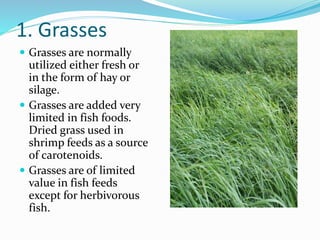
1. Grasses
 Grasses are normally
utilized either fresh or
in the form of hay or
silage.
 Grasses are added very
limited in fish foods.
Dried grass used in
shrimp feeds as a source
of carotenoids.
 Grasses are of limited
value in fish feeds
except for herbivorous
fish.
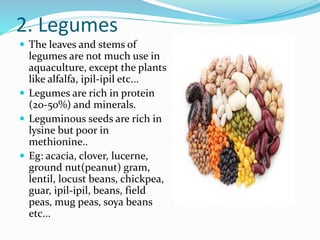
2. Legumes
 The leaves and stems of
legumes are not much use in
aquaculture, except the plants
like alfalfa, ipil-ipil etc...
 Legumes are rich in protein
(20-50%) and minerals.
 Leguminous seeds are rich in
lysine but poor in
methionine..
 Eg: acacia, clover, lucerne,
ground nut(peanut) gram,
lentil, locust beans, chickpea,
guar, ipil-ipil, beans, field
peas, mug peas, soya beans
etc...
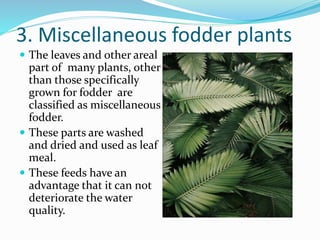
3. Miscellaneous fodder plants
 The leaves and other areal
part of many plants, other
than those specifically
grown for fodder are
classified as miscellaneous
fodder.
 These parts are washed
and dried and used as leaf
meal.
 These feeds have an
advantage that it can not
deteriorate the water
quality.
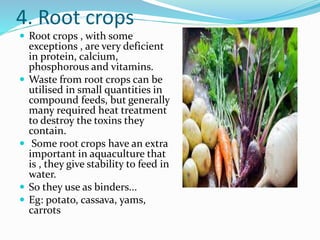
4. Root crops
 Root crops , with some
exceptions , are very deficient
in protein, calcium,
phosphorous and vitamins.
 Waste from root crops can be
utilised in small quantities in
compound feeds, but generally
many required heat treatment
to destroy the toxins they
contain.
 Some root crops have an extra
important in aquaculture that
is , they give stability to feed in
water.
 So they use as binders...
 Eg: potato, cassava, yams,
carrots
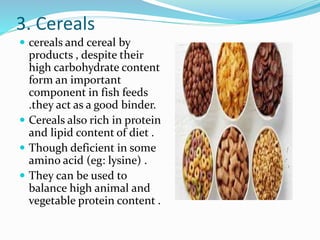
3. Cereals
 cereals and cereal by
products , despite their
high carbohydrate content
form an important
component in fish feeds
.they act as a good binder.
 Cereals also rich in protein
and lipid content of diet .
 Though deficient in some
amino acid (eg: lysine) .
 They can be used to
balance high animal and
vegetable protein content .
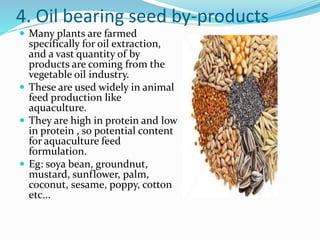
4. Oil bearing seed by-products
 Many plants are farmed
specifically for oil extraction,
and a vast quantity of by
products are coming from the
vegetable oil industry.
 These are used widely in animal
feed production like
aquaculture.
 They are high in protein and low
in protein , so potential content
for aquaculture feed
formulation.
 Eg: soya bean, groundnut,
mustard, sunflower, palm,
coconut, sesame, poppy, cotton
etc...
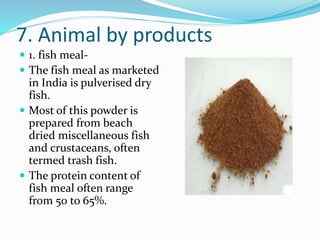
7. Animal by products
 1. fish meal-
 The fish meal as marketed
in India is pulverised dry
fish.
 Most of this powder is
prepared from beach
dried miscellaneous fish
and crustaceans, often
termed trash fish.
 The protein content of
fish meal often range
from 50 to 65%.
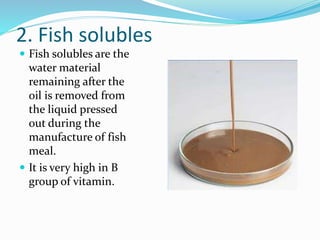
2. Fish solubles
 Fish solubles are the
water material
remaining after the
oil is removed from
the liquid pressed
out during the
manufacture of fish
meal.
 It is very high in B
group of vitamin.
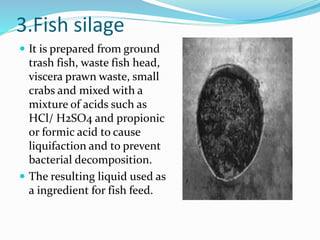
3.Fish silage
 It is prepared from ground
trash fish, waste fish head,
viscera prawn waste, small
crabs and mixed with a
mixture of acids such as
HCl/ H2SO4 and propionic
or formic acid to cause
liquifaction and to prevent
bacterial decomposition.
 The resulting liquid used as
a ingredient for fish feed.
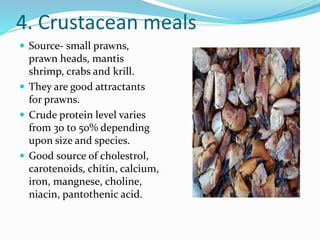
4. Crustacean meals
 Source- small prawns,
prawn heads, mantis
shrimp, crabs and krill.
 They are good attractants
for prawns.
 Crude protein level varies
from 30 to 50% depending
upon size and species.
 Good source of cholestrol,
carotenoids, chitin, calcium,
iron, mangnese, choline,
niacin, pantothenic acid.
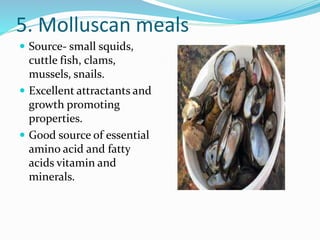
5. Molluscan meals
 Source- small squids,
cuttle fish, clams,
mussels, snails.
 Excellent attractants and
growth promoting
properties.
 Good source of essential
amino acid and fatty
acids vitamin and
minerals.
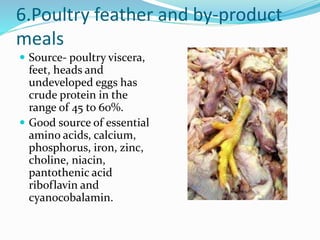
6.Poultry feather and by-product
meals
 Source- poultry viscera,
feet, heads and
undeveloped eggs has
crude protein in the
range of 45 to 60%.
 Good source of essential
amino acids, calcium,
phosphorus, iron, zinc,
choline, niacin,
pantothenic acid
riboflavin and
cyanocobalamin.
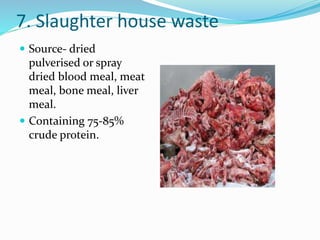
7. Slaughter house waste
 Source- dried
pulverised or spray
dried blood meal, meat
meal, bone meal, liver
meal.
 Containing 75-85%
crude protein.
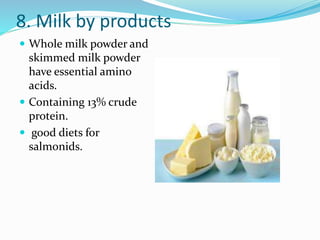
8. Milk by products
 Whole milk powder and
skimmed milk powder
have essential amino
acids.
 Containing 13% crude
protein.
 good diets for
salmonids.
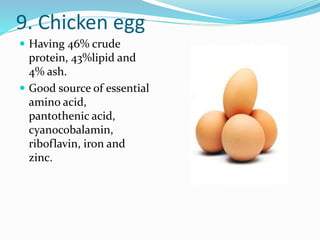
9. Chicken egg
 Having 46% crude
protein, 43%lipid and
4% ash.
 Good source of essential
amino acid,
pantothenic acid,
cyanocobalamin,
riboflavin, iron and
zinc.
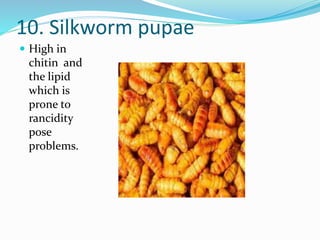
10. Silkworm pupae
 High in
chitin and
the lipid
which is
prone to
rancidity
pose
problems.
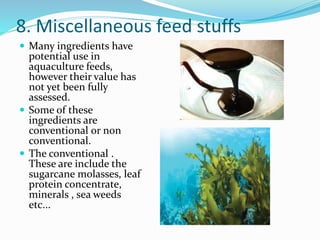
8. Miscellaneous feed stuffs
 Many ingredients have
potential use in
aquaculture feeds,
however their value has
not yet been fully
assessed.
 Some of these
ingredients are
conventional or non
conventional.
 The conventional .
These are include the
sugarcane molasses, leaf
protein concentrate,
minerals , sea weeds
etc...
Thank you

Feed Ingredients

  • 1.
    PREPARED BY- SWEETYSINGH M.F.Sc. Department of Aquaculture Fisheries College and Research Institute Tuticorin Tamil Nadu Dr. J. Jayalalitha Fisheries University
  • 2.
    FEED INGREDIENTS  Animaland fish feed ingredients are for the most part by products from the human food processing industry .. •  Feed ingredients are produced following the extraction of high value food from raw materials which are considered unsuitable for human consumption. •
  • 3.
    Cont...  A widevariety of ingredients are available for use in fish and crustacean feeds, they are  1. Grasses  2. Legumes  3. Miscellaneous fodder pants  4. Fruits and vegetables  5. Root crops  6. Cereals  7. Oil-bearing seed and oil cakes  8. Animal products  9. Miscellaneous feed stuffs  10. additives
  • 4.
    1. Grasses  Grassesare normally utilized either fresh or in the form of hay or silage.  Grasses are added very limited in fish foods. Dried grass used in shrimp feeds as a source of carotenoids.  Grasses are of limited value in fish feeds except for herbivorous fish.
  • 5.
    2. Legumes  Theleaves and stems of legumes are not much use in aquaculture, except the plants like alfalfa, ipil-ipil etc...  Legumes are rich in protein (20-50%) and minerals.  Leguminous seeds are rich in lysine but poor in methionine..  Eg: acacia, clover, lucerne, ground nut(peanut) gram, lentil, locust beans, chickpea, guar, ipil-ipil, beans, field peas, mug peas, soya beans etc...
  • 6.
    3. Miscellaneous fodderplants  The leaves and other areal part of many plants, other than those specifically grown for fodder are classified as miscellaneous fodder.  These parts are washed and dried and used as leaf meal.  These feeds have an advantage that it can not deteriorate the water quality.
  • 7.
    4. Root crops Root crops , with some exceptions , are very deficient in protein, calcium, phosphorous and vitamins.  Waste from root crops can be utilised in small quantities in compound feeds, but generally many required heat treatment to destroy the toxins they contain.  Some root crops have an extra important in aquaculture that is , they give stability to feed in water.  So they use as binders...  Eg: potato, cassava, yams, carrots
  • 8.
    3. Cereals  cerealsand cereal by products , despite their high carbohydrate content form an important component in fish feeds .they act as a good binder.  Cereals also rich in protein and lipid content of diet .  Though deficient in some amino acid (eg: lysine) .  They can be used to balance high animal and vegetable protein content .
  • 9.
    4. Oil bearingseed by-products  Many plants are farmed specifically for oil extraction, and a vast quantity of by products are coming from the vegetable oil industry.  These are used widely in animal feed production like aquaculture.  They are high in protein and low in protein , so potential content for aquaculture feed formulation.  Eg: soya bean, groundnut, mustard, sunflower, palm, coconut, sesame, poppy, cotton etc...
  • 10.
    7. Animal byproducts  1. fish meal-  The fish meal as marketed in India is pulverised dry fish.  Most of this powder is prepared from beach dried miscellaneous fish and crustaceans, often termed trash fish.  The protein content of fish meal often range from 50 to 65%.
  • 11.
    2. Fish solubles Fish solubles are the water material remaining after the oil is removed from the liquid pressed out during the manufacture of fish meal.  It is very high in B group of vitamin.
  • 12.
    3.Fish silage  Itis prepared from ground trash fish, waste fish head, viscera prawn waste, small crabs and mixed with a mixture of acids such as HCl/ H2SO4 and propionic or formic acid to cause liquifaction and to prevent bacterial decomposition.  The resulting liquid used as a ingredient for fish feed.
  • 13.
    4. Crustacean meals Source- small prawns, prawn heads, mantis shrimp, crabs and krill.  They are good attractants for prawns.  Crude protein level varies from 30 to 50% depending upon size and species.  Good source of cholestrol, carotenoids, chitin, calcium, iron, mangnese, choline, niacin, pantothenic acid.
  • 14.
    5. Molluscan meals Source- small squids, cuttle fish, clams, mussels, snails.  Excellent attractants and growth promoting properties.  Good source of essential amino acid and fatty acids vitamin and minerals.
  • 15.
    6.Poultry feather andby-product meals  Source- poultry viscera, feet, heads and undeveloped eggs has crude protein in the range of 45 to 60%.  Good source of essential amino acids, calcium, phosphorus, iron, zinc, choline, niacin, pantothenic acid riboflavin and cyanocobalamin.
  • 16.
    7. Slaughter housewaste  Source- dried pulverised or spray dried blood meal, meat meal, bone meal, liver meal.  Containing 75-85% crude protein.
  • 17.
    8. Milk byproducts  Whole milk powder and skimmed milk powder have essential amino acids.  Containing 13% crude protein.  good diets for salmonids.
  • 18.
    9. Chicken egg Having 46% crude protein, 43%lipid and 4% ash.  Good source of essential amino acid, pantothenic acid, cyanocobalamin, riboflavin, iron and zinc.
  • 19.
    10. Silkworm pupae High in chitin and the lipid which is prone to rancidity pose problems.
  • 20.
    8. Miscellaneous feedstuffs  Many ingredients have potential use in aquaculture feeds, however their value has not yet been fully assessed.  Some of these ingredients are conventional or non conventional.  The conventional . These are include the sugarcane molasses, leaf protein concentrate, minerals , sea weeds etc...
  • 21.