Presented by-Nitika Dhyani
 Fire insurance is that insurance
contract which take place against
fire and other risk which are
mentioned in the fire insurance
contract.
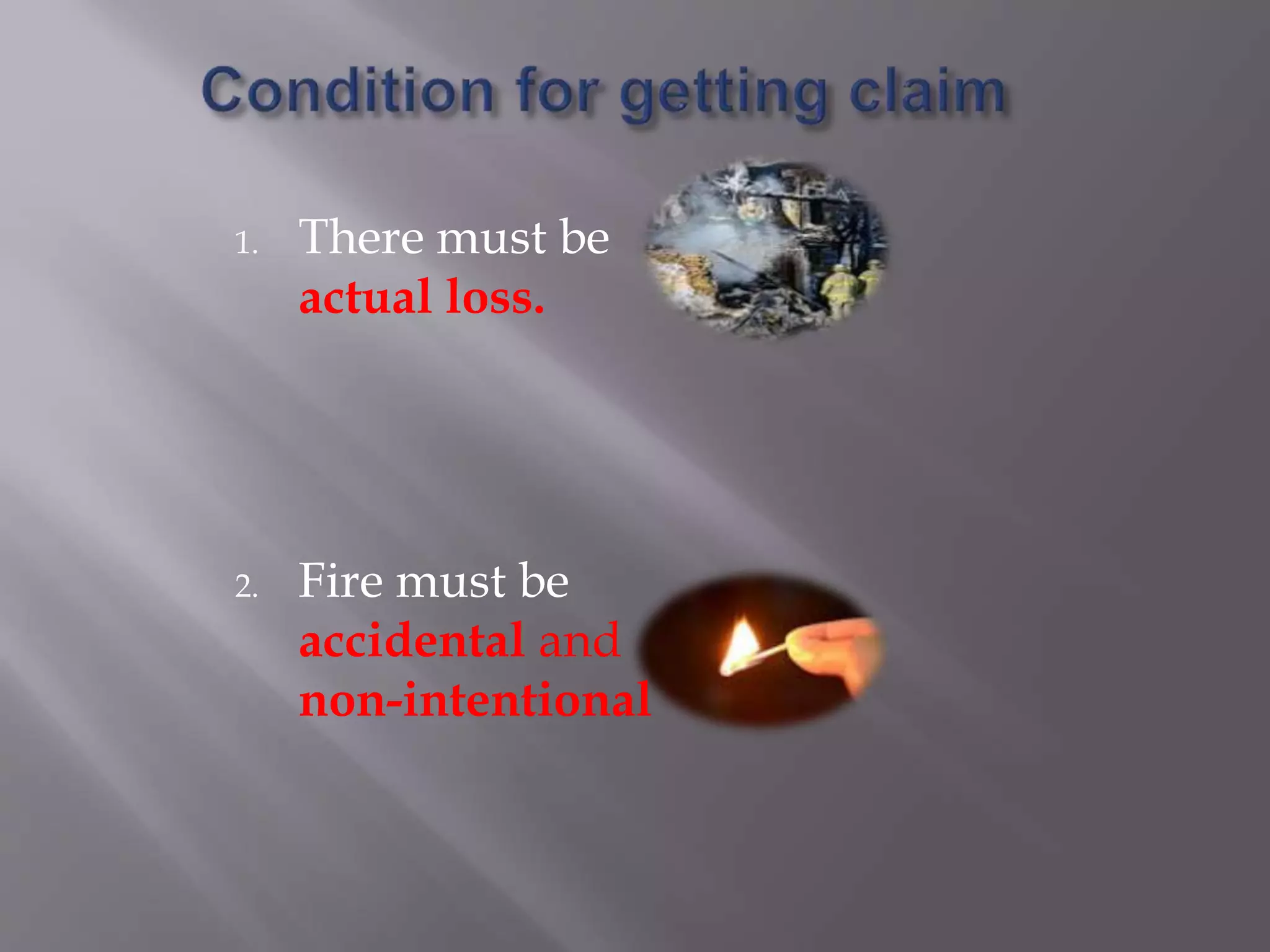
1. There must be
actual loss.
2. Fire must be
accidental and
non-intentional
 Written contract –between insurer and insured
 Two parties-insurer and insured.
 Repayment of sum assured is not nessary-if
there is no loss of property due to fire during
the period of insurance,no payment is made.
 Fire insurance policy is
for a period of one year,
after which it is to be
renewed form time to
time.
 Premium may be paid in
lump sum or
installments.
 The insured can, in the
event of loss recover the
actual amount of loss form
the insurer
 A person is not allowed to
gain by insurance.
 Protection element is present
.it is lack of investment.
 Where a property is insured for a sum which is less
than its value, the policy contain a clause that the
insurer shall not be liable to pay the full loss but
only that proportion of the loss which the amount
insured for, bears to the full value of the property.
 For example: A value of the property is
Rs.1,00,000. It is insured for Rs.60,000 (60% of the
total value)
The amount of loss is Rs 60,000.The insurance
company will not pay Rs.60,000 to the policyholder
but will pay Rs.36,000 (60% of Rs.60,000).
• It is usually taken where it is not easy to ascertain the value
of the property.
• In this policy the indemnity is a fixed amount agreed upon
at the time of signing the contract.
• The insured is benefited when the market value of the
property declines , but suffer loss when the market value
appreciates.
• The valued insurance policy is usually offered for such
items like jewellery, furs, or paintings, which value is
difficult to estimate once they are damaged or destroyed by
fire.
 A specific policy is a type of policy in which the property
is insured for a specific sum irrespective of its value.
 If there is loss, the stated amount will have to be paid to
the policyholder.
 The actual value of the subject matter is not considered
in this respect.
 For example: If a property is insured for Rs. 10000
though its actual value is Rs. 20000. In the event of
loss to property, not more than Rs. 10000 can be
recovered.
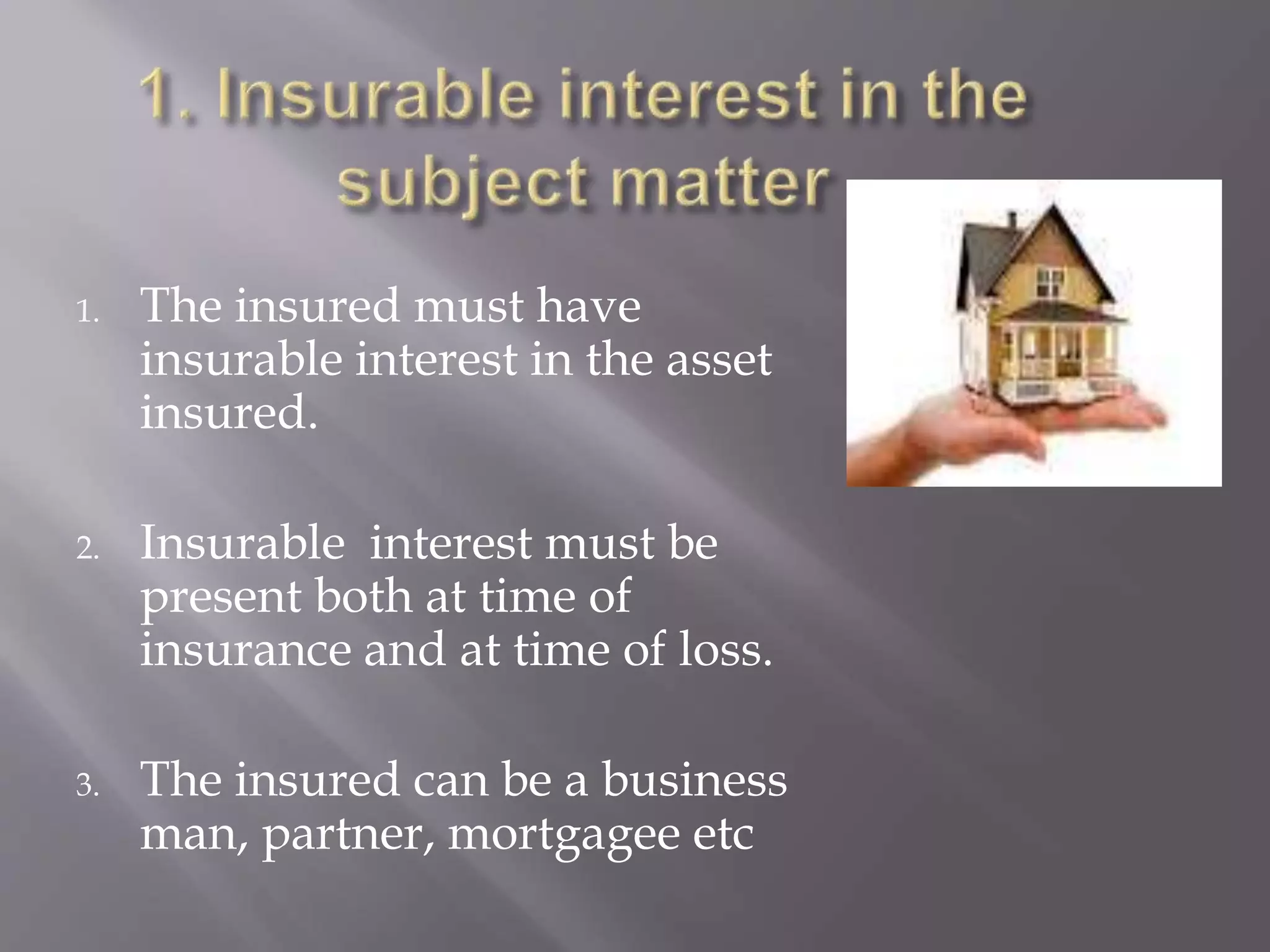
1. The insured must have
insurable interest in the asset
insured.
2. Insurable interest must be
present both at time of
insurance and at time of loss.
3. The insured can be a business
man, partner, mortgagee etc
• It is taken to cover loss on goods, which are lying in
different places and the stock of which is almost
continuously fluctuating.
• It is taken out for those goods which are frequently
changing in a warehouse.
• Floating policies are suitable to those traders or products
whose raw-materials or merchandise are lying at different
localities or godowns.
• For example:-Some of the goods of other trader are kept in
one godown, and few kept in another godown, some kept
in the railway godown or some at the sea port open.
Under this policy, the insurance company provides cover against any risk
affecting the goods such as fire, theft, earthquake.
Reinstatement Policy
Under this policy, the insurance company pays the amount required for
reinstating the damaged property.
Blanket Policy
When a single insurance policy is taken for both the fixed and the current
assets, then it is called a blanket policy.
Transit Policy
When goods are sent from one place to other place and if there are chances of
incurrence of loss due to fire in transit, then transit policy is taken.
Fire insurance ppt
Fire insurance ppt

Fire insurance ppt

  • 1.
  • 2.
     Fire insuranceis that insurance contract which take place against fire and other risk which are mentioned in the fire insurance contract.
  • 3.
    1. There mustbe actual loss. 2. Fire must be accidental and non-intentional
  • 4.
     Written contract–between insurer and insured  Two parties-insurer and insured.  Repayment of sum assured is not nessary-if there is no loss of property due to fire during the period of insurance,no payment is made.
  • 5.
     Fire insurancepolicy is for a period of one year, after which it is to be renewed form time to time.  Premium may be paid in lump sum or installments.
  • 6.
     The insuredcan, in the event of loss recover the actual amount of loss form the insurer  A person is not allowed to gain by insurance.
  • 7.
     Protection elementis present .it is lack of investment.
  • 8.
     Where aproperty is insured for a sum which is less than its value, the policy contain a clause that the insurer shall not be liable to pay the full loss but only that proportion of the loss which the amount insured for, bears to the full value of the property.  For example: A value of the property is Rs.1,00,000. It is insured for Rs.60,000 (60% of the total value) The amount of loss is Rs 60,000.The insurance company will not pay Rs.60,000 to the policyholder but will pay Rs.36,000 (60% of Rs.60,000).
  • 9.
    • It isusually taken where it is not easy to ascertain the value of the property. • In this policy the indemnity is a fixed amount agreed upon at the time of signing the contract. • The insured is benefited when the market value of the property declines , but suffer loss when the market value appreciates. • The valued insurance policy is usually offered for such items like jewellery, furs, or paintings, which value is difficult to estimate once they are damaged or destroyed by fire.
  • 10.
     A specificpolicy is a type of policy in which the property is insured for a specific sum irrespective of its value.  If there is loss, the stated amount will have to be paid to the policyholder.  The actual value of the subject matter is not considered in this respect.  For example: If a property is insured for Rs. 10000 though its actual value is Rs. 20000. In the event of loss to property, not more than Rs. 10000 can be recovered.
  • 11.
    1. The insuredmust have insurable interest in the asset insured. 2. Insurable interest must be present both at time of insurance and at time of loss. 3. The insured can be a business man, partner, mortgagee etc
  • 12.
    • It istaken to cover loss on goods, which are lying in different places and the stock of which is almost continuously fluctuating. • It is taken out for those goods which are frequently changing in a warehouse. • Floating policies are suitable to those traders or products whose raw-materials or merchandise are lying at different localities or godowns. • For example:-Some of the goods of other trader are kept in one godown, and few kept in another godown, some kept in the railway godown or some at the sea port open.
  • 13.
    Under this policy,the insurance company provides cover against any risk affecting the goods such as fire, theft, earthquake. Reinstatement Policy Under this policy, the insurance company pays the amount required for reinstating the damaged property. Blanket Policy When a single insurance policy is taken for both the fixed and the current assets, then it is called a blanket policy. Transit Policy When goods are sent from one place to other place and if there are chances of incurrence of loss due to fire in transit, then transit policy is taken.