PRESENTATION
ON JOURNAL ENTRY
BY NITIKA DHYANI
SUNDRY EXPENSES:
 Petty expenses are incurred in a business
such as on refreshment, postage,
conveyance ect such a/c are normally
debited in one account i.e. sundry expenses
a/c
The journal entry passed on :
sundry expenses A/c ….. Dr
To cash A/c
(Being the miscellaneous expenses incurred)
CLOSING STOCK OR INVENTORY
 Closing stock or inventory is the goods
unsold at the end of the year.it is not given in
trail balance but is given as an additional
information .
Adjustment entry for closing stock is as
follows:
Closing stock a/c ….Dr
To Trading a/c
(Being the closing stock recorded)
OUTSTANDING EXPENSES
 Outstanding expenses are those expenses
which have been incurred and consumed
during an accounting period. due but are not
paid. Examples include outstanding salary,
outstanding rent, etc. Outstanding expenses
are recorded in the books at the end of an
accounting period to show true numbers of a
business.
CONTIN.
 Outstanding expense is a personal account and is
shown on the liability side of a balance sheet.
 Let’s assume that in March there were 30,000 due to
be paid for salaries, which weren’t paid due to some
reason. At the end of March the company will record
this in their books of accounts with the following
journal entry:
 Salaries A/C …dr 30000
To outstanding expenses 3000
(being the outstanding wages accounted)
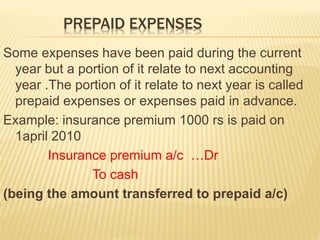
PREPAID EXPENSES
Some expenses have been paid during the current
year but a portion of it relate to next accounting
year .The portion of it relate to next year is called
prepaid expenses or expenses paid in advance.
Example: insurance premium 1000 rs is paid on
1april 2010
Insurance premium a/c …Dr
To cash
(being the amount transferred to prepaid a/c)
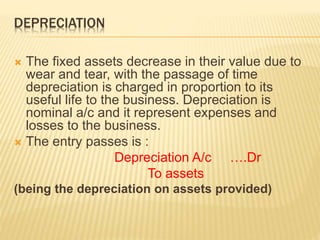
DEPRECIATION
 The fixed assets decrease in their value due to
wear and tear, with the passage of time
depreciation is charged in proportion to its
useful life to the business. Depreciation is
nominal a/c and it represent expenses and
losses to the business.
 The entry passes is :
Depreciation A/c ….Dr
To assets
(being the depreciation on assets provided)
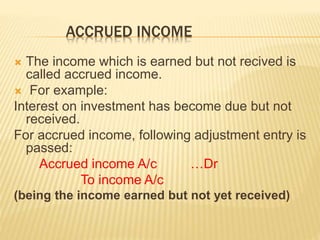
ACCRUED INCOME
 The income which is earned but not recived is
called accrued income.
 For example:
Interest on investment has become due but not
received.
For accrued income, following adjustment entry is
passed:
Accrued income A/c …Dr
To income A/c
(being the income earned but not yet received)
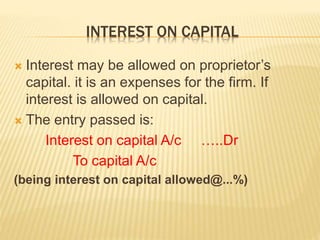
INTEREST ON CAPITAL
 Interest may be allowed on proprietor’s
capital. it is an expenses for the firm. If
interest is allowed on capital.
 The entry passed is:
Interest on capital A/c …..Dr
To capital A/c
(being interest on capital allowed@...%)
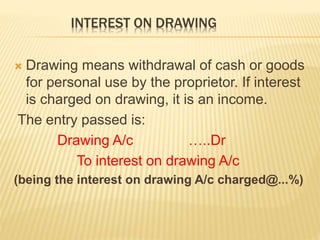
INTEREST ON DRAWING
 Drawing means withdrawal of cash or goods
for personal use by the proprietor. If interest
is charged on drawing, it is an income.
The entry passed is:
Drawing A/c …..Dr
To interest on drawing A/c
(being the interest on drawing A/c charged@...%)

important Journal entry

  • 1.
  • 2.
    SUNDRY EXPENSES:  Pettyexpenses are incurred in a business such as on refreshment, postage, conveyance ect such a/c are normally debited in one account i.e. sundry expenses a/c The journal entry passed on : sundry expenses A/c ….. Dr To cash A/c (Being the miscellaneous expenses incurred)
  • 3.
    CLOSING STOCK ORINVENTORY  Closing stock or inventory is the goods unsold at the end of the year.it is not given in trail balance but is given as an additional information . Adjustment entry for closing stock is as follows: Closing stock a/c ….Dr To Trading a/c (Being the closing stock recorded)
  • 4.
    OUTSTANDING EXPENSES  Outstandingexpenses are those expenses which have been incurred and consumed during an accounting period. due but are not paid. Examples include outstanding salary, outstanding rent, etc. Outstanding expenses are recorded in the books at the end of an accounting period to show true numbers of a business.
  • 5.
    CONTIN.  Outstanding expenseis a personal account and is shown on the liability side of a balance sheet.  Let’s assume that in March there were 30,000 due to be paid for salaries, which weren’t paid due to some reason. At the end of March the company will record this in their books of accounts with the following journal entry:  Salaries A/C …dr 30000 To outstanding expenses 3000 (being the outstanding wages accounted)
  • 6.
    PREPAID EXPENSES Some expenseshave been paid during the current year but a portion of it relate to next accounting year .The portion of it relate to next year is called prepaid expenses or expenses paid in advance. Example: insurance premium 1000 rs is paid on 1april 2010 Insurance premium a/c …Dr To cash (being the amount transferred to prepaid a/c)
  • 7.
    DEPRECIATION  The fixedassets decrease in their value due to wear and tear, with the passage of time depreciation is charged in proportion to its useful life to the business. Depreciation is nominal a/c and it represent expenses and losses to the business.  The entry passes is : Depreciation A/c ….Dr To assets (being the depreciation on assets provided)
  • 8.
    ACCRUED INCOME  Theincome which is earned but not recived is called accrued income.  For example: Interest on investment has become due but not received. For accrued income, following adjustment entry is passed: Accrued income A/c …Dr To income A/c (being the income earned but not yet received)
  • 9.
    INTEREST ON CAPITAL Interest may be allowed on proprietor’s capital. it is an expenses for the firm. If interest is allowed on capital.  The entry passed is: Interest on capital A/c …..Dr To capital A/c (being interest on capital allowed@...%)
  • 10.
    INTEREST ON DRAWING Drawing means withdrawal of cash or goods for personal use by the proprietor. If interest is charged on drawing, it is an income. The entry passed is: Drawing A/c …..Dr To interest on drawing A/c (being the interest on drawing A/c charged@...%)