
Financial Globalization has brought speculation and ruinAakashGoswamiJigar JoshiNidhi JoshiPratikNegi
Financial GlobalizationPratikNegi- Overview of financial globalization and The big question
What is Globalization?Combination of economic, technological, Socioculturaland political forcesInternationalismIntegration of national economy into international economy through:Trade
FDI
Migration
Spread of technologyRoman and British Empire’s contribution
What is Financial Globalization?The liberalization of trade in financial assets.It is the flow of capital and corporate investments between various countries.World allocation of money leading to exchange of services and goods.
Financial CrisisStage 1: Severe fiscal imbalancesStage 2: Run up to the currency crisisStage 3: Currency crisisFinal stage: currency crisis triggers a full-fledged financial crisis
The big question is:Then why the financial globalization has failed in the major parts of the globe?
Financial GlobalizationNidhi Joshi- the ladder to speculation and ruin
1st step-First mover advantagesAsymmetric trade and investmentExploitation on customers by means of increasing profitsAlso increases competition among the domestic service providers
2nd step-Expropriation, unfair pricesRuins the common manPolitical risk involved with investmentThe prices set by the multinational companies is not set looking at the development index of the country but just from profit-making point of view
3rd step-Economic and political interests of investor countriesDisproportionate shock on the local economy if the foreign investor withdraw his moneyDebt and exploitationCorrupts the political system of the country
4th-Undervaluation of currency of poor countriesMismatch between the national policy and the economy of the domestic countrySlow growth in the development of the countryBanking panics or RecessionCheaper exports
Financial GlobalizationJigar Joshi- Contemporary Examples
Mexico Crisis, 1988Happened due to 1970s increase in petroleum pricesLax banking and corrupt practicesFailure in maintaining fixed exchange rateDevaluation was not handled correctlyMexico lost its image in terms of exporting its crude oil
Indonesian crisis, 1997Occurred due to improper free-floating exchange rate arrangementFalling of the rupiah in international market
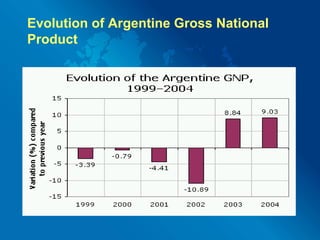
Argentina crisis,Unable to pay the debt of loan in 1983 due to tumbling economyRise in inflationUnemploymentForeign companies moves outProblem in debt restructuring
Evolution of Argentine Gross National Product
Thailand crisis, 1997Failure to devalue bahtBankruptcy law was enforcedProblem with devaluationIts international trade became worse
Malaysian crisis, 1997Due to the devaluation of Thai baht, Malaysian ringgit was ‘attacked’ by speculatorsDowngrades on the stock and currency marketsThe ringgit fall to almost 50%The exit of new plans for its developmentThe first recession in the countryUnemployment
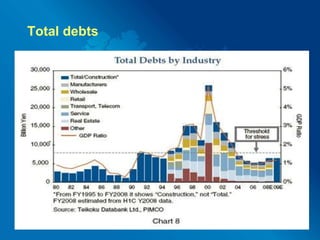
Japanese crisisAs foreign companies entered the market, the value and the price of the local goods fallThis resulted in to low consumption rateEstate bubbleThe prices of housing in Japan are still high
Total debts
Financial GlobalizationAakashGoswami – Conclusion and Recommendations
Financial globalization ‘dangerous’ success-Bubble-effectForeign Competition and thus rivalryBrain drainsThe shift of outsourcingThe investor on his wishes withdraws and then redeploysChances are given more to foreign companies. What about the domestic talent?
And the success is still rising…What about the national identification?Shifting production to low-wage economies and thus we jump into the ‘race to bottom’Due to language barriers, time also increases in solving an issueFear of debt

Financial Globalization (Pratik Negi)

  • 1.
    Financial Globalization hasbrought speculation and ruinAakashGoswamiJigar JoshiNidhi JoshiPratikNegi
  • 2.
    Financial GlobalizationPratikNegi- Overviewof financial globalization and The big question
  • 3.
    What is Globalization?Combinationof economic, technological, Socioculturaland political forcesInternationalismIntegration of national economy into international economy through:Trade
  • 4.
  • 5.
  • 6.
    Spread of technologyRomanand British Empire’s contribution
  • 7.
    What is FinancialGlobalization?The liberalization of trade in financial assets.It is the flow of capital and corporate investments between various countries.World allocation of money leading to exchange of services and goods.
  • 8.
    Financial CrisisStage 1:Severe fiscal imbalancesStage 2: Run up to the currency crisisStage 3: Currency crisisFinal stage: currency crisis triggers a full-fledged financial crisis
  • 9.
    The big questionis:Then why the financial globalization has failed in the major parts of the globe?
  • 10.
    Financial GlobalizationNidhi Joshi-the ladder to speculation and ruin
  • 11.
    1st step-First moveradvantagesAsymmetric trade and investmentExploitation on customers by means of increasing profitsAlso increases competition among the domestic service providers
  • 12.
    2nd step-Expropriation, unfairpricesRuins the common manPolitical risk involved with investmentThe prices set by the multinational companies is not set looking at the development index of the country but just from profit-making point of view
  • 13.
    3rd step-Economic andpolitical interests of investor countriesDisproportionate shock on the local economy if the foreign investor withdraw his moneyDebt and exploitationCorrupts the political system of the country
  • 14.
    4th-Undervaluation of currencyof poor countriesMismatch between the national policy and the economy of the domestic countrySlow growth in the development of the countryBanking panics or RecessionCheaper exports
  • 15.
  • 16.
    Mexico Crisis, 1988Happeneddue to 1970s increase in petroleum pricesLax banking and corrupt practicesFailure in maintaining fixed exchange rateDevaluation was not handled correctlyMexico lost its image in terms of exporting its crude oil
  • 17.
    Indonesian crisis, 1997Occurreddue to improper free-floating exchange rate arrangementFalling of the rupiah in international market
  • 18.
    Argentina crisis,Unable topay the debt of loan in 1983 due to tumbling economyRise in inflationUnemploymentForeign companies moves outProblem in debt restructuring
  • 19.
    Evolution of ArgentineGross National Product
  • 20.
    Thailand crisis, 1997Failureto devalue bahtBankruptcy law was enforcedProblem with devaluationIts international trade became worse
  • 21.
    Malaysian crisis, 1997Dueto the devaluation of Thai baht, Malaysian ringgit was ‘attacked’ by speculatorsDowngrades on the stock and currency marketsThe ringgit fall to almost 50%The exit of new plans for its developmentThe first recession in the countryUnemployment
  • 22.
    Japanese crisisAs foreigncompanies entered the market, the value and the price of the local goods fallThis resulted in to low consumption rateEstate bubbleThe prices of housing in Japan are still high
  • 23.
  • 24.
    Financial GlobalizationAakashGoswami –Conclusion and Recommendations
  • 25.
    Financial globalization ‘dangerous’success-Bubble-effectForeign Competition and thus rivalryBrain drainsThe shift of outsourcingThe investor on his wishes withdraws and then redeploysChances are given more to foreign companies. What about the domestic talent?
  • 26.
    And the successis still rising…What about the national identification?Shifting production to low-wage economies and thus we jump into the ‘race to bottom’Due to language barriers, time also increases in solving an issueFear of debt