Textile Raw MaterialsAjay Jindal Rakesh Jindal
download
https://ebookbell.com/product/textile-raw-materials-ajay-jindal-
rakesh-jindal-4061142
Explore and download more ebooks at ebookbell.com
2.
Here are somerecommended products that we believe you will be
interested in. You can click the link to download.
Roadmap To Sustainable Textiles And Clothing Ecofriendly Raw Materials
Technologies And Processing Methods 1st Edition Subramanian
Senthilkannan Muthu Eds
https://ebookbell.com/product/roadmap-to-sustainable-textiles-and-
clothing-ecofriendly-raw-materials-technologies-and-processing-
methods-1st-edition-subramanian-senthilkannan-muthu-eds-4698734
Textile And Fashion Education Internationalization A Promising
Discipline From South Asia Xinfeng Yan
https://ebookbell.com/product/textile-and-fashion-education-
internationalization-a-promising-discipline-from-south-asia-xinfeng-
yan-46703854
Textile Chemistry Bechtold T Pham T
https://ebookbell.com/product/textile-chemistry-bechtold-t-
pham-t-49200204
Textile Chemistry 2ed 2nd Edition Bechtold T Pham T
https://ebookbell.com/product/textile-chemistry-2ed-2nd-edition-
bechtold-t-pham-t-49273426
3.
Textilemaking In CentralTyrrhenian Italy From The Final Bronze Age To
The Republican Period Sanna Lipkin
https://ebookbell.com/product/textilemaking-in-central-tyrrhenian-
italy-from-the-final-bronze-age-to-the-republican-period-sanna-
lipkin-49995778
Textile Design Theory In The Making Elaine Igoe
https://ebookbell.com/product/textile-design-theory-in-the-making-
elaine-igoe-50226000
Textile Technology And Design From Interior Space To Outer Space
Deborah Schneiderman Alexa Griffith Winton Editors
https://ebookbell.com/product/textile-technology-and-design-from-
interior-space-to-outer-space-deborah-schneiderman-alexa-griffith-
winton-editors-50235526
Textile Chemistry Thomas Bechtold Tung Pham
https://ebookbell.com/product/textile-chemistry-thomas-bechtold-tung-
pham-50338604
Textile Engineering An Introduction Yasir Nawab Editor Tanveer Hussain
Editor Munir Ashraf Editor Abher Rasheed Editor Sheraz Ahmad Editor
Zulfiqar Ali Editor Abdulbasit Editor
https://ebookbell.com/product/textile-engineering-an-introduction-
yasir-nawab-editor-tanveer-hussain-editor-munir-ashraf-editor-abher-
rasheed-editor-sheraz-ahmad-editor-zulfiqar-ali-editor-abdulbasit-
editor-50347576
6.
Textile Raw Materials
AJAYJINDAL
B.Tech.( Textile) MBA,PGDRD PGDHE
RAKESH JINDAL
B. Tech, M.Tech. (Textiles)
ABHISHEK PUBLICATIONS
CHANDIGARH(INDIA )
7.
All rights reserved.No part of this book may be
reproduced or transmitted in any form or by any means,
electronic or mechanical, including photocopying,
recording or by any information storage and retrieval
system, without permission in writing from the
Publisher/Copyright owner
ISBN: 81-8247-159-1
Copyright: Publisher
First Edition:2007
Published by:
Abhishek Publications
SCO 57-59, SECTOR-17C,Chandigarh
Ph: 0172-5003768, Telefax 2707562
Email: abhpub@yahoo.com
www.abhishekpublications.com
Printed at:
Shiva Offset Press, Naveen Shahdra Delhi
ISBN : 978-81-8247-159-7
8.
CONTENTS
Chapter Title Page
1.INTRODUCTION OF TEXTILE FIBRES
1. 1. Development ......................................... 1
1.2. Fibre and its characteristics .................. 2
1.3. Classification of fibres ........................... 4
1.4. Polymerisation ...................................... 8
1.5. Properties of textile fibres ................... 15
1.6. Importance of textiles ......................... 21
2. NATURAL FIBRES
2. 1. Introduction ........................................ 27
2.2. Cotton ................................................. 30
2.3. Miscellaneous Seed and Fruit Fibres .. 50
2.4. Jute .................................................... 51
2.5. Flax .................................................... 57
2.6. Hemp ..................... 0............................ 62
2.7. Ramie or China grass .......................... 65
2.8. Miscellaneous bast fibres .................... 67
2.9. Leaf fibres ........................................... 68
2.10. Asbestos ............................................. 70
2. 11. Wool .................................................... 71
2.12. Other hair fibres ................................. 98
2.13. Silk ................................................... 100
3. REGENERATED FIBRES
3.1. Introduction ..................................... 119
3.2. Viscose rayon .................................... 120
3.3. Cuprammonium rayon ........o •••••••••• • •• 127
3.4. Polynosic rayon ................................. 129
3.5. Nitro cellulose ................................... 130
3.60 Cellulose acetate ............................... 131
3.7. Staple rayon ...................................... 136
3.8. Lyocell .............................................. 137
3.9. Minor regenerated fibres ................... 138
9.
4. SYNTHETIC FIBRES
4.1.Introcluction ...................................... 145
4.2. Nylon ................................................ 146
4.3. Aramid .............................................. 158
4.4. Polyester ........................................... 161
4.5. Acrylic ............................................... 168
4.6. Polypropylene ................................... 176
4.7. Miscellaneous fibres ......................... 178
5. SPECIALITY FIBRES
5.1. Glass and carbon .............................. 186
5.2. Spandex ............................................ 187
5.3. Metallic fibres ................................... 188
5.4. Reflective materials ........................... 191
5.5. Silicate fibres .................................... 195
6. IDENTIFICATION OF TEXTILE FIBRES
6.1. Introduction ...................................... 197
6.2. Burning test ...................................... 198
6.3. Staining tests .................................... 199
6.4. Chemical solubility test .................... 204
6.5. Microscopical tests ........................... 204
6.6. Elemental analysis for fibres ............. 209
6.7. Melting point of fibres ....................... 210
6.8. Infrared spectroscopy of fibres .......... 212
References ....................................................... 217
Appendices ....................................................... 218
(A) Important dimensional, physical, me-
chanical and chemical properties of
fibres ................................................ 219
(B) Physical and mechanical properties of
textile fibres ...................................... 220
(C) Composition of vegetable fibres ......... 222
(D) HOW TO BUY COTTON? ................... 223
Glossary ........................................................... 232
10.
CHAPTER 1
INTRODUCTION OFTEXTILE FIBRES
1.1. Development
Fibres abound in nature. Since ages human beings
have been increasingly dependent on fibres and fibrous
materials for shelter and housing, coverage, packaging,
protection and warmth. In ancient times, for protection
and warmth, man depended on animal hides, skins
and furs. As he looked around for more practical,
elegant and comfortable fibres, man found fibres
produced by plants, insects and animals. Using his
brain, he developed methods by which each of these
fibres could be twisted or spun together to form a thread
or yarn. The threads and yarns were then put through
mechanical processing such as weaving or interlacing
for obtaining flexible,' warm and highly comfortable,
stable, durable and useful material known as cloth or
fabric.
Till about the turn oftlle nineteenth century, only
natural fibres existed. Even today cotton, wool, jute,
flax and silk are the most important natural fibres used
for making elegant textiles.
In recent years, this list has been supplemented
by invention ofvariety of new fibres called 'man-made'
fibres (which include 'regenerated' and 'synthetic'
types). These materials have complemented the
properties of the important natural fibres and have
11.
2 Textile RawMaterials
made possible many of the major advances in product
performance. The world wide production and
consumption of textile fibres have increased
considerably. The increase in total fibre production is
mainly due to growth in population whereas the trend
from naturally occurring fibres to man-made fibres
reflects many factors inc1uding their desirable physical
properties, uniformity, stability of supply and in many
cases comparatively low price tag. The man-made fibres
become particularly effective and desirable when they
are blended with other fibres (mainly cotton or wool).
This chapter is concerned with general description
offibres that in most cases from the raw-materials from
which yarns and fabrics are produced.
1.2. Fibre and its characteristics
A fibre is a fine single filament which is used in
making ofyarns and thread which comprise ofthe basic
component of all textile items- such as fabrics, mats,
strings, cords, twines and ropes. It is defined as a fine
strand of tissue of plant, animal or any synthetic
material drawn out into filament and subsequently cut
into required length.
1.2.1. Characteristics of a fibre
(i) Length to diameter ratio
For a fibre to be suitable for textile purposes, its
length to diameter ratio must be at least in the range
of hundreds. This physical structure enables fibres to
be twisted together to form yarns and threads. Larger
items having bigger diameters such as cords and ropes
are made by first assembling fibres into yarns and in
turn assembling them into cords and further into ropes
through twists and turns.
12.
IntroductIon of TextileFibres 3
(ii) Strength
A fibre for textiles must be strong, Its inherent high
strength enables it to withstand the rigours of the
spinning (yarn or thread-making) and weaving
processes and to provide the desired strength in the
woven cloth.
(iii) Flexibility
A fibre should be essentially flexible. Flexibility
permits the fibres to be duly spun and woven and gives
to the textile fabric its unique folding and draping
characteristics.
(iv) Fibre-length
Fibre-length is an important physical parameter.
Fibres can be infinitely long, but they must not be
shorter than 6-12 mm (1/4-1/2 in) in length, so as to
ensure that they are held together by the imparted
twists during spinning.
(v) Elasticity and resilience
Besides having good strength and flexibility, a
textile fibre should also have a good degree of elasticity
and resilience without detrimental brittleness. For
fibres for clothing, garment, a good degree of moisture
absorption is desirable for good feel and comfort.
(vi) Density
The density of the fibre largely influences its
draping qualities when it is made into a fabric. Smaller
density and lower diameter make a finer fibre. Fabrics
made from very light fibres may not drape well; if the
fibre is too dense.
13.
4 Textile RawMaterials
1.2.2. Textile fibre and filament
Fibres have been defined by the textile institute
as units of matter characterized by flexibility, fmeness,
and a high ratio of length to thickness. In individual
textile fibres, the length/width ratio is at least 1000/1.
A filament is a very long fibre. The length of
filaments may range from a few hundred metres, as in
the case of silk, to several kilometres as in the case of
man-made fibres. The thickness of filaments tends to
be similar to that of fibres.
1.3. Classification of fibres
The textile fibres may be divided into two major
groups, namely, (a) natural fibres and (b) man-made
fibres. Table 1.1 describes the different types of fibres
classified under each major group.
During the past two decades, there has been a great
surge of activity in the development and production of
new synthetic fibres. This has given rise to considerable
confusion about the nomenclature of synthetic textile
fibres.
The natural fibres have been classified into thre
groups-
1. Animal fibres- wool, silk, hair fibres etc.
2. Vegetable fibres- cotton, jute, flax, hemp etc.
3. Mineral fibres- Asbestos
vegetable fibres are further divided into four sub-
groups according to source of origin-
14.
Table 1.1. Classificationof Textile Fibres
I
Natural
I
Animal Vegetable
I
Seed Bast
(cotton (flax
kapok) hemp,
Jute,
ramie,
etc,)
Silk Wool Hair
Mineral
(Asbestos)
I I
Leaf Fruit
(abaca, (coir)
manila,
sisal,
etc.)
(alpaca, camel,
goat, horse,
rabbit, etc.)
Regenerated
protein
(casein,
vegetable
protein)
Natural Polymer
I
Regenerated
cellulose
(Viscose
Rayon,
cuprammonlum
rayon)
I
I
Cellulose
esters
(cellolose
acetates)
Polyurethanes Polyamldes
(Lycra ,spandax) (nylons)
Miscellaneous
(alginate,
natural
rubber)
Polyesters
i
Man-Made
I
Synthetic
Polymer
Polymerized
hydrocarbons
(ethylene,
propylene)
Polyvinyl derivatives
I ..
Polyacrylonltnle
(acylic &
modacrylic)
I
Polyvinyl
chlonde
(PVC)
I
Polyvinylidlne
chlonde
(Saran)
I
Polytetra-
fluoroethylene
(Teflon)
I
Polyvinyl
alcohol
(PVA)
I
I
Polystyrene
I
Polyvinylldene
dlnitnle
Refractory and
Related Fibres
(carbon, glass,
metal, silica)
synthetic
rubbers
I
Miscellaneous
polyvinyl
derivatives
01·
15.
6 Textile RawMaterials
(a) Seed fibres- cotton
(b) Bast fibres- flax-hemp
(c) Leaffibres- manila, sisal
(d) Fruit fibres- coir
The maTl-made fibres are divided into two broad
categories, namely
(a) regenerated (natural polymer)
(b) synthetic fibres
The regenerated fibres are those in which the fibre-
forming material is of natural origin. Synthetic fibres
are made by the chemical synthesis of simple polymer-
formign materials.
The regenerated fibres are further divided into the
following four sub-groups-
1. Cellulose fibres- rayon, such as viscose;
polynosic (in which the fibre is either wholly or manly
cellulose) .
2. Cellulose esters- acetate and triacetate.
3. Protein fibres- casein
4. Miscellaneous- alginate, natural rubber etc.
Synthetic fibres are classified according to their
chemical structure. They fall into six broad groups.
Because the synthetic fibres are often made from
copolymers or from modifications of polymers, a fibre
may belong to two or more ofthe chemical sub-groups.
16.
Introduction of TextileFibres
1. Polyamides: Nylon 6, 6-6,
2. Polyesters: Dacron, Terylene
3. Polyvinyl derivatives:
(a) Polyacrylonitrile
7
(i) acrylic, for example, Orlon, Acrilan, Zefran,
etc.
(ii) Modacrylic, for example, Verel, Dynel
(b) Polyvinylchloride (PVC) for example, Rhovyl,
Vinyon, etc.
(c) Polyvinylidine chloride, for example, Saran
(d) Polyvinyl alcohol (PVA) for example, vinal and
Mewlon
(e) Polytetrafluoroethylene for example, Teflon
(f) Polyvinylidine dinitrile for example, Dravan
(g) Polystyrene for example, Durabass
(h) Miscellaneous polyvinyl derivatives
4. Polyolefins:
(a) polyethylene
(b) polypropylene for example, Herculon and
Marvess
5. Polyurethanes: lycra or spandex
6. Miscellaneous synthetics: glass and metallic,
carbon.
17.
8 Textile RawMatena/s
Thermoplast and non-thermoplast
Fibres may also be classified into- (a) Thermoplasts,
and (b) Non-thermoplasts
(a) Thermoplasts- When appropriately heated, the
thermoplasts melt or fuse and exhibit continuous flow
preferably under pressure and most of them can be
dissolved in appropriate solvents.
Cellulose acetate rayon, nylons, vinyl chloride- or
vinylidene chloride-vinyl chloride copolymers, glass
fibre etc. are examples of thermoplasts.
(b) Non-thermoplasts- Most non-thermoplastic
fibres begin to decompose on heating before exhibiting
plastic flow and they can be seldom dissolved in
solvents.
All cellulosic fibres available in nature together with
viscose and cuprammonium rayons (regeneraged
cellulose), wool and asbestos fall in this category.
1.4. Polymerisation
Textile fibres, like most substances, are made up
of molecules. Fibre molecules are called polymers. The
'unit' of a polymer is the monomer. At the molecular
level the polymer is extremely long and linear, whereas
the monomer is very small.
Monomers are usually chemically reactive, whereas
polymers tend to be unreactive. This is illustrated by
the chemical reaction called polymerisation, which
causes the monomers to join end-to-end to form a
polymer.
The length of the polymer is most important. All
18.
IntroductIOn of TextileFibres 9
fibres, both man-made and natural, have long to
extremely long polymers. Length of a polymer can be
obtained by determining its degree of polymerisation.
This is often abbreviated OP and defined by the
following mathematical expression:
average molecular weight ofpolymer
O.P. = molecular weight ofthe repeating unit in the polymer
(A) Addition polymerisation
With this type of polymerisation the monomers add
or join end-to-end without liberating any by-product
on polymerisation. Examples of fibres consisting of
addition polymers are acrylic, modacrylic, polyethylene
or polyethene, polypropylene or polypropene, poly-vinyl
alcohol (PVA) and the chlorofibres, namely polyvinyl
chloride and polyvinylidene chloride.
Example-
CH2
=CH2
+ CH2
= CH2
+ CH2
=CH2
+ ... ~
(Ethylene)
-CH2
-CH2
-CH2-CH2 -CH2
-CH2
-
(Polyethylene)
(8) Condensation polymerisation
With this type ofpolymerisation the monomers join
end-to-end and liberate a by-product. This by-product
is usually a simple compound- generally water, but
may be hydrogen chloride or ammonia, depending upon
the specific monomers. Examples of fibres consisting
of condensation polymers are elastomeric, nylon and
polyester.
19.
10 Textile RawMatenals
Example-
HO(CH2
}sCOOH + HO(CH)sCOOH --~
(Hydroxy acid)
HO(CHJsCO.O(CH)sCOOH + H2
0
1.4.1. Types of polymer
(i) Homopolymer
Such a polymer is polymerised from the same or
only one kind of monomer. Some homopolymer fibres
are: nylon 6, nylon 11, polyethylene, polypropylene,
polyvinyl chloride, polyvinylidene chloride,
polyacrylonitrile.
(ii) Copolymer
Such a polymer is polymerised from two or more
different monomers. There are four sub-categories of
copolymers, as follows-
(a) Alternating copolymer
(b) Block copolymer
(c) Graft copolymer
(d) Random copolymer.
1.4.2. Requirements of fibre-forming polymers
Fibre-forming polymers of apparel fibres should
be:
1. hydrophilic,
2. linear,
3. long,
4. capable of being oriented,
20.
Introduction of TextileFibres 11
5. chemically resistant, and
6. able to form high-melting point polymer systems.
The usefulness of a fibre for apparel purposes is
generally dependent upon the extent to which its
polymers meet the requirements of fibre-forming
polymers listed above.
A brief explanation of these requirements is as
under-
1. Hydrophilic properties
Fibre polymers should be hydrophilic. The
polymers should be polar, enabling them to attract
water molecules. A fibre is comfortable to wear if its
polymer system consists of hydrophilic polymers, and
the system itself permits the entry of water molecules.
2. Linearity
Fibre polymers should be linear i.e. the polymers
should not be branched. Only linear polymers allow
Cl-dequate polymer alignment to bring into effect
sufficient inter-polymer forces of attraction to give a
cohesive polymer system a1'ld, thus reSUlting in useful
textile fibre.
3. Length.
Fibre polymers should be long. The length of the
polymers constituting the commonly used apparel
fibres is in excess of one hundred nanometres.
Polymers of such length can readily be oriented. If the
polymers are oriented then there are sufficiently
effective inter-polymer forces of attraction to form a
cohesive polymer system and, hence, a useful fibre.
21.
12 Textile RawMaterials
4. Orientation
Fibre polymers should be capable ofbeing oriented.
The polymers are or can be arranged or aligned (i.e.
oriented) into more or less parallel order in the direction
of the longitudinal axis of the fibre or filament.
5. Chemical resistance
Fibre polymers should be chemically resistant for
a reasonable length of time against the common
degrading agents such as sunlight and weather,
common types of soiling, laundry liquors and dry
cleaning solvents. Another most important requirement
is than chemically resistant polymers should not be
toxic or hazardous to wear against human skin.
6. Formation ofhigh-melting-pointpolymersystems
A fibre consisting of a high-melting-point polymer
system tends to have adequate heat resistance to
enable it to withstand the various heat treatments of
textile wet processing, apparel manufacture, and the
heat subsequently applied to it during laundering,
pressing or ironing during its useful life as a garment.
A fibre's melting point needs to be above 225°C if it
has to be useful for textile manufacture and apparel use.
1.4.3. Amorphous and crystalline region
Polymer orientation in the polymer system offibres
is of two types-
1. Amorphous polymer orientation
Amorphous orientation of polymers within the
polymer system of any fibre is called the amorphous
22.
Introduction of TextileFibres 13
region. In amorphous regions the polymers are oriented
or aligned at random, i.e. display no particular order
of arrangement.
2. Crystalline polymer orientation
Crystalline orientation of polymers within the
polymer system of any fibre is called the crystalline
region. In crystalline regions the polymers are oriented
or aligned longitudinally into more or less parallel order.
Characteristics ofamorphous and crystalline fibres
1. Amorphous fibres
• More absorbent
• Weaker
• Less durable
• More easily degraded by chemicals
• More easily dyed
• More pliable, softer handling
• Plastic, more easily distorted
2. Crystalline fibres
• Less absorbent
• Stronger
• More durable
• Less easily degraded by chemicals
• Less easily dyed
• Less pliable, stiffer handling
• Less plastic, resist being distorted
23.
......
Table 1.2. Physicaland mechanical properties of some natural and man-made fibres ~
Fibre Density Average Crysta- Tena- Breaking Initial Moisture
g/cm3
Finess llinity city (g/ Elonga- Modulus Regain
(denier) (%) denier) tion(%) (g/denier) (%)
Cotton 1.54-1.55 1.8 55-60 3.0-5.0 5-7 40-50 7-8
Flax 1.50-1.54 11.5 65-70 5.5-6.5 2-3 130-200 11-12
Ramie 1.54-1.55 6.3 60-65 6.0-8.0 4-5 100-160 7-8
Jute 1048-1.50 18.0 50-55 2.7-6.0 0.8-2.0 180-300 12-14
Viscose 1.54-1.55 104 35-45 2.2-3.0 15.20 20-30 12
Rayon (bI
><
~
Polyester 1.33-1.38 104 45.50 3.8-6.0 20.-40 12-15 004 ::0
III
~
~
CD
a:l'
1ii
24.
Introduction of TextileFibres 15
1.5. Properties of textile fibres
Textile materials are capable of being transformed
into desired shapes without resistance and durable
over a reasonable period of wear. They derive these
properties from fibres and yarns. The yarn, in turn, is
formed by twisting a bundle of fibres together. It is
therefore clear that the properties ofthe ultimate textile
structure will depend very largely on the characteristics
of the fibres from which they are made. These
dimensional characteristics of fibres form the basis of
their use as textile raw materials.
The following are some of the most essential and
other desirable properties-
1. Dimensional and physical characteristics
- length
- fineness
- cross-sectional shape
- crimp
- density
2. Mechanical properties
- strength
- elasticity
- extensibility
- rigidity (stiffness)
3. General
- surface characteristics- frictional, (cohesion)
- environmental stability- resistance to
25.
16 Textile RawMaterials
sunlight, thermal stability, (plasticity)
pliability, resilience
- spinnability
- abrasion resistance
- dimensional stability (uniformity)
- moisture absorption
- resistance to bacteria, fungi, mildew, moths,
etc.
- static electrical resistance
- colour
- wetting characteristics (capillarity and
porosity)
A detailed discussion of the fibre properties
mentioned above is out of the scope of this book.
However, appropriate to discuss the technical
significance of some of the most important properties
of fibres that have a profound influence on the
processing behaviour and the end-use characteristics
of yarns.
Table 1.2 shows physical and mechanical
properties of some commonly used natural and man
made textile fibres.
A briefidea of some ofthe, properties of textile fibre
is as under-
(i) Fibre length
It is one of the most important property. Other
factors being equal, the longer the fibre, the stronger
the yarn. The lower limit oflength in case ofcommerdal
26.
Introduction of TextileFibres 17
textile fibres should not be less than 1 cm. A fibre
having a length below the commercial limit, cannot be
spun economically.
(ii) Fineness
In a fibre, the ratio of length to width or cross-
sectional area is expressed as its fineness. In coarse
fibres the length is about 700 times more than the
width. The ratio may be even 5000 in case of very fine
fibres. Only fine fibres can produce fine yarn. Fineness
has much role to determine properties and
characteristics of particular fibre. It also determines
the end use of fibres to some extent.
(iii) Crimp
Crimp is the waviness ofa fibre. It is natural quality
of wools. It is measured by the difference between the
length of the crimped fibre at rest and the length of
the same fibre when it is perfectly straight. It is
expressed as percentage of the unstretched fibre
length. Finewools usually have many fine waves.
Coarse wool is more, definitely curled rather than
crimped.
(iv) Density
Density is the mass or weight of material per unit
volume generally expressed in grams per cubic
centimetre (gmj cc). The specific gravity or specific
weight is the ratio of mass weighed in air to the mass
of an equal volume of water at 4°C.
Since the volume is affected by the lumen in hollow
fibre, the porosity (resulting from surface cracks) and
the amount of crystallanity in certain sections of the
individual fibre it is very difficult to determine the true
27.
18 Textile RawMaterials
density. In this case specific gravity is generally the
preferred method ofexpressing the weight ofthe textile
fibre.
(v) Strength
Strength is also one of the most important
characteristics of a textile fibre. Weak fibres cannot
produce a strong yarn. Individual fibres must have
sufficient strength to withstand normal mechanical
strain in the processing. The resistance of a fibre to
use and wear is considerably dependent on its tensile
strength.
(vi) Elasticity and elongation
To be used as textile material, a fibre must have
some elasticity. It is the property by which the fibre
tends to recover its original length upon the removal
of stress that caused deformation.
The elastic limit is the maximum load or stress to
which a fibre can be subjected without the formation
of a permanent set when the load is removed. The
amount of stretch or extension that a fibre will accept
is referred to as elongation. Breaking elongation is the
amount of stretch that a fibre can udnergo before it
breaks.
(vii) Spinnability
Spinnability includes several physical properties
each having an effect on the ability of the fibres to be
spun into yarn.
Staple fibres must have to be capable of taking a
twist. They must have a certain degree of friction
against one another to stayin place when pull is applied
28.
Introduction of TextileFibres 19
to the yarn. They must also be able to take on whole
special finishes for lubricatio!l during spinning or to
provide additional surface resistance to abrasion.
(viii) Uniformity
Uniformity means the evenness of the individual
fibres in length and diameter. A fibre possessing this
property can produce reasonably even threads. This is
also important in connection with the strength of the
resulting yarn. The more uniform the yarn the stronger
the yarn.
(ix) Plasticity
It is the property of a solid by which under certain
conditions oftemperature and pressure it can be made
to take on the shape of any mould and to retain this
shape after cooling. The synthetic fibres being
thermoplastic materials possesses this property. They
are all heat softened.
(x) Absorbency
Most of textile fibres absorb moisture from it is
important that the market purchaser of fibres and
yarns should know their moisture content so that they
will not be paying fibre prices for water.
The amount of moisture present is expressed as a
percentage of the original weight (Moisture content) of
fibres or its oven dry weight (Moisture regain).
The fibre that absorbs moisture are more
comfortable than those with low absorbancy especially
in hot humid weather when perspiration is removed.
29.
20 Textile RawMateria's
(xi) Cohesion
Cohesion is the property of clinging or sticking
together in a mass. Usually the more rigid the fibre
lower its cohesion. It is generally assumed that a high
degree of frictional resistance plays a part in the
cohesiveness. It is certain that external scales, neps
(the surface irregularities on wool and flax respectively),
twist and irregularitiness in the diametel of cotton
contributes to the ability ofsuch fibres to hold together.
(xii) Resilience
Resilience is the springing back of recovery of a
fibre when it is released from a deformation. Resiliency
is also a desirable property of fibre fillings for pillows
and mattresses and some types of wearing apparel.
(xiii) Static electrical resistance
Phenomenon of Static Electricity creates a problem
in the spinning and other processing of textile fibres.
The problem is more especially in a room with very low
relative humidity. It is much more severe in the caSe
of synthetic fibres which have extremely low electrical
conductivity and too little moisture to provide a path
where by the static electricity can be carried away.
Static electrical properties create problems in the
packaging and sewing also.
(xiv) Capillarity and porosity
These properties with the similar influence on the
ability of a textile fibre or yam to accept and hold a
dye, a fmish, a lubricant or resin finish in order to
increase the wrinkle resistance of a fabric and to give
a wash and wear finish. Liquids passed rapidly through
small cracks or breaks in the outer surface of a fibre
30.
Introduction of TextileFibres 21
bringing about absorbtion through porosity. In the case
of cotton liquids pass through the hollow centre or
lumen and in wool through small voids on the surface.
It is usually regarded as the effect of the mechanism,
capillarity.
(xv) Colour
Most natural fibre have some colour e.g. silk is
yellow to tan. Wool is brownish tint. Cotton is a creamy
white or brown. This is a natural colouring matter and
requires to be removed before subsequent wet
processing treatments such as dyeing and printing.
The removal is done with bleaching agents.
Most ofthe synthetic fibres too have a slight creamy
or yellowish colour. Therefore, they must be bleached
or boiled and stripped offtheir colour by some chemical
process in order to produce a fibre or yarn as white as
possible.
1.6. Importance of textiles
Textile products playa vital role in meeting man's
basic needs. We often only consider textiles to be the
clothes we wear. Obviously, the clothing industry is
where the majority of textiles are produced and used.
However, textiles are also important in all aspects of
our lives from birth to death.
The use oftextiles has been traced back over 8500
years. The technological advances of textiles in various
industries do not always get recognized as they do in
the clothing industry.
Some important roles that textiles play in other
industries are described as under:
31.
22 Textile RawMaterials
(a) Food industry
Farmers wear protective clothing to spray their
crops with pesticides. Textiles are used to cover plants
and wrap trees for protection from weather and insects.
Coffee filters and tea bags are made of a non-woven
textile. The annual production of tea bag string would
stretch around the equator 67 times.
(b) Building materials
Textiles are used in our homes to insulate them
from heat and cold. The furniture, on which we sit and
sleep, is composed ofvarious types oftextile products.
Textiles are used in roofing materials, wire coverings,
wall coverings, blinds, air ducts and window screens.
(c) Transportation
The transportation industry relies on textiles to
line the beds of the roads before they are paved. A tire
gets seventy five percent of its strength from textiles.
Kevlar aramid is often used to strengthen radial tires
because it is lightweight and five times stronger than
steel. The interiors ofall types oftransportation vehicles
are covered with textiles. Textiles are also used in the
brake linings, gaskets, seals, seat belts, air bags and
filters of vehicles. The Lear Fan Jet airplane body is
composed of 100 percent carbon fibre composite
material. This carbon material is half the weight of
aluminum and as strong as steel. The heat shields on
spacecraft are composed of a fibre that will withstand
20,000 degrees Fahrenheit.
(d) Health industry
Textiles are used as life saving devices in the
healthcare industry. The artificial kidney used in
32.
Introduction of TextileFibres 23
dialysis is made of 7,000 hollow fibres and is only two
inches in diameter. The Jarvik-7 artificial heart is
composed of over fifty percent textiles and has Velcro
fittings. Over 150,000 people in the United States have
artificial arteries made ofknitted polyester, which aids
in preventing clotting and rejection.
The invention ofdisposable clothing helps prevent
the spread of bacteria. Sutures for wounds are now
made of a dissolvable textile fibre. Casts for broken
bones, surgical masks, bandages and gloves are other
examples of textiles used in the healthcare industry.
(e) Protective materials
Bulletproofvests are made of 7 layers of Kevlar 29
aramid, which can protect a person from a knife slash
and stop a .38-caliber bullet fired at a range of 10 feet.
Firefighters and race-car drivers wear apparel made of
Nomex aramid to protect them from the extreme heat
they encounter in their professions. Astronauts wear
$100,000 (Rs. 40 lacs approx.) suits made of Nomex
aramid that protect them from the elements of space.
Sports players wear protective helmets and pads made
of textiles.
(f) Recreational products
Sports equipment such as sailboats, hockey sticks,
fishing rods, golf clubs, tennis rackets and canoes are
composed of textile fibres. Kevlar aramid is used in
this type ofsports equipment because ofits light weight
and strength. Backpacks, balls, life jackets and artificial
playing surfaces are also made of textile fibres.
(g) Miscellaneous textile products
Other products composed of textiles that are not
usually thought of as textile products are as follows:
33.
24 Textile RawMaterials
• Toothbrushes
• Hair Brushes
• Dental Floss
• Artificial Flowers/Plants
• Book Bindings
• Candle Wicks
• Communication Lines
• Circuit Boards
Just by reviewing the textile products contained
in the paragraphs above helps us realize how important
textiles are to our lives. The importance of textiles also
meets another need, which is employment. Today the
textile industry employs over 1.4 million people, more
than any other industry. As textile technology
advances, so will the importance oftextiles in our lives.
EXERCISE FOR PRACTICE I
(AJ Short answer type questions
1. Define fibre and filament.
2. What is polymerisation?
3. What are natural fibres?
4. What are man-made fibres?
5. What are regenerated fibres?
6. Name only mineral fibre available.
7. What is addition polymerisaion?
8. What is condensation polymerisation?
9. Which natural fibre has the largest world
production?
34.
Introduction of TextileFibres 25
10.Which man-made fibre has the largest world
production.
11. Define Homopolymer with example.
12.Define copolymer with examples.
13.Define hydrophillic and hydrophobic.
14. What is the degree of polymerisation?
15. What is fibre fineness?
16. Define specific gravity.
17. Define moisture content and moisture regain.
18. Define monomer.
19.Name different types of co-polymers.
20. Fill in the blanks-
i) Crimp is ___ of fibre.
ii) The longer the fibre (stronger/weaker)
the yarn.
iii) Fine yarn can be produced by (fine/
coarse) fibres.
iv) The length of a polymer is obtained by
determining ___
v) Viscose rayon is a ___ fibre.
vi) A fibre must have melting point above ___
to be used as textile material.
21. State True or False-
i) Thermoplast can not be dissolved in solvents.
ii) A fibre forming polymer should be capable
of being oriented.
iii) The coarser the fibre, finer the yarn.
iv) All cellulosic fibres are thermoplast in
nature.
35.
26 Textile RawMaterials
v) The more uniform the yarn, the more
stronger it is.
(8) Medium answer type questions
1. What are characteristics of a fibre? Explain
briefly.
2. What are requirements offibre forming polymer?
3. What are thermoplasts and non-thermo plasts
fibres? Explain briefly.
4. Give the classification of natural fibres.
5. Classify man-made fibres with suitable
examples.
6. Explain characteristics of amorphous and
crystalline fibres.
(C) Long answer type questions
1. Give the complete classification of textile fibres
with suitable examples.
2. Describe the essential and desirable properties
of a textile fibre. Also explain how the
characteristics offibre affect the yarn properties.
3. What are major differences between natural and
man-made fibres. Enumerate them in detail.
4. Give a detailed account on important fibre
properties.
36.
CHAPIER I
NATURAL FIBRES
2.1.Introduction
The natural fibres are those which are obtained
from natural source or grow in nature. Among them
cotton, jute, flax, wool and silk are important in terms
of production, indsutrial activity and usage pattern.
With respect to clothing and garments industry only
cotton, linen, wool and silk are important whereas other
fibres have their importance in non-apparel industrial
application as yarns, cords, canvas, twines, ropes, nets,
woven sacks, shopping bags, coarse fabrics, mats and
carpets, filling material for mattresses and cushions,
brushes and geo-textiles. The natural fibres can be
divided into three groups-
(i) vegetable fibres;
(ii) animal fibres; and
(iii) mineral fibres.
2.1.1. Vegetable fibres of natural origin
These include the most important of all textile
fibres. The vegetable fibres are all based upon cellulose,
a polysaccharide fibre related to starch and sugars
which are naturally built up in plants taking light, water
37.
28 Textile RawMaterials
and carbon dioxide from the environment. The
vegetable fibres are further divided into three
categories-
(a) Seed and fruit fibres
Among the seed and fruit fibres, cotton has grown
as the most important textile fibre in the world. It is
the backbone and basic foundation ofthe world's textile
trade and industry. Cotton is essentially cellulose and
in fact, the purest form of cellulose. Other less
important fibre is coir used mainly for making cords,
ropes etc.
(b) Bast fibre
The bast fibres grow and appear in the form of
bundles or strands oflignocellulosic fibres surrounding
the stem and beneath the outer bark ofdicotyledenous
plants. They provide strength to the plant and help to
hold it erect. They are not attached to seeds as are
cotton but are usually part of stem structure or some
other tissues of plant.
The most important fibres/in this group are linen
(flax), jute, ramie, hemp, and sunn. These fibres are also
composed of cellulose. They are made up of long, thick-
walled cells glued together by non-cellulosic materials
(lignins and pectins) resulting in long fibre bundles
running the entire length of the stem. The amount of
non-cellulosic material varies considerablyfrom one type
of fibre to the other. For example, jute may contain as
much as 20% lignin, compared to 8% in flax.
The bast fibres are removed from the woody stems
by the process known as "retting'. The function of this
process is to ferment the non-cellulosic material
binding the fibres and remove it by washing in water.
38.
Natural Fibres 29
Mostbast fibres have very high strength but low
elongation-to-break. Bast fibres are generally stronger
when wet. The structure of most bast fibres re8emble.
That ofcotton. Bast fibres do not have the convolutions
characteristics of cotton. On basis and importance of
usage pattern,jute is the most important ofbast fibres.
(c) Leaf fibres
Leaf fibres are obtained from the leaves of
monocotyledenous plants. The most important fibres
belonging to this category are sisal, henquen and abaca
(manila) in addition to several other less important ones
like pineapple leaf fibre, banana leaf fibre and palm
leaf fibre (Raffia).
Production of such leaf fibres has grown into
successful industrial ventures. Large quantities of
related leaf fibres are in use for making yarns, ropes,
cords and fabrics. Leaf fibres have the potential for
use as reinforcing agents in fibre-reinforced plastic and
rubber composites if they are produced in sufficient
amounts to meet the growing demand.
2.1.2. Animal fibres of natural origin
Natural fibre of animal origin are all basically
natural protein fibres, e.g. wool and other animal hair
fibres and the insect fibre silk. In general, animals fibres
make up nearly 8% of the total textile fibres annually
produced. Wool and silk also play much more
significant roles in the textile trade than their limited
production volume. Wool itselfaccounts for nearly 90%
of the world production of animal fibre.
Wool, by and large the most important of hair
fibres. The term 'wool' is reserved for the hair covering
of the sheep and all animal-covering fibres are grouped
as hair fibres.
39.
30 Textile RawMaterials
Other hair fibres such as mohair, cashmere wool,
alpaca and vicuna etc. are all similar to wool in chemical
structure; they are proteins, known as keratin, even
though they differ from wool and from each other in
physical characteristics such as length, fineness,
shape, internal structure and perhaps also colour. Only
wool is widely useful as textiles while others are
important in such applications as padding and stuffing
materials and in making felts and brushes.
2.1.3. Mineral fibres ofnatural origin
Asbestos is the only naturally occurring mineral
fibre. It has been used in heat resistant materials,
thermal insulation, break blocks and reinforcement in
sheet materials for buildings. The use of asbestos is
now rapidly declining following the discovery of health
risks from asbestos dust.
2.2. Cotton
2.2.1. History
Nobody seems to know exactly when people first
began to use cotton, but there is evidence that it was
cultivated in India and Pakistan and in Mexico and
Peru 5000 years ago. In these two widely separated
parts of the world, cotton must have grown wild. Then
people learned to cultivate cotton plants in their fields.
In Europe, wool was the only fibre used to make
clothing. Then from the Far East came tales of plants
that grew "wool". Traders claimed that cotton was the
wool of tiny animals called Scythian lambs, that grew
on the stalks of a plant. The stalks, each with a lamb
as its flower, were said to bend over so the small sheep
could graze on the grass around the plant. These
fantastic stories were shown to be untrue when Arabs
brought the cotton plant to Spain in Middle Ages.
40.
Natural Fibres 31
Inthe fourteenth century cotton was grown in
Mediterranean countries and shipped from there to
mills in the Netherlands in western Europe for spinning
and weaving. Until the mid eighteenth century, cotton
was not manufactured in England, because the wool
manufacturers there did not want it to compete with
their own product. They had managed to pass a law in
1720 making the manufacture or sale of cotton cloth
illegal. When the law was finally repealed in 1736,
cotton mills grew in number.
In the United States though, cotton mills could
not be established, as the English would not allow any
of the machinery to leave the country because they
feared the colonies would compete with them. But a
man named Samuel Slater, who had worked in a mill
in England, was able to build an American cotton mill
from memory in 1790.
Cotton is defined as white fibrous substance
covering seeds harvested from Cotton Plant. It is
classified as natural, cellulose, seed, mono-celluloar,
staple fibre. Many varieties of Cotton are cultivated
mainly from 3 important genetic species of Gossipium.
Species of Gossipium
(i) Gossipium hirsutum- 87% Grown in America,
Africa, Asia, Australia Plant grows to a height of 2
Meters.
(ii) Gossipium barbadense- 8% Grown in America,
Africa & Asia. Plant grows to a height of 2.5 Meters
with yellow flowers, long fibres with good quality, fibres
with long staple and fineness
(iii) Gossipium arboreum- 5% Perennial plant grows
up to 2 meters with red flowers, poor quality fibres in
East Africa and South East Asia.
41.
32 Textile RawMaterials
There are four other species grown in very
negligible quantities. Cotton harvested from the Plant
by hand-picking or machine picking is ginned to remove
seeds and the lint is pressed into Bales for delivery to
Spinning Mills. Cotton is Roller Ginned (RG) or Saw
Ginned (SG) depending varieties and ginning practices.
2.2.2. General considerations
Cotton is cultivated in 80 countries with an
approximate area of 32 million hectares. Cultivation
period varies from 175 days to 225 days depending on
variety. Cotton is harvested in "two seasons- summer
and winter.
Saw ginned cotton is more uniform and cleaner
than Roller Ginned Cotton. But fibres quality is retained
better quality in Roller Ginning than Saw Ginning
which has high productivity.
Cotton Fibre is having a tubular structure in
twisted form. Now. researchers have developed
coloured cotton also. As on date, percentage of Cotton
fibre use is more than synthetic fibres. But, its share
is gradually reducing. Cotton is preferred for under
garments due its comfort to body skin. Synthetics have
more versatile uses and advantage for Industrial
purposes.
No other material is quite like cotton. It is the most
important of all natural fibres, accounting for half of
all the fibres used by the world's textile industry. Cotton
has many qualities that make it the best choice for
countless uses. These fibres have a natural twist that
makes them so suitable for spinning into a very strong
yarn. The ability of water to penetrate right to the core
of the fibre makes it easy to remove dirt from the cotton
garments, and creases are easily removed by ironing.
42.
Natural Fibres 33
Cottonfabric is soft and comfortable to wear close to
skin because of its good moisture absorption qualities.
Charges of static electricity do not build up readily on
the clothes.
2.2.3. Cultivation and harvesting
Cotton is grown in about 80 countries. For a good
crop of cotton a long, sunny growing season with at
least 160 frost-free days and ample water are required.
Well drained, crumbly soils that can keep moisture
well are the best. In most regions extra water must be
supplied by irrigation. Because of
it's long growing season it is best to
plant early but not before the sun
has warmed the soil enough.
Young plants appear about 5
days after planting the seeds. Weeds
have to be removed because they
compete with young plants for
water, light and minerals and also
encourage pests and diseases. The
first flower buds appear after 5-6
weeks, and in another 3-5 weeks these buds become
flowers.
Each flower falls after only 3 days leaving behind
a small seed pot, known as the boll. Children in cotton-
growing areas in the South sometimes sing this song
about the flowers:
First day white, next day red,
third day from my birth - I'm dead.
Each boll contains about 30 seeds, and up to
500000 fibres of cotton. Each fibre grows its full length
in 3 weeks and for the following 4-7 weeks each fibre
gets thicker as layers of cellulose build up the
43.
34 Textile RawMaterials
secondary cell walls. While this is happening the boll
matures and in about 10 weeks after flowering it splits
open. The raw cotton fibres burst out to dry in the
sun. As they lose water and die, each fibre collapses
into a twisted ribbon. Now is time for harvesting.
Most cotton is hand-picked. This is the best method
of obtaining fully grown cotton because unwanted
material, called "trash", like leaves and the remains of
the boll are left behind. Also the cotton that is too young
to harvest is left for a second and third picking. A crop
can be picked over a period of two months as the bolls
ripen. Countries that are wealthy and where the land
is flat enough usually pick cotton with machines-
cotton harvesters.
2.2.4. Diseases affecting cotton plant
Cotton is subjected to attack from a wider range of
diseases and insects than any other plant. The various
diseases are as under:
(i) Root knot: This is caused by small worm which
enters the root of the plants, mUltiplies and forms
swelling. Chemicals fertilizers like sulphur,
formaldehyde and carbon-di-sulphide control it.
(ii) Cotton wilt: This is a fungal disease which causes
dwarfing of the plant. It is prevented by removing the
affected plants and burning them.
(iii) Rust/Black rust: It is a deficiency disease caused
by improper scil conditions, lack ofpotash or improper
drainage. The affected plants have spots on the leaves,
branches and bolls. Use of disease-free seeds control
this disease.
(iv) Cotton anthranose: It is a fungal disease.
44.
Natural Fibres 35
2.2.5.Global varieties of cotton
Global varieties ofcotton with reference to planting
and harvesting periods is given in Table 2.1.
Table 2.1
Country Planting Harvesting Staple Mike Variety
Period mm
1 Afghanistan April-May Oct-Dec 26-28 4.0 Acala
2 Argentina Sept-oct Feb-june 24-28 3.9-4.1 Toba
3 Australia Sept-nov Mar-june 24-29 3.2-4.9 Dpl
4 Brazil Oct-nov Mar-june 26-28 3.2-4,0 lac
32-35 3.2-4.8 Moco
5 Burkin June-july Nov-dec 25-28 3.6-4.8 Allen
6 Camerron June Nov-dec 25-28 3.8-4.3 Allen
7 Central Africa Jun-july Nov-dec 25-28 3.8-4.2 Allen
8 Chad June Nov-dec 25-28 3.8-4.4 Allen
9 China April-june Sep-oct 22-28 3.5-4.7 Shandong
Xinjiang
Mnh-93
10 Coted Ivorie Jun-aug Oct-jan 24-28 2.6-4.6 Allen
11 Egypt March Sep-oct 31-40 3.24.6 Giza
12 Greece April Sept-oct 26-28 3.8-4.2 4s
13 India April-nov Sep-nov 16-38 2.8-7.9 Shankar-6
India Sept-nov Feb-apr Shankar-4
DCH, J-34
F-414
14 Iran Mar-apr Sep-nov 26-28 3.9-4.5 Coker
15 Israel April Sep-oct 26-37 3.5-4.3 Acala
Pima
16 Mexico Mar-june Aug-dec 26-29 3.5-4.5 Deltapine
17 Nlgaria Jul-aug Dec-feb 24-26 2 5-4.0 Samaru
18 Pakistan Apr-jun Sep-dec 12-33 3.5-6.0
19 Paraguay Oct-dec Mar-apr 26-28 3.3-4.2 Empire
20 Spain Apr-may Sep-nov 25-28 3.3-4.9 Carolina
21 Sudan Aug Jun-apr 27-eO 3.8-4.2 Barakat
Acala
22 Syna Apr-may Sep-nov 25-29 3.8-4.8 Aleppo
23 Turkey Apr-may Sep-nov 24-28 3.5-5.5 Deltapme
24 USA Apr-may Sep-dec 26-40 3.8-4.5 Varieties
28-30 3.0A.0 Acala 151T
25-28 3.2-4.6 Paymaster-
280
27-28 3.7-4.7 Stonoville-
ST
35-40 3.5-4 5 Pima S7
45.
36 Textile RawMaterials
2.2.6. Micro-structure of the cotton fibre
The cotton fibre is a single plant cell. Its cross-
section is oval. However, like all plant cells, cotton has
a distinct cuticle, well developed primary and secondary
walls, and a lumen (Fig. 2.1).
'~-
lumen
Fig. 2.1. A morphological diagram of
the cotton fibre
(a) Cuticle
The cuticle is the 'very outside' or 'skin' ofthe cotton
fibre. It is composed of a waxy layer (cotton wax) only
a few molecules thick. The inert nature of this cotton
wax protects the fibre against chemical and other
degrading agents.
Kier boiling and bleaching during cotton finishing
removes much ofthe cuticle or wax. This enables cotton
to absorb moisture more quickly. Subsequent
laundering will gradually remove most ofthe remaining
cuticle. As the extent ofthe cuticle is decreased further,
deterioration of the cotton textile material increases.
46.
Natural Fibres 37
(b)Primary cell wall
It is immediately under the cuticle, is about 200
nm thick. It is composed of very fine threads of
cellulose, called fibrils. The fibrils spiral at about 70°
to the fibre axis. This spiralling imparts strength to
the primary cell wall and, hence, to the fibre.
(c) Secondary cell wall
Beneath the primary cell wall lies the secondary
cell wall, which forms the bulk of the fibre. Its fibrils
are about 10 nm thick, but of undefined length. Near
the primary cell wall, the fibrils of the secondary wall
spiral at about 20° to 30° to the fibre axis. This spiral
angle widens to about 20° to 45° for the fibrillar layers
nearer the lumen. Much of the strength and stability
of the cotton fibre and, hence, of the yarns and fabrics
may be attributed to these spiralling fibrils.
(d) Lumen
The hollow canal, running the length of the fibre,
is called the lumen. Its walls are the innermost,
concentric layers of spirals of the secondary cell wall.
The lumen was once the central vacuole ofthe growing
cotton fibre. It was full ofcell sap, which was composed
of a dilute, aqueous solution of proteins, sugars,
minerals and cell-waste products. When the sap
evaporated, its constituents remained behind to
contribute to the colour of the cotton fibre.
Further, as the sap evaporated, the pressure inside
the fibre became less than the atmospheric pressure
on the outside. This caused the fibre to collapse inward
resulting in the characteristic kidney-shaped cross-
section of the cotton fibre.
47.
38 Textile RawMaterials
2.2.7. The polymer system
The cotton polymer is a linear, cellulose polymer.
The repeating unit in the cotton polymer is cellobiose
which consists of two glucose units (Fig. 2.2). The
cotton polymer consists ofabout 5000 cellobiose units,
i.e. its degree of polymerisation is about 5000. It is a
very long, linear polymer, about 5000 nm in length
and about 0.8 nm thick. Cotton is a crystalline fibre.
Its polymer system is about 65 to 70 per cent crystalline
and, correspondingly, about 35-30 per cent
amorphous.
Methylol group Glucoside
1
H OH CHpH ~ H OH II CH OH ~~~en
H I I H H I I I H 12 0
C--C C--O C-C C--O
/6H ~"I I/~ "I /6H ~"I /~ "I
,7 /c
L1"9H
7/1 "7 /c
L
c"9H
7/Y
H c--o 0 c-c H c-o c--c I
I I I I 0 I I H
CH20H H OH CH2
0H H OH
Cellobiose Unit Glucose Unit
Fig. 2.2. Chemical formula of
cellulose polymer
The most important chemical groupings on the
cotton polymer are the hydroxyl groups of-OH groups.
These are also present as methylol groups or -CH2
0H.
Their polarity gives rise to hydrogen bonds between
the OH-groups of adjacent cotton polymers. Van der
Waals' forces also occur but compared with the
hydrogen bonds, the Van der Walls' forces are oflittle
significance.
Degradation products ofcellulose
(a) Oxycellulose: Cellulose is easily oxidised into
variety of products known as oxycellulose. There are
three ways by which oxidising agents can attack the
glucose molecule.
48.
Natural Fibres 39
Intwo cases oxidation results in the production of
acidic carboxyl groups reaction I and 2 and in the
third case a reducing product two aldehyde groups is
formed in reaction 3.
This shows that both acidic and reducing type of
oxycellulose are present. Oxycellulose formation is
accompanied by all the characteristic attributes of
reduction in the degree of polymerisation. This is due
to the fact that after oxidation the glucose rings are
more easily repture in the manner shown in reaction 4.
(1)
(2)
(3)
H OH H OH
I
I 'H I i
y-C I ~ y-C
C/OH ~'. Oxidation.. I/ OH ~'.
I'.~ /1 - cl'.~ COOH
H
c--o L C--OH
, 0- H ,
CHpH CH2
0H
H OH
I ' 'H
y-C I
/ OH ~'. Oxidation
f'.~-o/L
H , 0-
CHpH
H OH
I ' 'H
y-C
/ OH ~'.I
.. C C
I'.~ /L
C--O
H ,
COOH
Oxycellulose
49.
40 Textile RawMaterials
(b) Hydrocellulose: This is produced by the action
of dilute acids on cellulose. It results from the break
up of chains by hydrolysis as shown by the reaction as
given below.
CHOH H OH CH OH
H C' 0 r01 1 1 H H , 2 r o-
I
- - c--C I I y--O
I~ " lim ~" IH "
J
C C C C
,,?H_~I "~ IL J',,?H ~/I
--0 Y Y y--O 0 Y--Y H
H OH CH2
0H H OH
1+HP
CH20H H OH
H? or011 'H
I/H- " IbH-~"1
C c c +
J ,,?H ~I "~ II
c--c C 0
--0 1 1 1-- OH
H OH CH2
0H
Hydrocellulose
Hydrolysis lowers the degree ofpolymerisation and
therefore the tensile strength of the fibre is reduced.
The extent of breakdown depends on the pH of the
acid and temperature. Ifthe non-volatile acids whether
organic or inorganic are not removed, hydrocellulose
can be formed rapidly at higher temperatures which
prevail during drying.
The cellulosic fibres should be neutralised properly
after treatment with acid, otherwise hydrocellulose will
develop gradually on storage.
2.2.8. Cotton and yarn quality co-relation
Instead of buying any cotton available at lowest
price, spinning it to produce yarn of highest count
possible and selling Yam at any market in random, it
50.
Natural Fibres 41
isadvisable to locate a good market where Yam can
be sold at highest price and select a Cotton which has
characteristics to spin Yam of desired specifications
for that market.
Essential characteristics of cotton quality and
characteristics of Yarn quality of Yam are given from
detailed experimental investigations. Some of the
important conclusions which help to find co-relation
between Yarn quality and Cotton quality are given
below-
• Staple length: If the length of fibre is longer, it
can be spun into finer counts of Yam which can fetch
higher prices. It also gives stronger Yam.
• Strength: Stronger fibres give stronger Yams.
Further, processing speeds can be higher so that higher
productivity can be achieved with less end-breakages.
• Fibre fineness:Finer Fibers produce finer count
of Yarn and it also helps to produce stronger Yams.
• Fibre maturity: Mature fibres give better
evenness of Yam. There will be less end - breakages.
Better dyes' absorbency is additional benefit.
• Unif.ormity ratio: If the ratio is higher. Yam is
more even and there is reduced end-breakages.
• Elongation:A better value ofelongation will help
to reduce end-breakages in spinning and hence higher
productivity with low wastage of raw material.
• Non-lint content: Low percentage of Trash will
reduce the process waste in Blow Room and cards.
There will be less chances of Yam defects.
51.
42 Textile RawMaterials
• Sugar content: Higher Sugar Content will .create
stickiness of fibre and create processing problem of
licking in the machines.
• Moisture content: If Moisture Content is more
than standard value of 8.5%, there will be more
invisable loss. Itmoisture is less than 8.5%, then there
will be tendency for brittleness of fibre resulting in
frequent Yam breakages.
• Feel: If the feel of the Cotton is smooth, it will
be produce more smooth yarn which has potential for
weaving better fabric.
• Class: Cotton having better grade in classing
will produce less process waste and Yarn will have
better appearance.
• Grey value: Rd. ofcalorimeter is higher it means
it can reflect light better and Yam will give better
appearance.
• Yellowness: When value of yellowness is more,
the grade becomes lower and lower grades produce
weaker & inferior yams.
• Neppiness: Neppiness may be due to
entanglement offibres in ginning process or immature
fibres. Entangled fibres can be sorted out by careful
processing But, Neps due to immature fibre will stay
on in the end product and cause the level ofYarndefects
to go higher.
Given below are an analysis of yarn properties
which directly attribute to cotton qUality.
1. Yam count: Finer count ofyarn can be produced
by longer, finer and stronger fibres.
52.
Natural Fibres 43
2.CV % ofcount: Higher fibre uniformity and lower
level of short fibre percentage will be beneficial to keep
CV %(Co-efficient of Variation) at lowest.
3. Tensile strength: This is directly related to fibre
strength. Longer Length of fibre will also help to
produce stronger yarns.
4. CV % of strength: is directly related CV of fibre
strength.
5. Elongation: Yam elongation will be beneficial for
weaving efficiently. Fibre with better elongation have
positive co-relation with yarn elongation.
6. CV% ofelongation: CV % of yarn elongation can
be low when CV % of fibre elongation is also low.
7. Hairiness: is due to faster processing speeds and
high level of very short fibres,
8. Dyeing quality: Will defend on evenness of yarn
and marketing of cotton fibres.
9. Brightness: Yarn will give brighter appearance if
cotton grade is higher.
2.2.9. Cotton quality specifications
The most important fibre quality is Fibre Length.
(a) Length
Staple Length Length Spinning
classification (mm) (inches) Count
Short < 24 15/16 -1 Coarse Below 20
Medium 24-28 1.1/132- Medium Count
1.3/32 20s-34s
Long 28 -34 1.3/32- Fine Count
1.3/8 34s-60s
Extra Long 34- 40 1.3/8- Superfine Count
1.9/16 80s - 140s
53.
44 Textile RawMaterials
• Spinning Count does not depend on staple
length only. It also depends on fmeness and processing
machinery.
• Length is measured by hand stapling or
Fibrograph for 2.5% Span Length
• 2.5%SL (Spun Length) means at least 2.5% of
total fibres have length exceeding this value.
• 50% SL means at least 50% of total fibres have
length exceeding this value.
. . _ 50% Span length x 100
Length umformity - 2.5% Span length
Significance of UR (Uniformity Radio):
UR%
Very good
Good
Satisfactory
Poor
Below 30
Classification
50-55
45-50
40-45
35-40
Unusable
Upper half mean length (UHM)- Average value of
length of Longest of 50% of Fibers
Uniformity Index (UI) = Mean length
Upper half mean length
Interpretation of Uniformity Index:
U. Index Classi- UHM Classi-
fication fication
Below 77 Very low Below 0.99 Short
77-99 Low 0.99-1.10 Medium
80-82 Average 1.11-1.26 Long
83-85 High Above 1.26 Extra Long
Above 85 Very High
54.
Natural Fibres 45
(b)Fibre Strength
Fibre Strength, next important quality is tested
using Pressley instrument and the value is given in
Thousands of Pounds per Square inch. (1000 psi) For
better accuracy, Stelorneter is used and results are
given in grams/Tex.
Lately, strength is measured in HVI (High Value
Instrument) and result is given in terms of grams/tex.
Interpretation of Strength value is given below
Tenacity (g/tex)
Below 23
24-25
26-28
29-30
Above 31
Classification
Weak
Medium
Average
Strong
Very Strong
Strength is essential for stronger yarns and higher
processing speeds.
(c) Fineness and maturity
Fibre Fineness and maturity are tested in a
conjunction using Micronaire Instrument. Finer Fibers
give stronger yarns but amenable for more neppiness
of Yarn due to lower maturity. Micronaire values vary
from 2.6 to 7.5 in various varieties.
Usually Micronaire value is referred to evaluate
fineness of Cotton and its suitability for spinning
particular count of Yarn. As the value is a combined
result offmeness and maturity ofCotton fibre, it cannot
be interpreted, property for ascertaining its spinning
Value. This value should be taken in conjunction with
standard value of Calibrated Cotton value.
Public Performance
of the“Eroica”
performance was in the Theater-an-der-Wien, on Sunday evening,
April 7th, where it began the second part of a concert given for his
own benefit by Clement. The programme announces it thus: “A new
grand symphony in D-sharp by Herrn Ludwig van Beethoven,
dedicated to his Serene Highness Prince Lobkowitz. The composer
has kindly consented to conduct the work.”
Czerny remembered, and told Jahn, that on this
occasion “somebody in the gallery cried out: ‘I’ll
give another kreutzer if the thing will but stop!’”
This is the key-note to the strain in which the Symphony was
criticized in communications to the press, that are now among the
curiosities of musical literature. The correspondent of the
“Freymüthige” divided the audience into three parties.
Some, says he, Beethoven’s particular friends, assert that it is just
this symphony which is his masterpiece, that this is the true style for
high-class music, and that if it does not please now, it is because the
public is not cultured enough, artistically, to grasp all these lofty
beauties; after a few thousand years have passed it will not fail of its
effect. Another faction denies that the work has any artistic value
and professes to see in it an untamed striving for singularity which
had failed, however, to achieve in any of its parts beauty or true
sublimity and power. By means of strange modulations and violent
transitions, by combining the most heterogeneous elements, as for
instance when a pastoral in the largest style is ripped up by the
basses, by three horns, etc., a certain undesirable originality may be
achieved without much trouble; but genius proclaims itself not in the
unusual and the fantastic, but in the beautiful and the sublime.
Beethoven himself proved the correctness of this axiom in his earlier
works. The third party, a very small one, stands midway between the
others—it admits that the symphony contains many beauties, but
concedes that the connection is often disrupted entirely, and that the
inordinate length of this longest, and perhaps most difficult of all
symphonies, wearies even the cognoscenti, and is unendurable to
the mere music-lover; it wishes that H. v. B. would employ his
acknowledgedly great talents in giving us works like his symphonies
57.
in C andD, his ingratiating Septet in E-flat, the intellectual Quintet in
D (C major?) and others of his early compositions which have placed
B. forever in the ranks of the foremost instrumental composers. It
fears, however, that if Beethoven continues on his present path both
he and the public will be the sufferers.... The public and Herr van
Beethoven, who conducted, were not satisfied with each other on
this evening; the public thought the symphony too heavy, too long,
and Beethoven himself too discourteous, because he did not nod his
head in recognition of the applause which came from a portion of
the audience.
This clear, compendious and valuable statement of the conflicting
opinions of the first auditors of the “Eroica” renders farther citations
superfluous; but a story—characteristic enough to be true—may be
added: that Beethoven, in reply to the complaints of too great
length, said, in substance: “If I write a symphony an hour long it will
be found short enough!” He refused positively to make any change
in the work, but deferred to public opinion so far, as, upon its
publication, to affix to the title of the Symphony a note to the effect,
that on account of its great length it should be played near the
beginning of a concert, before the audience was become weary.
Beethoven, though choleric and violent in his anger, was placable.
The theft of the Quintet in C dedicated to Count Fries, as related by
Ries, and Beethoven’s warning against the pirated edition, will be
remembered. Nottebohm has sufficiently established the fact that
the engraved plates were not destroyed, as supposed by Ries, but
afterwards again used with the composer’s consent and even his
corrections. A short letter to the offending publisher (June 1) shows
that his wrath was already appeased, and seems to indicate a
purpose to grant him the copyright of a new quintet—a purpose
which, under the pressure of his opera, and the subsequent invasion
of the French, remained unexecuted.
Ignatz Pleyel, born in 1757, the twenty-fourth child of a
schoolmaster at Ruppersthal, a village a few miles from Vienna, a
favorite pupil of Haydn and just now the most widely known and
58.
popular living instrumentalcomposer except his master, came from
Paris this season to revisit, after many years’ absence, the scenes of
his youth. He brought with him his last new quartets, “which,” writes
Czerny,
were performed before a large and aristocratic society at the house
of Prince Lobkowitz. At the close, Beethoven, who was also present,
was requested to play something. As usual he let himself be begged
for an infinitely long time and at last almost dragged by two ladies to
the pianoforte. In an ill humor he grabs a second violin part of the
Pleyel quartet from a music desk, throws it on the rack of the
pianoforte and begins to improvise. He had never been heard to
improvise more brilliantly, with more originality and splendor than on
this evening! but through the entire improvisation there ran through
the middle voices like a thread or cantus firmus the notes, in
themselves utterly insignificant, which he found on the accidentally
opened page of the quartet, upon which he built up the most daring
melodies and harmonies in the most brilliant concerto style. Old
Pleyel could show his amazement only by kissing his hands. After
such improvisations Beethoven was wont to break out into a ringing
peal of amused laughter.
Beethoven’s abandonment (if there really was one) of the rooms in
the theatre in the spring of 1804, and his subsequent relinquishment
of the apartments in “das Rothe Haus” to share those of Breuning,
compelled his brother Kaspar to seek a lodging of his own, which he
found for the present on the Hohen Markt. But the new contract,
with Baron Braun, gave the composer again a right to the
apartments in the theatre building, which he improved, at the same
time retaining the dwelling in the Pasqualati house. The city
directory for 1805 gives his address at the theatre, and there he
received visitors; at the Pasqualati house he was accustomed to
seclude himself for work, forbidding his servant to admit any person
whatever. In the summer he retired to Hetzendorf, and wrought out
his opera, sitting in the same crotched oak in the Schönbrunn
Garden where, four years before, he had composed the “Christus am
Ölberg.” Thus again he had three lodgings at the same time, as in
59.
The Sketches for
“Fidelio”
thepreceding summer; with this difference, that now one was no
expense to him. The thousand times repeated story of Ries, that in
1804 he had four dwellings at once, is a mistake.
Before his migration to Hetzendorf—say about the
middle of June—Beethoven had completely
sketched the music of his opera. This is made
sufficiently certain by one of those whimsical remarks that he was in
the habit of making on the blank spaces of whatever manuscript he
happened to have before him. In this case he writes: “June 2d Finale
always simpler. All pianoforte music also. God knows why my
pianoforte music always makes the worst impression, especially
when it is badly played.” This is in the midst of sketches to the final
chorus of the opera, and is written upon the upper outer corner of
page 291 of the “Leonore” sketchbook which became the property of
Mr. Paul Mendelssohn, of Berlin. The principal value of this
manuscript lies of course in the insight which it gives the musician
into the master’s methods of composition;[30] but for the biographer
the volume is by no means without its value. Its striking
confirmation of the previously formed opinion, that two current
notions in relation to the composition of the opera are erroneous,
well repays the toil of studying it through. First: A misinterpreted
sentence in Jahn’s article on “Leonore, oder Fidelio,” has originated
and given currency to the idea that Beethoven’s “daring enthusiasm
for the welfare of men and their rights” led him to begin his sketches
for the opera with the “second finale, with its hymn-like character.”
But the sketchbook, if it proves anything, proves this: that
Beethoven began at the beginning and took up all the principal
numbers in order, as they stood in Sonnleithner’s text; that the final
choruses were the last to be sketched; and that this sketchbook
happens to begin in the midst of the chorus of prisoners (originally
the second finale) because the previous studies are wanting.
This volume contains the first sketches of Nos. 11, 18, 15a, 17a and
18a (appendix) of Jahn’s edition; Nos. 1 and 5 occur, but not in the
original studies; Nos. 2, 3, 4, 6, 7, 8, 9 and 10 are either entirely
60.
Patient Labor on
theOpera
wanting or only come up in mere fragmentary afterthoughts, as No.
9, on page 51, where Beethoven has written at the top of the page:
“in the duet between P. and R.” and just below: “dann schleich ich,”
with a hint (4 bars of music unisono) for the accompaniment.
Afterthoughts for the duet “Um in die Ehe”—Fidelio and Marcelline—
occur also on pages 23, 344, and possibly one or two others, but not
more. The studies for Fidelio’s recitative “Ach brich noch nicht” and
aria “Komm Hoffnung” (No. 11), which are found near the end of the
volume, seem to form a marked exception to the rule; but if these
are really the first sketches, their appearance after the final scenes is
explained by two remarks in Beethoven’s hand on page 344: “Duetto
with Müller (Marcelline) and Fidelio aside,” and “Aria for Fidelio,
another text which agrees with her.” These notes clearly indicate a
change of plan in connection with the duet, and that the beautiful
air, “Komm Hoffnung,” did not stand in Sonnleithner’s original text.
The other current error thoroughly exploded by the
sketchbook is this, namely, that the noblest
passages in the opera are a sort of spontaneous
outpouring in music of feelings and sentiments awakened, or
rendered intense and vivid, by the unfortunate love-affairs of the
composer. Now, there is nothing from the first page to the last of
this manuscript that conveys the impression of any such spontaneity.
Every number, as it now stands complete in the score, was the tardy
result of persevering labor—of the most painstaking study.
Where Jahn says: “I have not had an opportunity to study many of
Beethoven’s sketchbooks, but I have found no instance in which one
was not compelled to recognize that the material chosen was not the
best, or to deplore that the material which he rejected had not been
used,” he might have added, with truth, that some of the first ideas
noted to passages, now among the gems of the opera, are
commonplace and trivial to such a degree, that one can hardly
attribute them to Beethoven. Yet, there they are in his own hand.
Jahn’s compendious general description of the contents of this
manuscript cannot be improved, except in a single passage, in
which, probably trusting his memory a little too much, he conveys
61.
the mistaken (aswe think) impression, that the aria of Marcelline is
here first sketched.
The sketches [says he] are, naturally enough, of very different kinds;
in part they are widely varying efforts to give musical expression to
the same text, and many numbers, like the airs of Marcelline and
Pizarro, the grave duet, a few striking passages, appear for the first
time with motivi wholly different from those now to be found in the
opera.... At other times, whole pieces are written down in a breath
essentially as they have remained.
This is rather too strongly expressed, unless Jahn had in mind the
arias of Rocco and Marcelline.
By the side of such passages are examples of indefatigable detail
work, which cannot find a conclusion, of turning not only single
motivi and melodies but the tiniest elements of them this way and
that, and out of all conceivable variations to draw out the form that
is best. One is amazed at this everlasting experimentation and
cannot conceive how it will be possible to create an organic whole
out of such musical scraps. But if one compares the completed art-
work with the chaos of sketches one is overwhelmed with wonder at
the creative mind which surveyed its task so clearly, grasped the
foundation and the outlines of the execution so firmly and surely
that with all the sketches and attempts in details the whole grows
naturally from its roots and develops. And though the sketches
frequently create the impression of uncertainty and groping,
admiration comes again for the marvelously keen self-criticism,
which, after everything has been tested with sovereign certainty,
retains the best.[31]
In the notices of the “Leonore” sketchbook, made for use in this
work, are copied eighteen different beginnings to Florestan’s air, “In
des Lebens Frühlingstagen,” and ten to the chorus, “Wer ein holdes
Weib”; others being omitted, because illegible or little more than
repetitions. The studies for that wondrous outburst of joy, “O
namenlose Freude,” are numerous; but the first bars of the duet are
62.
the same inall of them, having been taken by Beethoven from an
“old opera.”
It certainly seems a little like cold-blooded cruelty thus ruthlessly to
demolish the structure of romance which has been rising for thirty
years on the sandy foundation laid by Schindler in his story of the
Countess Guicciardi, and of which, through some fancied connection,
the opera “Leonore” has become an imposing part. But facts are
stubborn things, and here they are irreconcilable with the romance.
Inborn genius for musical composition, untiring industry, and the
ambition to rival Cherubini in his own field, sufficiently explain the
extraordinary merits of this work of Beethoven; want of practice and
experience in operatic writing, its defects.
Beethoven’s seclusion at Hetzendorf from June to September
(probably) and his labor of reducing the chaos of the sketchbook
into the order and beauty of the score of “Leonore”—on which, as he
told Schindler, he wrought in the bright summer days, sitting in the
shades of Schönbrunn—are unbroken for us except by his first
meeting with Cherubini. Some time in July—for that master arrived
in Vienna after the 5th of that month, and Vogler was in Salzburg
before the 28th—“Cherubini, Beethoven and Vogler were gathered
together at Sonnleithner’s; everybody played, Vogler first, and
without ceasing, so that the company meanwhile sat down to table.
Beethoven was full of attention and respect toward Cherubini.” Such
is Jahn’s note of a communication to him by Grillparzer; and Czerny
told him: “B. did not give Cherubini a friendly reception in 1805, as
the latter complained to Czerny later.”
At the end of the summer season Beethoven returned to town with
his opera ready to be put in rehearsal. Here Ries found him. “He was
really fond of me,” says he, “and gave me a comical proof of the fact
in one of his fits of absentmindedness”; and Ries goes on to relate in
the “Notizen”:
63.
When I cameback from Silesia, where, on Beethoven’s
recommendation, I had spent a considerable time as pianoforte
player for Prince Lichnowsky on his estate, I went into his room; he
was about to shave and had lathered himself up to the eyes (for his
fearful beard extended so far). He jumped up, embraced me
cordially and, behold! he had transferred the soap from his left
cheek to my right so completely that there was nothing left of it on
him. Didn’t we laugh!
With all his kindness to Ries, Beethoven had neither forgotten nor
forgiven the affair of the “Andante favori”:
One day when a small company including Beethoven and me
breakfasted with Prince (Lichnowsky) after the concert in the
Augarten (8 o’clock in the forenoon), it was proposed that we drive
to Beethoven’s house and hear his opera “Leonore,” which had not
yet been performed. Arrived there Beethoven demanded that I go
away, and inasmuch as the most urgent appeals of all present were
fruitless, I did so with tears in my eyes. The entire company noticed
it and Prince Lichnowsky, following me, asked me to wait in an
anteroom, because, having been the cause of the trouble, he
wanted to have it settled. But the feeling of hurt to my honor would
not admit of this. I heard afterward that Prince Lichnowsky had
sharply rebuked Beethoven for his conduct, since only love for his
works had been to blame for the incident and consequently for his
anger. But the only result of these representations was that
Beethoven refused to play any more for the company.
It so happened, that Ries thus lost his only opportunity ever to hear
the “Leonore-Fidelio” music in its original form; but this Beethoven
could not anticipate, as he could have no suspicion that they were so
soon to be parted. Bonn, being now under French rule, Ries was
liable to conscription, and notice came that he was among the first
drawn. “He was therefore,” says the ‘Harmonicon,’ “obliged to return
home immediately, for his disobedience would have exposed his
father and family to the risk of ruin.” Before Ries’ departure from
Vienna, Beethoven, himself unable to afford him pecuniary
64.
First Performance
of “Fidelio”
assistance,again proved his kindly feelings towards his pupil by
giving him a letter commending him to the benevolence of Princess
Liechtenstein.
“To Beethoven’s rage,” says Ries, “the letter was not delivered, but I
kept the original, written on an unevenly cut quarto sheet, as a proof
of Beethoven’s friendship and love for me.” Three years will elapse
before we meet Ries again in Vienna—the greater part of which
period he passed at Paris in such discouraging circumstances, that
he thought seriously of abandoning his profession.
At the Theater-an-der-Wien none of the new
operas produced this season had long kept the
stage; although two of them—Schikaneder’s
“Swetard’s Zaubergürtel,” music by Fischer, and his “Vesta’s Feuer,”
music by J. Weigl—were brought out “with very extraordinary
splendor of decorations and costumes.” It was now Autumn and the
receipts did not cover the expenses of the theatre. “From the
distance,” says Treitschke,
the storm of war rolled towards Vienna and robbed the spectators of
the calm essential to the enjoyment of an art-work. But just for this
reason all possible efforts were made to enliven the sparsely
attended spaces of the house. “Fidelio” was relied upon to do its
best, and so, under far from happy auspices, the opera was
produced on November 20 (1805). It was possible efficiently to cast
only the female parts with Mlles. Milder and Müller; the men left all
the more to be desired.
Anna Milder (born December 13, 1785), now just completing her
twentieth year, was that pupil of Neukomm to whom Haydn had said
half a dozen years before: “My dear child! You have a voice like a
house!” Schikaneder gave her her first engagement and she began
her theatrical career April 9, 1803, in the part of Juno in Süssmayr’s
“Spiegel von Arkadien,” with a new grand aria composed for her by
him. Beethoven had now written the part of Fidelio for her. In later
years it was one of her grand performances; though, judging from
the contemporary criticisms, it was now somewhat defective, simply
65.
from lack ofstage experience. Louise Müller, the Marcelline, “had
already (in April, 1805) developed in a few years into a tasteful and
honest singer, although she did not have the help of a voice of
especial volume.” She became, in the opinion of Castelli, “a most
amiable actress and good singer, particularly in the comic genre.”
Demmer, “trained in Cologne,” is reported in 1799, when singing at
Frankfort-on-the-Main, as having “a firm, enduring voice with a high
range; he played semi-comic rôles admirably. He was best in airs in
which there was little agility and more sustained declamation.”
Castelli praises him; but all contemporary accounts agree that he
was not equal to the part of Florestan, for which he was now
selected.
Sebastian Meier, brother-in-law to Mozart (the musical reformer of
this theatre), “was insignificant as a singer, but a valiant actor,” says
Castelli, who knew him most intimately. Schindler has an anecdote
of him as Pizarro, apparently derived from Beethoven, to the effect
that he had a high opinion of his own powers; that he used to swear
by Mozart and confidently undertake everything. In view of this
Beethoven resolved to cure him of his weakness, and to this end
wrote the passage in Pizarro’s air:
Pizarro
Bass
66.
Bald wird seinBlut verrinnen
Bald krümmet sich der Wurm
the voice moves over a series of scales, played by all the strings, so
that the singer at each note which he has to utter, hears an
appogiatura of a minor second from the orchestra. The Pizarro of
1805 was unable with all his gesticulation and writhing to avoid the
difficulty, the more since the mischievous players in the orchestra
below maliciously emphasized the minor second by accentuation.
Don Pizarro, snorting with rage, was thus at the mercy of the bows
of the fiddlers. This aroused laughter. The singer, whose conceit was
thus wounded, thereupon flew into a rage and hurled at the
composer among other remarks the words: “My brother-in-law
would never have written such damned nonsense.”
Weinkopf (Don Fernando) had “a pure and expressive bass voice,”
but his part was too meagre and unimportant to affect the success
or failure of the opera.
Caché (Jaquino), according to Castelli, was a good actor,
who was also made serviceable in the opera because Meyer, the
stage-manager, knew that good acting, in comic operas, was
frequently more effective than a good voice. It was necessary to
fiddle his song-parts into his head before he came to rehearsals.
Rothe (Rocco) was so inferior both as actor and singer, that his
name is not to be found in any of the ordinary sources of Vienna
theatrical history.
One can well believe that very considerable difficulties attended the
performance, as Treitschke states. His words, in a passage above
cited, as well as certain expressions of Beethoven’s a few months
later, indicate that the opera was hurriedly put upon the stage, and
the inadequacy of the singers thus increased by the lack of sufficient
rehearsals. Seyfried says, “I directed the study of the parts with all
the singers according to his suggestions, also all the orchestral
67.
Incidents at the
Rehearsals
rehearsals,and personally conducted the performance.” In 1805
Seyfried was young, talented, ambitious, zealous, and nothing was
wanting on his part to insure success.
Speaking of the rehearsals recalls to mind one of
those bursts of puerile wrath, which were passed
over with a smile by some of Beethoven’s friends,
but gave serious offense to others. Mähler remembered that at one
of the general rehearsals the third bassoon was absent; at which
Beethoven fretted and fumed. Lobkowitz, who was present, made
light of the matter: two of the bassoons were present, said he, and
the absence of the third could make no great difference. This so
enraged the composer, that, as he passed the Lobkowitz Place, on
his way home, he could not restrain the impulse to turn aside and
shout in at the great door of the palace: “Lobkowitzian ass!”
There were various stumbling-blocks in the vocal score of “Leonore.”
Schindler on this point has some judicious remarks (in his third
edition), and they are borne out by his record of conversations with
Cherubini and Anna Milder. During his years of frequent intercourse
with Beethoven and subsequently, “Leonore” was a work upon
whose origin and failure he took much pains to inform himself, and
its history as finally drawn up by him is much more satisfactory and
correct than others of greater pretensions.
Outside the narrow circle of the playhouse, weightier matters than a
new opera now occupied and agitated the minds of the Viennese.
On the 20th October, Ulm fell. On the 30th Bernadotte entered
Salzburg, on his way to and down the Danube. Vienna was
defenceless. The nobility, the great bankers and merchants—all
whose wealth enabled and whose vocations permitted it—precisely
those classes of society in which Beethoven moved, which knew how
to appreciate his music, and of whose suffrages his opera was
assured, fled from the capital. On November 9th the Empress
departed. On the 10th the French armies had reached and occupied
the villages a few miles west of the city. On November 13th, about
11 o’clock in the forenoon, the vanguard of the enemy, Murat and
68.
Recollections of a
Singer
Lannesat the head, 15,000 strong, representing all branches of the
service, entered Vienna in order of battle, flags flying and music
sounding.
On the 15th, Bonaparte issued his proclamation from Schönbrunn,
which he made his headquarters. Murat quartered himself in the
palace of Archduke Albert; General Hulin, in that of Prince
Lobkowitz. It was just at this most unlucky of all possible periods
that Beethoven’s opera was produced; on November 20, 21 and 22.
Beethoven’s friend, Stephan von Breuning, prepared a pretty
surprise for him by printing a short complimentary poem and having
it distributed in the theatre at the second performance. It is
preserved in the “Notizen” (p. 34).[32] Beethoven desired to retain
the original title of the opera, “Leonore,” and the directors of the
theatre have been severely censured from that day to this for
persisting in giving and retaining the title “Fidelio”; but unjustly; for,
considering the relations in which Paër stood to Baron Braun, it was
surely enough to have taken his subject, without stealing his title.
A young man, educated at the University of
Munich, had for some time past been private
secretary to the Bavarian Chargé des Affaires at
Salzburg. The approach of the French armies after the fall of Ulm
made his position and prospects very uncertain. It was just then that
an agent of Baron Braun came thither in search of a young, fresh
tenor to succeed Demmer, whose powers were fast yielding to time.
The engagement was offered him and thus it came about, that J. A.
Röckel, in the Autumn of 1805, became first tenor in the Theater-an-
der-Wien. After appearing in divers characters with much success,
considering his inexperience, he was offered the part of Florestan in
the contemplated revival of “Fidelio.” A conversation with the singer
at Bath in April, 1861, is authority for these particulars, and a letter
from him dated February 26 of the same year adds more. Röckel
wrote:
It was in December, 1805—the opera house An-der-Wien and both
the Court theatres of Vienna having been at that time under the
69.
intendance of BaronBraun, the Court Banker—when Mr. Meyer,
brother-in-law to Mozart and Regisseur of the opera An-der-Wien,
came to fetch me to an evening meeting in the palace of Prince
Charles Lichnowsky, the great patron of Beethoven. “Fidelio” was
already a month previously performed An-der-Wien—unhappily just
after the entrance of the French, when the city was shut against the
suburbs. The whole theatre was taken up by the French, and only a
few friends of Beethoven ventured to hear the opera. These friends
were now at that soirée, to bring Beethoven about, to consent to the
changes they wanted to introduce in the opera in order to remove
the heaviness of the first act. The necessity of these improvements
was already acknowledged and settled among themselves. Meyer
had prepared me for the coming storm, when Beethoven should
hear of leaving out three whole numbers of the first act.
At the soirée were present Prince Lichnowsky and the Princess, his
lady, Beethoven and his brother Kaspar, [Stephan] von Breuning,
[Heinrich] von Collin, the poet, the tragedian Lange (another
brother-in-law to Mozart), Treitschke, Clement, leader of the
orchestra, Meyer and myself; whether Kapellmeister von Seyfried
was there I am not certain any more, though I should think so.
I had arrived in Vienna only a short time before, and met Beethoven
there for the first time.
As the whole opera was to be gone through, we went directly to
work. Princess L. played on the grand piano the great score of the
opera and Clement, sitting in a corner of the room, accompanied
with his violin the whole opera by heart, playing all the solos of the
different instruments. The extraordinary memory of Clement having
been universally known, nobody was astonished by it, except myself.
Meyer and I made ourselves useful, by singing as well as we could,
he (basso) the lower, I the higher parts of the opera. Though the
friends of Beethoven were fully prepared for the impending battle,
they had never seen him in that excitement before, and without the
prayers and entreaties of the very delicate and invalid princess, who
was a second mother to Beethoven and acknowledged by himself as
70.
such, his unitedfriends were not likely to have succeeded in this,
even to themselves, very doubtful enterprise. But when after their
united endeavors from seven till after one o’clock, the sacrifice of
the three numbers was accomplished, and when we, exhausted,
hungry and thirsty, went to restore ourselves by a splendid supper—
then, none was happier and gayer than Beethoven. Had I seen him
before in his fury, I saw him now in his frolics. When he saw me,
opposite to him, so intently occupied with a French dish, and asked
me what I was eating, and I answered: “I don’t know!” with his lion-
voice he roared out: “He eats like a wolf—without knowing what! Ha,
ha, ha!”
The condemned three numbers were:
1. A great aria with chorus of Pizarro;
2. A comic duo between Leonore (Fidelio) and Marcelline, with violin
and violoncello solo;
3. A comic terzetto between Marcelline, Jacquino and Rocco.
Many years after, Mr. Schindler found the scores of these three
pieces amongst the rubbish of Beethoven’s music, and got them as a
present from him.
A question has been raised as to the accuracy of Röckel’s memory in
his statement of the numbers cancelled on this occasion; to which it
may be remarked, that the particulars of this first and extraordinary
meeting with Beethoven would naturally impress themselves very
deeply upon the memory of the young singer; that the numbers to
be condemned had been previously agreed upon by the parties
opposed to the composer in the transaction, and doubtless made
known to Röckel; that Röckel’s relations to Meyer were such as to
render it in the highest degree improbable, that he should confound
Rocco’s gold aria with either of the Pizarro airs with chorus belonging
to Meyer’s part; that both of these belong to the first and second
original acts—i. e., to the first act of the opera as Röckel knew it;
that he (Röckel) in his letter to the writer is not reporting upon the
pieces actually omitted in the subsequent performance three or four
71.
months later, butupon those which, at this meeting, Beethoven was
with great difficulty persuaded to omit: that the objections made to
them were not to the music, but because they retarded the action;
and, therefore, that the decision now reached was by no means
final, provided the end desired could be attained in some other way.
Perhaps it may yet appear that Beethoven, now cunningly giving
way, succeeded in winning the game, and retaining all three of the
pieces condemned.
Outside theatrical circles we catch also a glimpse or two of
Beethoven in these months. Pierre Baillot, the violinist, was in
Vienna just before the French invasion on his way to Moscow, and
was taken by Anton Reicha to see Beethoven.
They did not find him in his lodgings but in a by no means elegant
inn in the Vorstadt. What first attracted the attention of the
Frenchman was that Beethoven did not have the bulldog, gloomy
expression which he had expected from the majority of his portraits;
he even thought he recognized an expression of good-nature in the
face of the composer. The conversation had just got well under way
when it was interrupted by a terrific snore. It came from a
stableman or coachman who was taking his little nap in a corner of
the room. Beethoven gazed at the snorer a few moments attentively
and then broke out with the words: “I wish I were as stupid as that
fellow.”[33]
Schindler closes his account of these last five years in Beethoven’s
life with great propriety and elegance by quoting a passage copied
by the master from Christian Sturm’s “Betrachtungen.” It is made up
of scattered sentences which may be found on page 197 of the ninth
edition (Reutlingen, 1827):
To the praise of Thy goodness I must confess that Thou hast tried all
means to draw me to Thee. Now it hath pleased Thee to let me feel
the heavy hand of Thy wrath, and to humiliate my proud heart by
manifold chastisements. Sickness and misfortune hast Thou sent to
bring me to a contemplation of my digressions. But one thing only
do I ask, O God, cease not to labor for my improvement. Only let
72.
Works Published in
1805
me,in whatsoever manner pleases Thee, turn to Thee and be
fruitful of good works.
The publications for the year 1805 were the Two
Easy Sonatas, G minor and G major, Op. 49,
advertised by the Kunst- und Industrie-Comptoir,
on January 23; Trio (arranged from the Septet) for Pf., Violin (or
Clarinet) and Violoncello, E-flat, Op. 38, advertised by the same
institution on the same date; Prelude for the Pf., F minor, advertised
by the same on January 30; Romance for Violin and Orchestra, F
major, Op. 50, advertised by the same on May 15; Sonata in C major
for Pf., Op. 53, dedicated to Count Waldstein, advertised with the
Romance; song, “An die Hoffnung,” Op. 32, advertised by the same
on September 18; Six Variations for Pf. four hands, on “Ich denke
Dein,” advertised by the same on January 23; Minuet in E-flat for Pf.,
advertised by same on January 30; Scene and Air, “Ah, perfido!
spergiuro,” in pianoforte score, published by Hoffmann and Kühnel.
The compositions which were completed were the opera “Leonore”
(“Fidelio”) in its first form; the Concerto for Pf. and Orchestra, G
major, Op. 58 (this on the authority of Nottebohm); the Pf. Sonata in
F major. Op. 54; perhaps also may be added the Concerto for Pf.,
Violin and Violoncello, C major. Op. 56. It was sketched at the
beginning of the year and was written, as Schindler states, for
Archduke Rudolph, Seidler, violin, and Kraft, violoncello; it may well
have been completed so as to be played by the winter of 1805-1806.
73.
Chapter IV
The Year1806—Repetition of “Fidelio”—Changes in the Opera—Its
Withdrawal—Journey to Silesia—Correspondence with Thomson—
The Scottish Songs.
Excerpts from a letter written on June 2, 1806, by Stephan von
Breuning to his sister and brother-in-law, make a fair opening for the
story of the year 1806. In it he reports on “Fidelio.” The letter,
though written in the middle of the year, has reference to the period
between the original performance late in 1805 and the repetition in
the spring of 1806, a period in which it would seem, from the
absence of all epistolary writings, Beethoven was in no mood, or too
much occupied otherwise, for correspondence. Von Breuning writes:
Nothing, perhaps, has caused Beethoven so much vexation as this
work, the value of which will be appreciated only in the future....
Beethoven, who had also observed a few imperfections in the
treatment of the text in the opera, withdrew it after three
representations. After order had been restored he and I took it up
again. I remodelled the whole book for him, quickening and
enlivening the action; he curtailed many pieces, and then it was
performed three[34] times with great success. Now, however, his
enemies in the theatre arose, and as he had offended several
persons, especially at the second representation, they succeeded in
preventing further performances. Before this, many obstacles had
been placed in his way; to let one instance stand as proof for the
others, he could not even get permission to secure an
announcement of the opera under the changed title “Fidelio,” as it is
called in the French original, and as it was put into print after the
changes were made. Contrary to promise the first title “Leonore”
appeared on the poster. This is all the more unpleasant for
Beethoven since the cessation of the performances on which he was
74.
The Overtures to
“Fidelio”
dependingfor his honorarium, which consists in a percentage of the
receipts, has embarrassed him in a financial way. He will recover
from the set-back all the more slowly since the treatment which he
has received has robbed him of a great deal of his pleasure in and
love for work....
The words “Fidelio” and “Leonore” are here misplaced, interchanged,
whether by Breuning or his copyist is not known. The letter is a
reflection of Beethoven’s disappointment and indignation at fancied
injuries; it was written in ignorance of divers material facts, and
contains inaccuracies, which—since its publication by Wegeler in
1838—have colored many attempts to write the early history of the
opera.
It is a circumstance, noteworthy and not easily to be explained, that
Breuning, instead of Sonnleithner, revised the text and made the
new disposition of the scenes. For the alterations and suppressions,
both in the text and the music, made at this time, the reader is
referred to the edition of “Leonore” prepared by Otto Jahn, and
published by Breitkopf and Härtel in 1852, and the preface to the
edition of the “Fidelio” of 1805 published by Erich Prieger.
At the performances in November, the effect of the overture had
been ruined by a passage in the Allegro, which was too difficult for
the wood-wind instruments. “Instead of simply removing this
obstacle (31 measures),” says Schindler, “Beethoven thought it
advisable to rewrite the whole, inasmuch as he was already engaged
upon a revision of other parts of the work. He retains the motivi of
the Introduction as well as the Allegro, has the motivo of the latter
played by violoncellos and violins simultaneously for the sake of
greater sonority, and on the existing foundation rears a new
structure, including several new thoughts.”[35]
And thus for Beethoven the winter passed. To
compete with successful new works which
Schikaneder offered the Vienna audiences of 1806,
was no light matter; and it is easy to imagine, that Beethoven felt
this, and determined, at all events in his own field of instrumental
75.
Unsuccessful
Performances
composition, to leaveno doubt who was master. Hence, that
monumental work, the great overture to “Leonore” in its second
form. He was, as usual, dilatory in meeting his engagements.
January and February passed and March drew to its close, and the
overture was not ready. This was too much for Baron Braun’s
patience. He, therefore, selected the best night of the season—
Saturday, March 29, the last before the closing of the theatre for
Holy Week and Easter—and gave Beethoven distinctly to understand,
that if the opera was not performed on that evening, it should not
be given at all. This was effectual and the new score was sent in;
but so late, as Röckel well remembered, as to allow but two or three
rehearsals with pianoforte and one only with orchestra; and these
were directed by Seyfried—the composer appearing at neither.
Beethoven and Breuning supposed that a change of title from
“Fidelio” to “Leonore” had been agreed to by the directors, and
indeed the new text-book and Breuning’s poem on the occasion
were so printed; but it was determined otherwise. By the new
arrangement of the scenes, the number of acts was reduced to two.
The new playbill therefore substitutes “Opera in two Acts” for
“three”; excepting this, the change of date, and of Röckel’s for
Demmer’s name as Florestan, it is a facsimile of the previous ones,
and announces: “Fidelio oder die Eheliche Liebe.” For this
determination the directors may well have urged, not only a proper
regard for the composer of “Sargino” and the (Italian) “Leonore,” but
the manifest impropriety of misleading the public by giving a new
title to a work which remained essentially unchanged. As on the
original production, Breuning wrote a poem: “To Herr Ludwig van
Beethoven, on the occasion of the reproduction of the opera
composed by him and first performed on November 20, 1805, now
given under the new title ‘Leonore.’”
The correspondent of the “Allg. Mus. Zeit.,” under
date of April 2, writes: “Beethoven has again
produced his opera ‘Fidelio’ on the stage with many
alterations and abbreviations. An entire act has been omitted, but
the piece has benefited and pleased better.” On Thursday, the 10th,
76.
it was givenagain. The following letters from Beethoven to
Sebastian Meier, referring to this performance, complain of “many
blunders” in the choruses, ask for new rehearsals, and say:
Please ask Mr. Seyfried to conduct my opera to-day, I want to look at
and hear it from a distance, thus at least my patience will not be so
greatly tried as if I were to hear my music bungled close at hand! I
cannot think otherwise than that it is done purposely. I will say
nothing about the wind-instruments, but that all pp, crescendo, all
decres. and all forte, ff, have been elided from my opera; at any rate
they are not played. All delight in composing departs when one
hears it (one’s music) played thus!
Seyfried’s autograph record of all performances in the Theater-an-
der-Wien, through a long series of years, gives “Sargino” instead of
“Fidelio,” for Saturday the 12th—and “Agnes Bernauer” for the
Sunday and Monday following. That this old, well-known drama was
so repeated affords a strong presumption that an opera—we think
“Fidelio”—was withdrawn “because obstacles had suddenly
appeared” after it was too late to supply its place with another. At all
events, the production of “Fidelio” on Thursday, April 10th, was the
last; for which fact, two explanations are given—that in Breuning’s
letter, and one by Röckel in his letter to the author. Breuning
attributes it to the composer’s enemies—to a cabal, to “several
persons whom Beethoven had offended, especially at the second
representation”; Röckel, to Beethoven’s own imprudence and folly.
Breuning, a Secretary in the War Office, could have had little leisure
for theatrical matters in those melancholy days during the French
occupation and immediately after; it is a cause of surprise, that he
found time for the revision of the “Fidelio” text; his record, therefore,
could hardly have been made except upon the representations of his
friend—the last man to admit that he was in fault. But Röckel was
behind the scenes in a double sense: he sang the part of Florestan
and while Beethoven’s “friends were, most of them, married men,
not able to walk and dine out with him (as he writes) like myself,
another bachelor, to whom he took a fancy—I could call upon him in
77.
The Composer ina
Rage
the morning and in fine weather stroll and dine with him in the
country.” Breuning and Röckel are alike men of unimpeachable
veracity; but the latter speaks from personal knowledge and
observation.
Breuning’s statement is improbable. Who were Beethoven’s
enemies? Who formed the cabal? Baron Braun, Schikaneder,
Seyfried, the Stage-manager Meier, Director Clement, the solo
singers (Mlle. Milder, Weinkopf, Röckel), were all his friends; and, for
anything now known, so were Mlle. Müller, Rothe and Caché. As to
orchestra and chorus, they might refuse to play under Beethoven as
conductor—nothing more; and, as he had already conducted four if
not five times, this would create no great difficulty, as the baton
would necessarily pass into the hands of Seyfried at the first or
second subsequent performance. Moreover, now that the opera was
fairly upon the stage and making its way, it was for the interest of all
parties, from Baron Braun down to the scene-shifters, to continue it
so long as it would draw an audience. That it was making its way is
proved not only by all the contemporary accounts, but by this: that
notwithstanding the necessarily empty houses in November,
Beethoven’s percentage of the receipts finally amounted to nearly
200 florins.
In the second of the notes to Meier, Beethoven is
guilty of monstrous injustice. A moment’s reflection
shows this. The orchestra and chorus had duly
rehearsed and three times publicly performed “Fidelio” as first
written. Since then (see Jahn’s edition) most of the numbers,
perhaps every one, had been more or less changed. Now every
musician knows that it is easier to play a piece of new music
correctly at sight, than a well-known composition in which material
alterations have been made. And yet, because some forty men—
playing on a dozen different instruments, and after a single rehearsal
at which the composer was not present to explain his intentions—did
not effect the impossibility of reading the music correctly and at the
same time note all the marks of expression, Beethoven writes: “I
cannot think otherwise than that is done purposely!”
78.
All things considered,there can be no hesitation in preferring the
testimony of the singer of Florestan, to that of the Court War
Councillor.
When the opera was produced in the beginning of the following year
(writes Röckel) it was exceedingly well received by a select public,
which became more numerous and enthusiastic with each new
representation; and no doubt the opera would have become a
favorite if the evil genius of the composer had not prevented it, and
as he, Beethoven, was paid for his work by a percentage, instead of
a mere honorarium, an advantage which none enjoyed before him, it
would have considerably advanced his pecuniary arrangements.
Having had no theatrical experience, he was estimating the receipts
of the house much higher than they really were; he believed himself
cheated in his percentage, and without consulting his real friends on
such a delicate point, he hastened to Baron Braun—that high-
minded and honorable nobleman—and submitted his complaint. The
Baron, seeing Beethoven excited and conscious of his one
susceptibility (i. e., suspicious temper), did what he could to cure
him of his suspicions against his employees, of whose honesty he
was sure. Were there any fraud, the Baron said, his own loss would
be beyond comparison more considerable than Beethoven’s. He
hoped that the receipts would increase with each representation;
until now, only the first ranks, stalls and pit were occupied; by and
by the upper ranks would likewise contribute their shares.
“I don’t write for the galleries!” exclaimed Beethoven.
“No?” replied the Baron, “My dear Sir, even Mozart did not disdain to
write for the galleries.”
Now it was at an end. “I will not give the opera any more,” said
Beethoven, “I want my score back.” Here Baron Braun rang the bell,
gave orders for the delivery of the score to the composer, and the
opera was buried for a long time. From this encounter between
Beethoven and Baron Braun one might conclude that the former’s
feelings had been injured by the comparison with Mozart; but since
he revered Mozart highly, it is probable that he took offence more at
79.
the manner inwhich they were uttered than at the words
themselves.—He now realized plainly that he had acted against his
own interests, and in all probability the parties would have come to
an amicable understanding through the mediation of friends if Baron
Braun had not very soon after retired from the management of the
united theatres, a circumstance that led to a radical change of
conditions.
In truth, Beethoven had overshot the mark. The overture was too
novel in form and grand in substance to be immediately understood;
and, in 1806, there was not an audience in Europe able to find, in
the fire and expression of the principal vocal numbers, an adequate
compensation for the superficial graces and melodic beauties of the
favorite operas of the time, and which seemed to them to be
wanting in “Fidelio.” Even Cherubini, who was all this time in Vienna,
failed to comprehend fully a work which, though a first and only
experiment, was destined to an ever-increasing popularity, when
nearly all his own then universally admired operas had disappeared
from the stage. Schindler records that he “told the musicians of Paris
concerning the overture that because of its confusion of modulations
he was unable to recognize the principal key.” And farther, that he
(Cherubini), in listening to “Fidelio,” had come to the conclusion that
till then Beethoven had paid too little heed to the art of singing, for
which Salieri was not to blame.
In 1836, Schindler conversed with the Fidelio of 1805-06, Madame
Milder-Hauptmann, on the subject: “She said, among other things,
that she, too, had had severe struggles with the master chiefly about
the unbeautiful, unsingable passages, unsuited to her voice, in the
Adagio of the air in E major—but all in vain, until, in 1814, she
declared that she would never sing the air again in its then shape.
That worked.”
Anselm Hüttenbrenner, who became a pupil of Salieri a dozen years
later, wrote in a letter to Ferdinand Luib, under date February 21,
1858: “Speaking of Beethoven Salieri told me the composer had
submitted ‘Fidelio’ to him for an opinion: he had taken exception to
80.
Marriage of Karl
Kasparvan
Beethoven
many things and advised Beethoven to make certain changes; but
Beethoven had ‘Fidelio’ performed just as he had written it—and
never visited Salieri again.” These last words are too strong;
Beethoven’s pique against his old master was in time forgotten; for
Moscheles (also in a letter to Luib) writes on February 28, 1858: “I
cannot recall seeing Schubert at Salieri’s, but I do remember the
interesting circumstance that once I saw a sheet of paper lying at
Salieri’s on which in great letters written by Beethoven were the
words: ‘The pupil Beethoven was here!’”
A letter by Beethoven to Baron von Braun refers to the incidents just
described and asks permission to get from the theatre orchestral
parts, as follows:
Flauto primo, the three trombones and the four horn parts of my
opera. I need these parts, but only for a day, in order to have a few
trifles copied for myself which could not be written into the score for
want of room, also because Prince Lobkowitz thinks of giving the
opera at his house and has asked it of me.
There were other reasons why Beethoven desired to render his score
perfect. Whether the opera was performed in the Lobkowitz palace is
not recorded; but Breuning ends his letter of June 2nd thus: “I will
not write you the news that Prince Lichnowsky has now sent the
opera to the Queen of Prussia, and that I hope the performances in
Berlin will show the Viennese what they have at home.”
Breuning’s hope was vain; the opera was not given in Berlin.
The order of time requires a passing notice of a
family event which proved in the end a cause of
infinite trouble and vexation to Beethoven and all
connected with him by the ties of kindred or
friendship. Whether his brother Kaspar’s salary was increased above
250 florins, before his appointment in 1809 as Liquidators’-Adjunct
with 1000 florins and 160 fl. for lodgings, does not appear; beyond a
doubt it had been. But, be this as it may, he now found himself in a
position to marry, and on the 25th of May “a marriage contract was
81.
closed between CarlCaspar v. Beethoven, R. I. Officer of the
Revenue, and of this city (Vienna) and Theresia Reiss, daughter of
Anton Reiss, civilian, upholsterer.” Their only child, a son, was born—
according to the baptismal certificate—on September 4th, 1806.
Reiss was a man of considerable wealth, for one in his sphere of life,
and able, it is said, to give his daughter a marriage portion of 2000
florins; it appears, too, that the valuable house in the Alservorstadt,
owned by Karl at the time of his death, was an inheritance of his
wife from her father’s estate; indeed, half the right to the property
was legally secured to her. So much has been wantonly and falsely
written upon this marriage and its consequences, as to render it
proper to add here: Karl van Beethoven’s character and
temperament were not fitted to render a wife permanently happy;
on the other hand his wife, before her husband’s death, dishonored
him by an intrigue with a medical student; but there is no reason
whatever to believe that the marriage, at the time it took place, was
not considered a good one for, and by, all parties concerned.
The notices of Beethoven’s own movements during this year are
scanty. “Fidelio” and studies to instrumental works employed him
during the winter (1805-6), but not to the exclusion of the claims of
social intercourse, as one of his characteristic memoranda indicates.
It is written with lead pencil on a page of the new quartet sketches:
“Just as you are now plunging into the whirlpool of society—just so
possible is it to compose operas in spite of social obstacles. Let your
deafness no longer be a secret—even in art.”
Breuning’s report (June 2), that Beethoven “had lost a great deal of
his pleasure in and love for work,” had even then ceased to be true.
On the 26th of May, the first of the Rasoumowski Quartets had been
begun—and with it began a series of works which distinguished the
year 1806 as one of astonishing productiveness—but more on this
point in due time. It is quite certain that he took no summer
lodgings: this and other considerations confirm Schindler’s
statement, that, when the revision of a copy of his opera for Berlin
had been finished, he went into Hungary to enjoy “a short rest with
82.
Negotiations with
Breitkopf and
Härtel
hisfriend Count Brunswick.” Thence he journeyed into Silesia to the
seat of Prince Lichnowsky near Troppau.
Two documents now come up for consideration
which fill a hiatus left by the author in the original
edition of this work. They are the letters to which
reference was made by the English editor in his
comments on Beethoven’s love-affairs (Vol. I, p. 344). Both are
addressed to Breitkopf and Härtel, the first dated “Vienna, July 5,
1806,” the second “Grätz, den 3ten Heumonath,
1806”—“Heumonath” meaning July. The inaccuracy of the latter date
is too obvious to call for extended comment; Beethoven could not
apologize on the third day of the month for tardiness in replying to a
letter in answer to one which he had dispatched on the fifth. It is not
permissible to play fast and loose with Beethoven’s dates, despite
their frequent faultiness; we must accept them when they are
upheld by corroborative evidence, but reject them when it is plainly
impossible to conceive them as correct. In explanation of the
obvious incorrectness of the second date it is suggested that when
Beethoven wrote “Heumonath,” i. e., July, he meant to write
“Herbstmonath,” i. e., September. Irrespective of their dates,
however, the letters furnish evidence of Beethoven’s creative activity
during the summer of 1806. The first letter is as follows:
Vienna, July 5, 1806.
I inform you that my brother is going to Leipsic on business of his
chancellary and I have given him to carry the overture to my opera
in pianoforte arrangement, my oratorio and a new pianoforte
concerto—you may also negotiate with him touching some new
violin quartets of which I have already completed one and am
purposing to devote myself almost wholly to this work. As soon as
you have come to an understanding with my brother I will send you
the pianoforte arrangement of my opera—you may also have the
score.
I hear that the symphony which I sent you last year and which you
returned to me has been roundly abused in the Musikal. Zeitung, I
83.
have not readit, if you think that you do me harm by this you are
mistaken, on the contrary you bring your newspaper into discredit by
such things—all the more since I have not made any secret of the
fact that you sent back this symphony and other compositions—
Please present my compliments to Herr V. Rochlitz, I hope his bad
blood toward me has become a little diluted, say to him that I AM BY
NO MEANS SO IGNORANT of foreign literature not to know that Herr
v. Rochlitz has written some very pretty things, and if I should ever
come to Leipsic I am convinced that we shall become right good
friends without causing injury or loss to his criticisms....
The pianoforte concerto referred to is that in G major, Op. 58; the
Quartets, the set Op. 59; the symphony, the “Eroica.” The second
letter was written from Prince Lichnowsky’s castle, Grätz, near
Troppau in Silesia. Breitkopf and Härtel’s endorsement shows that it
was received and answered in September:
Grätz, Heu-Monath 3rd, 1806.
Rather too much to do and the little journey here I could not answer
your letter at once—although I at once decided to accept your offer,
since my comfort, too, will be promoted by such an arrangement
and many unavoidable disorders obviated—I willingly obligate myself
not to sell any more of my works to any one except you nor abroad
except in the cases now specified, viz: whenever advantageous
offers are made to me by foreign publishers I will inform you of the
fact; and if you are otherwise inclined I will at once arrange that you
shall have the same work for Germany for a smaller honorarium.—
The second case is this: if I should leave Germany, which is easily
possible, that you may still participate as above, if you so desire—If
these conditions are agreeable to you write me—I believe the plan
mutually helpful—as soon as I learn your opinion of the matter—you
may have at once 3 violin quartets, a new pianoforte concerto, a
new symphony, the score of my opera and my oratorio.
My present place of sojourn is here in Silesia so long as autumn lasts
—with Prince Lichnowsky—who sends greetings to you—My address
is L. v. Beethoven in Troppau.
84.
Breitkopf and Härtel’sendorsement is as follows: “Resp. (i. e.,
responsum). Let him propose the honorarium; if acceptable we will
send him a contract for three years.” In reply to this Beethoven
wrote a letter dated Vienna, Nov. 18, 1806, in which he said:
Partly my distractions in Silesia, partly the events which have taken
place in your country, were to blame that I did not answer your
letter before now—should the present condition of affairs prevent
your entering into an engagement with me, you are not bound to
anything—only I beg you to answer at once by post, so that in case
you do not care to make a contract with me—I need not let my
works lie idle. With regard to a contract for three years I am
disposed to enter into it with you at once if you will agree that I sell
several works to England or Scotland. It is understood of course that
the works which you have received from me or which I sold you
belong only to you, namely are your sole property and have nothing
to do with those of France, England or Scotland—but I must have
the privilege to dispose of other works in those countries—But in
Germany, you and no other publisher would be the owner of my
works. I would willingly renounce the sale of my works in those
countries, but I have received from Scotland such weighty offers and
such an honorarium as I could not ask of you, besides a connection
with foreign countries is always important for the fame of an artist
and in the event of his travelling—As, for instance, in the case of
Scotland, I have the right to sell the same works in Germany and
France, I would gladly let you have them for Germany and France—
so that only London and Edinburgh (in Scotland) would be lost to
your sales.... For the present I offer you three quartets and a
pianoforte concerto—I cannot give you the promised symphony yet
—because a gentleman of quality has taken it from me, but I have
the privilege of publishing it in half a year. I ask of you 600 florins
for the three quartets and 300 fl. for the concerto, both amounts in
Convention Florins according to the 20 florin scale.
The negotiations were without result and the compositions
mentioned were published by the Industrie-Comptoir. The symphony
referred to was doubtless the fourth, in B-flat, and the “gentleman of
85.
quality” in alllikelihood Count von Oppersdorff, to whom it was
dedicated.
In October Breuning wrote to Wegeler: “Beethoven is at present in
Silesia with Prince Lichnowsky and will not return till near the end of
this month. His circumstances are none of the best at present, since
his opera, owing to the cabals of his opponents, was performed but
seldom, and therefore yielded him nothing. His spirits are generally
low and, to judge by his letters, the sojourn in the country has not
cheered him.” This visit to the Prince came to an abrupt termination
in a scene which has been a fruitful theme for the silly race of
musical novelette writers. The simple truth is related by Seyfried in
the appendix to his “Studien” (page 23) and is here copied literally
except for a few additional words interspersed, derived by the
present writer from a conversation with the daughter of Moritz
Lichnowsky:
When he (Beethoven) did not feel in the mood it required repeated
and varied urgings to get him to sit down to the pianoforte. Before
he began playing he was in the habit of hitting the keys with the flat
of his hand, or running a single finger up and down the keyboard, in
short, doing all manner of things to kill time and laughing heartily, as
was his wont, at the folly. Once while spending a summer with a
Mæcenas at his countryseat, he was so pestered by the guests
(French officers), who wished to hear him play, that he grew angry
and refused to do what he denounced as menial labor. A threat of
arrest, made surely in jest, was taken seriously by him and resulted
in Beethoven’s walking by night to the nearest city, Troppau, whence
he hurried as on the wings of the wind by extra post to Vienna.[36]
In the “Grenzboten,” Vol. XVI, No. 14, April 3, 1857, Fräulein
Giannatasio del Rio relates that, in 1816, Beethoven told how once
during the invasion when the Prince had a number of Frenchmen as
his guests, he (the Prince) repeatedly tried to coerce him to play for
them on the pianoforte and that he had stoutly refused; which led to
a scene between him and the Prince, whereupon B. indiscreetly and
suddenly left the house.—He once said that it is easy to get along
86.
Thomson and
Scottish Songs
withnobility, but it was necessary to have something to impress
them with.
To propitiate him for the humiliation which he had suffered, the bust
of his patron had to become a sacrifice; he dashed it into pieces
from its place on a cabinet to the floor. Alois Fuchs recorded an
anecdote which illustrates the feeling which made Beethoven so
unwilling to play before the French officers. After the battle at Jena
(October 14, 1806) Beethoven met his friend Krumpholz, to whom
he was warmly attached, and, as usual, asked him, “What’s the
news?” Krumpholz answered that the latest news was the report just
received that the great hero Napoleon had won another decisive
victory over the Prussians. Greatly angered, Beethoven replied to
this: “It’s a pity that I do not understand the art of war as well as I
do the art of music, I would conquer him!”
A very natural query arises here: how did Beethoven meet the
expenses of these costly journeys? In answer it may be said that
there is good reason to believe that he borrowed and used his
brother Johann’s scanty savings.
A letter by Beethoven, dated November 1,
introduces a new topic. At the time of the Union of
the Kingdoms of England and Scotland, 1707, a
“Board of Trustees for the Encouragement of Arts and Manufactures
in Scotland” was established. About 1785 George Thomson became
its Secretary. He had some knowledge of musical science, and was
an enthusiastic lover of Scottish airs and melodies. His official
position brought him into correspondence with educated and
influential people in all parts of the kingdom, and afforded him
singular facilities for the execution of an early formed project—that
of making the most extensive collection possible of the music of
Scotland. Many compilations, various in extent and merit, had been
published, but all of them, as Thomson justly remarks, “more or less
defective and exceptionable.” In one of his prefaces he says:
To furnish a collection of all the fine airs, both of the plaintive and
the lively kind, unmixed with trifling and inferior ones—to obtain the
87.
most suitable andfinished accompaniments, with the addition of
characteristic symphonies to introduce and conclude each air—and
to substitute congenial and interesting songs, every way worthy of
the music, in the room of insipid or exceptionable verses, were the
great objects of the present publication....
For the composition of the symphonies and accompaniments, he
entered into terms with Mr. Pleyel, who fulfilled part of his
engagement satisfactorily; but having then stopped short, the editor
found it necessary to turn his eyes elsewhere. He was so fortunate,
however, as to engage Mr. Koželuch, and afterwards, Dr. Haydn, to
proceed with the work, which they have finished in such a manner
as to leave him nothing to regret on Mr. Pleyel’s breach of
engagement, etc., etc.
Doubtless Thomson would have applied sooner to Haydn, had he
known that the great master would condescend to such a labor. The
appearance of William Napier’s two volumes of “Original Scots
Songs, in three parts, the Harmony by Haydn,” removed any doubt
on this point. For Napier, Haydn simply added a violin part and a
figured bass; for Thomson, a full pianoforte score, parts for violin
and violoncello, and an instrumental introduction and coda. A very
remarkable feature of the enterprise was, that the composers of the
accompaniments had no knowledge of the texts, and the writers of
the poetry no knowledge of the accompaniments. The poets, in
many cases, had a stanza of the original song as a model for the
metre and rhythm; in all others, they and the composers alike
received the bare melody, with nothing else to guide them in their
work but Italian musical terms: allegro, moderato, andante, etc.,
etc., affettuoso, espressivo, scherzando, and the like. This is also
true of the Welsh and Irish melodies. Beethoven began his labors for
Thomson with the last named. In the preface to the first volume,
dated “Edinburgh, anno 1814,” after describing his work in collecting
Irish airs, Thomson says:
They were sent to Haydn to be harmonized along with the Scottish
and Welsh airs; but after that celebrated composer had finished the
88.
Welcome to ourwebsite – the perfect destination for book lovers and
knowledge seekers. We believe that every book holds a new world,
offering opportunities for learning, discovery, and personal growth.
That’s why we are dedicated to bringing you a diverse collection of
books, ranging from classic literature and specialized publications to
self-development guides and children's books.
More than just a book-buying platform, we strive to be a bridge
connecting you with timeless cultural and intellectual values. With an
elegant, user-friendly interface and a smart search system, you can
quickly find the books that best suit your interests. Additionally,
our special promotions and home delivery services help you save time
and fully enjoy the joy of reading.
Join us on a journey of knowledge exploration, passion nurturing, and
personal growth every day!
ebookbell.com



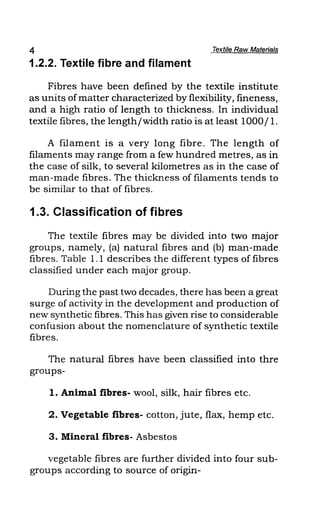
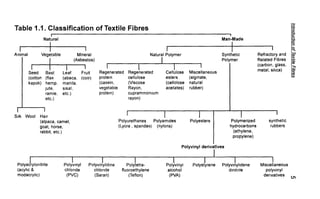
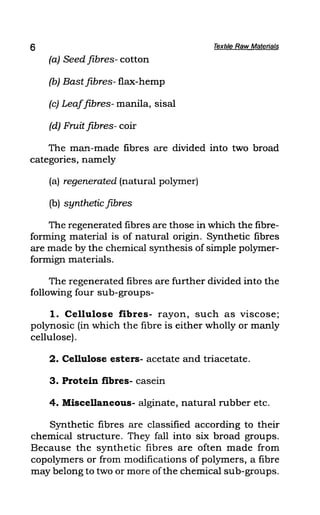
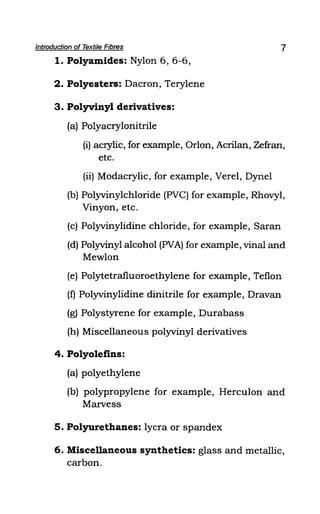
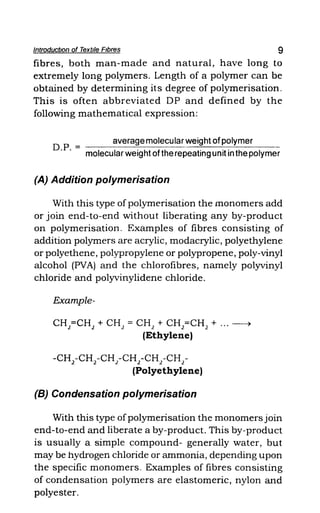
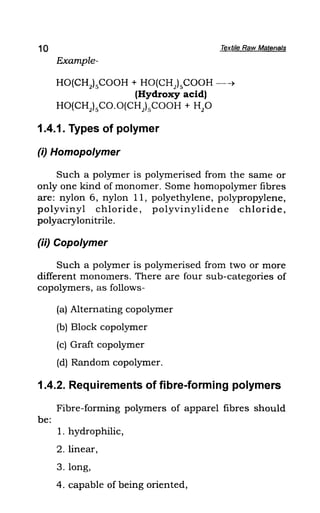
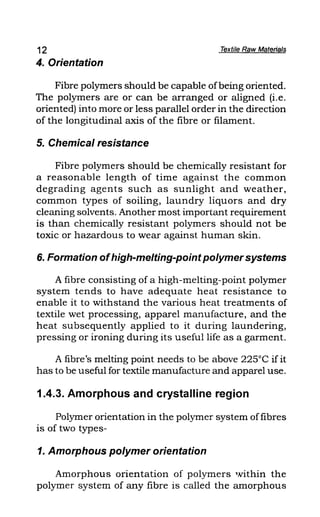
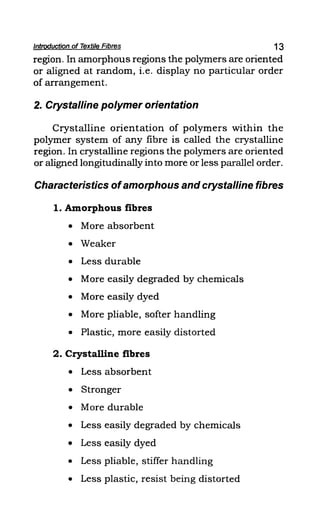
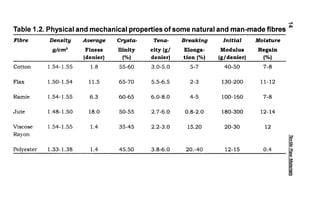
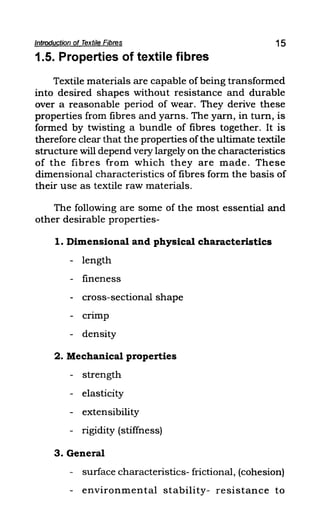
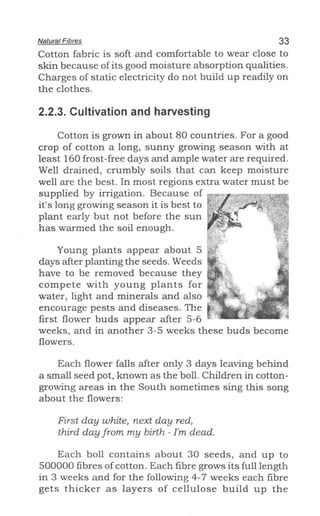
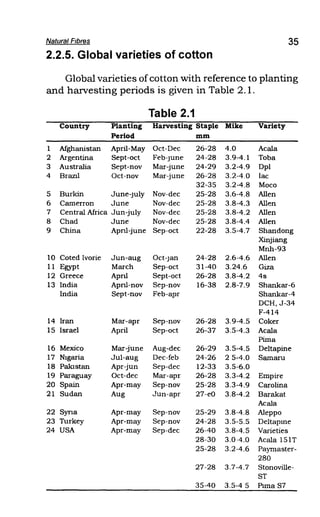
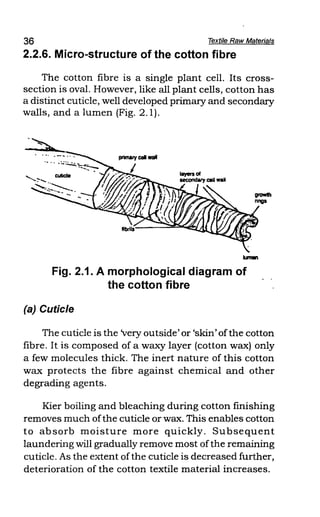
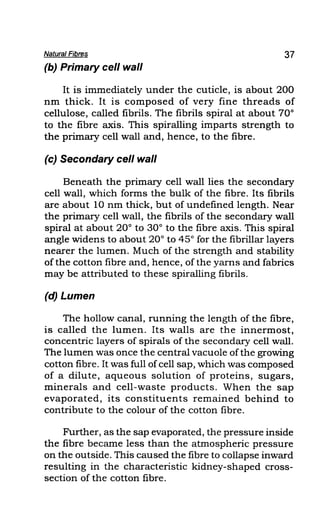
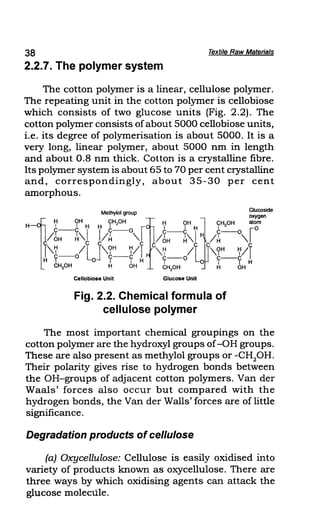
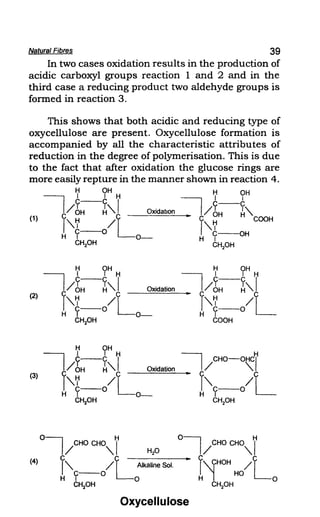
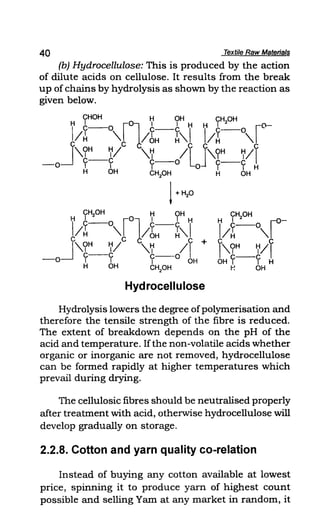
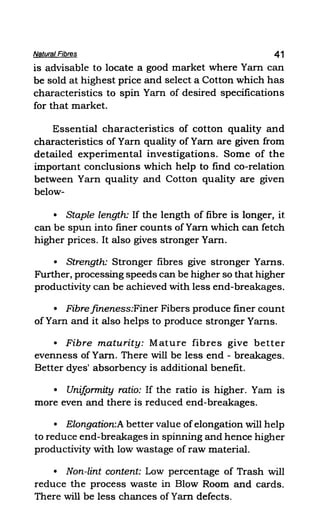
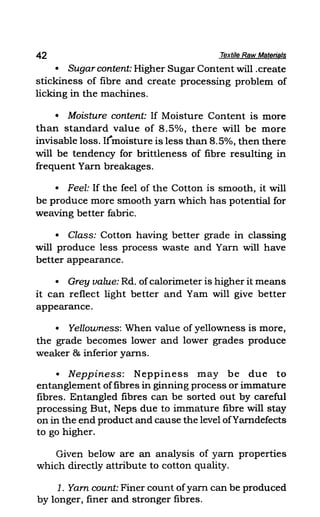
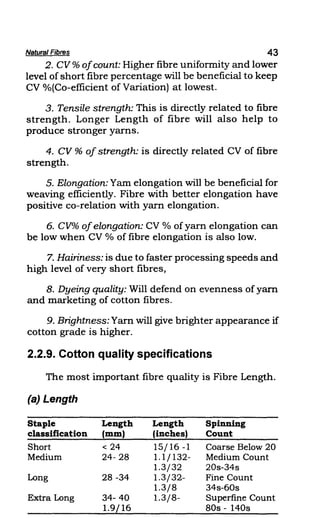
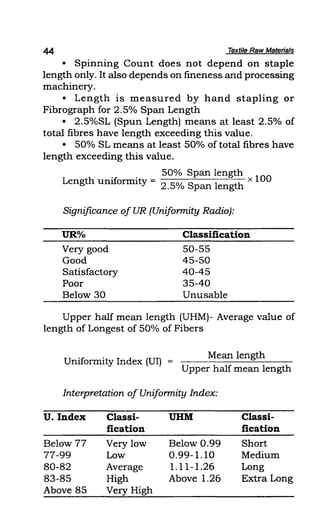
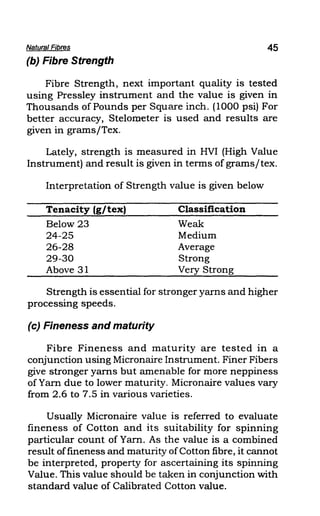

![The Sketches for
“Fidelio”
the preceding summer; with this difference, that now one was no
expense to him. The thousand times repeated story of Ries, that in
1804 he had four dwellings at once, is a mistake.
Before his migration to Hetzendorf—say about the
middle of June—Beethoven had completely
sketched the music of his opera. This is made
sufficiently certain by one of those whimsical remarks that he was in
the habit of making on the blank spaces of whatever manuscript he
happened to have before him. In this case he writes: “June 2d Finale
always simpler. All pianoforte music also. God knows why my
pianoforte music always makes the worst impression, especially
when it is badly played.” This is in the midst of sketches to the final
chorus of the opera, and is written upon the upper outer corner of
page 291 of the “Leonore” sketchbook which became the property of
Mr. Paul Mendelssohn, of Berlin. The principal value of this
manuscript lies of course in the insight which it gives the musician
into the master’s methods of composition;[30] but for the biographer
the volume is by no means without its value. Its striking
confirmation of the previously formed opinion, that two current
notions in relation to the composition of the opera are erroneous,
well repays the toil of studying it through. First: A misinterpreted
sentence in Jahn’s article on “Leonore, oder Fidelio,” has originated
and given currency to the idea that Beethoven’s “daring enthusiasm
for the welfare of men and their rights” led him to begin his sketches
for the opera with the “second finale, with its hymn-like character.”
But the sketchbook, if it proves anything, proves this: that
Beethoven began at the beginning and took up all the principal
numbers in order, as they stood in Sonnleithner’s text; that the final
choruses were the last to be sketched; and that this sketchbook
happens to begin in the midst of the chorus of prisoners (originally
the second finale) because the previous studies are wanting.
This volume contains the first sketches of Nos. 11, 18, 15a, 17a and
18a (appendix) of Jahn’s edition; Nos. 1 and 5 occur, but not in the
original studies; Nos. 2, 3, 4, 6, 7, 8, 9 and 10 are either entirely](https://image.slidesharecdn.com/2030571-250526033629-e66a4248/85/Textile-Raw-Materials-Ajay-Jindal-Rakesh-Jindal-59-320.jpg)
![the mistaken (as we think) impression, that the aria of Marcelline is
here first sketched.
The sketches [says he] are, naturally enough, of very different kinds;
in part they are widely varying efforts to give musical expression to
the same text, and many numbers, like the airs of Marcelline and
Pizarro, the grave duet, a few striking passages, appear for the first
time with motivi wholly different from those now to be found in the
opera.... At other times, whole pieces are written down in a breath
essentially as they have remained.
This is rather too strongly expressed, unless Jahn had in mind the
arias of Rocco and Marcelline.
By the side of such passages are examples of indefatigable detail
work, which cannot find a conclusion, of turning not only single
motivi and melodies but the tiniest elements of them this way and
that, and out of all conceivable variations to draw out the form that
is best. One is amazed at this everlasting experimentation and
cannot conceive how it will be possible to create an organic whole
out of such musical scraps. But if one compares the completed art-
work with the chaos of sketches one is overwhelmed with wonder at
the creative mind which surveyed its task so clearly, grasped the
foundation and the outlines of the execution so firmly and surely
that with all the sketches and attempts in details the whole grows
naturally from its roots and develops. And though the sketches
frequently create the impression of uncertainty and groping,
admiration comes again for the marvelously keen self-criticism,
which, after everything has been tested with sovereign certainty,
retains the best.[31]
In the notices of the “Leonore” sketchbook, made for use in this
work, are copied eighteen different beginnings to Florestan’s air, “In
des Lebens Frühlingstagen,” and ten to the chorus, “Wer ein holdes
Weib”; others being omitted, because illegible or little more than
repetitions. The studies for that wondrous outburst of joy, “O
namenlose Freude,” are numerous; but the first bars of the duet are](https://image.slidesharecdn.com/2030571-250526033629-e66a4248/85/Textile-Raw-Materials-Ajay-Jindal-Rakesh-Jindal-61-320.jpg)
![Recollections of a
Singer
Lannes at the head, 15,000 strong, representing all branches of the
service, entered Vienna in order of battle, flags flying and music
sounding.
On the 15th, Bonaparte issued his proclamation from Schönbrunn,
which he made his headquarters. Murat quartered himself in the
palace of Archduke Albert; General Hulin, in that of Prince
Lobkowitz. It was just at this most unlucky of all possible periods
that Beethoven’s opera was produced; on November 20, 21 and 22.
Beethoven’s friend, Stephan von Breuning, prepared a pretty
surprise for him by printing a short complimentary poem and having
it distributed in the theatre at the second performance. It is
preserved in the “Notizen” (p. 34).[32] Beethoven desired to retain
the original title of the opera, “Leonore,” and the directors of the
theatre have been severely censured from that day to this for
persisting in giving and retaining the title “Fidelio”; but unjustly; for,
considering the relations in which Paër stood to Baron Braun, it was
surely enough to have taken his subject, without stealing his title.
A young man, educated at the University of
Munich, had for some time past been private
secretary to the Bavarian Chargé des Affaires at
Salzburg. The approach of the French armies after the fall of Ulm
made his position and prospects very uncertain. It was just then that
an agent of Baron Braun came thither in search of a young, fresh
tenor to succeed Demmer, whose powers were fast yielding to time.
The engagement was offered him and thus it came about, that J. A.
Röckel, in the Autumn of 1805, became first tenor in the Theater-an-
der-Wien. After appearing in divers characters with much success,
considering his inexperience, he was offered the part of Florestan in
the contemplated revival of “Fidelio.” A conversation with the singer
at Bath in April, 1861, is authority for these particulars, and a letter
from him dated February 26 of the same year adds more. Röckel
wrote:
It was in December, 1805—the opera house An-der-Wien and both
the Court theatres of Vienna having been at that time under the](https://image.slidesharecdn.com/2030571-250526033629-e66a4248/85/Textile-Raw-Materials-Ajay-Jindal-Rakesh-Jindal-68-320.jpg)
![intendance of Baron Braun, the Court Banker—when Mr. Meyer,
brother-in-law to Mozart and Regisseur of the opera An-der-Wien,
came to fetch me to an evening meeting in the palace of Prince
Charles Lichnowsky, the great patron of Beethoven. “Fidelio” was
already a month previously performed An-der-Wien—unhappily just
after the entrance of the French, when the city was shut against the
suburbs. The whole theatre was taken up by the French, and only a
few friends of Beethoven ventured to hear the opera. These friends
were now at that soirée, to bring Beethoven about, to consent to the
changes they wanted to introduce in the opera in order to remove
the heaviness of the first act. The necessity of these improvements
was already acknowledged and settled among themselves. Meyer
had prepared me for the coming storm, when Beethoven should
hear of leaving out three whole numbers of the first act.
At the soirée were present Prince Lichnowsky and the Princess, his
lady, Beethoven and his brother Kaspar, [Stephan] von Breuning,
[Heinrich] von Collin, the poet, the tragedian Lange (another
brother-in-law to Mozart), Treitschke, Clement, leader of the
orchestra, Meyer and myself; whether Kapellmeister von Seyfried
was there I am not certain any more, though I should think so.
I had arrived in Vienna only a short time before, and met Beethoven
there for the first time.
As the whole opera was to be gone through, we went directly to
work. Princess L. played on the grand piano the great score of the
opera and Clement, sitting in a corner of the room, accompanied
with his violin the whole opera by heart, playing all the solos of the
different instruments. The extraordinary memory of Clement having
been universally known, nobody was astonished by it, except myself.
Meyer and I made ourselves useful, by singing as well as we could,
he (basso) the lower, I the higher parts of the opera. Though the
friends of Beethoven were fully prepared for the impending battle,
they had never seen him in that excitement before, and without the
prayers and entreaties of the very delicate and invalid princess, who
was a second mother to Beethoven and acknowledged by himself as](https://image.slidesharecdn.com/2030571-250526033629-e66a4248/85/Textile-Raw-Materials-Ajay-Jindal-Rakesh-Jindal-69-320.jpg)
![months later, but upon those which, at this meeting, Beethoven was
with great difficulty persuaded to omit: that the objections made to
them were not to the music, but because they retarded the action;
and, therefore, that the decision now reached was by no means
final, provided the end desired could be attained in some other way.
Perhaps it may yet appear that Beethoven, now cunningly giving
way, succeeded in winning the game, and retaining all three of the
pieces condemned.
Outside theatrical circles we catch also a glimpse or two of
Beethoven in these months. Pierre Baillot, the violinist, was in
Vienna just before the French invasion on his way to Moscow, and
was taken by Anton Reicha to see Beethoven.
They did not find him in his lodgings but in a by no means elegant
inn in the Vorstadt. What first attracted the attention of the
Frenchman was that Beethoven did not have the bulldog, gloomy
expression which he had expected from the majority of his portraits;
he even thought he recognized an expression of good-nature in the
face of the composer. The conversation had just got well under way
when it was interrupted by a terrific snore. It came from a
stableman or coachman who was taking his little nap in a corner of
the room. Beethoven gazed at the snorer a few moments attentively
and then broke out with the words: “I wish I were as stupid as that
fellow.”[33]
Schindler closes his account of these last five years in Beethoven’s
life with great propriety and elegance by quoting a passage copied
by the master from Christian Sturm’s “Betrachtungen.” It is made up
of scattered sentences which may be found on page 197 of the ninth
edition (Reutlingen, 1827):
To the praise of Thy goodness I must confess that Thou hast tried all
means to draw me to Thee. Now it hath pleased Thee to let me feel
the heavy hand of Thy wrath, and to humiliate my proud heart by
manifold chastisements. Sickness and misfortune hast Thou sent to
bring me to a contemplation of my digressions. But one thing only
do I ask, O God, cease not to labor for my improvement. Only let](https://image.slidesharecdn.com/2030571-250526033629-e66a4248/85/Textile-Raw-Materials-Ajay-Jindal-Rakesh-Jindal-71-320.jpg)
![Chapter IV
The Year 1806—Repetition of “Fidelio”—Changes in the Opera—Its
Withdrawal—Journey to Silesia—Correspondence with Thomson—
The Scottish Songs.
Excerpts from a letter written on June 2, 1806, by Stephan von
Breuning to his sister and brother-in-law, make a fair opening for the
story of the year 1806. In it he reports on “Fidelio.” The letter,
though written in the middle of the year, has reference to the period
between the original performance late in 1805 and the repetition in
the spring of 1806, a period in which it would seem, from the
absence of all epistolary writings, Beethoven was in no mood, or too
much occupied otherwise, for correspondence. Von Breuning writes:
Nothing, perhaps, has caused Beethoven so much vexation as this
work, the value of which will be appreciated only in the future....
Beethoven, who had also observed a few imperfections in the
treatment of the text in the opera, withdrew it after three
representations. After order had been restored he and I took it up
again. I remodelled the whole book for him, quickening and
enlivening the action; he curtailed many pieces, and then it was
performed three[34] times with great success. Now, however, his
enemies in the theatre arose, and as he had offended several
persons, especially at the second representation, they succeeded in
preventing further performances. Before this, many obstacles had
been placed in his way; to let one instance stand as proof for the
others, he could not even get permission to secure an
announcement of the opera under the changed title “Fidelio,” as it is
called in the French original, and as it was put into print after the
changes were made. Contrary to promise the first title “Leonore”
appeared on the poster. This is all the more unpleasant for
Beethoven since the cessation of the performances on which he was](https://image.slidesharecdn.com/2030571-250526033629-e66a4248/85/Textile-Raw-Materials-Ajay-Jindal-Rakesh-Jindal-73-320.jpg)
![The Overtures to
“Fidelio”
depending for his honorarium, which consists in a percentage of the
receipts, has embarrassed him in a financial way. He will recover
from the set-back all the more slowly since the treatment which he
has received has robbed him of a great deal of his pleasure in and
love for work....
The words “Fidelio” and “Leonore” are here misplaced, interchanged,
whether by Breuning or his copyist is not known. The letter is a
reflection of Beethoven’s disappointment and indignation at fancied
injuries; it was written in ignorance of divers material facts, and
contains inaccuracies, which—since its publication by Wegeler in
1838—have colored many attempts to write the early history of the
opera.
It is a circumstance, noteworthy and not easily to be explained, that
Breuning, instead of Sonnleithner, revised the text and made the
new disposition of the scenes. For the alterations and suppressions,
both in the text and the music, made at this time, the reader is
referred to the edition of “Leonore” prepared by Otto Jahn, and
published by Breitkopf and Härtel in 1852, and the preface to the
edition of the “Fidelio” of 1805 published by Erich Prieger.
At the performances in November, the effect of the overture had
been ruined by a passage in the Allegro, which was too difficult for
the wood-wind instruments. “Instead of simply removing this
obstacle (31 measures),” says Schindler, “Beethoven thought it
advisable to rewrite the whole, inasmuch as he was already engaged
upon a revision of other parts of the work. He retains the motivi of
the Introduction as well as the Allegro, has the motivo of the latter
played by violoncellos and violins simultaneously for the sake of
greater sonority, and on the existing foundation rears a new
structure, including several new thoughts.”[35]
And thus for Beethoven the winter passed. To
compete with successful new works which
Schikaneder offered the Vienna audiences of 1806,
was no light matter; and it is easy to imagine, that Beethoven felt
this, and determined, at all events in his own field of instrumental](https://image.slidesharecdn.com/2030571-250526033629-e66a4248/85/Textile-Raw-Materials-Ajay-Jindal-Rakesh-Jindal-74-320.jpg)
![quality” in all likelihood Count von Oppersdorff, to whom it was
dedicated.
In October Breuning wrote to Wegeler: “Beethoven is at present in
Silesia with Prince Lichnowsky and will not return till near the end of
this month. His circumstances are none of the best at present, since
his opera, owing to the cabals of his opponents, was performed but
seldom, and therefore yielded him nothing. His spirits are generally
low and, to judge by his letters, the sojourn in the country has not
cheered him.” This visit to the Prince came to an abrupt termination
in a scene which has been a fruitful theme for the silly race of
musical novelette writers. The simple truth is related by Seyfried in
the appendix to his “Studien” (page 23) and is here copied literally
except for a few additional words interspersed, derived by the
present writer from a conversation with the daughter of Moritz
Lichnowsky:
When he (Beethoven) did not feel in the mood it required repeated
and varied urgings to get him to sit down to the pianoforte. Before
he began playing he was in the habit of hitting the keys with the flat
of his hand, or running a single finger up and down the keyboard, in
short, doing all manner of things to kill time and laughing heartily, as
was his wont, at the folly. Once while spending a summer with a
Mæcenas at his countryseat, he was so pestered by the guests
(French officers), who wished to hear him play, that he grew angry
and refused to do what he denounced as menial labor. A threat of
arrest, made surely in jest, was taken seriously by him and resulted
in Beethoven’s walking by night to the nearest city, Troppau, whence
he hurried as on the wings of the wind by extra post to Vienna.[36]
In the “Grenzboten,” Vol. XVI, No. 14, April 3, 1857, Fräulein
Giannatasio del Rio relates that, in 1816, Beethoven told how once
during the invasion when the Prince had a number of Frenchmen as
his guests, he (the Prince) repeatedly tried to coerce him to play for
them on the pianoforte and that he had stoutly refused; which led to
a scene between him and the Prince, whereupon B. indiscreetly and
suddenly left the house.—He once said that it is easy to get along](https://image.slidesharecdn.com/2030571-250526033629-e66a4248/85/Textile-Raw-Materials-Ajay-Jindal-Rakesh-Jindal-85-320.jpg)