By: Granch Berhe
2015
INTRODUCTION
• Nowadays safety and protective textile have become an
integral part in one or other form. Safety and protective
textile refer to garment and other fabric related items
designed to protect the wearer from harsh environmental
effects that may result in injury or death.
• c
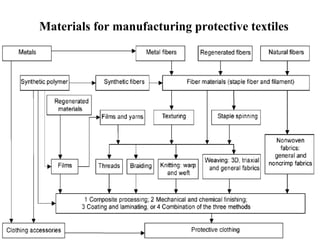
Materials for manufacturing protective textiles
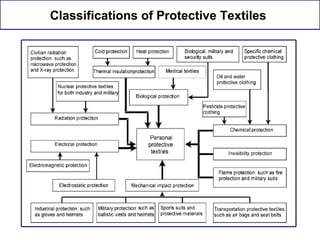
Classifications of Protective Textiles
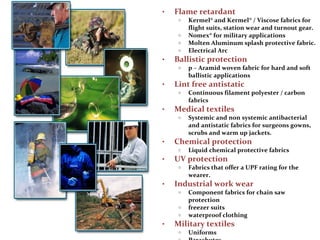
• Flame retardant
o Kermel® and Kermel® / Viscose fabrics for
flight suits, station wear and turnout gear.
o Nomex® for military applications
o Molten Aluminum splash protective fabric.
o Electrical Arc
• Ballistic protection
o p – Aramid woven fabric for hard and soft
ballistic applications
• Lint free antistatic
o Continuous filament polyester / carbon
fabrics
• Medical textiles
o Systemic and non systemic antibacterial
and antistatic fabrics for surgeons gowns,
scrubs and warm up jackets.
• Chemical protection
o Liquid chemical protective fabrics
• UV protection
o Fabrics that offer a UPF rating for the
wearer.
• Industrial work wear
o Component fabrics for chain saw
protection
o freezer suits
o waterproof clothing
• Military textiles
o Uniforms
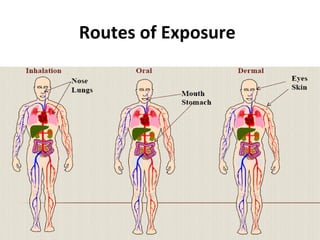
Routes of Exposure
9
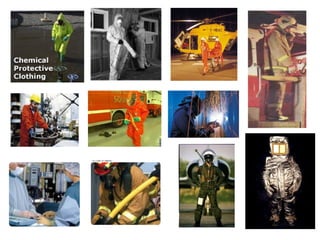
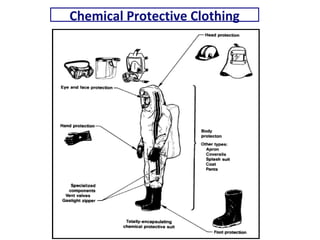
Chemical Protective Clothing
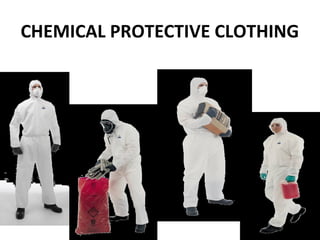
CHEMICAL PROTECTIVE CLOTHING
11
Chemical Protection
• Protective clothing cannot be made generic for all chemical
applications, since chemicals vary in most cases and a particular
CPC can protect only against a limited number of specific
chemicals.
• Important considerations in designing chemical protective
clothing are
– The amount of chemical permeation.
– Breakthrough time for penetration.
– Liquid repellency.
– Physical properties of the CPC in specific chemical conditions.
12
Requirements
• Chemical Protective Clothing Should Resist :
Permeation , Degradation, Penetration.
• Durability
• Flexibility
• Temperature Resistance
• Service Life
• Clean Ability
13
Textile Materials
• Ordinary textile materials are generally not considered suitable for protection
against chemicals, however special non-coated textile materials are used for a
variety of applications involving particulates and light liquid spray from relatively
non-hazardous chemicals.
• Though woven textiles are not often found in chemical protective clothing, very
tightly woven, repellent-treated fabrics can provide some very low minimum
protection against liquid exposure.
• More common are nonwoven fabrics that have demonstrated barrier performance
against particles and repellency of liquids.
• Two predominant examples of non- woven fabrics are flashspun polyethylene
(Tyvek) and spunbond/ meltbown/ spunbond (SMS) polypropylene (Kleenguard).
• These textiles are used because of their relatively low cost and because the
materials provide a structure of microfibers that filter out dry particulates and
many water-based liquids.
14
Adsorbent-Based Materials
• These materials include adsorbents, such as
activated charcoal or other sorbent materials.
• Activated Carbon : Activated carbon in very fine
powder or granular form is useful to purify both
water and air. Activated carbon has particular
affinity to organic materials such as solvents used in
printing inks and common coatings.
15
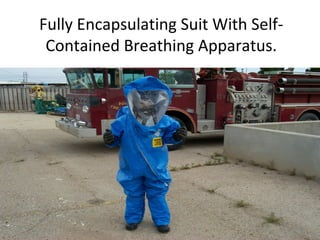
Fully Encapsulating Suit With Self-
Contained Breathing Apparatus.
16
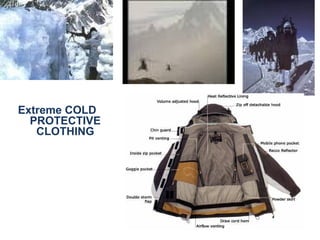
Extreme COLD
PROTECTIVE
CLOTHING
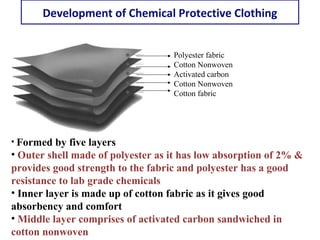
Development of Chemical Protective Clothing
Polyester fabric
Cotton Nonwoven
Activated carbon
Cotton Nonwoven
Cotton fabric
• Formed by five layers
• Outer shell made of polyester as it has low absorption of 2% &
provides good strength to the fabric and polyester has a good
resistance to lab grade chemicals
• Inner layer is made up of cotton fabric as it gives good
absorbency and comfort
• Middle layer comprises of activated carbon sandwiched in
cotton nonwoven
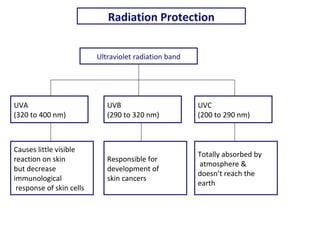
Radiation Protection
Ultraviolet radiation band
UVA
(320 to 400 nm)
UVB
(290 to 320 nm)
UVC
(200 to 290 nm)
Causes little visible
reaction on skin
but decrease
immunological
response of skin cells
Responsible for
development of
skin cancers
Totally absorbed by
atmosphere &
doesn’t reach the
earth
Radiation Protection
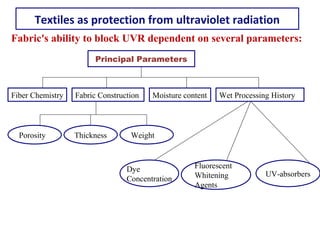
Fabric's ability to block UVR dependent on several parameters:
Principal Parameters
Fiber Chemistry Fabric Construction Moisture content Wet Processing History
WeightThicknessPorosity
Dye
Concentration
Fluorescent
Whitening
Agents
UV-absorbers
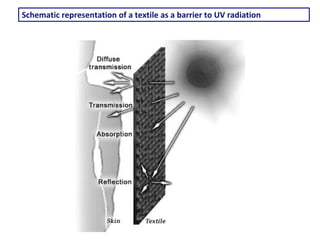
Textiles as protection from ultraviolet radiation
Schematic representation of a textile as a barrier to UV radiation
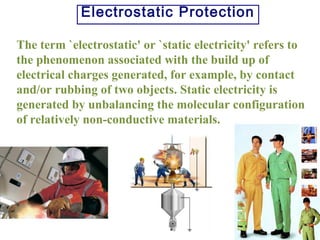
Electrostatic Protection
The term `electrostatic' or `static electricity' refers to
the phenomenon associated with the build up of
electrical charges generated, for example, by contact
and/or rubbing of two objects. Static electricity is
generated by unbalancing the molecular configuration
of relatively non-conductive materials.
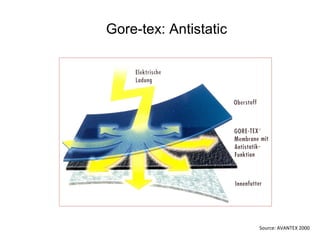
Gore-tex: Antistatic
Source: AVANTEX 2000
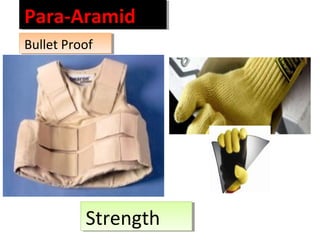
StrengthStrength
Para-AramidPara-Aramid
Bullet ProofBullet Proof
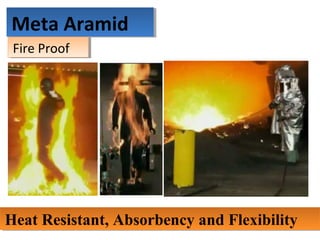
Meta AramidMeta Aramid
Heat Resistant, Absorbency and FlexibilityHeat Resistant, Absorbency and Flexibility
Fire ProofFire Proof

8. protective textiles

  • 1.
  • 3.
    INTRODUCTION • Nowadays safetyand protective textile have become an integral part in one or other form. Safety and protective textile refer to garment and other fabric related items designed to protect the wearer from harsh environmental effects that may result in injury or death. • c
  • 4.
    Materials for manufacturingprotective textiles
  • 5.
  • 7.
    • Flame retardant oKermel® and Kermel® / Viscose fabrics for flight suits, station wear and turnout gear. o Nomex® for military applications o Molten Aluminum splash protective fabric. o Electrical Arc • Ballistic protection o p – Aramid woven fabric for hard and soft ballistic applications • Lint free antistatic o Continuous filament polyester / carbon fabrics • Medical textiles o Systemic and non systemic antibacterial and antistatic fabrics for surgeons gowns, scrubs and warm up jackets. • Chemical protection o Liquid chemical protective fabrics • UV protection o Fabrics that offer a UPF rating for the wearer. • Industrial work wear o Component fabrics for chain saw protection o freezer suits o waterproof clothing • Military textiles o Uniforms
  • 9.
  • 10.
  • 11.
  • 12.
    Chemical Protection • Protectiveclothing cannot be made generic for all chemical applications, since chemicals vary in most cases and a particular CPC can protect only against a limited number of specific chemicals. • Important considerations in designing chemical protective clothing are – The amount of chemical permeation. – Breakthrough time for penetration. – Liquid repellency. – Physical properties of the CPC in specific chemical conditions. 12
  • 13.
    Requirements • Chemical ProtectiveClothing Should Resist : Permeation , Degradation, Penetration. • Durability • Flexibility • Temperature Resistance • Service Life • Clean Ability 13
  • 14.
    Textile Materials • Ordinarytextile materials are generally not considered suitable for protection against chemicals, however special non-coated textile materials are used for a variety of applications involving particulates and light liquid spray from relatively non-hazardous chemicals. • Though woven textiles are not often found in chemical protective clothing, very tightly woven, repellent-treated fabrics can provide some very low minimum protection against liquid exposure. • More common are nonwoven fabrics that have demonstrated barrier performance against particles and repellency of liquids. • Two predominant examples of non- woven fabrics are flashspun polyethylene (Tyvek) and spunbond/ meltbown/ spunbond (SMS) polypropylene (Kleenguard). • These textiles are used because of their relatively low cost and because the materials provide a structure of microfibers that filter out dry particulates and many water-based liquids. 14
  • 15.
    Adsorbent-Based Materials • Thesematerials include adsorbents, such as activated charcoal or other sorbent materials. • Activated Carbon : Activated carbon in very fine powder or granular form is useful to purify both water and air. Activated carbon has particular affinity to organic materials such as solvents used in printing inks and common coatings. 15
  • 16.
    Fully Encapsulating SuitWith Self- Contained Breathing Apparatus. 16
  • 17.
  • 18.
    Development of ChemicalProtective Clothing Polyester fabric Cotton Nonwoven Activated carbon Cotton Nonwoven Cotton fabric • Formed by five layers • Outer shell made of polyester as it has low absorption of 2% & provides good strength to the fabric and polyester has a good resistance to lab grade chemicals • Inner layer is made up of cotton fabric as it gives good absorbency and comfort • Middle layer comprises of activated carbon sandwiched in cotton nonwoven
  • 19.
    Radiation Protection Ultraviolet radiationband UVA (320 to 400 nm) UVB (290 to 320 nm) UVC (200 to 290 nm) Causes little visible reaction on skin but decrease immunological response of skin cells Responsible for development of skin cancers Totally absorbed by atmosphere & doesn’t reach the earth Radiation Protection
  • 20.
    Fabric's ability toblock UVR dependent on several parameters: Principal Parameters Fiber Chemistry Fabric Construction Moisture content Wet Processing History WeightThicknessPorosity Dye Concentration Fluorescent Whitening Agents UV-absorbers Textiles as protection from ultraviolet radiation
  • 21.
    Schematic representation ofa textile as a barrier to UV radiation
  • 22.
    Electrostatic Protection The term`electrostatic' or `static electricity' refers to the phenomenon associated with the build up of electrical charges generated, for example, by contact and/or rubbing of two objects. Static electricity is generated by unbalancing the molecular configuration of relatively non-conductive materials.
  • 23.
  • 24.
  • 25.
    Meta AramidMeta Aramid HeatResistant, Absorbency and FlexibilityHeat Resistant, Absorbency and Flexibility Fire ProofFire Proof