IMPLANTATION
&
PLACENTATION
Pranjal Gupta
Bsc(H) Zoology, Ramjas College
OVERVIEW
 Human embryo cleavages and blastulation
 Human implantation
 Human basic gastrulation
 Extra-embryonic membranes in birds
 Extra-embryonic membranes in mammals
 Classification of placenta
 Human placental physiology
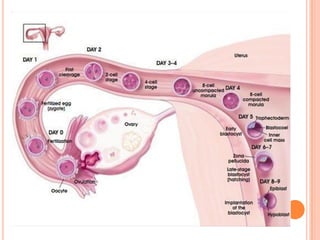
HUMAN EMBRYO CLEAVAGES
 1st cleavage occur in first 30h; Upper oviduct
 Next within 40hrs after fertilization
 Third about 3days after fertilization, i.e. 8celled
embryo.
 By the end of 3rd day, 8-16 celled morula reaches
uterus
 Holoblastic cleavage
 Enclosed within zona pellucida
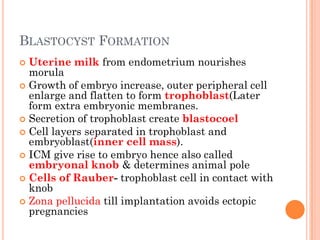
BLASTOCYST FORMATION
 Uterine milk from endometrium nourishes
morula
 Growth of embryo increase, outer peripheral cell
enlarge and flatten to form trophoblast(Later
form extra embryonic membranes.
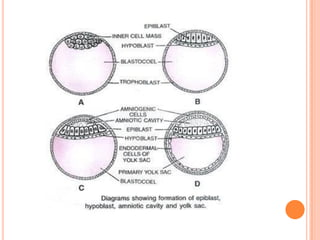
 Secretion of trophoblast create blastocoel
 Cell layers separated in trophoblast and
embryoblast(inner cell mass).
 ICM give rise to embryo hence also called
embryonal knob & determines animal pole
 Cells of Rauber- trophoblast cell in contact with
knob
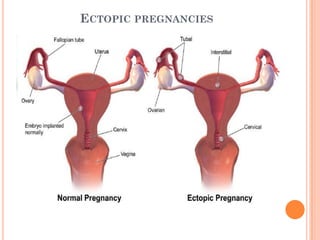
 Zona pellucida till implantation avoids ectopic
pregnancies
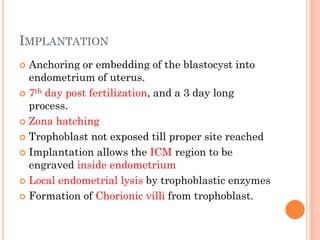
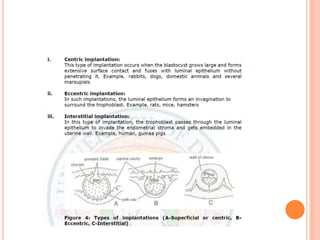
IMPLANTATION
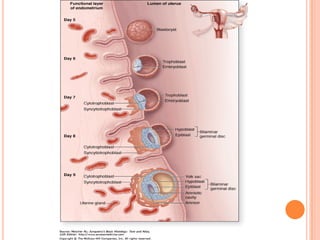
 Anchoring or embedding of the blastocyst into
endometrium of uterus.
 7th day post fertilization, and a 3 day long
process.
 Zona hatching
 Trophoblast not exposed till proper site reached
 Implantation allows the ICM region to be
engraved inside endometrium
 Local endometrial lysis by trophoblastic enzymes
 Formation of Chorionic villi from trophoblast.
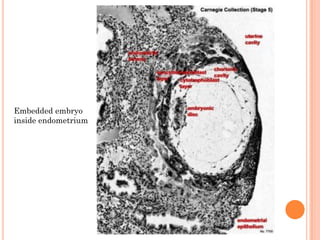
Embedded embryo
inside endometrium
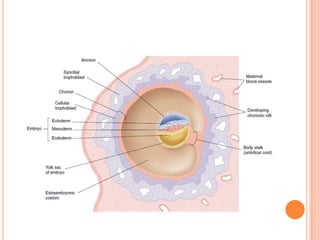
 Trophoblast’s been divided into syncytiotrophoblast(STB) and
cytotrophoblast(CTB).
 Endometrium entirely encloses the embryo now
 Implantation involves events of both blastocyst and the uterine
wall.
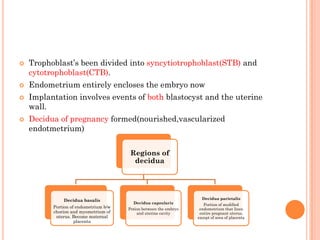
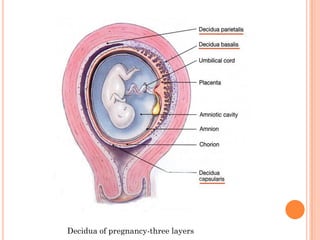
 Decidua of pregnancy formed(nourished,vascularized
endotmetrium)
Regions of
decidua
Decidua basalis
Portion of endometrium b/w
chorion and myometrium of
uterus. Become maternal
placenta
Decidua capsularis
Potion between the embryo
and uterine cavity
Decidua parietalis
Portion of modified
endometrium that lines
entire pregnant uterus,
except of area of placenta
Decidua of pregnancy-three layers
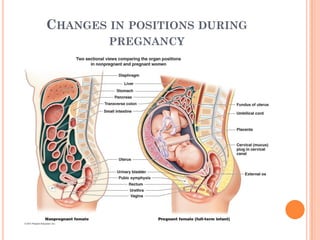
CHANGES IN POSITIONS DURING
PREGNANCY
ECTOPIC PREGNANCIES
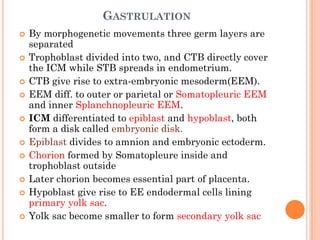
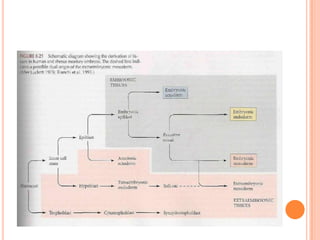
GASTRULATION
 By morphogenetic movements three germ layers are
separated
 Trophoblast divided into two, and CTB directly cover
the ICM while STB spreads in endometrium.
 CTB give rise to extra-embryonic mesoderm(EEM).
 EEM diff. to outer or parietal or Somatopleuric EEM
and inner Splanchnopleuric EEM.
 ICM differentiated to epiblast and hypoblast, both
form a disk called embryonic disk.
 Epiblast divides to amnion and embryonic ectoderm.
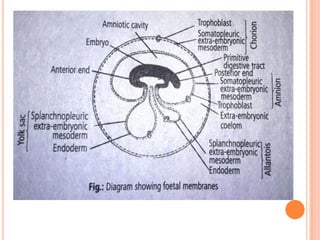
 Chorion formed by Somatopleure inside and
trophoblast outside
 Later chorion becomes essential part of placenta.
 Hypoblast give rise to EE endodermal cells lining
primary yolk sac.
 Yolk sac become smaller to form secondary yolk sac
EXTRA EMBRYONIC MEMBRANES
 It is an adaptation to terrestrial mode of life.
 Situated outside boundaries of embryo hence so called.
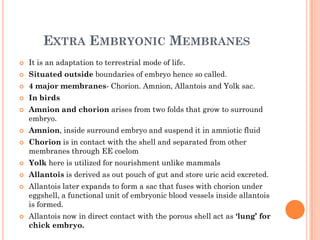
 4 major membranes- Chorion. Amnion, Allantois and Yolk sac.
 In birds
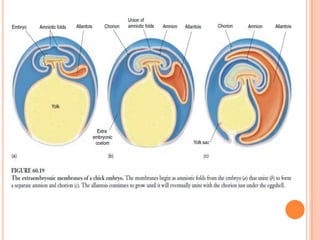
 Amnion and chorion arises from two folds that grow to surround
embryo.
 Amnion, inside surround embryo and suspend it in amniotic fluid
 Chorion is in contact with the shell and separated from other
membranes through EE coelom
 Yolk here is utilized for nourishment unlike mammals
 Allantois is derived as out pouch of gut and store uric acid excreted.
 Allantois later expands to form a sac that fuses with chorion under
eggshell, a functional unit of embryonic blood vessels inside allantois
is formed.
 Allantois now in direct contact with the porous shell act as ‘lung’ for
chick embryo.
 In mammals
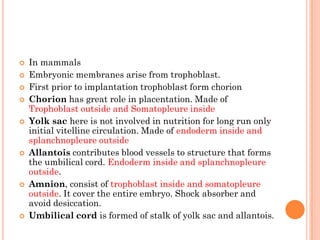
 Embryonic membranes arise from trophoblast.
 First prior to implantation trophoblast form chorion
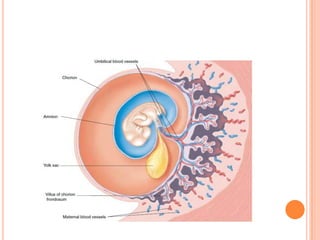
 Chorion has great role in placentation. Made of
Trophoblast outside and Somatopleure inside
 Yolk sac here is not involved in nutrition for long run only
initial vitelline circulation. Made of endoderm inside and
splanchnopleure outside
 Allantois contributes blood vessels to structure that forms
the umbilical cord. Endoderm inside and splanchnopleure
outside.
 Amnion, consist of trophoblast inside and somatopleure
outside. It cover the entire embryo. Shock absorber and
avoid desiccation.
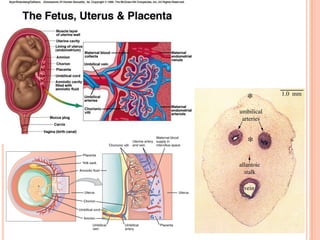
 Umbilical cord is formed of stalk of yolk sac and allantois.
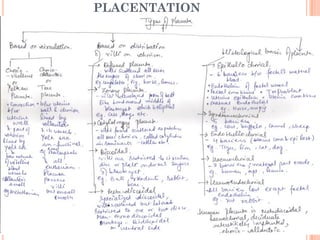
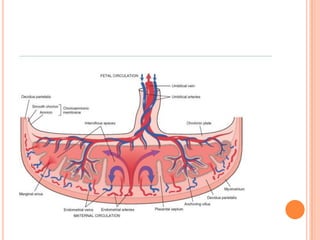
PLACENTATION
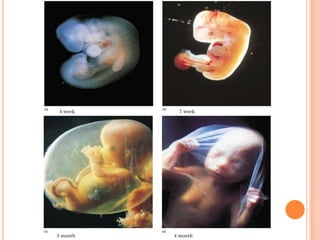
3 month
7 week4 week
4 month
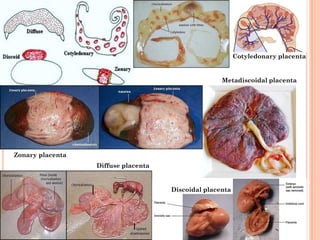
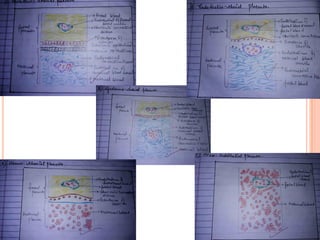
PLACENTATION
Zonary placenta
Diffuse placenta
Discoidal placenta
Metadiscoidal placenta
Cotyledonary placenta
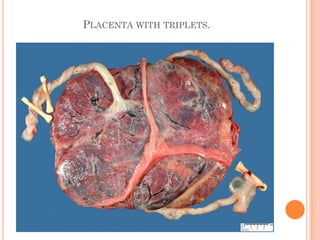
PLACENTA WITH TRIPLETS.
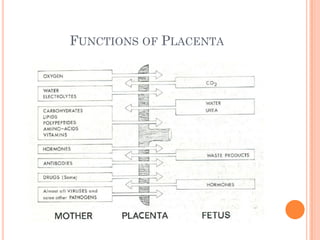
FUNCTIONS OF PLACENTA
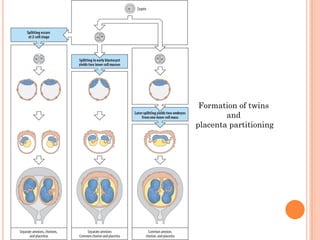
Formation of twins
and
placenta partitioning
Implantation and placentation , and overview

Implantation and placentation , and overview

  • 1.
  • 2.
    OVERVIEW  Human embryocleavages and blastulation  Human implantation  Human basic gastrulation  Extra-embryonic membranes in birds  Extra-embryonic membranes in mammals  Classification of placenta  Human placental physiology
  • 3.
    HUMAN EMBRYO CLEAVAGES 1st cleavage occur in first 30h; Upper oviduct  Next within 40hrs after fertilization  Third about 3days after fertilization, i.e. 8celled embryo.  By the end of 3rd day, 8-16 celled morula reaches uterus  Holoblastic cleavage  Enclosed within zona pellucida
  • 5.
    BLASTOCYST FORMATION  Uterinemilk from endometrium nourishes morula  Growth of embryo increase, outer peripheral cell enlarge and flatten to form trophoblast(Later form extra embryonic membranes.  Secretion of trophoblast create blastocoel  Cell layers separated in trophoblast and embryoblast(inner cell mass).  ICM give rise to embryo hence also called embryonal knob & determines animal pole  Cells of Rauber- trophoblast cell in contact with knob  Zona pellucida till implantation avoids ectopic pregnancies
  • 6.
    IMPLANTATION  Anchoring orembedding of the blastocyst into endometrium of uterus.  7th day post fertilization, and a 3 day long process.  Zona hatching  Trophoblast not exposed till proper site reached  Implantation allows the ICM region to be engraved inside endometrium  Local endometrial lysis by trophoblastic enzymes  Formation of Chorionic villi from trophoblast.
  • 9.
  • 10.
     Trophoblast’s beendivided into syncytiotrophoblast(STB) and cytotrophoblast(CTB).  Endometrium entirely encloses the embryo now  Implantation involves events of both blastocyst and the uterine wall.  Decidua of pregnancy formed(nourished,vascularized endotmetrium) Regions of decidua Decidua basalis Portion of endometrium b/w chorion and myometrium of uterus. Become maternal placenta Decidua capsularis Potion between the embryo and uterine cavity Decidua parietalis Portion of modified endometrium that lines entire pregnant uterus, except of area of placenta
  • 11.
  • 12.
    CHANGES IN POSITIONSDURING PREGNANCY
  • 13.
  • 14.
    GASTRULATION  By morphogeneticmovements three germ layers are separated  Trophoblast divided into two, and CTB directly cover the ICM while STB spreads in endometrium.  CTB give rise to extra-embryonic mesoderm(EEM).  EEM diff. to outer or parietal or Somatopleuric EEM and inner Splanchnopleuric EEM.  ICM differentiated to epiblast and hypoblast, both form a disk called embryonic disk.  Epiblast divides to amnion and embryonic ectoderm.  Chorion formed by Somatopleure inside and trophoblast outside  Later chorion becomes essential part of placenta.  Hypoblast give rise to EE endodermal cells lining primary yolk sac.  Yolk sac become smaller to form secondary yolk sac
  • 17.
    EXTRA EMBRYONIC MEMBRANES It is an adaptation to terrestrial mode of life.  Situated outside boundaries of embryo hence so called.  4 major membranes- Chorion. Amnion, Allantois and Yolk sac.  In birds  Amnion and chorion arises from two folds that grow to surround embryo.  Amnion, inside surround embryo and suspend it in amniotic fluid  Chorion is in contact with the shell and separated from other membranes through EE coelom  Yolk here is utilized for nourishment unlike mammals  Allantois is derived as out pouch of gut and store uric acid excreted.  Allantois later expands to form a sac that fuses with chorion under eggshell, a functional unit of embryonic blood vessels inside allantois is formed.  Allantois now in direct contact with the porous shell act as ‘lung’ for chick embryo.
  • 19.
     In mammals Embryonic membranes arise from trophoblast.  First prior to implantation trophoblast form chorion  Chorion has great role in placentation. Made of Trophoblast outside and Somatopleure inside  Yolk sac here is not involved in nutrition for long run only initial vitelline circulation. Made of endoderm inside and splanchnopleure outside  Allantois contributes blood vessels to structure that forms the umbilical cord. Endoderm inside and splanchnopleure outside.  Amnion, consist of trophoblast inside and somatopleure outside. It cover the entire embryo. Shock absorber and avoid desiccation.  Umbilical cord is formed of stalk of yolk sac and allantois.
  • 23.
  • 24.
  • 25.
    Zonary placenta Diffuse placenta Discoidalplacenta Metadiscoidal placenta Cotyledonary placenta
  • 29.
  • 30.
  • 31.