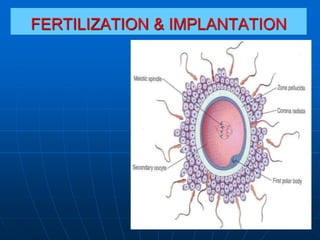
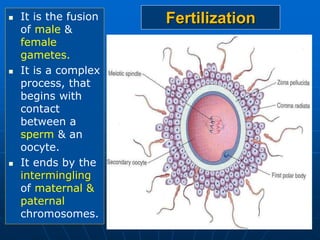
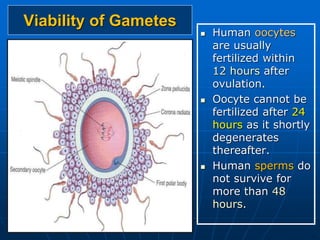
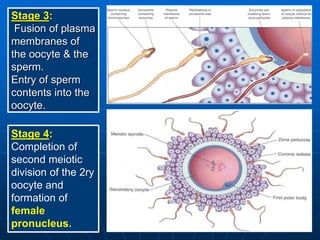
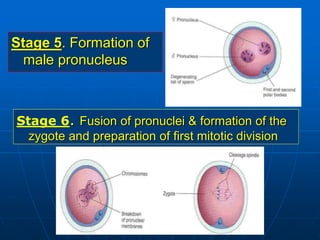
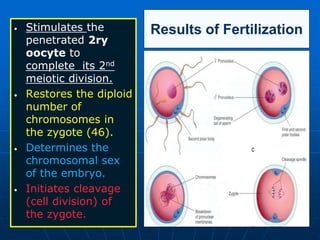
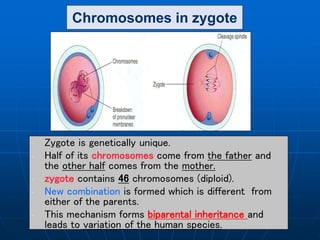
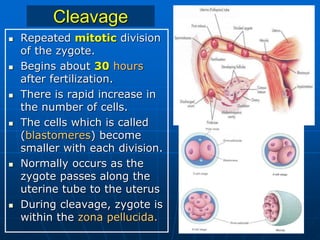
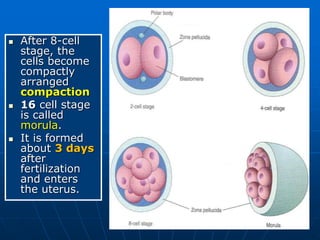
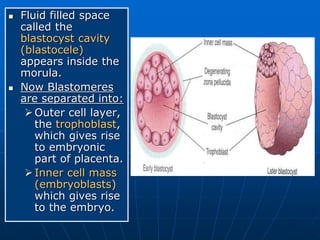
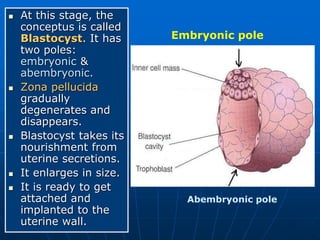
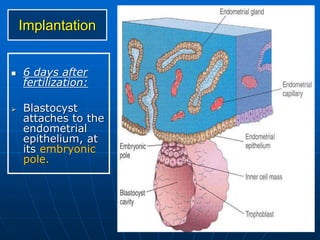
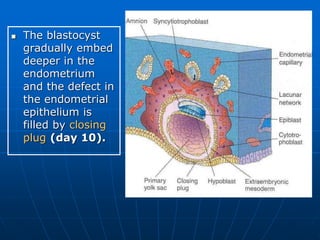
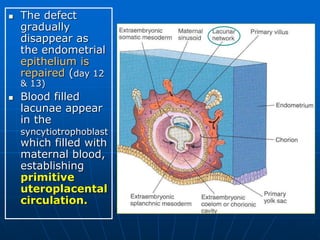
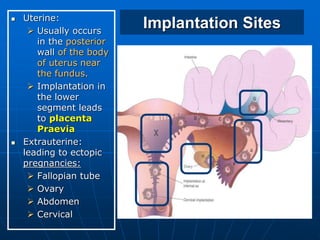
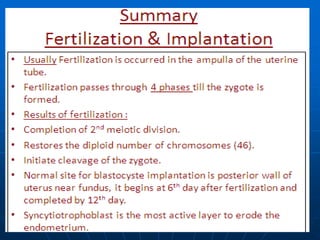
Fertilization involves the fusion of an egg and sperm cell. It is a multi-stage process beginning with sperm penetration of the egg's outer layers and ending with the fusion of genetic material to form a single cell called a zygote. The zygote then undergoes cell division called cleavage as it travels through the fallopian tube. Around 6 days after fertilization, the blastocyst implants in the lining of the uterus, where it derives nourishment and establishes the beginnings of the placenta and embryonic development. Implantation normally occurs in the uterine wall, but can sometimes occur in abnormal locations leading to ectopic pregnancy.



![谷歌留痕技术 [ 𝙩𝙤𝙥 𝟮𝟯𝟯. 𝙘 𝙤𝙢 ]](https://cdn.slidesharecdn.com/ss_thumbnails/top233-260130174328-3833018c-thumbnail.jpg?width=640&height=640&fit=bounds)


