Downloaded 160 times

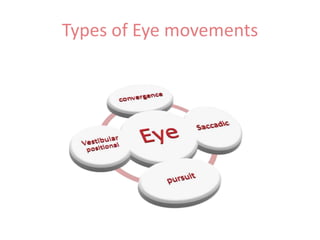
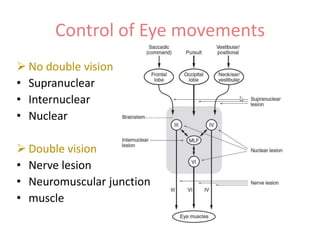
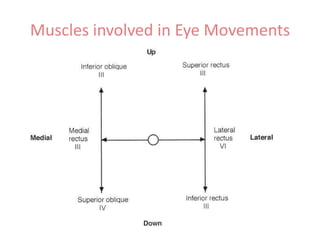

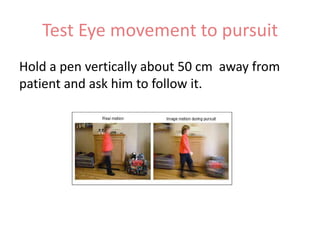
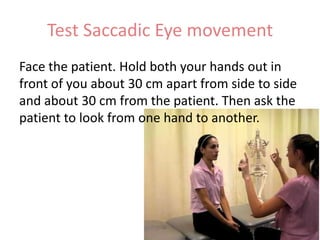
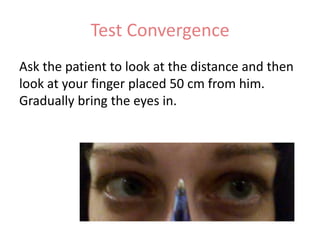
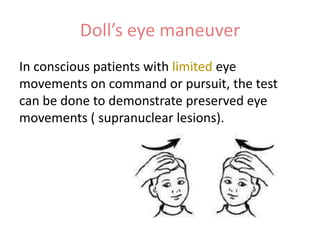


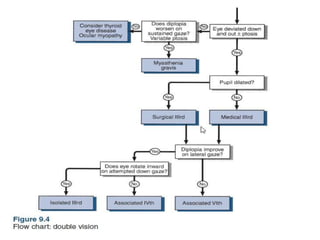







This document discusses eye movement examination and what it can reveal about eye and brain function. It describes different types of eye movements including those that prevent double vision and those that cause double vision. It provides details on muscles involved in eye movements and tests that examine pursuit, saccadic, convergence, and doll's eye movements. The results of these tests can indicate lesions in the supranuclear, internuclear, or nuclear control of eye movements. Specific findings like skew deviation or cranial nerve palsies suggest medical conditions like diabetes or surgical issues like tumors. Internuclear opthalmoplegia often arises from multiple sclerosis while supranuclear palsy is seen in degenerative conditions.


