CONNECTIVE TISSUES
Supports and binds together other structural elements throughout  the  body
Components 1.  Connective tissue cells 2.  Ground substance 3.  Connective tissue fibers  4.  Blood  vessels
General Characteristics 1.  There are few cells that are set apart. 2.  Abundant intercellular substance 3.  Intercellular ground substance contains fibers
Functions 1. Binding of tissues and organs 2. Mechanical support 3. Storage of fat and certain minerals 4. Exchange of metabolites 5. Repair and healing of wounds 6. Protection against infection
Classification I.  Connective Tissue Proper Loose connective Tissue Dense connective tissue II.  Specialized Connective Tissue Cartilage  Bone Blood
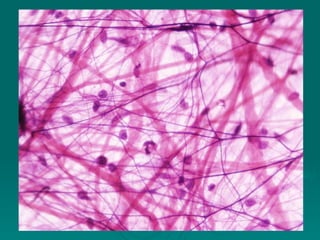
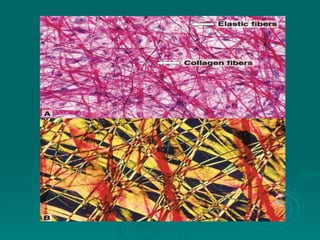
A.  Loose Connective Tissue 1.  Loose Areolar tissue - lamina propia - supporting tissue of organs - in between muscle fibers - subcutaneous layer of skin
 
 
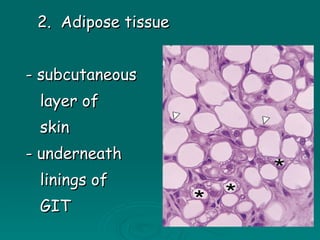
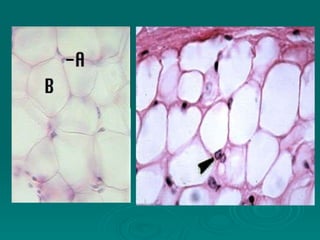
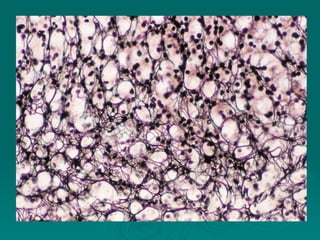
2.  Adipose tissue - subcutaneous layer of  skin - underneath linings of GIT
 
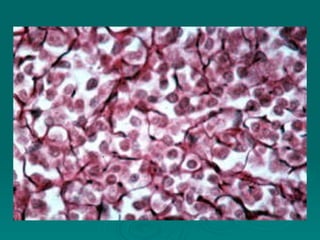
3.  Reticular Tissue - supporting stroma of  highly cellular organs –  endocrine glands lymph nodes liver
 
 
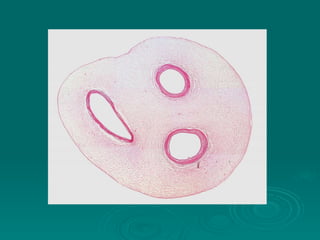
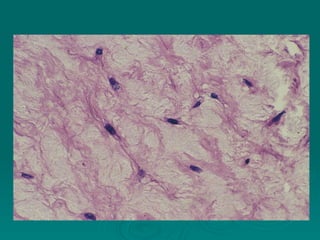
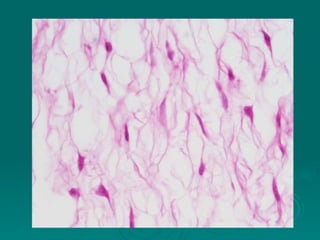
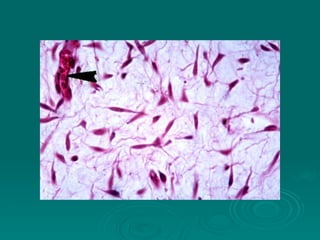
4.  Mucous tissue - Wharton’s jelly of umbilical cord


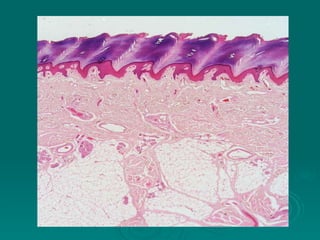
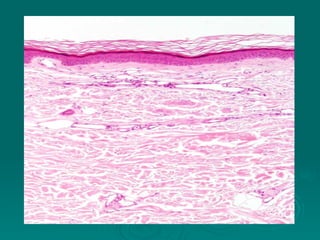
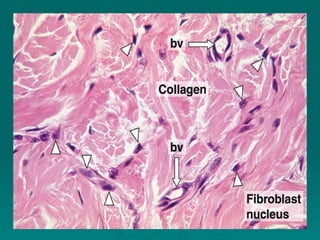
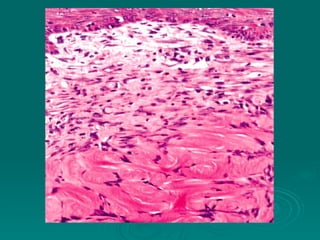
B.  Dense connective tissue 1. Dense fibrous irregular - dermis of the skin - capsules of organs - tendon sheaths - urinary tract


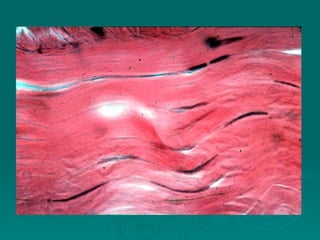
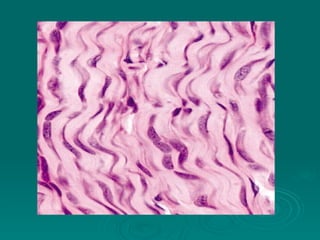
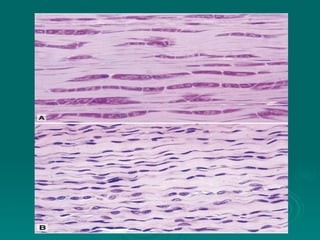
2.  Dense fibrous regular -  tendons -  ligaments -  fascia and aponeurosis -  cornea
 
 
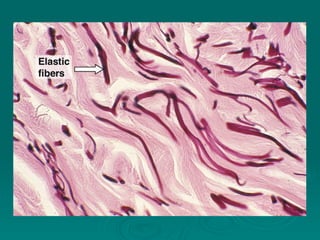
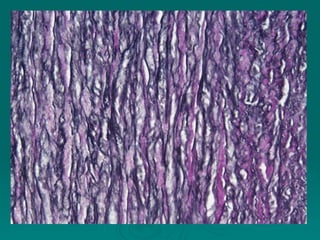
3.  Dense elastic tissue -  ligaments -  true vocal cords -  stylohyoid ligaments -  elastic arteries


Connective tissue proper

  • 1.
  • 2.
    Supports and bindstogether other structural elements throughout the body
  • 3.
    Components 1. Connective tissue cells 2. Ground substance 3. Connective tissue fibers 4. Blood vessels
  • 4.
    General Characteristics 1. There are few cells that are set apart. 2. Abundant intercellular substance 3. Intercellular ground substance contains fibers
  • 5.
    Functions 1. Bindingof tissues and organs 2. Mechanical support 3. Storage of fat and certain minerals 4. Exchange of metabolites 5. Repair and healing of wounds 6. Protection against infection
  • 6.
    Classification I. Connective Tissue Proper Loose connective Tissue Dense connective tissue II. Specialized Connective Tissue Cartilage Bone Blood
  • 7.
    A. LooseConnective Tissue 1. Loose Areolar tissue - lamina propia - supporting tissue of organs - in between muscle fibers - subcutaneous layer of skin
  • 8.
  • 9.
  • 10.
    2. Adiposetissue - subcutaneous layer of skin - underneath linings of GIT
  • 11.
  • 12.
    3. ReticularTissue - supporting stroma of highly cellular organs – endocrine glands lymph nodes liver
  • 13.
  • 14.
  • 15.
    4. Mucoustissue - Wharton’s jelly of umbilical cord
  • 16.
  • 17.
  • 18.
  • 19.
  • 20.
    B. Denseconnective tissue 1. Dense fibrous irregular - dermis of the skin - capsules of organs - tendon sheaths - urinary tract
  • 21.
  • 22.
  • 23.
  • 24.
  • 25.
  • 26.
    2. Densefibrous regular - tendons - ligaments - fascia and aponeurosis - cornea
  • 27.
  • 28.
  • 29.
    3. Denseelastic tissue - ligaments - true vocal cords - stylohyoid ligaments - elastic arteries
  • 30.
  • 31.
  • 32.