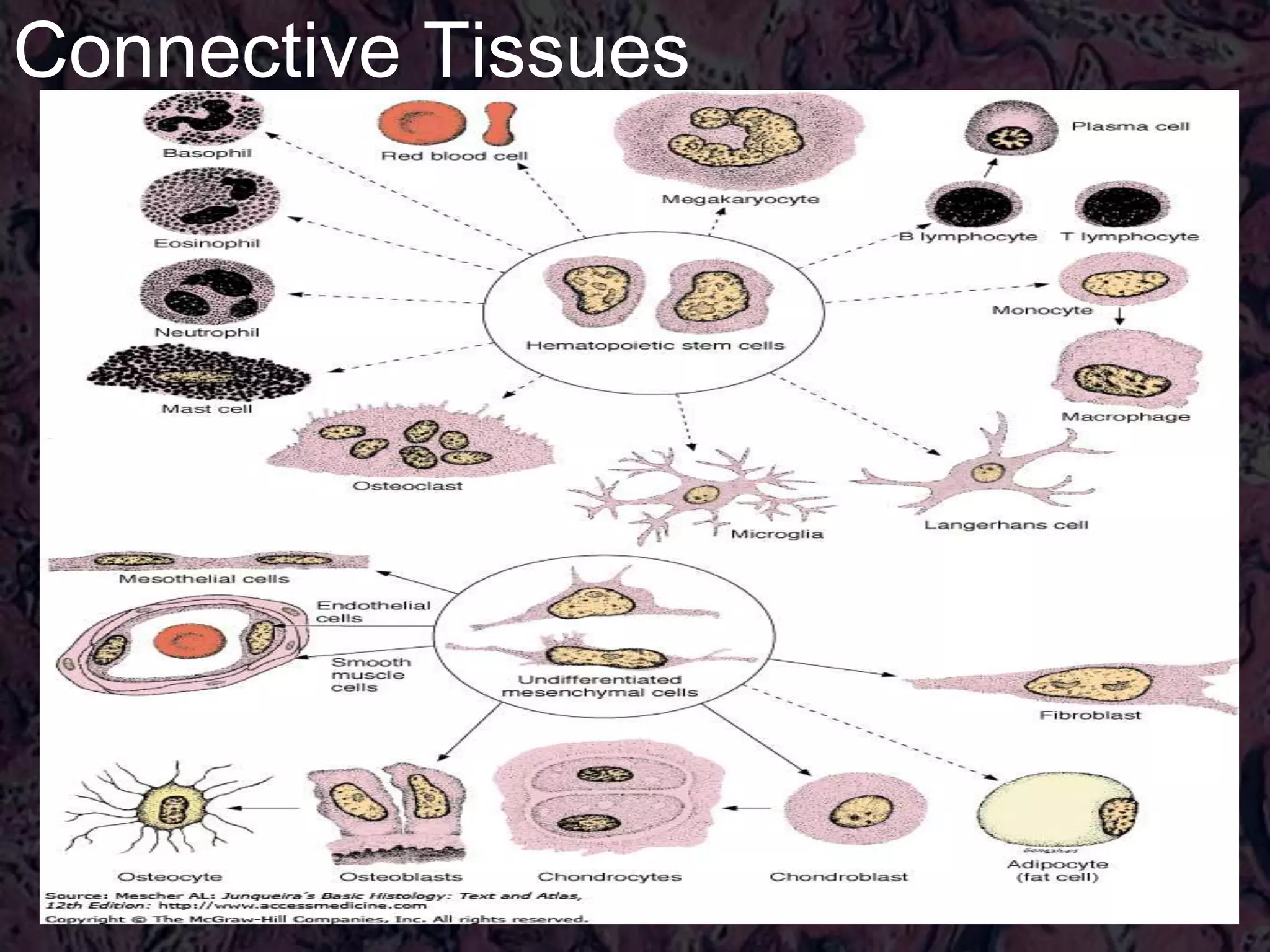
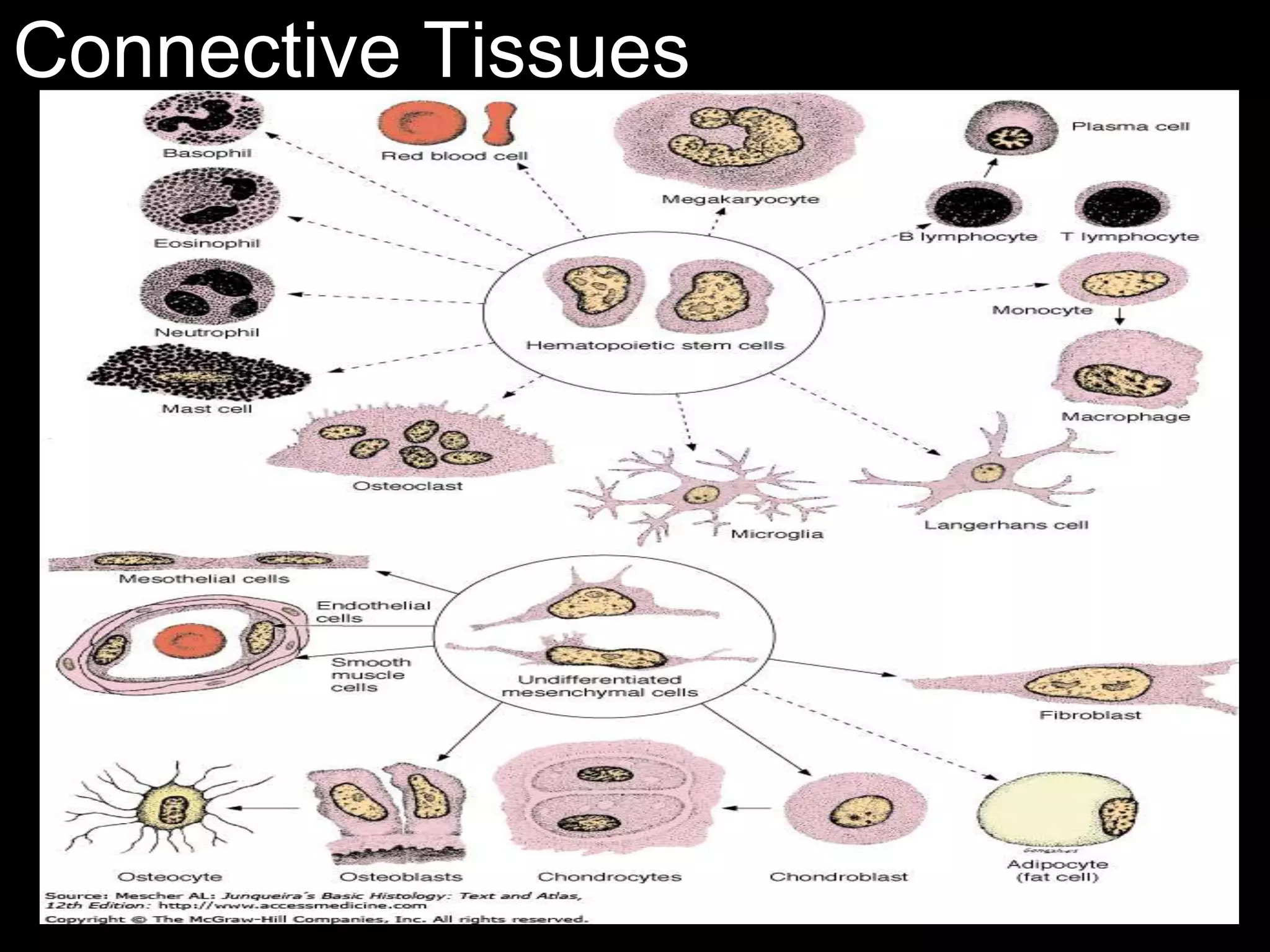
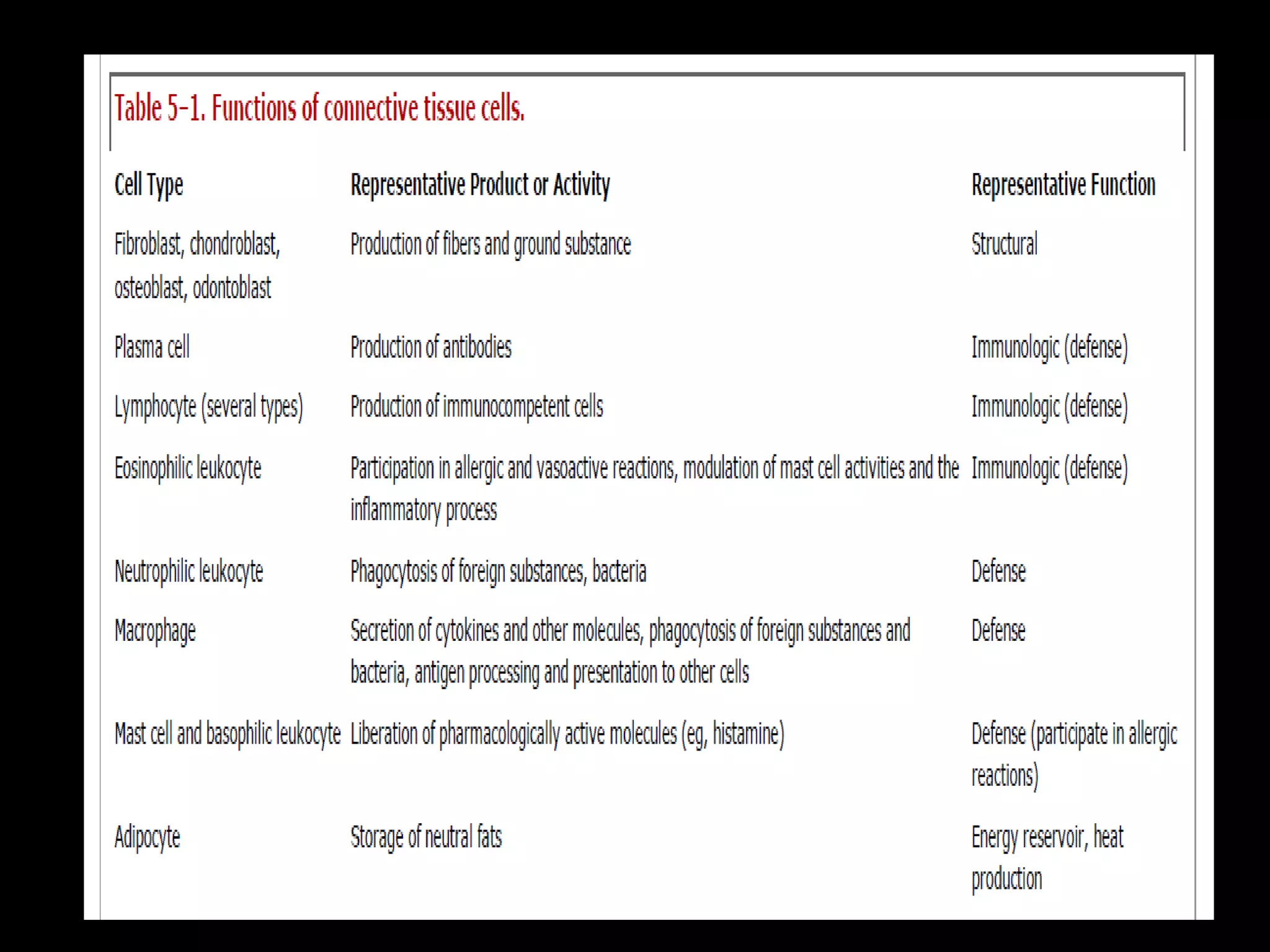
Connective Tissues
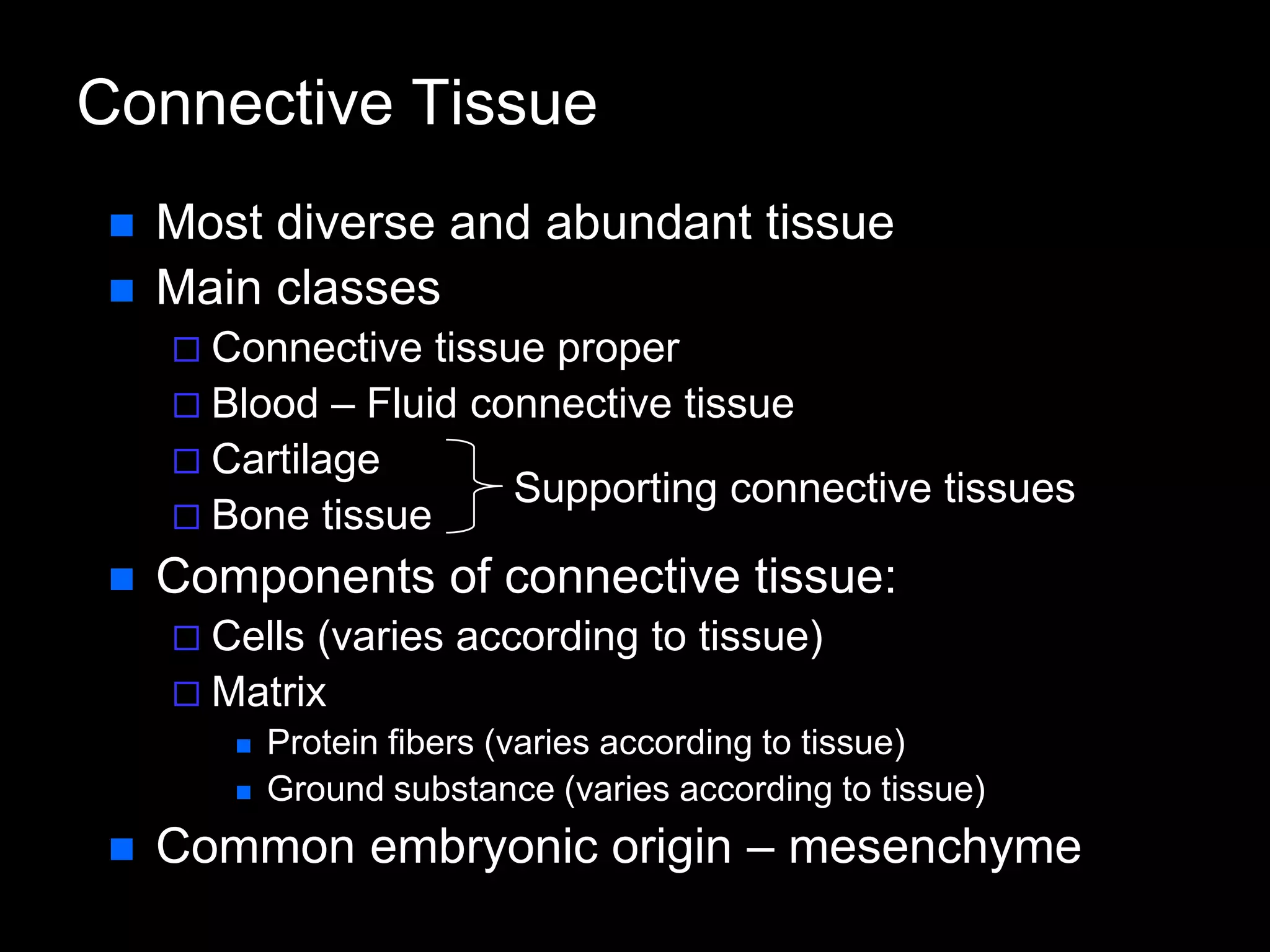
Connective Tissue
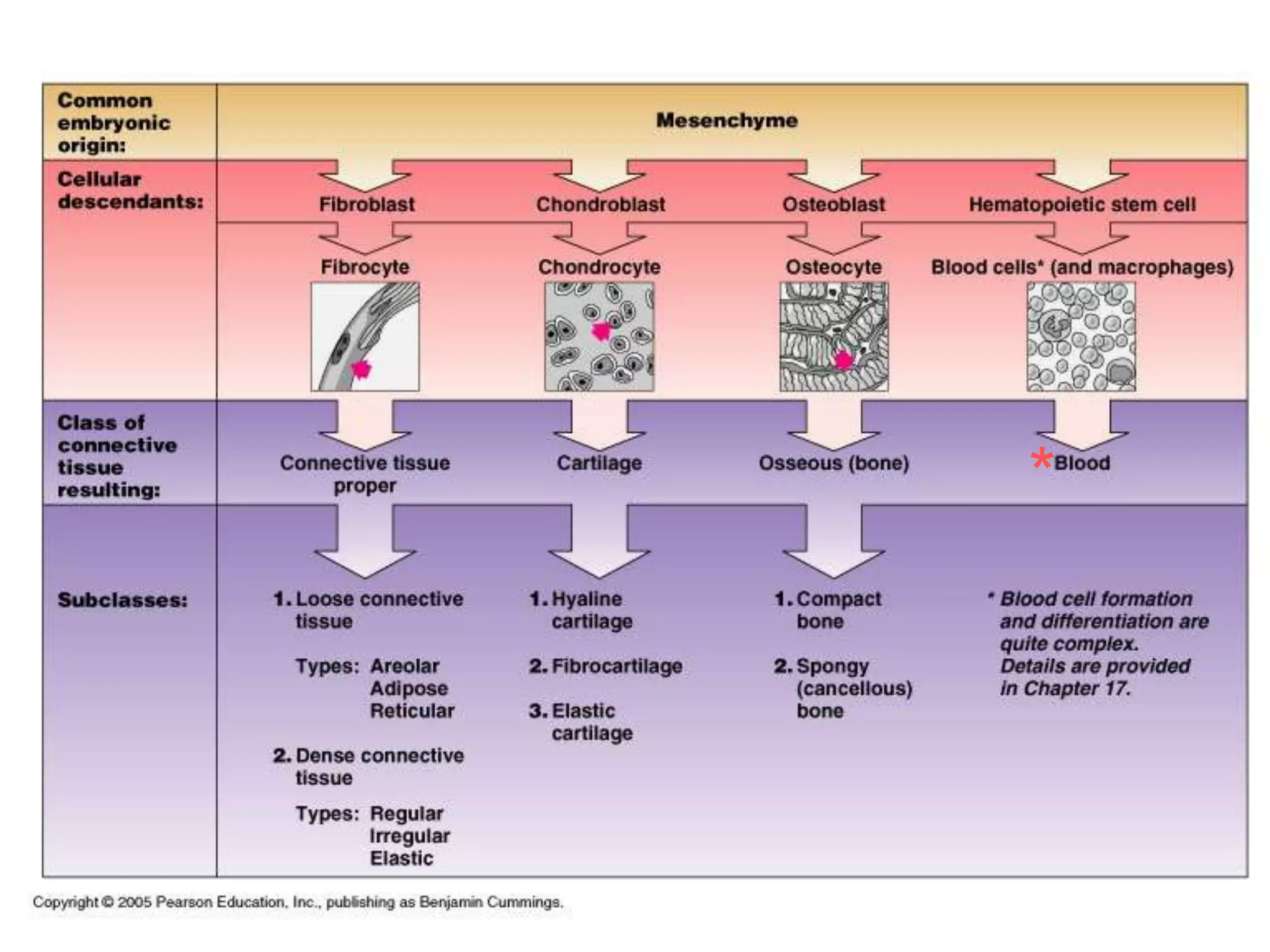
 Most diverse and abundant tissue
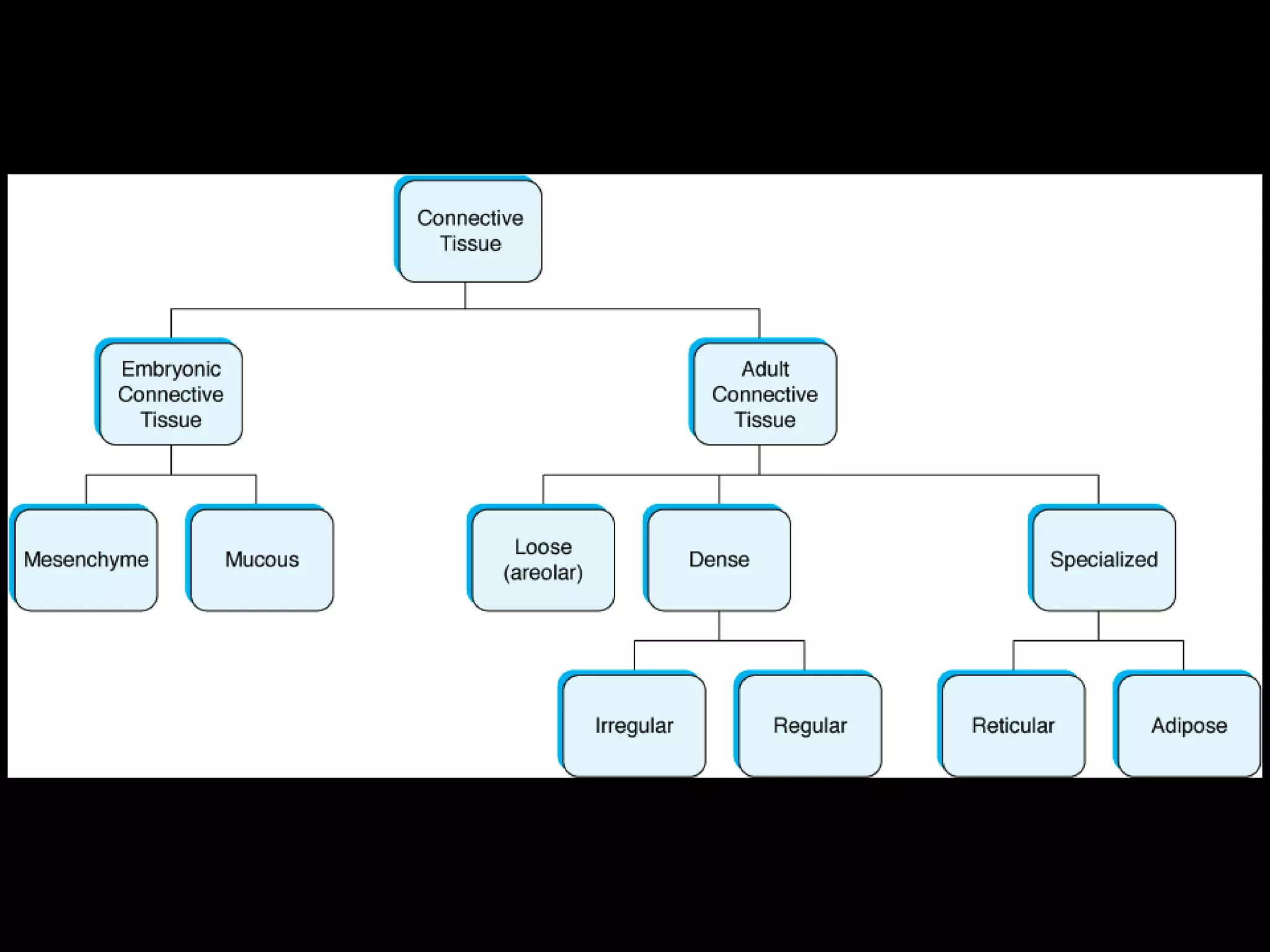
 Main classes
 Connective tissue proper
 Blood – Fluid connective tissue
 Cartilage
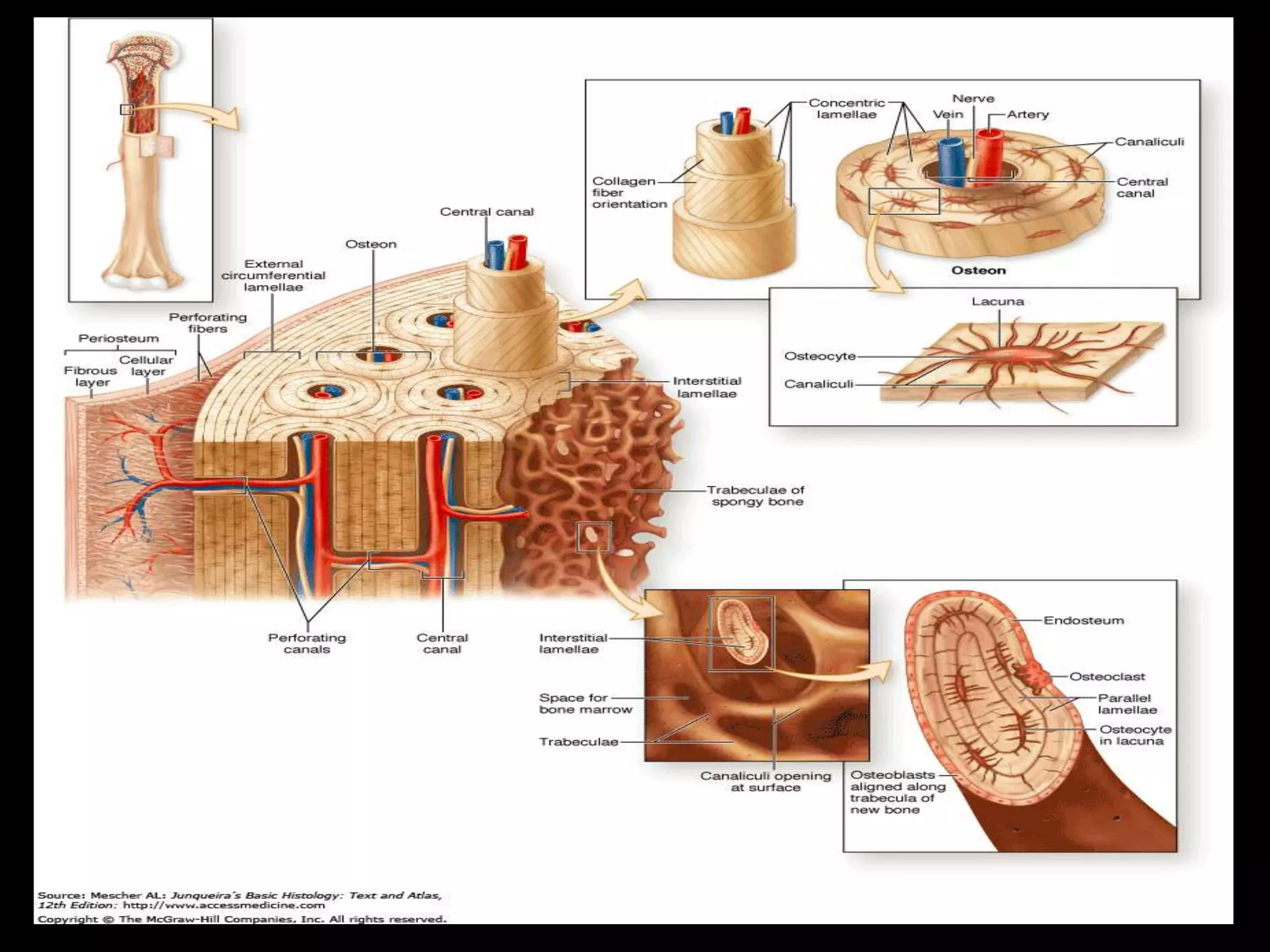
 Bone tissue
 Components of connective tissue:
 Cells (varies according to tissue)
 Matrix
 Protein fibers (varies according to tissue)
 Ground substance (varies according to tissue)
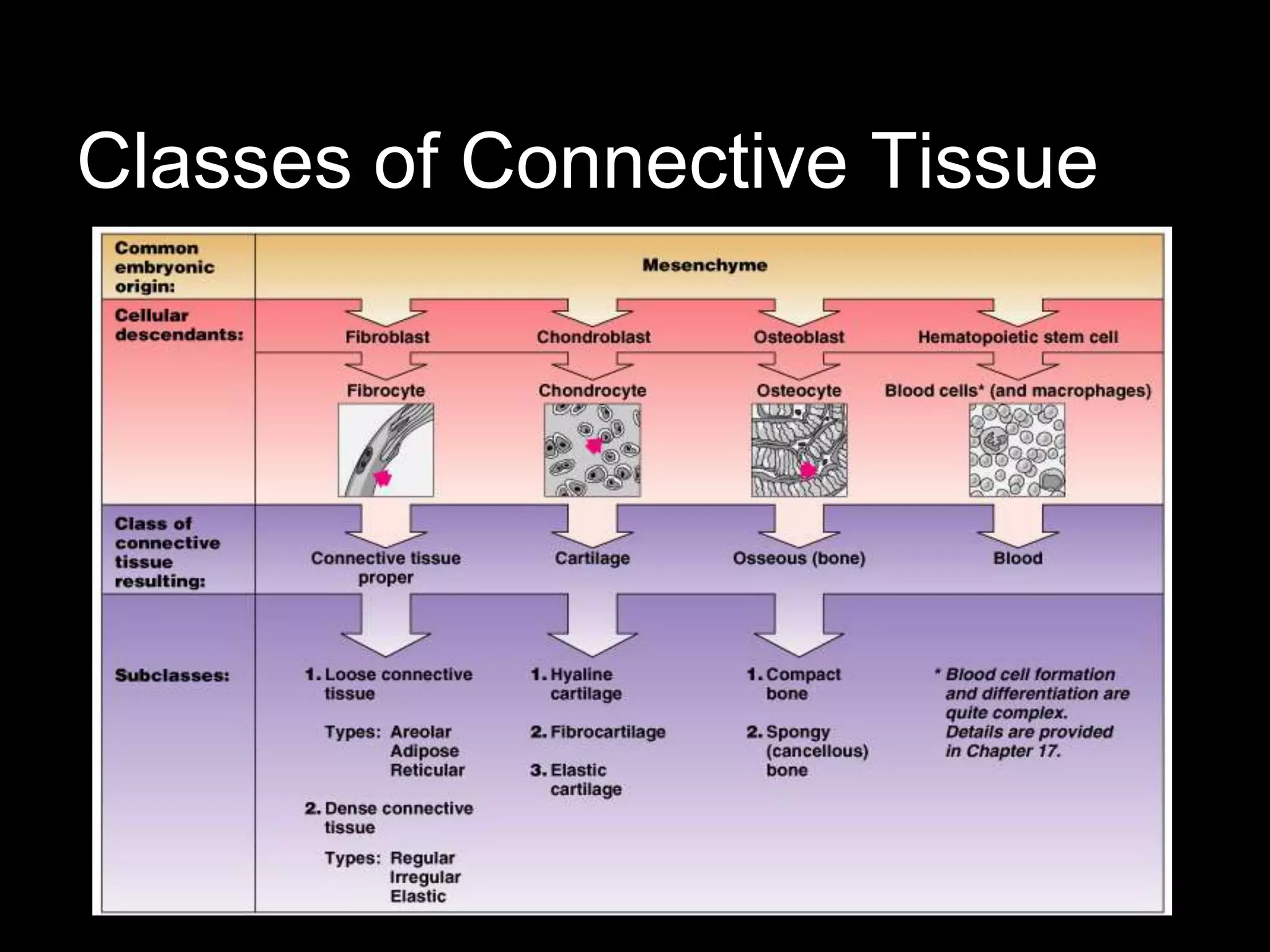
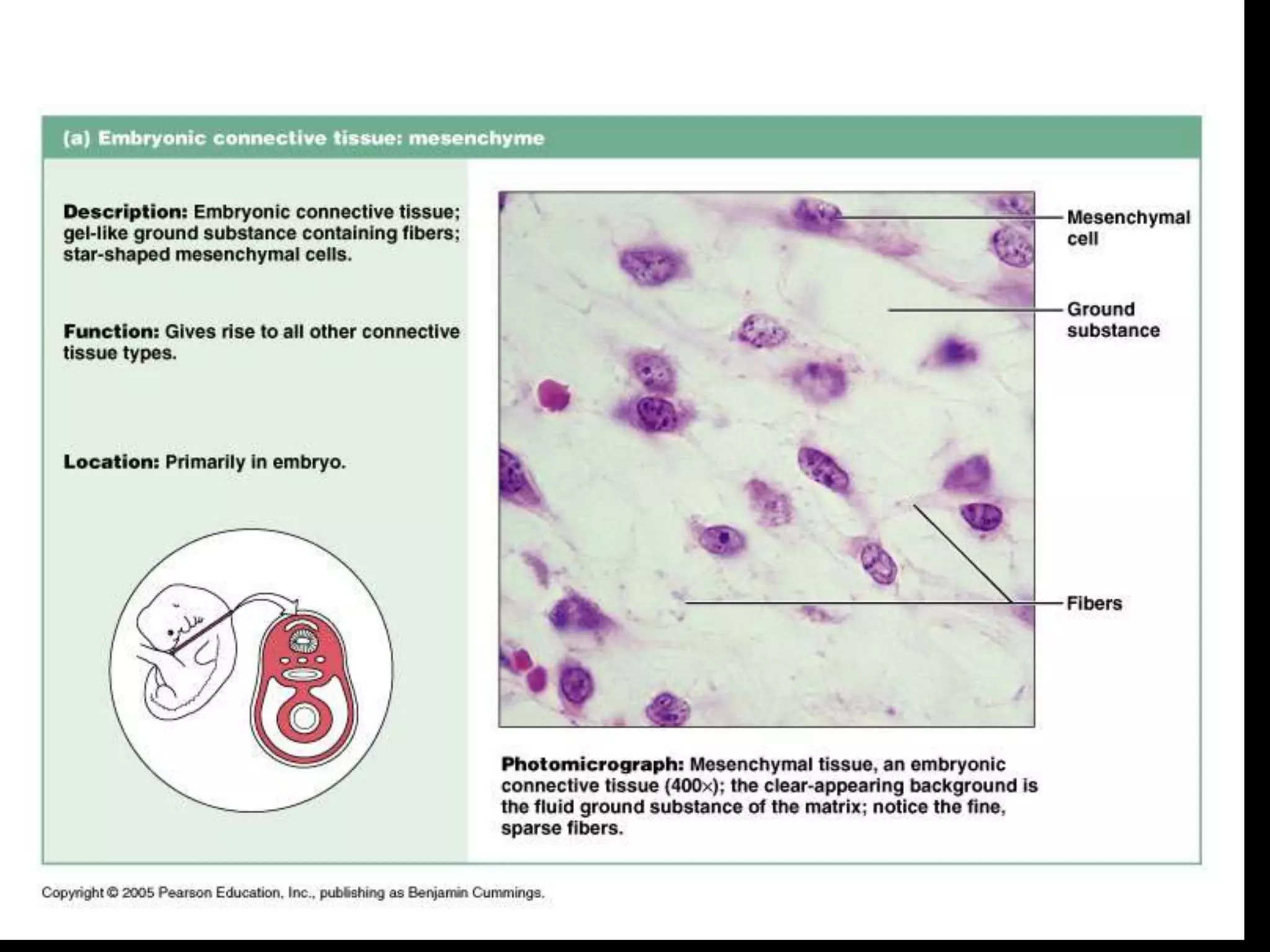
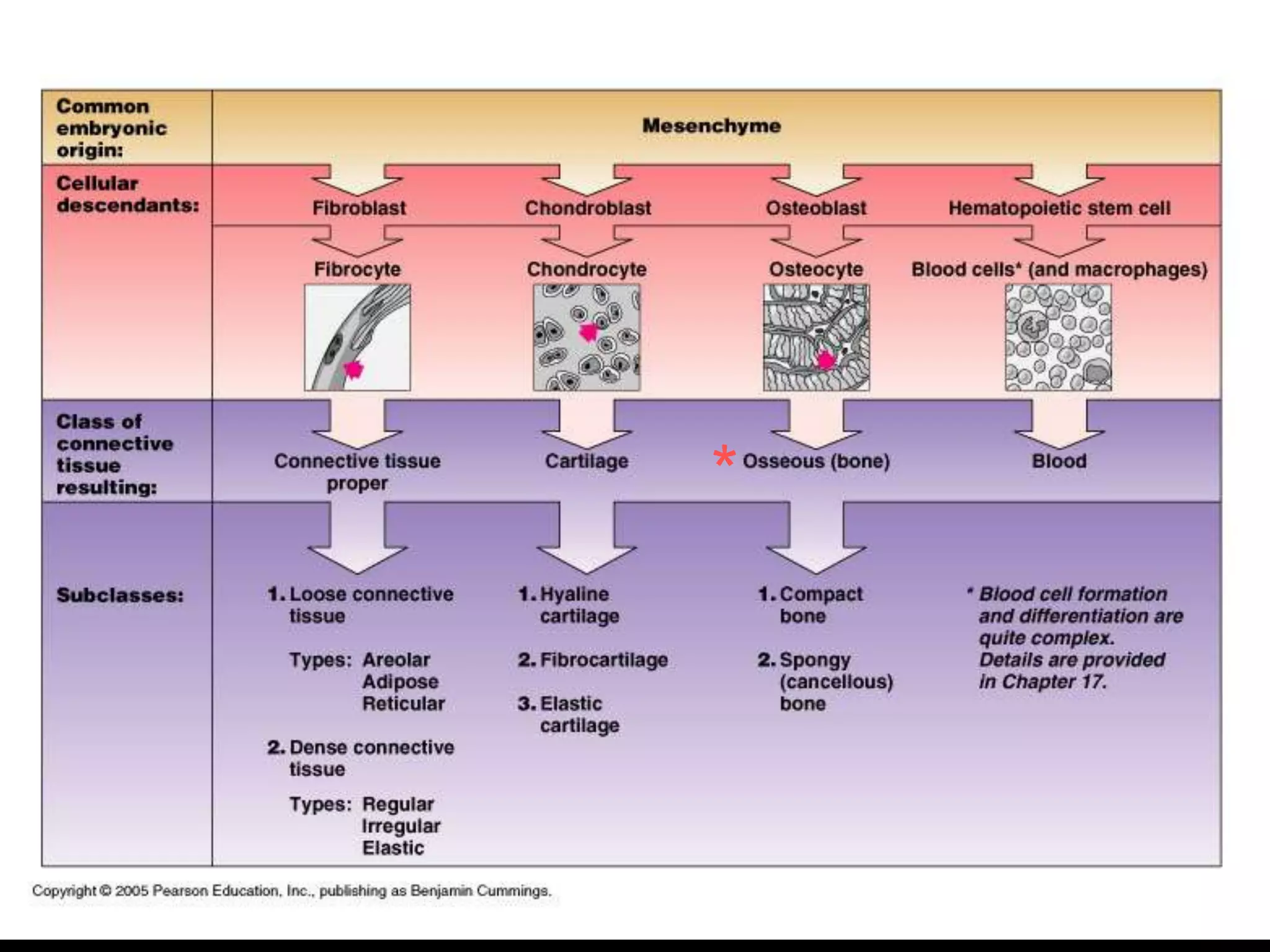
 Common embryonic origin – mesenchyme
Supporting connective tissues
Connective Tissues
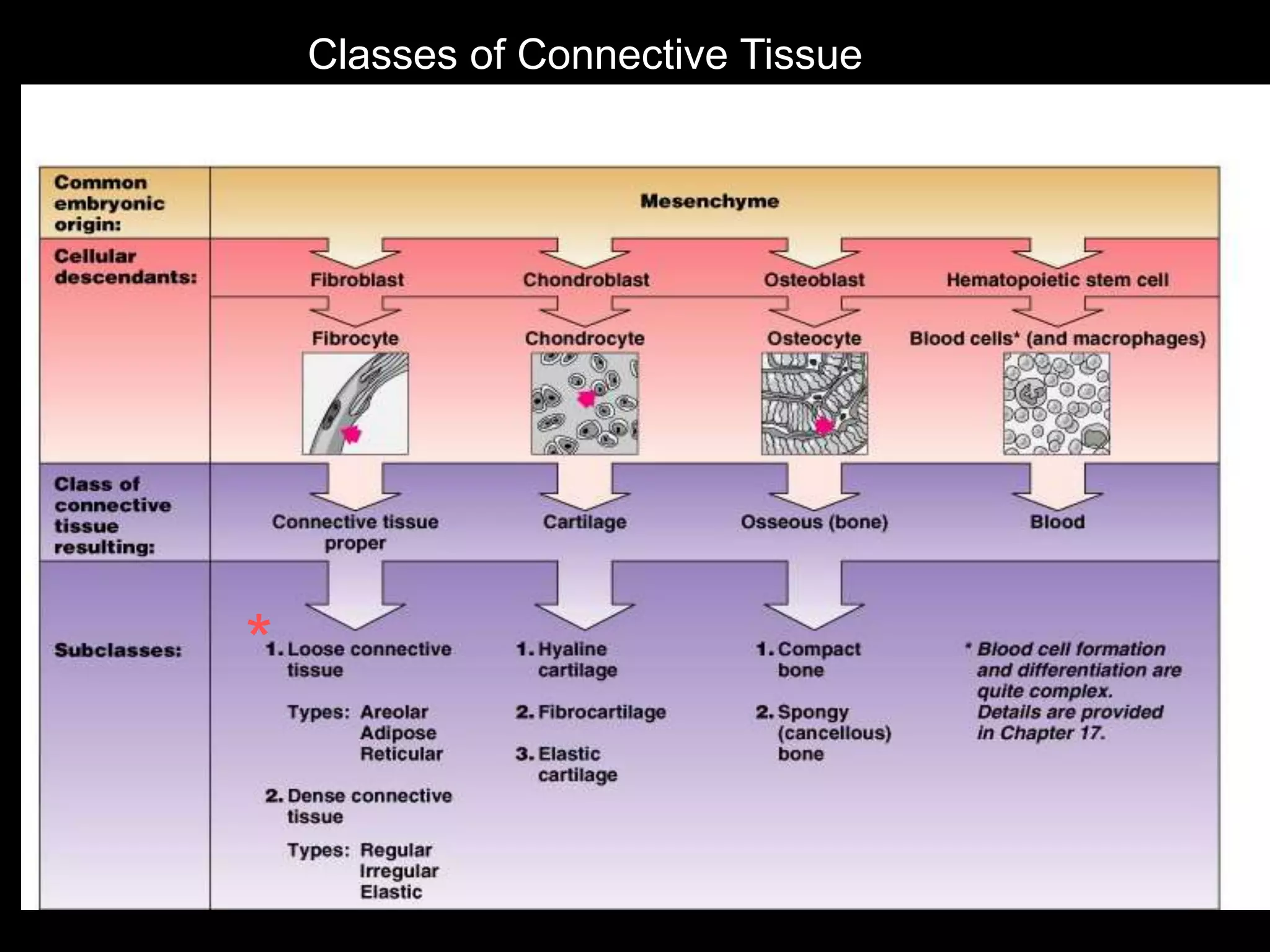
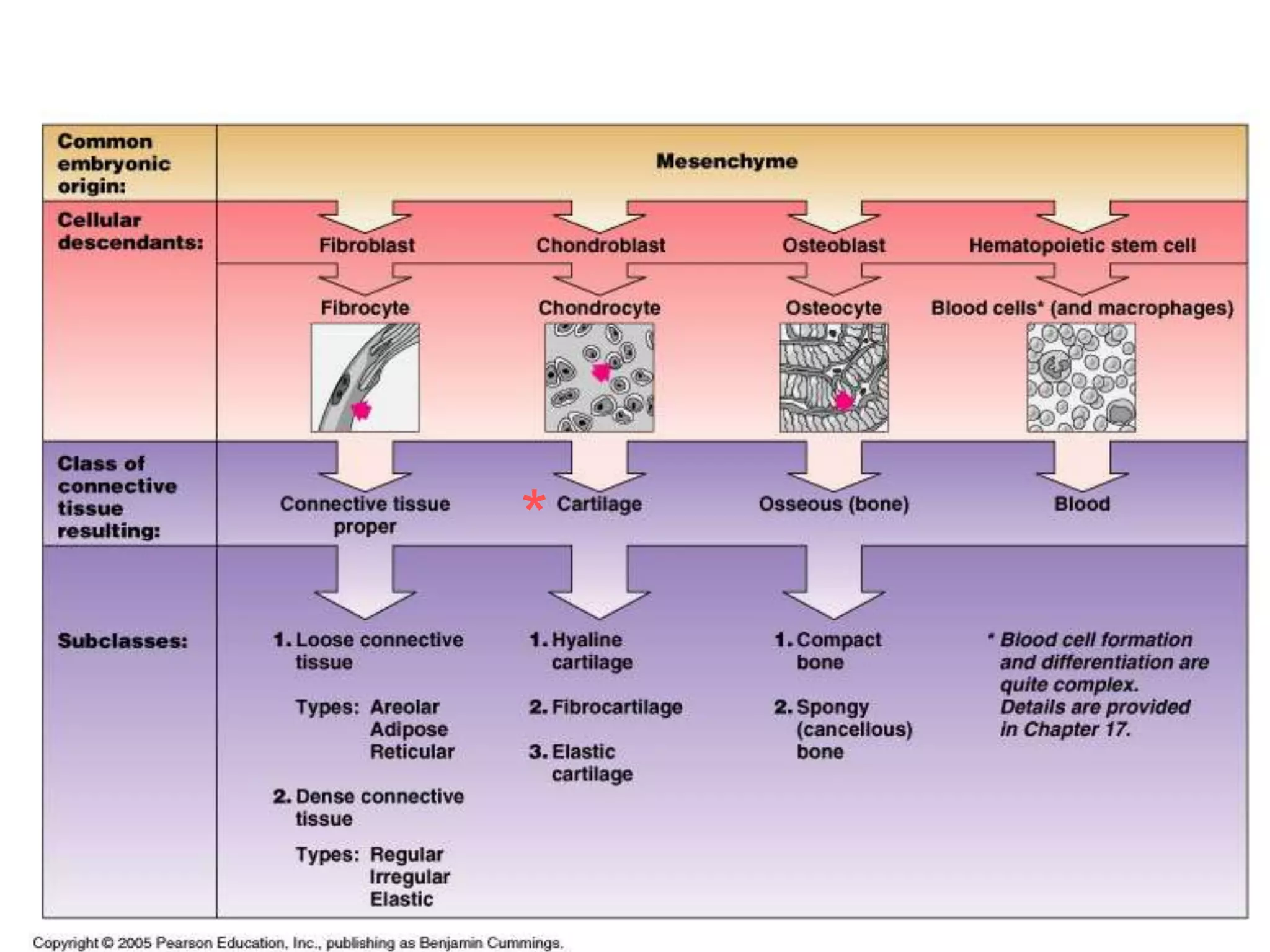
Classes of Connective Tissue
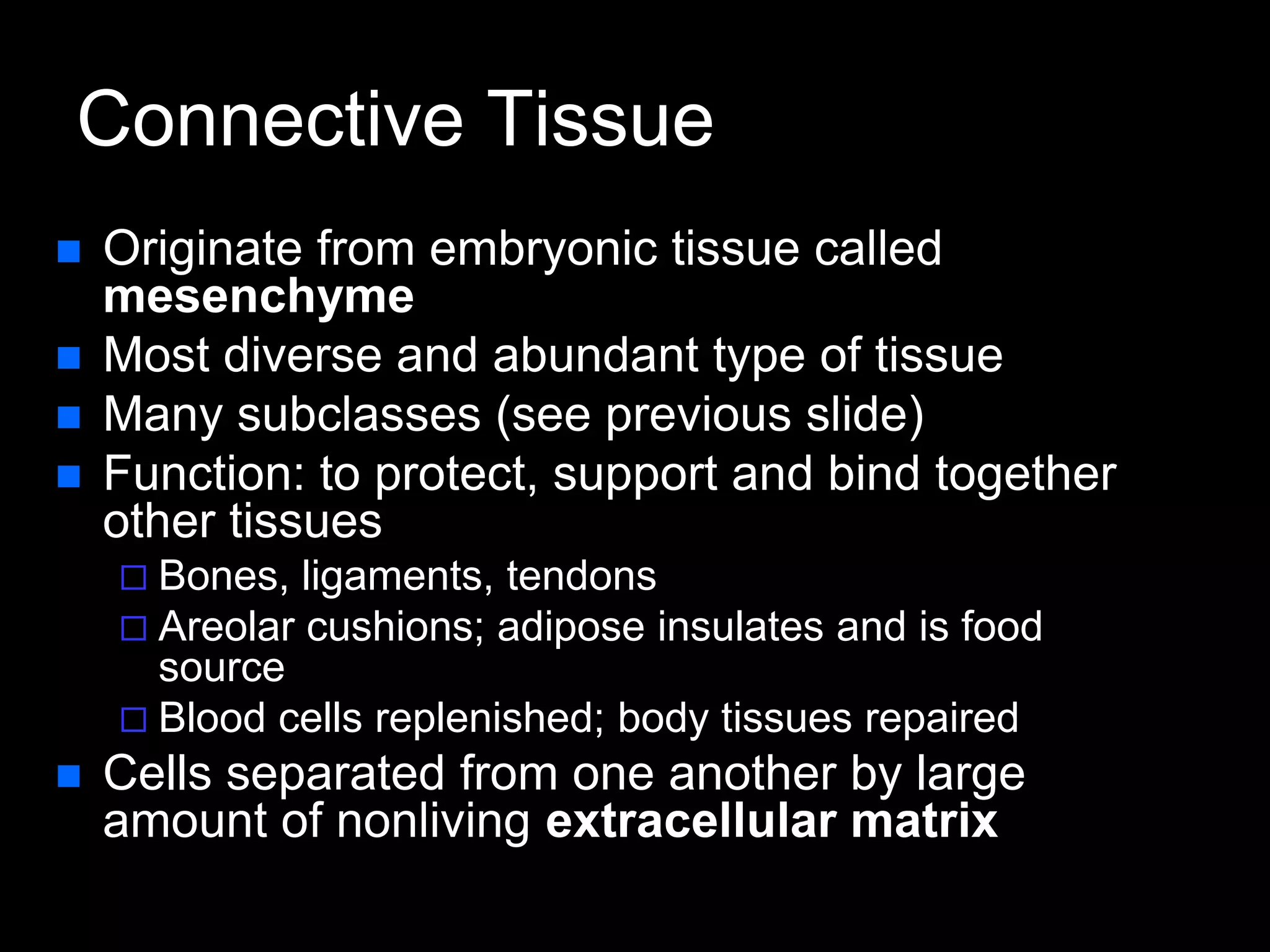
Connective Tissue
 Originate from embryonic tissue called
mesenchyme
 Most diverse and abundant type of tissue
 Many subclasses (see previous slide)
 Function: to protect, support and bind together
other tissues
 Bones, ligaments, tendons
 Areolar cushions; adipose insulates and is food
source
 Blood cells replenished; body tissues repaired
 Cells separated from one another by large
amount of nonliving extracellular matrix
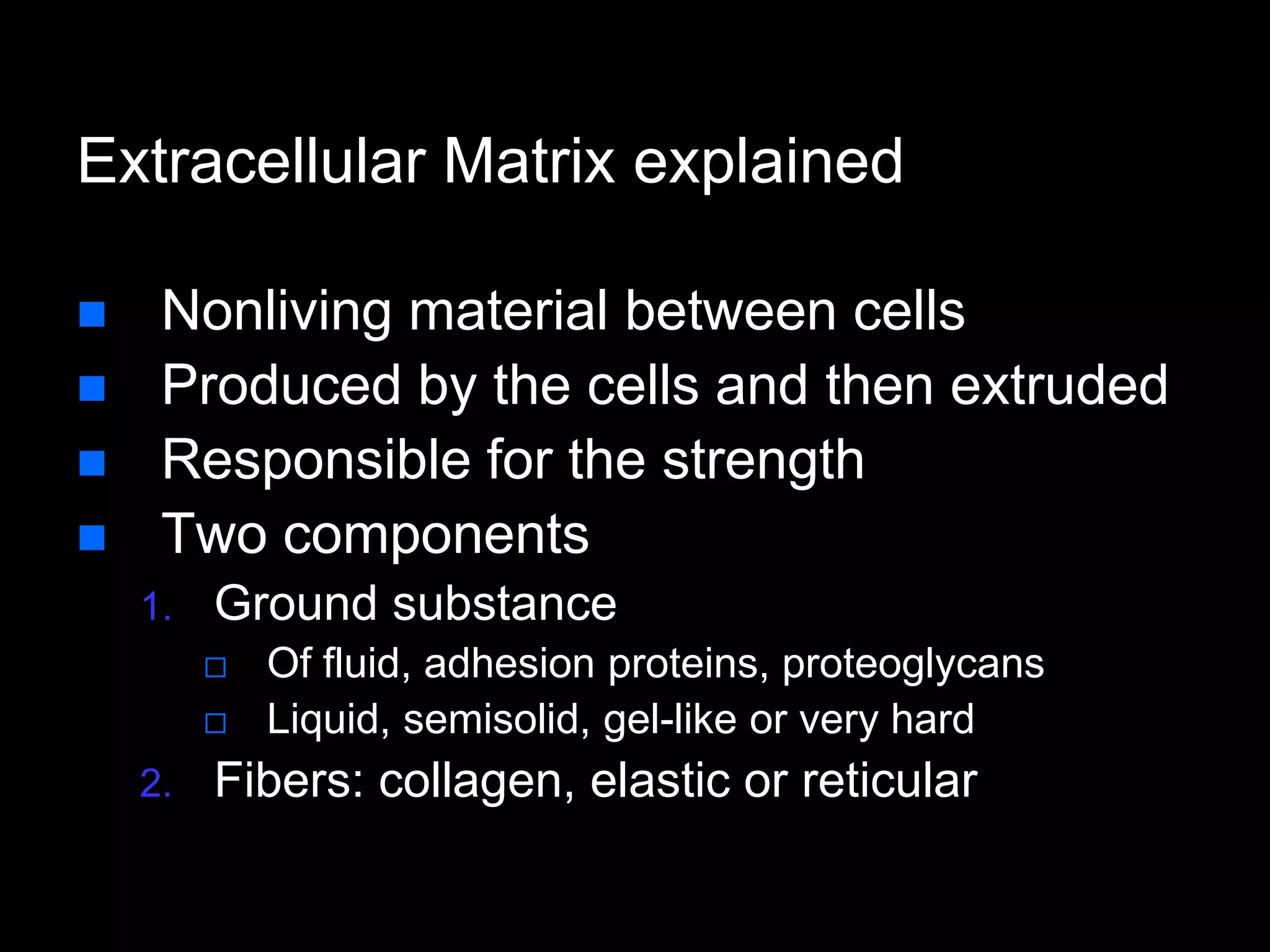
Extracellular Matrix explained
 Nonliving material between cells
 Produced by the cells and then extruded
 Responsible for the strength
 Two components
1. Ground substance
 Of fluid, adhesion proteins, proteoglycans
 Liquid, semisolid, gel-like or very hard
2. Fibers: collagen, elastic or reticular
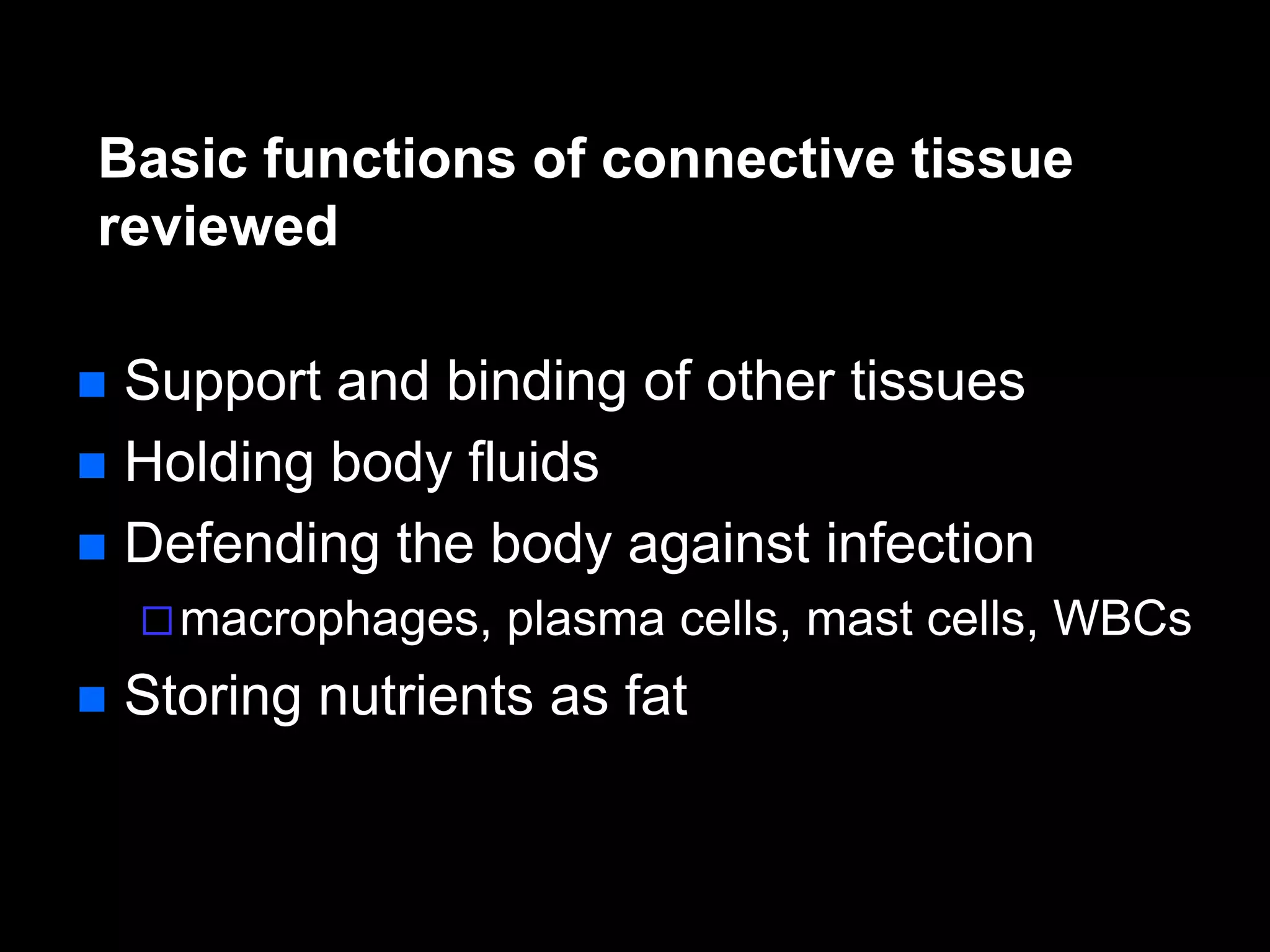
Basic functions of connective tissue
reviewed
 Support and binding of other tissues
 Holding body fluids
 Defending the body against infection
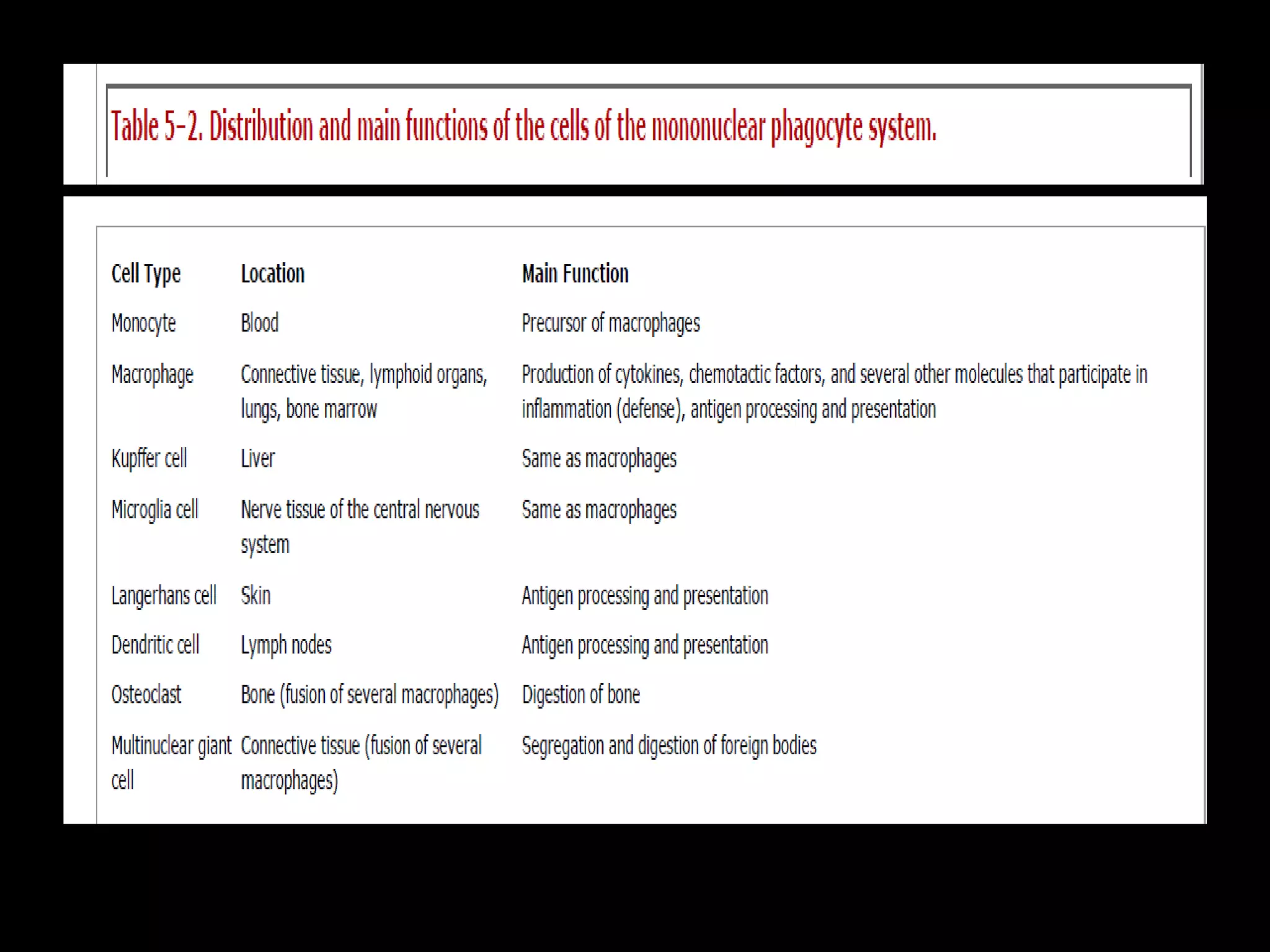
macrophages, plasma cells, mast cells, WBCs
 Storing nutrients as fat
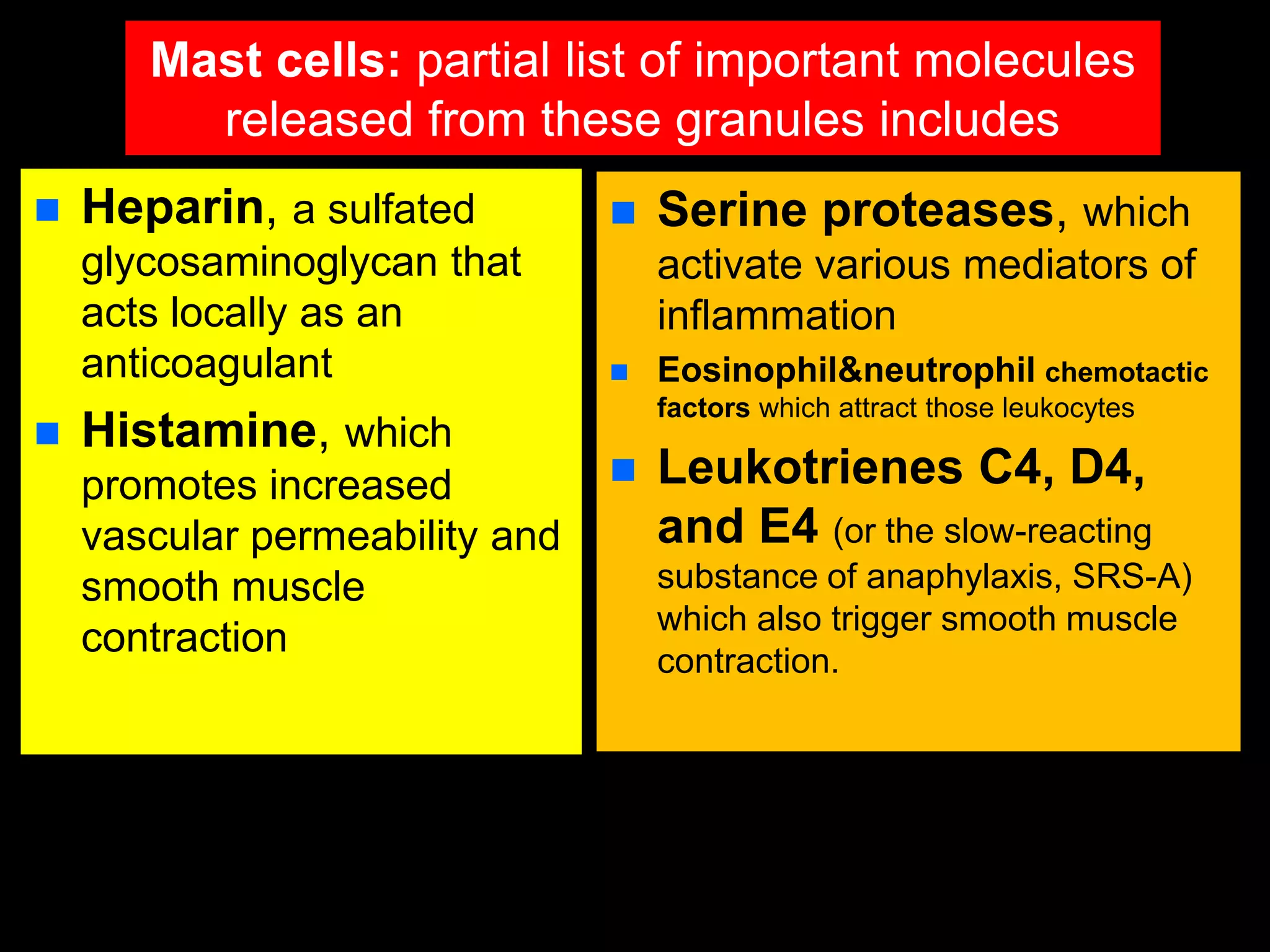
Mast cells: partial list of important molecules
released from these granules includes
 Heparin, a sulfated
glycosaminoglycan that
acts locally as an
anticoagulant
 Histamine, which
promotes increased
vascular permeability and
smooth muscle
contraction
 Serine proteases, which
activate various mediators of
inflammation
 Eosinophil&neutrophil chemotactic
factors which attract those leukocytes
 Leukotrienes C4, D4,
and E4 (or the slow-reacting
substance of anaphylaxis, SRS-A)
which also trigger smooth muscle
contraction.
Classes of Connective Tissue
*
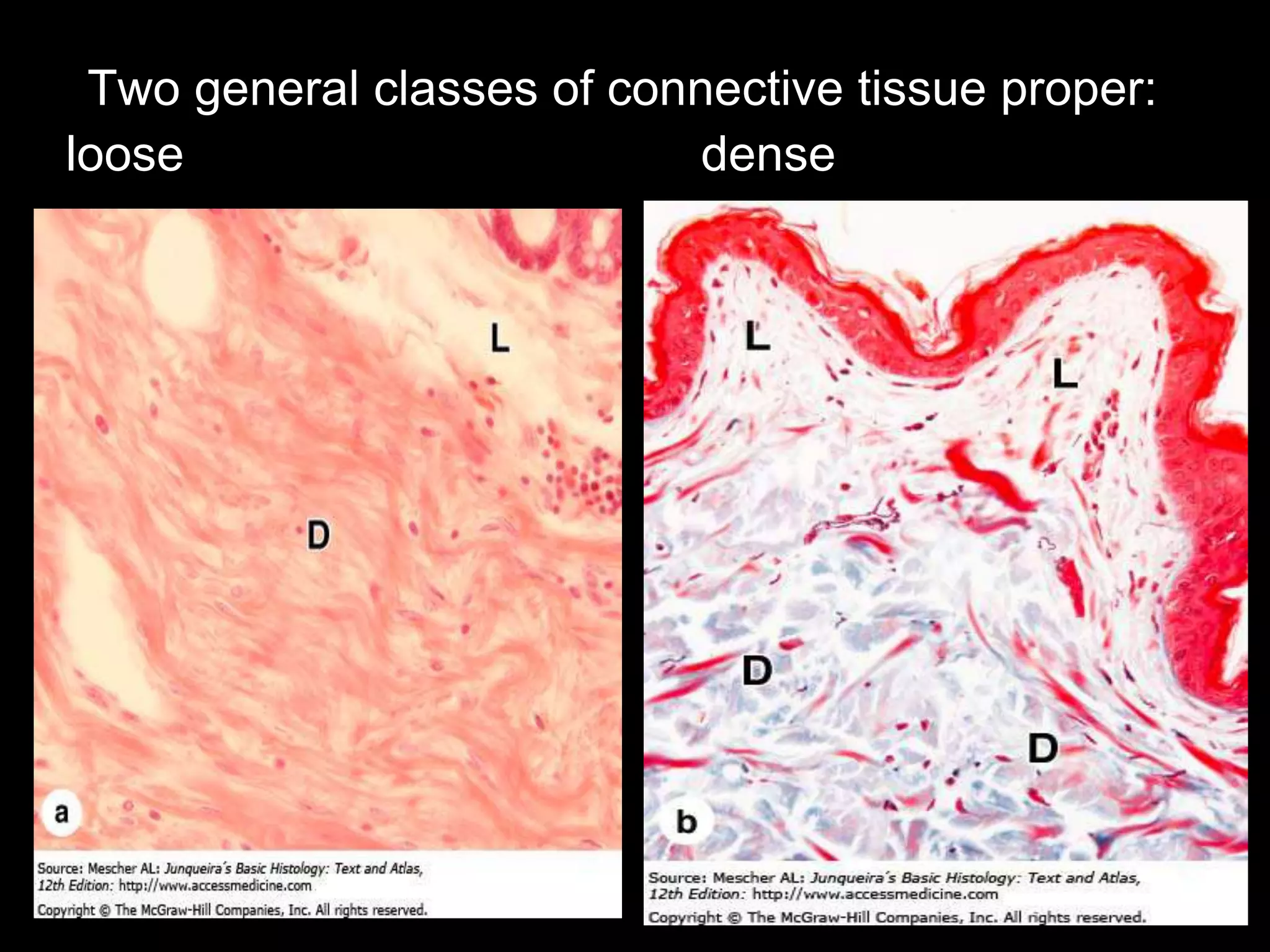
Two general classes of connective tissue proper:
loose dense
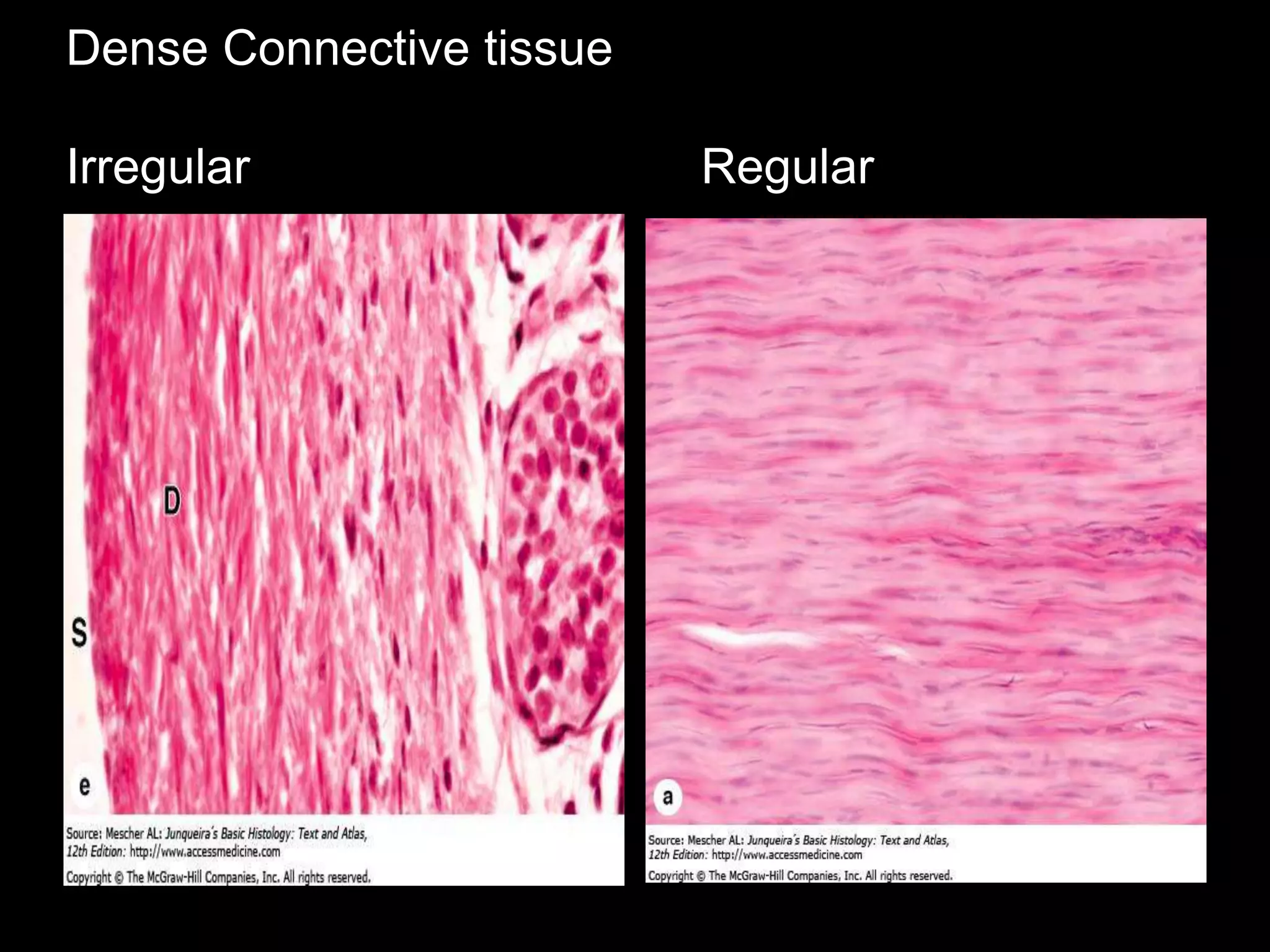
Dense Connective tissue
Irregular Regular
*
Classes of Connective Tissue
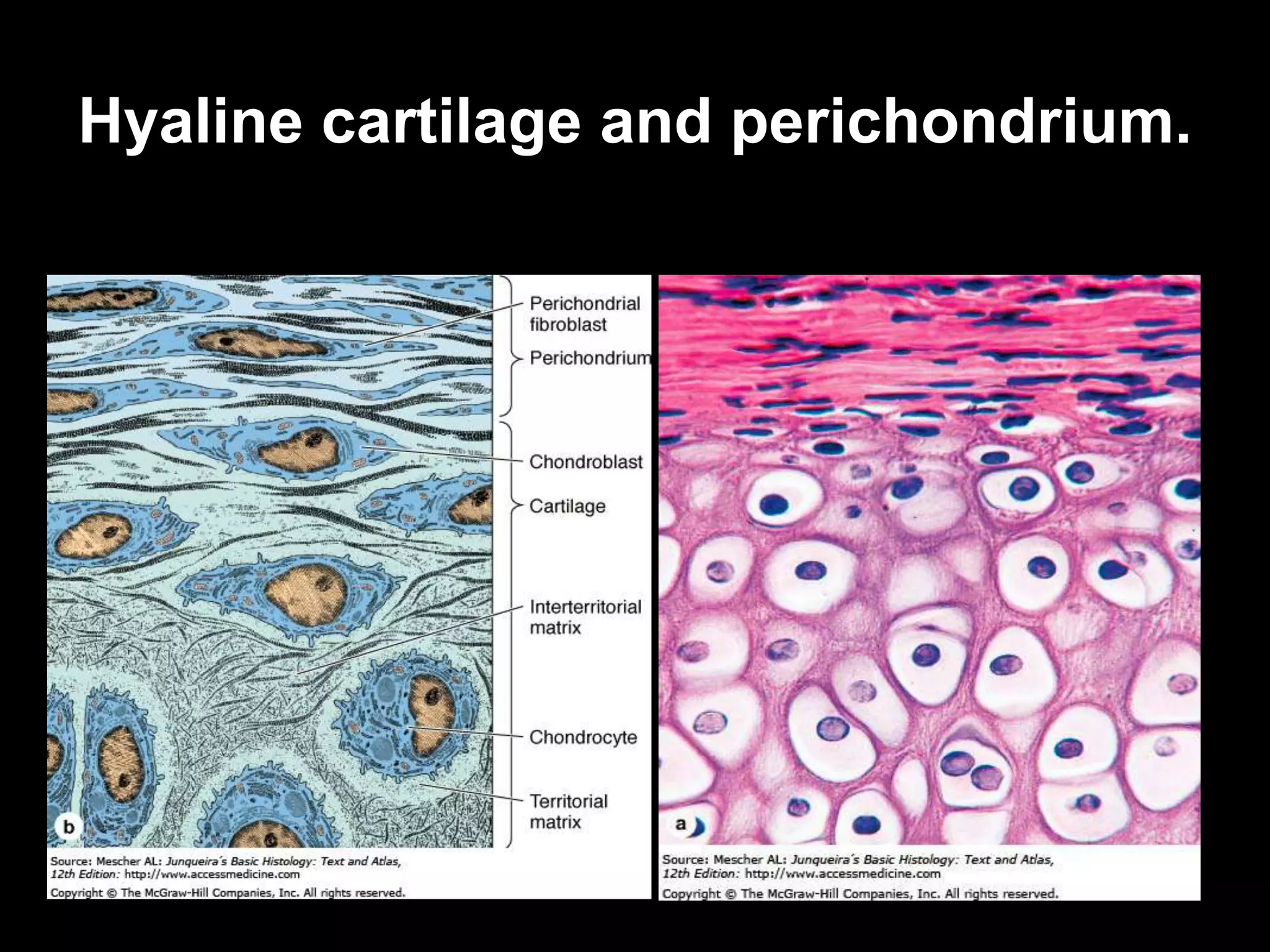
Hyaline cartilage and perichondrium.
Classes of Connective Tissue
*
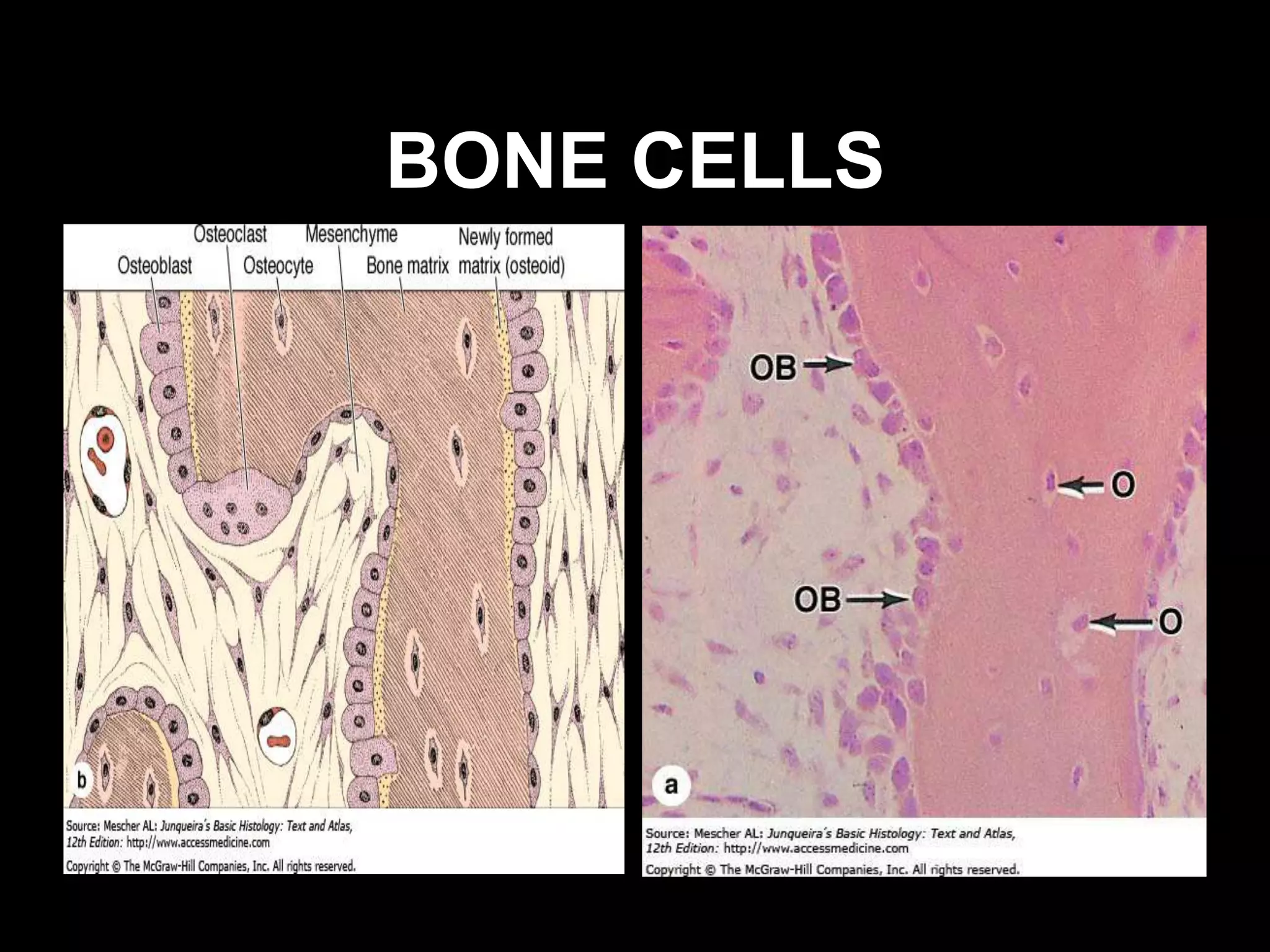
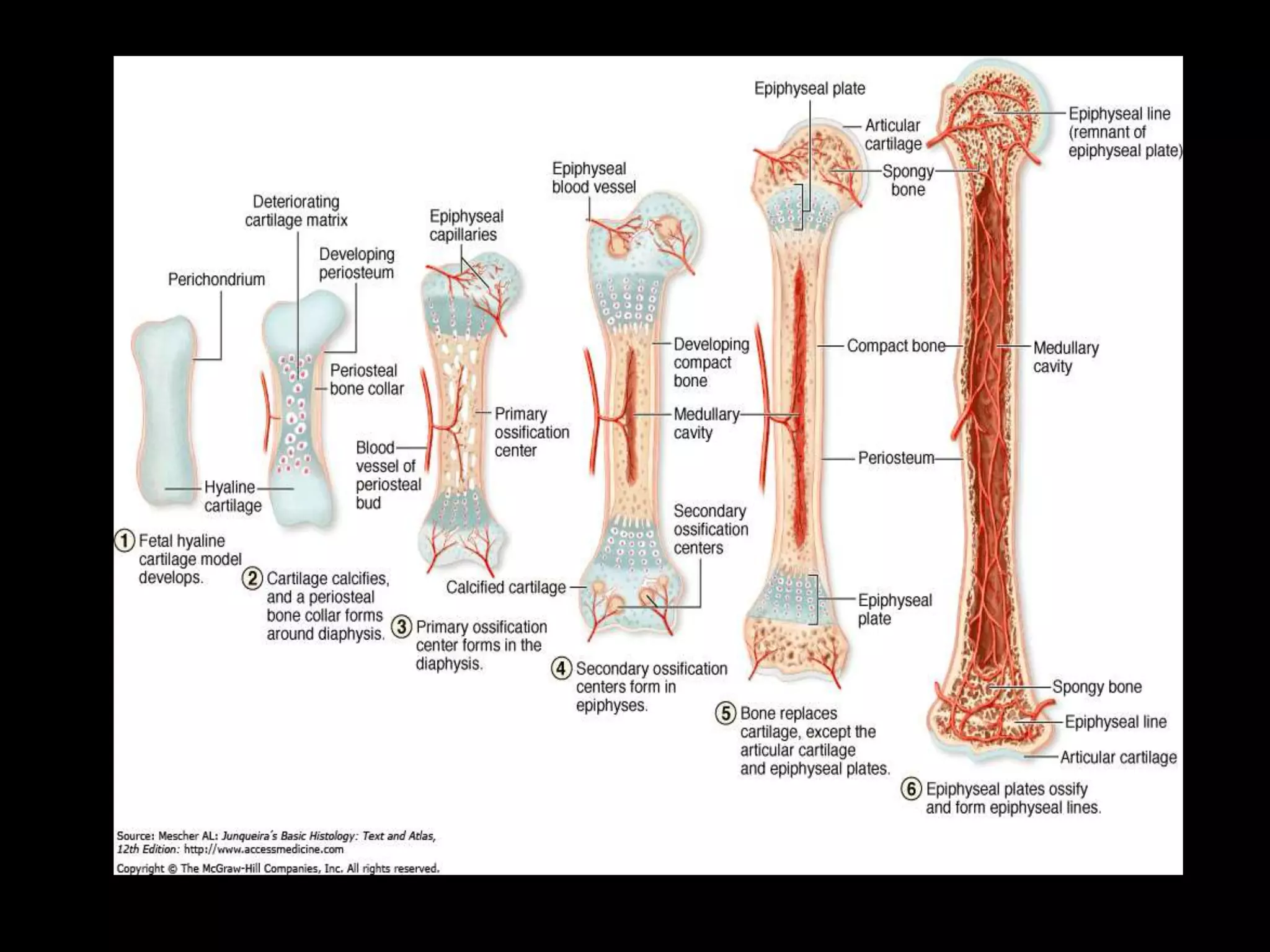
BONE CELLS
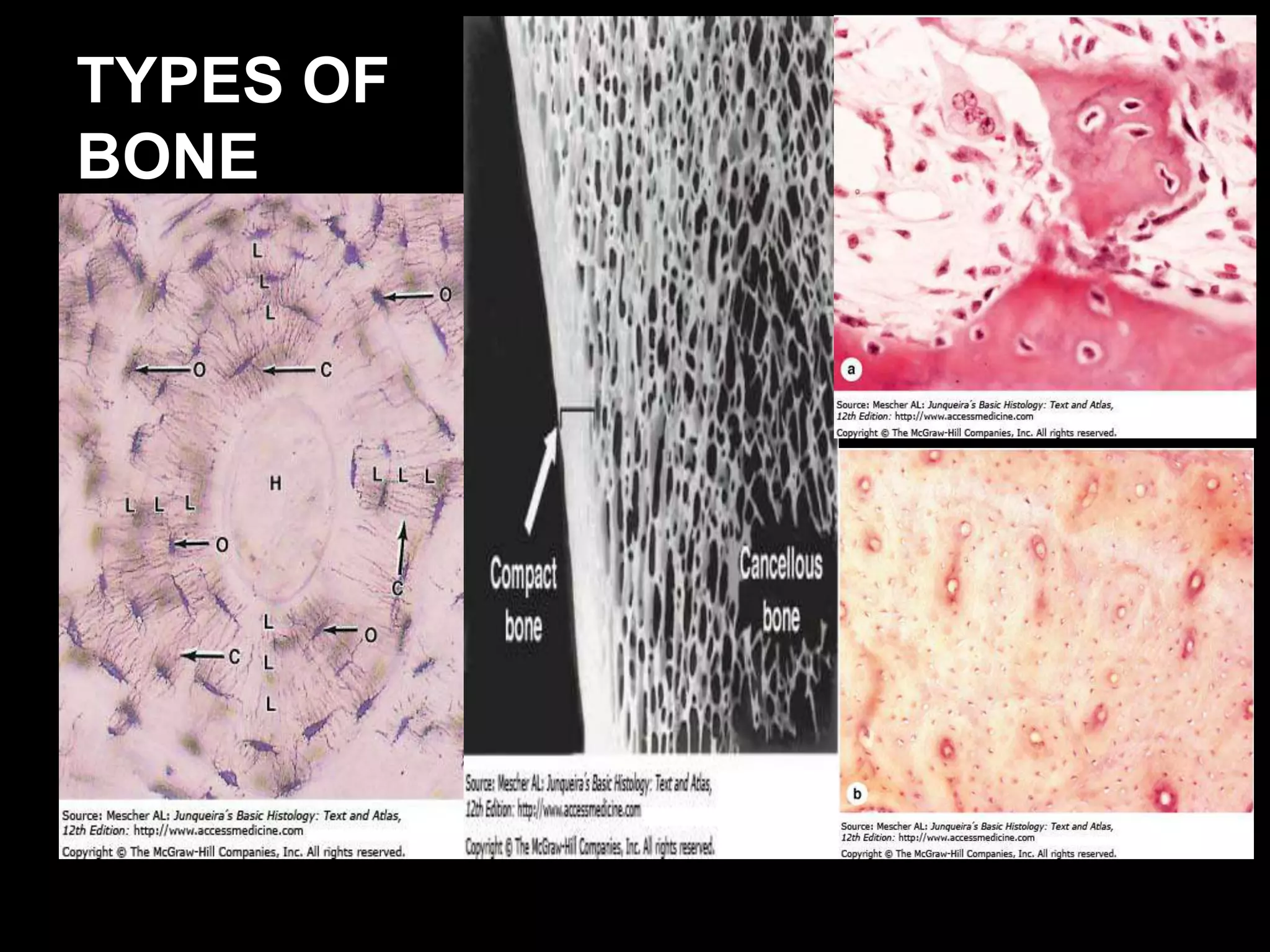
TYPES OF
BONE
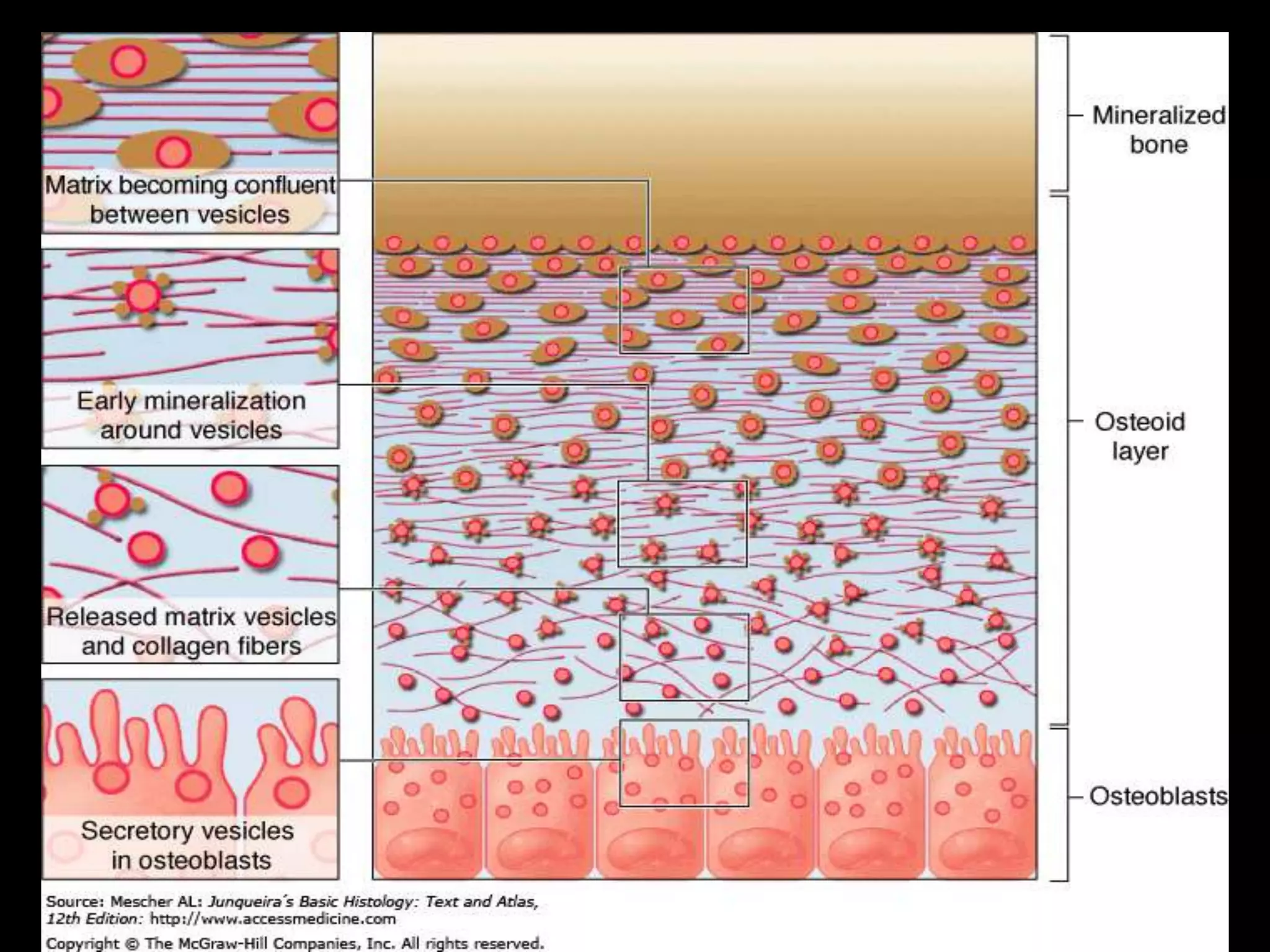
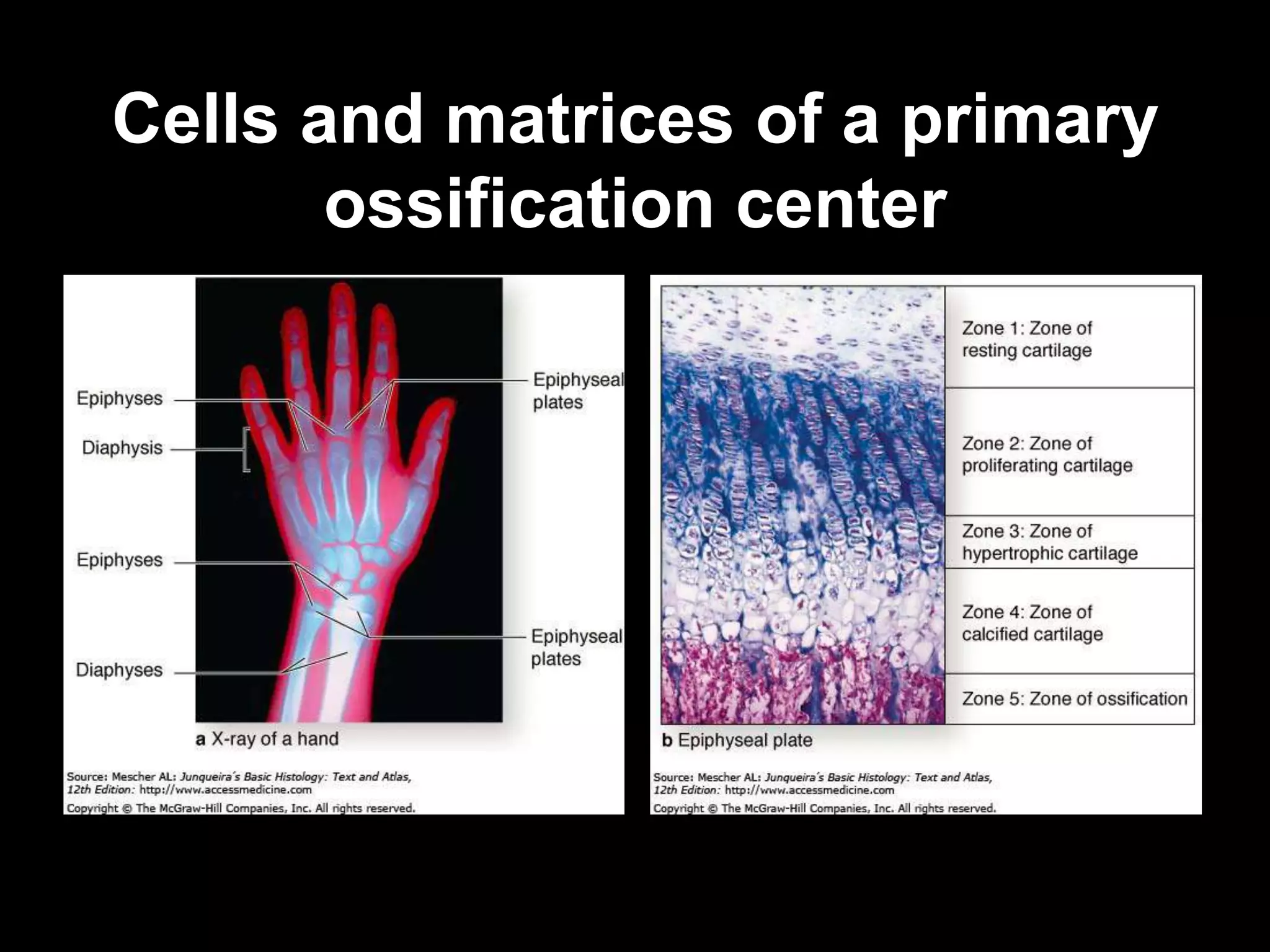
Cells and matrices of a primary
ossification center
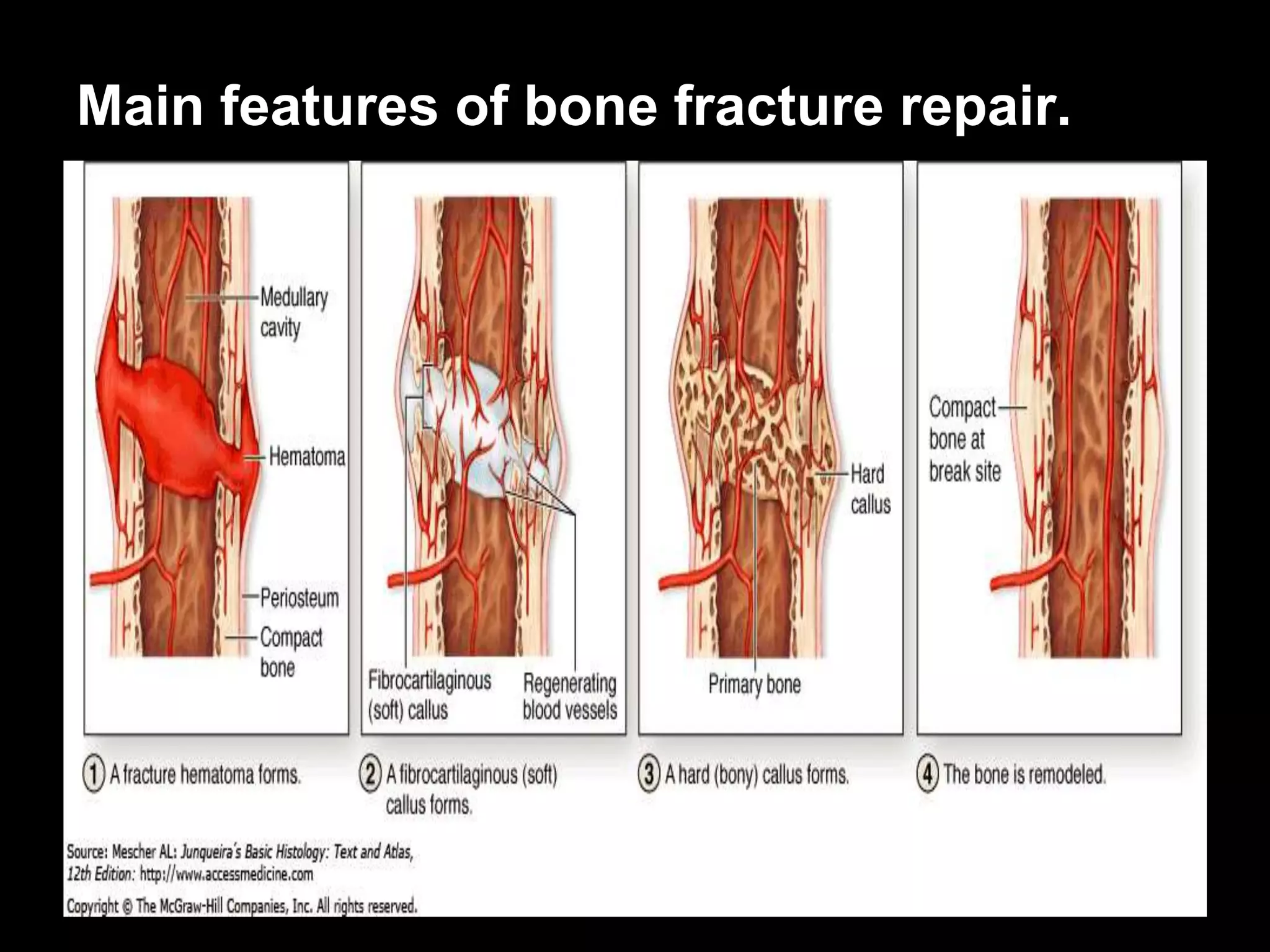
Main features of bone fracture repair.
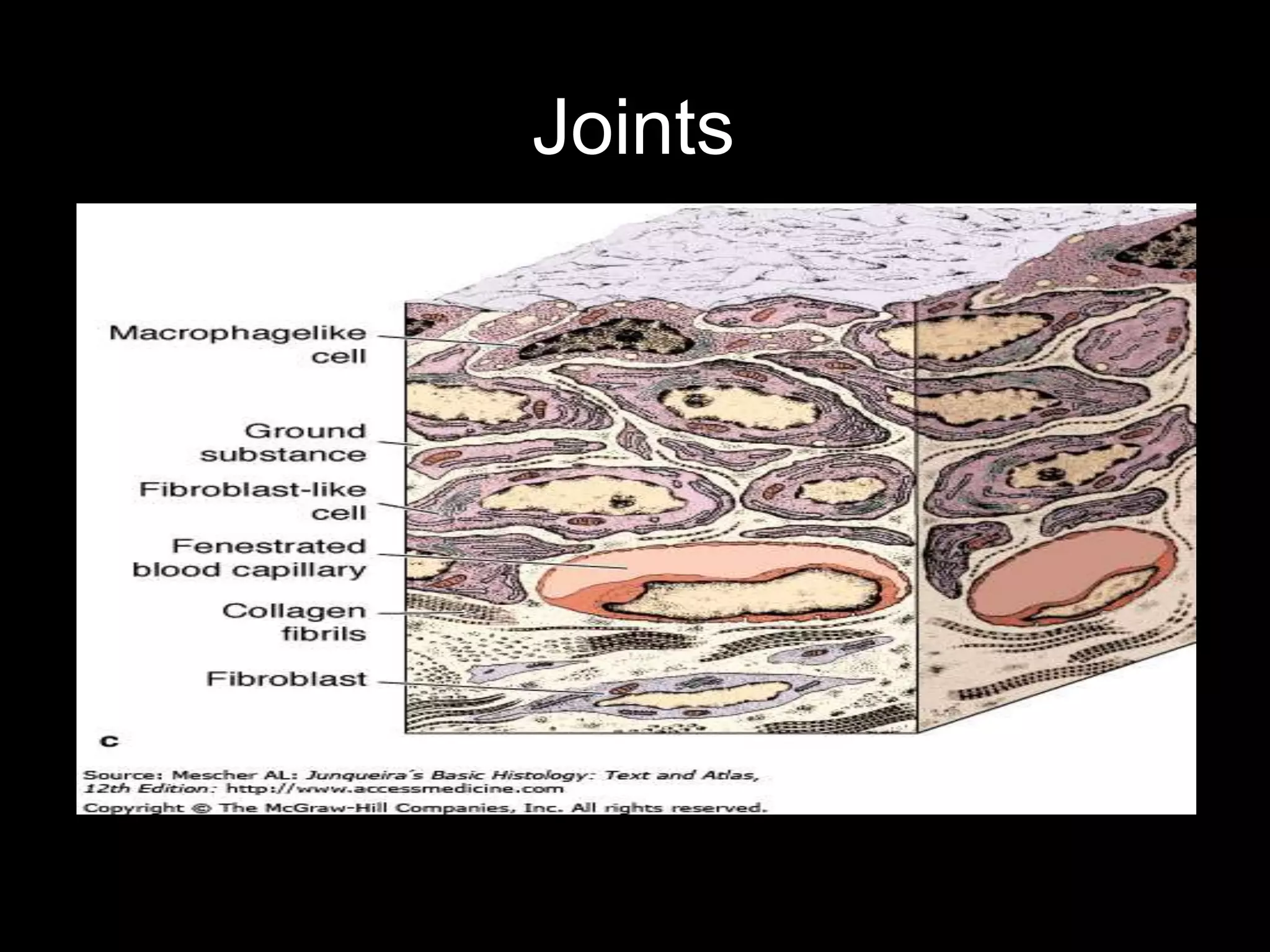
Joints
Classes of Connective Tissue
*
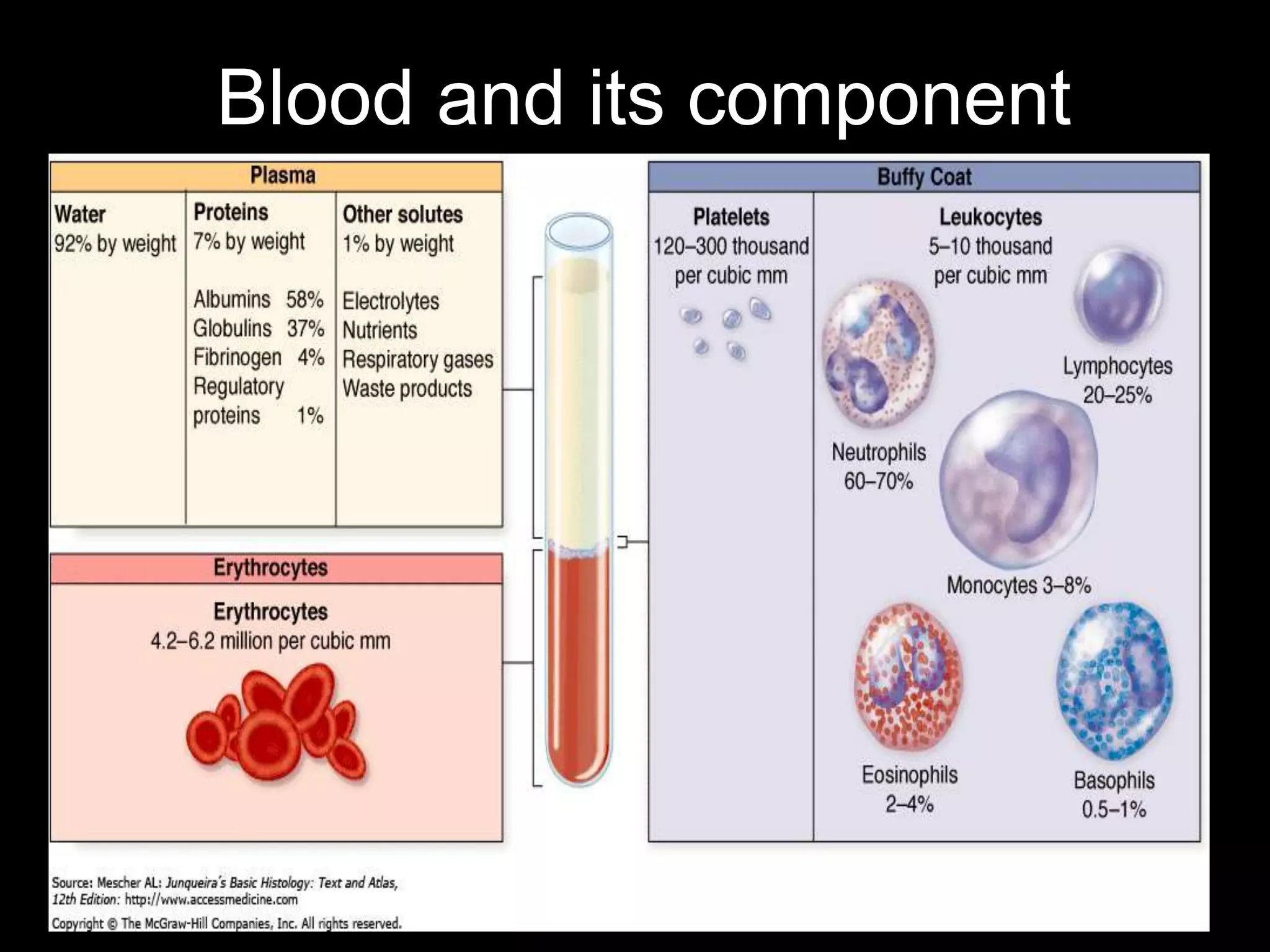
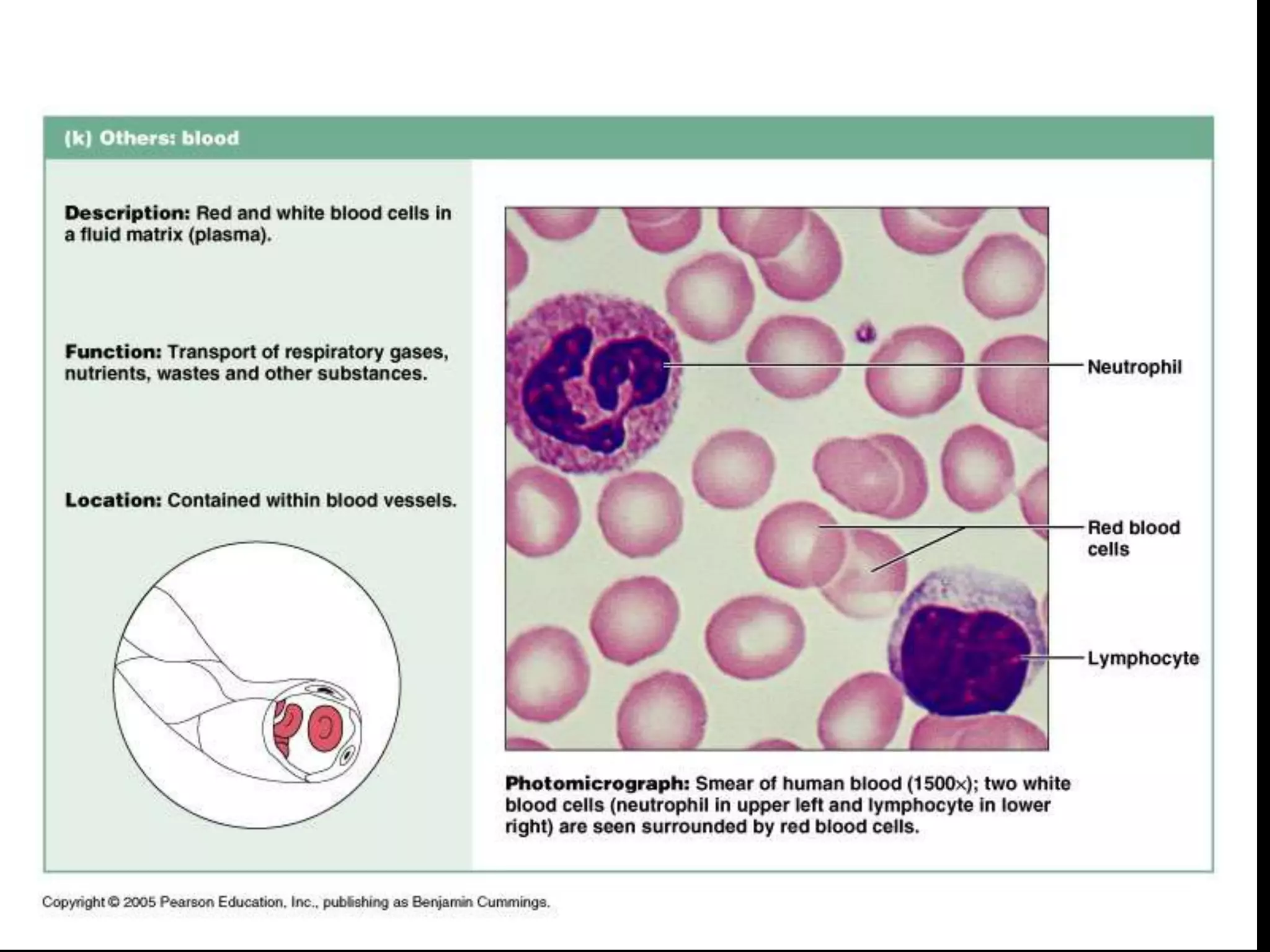
Blood and its component
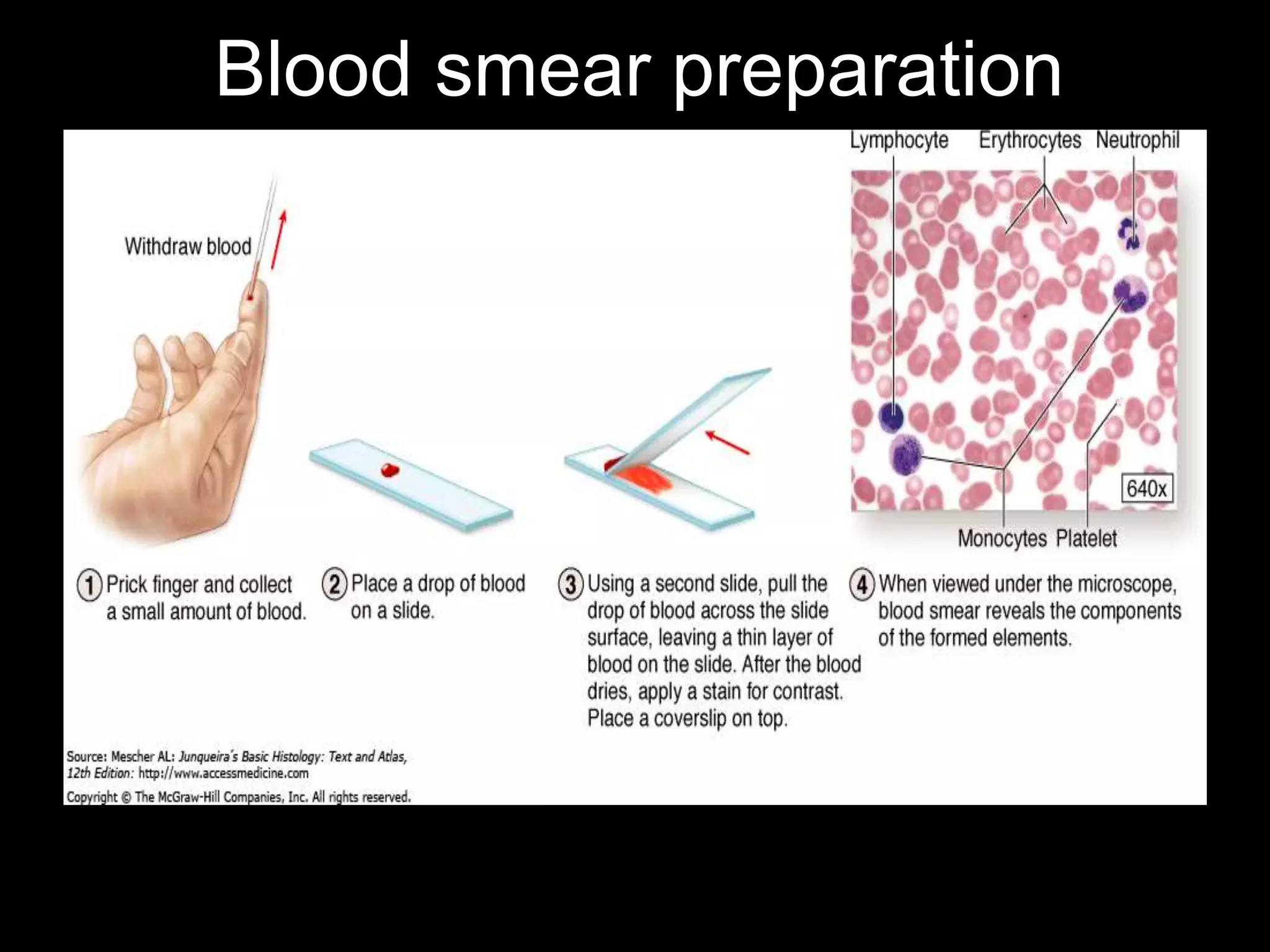
Blood smear preparation
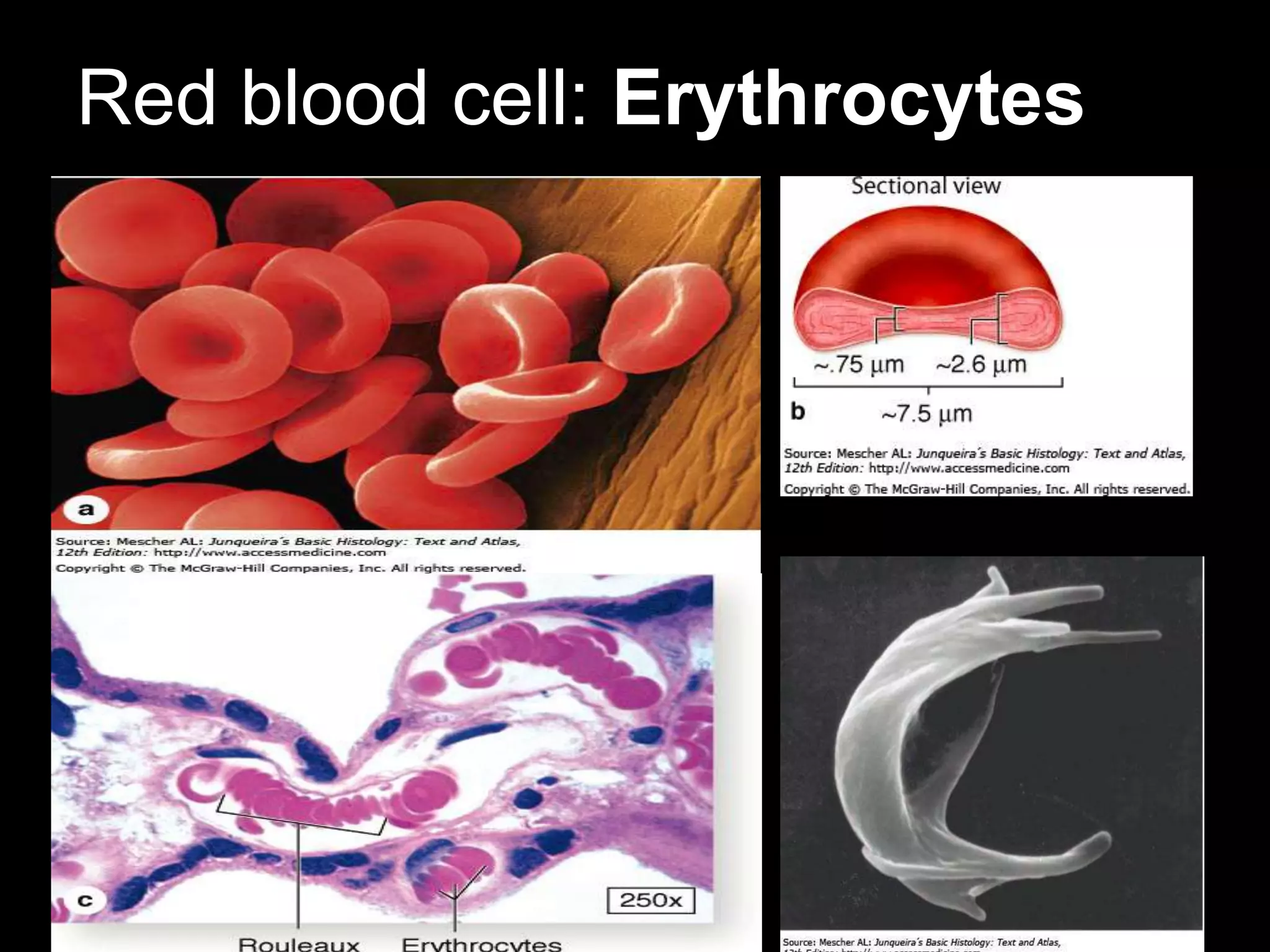
Red blood cell: Erythrocytes
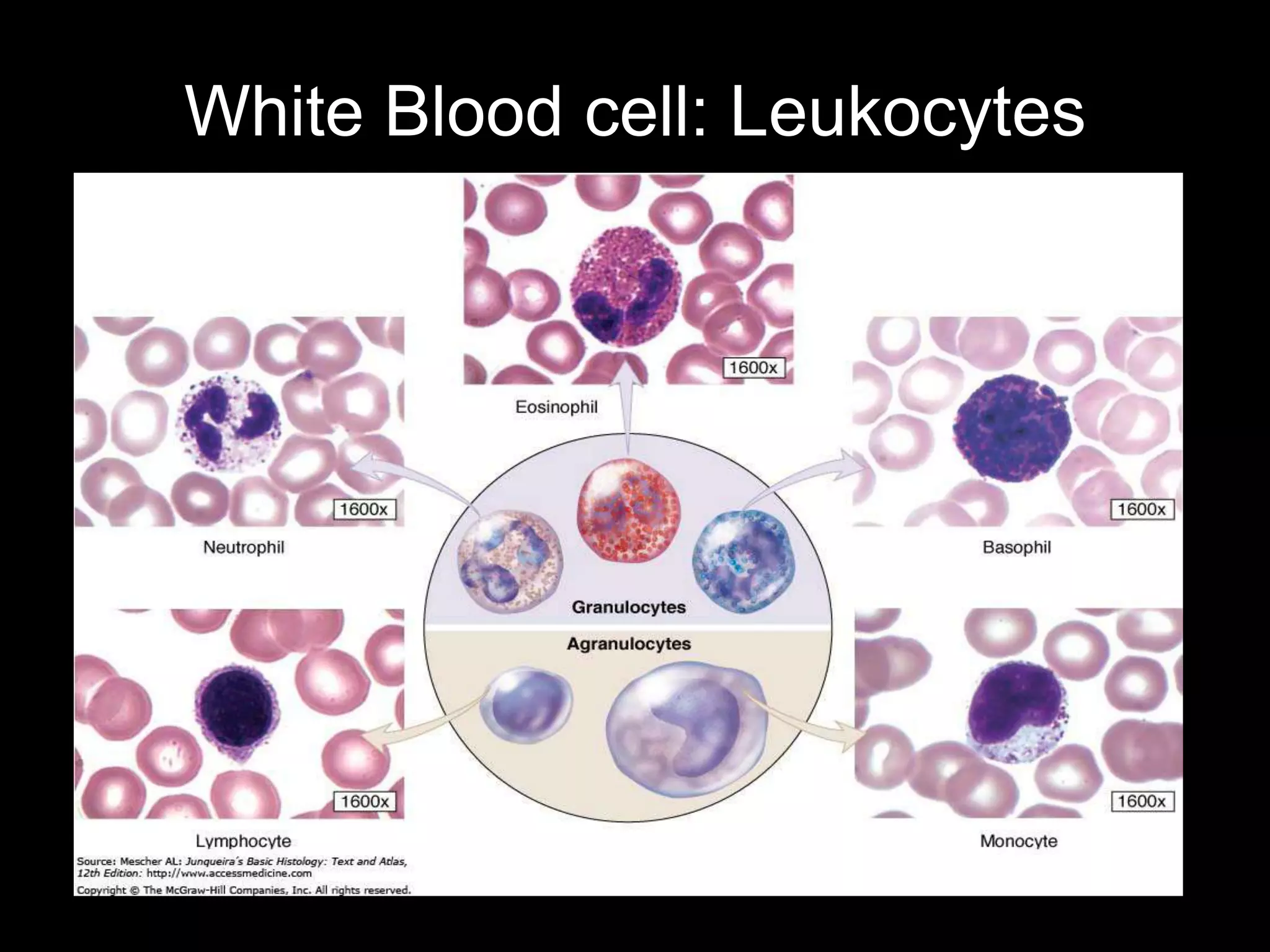
White Blood cell: Leukocytes
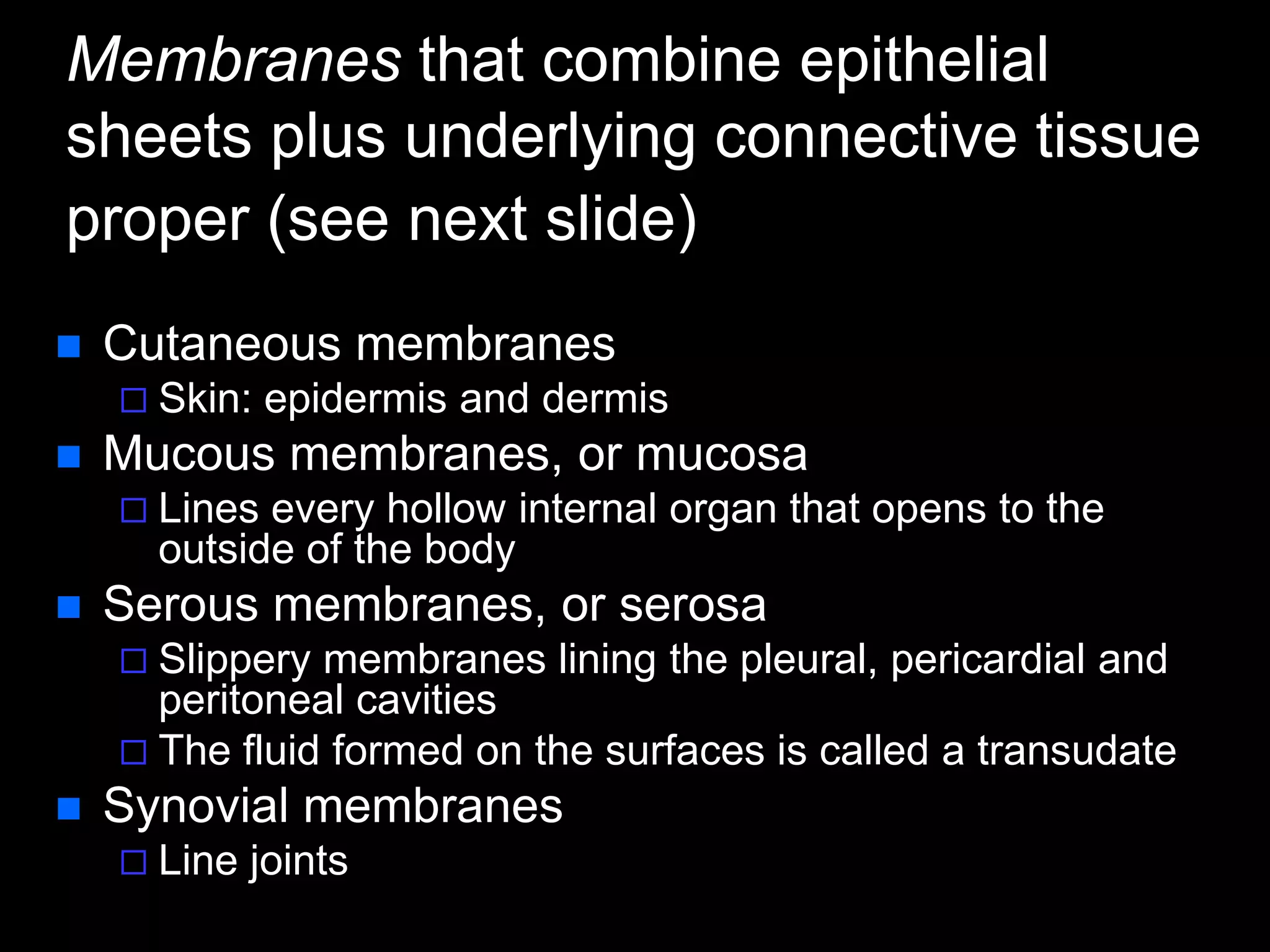
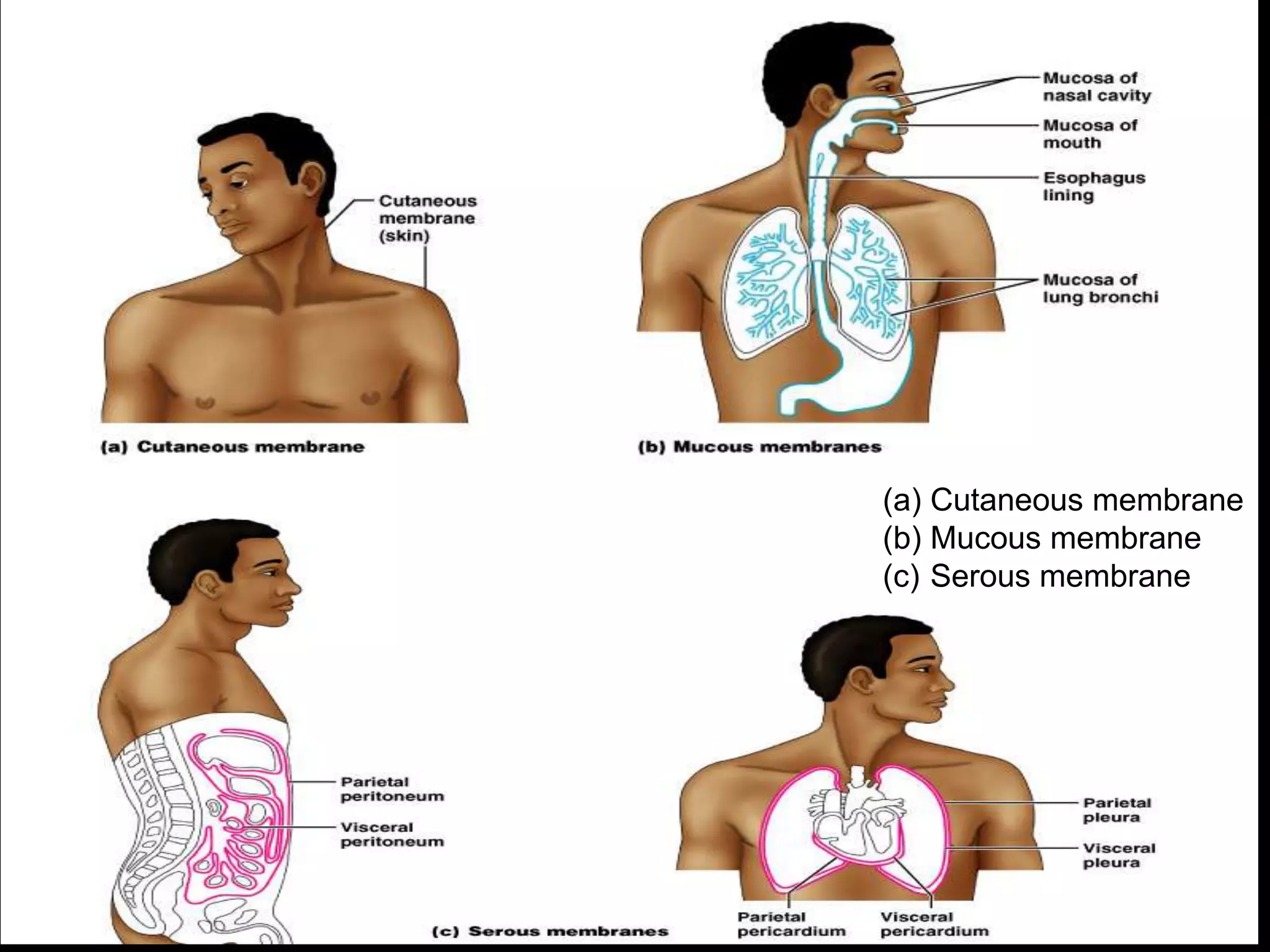
Membranes that combine epithelial
sheets plus underlying connective tissue
proper (see next slide)
 Cutaneous membranes
 Skin: epidermis and dermis
 Mucous membranes, or mucosa
 Lines every hollow internal organ that opens to the
outside of the body
 Serous membranes, or serosa
 Slippery membranes lining the pleural, pericardial and
peritoneal cavities
 The fluid formed on the surfaces is called a transudate
 Synovial membranes
 Line joints
(a) Cutaneous membrane
(b) Mucous membrane
(c) Serous membrane
Connective Tissue Proper - Structures
 Variety of cells, fibers & grounds substances
 Types of depend on use
 Cells found in connective tissue proper
 Fibroblasts
 Macrophages, lymphocytes (antibody producing cells)
 Adipocytes (fat cells)
 Mast cells
 Stem cells
 Fibers:
 Collagen – very strong & abundant, long & straight
 Elastic – branching fibers with a wavy appearance (when
relaxed)
 Reticular – form a network of fibers that form a supportive
framwork in soft organs (i.e. Spleen & liver)
 Ground substance:
 Along with fibers, fills the extracellular space
 Ground substance helps determine functionality of tissue
Connective Tissue Proper -
Classifications
 Loose Connective Tissue
 Areolar
 Reticular
 Adipose
 Dense Connective Tissue
 Regular
 Irregular
 Elastic
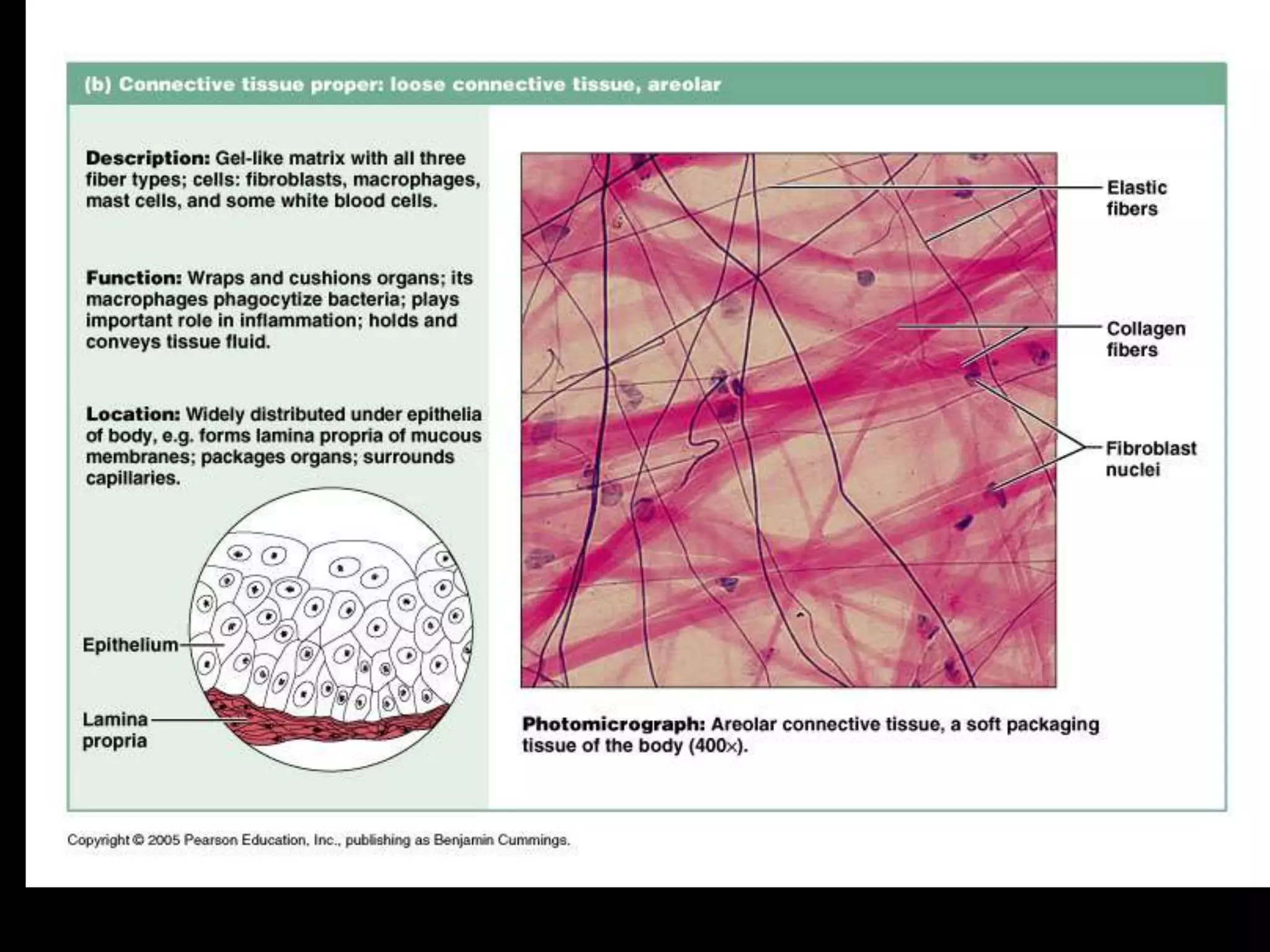
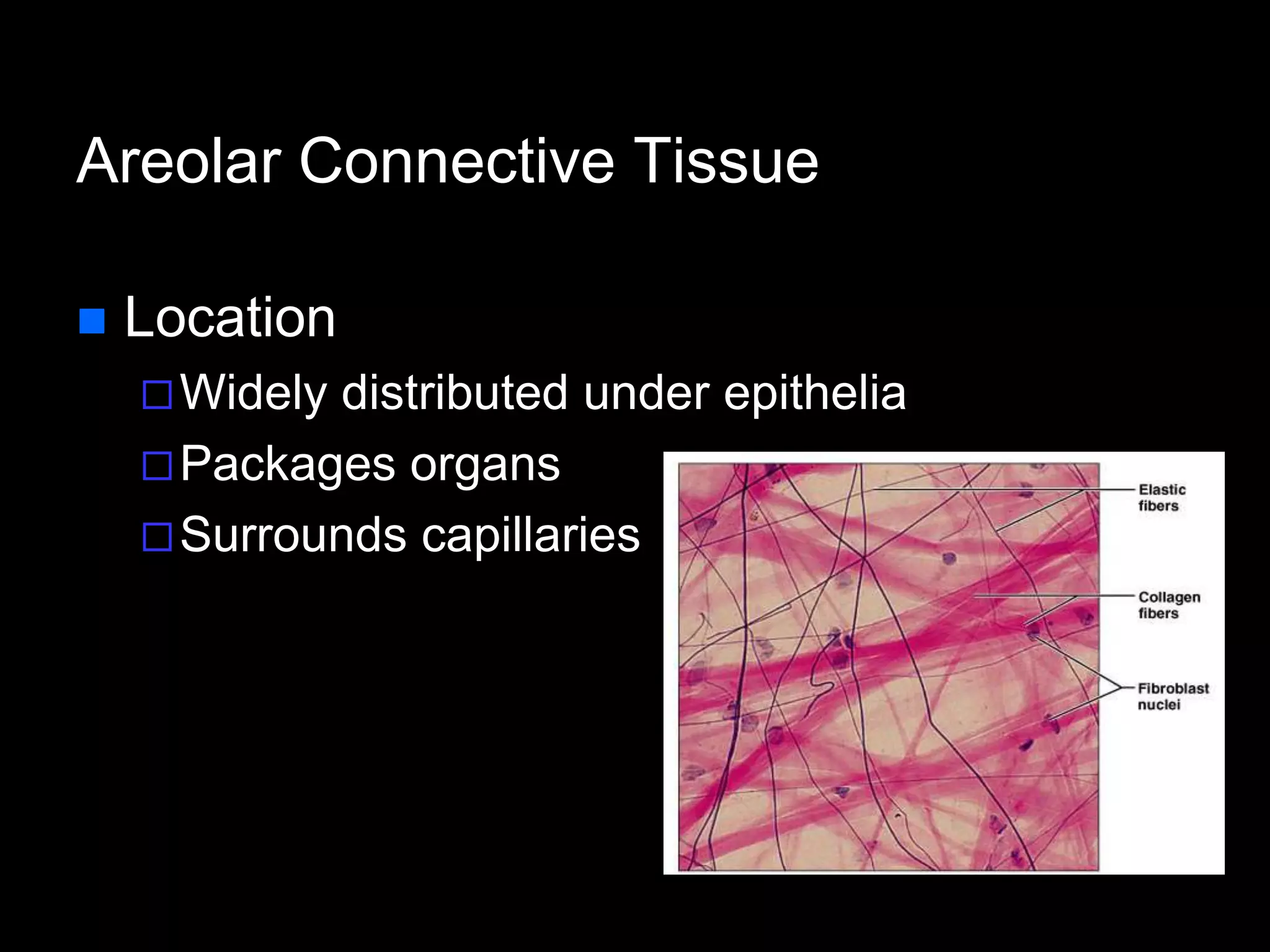
Areolar Connective Tissue
 Description
 Gel-like matrix with:
 all three fiber types (collagen, reticular, elastic) for support
 Ground substance is made up by glycoproteins also made
and secreted by the fibroblasts.
 Cells – fibroblasts, macrophages, mast cells, white
blood cells, adipocytes
 Highly vascular tissue
 Function
 Wraps and cushions organs
 Holds and conveys tissue fluid
 Important role in inflammation
 Main battlefield in fight against infection
Areolar Connective Tissue
 Location
Widely distributed under epithelia
Packages organs
Surrounds capillaries
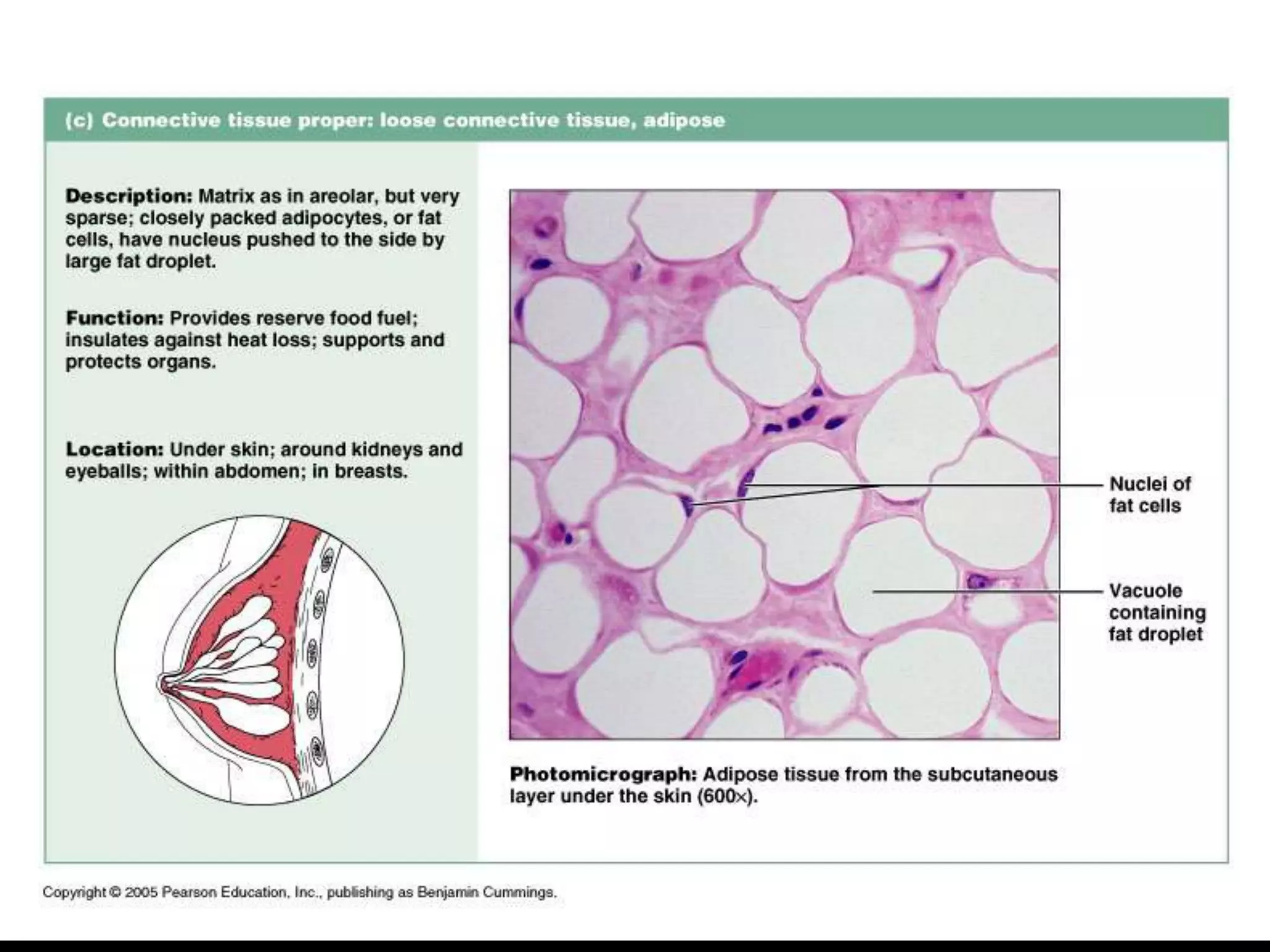
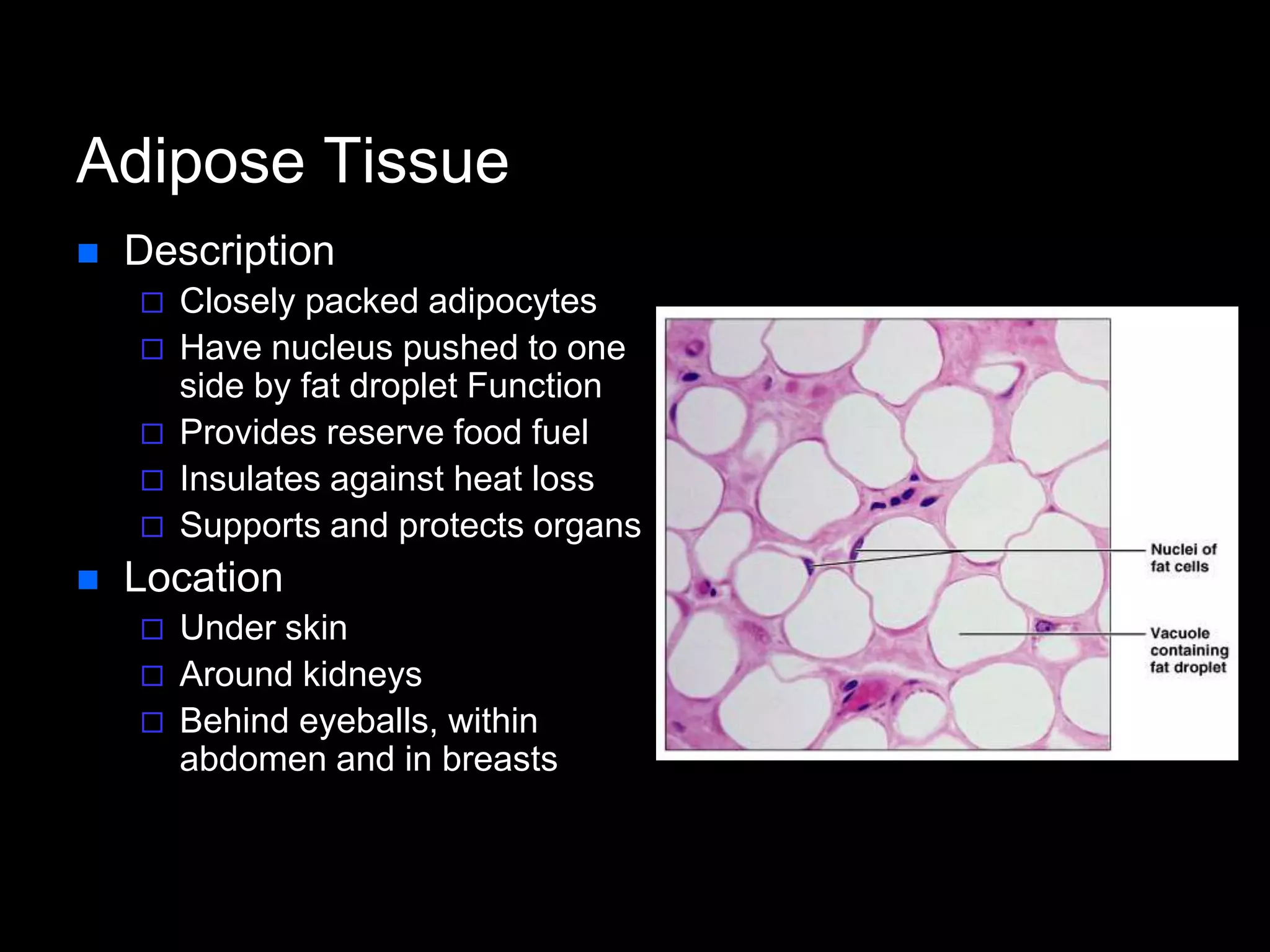
Adipose Tissue
 Description
 Closely packed adipocytes
 Have nucleus pushed to one
side by fat droplet Function
 Provides reserve food fuel
 Insulates against heat loss
 Supports and protects organs
 Location
 Under skin
 Around kidneys
 Behind eyeballs, within
abdomen and in breasts
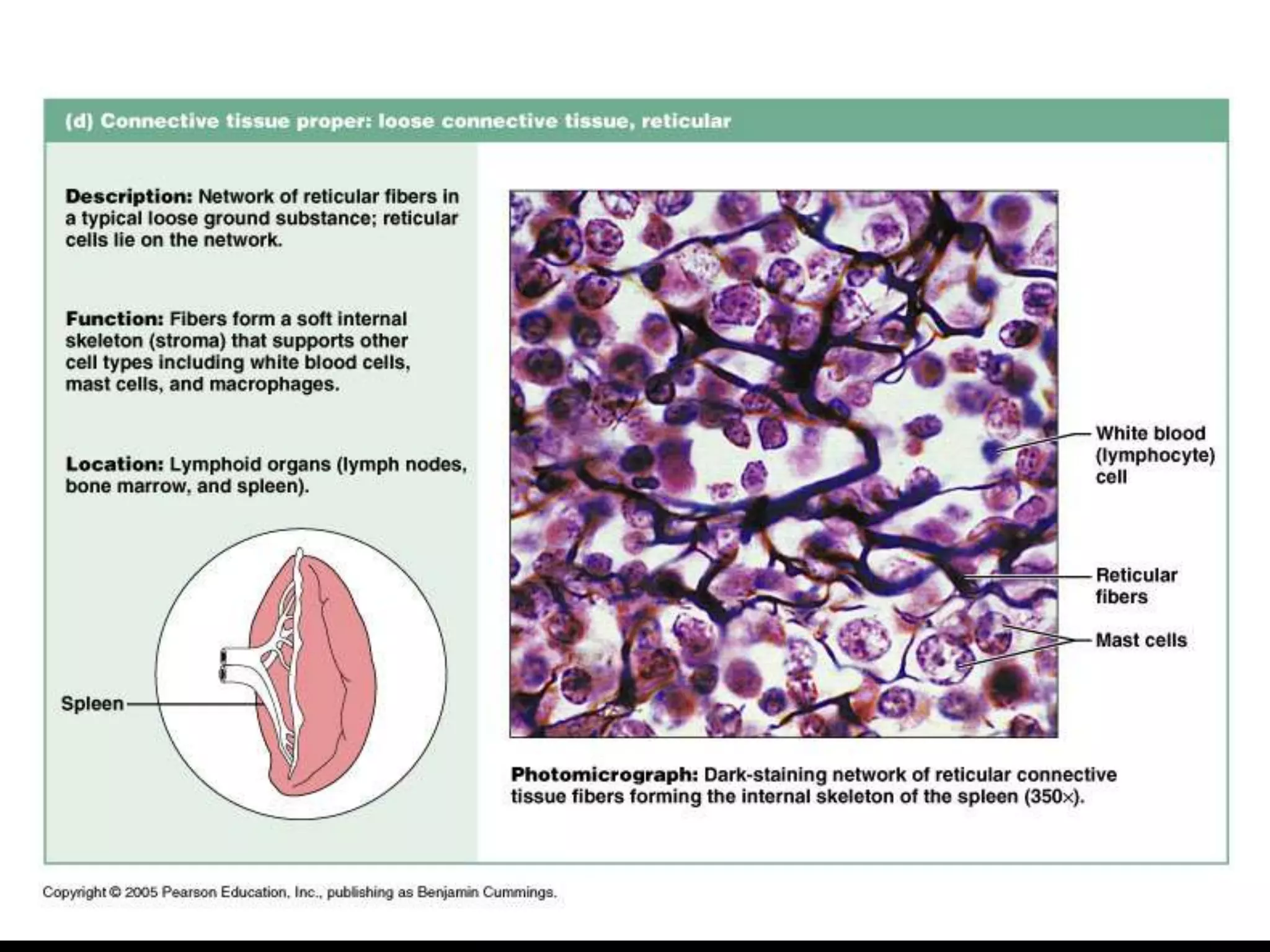
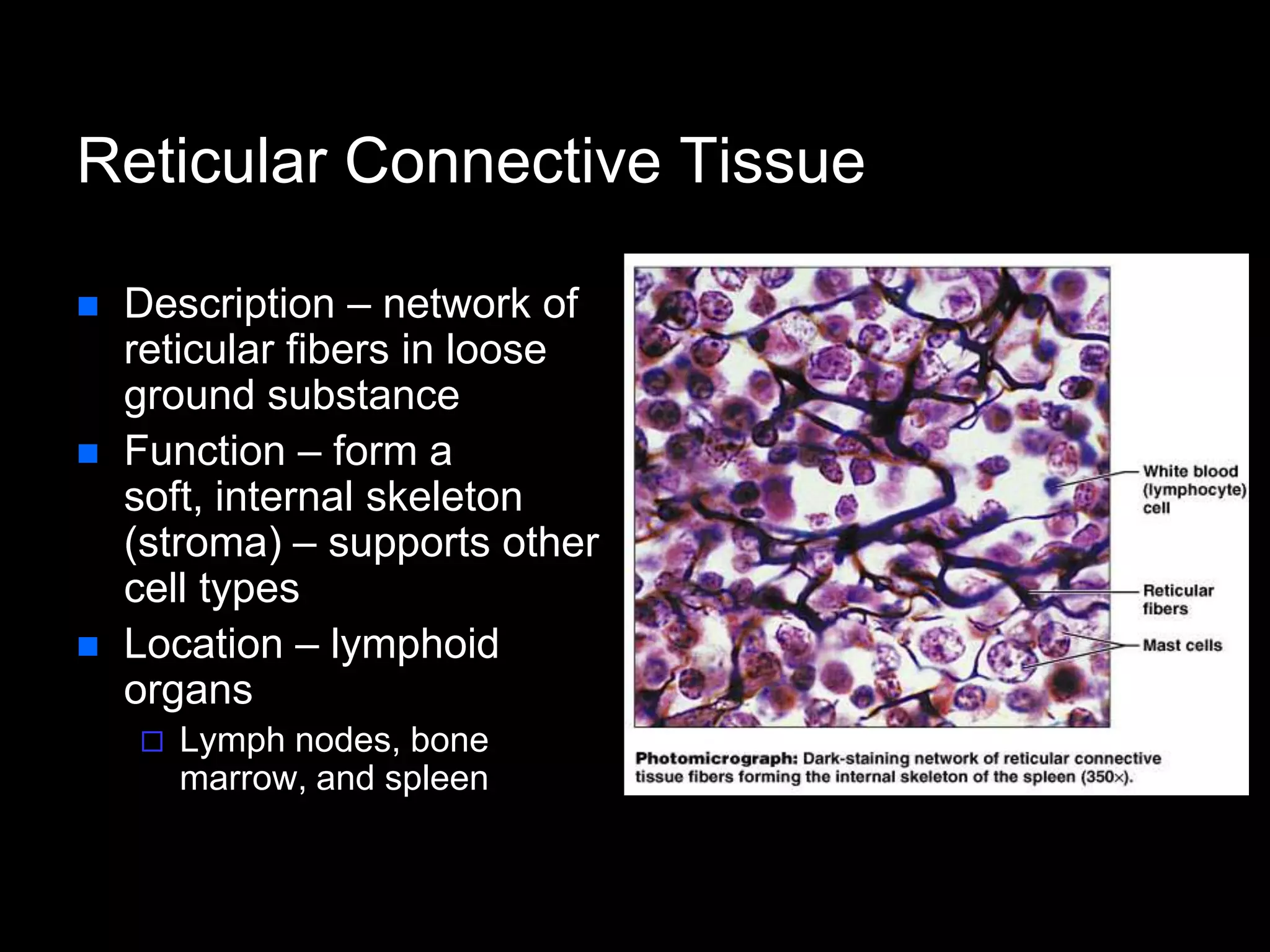
Reticular Connective Tissue
 Description – network of
reticular fibers in loose
ground substance
 Function – form a
soft, internal skeleton
(stroma) – supports other
cell types
 Location – lymphoid
organs
 Lymph nodes, bone
marrow, and spleen
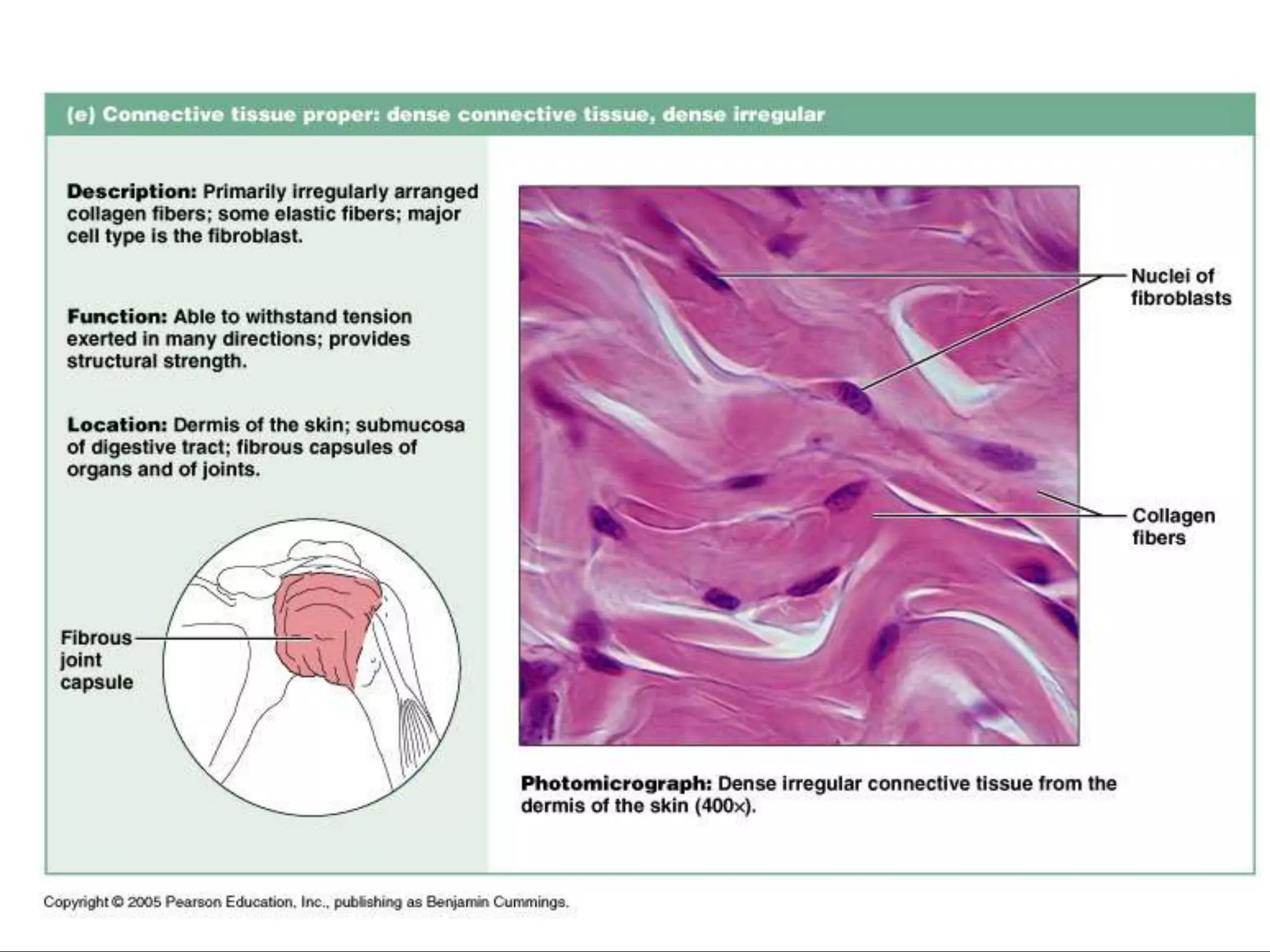
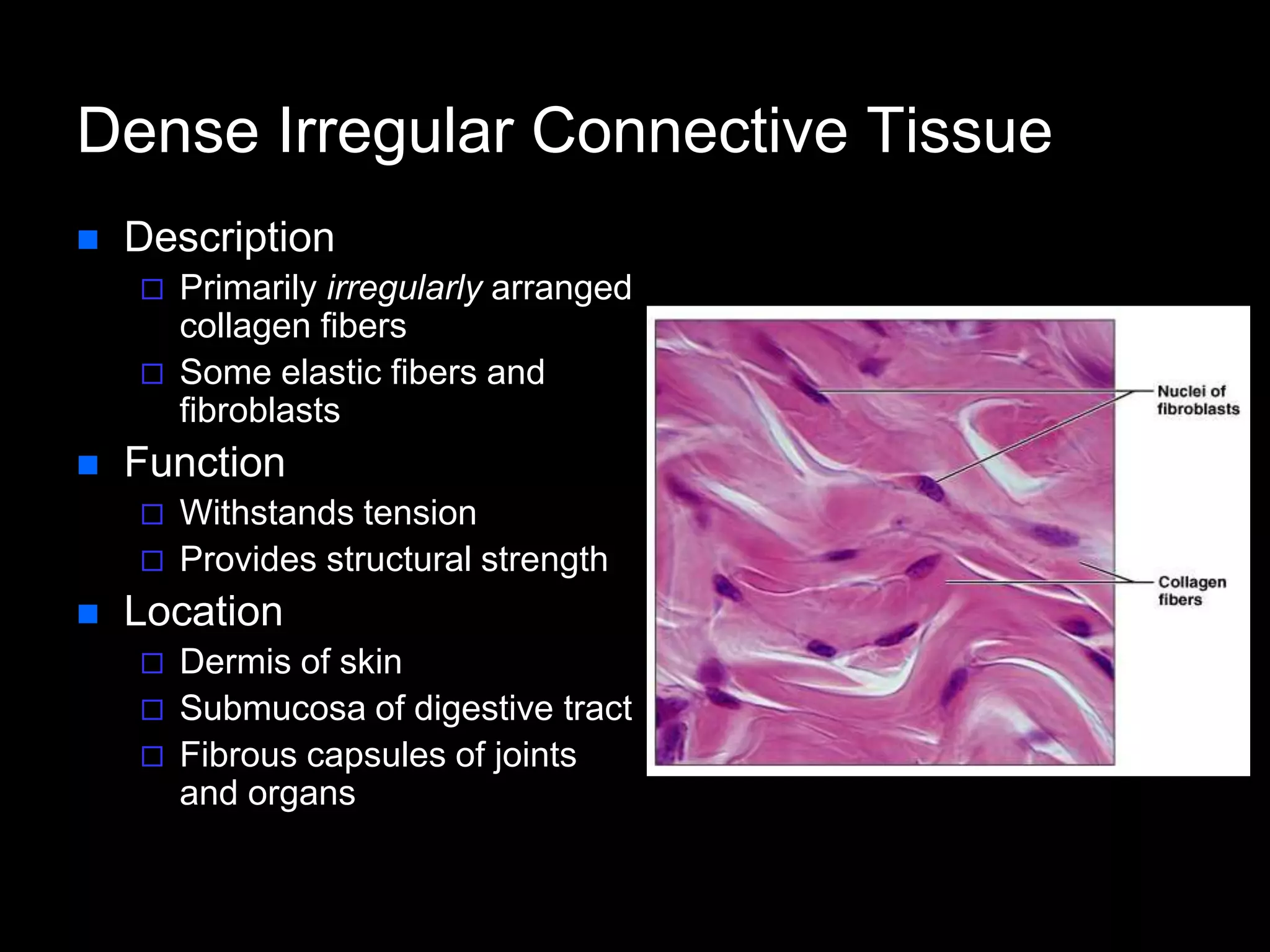
Dense Irregular Connective Tissue
 Description
 Primarily irregularly arranged
collagen fibers
 Some elastic fibers and
fibroblasts
 Function
 Withstands tension
 Provides structural strength
 Location
 Dermis of skin
 Submucosa of digestive tract
 Fibrous capsules of joints
and organs
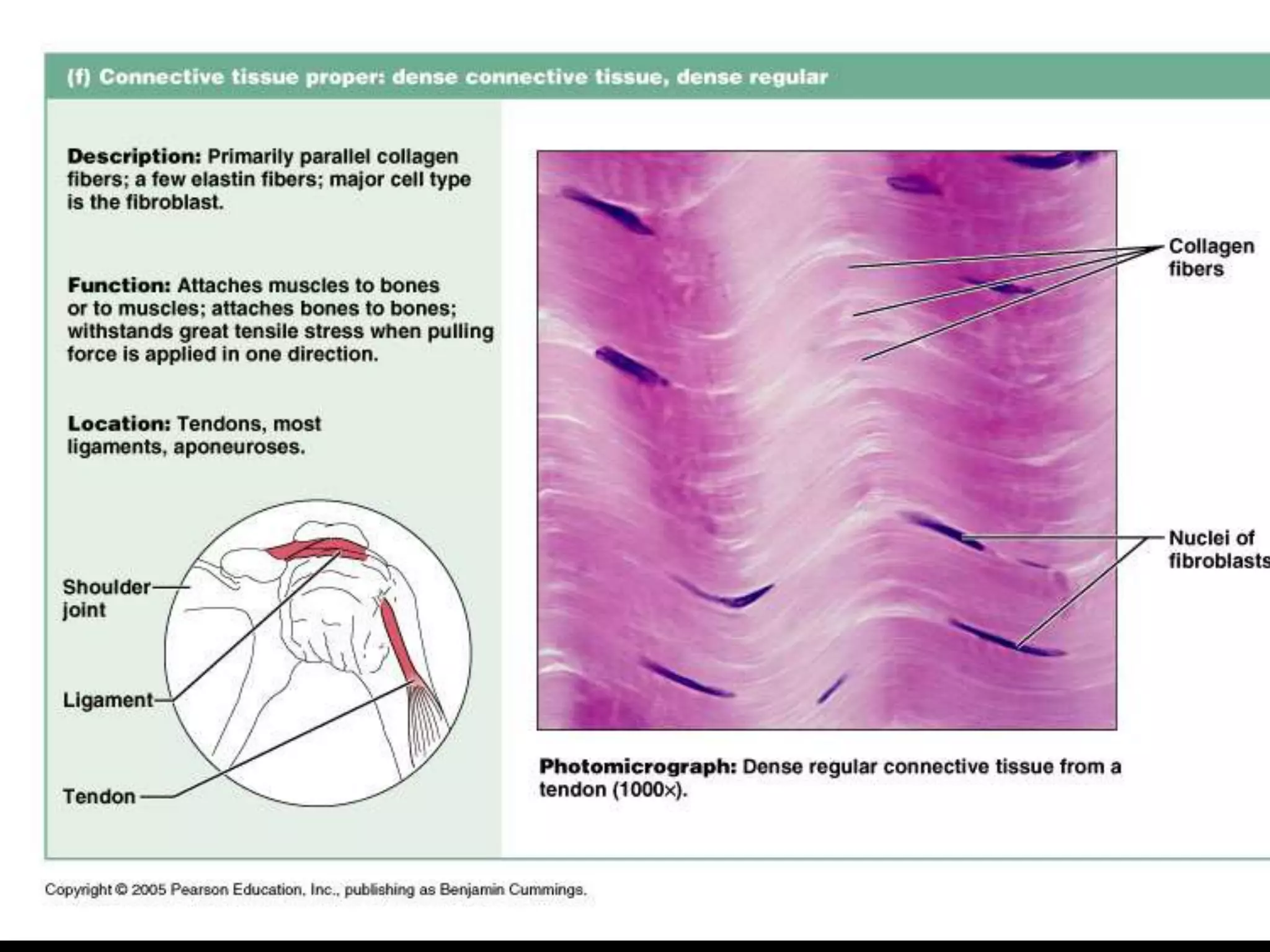
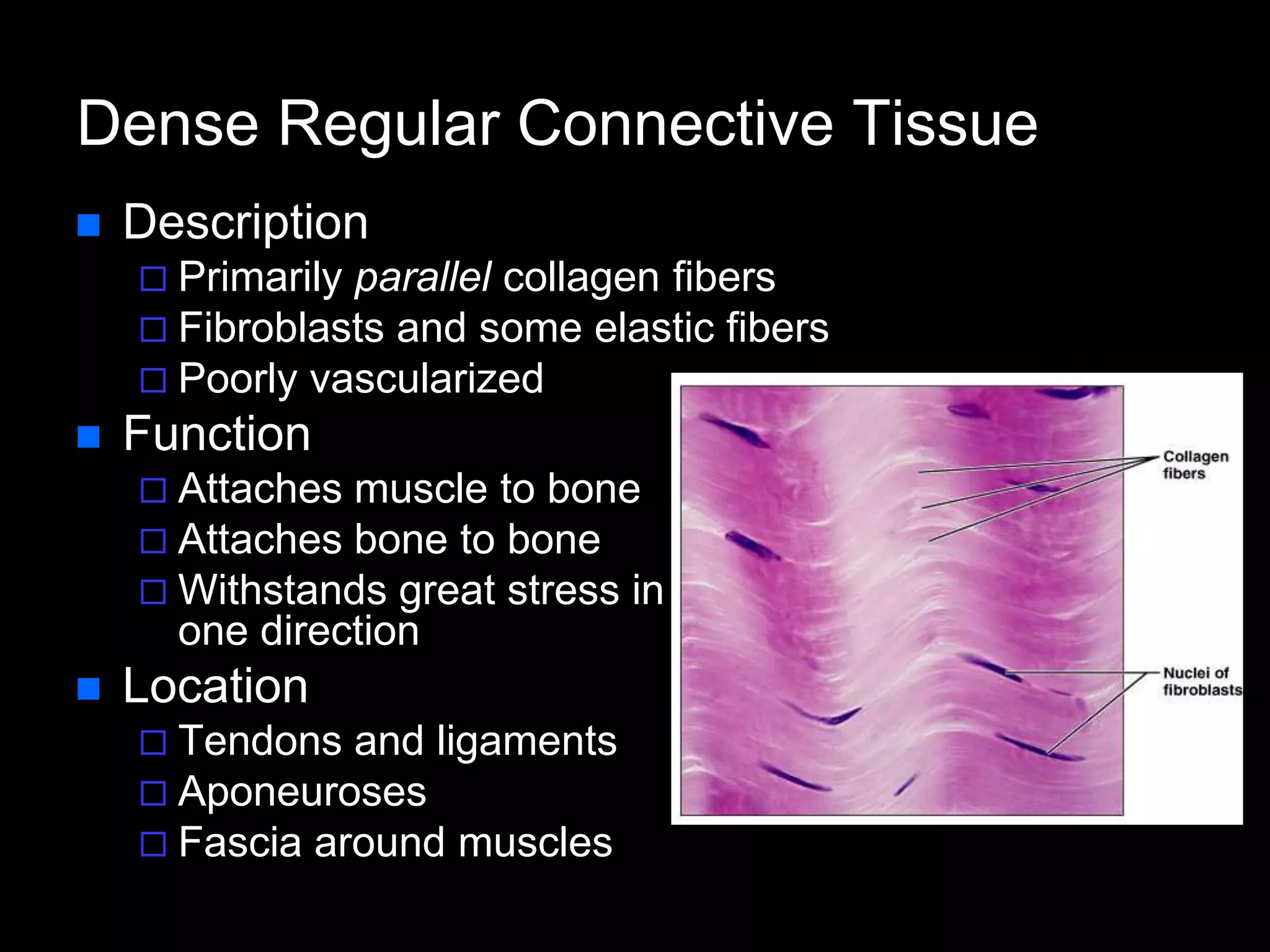
Dense Regular Connective Tissue
 Description
 Primarily parallel collagen fibers
 Fibroblasts and some elastic fibers
 Poorly vascularized
 Function
 Attaches muscle to bone
 Attaches bone to bone
 Withstands great stress in
one direction
 Location
 Tendons and ligaments
 Aponeuroses
 Fascia around muscles
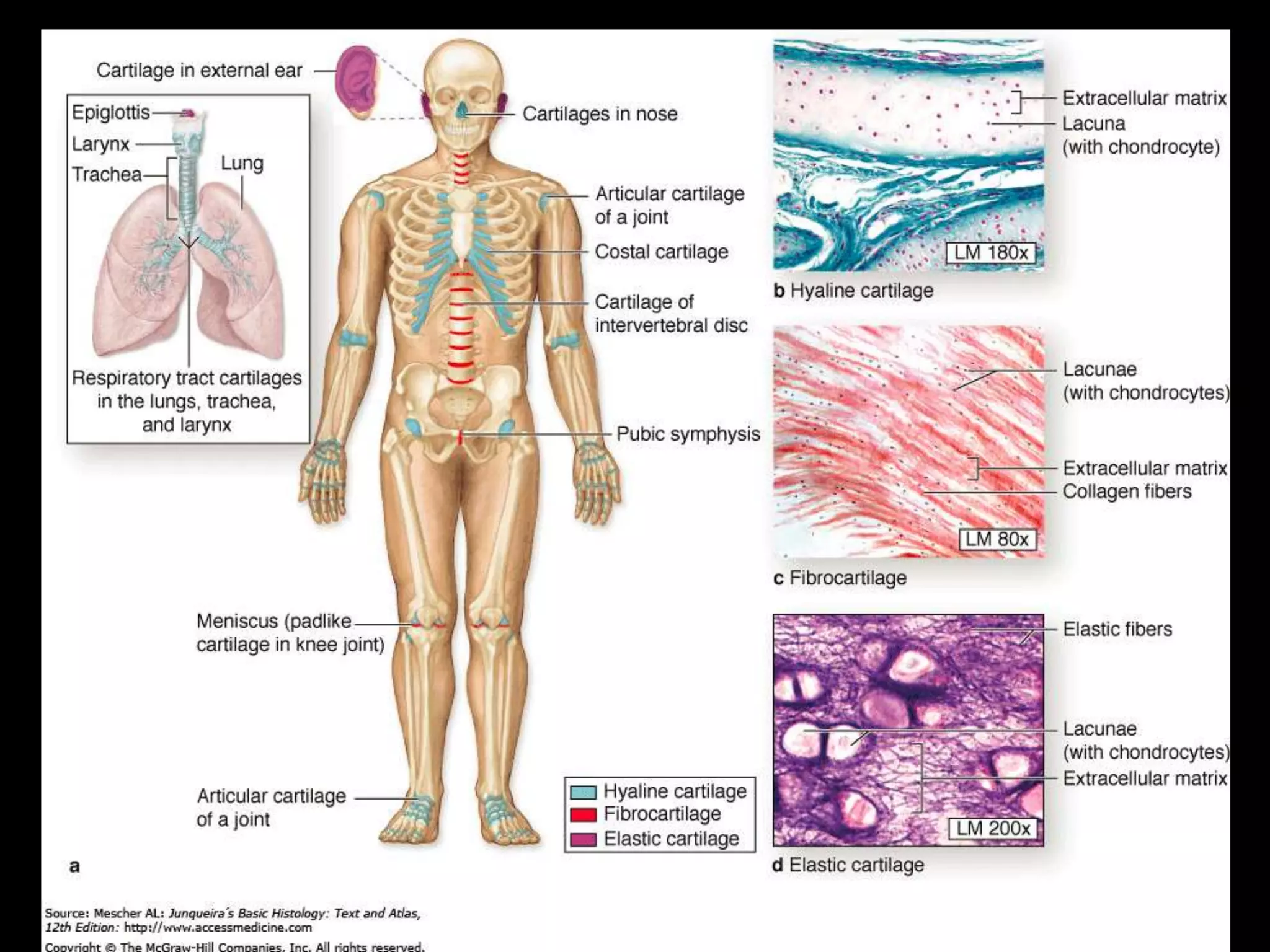
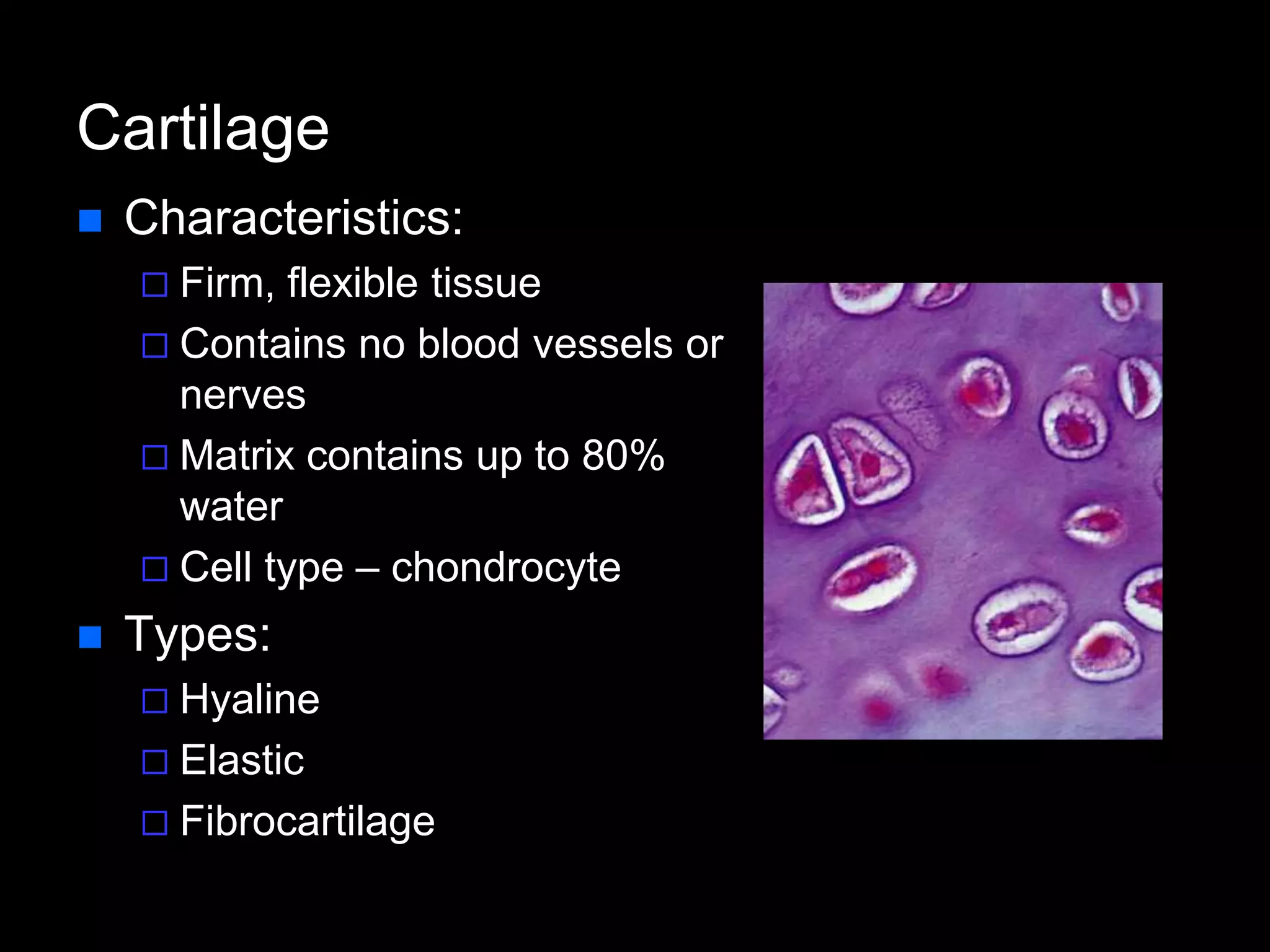
Cartilage
 Characteristics:
 Firm, flexible tissue
 Contains no blood vessels or
nerves
 Matrix contains up to 80%
water
 Cell type – chondrocyte
 Types:
 Hyaline
 Elastic
 Fibrocartilage
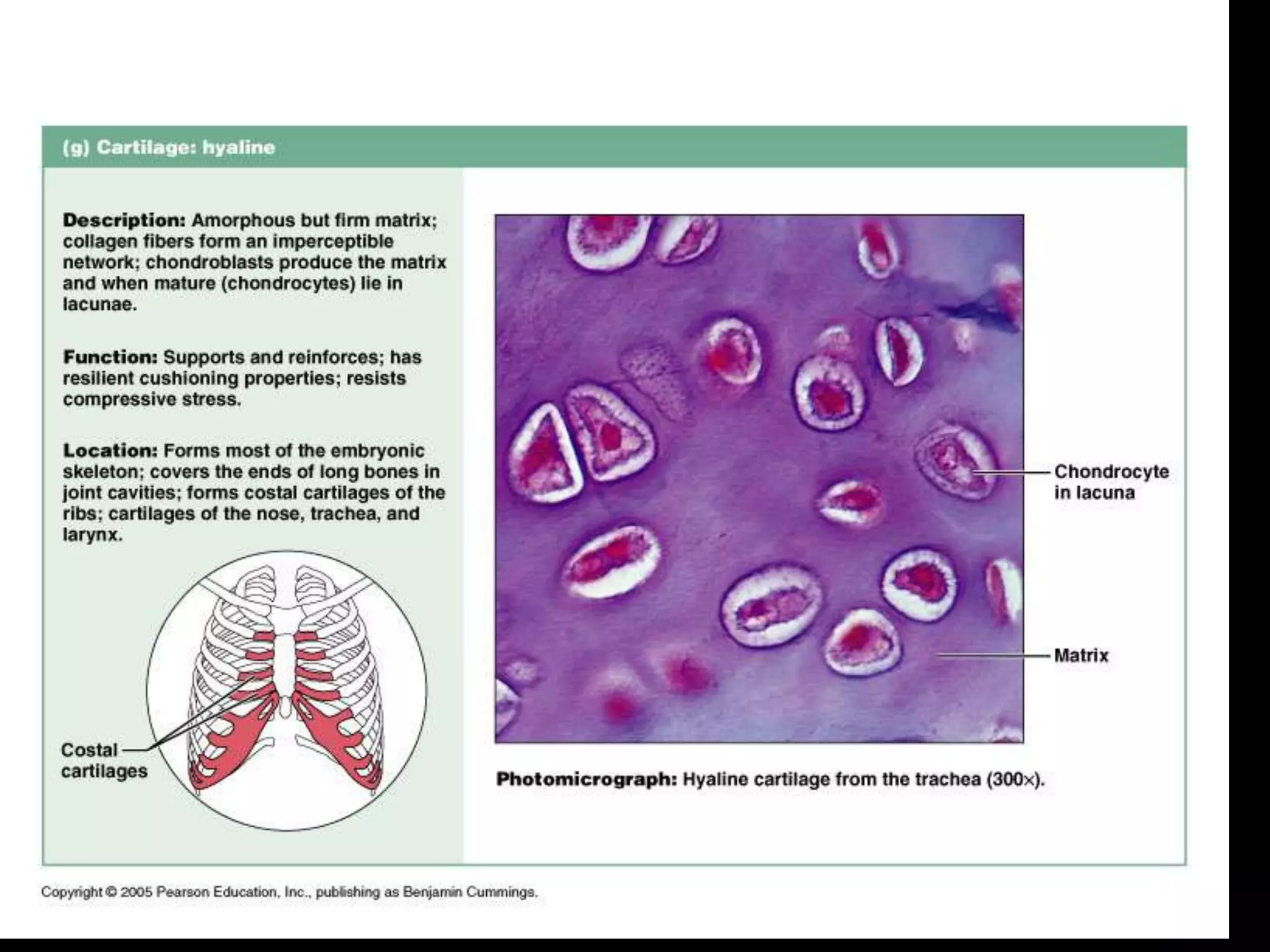
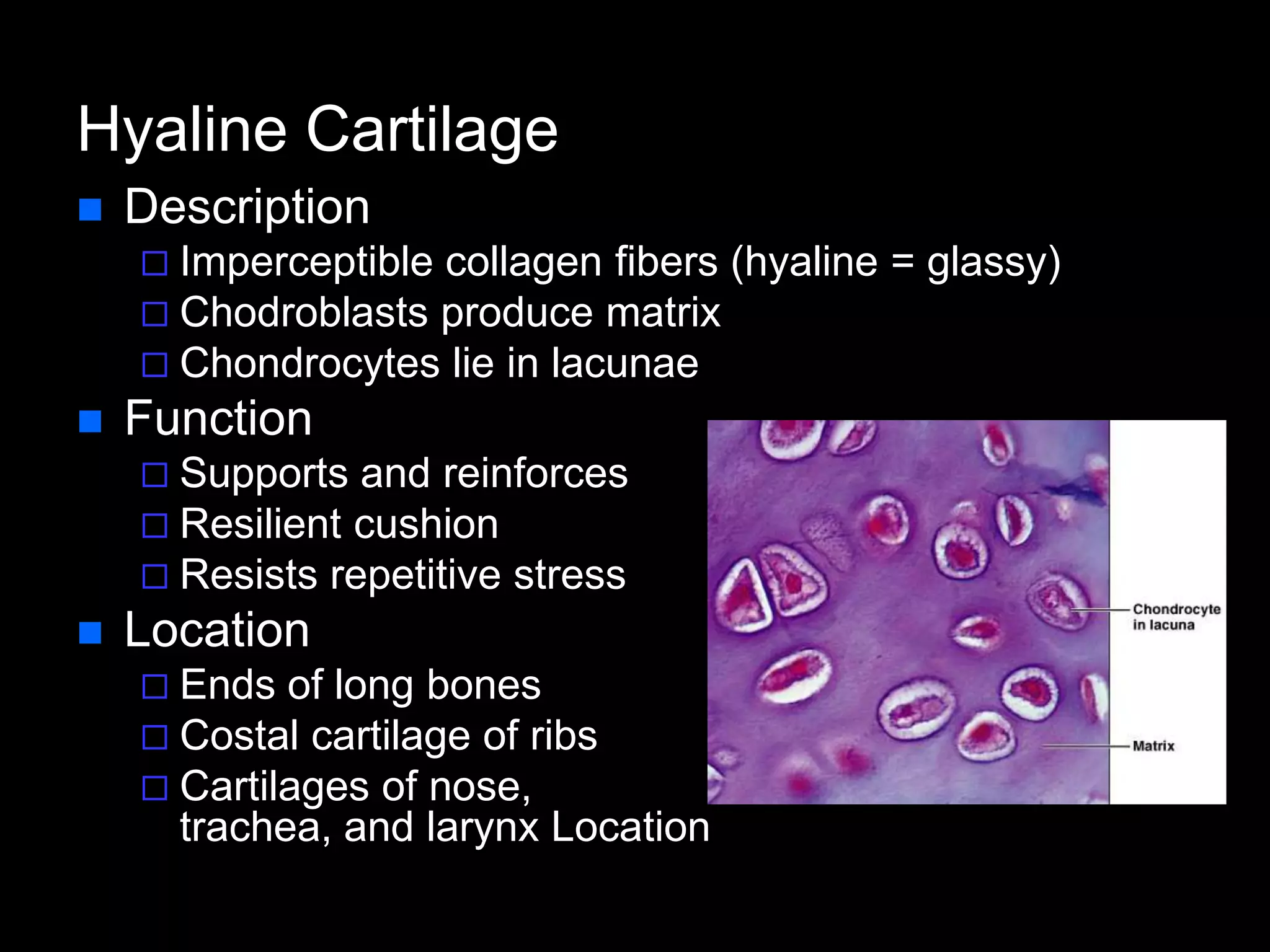
Hyaline Cartilage
 Description
 Imperceptible collagen fibers (hyaline = glassy)
 Chodroblasts produce matrix
 Chondrocytes lie in lacunae
 Function
 Supports and reinforces
 Resilient cushion
 Resists repetitive stress
 Location
 Ends of long bones
 Costal cartilage of ribs
 Cartilages of nose,
trachea, and larynx Location
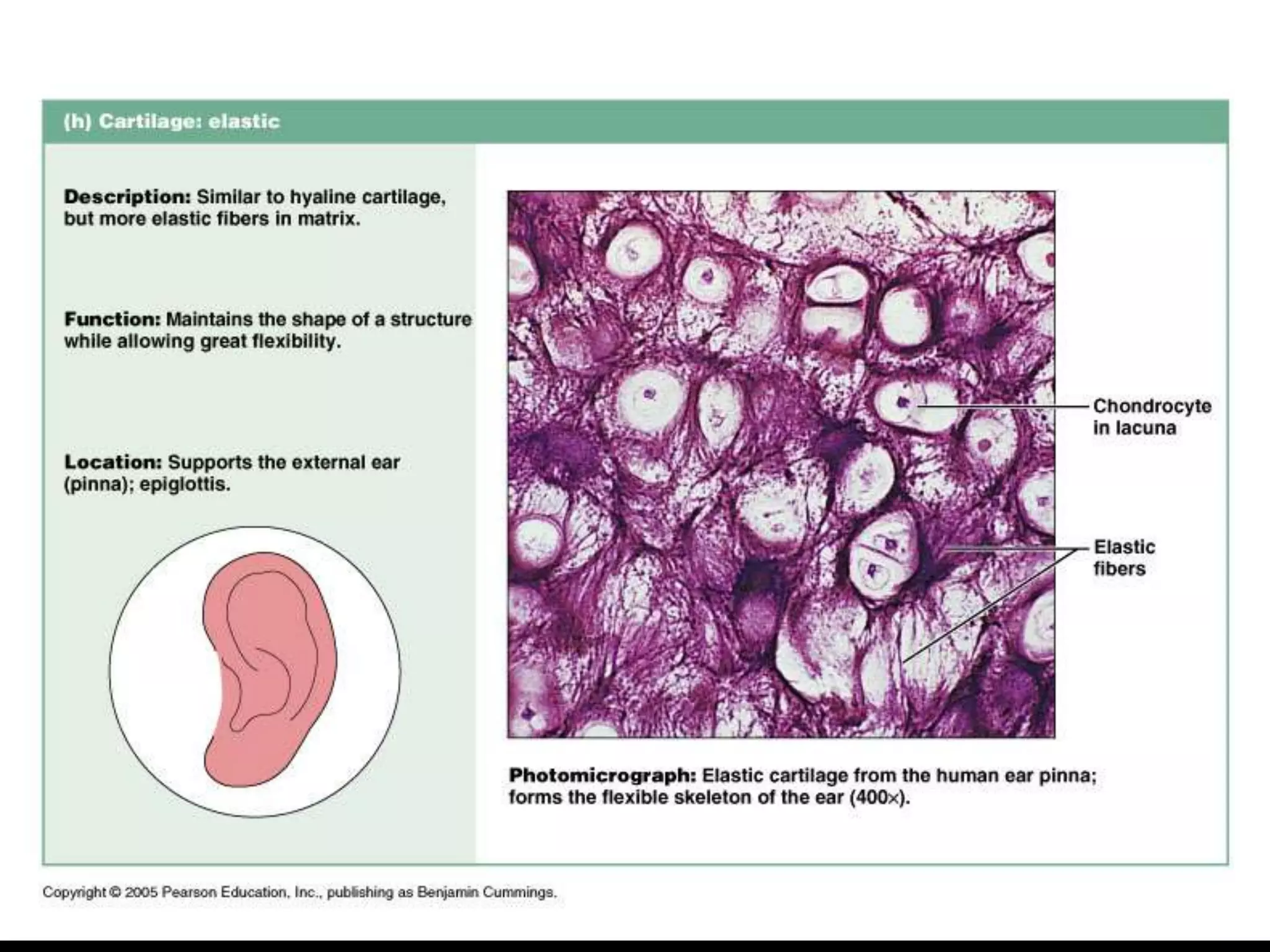
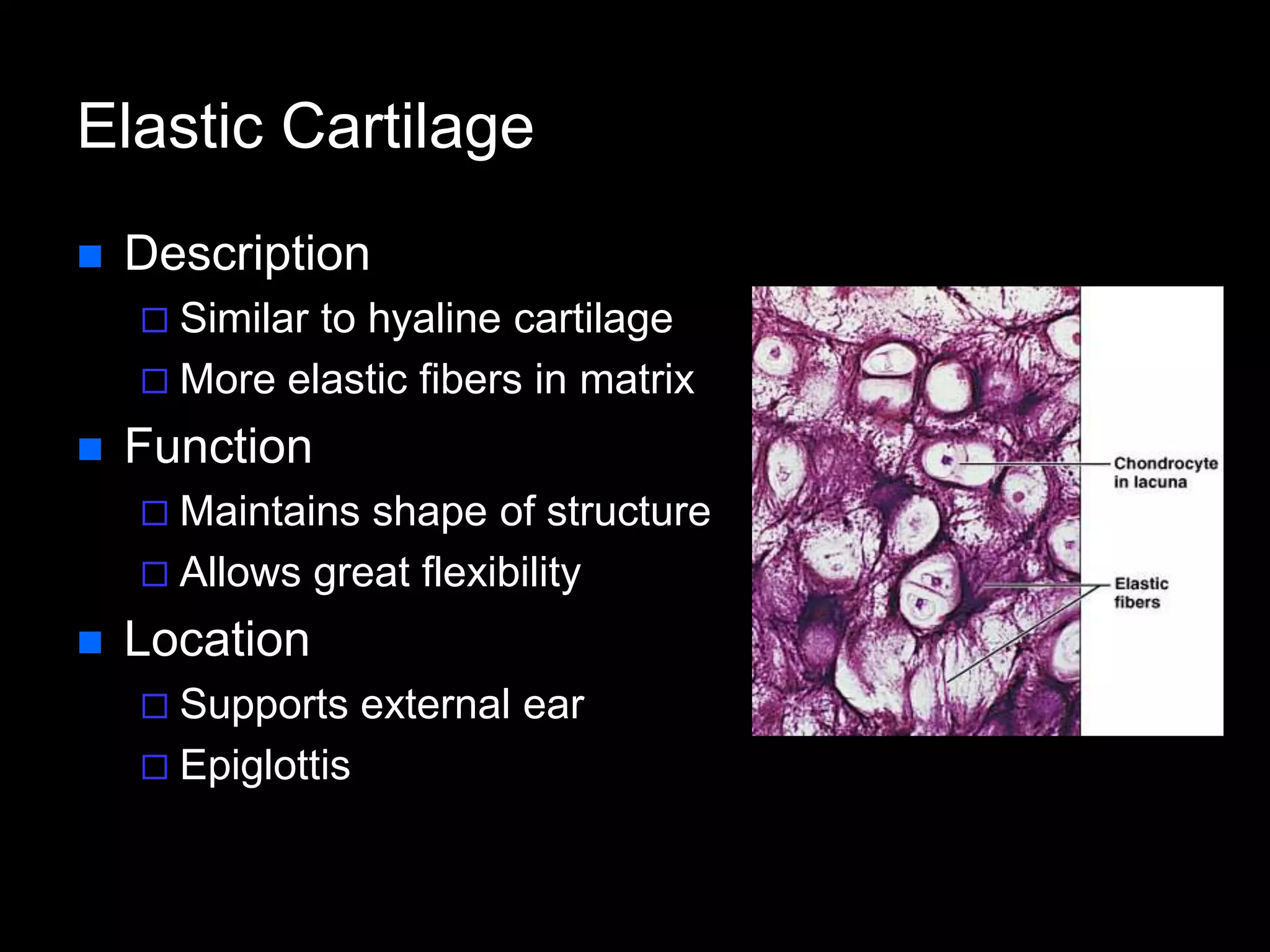
Elastic Cartilage
 Description
 Similar to hyaline cartilage
 More elastic fibers in matrix
 Function
 Maintains shape of structure
 Allows great flexibility
 Location
 Supports external ear
 Epiglottis
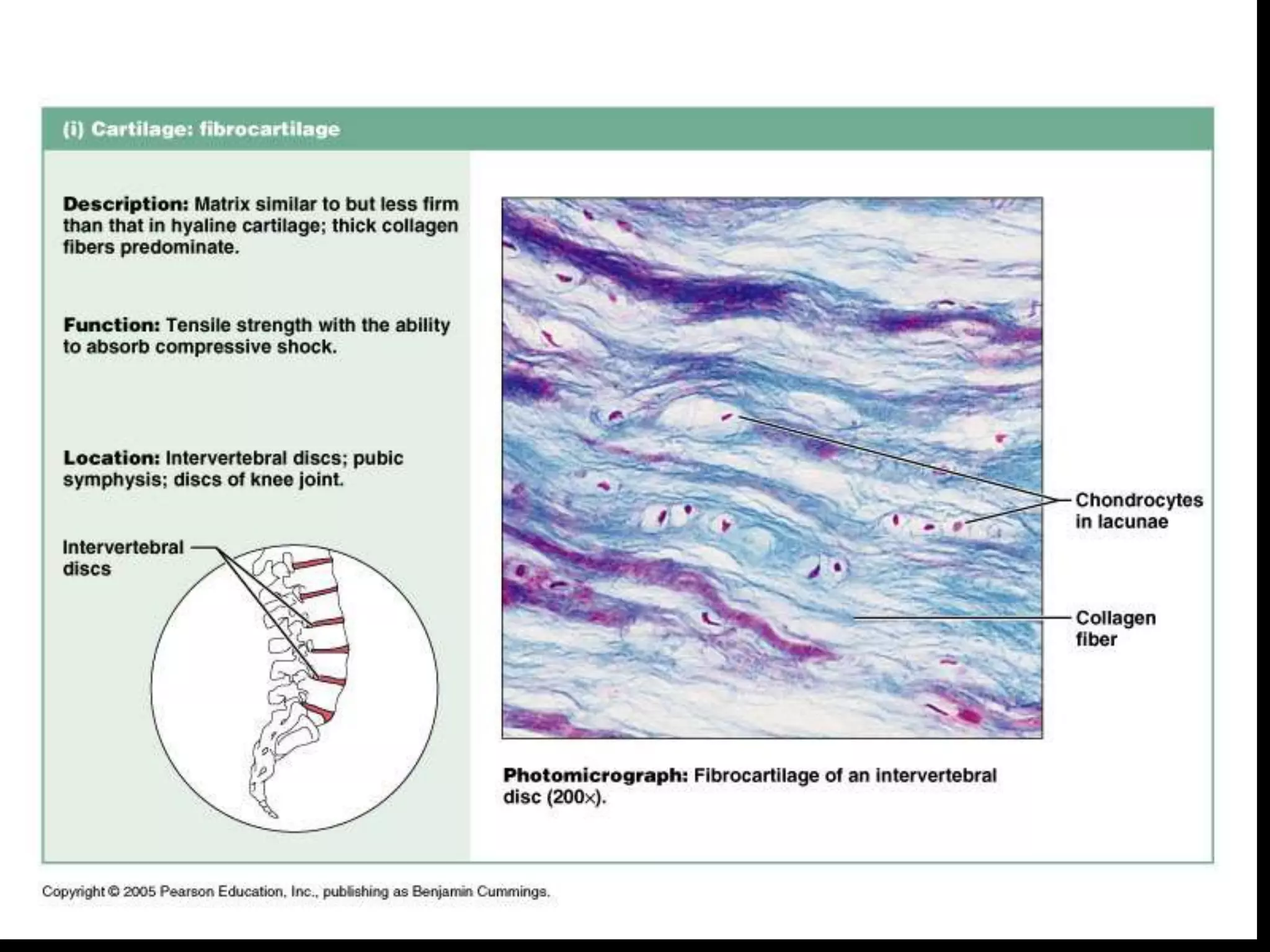
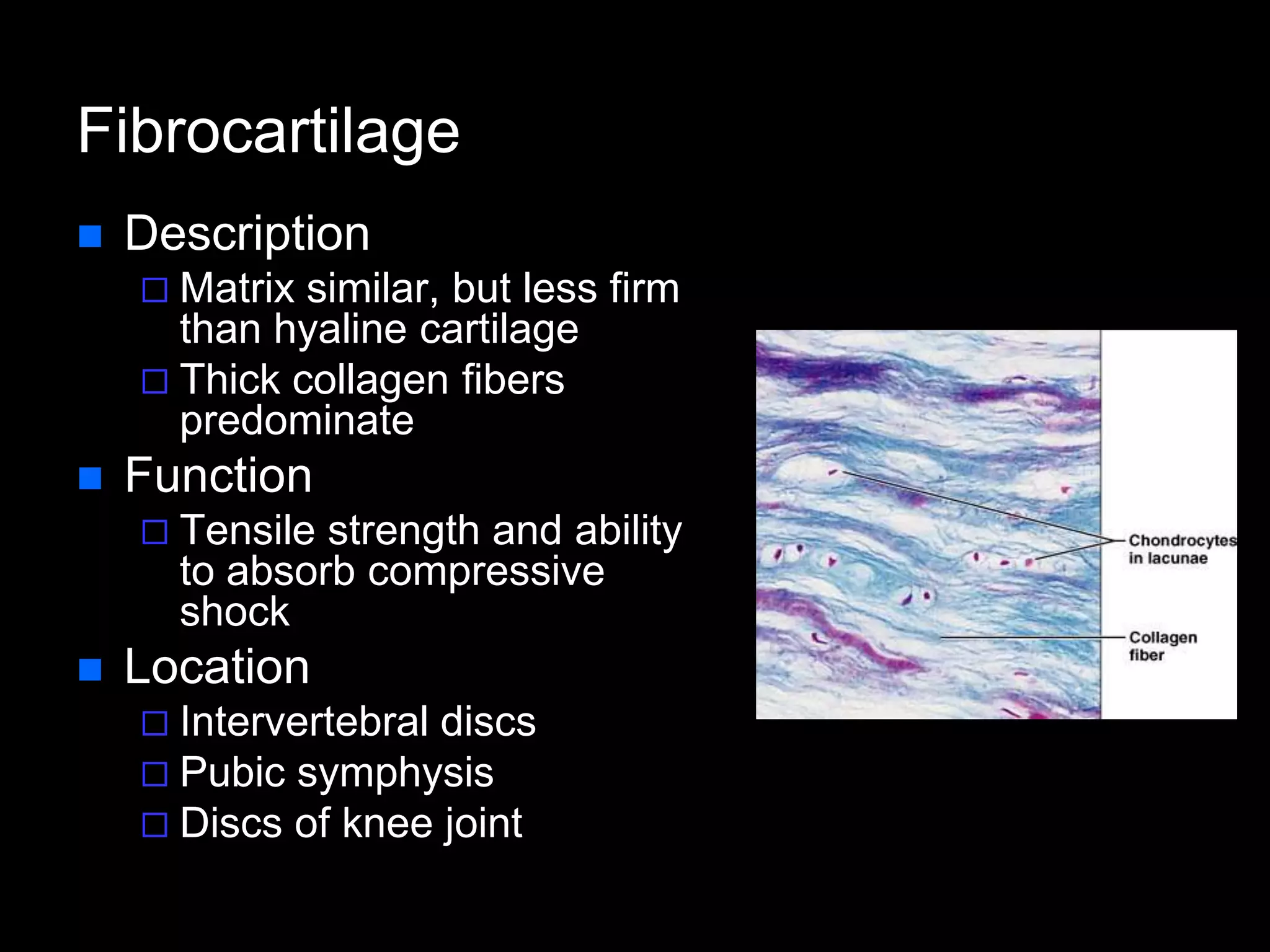
Fibrocartilage
 Description
 Matrix similar, but less firm
than hyaline cartilage
 Thick collagen fibers
predominate
 Function
 Tensile strength and ability
to absorb compressive
shock
 Location
 Intervertebral discs
 Pubic symphysis
 Discs of knee joint
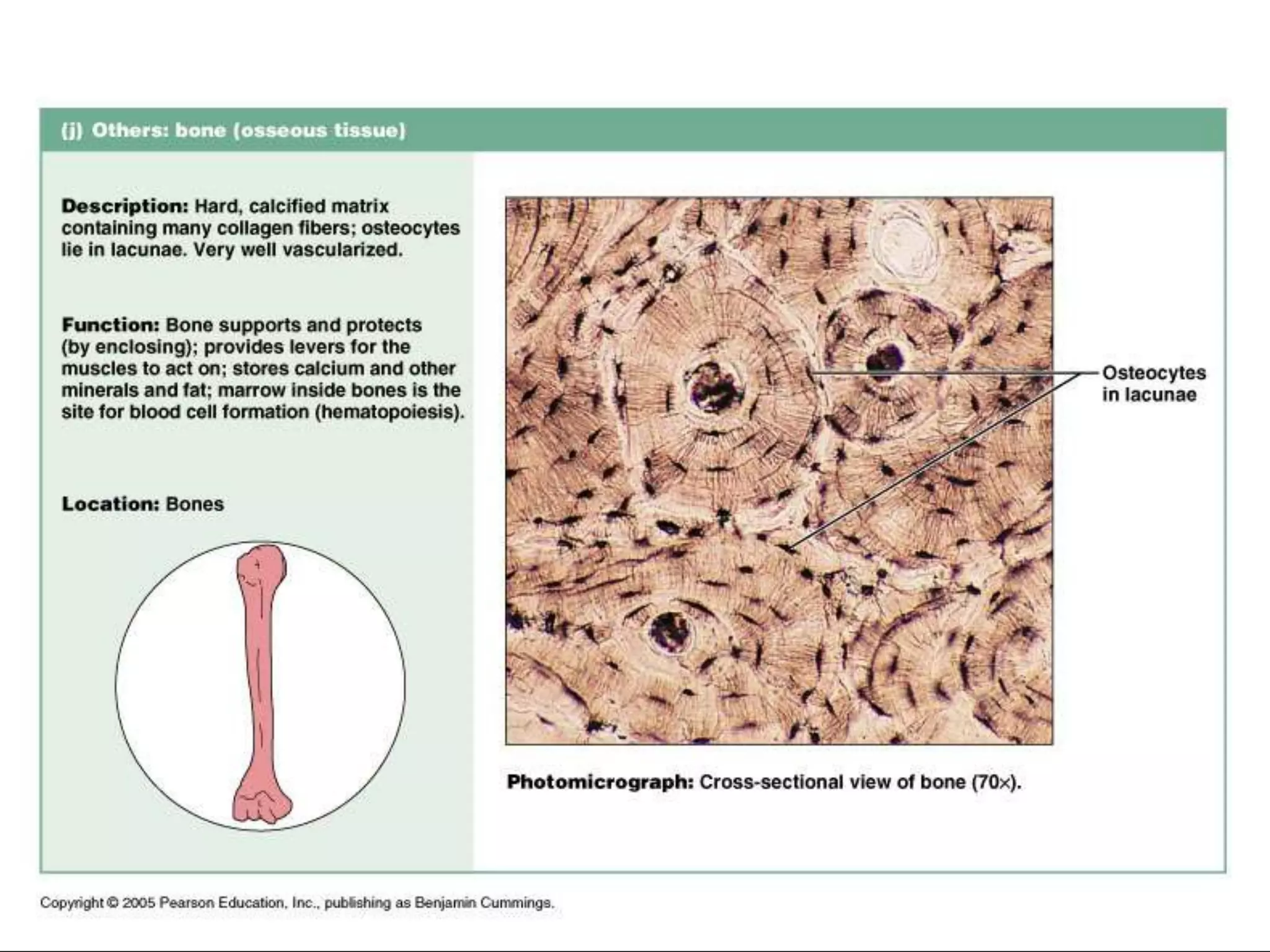
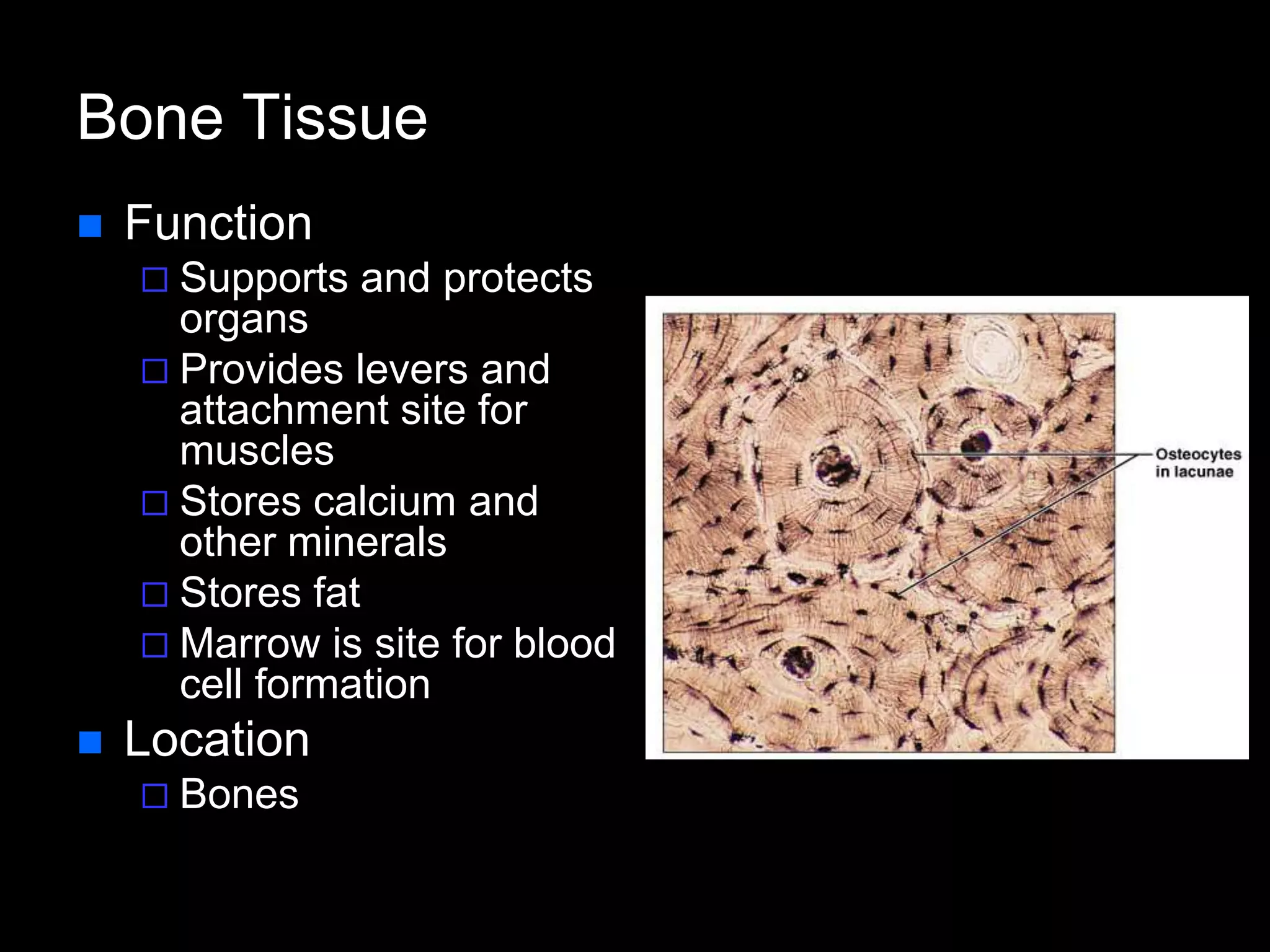
Bone Tissue
 Function
 Supports and protects
organs
 Provides levers and
attachment site for
muscles
 Stores calcium and
other minerals
 Stores fat
 Marrow is site for blood
cell formation
 Location
 Bones
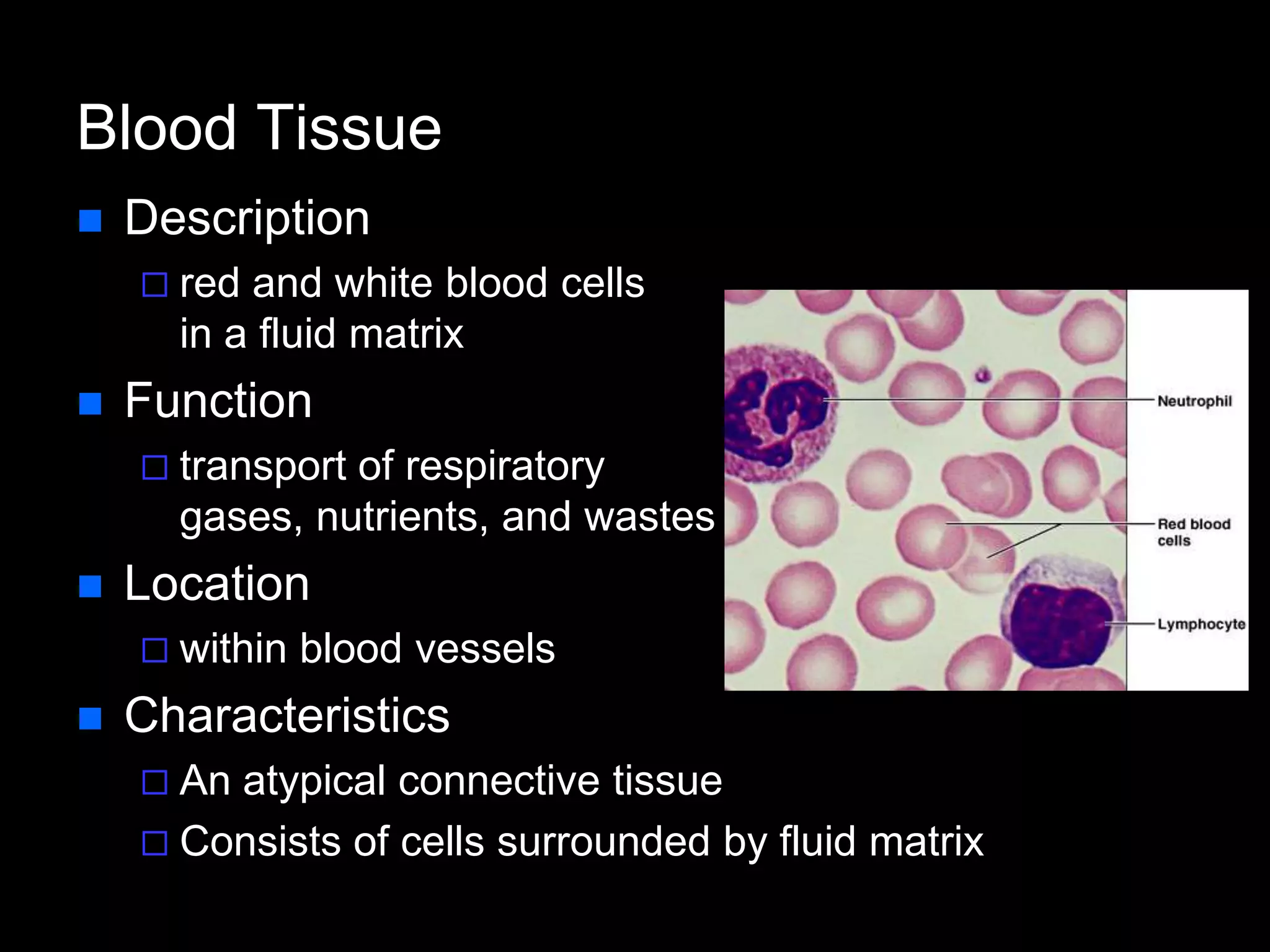
Blood Tissue
 Description
 red and white blood cells
in a fluid matrix
 Function
 transport of respiratory
gases, nutrients, and wastes
 Location
 within blood vessels
 Characteristics
 An atypical connective tissue
 Consists of cells surrounded by fluid matrix
Covering and Lining Membranes
 Combine epithelial tissues and connective
tissues
 Cover broad areas within body
 Consist of epithelial sheet plus underlying
connective tissue
Types of Membranes
 Cutaneous membrane – skin
 Mucous membrane
 Lines hollow organs that open to surface of body
 An epithelial sheet underlain with layer of lamina propria
 Serous membrane – slippery membranes
 Simple squamous epithelium lying on areolar connective tissue
 Line closed cavities
 Pleural, peritoneal, and pericardial cavities
 Synovial membranes – lining joint cavities
 Loose connective (areolar) + simple squamous epithelium
 Secretes fluid (synovial fluid) which lubricates, protects &
cushions joint structures

Connective tissues

  • 1.
  • 2.
    Connective Tissue  Mostdiverse and abundant tissue  Main classes  Connective tissue proper  Blood – Fluid connective tissue  Cartilage  Bone tissue  Components of connective tissue:  Cells (varies according to tissue)  Matrix  Protein fibers (varies according to tissue)  Ground substance (varies according to tissue)  Common embryonic origin – mesenchyme Supporting connective tissues
  • 3.
  • 5.
  • 6.
    Connective Tissue  Originatefrom embryonic tissue called mesenchyme  Most diverse and abundant type of tissue  Many subclasses (see previous slide)  Function: to protect, support and bind together other tissues  Bones, ligaments, tendons  Areolar cushions; adipose insulates and is food source  Blood cells replenished; body tissues repaired  Cells separated from one another by large amount of nonliving extracellular matrix
  • 8.
    Extracellular Matrix explained Nonliving material between cells  Produced by the cells and then extruded  Responsible for the strength  Two components 1. Ground substance  Of fluid, adhesion proteins, proteoglycans  Liquid, semisolid, gel-like or very hard 2. Fibers: collagen, elastic or reticular
  • 9.
    Basic functions ofconnective tissue reviewed  Support and binding of other tissues  Holding body fluids  Defending the body against infection macrophages, plasma cells, mast cells, WBCs  Storing nutrients as fat
  • 10.
    Mast cells: partiallist of important molecules released from these granules includes  Heparin, a sulfated glycosaminoglycan that acts locally as an anticoagulant  Histamine, which promotes increased vascular permeability and smooth muscle contraction  Serine proteases, which activate various mediators of inflammation  Eosinophil&neutrophil chemotactic factors which attract those leukocytes  Leukotrienes C4, D4, and E4 (or the slow-reacting substance of anaphylaxis, SRS-A) which also trigger smooth muscle contraction.
  • 11.
  • 14.
    Two general classesof connective tissue proper: loose dense
  • 15.
  • 22.
  • 24.
    Hyaline cartilage andperichondrium.
  • 28.
  • 30.
  • 32.
  • 35.
    Cells and matricesof a primary ossification center
  • 36.
    Main features ofbone fracture repair.
  • 37.
  • 38.
  • 39.
    Blood and itscomponent
  • 40.
  • 41.
    Red blood cell:Erythrocytes
  • 43.
  • 44.
    Membranes that combineepithelial sheets plus underlying connective tissue proper (see next slide)  Cutaneous membranes  Skin: epidermis and dermis  Mucous membranes, or mucosa  Lines every hollow internal organ that opens to the outside of the body  Serous membranes, or serosa  Slippery membranes lining the pleural, pericardial and peritoneal cavities  The fluid formed on the surfaces is called a transudate  Synovial membranes  Line joints
  • 45.
    (a) Cutaneous membrane (b)Mucous membrane (c) Serous membrane
  • 46.
    Connective Tissue Proper- Structures  Variety of cells, fibers & grounds substances  Types of depend on use  Cells found in connective tissue proper  Fibroblasts  Macrophages, lymphocytes (antibody producing cells)  Adipocytes (fat cells)  Mast cells  Stem cells  Fibers:  Collagen – very strong & abundant, long & straight  Elastic – branching fibers with a wavy appearance (when relaxed)  Reticular – form a network of fibers that form a supportive framwork in soft organs (i.e. Spleen & liver)  Ground substance:  Along with fibers, fills the extracellular space  Ground substance helps determine functionality of tissue
  • 47.
    Connective Tissue Proper- Classifications  Loose Connective Tissue  Areolar  Reticular  Adipose  Dense Connective Tissue  Regular  Irregular  Elastic
  • 48.
    Areolar Connective Tissue Description  Gel-like matrix with:  all three fiber types (collagen, reticular, elastic) for support  Ground substance is made up by glycoproteins also made and secreted by the fibroblasts.  Cells – fibroblasts, macrophages, mast cells, white blood cells, adipocytes  Highly vascular tissue  Function  Wraps and cushions organs  Holds and conveys tissue fluid  Important role in inflammation  Main battlefield in fight against infection
  • 49.
    Areolar Connective Tissue Location Widely distributed under epithelia Packages organs Surrounds capillaries
  • 50.
    Adipose Tissue  Description Closely packed adipocytes  Have nucleus pushed to one side by fat droplet Function  Provides reserve food fuel  Insulates against heat loss  Supports and protects organs  Location  Under skin  Around kidneys  Behind eyeballs, within abdomen and in breasts
  • 51.
    Reticular Connective Tissue Description – network of reticular fibers in loose ground substance  Function – form a soft, internal skeleton (stroma) – supports other cell types  Location – lymphoid organs  Lymph nodes, bone marrow, and spleen
  • 52.
    Dense Irregular ConnectiveTissue  Description  Primarily irregularly arranged collagen fibers  Some elastic fibers and fibroblasts  Function  Withstands tension  Provides structural strength  Location  Dermis of skin  Submucosa of digestive tract  Fibrous capsules of joints and organs
  • 53.
    Dense Regular ConnectiveTissue  Description  Primarily parallel collagen fibers  Fibroblasts and some elastic fibers  Poorly vascularized  Function  Attaches muscle to bone  Attaches bone to bone  Withstands great stress in one direction  Location  Tendons and ligaments  Aponeuroses  Fascia around muscles
  • 54.
    Cartilage  Characteristics:  Firm,flexible tissue  Contains no blood vessels or nerves  Matrix contains up to 80% water  Cell type – chondrocyte  Types:  Hyaline  Elastic  Fibrocartilage
  • 55.
    Hyaline Cartilage  Description Imperceptible collagen fibers (hyaline = glassy)  Chodroblasts produce matrix  Chondrocytes lie in lacunae  Function  Supports and reinforces  Resilient cushion  Resists repetitive stress  Location  Ends of long bones  Costal cartilage of ribs  Cartilages of nose, trachea, and larynx Location
  • 56.
    Elastic Cartilage  Description Similar to hyaline cartilage  More elastic fibers in matrix  Function  Maintains shape of structure  Allows great flexibility  Location  Supports external ear  Epiglottis
  • 57.
    Fibrocartilage  Description  Matrixsimilar, but less firm than hyaline cartilage  Thick collagen fibers predominate  Function  Tensile strength and ability to absorb compressive shock  Location  Intervertebral discs  Pubic symphysis  Discs of knee joint
  • 58.
    Bone Tissue  Function Supports and protects organs  Provides levers and attachment site for muscles  Stores calcium and other minerals  Stores fat  Marrow is site for blood cell formation  Location  Bones
  • 59.
    Blood Tissue  Description red and white blood cells in a fluid matrix  Function  transport of respiratory gases, nutrients, and wastes  Location  within blood vessels  Characteristics  An atypical connective tissue  Consists of cells surrounded by fluid matrix
  • 60.
    Covering and LiningMembranes  Combine epithelial tissues and connective tissues  Cover broad areas within body  Consist of epithelial sheet plus underlying connective tissue
  • 61.
    Types of Membranes Cutaneous membrane – skin  Mucous membrane  Lines hollow organs that open to surface of body  An epithelial sheet underlain with layer of lamina propria  Serous membrane – slippery membranes  Simple squamous epithelium lying on areolar connective tissue  Line closed cavities  Pleural, peritoneal, and pericardial cavities  Synovial membranes – lining joint cavities  Loose connective (areolar) + simple squamous epithelium  Secretes fluid (synovial fluid) which lubricates, protects & cushions joint structures