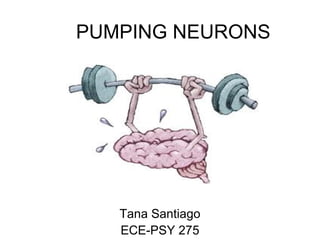
PUMPING NEURONS


   Tana Santiago
   ECE-PSY 275
PUMPING NEURONS

What Are Normal Brain Changes?
To understand cognitive and physical brain
changes that lead to cognitive aging and dementia,
first we must understand normal age-related
brain changes. The parietal, frontal, and temporal
cortices all experience significant tissue loss
throughout life. Healthy adults lose approximately
15 percent of their neocortical tissue
between ages thirty and ninety, with disproportionately
higher losses in areas crucial for
executive control (Raz, 2000).
PUMPING NEURONS
• Adopting a physically
  active lifestyle early
  on may be the best
  way to prevent brain
  decay
• Aging increases the
  prevalence of
  cognitive impairment.
• (Ratey, 2008)
PUMPING NEURONS
 In contrast to
  medications, aerobic
  exercise is consistently
  associated with increased
  cognitive performance
  and greater brain volume.
  (Crone 2010)
• Aerobic exercise is
  thought to improve brain
  health by creating new
  brain cells , blood vessels
  and by enhancing
  communication between
  neurons. (Ratey, 2008)
PUMPING NEURONS
Blood flow increases and the
 transport of nutrients to newly
 formed cells result in better
 brain function and increased
 brain mass.
One prospective longitudinal
 study found that midlife
 physical activity levels
 increased more gray matter
 volume twenty-one years later,
 even in individuals with
 cognitive problems, (Rovio et
 al., 2010).
PUMPING NEURONS
• Aerobic exercise not only slowed, but reversed, typical
  age-related atrophy.
• Modest amounts of aerobic exercise can protect against
  brain atrophy.
• Walking one mile a day can prevent atrophy.
PUMPING NEURONS
• While exercise preserves brain tissue, it also helps you
  think better. In a recent study, people who exercised
  regularly got better at planning and paying attention.
• Athletic activity helps young exercisers also with
  increased ability to handle complex problems and relief
  of knowing their brains are protected as they get older.
• (Gullar,2006)
PUMPING NEURONS
• Exercise also has a positive effect on mental health.
• Physical activities have been found to have holistic
  benefits such as, social interaction, positive emotional
  experiences and sense of achievement (Crone et al., ).
• Very few studies have been done on younger age
  groups. Of the few studies that have been conducted,
  Ahmadi et al. (2005) It was reported that body building,
  swimming and taekwondo control groups had lower
  levels of depression than the group who did no physical
  activity.
PUMPING NEURONS
• Exercise gets rid of stress, improves your mood,
  increases memory, makes you smarter and able to
  function better.
• Exercise reconfigures your brain to help you perform at
  your highest level.
• Exercise is a free and easy way to fight off the effects of
  depression, ADD and memory loss. (Ratey, 2008)
PUMPING NEURONS
• As you have read physical activity is beneficial in many
  ways:
• It increases brain function and mass.
• It fights off depression.
• When you are feeling overwhelmed take a few minutes,
  go for a walk do some aerobics. You will be thinking
  clearer and become more relaxed and protecting your
  brain for the future.
PUMPING NEURONS
Guallar E, Podewils L. Mens Sana in Corpore Sano. Annals of Internal
   Medicine [serial online]. January 17, 2006:135, W24. Available from:
   Academic Search Complete, Ipswich, MA. Accessed July 14, 2012.
APA
(American Psychological Assoc.)
  References
Keith Laws, et al. "Physical Activity And Mental Health In A Student
   Population." Journal Of Mental Health 19.6 (2010): 492-499.
   Academic Search Complete. Web. 14 July 2012.
Vancouver/ICMJE
  References
PUMPING NEURONS
Moghaddam J, Hefzollesan M, Salehian M, Shirmohammadzadeh M.
  Effect of Different Exercises on Reducing Male Students
  Depression. Annals Of Biological Research [serial online]. June
  2012;3(3):1231-1235. Available from: Academic Search Complete,
  Ipswich, MA. Accessed July 14, 2012.
APA
(American Psychological Assoc.)
  References

Ratey, J. J., & Hagerman, E. (2008). Spark: The revolutionary new
  science of exercise and the brain. New York, NY: Little, Brown.
  Spark explains the science of exercise and the biological
  relationship between the body, the brain, and the mind.
PUMPING NEURONS

Tyson, P, Wilson, K, Crone, D, Brailsford, R, & Laws, K
  2010, 'Physical activity and mental health in a student
  population', Journal Of Mental Health, 19, 6, pp. 492-
  499, Academic Search Complete, EBSCOhost, viewed
  14 July 2012.
MLA
(Modern Language Assoc.)
  Works Cited

Exercise

  • 1.
    PUMPING NEURONS Tana Santiago ECE-PSY 275
  • 2.
    PUMPING NEURONS What AreNormal Brain Changes? To understand cognitive and physical brain changes that lead to cognitive aging and dementia, first we must understand normal age-related brain changes. The parietal, frontal, and temporal cortices all experience significant tissue loss throughout life. Healthy adults lose approximately 15 percent of their neocortical tissue between ages thirty and ninety, with disproportionately higher losses in areas crucial for executive control (Raz, 2000).
  • 3.
    PUMPING NEURONS • Adoptinga physically active lifestyle early on may be the best way to prevent brain decay • Aging increases the prevalence of cognitive impairment. • (Ratey, 2008)
  • 4.
    PUMPING NEURONS  Incontrast to medications, aerobic exercise is consistently associated with increased cognitive performance and greater brain volume. (Crone 2010) • Aerobic exercise is thought to improve brain health by creating new brain cells , blood vessels and by enhancing communication between neurons. (Ratey, 2008)
  • 5.
    PUMPING NEURONS Blood flowincreases and the transport of nutrients to newly formed cells result in better brain function and increased brain mass. One prospective longitudinal study found that midlife physical activity levels increased more gray matter volume twenty-one years later, even in individuals with cognitive problems, (Rovio et al., 2010).
  • 6.
    PUMPING NEURONS • Aerobicexercise not only slowed, but reversed, typical age-related atrophy. • Modest amounts of aerobic exercise can protect against brain atrophy. • Walking one mile a day can prevent atrophy.
  • 7.
    PUMPING NEURONS • Whileexercise preserves brain tissue, it also helps you think better. In a recent study, people who exercised regularly got better at planning and paying attention. • Athletic activity helps young exercisers also with increased ability to handle complex problems and relief of knowing their brains are protected as they get older. • (Gullar,2006)
  • 8.
    PUMPING NEURONS • Exercisealso has a positive effect on mental health. • Physical activities have been found to have holistic benefits such as, social interaction, positive emotional experiences and sense of achievement (Crone et al., ). • Very few studies have been done on younger age groups. Of the few studies that have been conducted, Ahmadi et al. (2005) It was reported that body building, swimming and taekwondo control groups had lower levels of depression than the group who did no physical activity.
  • 9.
    PUMPING NEURONS • Exercisegets rid of stress, improves your mood, increases memory, makes you smarter and able to function better. • Exercise reconfigures your brain to help you perform at your highest level. • Exercise is a free and easy way to fight off the effects of depression, ADD and memory loss. (Ratey, 2008)
  • 10.
    PUMPING NEURONS • Asyou have read physical activity is beneficial in many ways: • It increases brain function and mass. • It fights off depression. • When you are feeling overwhelmed take a few minutes, go for a walk do some aerobics. You will be thinking clearer and become more relaxed and protecting your brain for the future.
  • 11.
    PUMPING NEURONS Guallar E,Podewils L. Mens Sana in Corpore Sano. Annals of Internal Medicine [serial online]. January 17, 2006:135, W24. Available from: Academic Search Complete, Ipswich, MA. Accessed July 14, 2012. APA (American Psychological Assoc.) References Keith Laws, et al. "Physical Activity And Mental Health In A Student Population." Journal Of Mental Health 19.6 (2010): 492-499. Academic Search Complete. Web. 14 July 2012. Vancouver/ICMJE References
  • 12.
    PUMPING NEURONS Moghaddam J,Hefzollesan M, Salehian M, Shirmohammadzadeh M. Effect of Different Exercises on Reducing Male Students Depression. Annals Of Biological Research [serial online]. June 2012;3(3):1231-1235. Available from: Academic Search Complete, Ipswich, MA. Accessed July 14, 2012. APA (American Psychological Assoc.) References Ratey, J. J., & Hagerman, E. (2008). Spark: The revolutionary new science of exercise and the brain. New York, NY: Little, Brown. Spark explains the science of exercise and the biological relationship between the body, the brain, and the mind.
  • 13.
    PUMPING NEURONS Tyson, P,Wilson, K, Crone, D, Brailsford, R, & Laws, K 2010, 'Physical activity and mental health in a student population', Journal Of Mental Health, 19, 6, pp. 492- 499, Academic Search Complete, EBSCOhost, viewed 14 July 2012. MLA (Modern Language Assoc.) Works Cited