Nutrition and Brain Function
Kalynn Anderson
INTRODUCTION
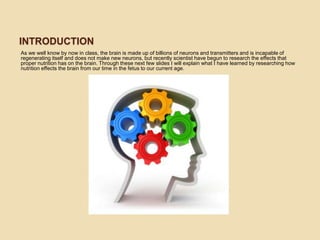
As we well know by now in class, the brain is made up of billions of neurons and transmitters and is incapable of
regenerating itself and does not make new neurons, but recently scientist have begun to research the effects that
proper nutrition has on the brain. Through these next few slides I will explain what I have learned by researching how
nutrition effects the brain from our time in the fetus to our current age.
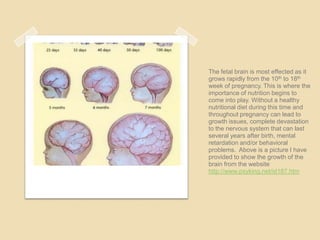
The fetal brain is most effected as it
grows rapidly from the 10th to 18th
week of pregnancy. This is where the
importance of nutrition begins to
come into play. Without a healthy
nutritional diet during this time and
throughout pregnancy can lead to
growth issues, complete devastation
to the nervous system that can last
several years after birth, mental
retardation and/or behavioral
problems. Above is a picture I have
provided to show the growth of the
brain from the website
http://www.psyking.net/id187.htm
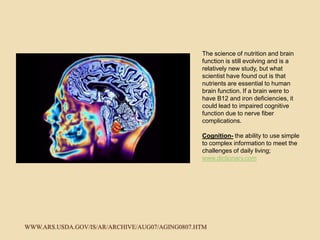
The science of nutrition and brain
                                                function is still evolving and is a
                                                relatively new study, but what
                                                scientist have found out is that
                                                nutrients are essential to human
                                                brain function. If a brain were to
                                                have B12 and iron deficiencies, it
                                                could lead to impaired cognitive
                                                function due to nerve fiber
                                                complications.

                                                Cognition- the ability to use simple
                                                to complex information to meet the
                                                challenges of daily living;
                                                www.dictionary.com


WWW.ARS.USDA.GOV/IS/AR/ARCHIVE/AUG07/AGING0807.HTM
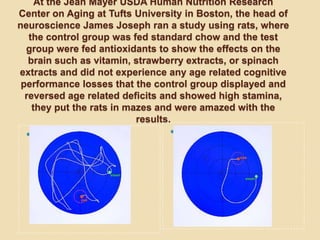
At the Jean Mayer USDA Human Nutrition Research
Center on Aging at Tufts University in Boston, the head of
neuroscience James Joseph ran a study using rats, where
   the control group was fed standard chow and the test
  group were fed antioxidants to show the effects on the
   brain such as vitamin, strawberry extracts, or spinach
extracts and did not experience any age related cognitive
 performance losses that the control group displayed and
  reversed age related deficits and showed high stamina,
    they put the rats in mazes and were amazed with the
                           results.
    Control group                 Test group
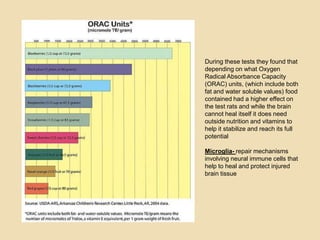
During these tests they found that
depending on what Oxygen
Radical Absorbance Capacity
(ORAC) units, (which include both
fat and water soluble values) food
contained had a higher effect on
the test rats and while the brain
cannot heal itself it does need
outside nutrition and vitamins to
help it stabilize and reach its full
potential

Microglia- repair mechanisms
involving neural immune cells that
help to heal and protect injured
brain tissue
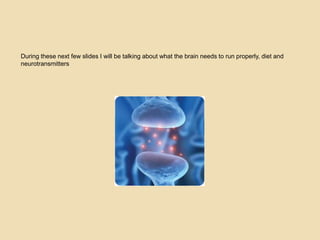
During these next few slides I will be talking about what the brain needs to run properly, diet and
neurotransmitters
The brain needs special material to run properly:
glucose, protein, vitamins, minerals and essential
chemicals
glucose- the preferred form of energy for many of the body
cells including the brain and muscle cells and is found in
many food sources. There are a variety of foods that the
body either chemically reduces to glucose, which is
absorbed into the bloodstream or is chemically converted
to glucose such as starch, which is made up of long chains
of glucose molecules chemically connected together. Other
food sources include lactose, milk and other dairy products
Protein- large molecules made from amino acids, which
are enzymes and hormones. Food sources of protein
include meat, eggs, beans and dairy products.
Essential vitamins and minerals-Vitamins and minerals
are needed by the body but not produced by the body
therefore must be taken in as part of the diet.
“Biochemistry”; Reginald Garrett, PH.D. and Charles Grisham, PH.D.; 2007
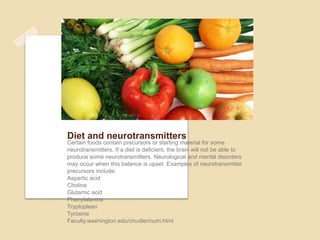
Diet and neurotransmitters
Certain foods contain precursors or starting material for some
neurotransmitters. If a diet is deficient, the brain will not be able to
produce some neurotransmitters. Neurological and mental disorders
may occur when this balance is upset. Examples of neurotransmitter
precursors include:
Aspartic acid
Choline
Glutamic acid
Phenylalanine
Tryptoplean
Tyrosine
Faculty.washington.edu/chudler/nutri.html
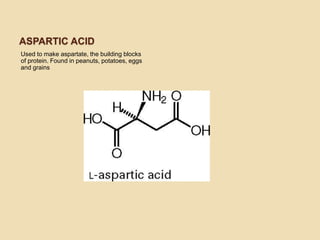
ASPARTIC ACID
Used to make aspartate, the building blocks
of protein. Found in peanuts, potatoes, eggs
and grains
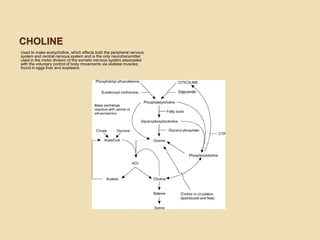
CHOLINE
Used to make acetycholine, which effects both the peripheral nervous
system and central nervous system and is the only neurotransmitter
used in the motor division of the somatic nervous system associated
with the voluntary control of body movements via skeletal muscles;
found in eggs liver and soybeans
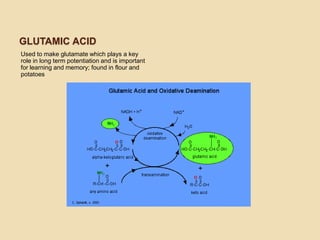
GLUTAMIC ACID
Used to make glutamate which plays a key
role in long term potentiation and is important
for learning and memory; found in flour and
potatoes
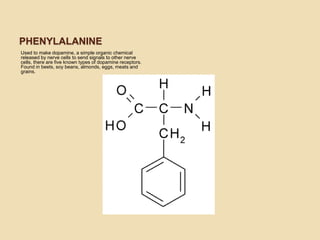
PHENYLALANINE
Used to make dopamine, a simple organic chemical
released by nerve cells to send signals to other nerve
cells, there are five known types of dopamine receptors.
Found in beets, soy beans, almonds, eggs, meats and
grains.
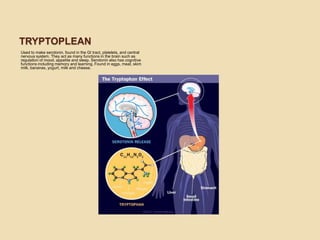
TRYPTOPLEAN
Used to make serotonin, found in the GI tract, platelets, and central
nervous system. They act as many functions in the brain such as
regulation of mood, appetite and sleep. Serotonin also has cognitive
functions including memory and learning. Found in eggs, meat, skim
milk, bananas, yogurt, milk and cheese.
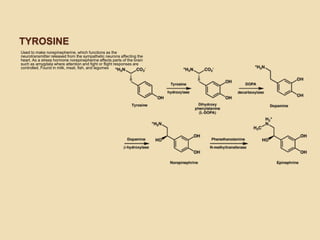
TYROSINE
Used to make norepinepherine, which functions as the
neurotransmitter released from the sympathetic neurons affecting the
heart. As a stress hormone norepinepherine affects parts of the brain
such as amygdala where attention and fight or flight responses are
controlled. Found in milk, meat, fish, and legumes
Finally, to conclude my presentation I thought I would inset
a video where an experienced neurosurgeon talks about
the effects of nutrition and brain health. Thank you for
taking the time to read through my slideshow, I hope you
found something new and interesting.
   http://www.youtube.com/watch?v=Ms
    U0imEAlUg
Bibliography
  Books:
  Biochemistry; Reginald Garrett, Ph.D. and Charles
   Grisham, PH.D.; 2007
  Websites:
1. www.dictionary.com
2. Faculty.washington.edu/chudler/nutri.html
3. http://www.nlm.nih.gov/medlineplus/mplusdictionar
    y.html
4. www.ars.usda.gov/is/ar/archive/aug07/aging0807.
    htm
5. http://www.youtube.com/watch?v=MsU0imEAlUg

Nutrition and brain_function

  • 1.
    Nutrition and BrainFunction Kalynn Anderson
  • 2.
    INTRODUCTION As we wellknow by now in class, the brain is made up of billions of neurons and transmitters and is incapable of regenerating itself and does not make new neurons, but recently scientist have begun to research the effects that proper nutrition has on the brain. Through these next few slides I will explain what I have learned by researching how nutrition effects the brain from our time in the fetus to our current age.
  • 3.
    The fetal brainis most effected as it grows rapidly from the 10th to 18th week of pregnancy. This is where the importance of nutrition begins to come into play. Without a healthy nutritional diet during this time and throughout pregnancy can lead to growth issues, complete devastation to the nervous system that can last several years after birth, mental retardation and/or behavioral problems. Above is a picture I have provided to show the growth of the brain from the website http://www.psyking.net/id187.htm
  • 4.
    The science ofnutrition and brain function is still evolving and is a relatively new study, but what scientist have found out is that nutrients are essential to human brain function. If a brain were to have B12 and iron deficiencies, it could lead to impaired cognitive function due to nerve fiber complications. Cognition- the ability to use simple to complex information to meet the challenges of daily living; www.dictionary.com WWW.ARS.USDA.GOV/IS/AR/ARCHIVE/AUG07/AGING0807.HTM
  • 5.
    At the JeanMayer USDA Human Nutrition Research Center on Aging at Tufts University in Boston, the head of neuroscience James Joseph ran a study using rats, where the control group was fed standard chow and the test group were fed antioxidants to show the effects on the brain such as vitamin, strawberry extracts, or spinach extracts and did not experience any age related cognitive performance losses that the control group displayed and reversed age related deficits and showed high stamina, they put the rats in mazes and were amazed with the results.  Control group  Test group
  • 6.
    During these teststhey found that depending on what Oxygen Radical Absorbance Capacity (ORAC) units, (which include both fat and water soluble values) food contained had a higher effect on the test rats and while the brain cannot heal itself it does need outside nutrition and vitamins to help it stabilize and reach its full potential Microglia- repair mechanisms involving neural immune cells that help to heal and protect injured brain tissue
  • 7.
    During these nextfew slides I will be talking about what the brain needs to run properly, diet and neurotransmitters
  • 8.
    The brain needsspecial material to run properly: glucose, protein, vitamins, minerals and essential chemicals glucose- the preferred form of energy for many of the body cells including the brain and muscle cells and is found in many food sources. There are a variety of foods that the body either chemically reduces to glucose, which is absorbed into the bloodstream or is chemically converted to glucose such as starch, which is made up of long chains of glucose molecules chemically connected together. Other food sources include lactose, milk and other dairy products Protein- large molecules made from amino acids, which are enzymes and hormones. Food sources of protein include meat, eggs, beans and dairy products. Essential vitamins and minerals-Vitamins and minerals are needed by the body but not produced by the body therefore must be taken in as part of the diet. “Biochemistry”; Reginald Garrett, PH.D. and Charles Grisham, PH.D.; 2007
  • 9.
    Diet and neurotransmitters Certainfoods contain precursors or starting material for some neurotransmitters. If a diet is deficient, the brain will not be able to produce some neurotransmitters. Neurological and mental disorders may occur when this balance is upset. Examples of neurotransmitter precursors include: Aspartic acid Choline Glutamic acid Phenylalanine Tryptoplean Tyrosine Faculty.washington.edu/chudler/nutri.html
  • 10.
    ASPARTIC ACID Used tomake aspartate, the building blocks of protein. Found in peanuts, potatoes, eggs and grains
  • 11.
    CHOLINE Used to makeacetycholine, which effects both the peripheral nervous system and central nervous system and is the only neurotransmitter used in the motor division of the somatic nervous system associated with the voluntary control of body movements via skeletal muscles; found in eggs liver and soybeans
  • 12.
    GLUTAMIC ACID Used tomake glutamate which plays a key role in long term potentiation and is important for learning and memory; found in flour and potatoes
  • 13.
    PHENYLALANINE Used to makedopamine, a simple organic chemical released by nerve cells to send signals to other nerve cells, there are five known types of dopamine receptors. Found in beets, soy beans, almonds, eggs, meats and grains.
  • 14.
    TRYPTOPLEAN Used to makeserotonin, found in the GI tract, platelets, and central nervous system. They act as many functions in the brain such as regulation of mood, appetite and sleep. Serotonin also has cognitive functions including memory and learning. Found in eggs, meat, skim milk, bananas, yogurt, milk and cheese.
  • 15.
    TYROSINE Used to makenorepinepherine, which functions as the neurotransmitter released from the sympathetic neurons affecting the heart. As a stress hormone norepinepherine affects parts of the brain such as amygdala where attention and fight or flight responses are controlled. Found in milk, meat, fish, and legumes
  • 16.
    Finally, to concludemy presentation I thought I would inset a video where an experienced neurosurgeon talks about the effects of nutrition and brain health. Thank you for taking the time to read through my slideshow, I hope you found something new and interesting.  http://www.youtube.com/watch?v=Ms U0imEAlUg
  • 17.
    Bibliography  Books: Biochemistry; Reginald Garrett, Ph.D. and Charles Grisham, PH.D.; 2007  Websites: 1. www.dictionary.com 2. Faculty.washington.edu/chudler/nutri.html 3. http://www.nlm.nih.gov/medlineplus/mplusdictionar y.html 4. www.ars.usda.gov/is/ar/archive/aug07/aging0807. htm 5. http://www.youtube.com/watch?v=MsU0imEAlUg