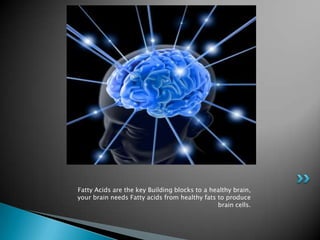
Fatty Acids are the key Building blocks to a healthy brain,
your brain needs Fatty acids from healthy fats to produce
                                               brain cells.
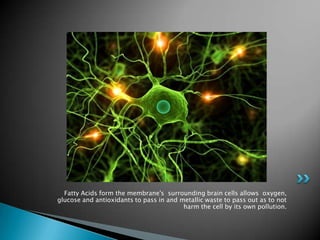
Fatty Acids form the membrane's surrounding brain cells allows oxygen,
glucose and antioxidants to pass in and metallic waste to pass out as to not
                                         harm the cell by its own pollution.
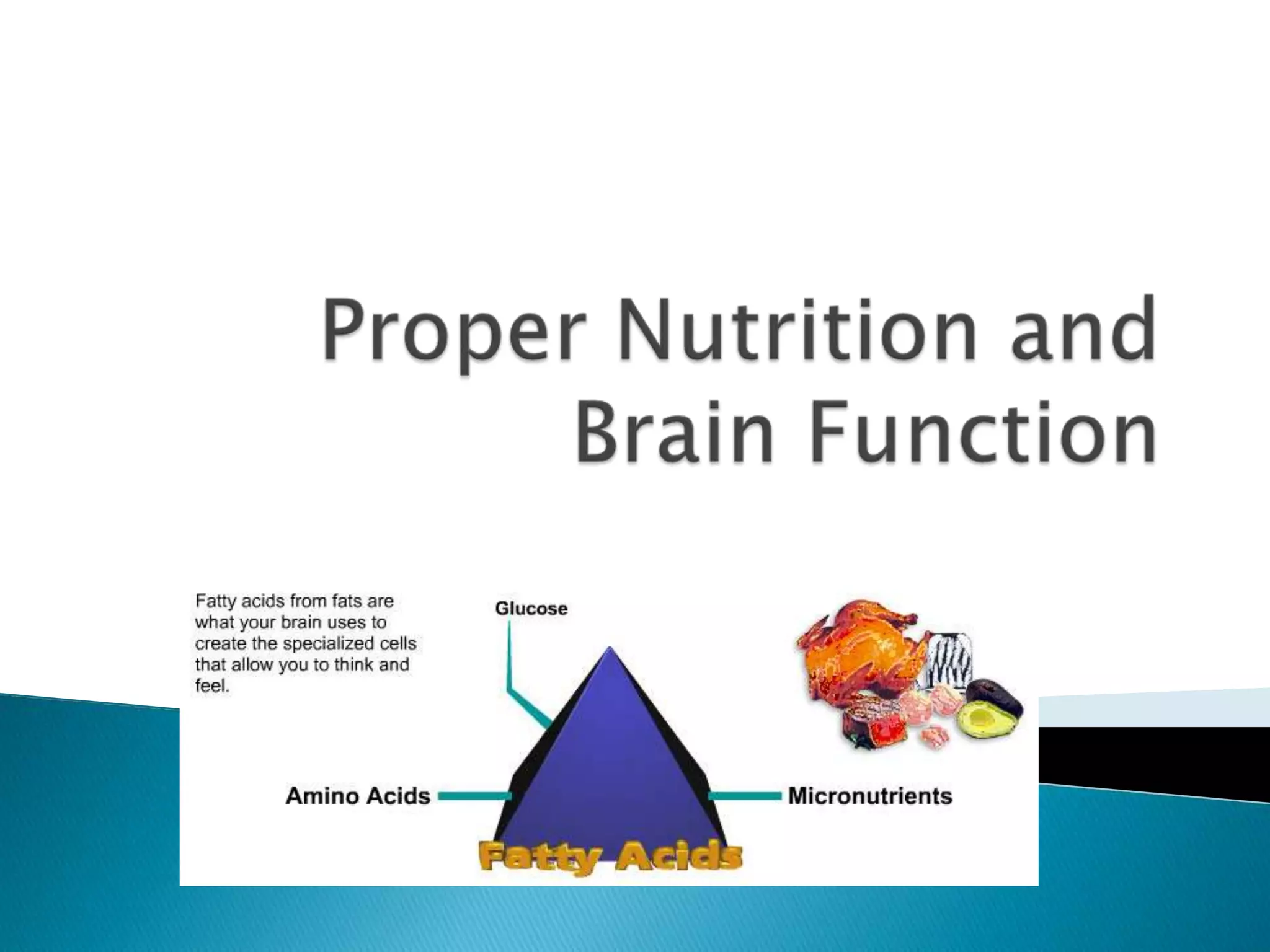
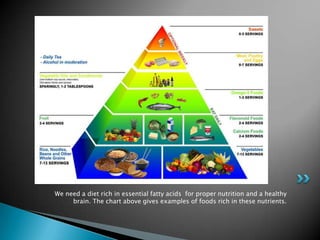
We need a diet rich in essential fatty acids for proper nutrition and a healthy
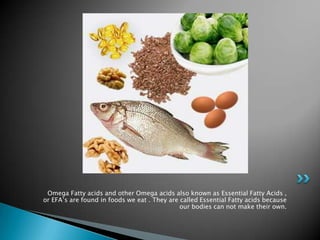
     brain. The chart above gives examples of foods rich in these nutrients.
Omega Fatty acids and other Omega acids also known as Essential Fatty Acids ,
or EFA’s are found in foods we eat . They are called Essential Fatty acids because
                                              our bodies can not make their own.
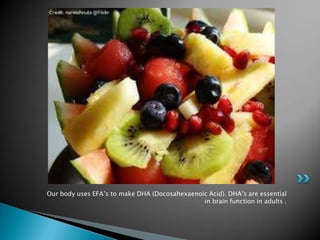
Our body uses EFA’s to make DHA (Docosahexaenoic Acid). DHA’s are essential
                                               in brain function in adults .
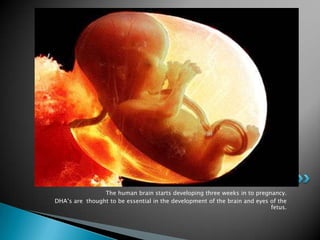
The human brain starts developing three weeks in to pregnancy.
DHA’s are thought to be essential in the development of the brain and eyes of the
                                                                           fetus.
Fatty Acids in breast milk help myelination in nursing infants. Healthy myelination is essential
 for proper function of the nervous system. Deficiencies of these fatty acids can result in low
birth weight and reduced head size. Although studies show myelination can be made up later
                                                                             in the child's life .
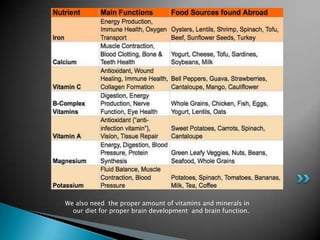
We also need the proper amount of vitamins and minerals in
  our diet for proper brain development and brain function.
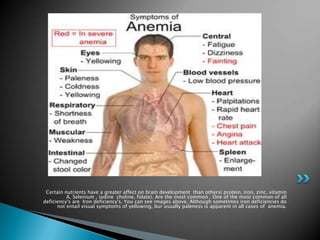
Certain nutrients have a greater affect on brain development than others( protein, iron, zinc, vitamin
          A, Selenium , iodine choline, folate). Are the most common . One of the most common of all
deficiency's are Iron deficiency's. You can see images above, Although sometimes iron deficiencies do
      not entail visual symptoms of yellowing, bur usually paleness is apparent in all cases of anemia.
Iron deficiencies can hit at any time in ones life, but are most crucial to the
                                           fetus through first two years of life.
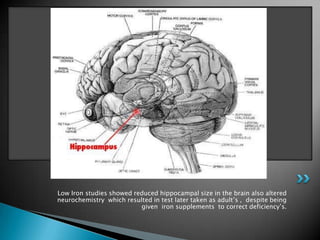
Low Iron studies showed reduced hippocampal size in the brain also altered
neurochemistry which resulted in test later taken as adult’s , despite being
                          given iron supplements to correct deficiency’s.
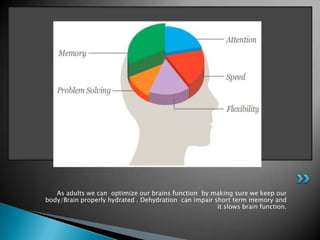
As adults we can optimize our brains function by making sure we keep our
body/Brain properly hydrated . Dehydration can impair short term memory and
                                                       it slows brain function.
We can actually improve are performance at work or on tests by eating certain foods to
    improve brain function. Foods high in protein stabilize blood sugars levels and maintain
mental alertness. Oatmeal, almonds and whole grains are also examples of optimal choices
                                                        of food for improved brain function.
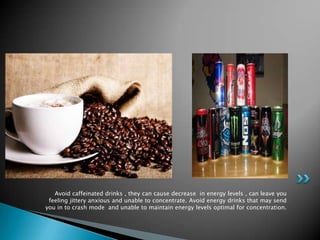
Avoid caffeinated drinks , they can cause decrease in energy levels , can leave you
 feeling jittery anxious and unable to concentrate. Avoid energy drinks that may send
you in to crash mode and unable to maintain energy levels optimal for concentration.
END OF POWERPOINTS

              REFERANCES AND WORK SITED


Mid term Presentation , august 6th
                         Deanna Spencer
APA
            (American Psychological Assoc.).

            References.


            Rao, R., Tkac, I., Schmidt, A. T., &
            Georgieff, M. K. (2011). Fetal and
            neonatal iron deficiency causes volume
            loss and alters the neurochemical
            profile of the adult rat hippocampus.
            Nutritional Neuroscience, 14(2), 59-
            65.
            doi:10.1179/1476830511Y.00000000
            01
            .


I found this source to be valid and peer approved. I found it through the library
                  web site EBSCO, I found it informational on my topic of study.
APA
(American Psychological Assoc.).

References.


Hazin, A., Alves, J., & Falbo, A. (2007). THE MYELINATION PROCESS
IN SEVERELY MALNOURISHED CHILDREN: MRI FINDINGS.
International Journal Of Neuroscience, 117(8), 1209-1214.
doi:10.1080/00207450600934945
.


        In this research a study was done on children with malnutrition to see the
                       affects on the developing brain. It is a peer approved article.
Book (Teaching with the Brain in Mind)
                                                                             2nd Edition
Eric Jensen. Memory and recall, Preparing the Brain for school ,Meet your Amazing Brain
          Ed. Association for Supervision and Curriculum development. Copy right 2005.

                                                                             Web site
             http://ww.fi.edu/learn/brain/facts.html (I used this site in the research of
                                                                                     brain
         development this sight linked with the Franklin Institution/ on-line of learning)


                                                                                  Web site
             MedlinePlus.gov (The American Journal of Clinical Nutrition) 2007,Michael K
             Georgieff , Authors afflictions From department of Pediatrics and childhood
            Development .(This article focused on iron deficiencies and pertained to my
            PowerPoint's)I found it to be informative of early iron deficiencies and adult
                                                                                   anemia.
                                                                                  Web Site
          Livestrong .com, Article September 1, 2011, Byb Sage Kalmus, “What does the
            brain need to functionNutricionally. I used this research and its content that
         broke down the foods that contained the fatty 3 omega acids and the omega 6
          fatty acids and there source from how the body uses these nutrients and does
                                                                             make its own.

Deanna spencer nutrition

  • 2.
    Fatty Acids arethe key Building blocks to a healthy brain, your brain needs Fatty acids from healthy fats to produce brain cells.
  • 3.
    Fatty Acids formthe membrane's surrounding brain cells allows oxygen, glucose and antioxidants to pass in and metallic waste to pass out as to not harm the cell by its own pollution.
  • 4.
    We need adiet rich in essential fatty acids for proper nutrition and a healthy brain. The chart above gives examples of foods rich in these nutrients.
  • 5.
    Omega Fatty acidsand other Omega acids also known as Essential Fatty Acids , or EFA’s are found in foods we eat . They are called Essential Fatty acids because our bodies can not make their own.
  • 6.
    Our body usesEFA’s to make DHA (Docosahexaenoic Acid). DHA’s are essential in brain function in adults .
  • 7.
    The human brainstarts developing three weeks in to pregnancy. DHA’s are thought to be essential in the development of the brain and eyes of the fetus.
  • 8.
    Fatty Acids inbreast milk help myelination in nursing infants. Healthy myelination is essential for proper function of the nervous system. Deficiencies of these fatty acids can result in low birth weight and reduced head size. Although studies show myelination can be made up later in the child's life .
  • 9.
    We also needthe proper amount of vitamins and minerals in our diet for proper brain development and brain function.
  • 10.
    Certain nutrients havea greater affect on brain development than others( protein, iron, zinc, vitamin A, Selenium , iodine choline, folate). Are the most common . One of the most common of all deficiency's are Iron deficiency's. You can see images above, Although sometimes iron deficiencies do not entail visual symptoms of yellowing, bur usually paleness is apparent in all cases of anemia.
  • 11.
    Iron deficiencies canhit at any time in ones life, but are most crucial to the fetus through first two years of life.
  • 12.
    Low Iron studiesshowed reduced hippocampal size in the brain also altered neurochemistry which resulted in test later taken as adult’s , despite being given iron supplements to correct deficiency’s.
  • 13.
    As adults wecan optimize our brains function by making sure we keep our body/Brain properly hydrated . Dehydration can impair short term memory and it slows brain function.
  • 14.
    We can actuallyimprove are performance at work or on tests by eating certain foods to improve brain function. Foods high in protein stabilize blood sugars levels and maintain mental alertness. Oatmeal, almonds and whole grains are also examples of optimal choices of food for improved brain function.
  • 15.
    Avoid caffeinated drinks, they can cause decrease in energy levels , can leave you feeling jittery anxious and unable to concentrate. Avoid energy drinks that may send you in to crash mode and unable to maintain energy levels optimal for concentration.
  • 16.
    END OF POWERPOINTS REFERANCES AND WORK SITED Mid term Presentation , august 6th Deanna Spencer
  • 17.
    APA (American Psychological Assoc.). References. Rao, R., Tkac, I., Schmidt, A. T., & Georgieff, M. K. (2011). Fetal and neonatal iron deficiency causes volume loss and alters the neurochemical profile of the adult rat hippocampus. Nutritional Neuroscience, 14(2), 59- 65. doi:10.1179/1476830511Y.00000000 01 . I found this source to be valid and peer approved. I found it through the library web site EBSCO, I found it informational on my topic of study.
  • 18.
    APA (American Psychological Assoc.). References. Hazin,A., Alves, J., & Falbo, A. (2007). THE MYELINATION PROCESS IN SEVERELY MALNOURISHED CHILDREN: MRI FINDINGS. International Journal Of Neuroscience, 117(8), 1209-1214. doi:10.1080/00207450600934945 . In this research a study was done on children with malnutrition to see the affects on the developing brain. It is a peer approved article.
  • 19.
    Book (Teaching withthe Brain in Mind) 2nd Edition Eric Jensen. Memory and recall, Preparing the Brain for school ,Meet your Amazing Brain Ed. Association for Supervision and Curriculum development. Copy right 2005. Web site http://ww.fi.edu/learn/brain/facts.html (I used this site in the research of brain development this sight linked with the Franklin Institution/ on-line of learning) Web site MedlinePlus.gov (The American Journal of Clinical Nutrition) 2007,Michael K Georgieff , Authors afflictions From department of Pediatrics and childhood Development .(This article focused on iron deficiencies and pertained to my PowerPoint's)I found it to be informative of early iron deficiencies and adult anemia. Web Site Livestrong .com, Article September 1, 2011, Byb Sage Kalmus, “What does the brain need to functionNutricionally. I used this research and its content that broke down the foods that contained the fatty 3 omega acids and the omega 6 fatty acids and there source from how the body uses these nutrients and does make its own.