A History of China
An Introduction to
Dynastic and Communist China
Objective
 I can describe define key terms and explain their
significance to Chinese History.
 I can explain what factors contributed to the fall of
dynastic China.
Key Terms
 Dynastic China
 Mandate of Heaven
 Opium War
 The Open Door Policy
 Boxer Rebellion
 May Fourth Movement
Geography of China
Dynastic China
 A period in Chinese History (2100 BCE- 1900
CE) in which powerful families ruled over China.
 Dynasties often lasted for centuries.
 Wars and Unrest generally brought the end of
old dynasties and the beginnings of new
Dynasties.
 Different Dynasties promoted different values.
Mandate of Heaven
 An ancient Chinese philosophy which believed that
heaven gave emperors the power to rule. When they lost
the mandate, they would lose their power.
 Four Principles…
1) Heaven grants the emperor the right to rule,
2) Since there is only one Heaven, there can only be one
emperor at any given time,
3) The emperor's virtue determines his right to rule, and,
4) No one dynasty has a permanent right to rule.
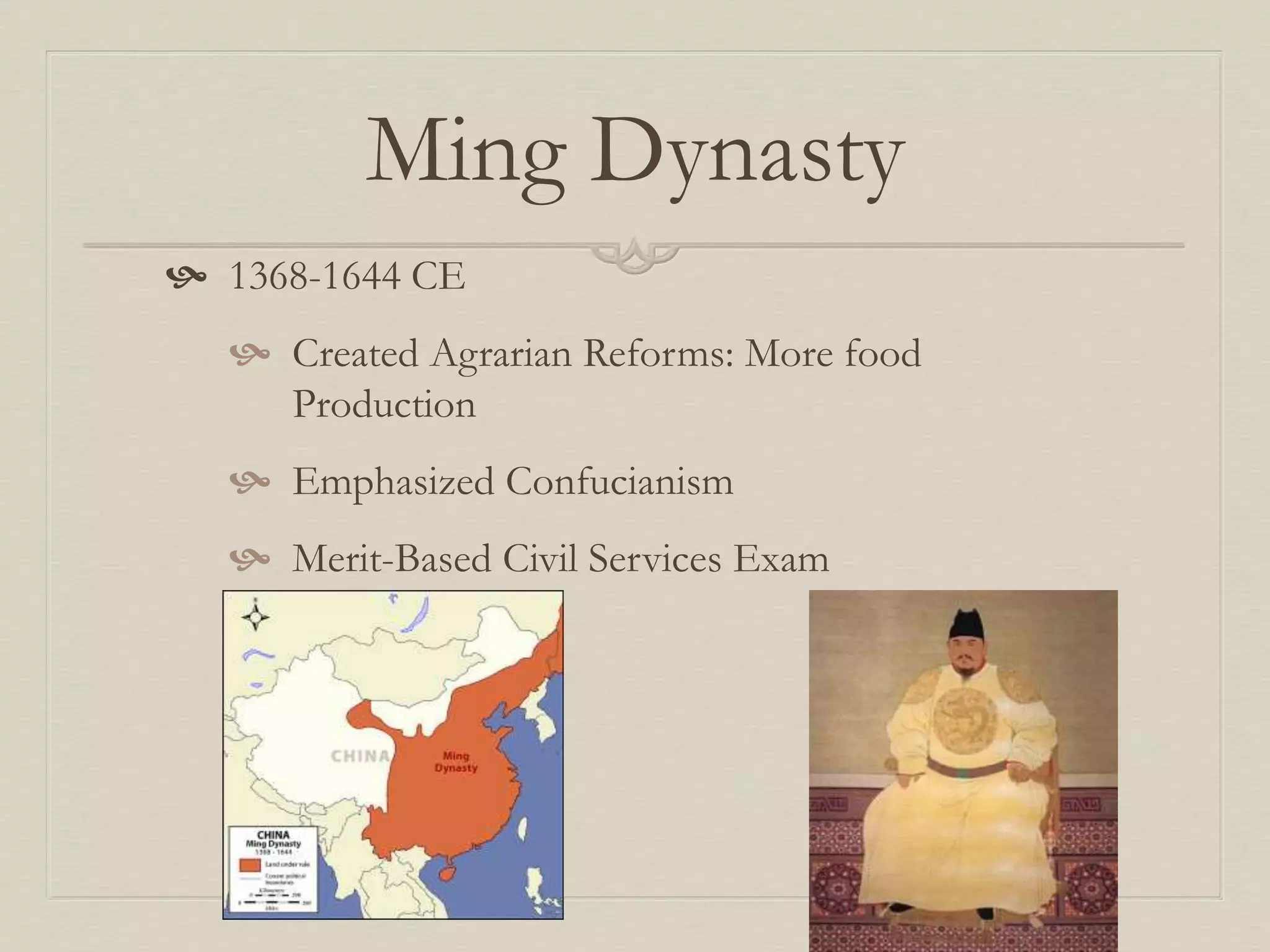
Ming Dynasty
 1368-1644 CE
 Created Agrarian Reforms: More food
Production
 Emphasized Confucianism
 Merit-Based Civil Services Exam
Ming Policy of Isolation
 Goal was to limit outside influences.
 Finished the Great Wall to protect themselves from
threats from the north.
 Government tried to limit trade with Europe
 Trade limited to three several ports along the eastern sea
board.
 International demand for Chinese goods rose and
changed the economy.
 China remained an agrarian community to match its
Confucian beliefs.
Qing Dynasty
 1644-1912 CE
 Manchurian (Seen as outsiders from the North)
 Continued to Resist European and outside influence by
placing restrictions on trade.
 Only traded with the Dutch because they showed respect
to the Emperor and followed Chinese customs.
 British were denied access into the market.
Challenge to China’s Isolation
 In 1793, the Qing Emperor sent a letter to the King of England:
 “There is nothing we lack…We have never placed much value on strange
or ingenious objects, nor do we need any more of your country’s
manufactures.”
 Believed that the Chinese economy was self-sufficient.
England’s Introduction of
Opium to China
 Desperate to find a product that China would find
appealing, the British introduced Opium.
 Habit inducing narcotic.
 By 1835, millions of Chinese were addicted.
 “By what right do they [British Merchants]…use the
poisonous drug to injure the Chinese people? I have head
that the smoking of opium is illegal in England…Since it is
not permitted to do harm to your own country, then even
less should you let it be passed on to the harm of other
countries.”
The Opium Wars
 A war which broke out between China and England
following England’s refusal to stop shipping opium to
China.
 End Result: China lost the naval war and was forced to
surrender the island of Hong Kong to England and
remove many of their trade restrictions.
Spheres of Influence
 After their defeat to the British, and added to by internal
economic & political struggles, China became divided by
World powers.
Open Door Policy
 Fearful that they would loose out on China as a trading
partner, the United States proposed the Open Door
Policy in 1899.
 Called for open trade between China and the Western
World.
The Boxer Rebellion
 A 1900 revolt by the Chinese peasants aimed at ridding
China of foreign influence.
 “Death to the Foreign Devils!”
 The rebellion failed but it led to a strong sense of
nationalism in China and showed that the people wanted
a more representative government.
The Fall of Dynastic China
 By 1911, Nationalistic forces had gained support around
China and led to the successful rebellion against the Qing
Dynasty.
 The goal of the Nationalists was to develop a democratic
system within China.
The Warlord Period
 1911-1927
 The Nationalist Party struggled to gain control around the
country and local warlords rose to power instead. This
divided China politically and economically.
The May Fourth Movement
 May, 1919: A series of protests by Chinese students,
intellectuals, and professionals following the news that the
Treaty of Versailles had granted areas of China that had
been controlled by Germany to Japan.
 This led many young people to begin looking for
alternative political systems to guide their country,
including a rise in popularity of Communism.
Timeline Challenge
 You will each be assigned a term or event.
 With your group, arrange yourselves in the
correct chronological order.
 Be prepared to explain what your term/event
was and why it was significant to the history of
China.
 This will help you better tell the story of the last
days of Dynastic China.

Chinese History PP

  • 1.
    A History ofChina An Introduction to Dynastic and Communist China
  • 2.
    Objective  I candescribe define key terms and explain their significance to Chinese History.  I can explain what factors contributed to the fall of dynastic China.
  • 3.
    Key Terms  DynasticChina  Mandate of Heaven  Opium War  The Open Door Policy  Boxer Rebellion  May Fourth Movement
  • 4.
  • 5.
    Dynastic China  Aperiod in Chinese History (2100 BCE- 1900 CE) in which powerful families ruled over China.  Dynasties often lasted for centuries.  Wars and Unrest generally brought the end of old dynasties and the beginnings of new Dynasties.  Different Dynasties promoted different values.
  • 6.
    Mandate of Heaven An ancient Chinese philosophy which believed that heaven gave emperors the power to rule. When they lost the mandate, they would lose their power.  Four Principles… 1) Heaven grants the emperor the right to rule, 2) Since there is only one Heaven, there can only be one emperor at any given time, 3) The emperor's virtue determines his right to rule, and, 4) No one dynasty has a permanent right to rule.
  • 7.
    Ming Dynasty  1368-1644CE  Created Agrarian Reforms: More food Production  Emphasized Confucianism  Merit-Based Civil Services Exam
  • 8.
    Ming Policy ofIsolation  Goal was to limit outside influences.  Finished the Great Wall to protect themselves from threats from the north.  Government tried to limit trade with Europe  Trade limited to three several ports along the eastern sea board.  International demand for Chinese goods rose and changed the economy.  China remained an agrarian community to match its Confucian beliefs.
  • 9.
    Qing Dynasty  1644-1912CE  Manchurian (Seen as outsiders from the North)  Continued to Resist European and outside influence by placing restrictions on trade.  Only traded with the Dutch because they showed respect to the Emperor and followed Chinese customs.  British were denied access into the market.
  • 10.
    Challenge to China’sIsolation  In 1793, the Qing Emperor sent a letter to the King of England:  “There is nothing we lack…We have never placed much value on strange or ingenious objects, nor do we need any more of your country’s manufactures.”  Believed that the Chinese economy was self-sufficient.
  • 11.
    England’s Introduction of Opiumto China  Desperate to find a product that China would find appealing, the British introduced Opium.  Habit inducing narcotic.  By 1835, millions of Chinese were addicted.  “By what right do they [British Merchants]…use the poisonous drug to injure the Chinese people? I have head that the smoking of opium is illegal in England…Since it is not permitted to do harm to your own country, then even less should you let it be passed on to the harm of other countries.”
  • 12.
    The Opium Wars A war which broke out between China and England following England’s refusal to stop shipping opium to China.  End Result: China lost the naval war and was forced to surrender the island of Hong Kong to England and remove many of their trade restrictions.
  • 13.
    Spheres of Influence After their defeat to the British, and added to by internal economic & political struggles, China became divided by World powers.
  • 14.
    Open Door Policy Fearful that they would loose out on China as a trading partner, the United States proposed the Open Door Policy in 1899.  Called for open trade between China and the Western World.
  • 15.
    The Boxer Rebellion A 1900 revolt by the Chinese peasants aimed at ridding China of foreign influence.  “Death to the Foreign Devils!”  The rebellion failed but it led to a strong sense of nationalism in China and showed that the people wanted a more representative government.
  • 16.
    The Fall ofDynastic China  By 1911, Nationalistic forces had gained support around China and led to the successful rebellion against the Qing Dynasty.  The goal of the Nationalists was to develop a democratic system within China.
  • 17.
    The Warlord Period 1911-1927  The Nationalist Party struggled to gain control around the country and local warlords rose to power instead. This divided China politically and economically.
  • 18.
    The May FourthMovement  May, 1919: A series of protests by Chinese students, intellectuals, and professionals following the news that the Treaty of Versailles had granted areas of China that had been controlled by Germany to Japan.  This led many young people to begin looking for alternative political systems to guide their country, including a rise in popularity of Communism.
  • 19.
    Timeline Challenge  Youwill each be assigned a term or event.  With your group, arrange yourselves in the correct chronological order.  Be prepared to explain what your term/event was and why it was significant to the history of China.  This will help you better tell the story of the last days of Dynastic China.