K. Narayanapura, Kothanur (PO), Bengaluru 560077
Tel+91 80 – 68737777 / 28465770 /28465353 Fax. 080- 68737799
e-mail:info@kristujayanti.com, www.kristujayanti.edu.in
Mapping and quantifying
transcripts
Dr. Manikandan Kathirvel
Assistant Professor,
Department of Life Sciences,
Kristu Jayanti College (Autonomous),
Bengaluru
Mapping and quantifying transcripts:
• Northern blots
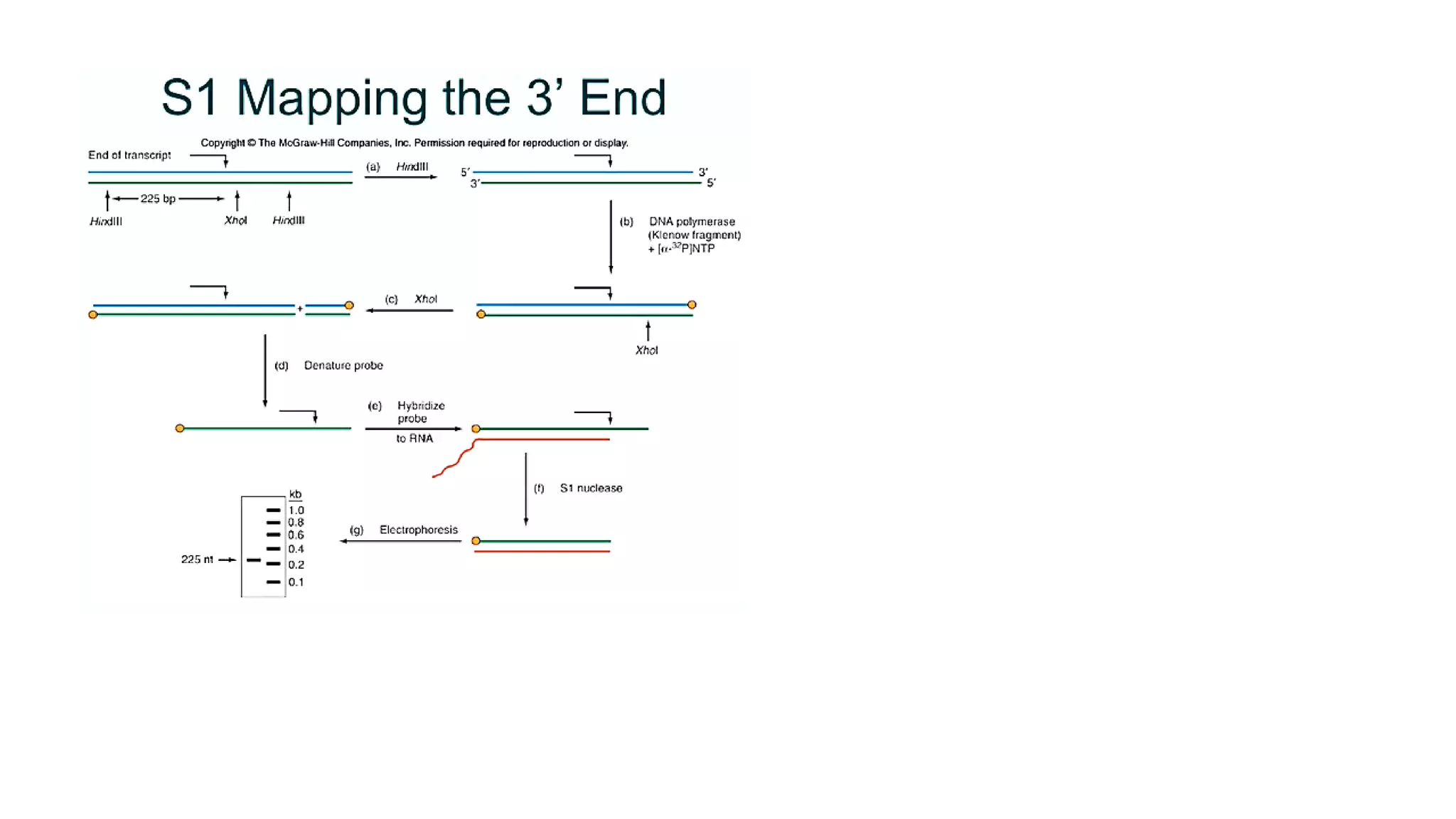
• S1 mapping of 5’ and 3’ end transcripts
• Primer extension
• Runoff transcription and G –less cassette transcription
• Nuclear Runon transcription
Reference: Molecular Biology by Robert Weaver
Mapping and Quantifying Transcripts
Mapping (locating start and end) and quantifying (how
much transcript exists at a set time) are common
procedures
Often transcripts do not have a uniform terminator,
resulting in a continuum of species smeared on a gel
Techniques that specific for the sequence of interest are
important
Northern Blots You have cloned a cDNA:
1. How actively is the corresponding gene expressed in
different tissues?
2. Find out using a Northern Blot
3. Obtain RNA from different tissues
4. Run RNA on agarose gel and blot to membrane
5. Hybridize to a labeled cDNA probe
6. Northern plot tells abundance of the transcript
7. Quantify using densitometer
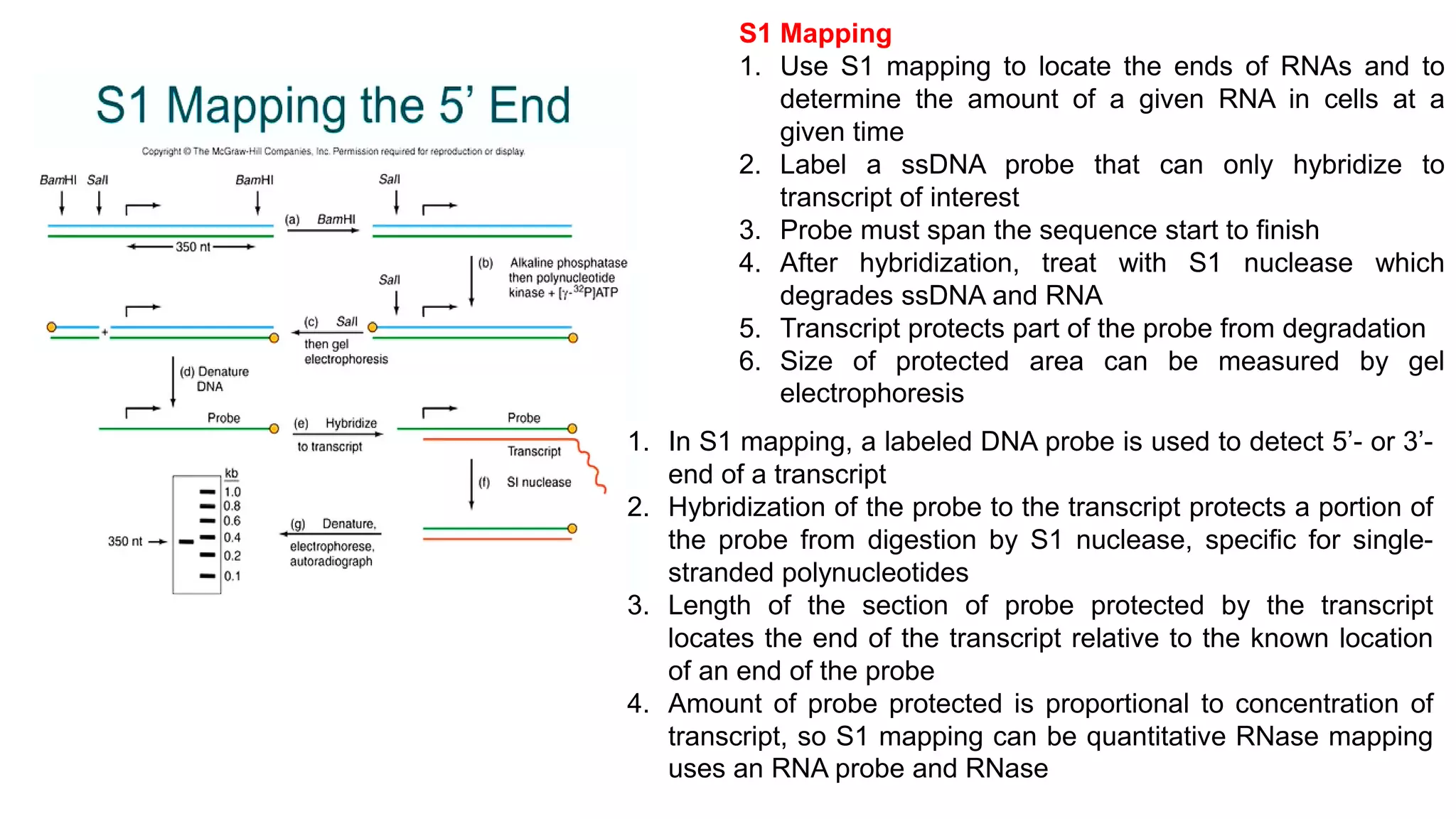
S1 Mapping
1. Use S1 mapping to locate the ends of RNAs and to
determine the amount of a given RNA in cells at a
given time
2. Label a ssDNA probe that can only hybridize to
transcript of interest
3. Probe must span the sequence start to finish
4. After hybridization, treat with S1 nuclease which
degrades ssDNA and RNA
5. Transcript protects part of the probe from degradation
6. Size of protected area can be measured by gel
electrophoresis
1. In S1 mapping, a labeled DNA probe is used to detect 5’- or 3’-
end of a transcript
2. Hybridization of the probe to the transcript protects a portion of
the probe from digestion by S1 nuclease, specific for single-
stranded polynucleotides
3. Length of the section of probe protected by the transcript
locates the end of the transcript relative to the known location
of an end of the probe
4. Amount of probe protected is proportional to concentration of
transcript, so S1 mapping can be quantitative RNase mapping
uses an RNA probe and RNase
Primer Extension
• Primer extension works to determine exactly the 5’-end
of a transcript to one-nucleotide accuracy
• Specificity of this method is due to complementarity
between primer and transcriptS1 mapping will give
similar results but limits:S1 will “nibble” ends of RNA-
DNA hybrid Also can “nibble” A-T rich regions that have
melted Might not completely digest single-stranded
regions
Primer Extension Schematic:
1. Start with in vivo transcription, harvest cellular RNA
containing desired transcript Hybridize labeled
oligonucleotide [18nt] (primer)
2. Reverse transcriptase extends the primer to the 5’-end
of transcript
3. Denature the RNA-DNA hybrid and run the mix on a
high-resolution DNA gel
4. Can estimate transcript concentration also
Run-Off Transcription and G-Less Cassette
Transcription
If want to assess:
1. Transcription accuracy
2. How much of this accurate transcription Simpler
method is run-off transcription
3. Can be used after the physiological start site is found
by S1 mapping or primer extension Useful to see
effects of promoter mutation on accuracy and
efficiency of transcription
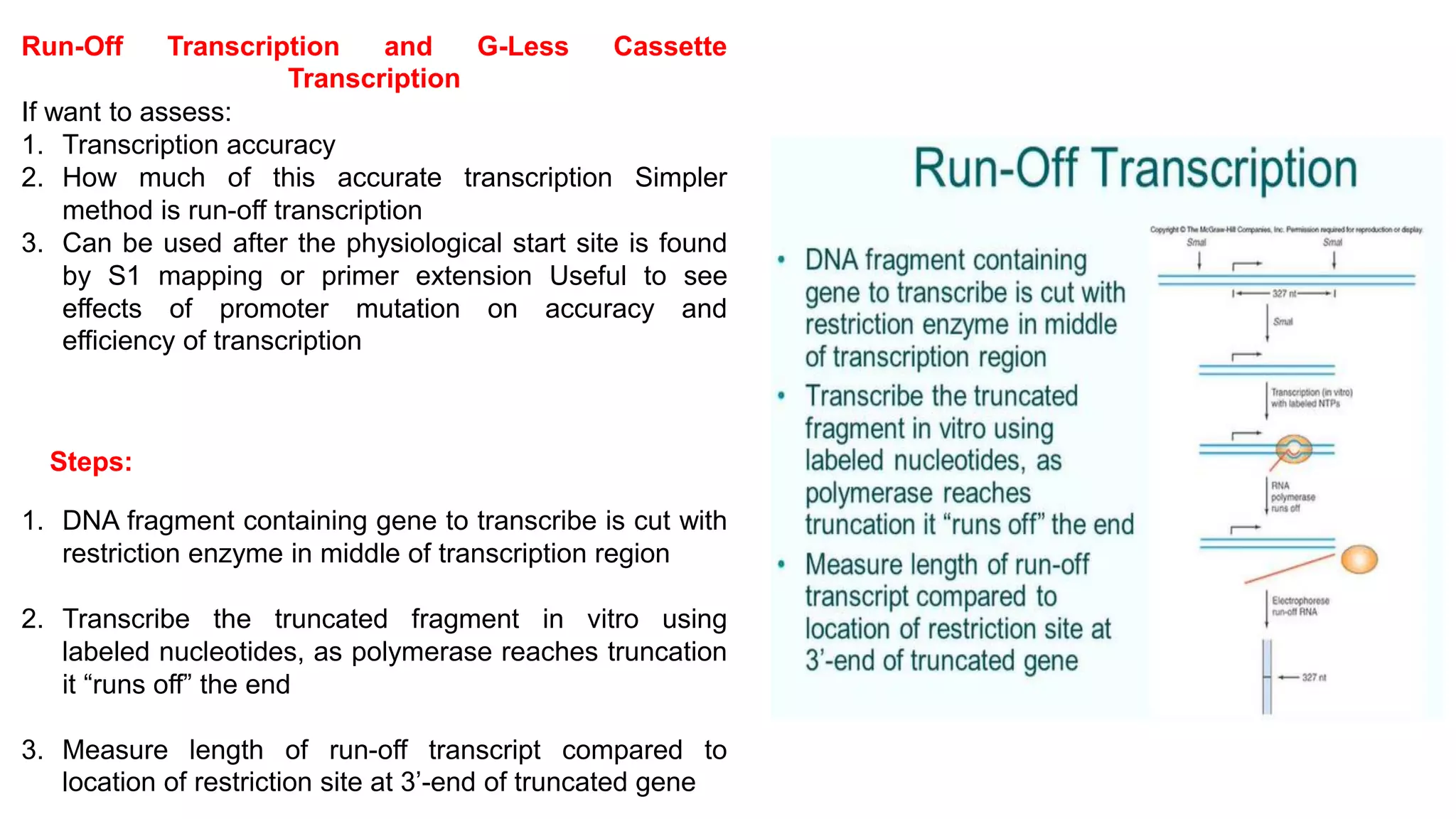
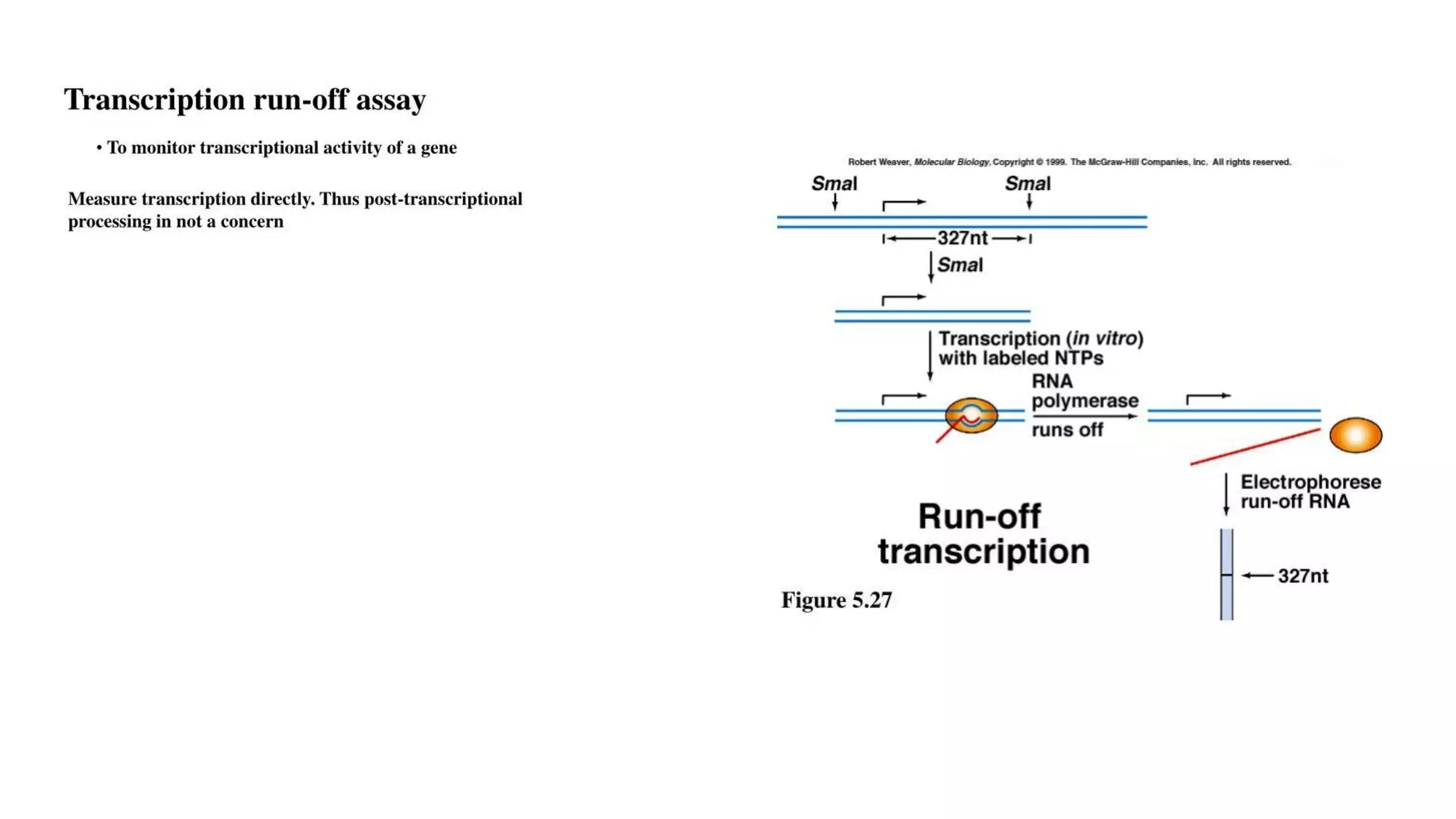
1. DNA fragment containing gene to transcribe is cut with
restriction enzyme in middle of transcription region
2. Transcribe the truncated fragment in vitro using
labeled nucleotides, as polymerase reaches truncation
it “runs off” the end
3. Measure length of run-off transcript compared to
location of restriction site at 3’-end of truncated gene
Steps:
Runoff Transcription
A runoff transcription is a useful in-vitro analysis of the transcription
site. The outputs of this assay are the position of the transition
starting site and the promoter regions. It can also be used to
measure the effect the modification in promoter position on in-vitro
transcription. Since it is in vitro assay it is limited to not find cell-
specific genetic expression.
A brief procedure for performing the run-off transcription is
generalized below:
1) First, a gene of interest (including promoter) is cloned into a
plasmid.
2) Digestion of the plasmid is carried out. It is done in the
downstream direction the transcription site, which we have inserted.
From this cut sequences, the desired mRNA can be separated in the
steps to follow.
3) Before running the assay the DNA is purified.
4) RNA polymerase, radiolabeled UTP, and other nucleotides are
added and incubated with the linearized DNA. This starts the
transcription process. The transcription runs the full length of the
DNA producing the mRNA fragment of the desired length.
5) Gel electrophoresis is used to separate this mRNA fragment. The
separation is aided alongside by size standards and autoradiography.
The standard size gives the size of the mRNA fragment and the
intensity gives the amount of mRNA produced.
Analysis of In Vitro Transcription by Primer Extension
and by Run-Off Assay
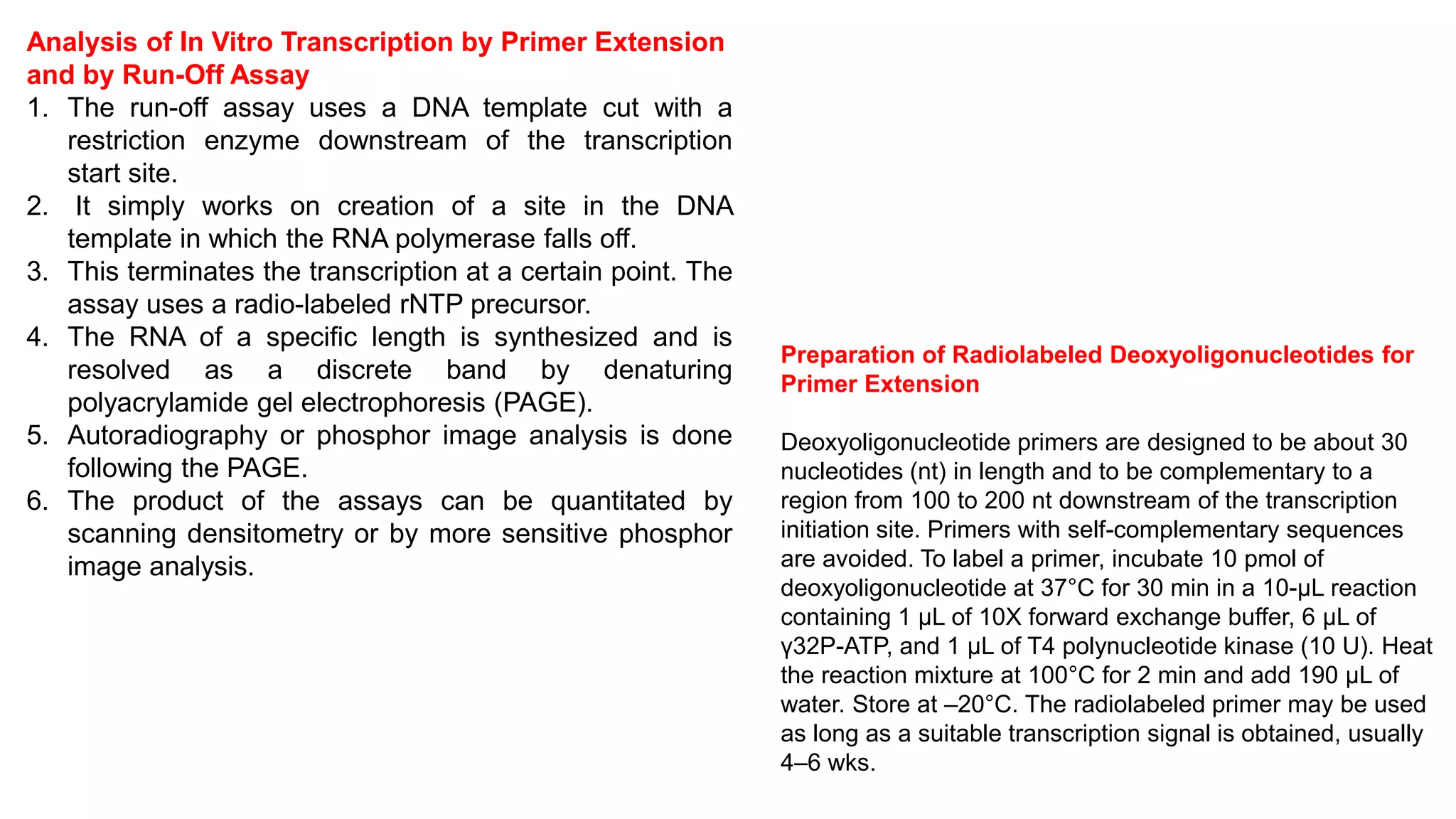
1. The run-off assay uses a DNA template cut with a
restriction enzyme downstream of the transcription
start site.
2. It simply works on creation of a site in the DNA
template in which the RNA polymerase falls off.
3. This terminates the transcription at a certain point. The
assay uses a radio-labeled rNTP precursor.
4. The RNA of a specific length is synthesized and is
resolved as a discrete band by denaturing
polyacrylamide gel electrophoresis (PAGE).
5. Autoradiography or phosphor image analysis is done
following the PAGE.
6. The product of the assays can be quantitated by
scanning densitometry or by more sensitive phosphor
image analysis.
Preparation of Radiolabeled Deoxyoligonucleotides for
Primer Extension
Deoxyoligonucleotide primers are designed to be about 30
nucleotides (nt) in length and to be complementary to a
region from 100 to 200 nt downstream of the transcription
initiation site. Primers with self-complementary sequences
are avoided. To label a primer, incubate 10 pmol of
deoxyoligonucleotide at 37°C for 30 min in a 10-μL reaction
containing 1 μL of 10X forward exchange buffer, 6 μL of
γ32P-ATP, and 1 μL of T4 polynucleotide kinase (10 U). Heat
the reaction mixture at 100°C for 2 min and add 190 μL of
water. Store at –20°C. The radiolabeled primer may be used
as long as a suitable transcription signal is obtained, usually
4–6 wks.
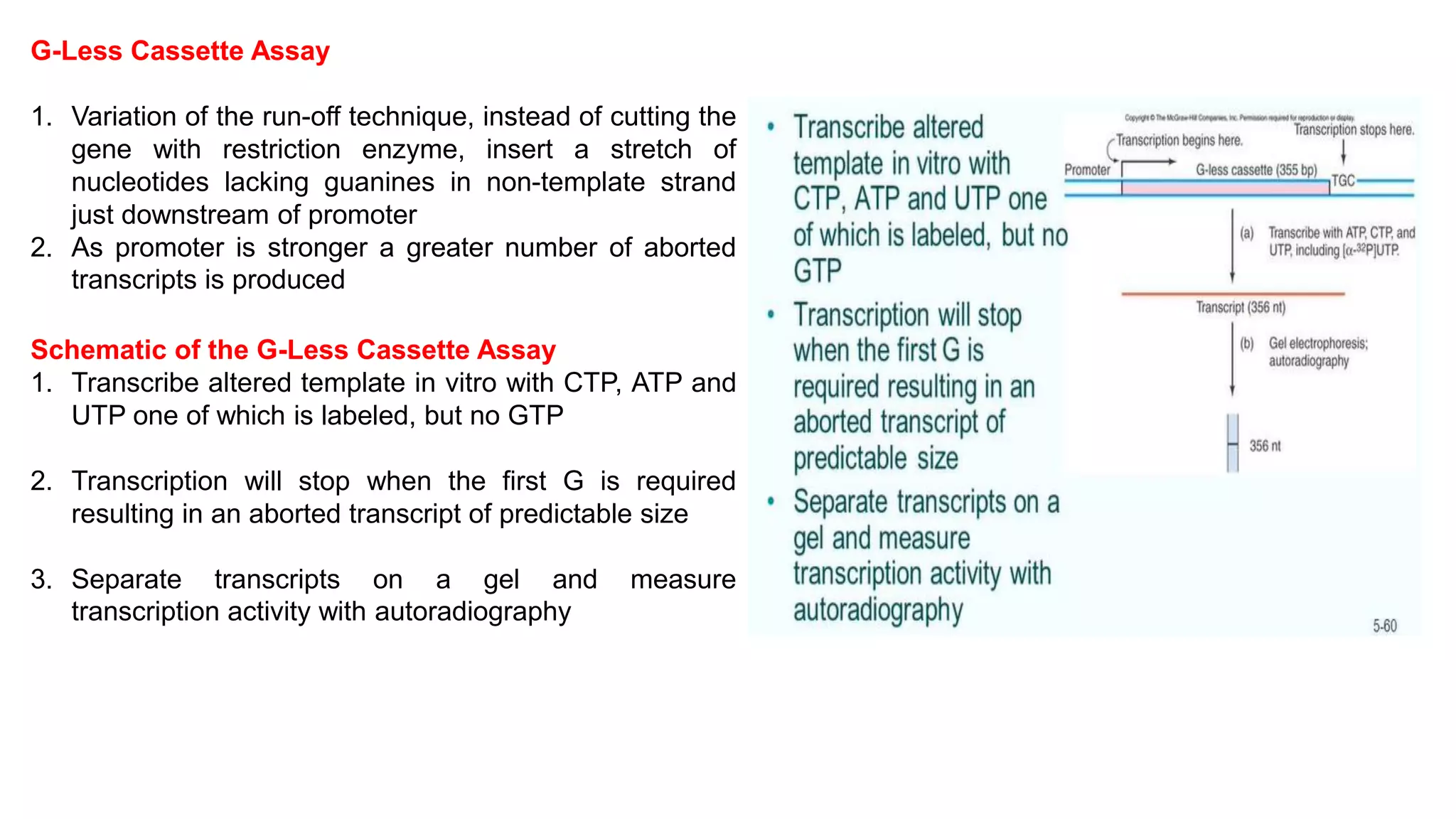
G-Less Cassette Assay
1. Variation of the run-off technique, instead of cutting the
gene with restriction enzyme, insert a stretch of
nucleotides lacking guanines in non-template strand
just downstream of promoter
2. As promoter is stronger a greater number of aborted
transcripts is produced
Schematic of the G-Less Cassette Assay
1. Transcribe altered template in vitro with CTP, ATP and
UTP one of which is labeled, but no GTP
2. Transcription will stop when the first G is required
resulting in an aborted transcript of predictable size
3. Separate transcripts on a gel and measure
transcription activity with autoradiography
Summary
1. Run-off transcription is a means of checking efficiency
and accuracy of in vitro transcription
2. Gene is truncated in the middle and transcribed in vitro
in presence of labeled nucleotides
3. RNA polymerase runs off the end making an
incomplete transcript
4. Size of run-off transcript locates transcription start site
5. Amount of transcript reflects efficiency of transcription
6. In G-less cassette transcription, a promoter is fused to
dsDNA cassette lacking Gs in non template strand
7. Construct is transcribed in vitro in absence of GTP
8. Transcription aborts at end of cassette for a
predictable size band on a gel
Measuring Transcription Rates in Vivo
1. Primer extension, S1 mapping and Northern blotting
will determine the concentration of specific transcripts
at a given time
2. These techniques do not really reveal the rate of
transcript synthesis as concentration involves both:
Transcript synthesis and Transcript degradation
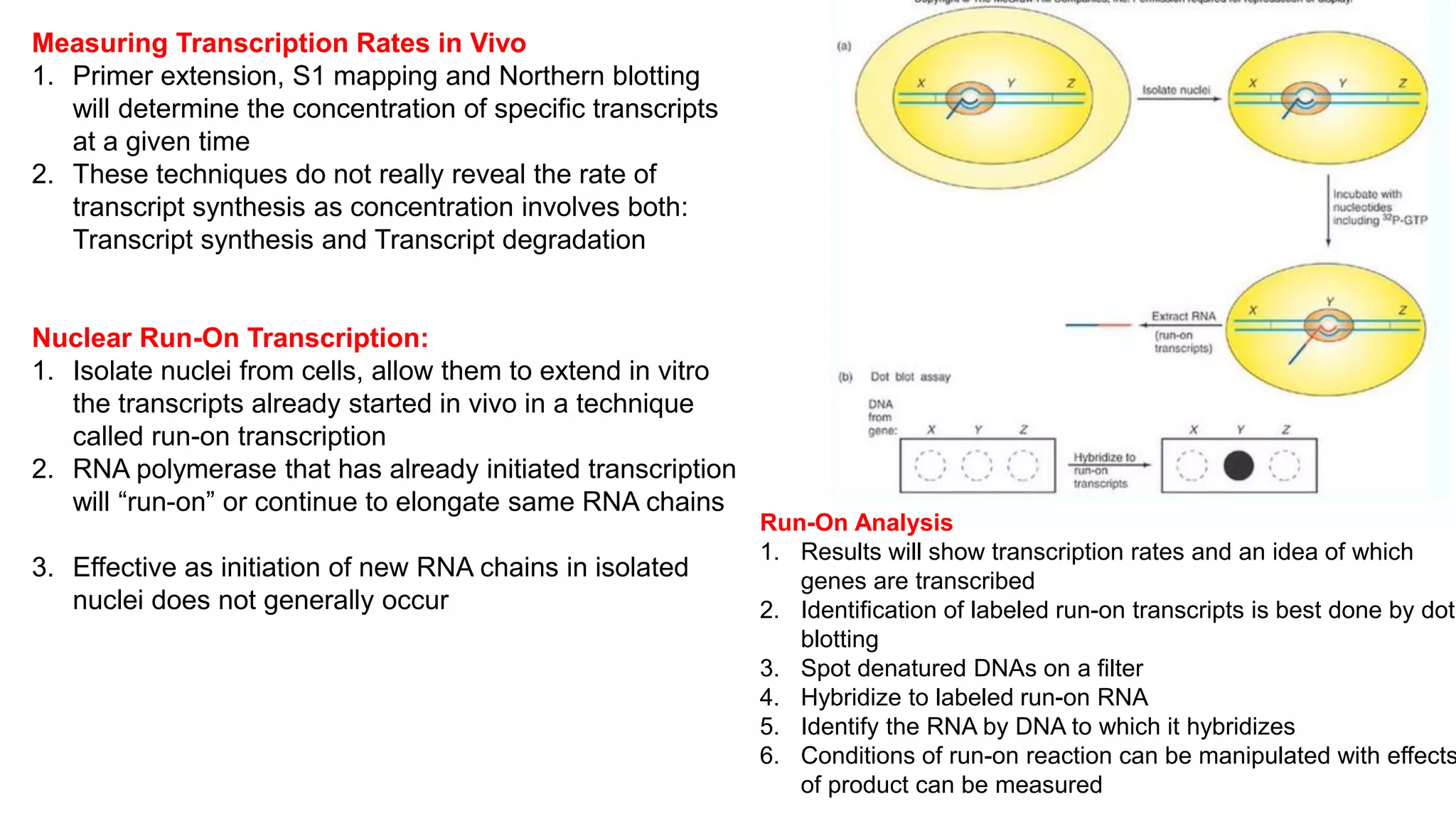
Nuclear Run-On Transcription:
1. Isolate nuclei from cells, allow them to extend in vitro
the transcripts already started in vivo in a technique
called run-on transcription
2. RNA polymerase that has already initiated transcription
will “run-on” or continue to elongate same RNA chains
3. Effective as initiation of new RNA chains in isolated
nuclei does not generally occur
Run-On Analysis
1. Results will show transcription rates and an idea of which
genes are transcribed
2. Identification of labeled run-on transcripts is best done by dot
blotting
3. Spot denatured DNAs on a filter
4. Hybridize to labeled run-on RNA
5. Identify the RNA by DNA to which it hybridizes
6. Conditions of run-on reaction can be manipulated with effects
of product can be measured
Measuring Protein Accumulation in Vivo
Gene activity can be monitored by measuring the
accumulation of protein (the ultimate gene product)
Two primary methods of measuring protein
accumulation
1. Immunoblotting / Western blotting
2. Immunoprecipitation
i. Label proteins by growing cells with 35S-labeled amino
acid
ii. Bind protein of interest to an antibody
iii. Precipitate the protein-antibody complex with a
secondary antibody complexed to Protein A on resin
beads using a low-speed centrifuge
iv. Determine protein level with liquid scintillation
counting

Mapping and quantifying transcripts.pdf

  • 1.
    K. Narayanapura, Kothanur(PO), Bengaluru 560077 Tel+91 80 – 68737777 / 28465770 /28465353 Fax. 080- 68737799 e-mail:info@kristujayanti.com, www.kristujayanti.edu.in Mapping and quantifying transcripts Dr. Manikandan Kathirvel Assistant Professor, Department of Life Sciences, Kristu Jayanti College (Autonomous), Bengaluru
  • 2.
    Mapping and quantifyingtranscripts: • Northern blots • S1 mapping of 5’ and 3’ end transcripts • Primer extension • Runoff transcription and G –less cassette transcription • Nuclear Runon transcription Reference: Molecular Biology by Robert Weaver
  • 3.
    Mapping and QuantifyingTranscripts Mapping (locating start and end) and quantifying (how much transcript exists at a set time) are common procedures Often transcripts do not have a uniform terminator, resulting in a continuum of species smeared on a gel Techniques that specific for the sequence of interest are important Northern Blots You have cloned a cDNA: 1. How actively is the corresponding gene expressed in different tissues? 2. Find out using a Northern Blot 3. Obtain RNA from different tissues 4. Run RNA on agarose gel and blot to membrane 5. Hybridize to a labeled cDNA probe 6. Northern plot tells abundance of the transcript 7. Quantify using densitometer
  • 4.
    S1 Mapping 1. UseS1 mapping to locate the ends of RNAs and to determine the amount of a given RNA in cells at a given time 2. Label a ssDNA probe that can only hybridize to transcript of interest 3. Probe must span the sequence start to finish 4. After hybridization, treat with S1 nuclease which degrades ssDNA and RNA 5. Transcript protects part of the probe from degradation 6. Size of protected area can be measured by gel electrophoresis 1. In S1 mapping, a labeled DNA probe is used to detect 5’- or 3’- end of a transcript 2. Hybridization of the probe to the transcript protects a portion of the probe from digestion by S1 nuclease, specific for single- stranded polynucleotides 3. Length of the section of probe protected by the transcript locates the end of the transcript relative to the known location of an end of the probe 4. Amount of probe protected is proportional to concentration of transcript, so S1 mapping can be quantitative RNase mapping uses an RNA probe and RNase
  • 6.
    Primer Extension • Primerextension works to determine exactly the 5’-end of a transcript to one-nucleotide accuracy • Specificity of this method is due to complementarity between primer and transcriptS1 mapping will give similar results but limits:S1 will “nibble” ends of RNA- DNA hybrid Also can “nibble” A-T rich regions that have melted Might not completely digest single-stranded regions Primer Extension Schematic: 1. Start with in vivo transcription, harvest cellular RNA containing desired transcript Hybridize labeled oligonucleotide [18nt] (primer) 2. Reverse transcriptase extends the primer to the 5’-end of transcript 3. Denature the RNA-DNA hybrid and run the mix on a high-resolution DNA gel 4. Can estimate transcript concentration also
  • 7.
    Run-Off Transcription andG-Less Cassette Transcription If want to assess: 1. Transcription accuracy 2. How much of this accurate transcription Simpler method is run-off transcription 3. Can be used after the physiological start site is found by S1 mapping or primer extension Useful to see effects of promoter mutation on accuracy and efficiency of transcription 1. DNA fragment containing gene to transcribe is cut with restriction enzyme in middle of transcription region 2. Transcribe the truncated fragment in vitro using labeled nucleotides, as polymerase reaches truncation it “runs off” the end 3. Measure length of run-off transcript compared to location of restriction site at 3’-end of truncated gene Steps:
  • 8.
    Runoff Transcription A runofftranscription is a useful in-vitro analysis of the transcription site. The outputs of this assay are the position of the transition starting site and the promoter regions. It can also be used to measure the effect the modification in promoter position on in-vitro transcription. Since it is in vitro assay it is limited to not find cell- specific genetic expression. A brief procedure for performing the run-off transcription is generalized below: 1) First, a gene of interest (including promoter) is cloned into a plasmid. 2) Digestion of the plasmid is carried out. It is done in the downstream direction the transcription site, which we have inserted. From this cut sequences, the desired mRNA can be separated in the steps to follow. 3) Before running the assay the DNA is purified. 4) RNA polymerase, radiolabeled UTP, and other nucleotides are added and incubated with the linearized DNA. This starts the transcription process. The transcription runs the full length of the DNA producing the mRNA fragment of the desired length. 5) Gel electrophoresis is used to separate this mRNA fragment. The separation is aided alongside by size standards and autoradiography. The standard size gives the size of the mRNA fragment and the intensity gives the amount of mRNA produced.
  • 9.
    Analysis of InVitro Transcription by Primer Extension and by Run-Off Assay 1. The run-off assay uses a DNA template cut with a restriction enzyme downstream of the transcription start site. 2. It simply works on creation of a site in the DNA template in which the RNA polymerase falls off. 3. This terminates the transcription at a certain point. The assay uses a radio-labeled rNTP precursor. 4. The RNA of a specific length is synthesized and is resolved as a discrete band by denaturing polyacrylamide gel electrophoresis (PAGE). 5. Autoradiography or phosphor image analysis is done following the PAGE. 6. The product of the assays can be quantitated by scanning densitometry or by more sensitive phosphor image analysis. Preparation of Radiolabeled Deoxyoligonucleotides for Primer Extension Deoxyoligonucleotide primers are designed to be about 30 nucleotides (nt) in length and to be complementary to a region from 100 to 200 nt downstream of the transcription initiation site. Primers with self-complementary sequences are avoided. To label a primer, incubate 10 pmol of deoxyoligonucleotide at 37°C for 30 min in a 10-μL reaction containing 1 μL of 10X forward exchange buffer, 6 μL of γ32P-ATP, and 1 μL of T4 polynucleotide kinase (10 U). Heat the reaction mixture at 100°C for 2 min and add 190 μL of water. Store at –20°C. The radiolabeled primer may be used as long as a suitable transcription signal is obtained, usually 4–6 wks.
  • 11.
    G-Less Cassette Assay 1.Variation of the run-off technique, instead of cutting the gene with restriction enzyme, insert a stretch of nucleotides lacking guanines in non-template strand just downstream of promoter 2. As promoter is stronger a greater number of aborted transcripts is produced Schematic of the G-Less Cassette Assay 1. Transcribe altered template in vitro with CTP, ATP and UTP one of which is labeled, but no GTP 2. Transcription will stop when the first G is required resulting in an aborted transcript of predictable size 3. Separate transcripts on a gel and measure transcription activity with autoradiography
  • 12.
    Summary 1. Run-off transcriptionis a means of checking efficiency and accuracy of in vitro transcription 2. Gene is truncated in the middle and transcribed in vitro in presence of labeled nucleotides 3. RNA polymerase runs off the end making an incomplete transcript 4. Size of run-off transcript locates transcription start site 5. Amount of transcript reflects efficiency of transcription 6. In G-less cassette transcription, a promoter is fused to dsDNA cassette lacking Gs in non template strand 7. Construct is transcribed in vitro in absence of GTP 8. Transcription aborts at end of cassette for a predictable size band on a gel
  • 13.
    Measuring Transcription Ratesin Vivo 1. Primer extension, S1 mapping and Northern blotting will determine the concentration of specific transcripts at a given time 2. These techniques do not really reveal the rate of transcript synthesis as concentration involves both: Transcript synthesis and Transcript degradation Nuclear Run-On Transcription: 1. Isolate nuclei from cells, allow them to extend in vitro the transcripts already started in vivo in a technique called run-on transcription 2. RNA polymerase that has already initiated transcription will “run-on” or continue to elongate same RNA chains 3. Effective as initiation of new RNA chains in isolated nuclei does not generally occur Run-On Analysis 1. Results will show transcription rates and an idea of which genes are transcribed 2. Identification of labeled run-on transcripts is best done by dot blotting 3. Spot denatured DNAs on a filter 4. Hybridize to labeled run-on RNA 5. Identify the RNA by DNA to which it hybridizes 6. Conditions of run-on reaction can be manipulated with effects of product can be measured
  • 14.
    Measuring Protein Accumulationin Vivo Gene activity can be monitored by measuring the accumulation of protein (the ultimate gene product) Two primary methods of measuring protein accumulation 1. Immunoblotting / Western blotting 2. Immunoprecipitation i. Label proteins by growing cells with 35S-labeled amino acid ii. Bind protein of interest to an antibody iii. Precipitate the protein-antibody complex with a secondary antibody complexed to Protein A on resin beads using a low-speed centrifuge iv. Determine protein level with liquid scintillation counting