GLANDERS (Zoonotic Disease)
Outbreak in Nepal
Dr. Manoj karki
B.V.Sc.&A.H. (2019)
M.V.Sc Microbiology pursuing
Synonyms: Farcy; Malleus
Organization by:
Animal Nepal, kailali
Supported by:
World Horse
Welfare
Introduction:
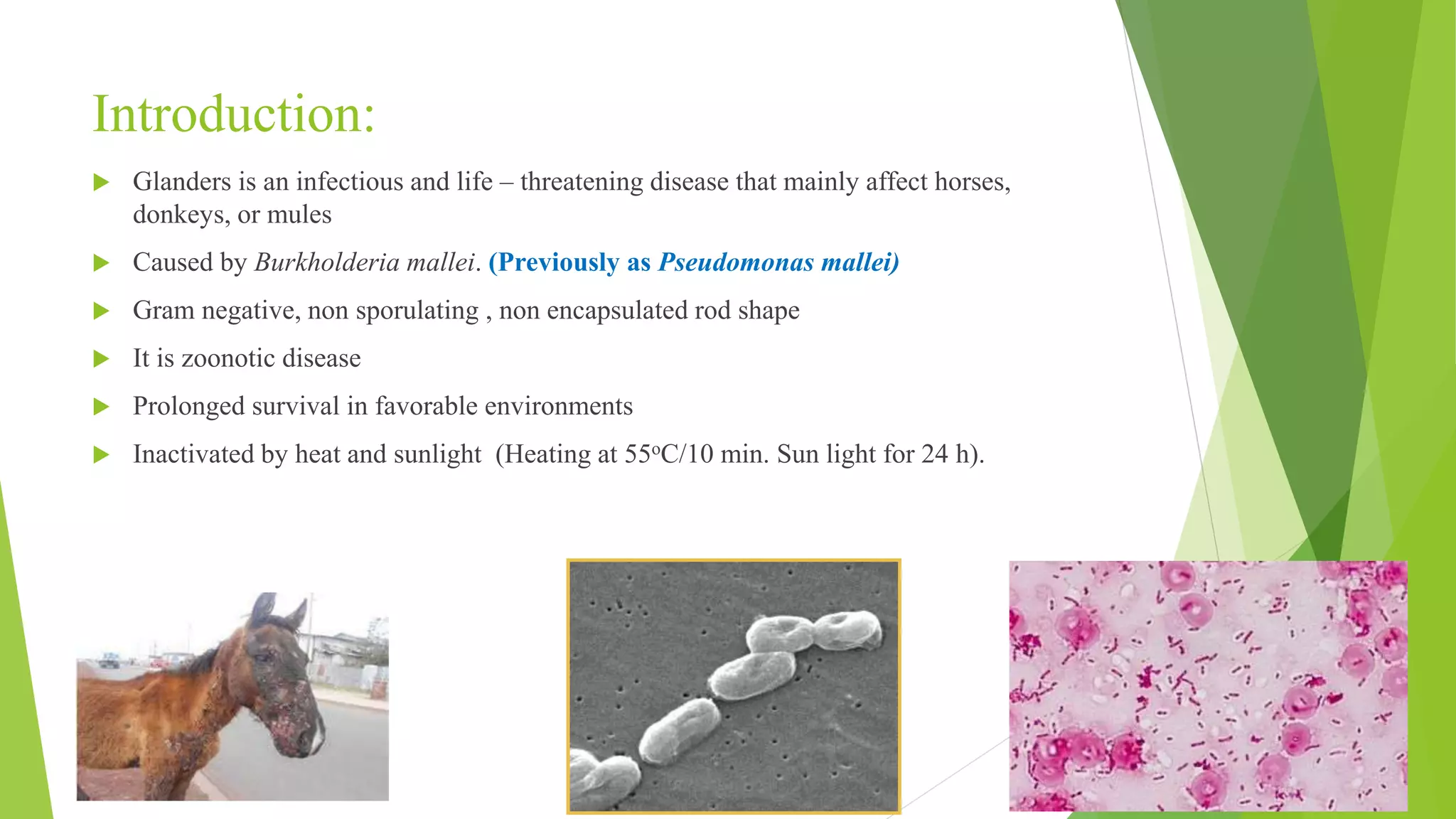
 Glanders is an infectious and life – threatening disease that mainly affect horses,
donkeys, or mules
 Caused by Burkholderia mallei. (Previously as Pseudomonas mallei)
 Gram negative, non sporulating , non encapsulated rod shape
 It is zoonotic disease
 Prolonged survival in favorable environments
 Inactivated by heat and sunlight (Heating at 55oC/10 min. Sun light for 24 h).
 Survivability:
 Contaminated environment- 6 weeks to months
 Viable in tap water for at least 1 months
 Polysaccharide capsule of bacterium is considered an important virulence
factor and enhances survival
History
 3rd Century BC
 Described by Aristotle
 World War I
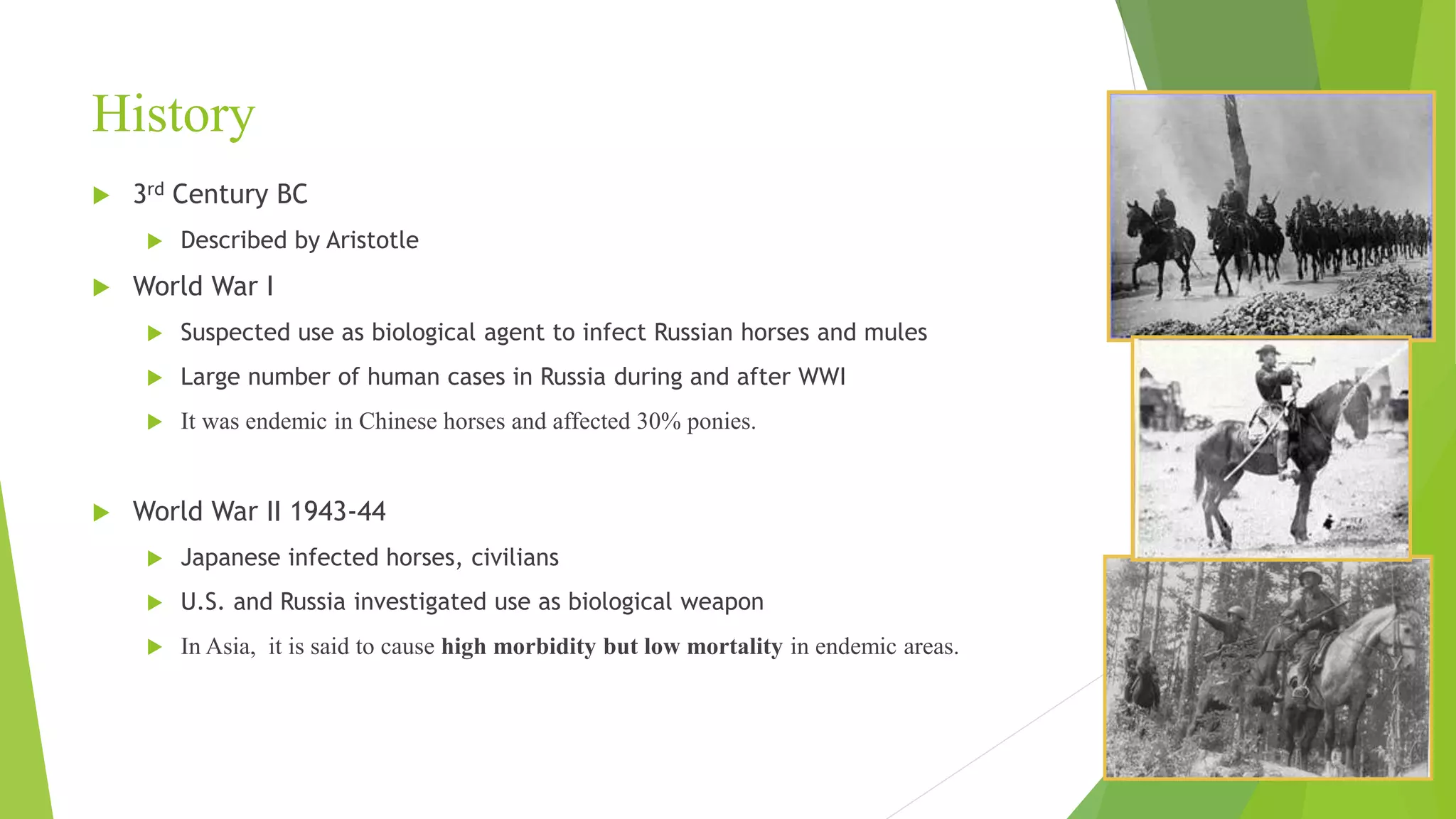
 Suspected use as biological agent to infect Russian horses and mules
 Large number of human cases in Russia during and after WWI
 It was endemic in Chinese horses and affected 30% ponies.
 World War II 1943-44
 Japanese infected horses, civilians
 U.S. and Russia investigated use as biological weapon
 In Asia, it is said to cause high morbidity but low mortality in endemic areas.
Geographical distribution:
 The disease has been eradicated in North America, Australia, and Europe.
 Glanders remain sporadically or endemic reported in a number of Asian, African,
middle eastern and south American,
 Dr. Sainbel - the first principal of London veterinary College in 1723 was one of the
first reported human cases of glanders.
 In India, information on human glanders is scanty despite many reported cases of
disease in equines.
Dr. S.H. Gaiger (1913-1916), a veterinary pathologist at Punjab Veterinary College,
Lahore who contracted the disease while autopsying an infected horse
 In April 2010, Bahrain notified the first occurrence of the disease. In brazil the disease
reappeared in 2009.
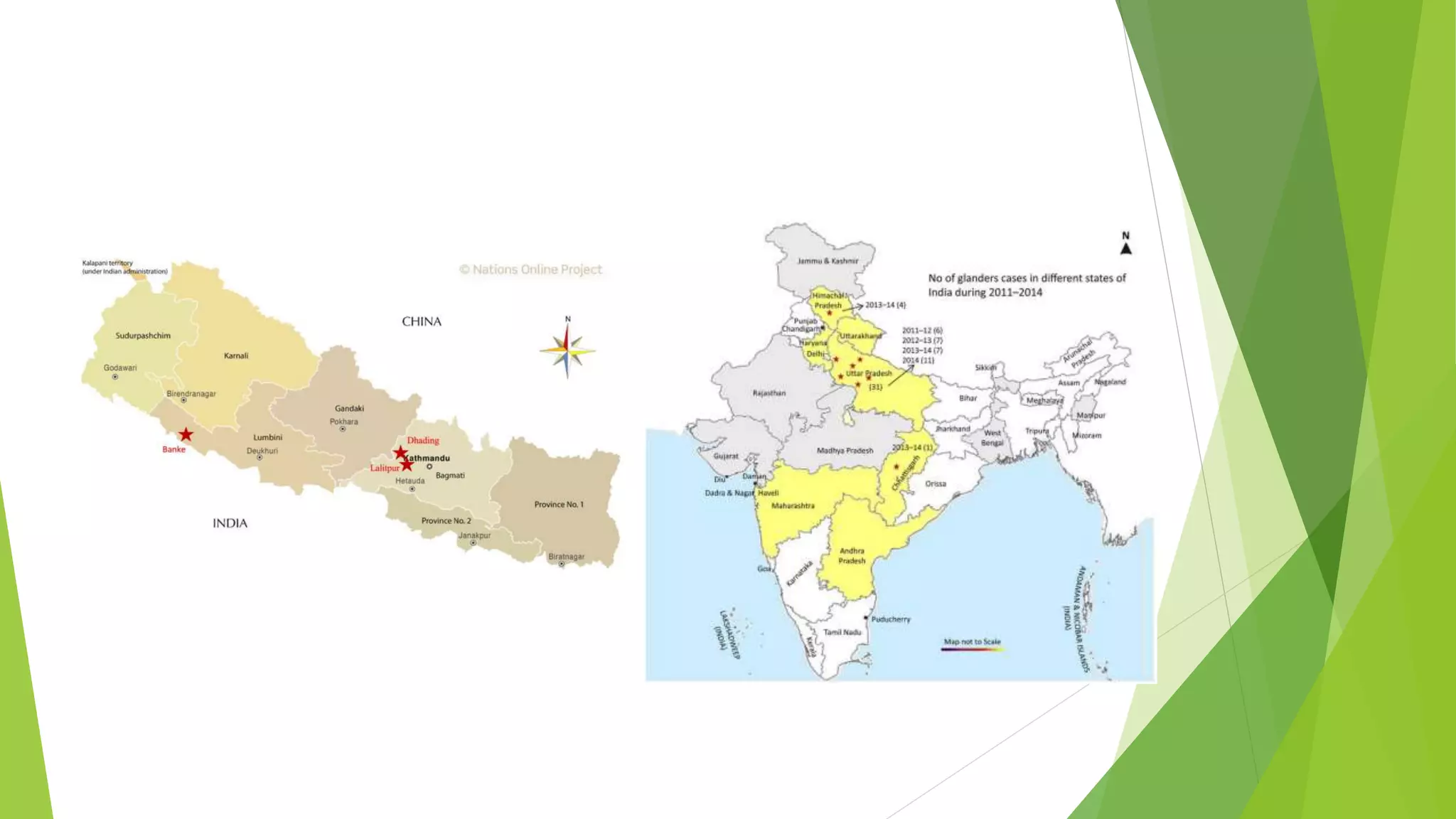
 In Nepal glanders first occurrence in 2020-11-17 (Animal Nepal)
Epidemiology:
 Source of event or origin of infection: illegal movement of animals
 Horses and mules working at brick kilns and tanga pullers have been found sick
 Susceptibility to glanders has also been demonstrated in camels, bear, wolves and dogs.
 Carniverous may become infected by eating infected meal
Quantitative data summery: Nepalgunj,
Lalitpur and kailali
 Species Susceptible Cases Death
Equidae 87 26 16
Outbreak: 2020-11-09 first time
1. Nepalgunj -5- MP school tole
2. Godawari, Lalitpur.
3. janaki 8, bhokshi, and janaki 7, makri, Kailali 15 samples were collected but not found due
to sample error (2020-11-12)
Disease category: OIE- listed
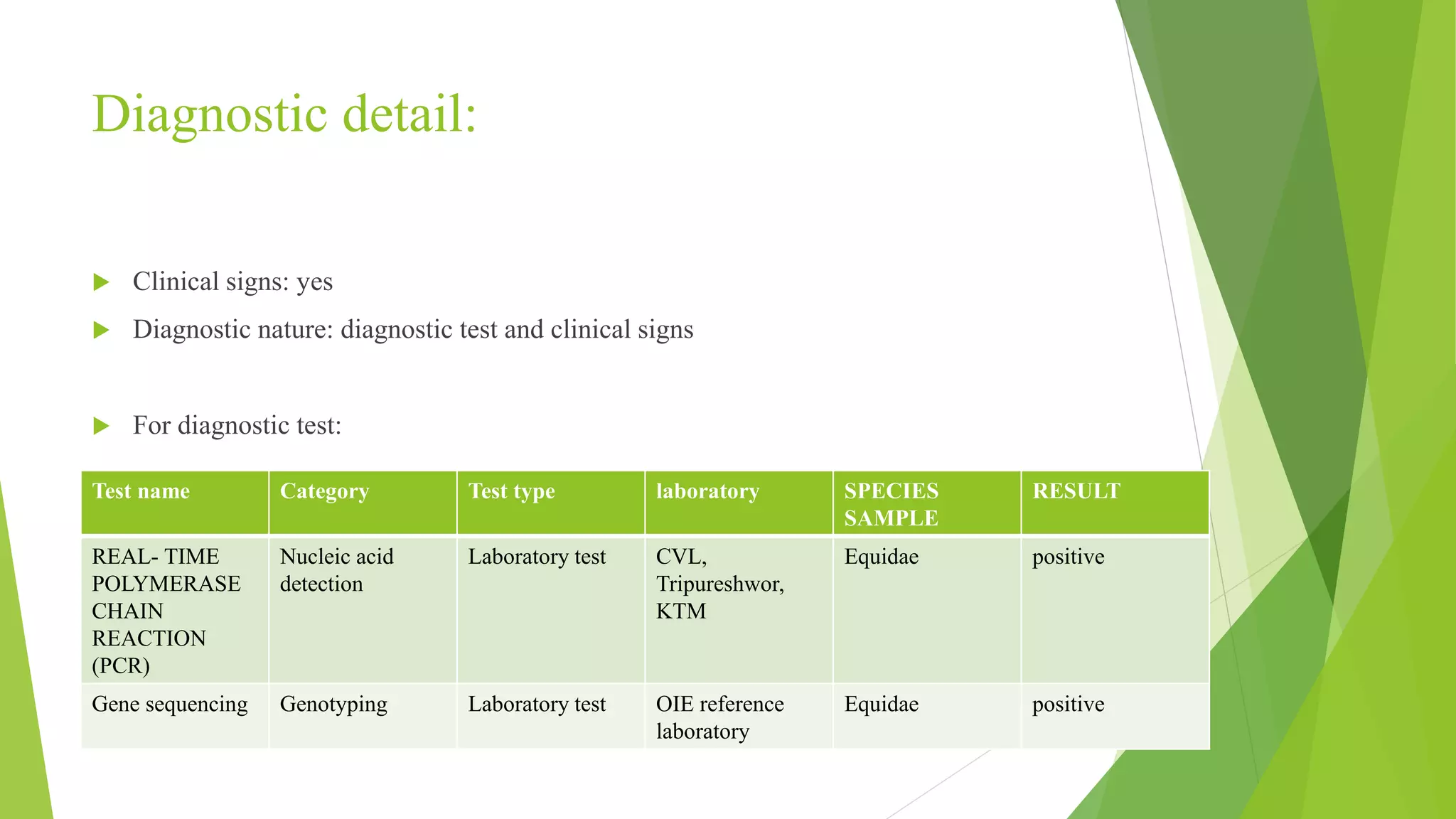
Diagnostic detail:
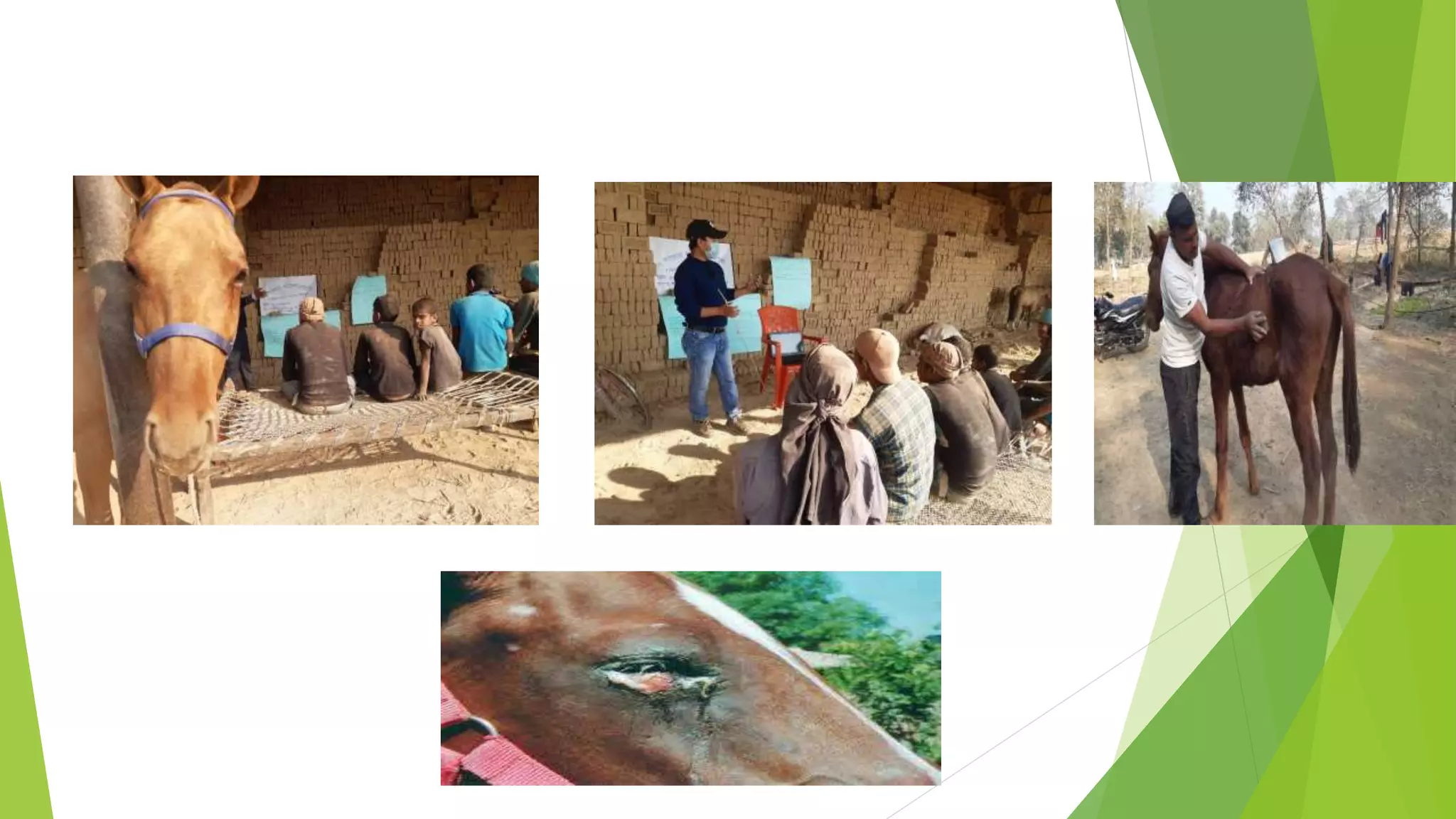
 Clinical signs: yes
 Diagnostic nature: diagnostic test and clinical signs
 For diagnostic test:
Test name Category Test type laboratory SPECIES
SAMPLE
RESULT
REAL- TIME
POLYMERASE
CHAIN
REACTION
(PCR)
Nucleic acid
detection
Laboratory test CVL,
Tripureshwor,
KTM
Equidae positive
Gene sequencing Genotyping Laboratory test OIE reference
laboratory
Equidae positive
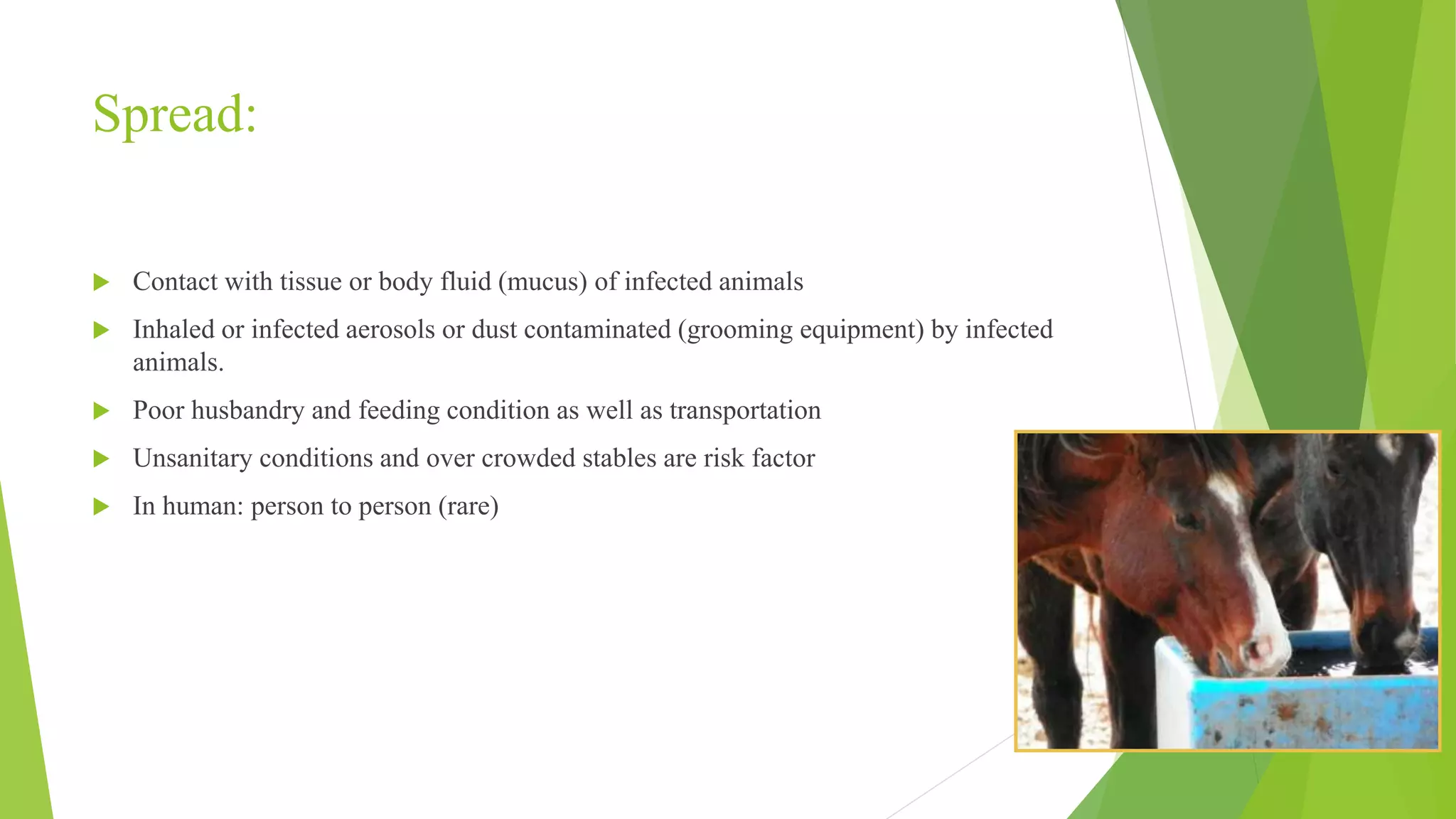
Spread:
 Contact with tissue or body fluid (mucus) of infected animals
 Inhaled or infected aerosols or dust contaminated (grooming equipment) by infected
animals.
 Poor husbandry and feeding condition as well as transportation
 Unsanitary conditions and over crowded stables are risk factor
 In human: person to person (rare)
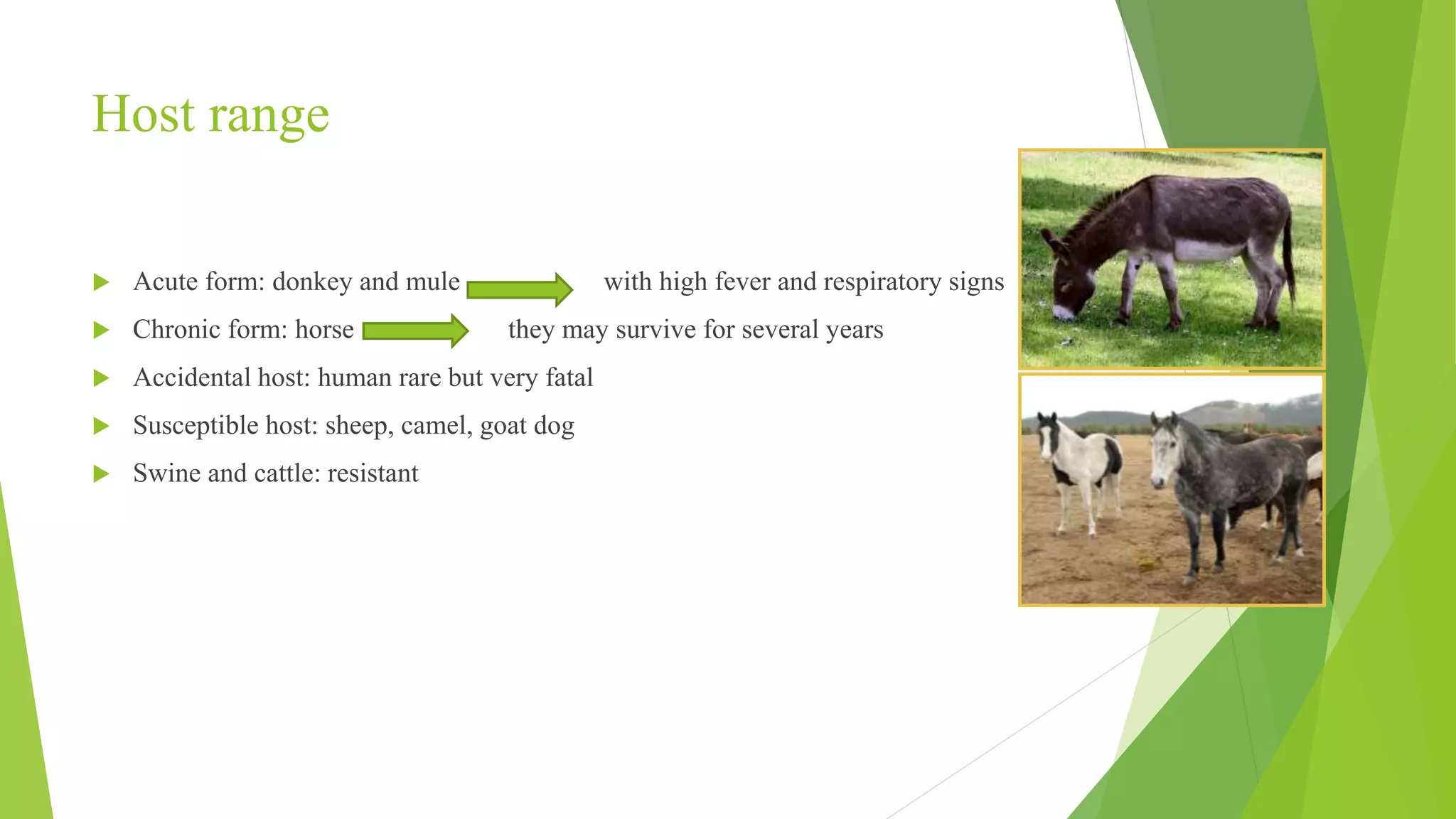
Host range
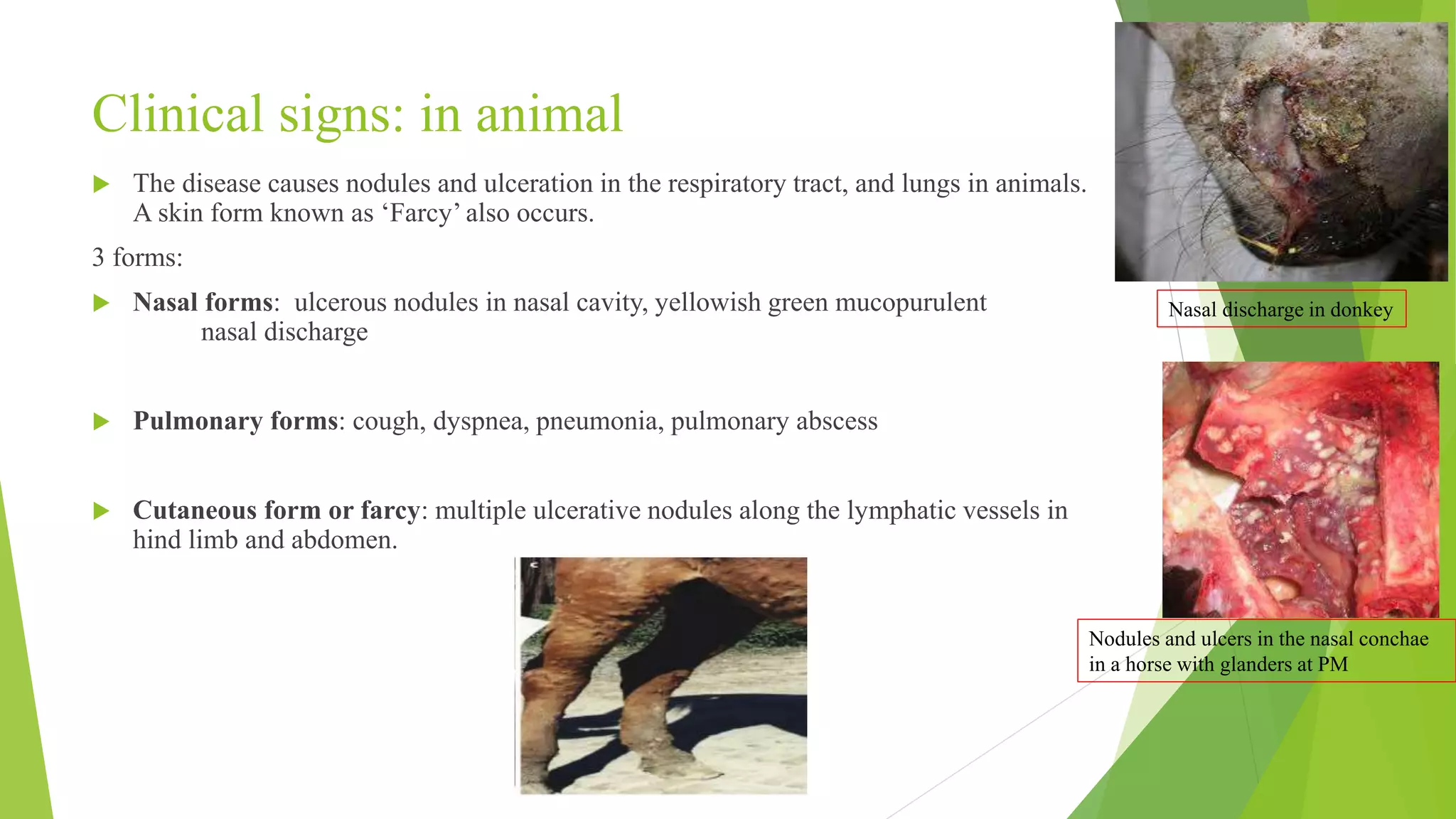
 Acute form: donkey and mule with high fever and respiratory signs
 Chronic form: horse they may survive for several years
 Accidental host: human rare but very fatal
 Susceptible host: sheep, camel, goat dog
 Swine and cattle: resistant
Public Health Risk
 No vaccine exist
 Life threatening zoonosis
 Animal with clinical disease, asymptomatically infected animals pose a risk to human
 In human the disease can take different forms such as Nasal, localized with nodules and
abscesses, pulmonary, septicemia with chronic infection. Incubation period-1-14 days
to month
 In human the untreated acute disease the mortality rate can reach 95 % within 3 weeks.
 A cure is possible, however if case are treated rapidly with antibiotics
 Transmission to human can be avoided by controlling the disease in animals, avoiding
contact with infected animals and by taking precautionary hygienic measures
Clinical signs: in animal
 The disease causes nodules and ulceration in the respiratory tract, and lungs in animals.
A skin form known as ‘Farcy’ also occurs.
3 forms:
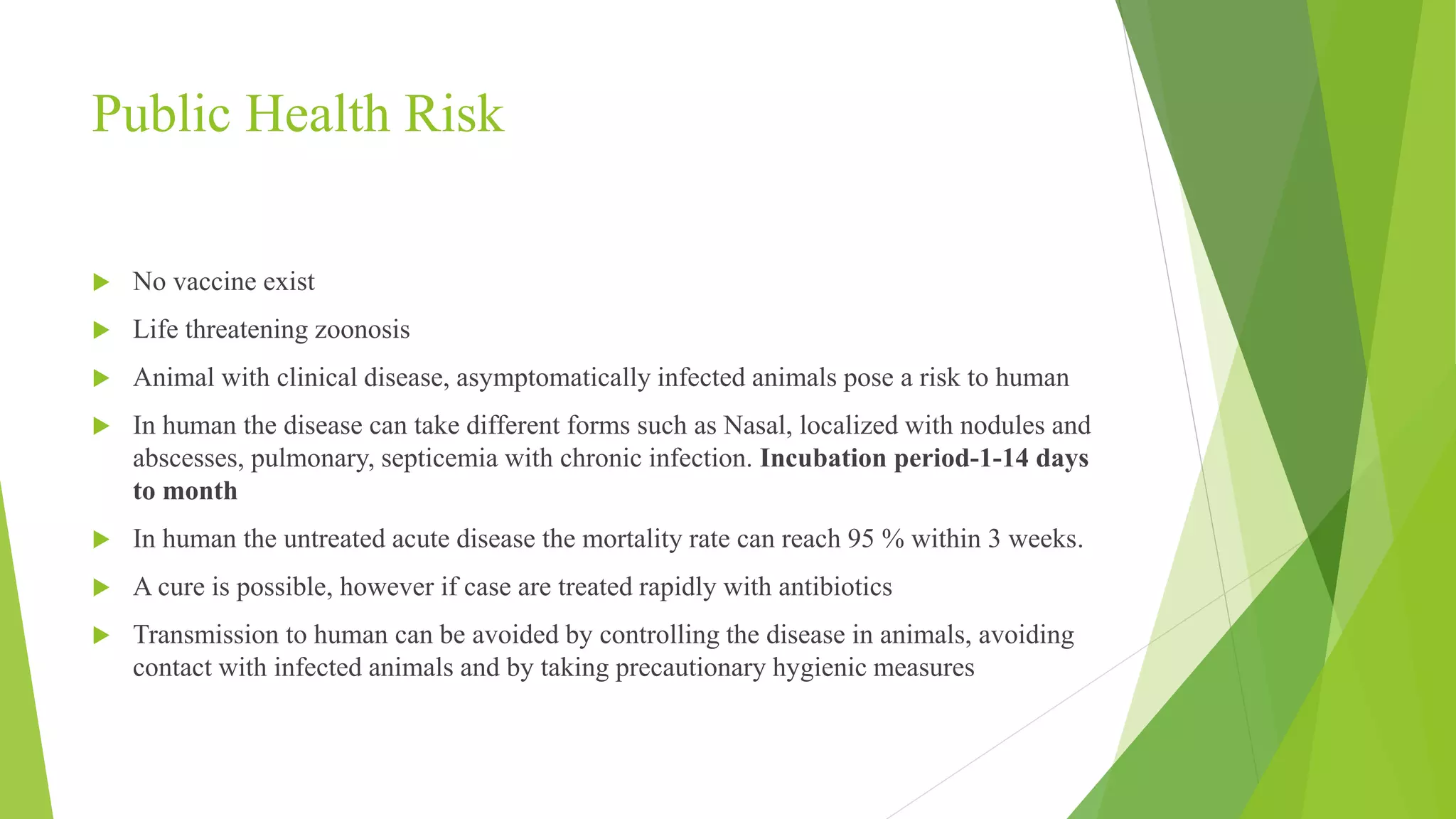
 Nasal forms: ulcerous nodules in nasal cavity, yellowish green mucopurulent
nasal discharge
 Pulmonary forms: cough, dyspnea, pneumonia, pulmonary abscess
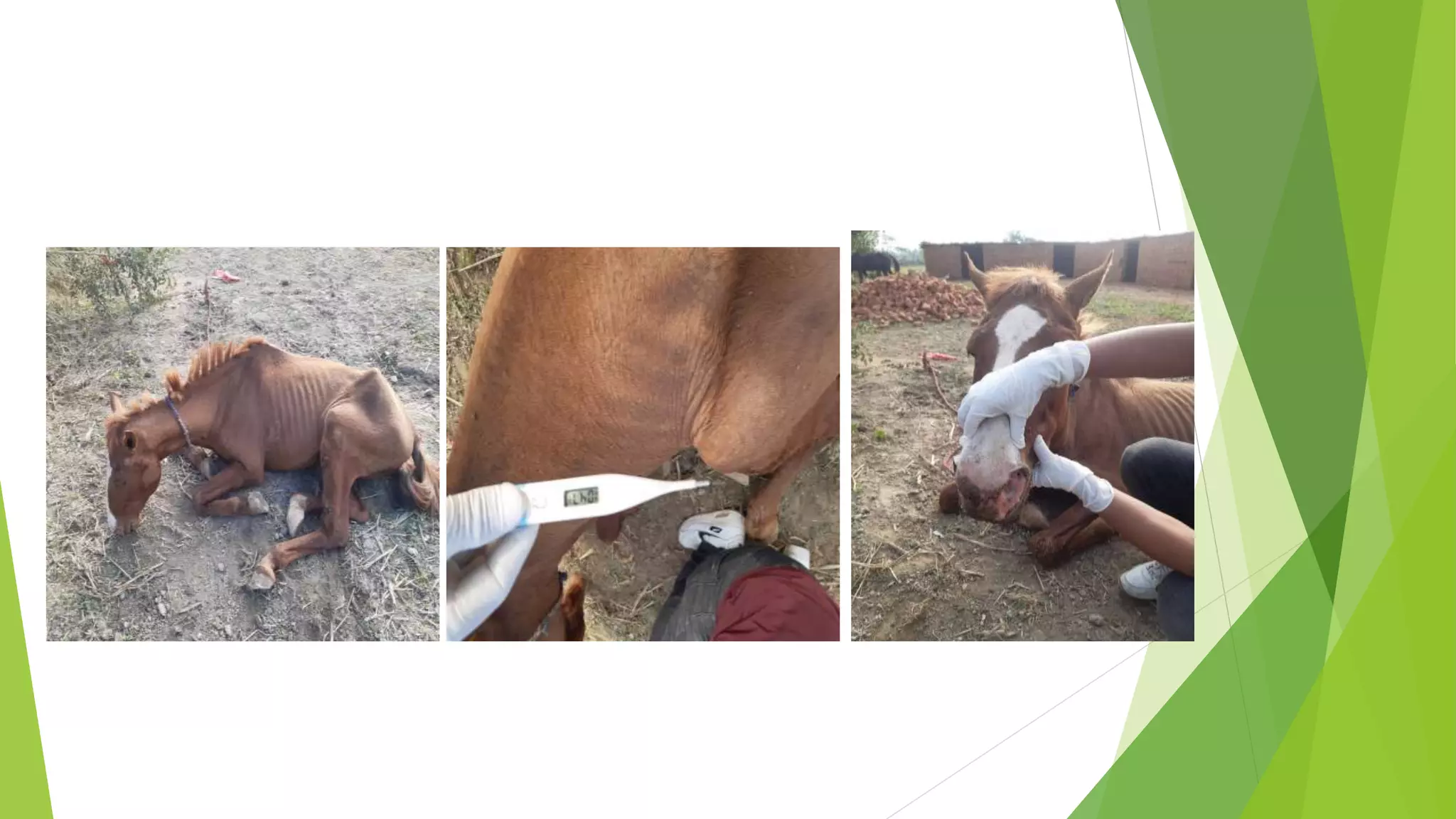
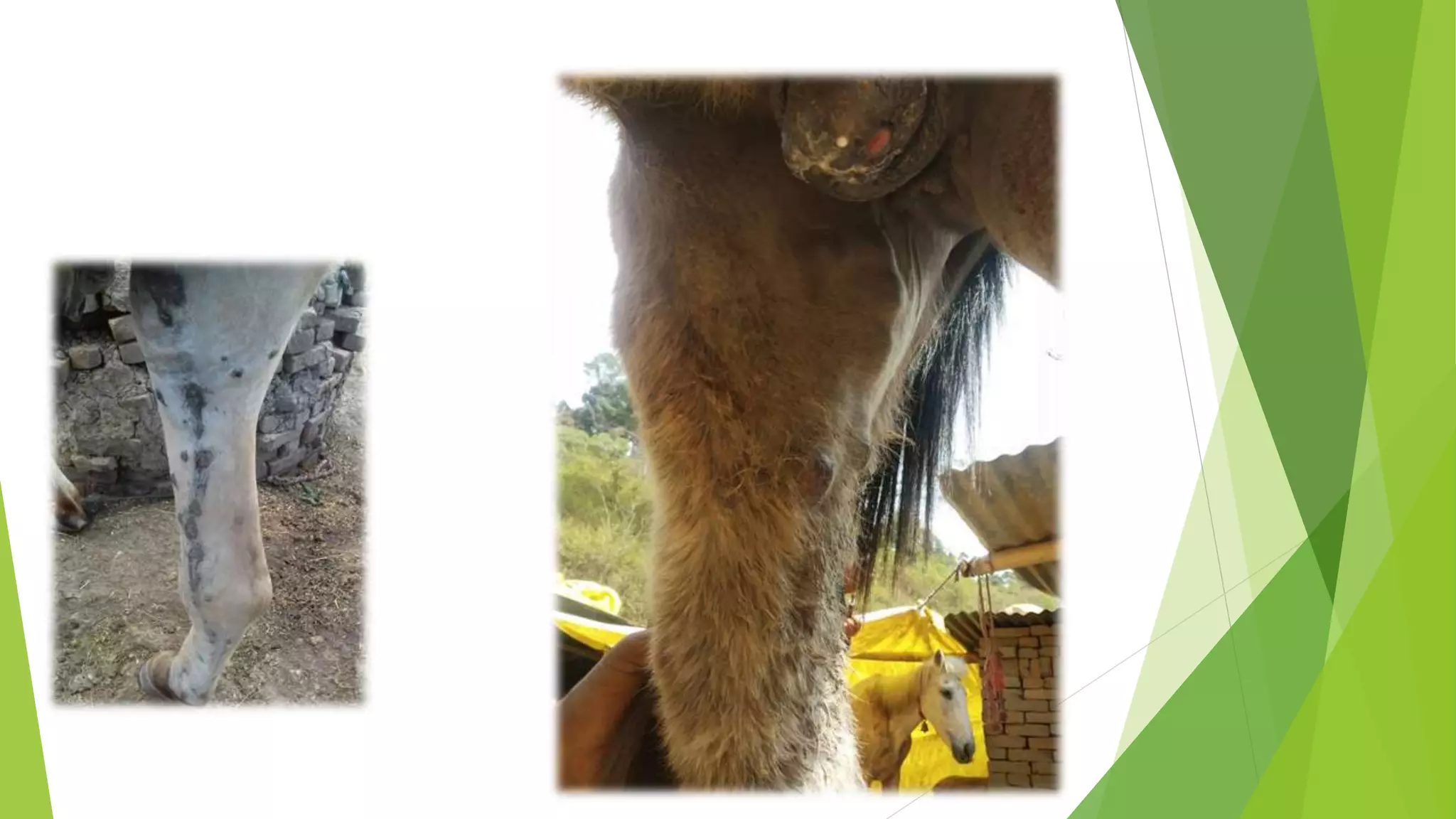
 Cutaneous form or farcy: multiple ulcerative nodules along the lymphatic vessels in
hind limb and abdomen.
Nodules and ulcers in the nasal conchae
in a horse with glanders at PM
Nasal discharge in donkey
Clinical sign in human
Acute & Chronic form
Incubation period-1-14 days to month
 The disease causes fever, malaise, fatigue, jaundice, nausea, rheumatic pain in legs and
headache
 Erysepelous swelling on face and limbs or painful nodules
 The nodular eruption is followed by pustular eruptions on the skin of face, legs,
arms and other body parts
 The nasal mucosa becomes congested and swollen, and conditions like severe pyaemia,
metastatic pneumonia, muscular abscessation and diarrhoea set in leading to emaciation
and collapse.
 In chronic cases, these symptoms last for several days to months
Diagnosis:
 Physical examination of animals: Cardinal sign and symptoms of disease
 Clinical signs alone are not sufficient to obtain a final diagnosis, especially in the first stage
of the disease
 To confirm the diagnosis, laboratory test are required.
1. Identification of the agent:
a) morphology of Burkholderia mallei
b) Cultural characteristics
c) Identification of B. mallei by PCR: DNA preparation
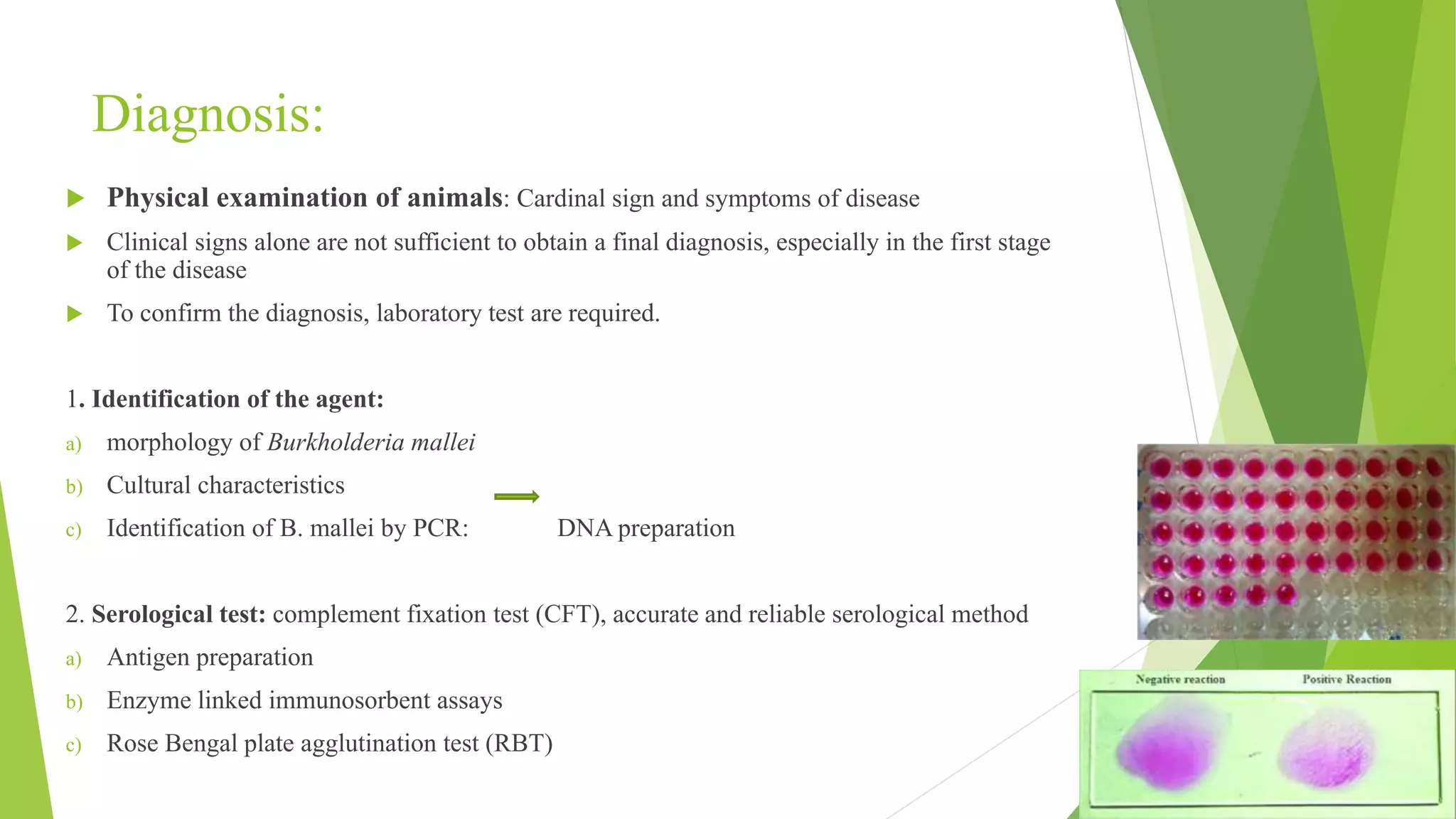
2. Serological test: complement fixation test (CFT), accurate and reliable serological method
a) Antigen preparation
b) Enzyme linked immunosorbent assays
c) Rose Bengal plate agglutination test (RBT)
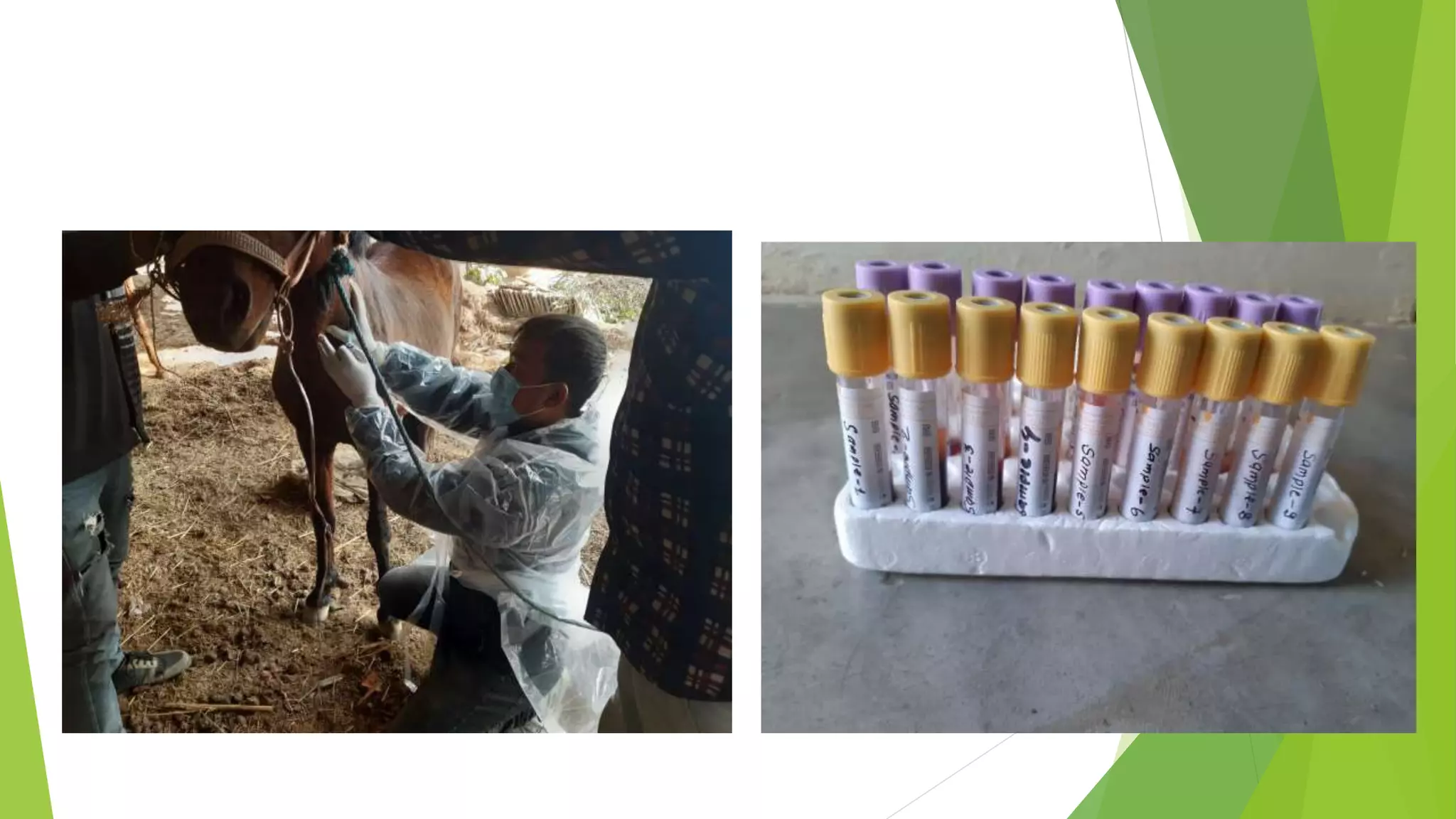
 Before collecting or sending any samples, the proper authorities should be contacted
 Samples should only be sent under secure conditions and to authorized laboratories to
prevent the spread of the disease
 Isolation of Burkholderia mallei
 Blood, sputum, urine or skin lesions
TEST FOR CELLULAR IMMUNITY:
3. Mallein test: hypersensitivity skin test. This test is not generally recommended because
of animal welfare, however it can be used in remote endemic area where sample transport
or proper cooling of sample is not possible.
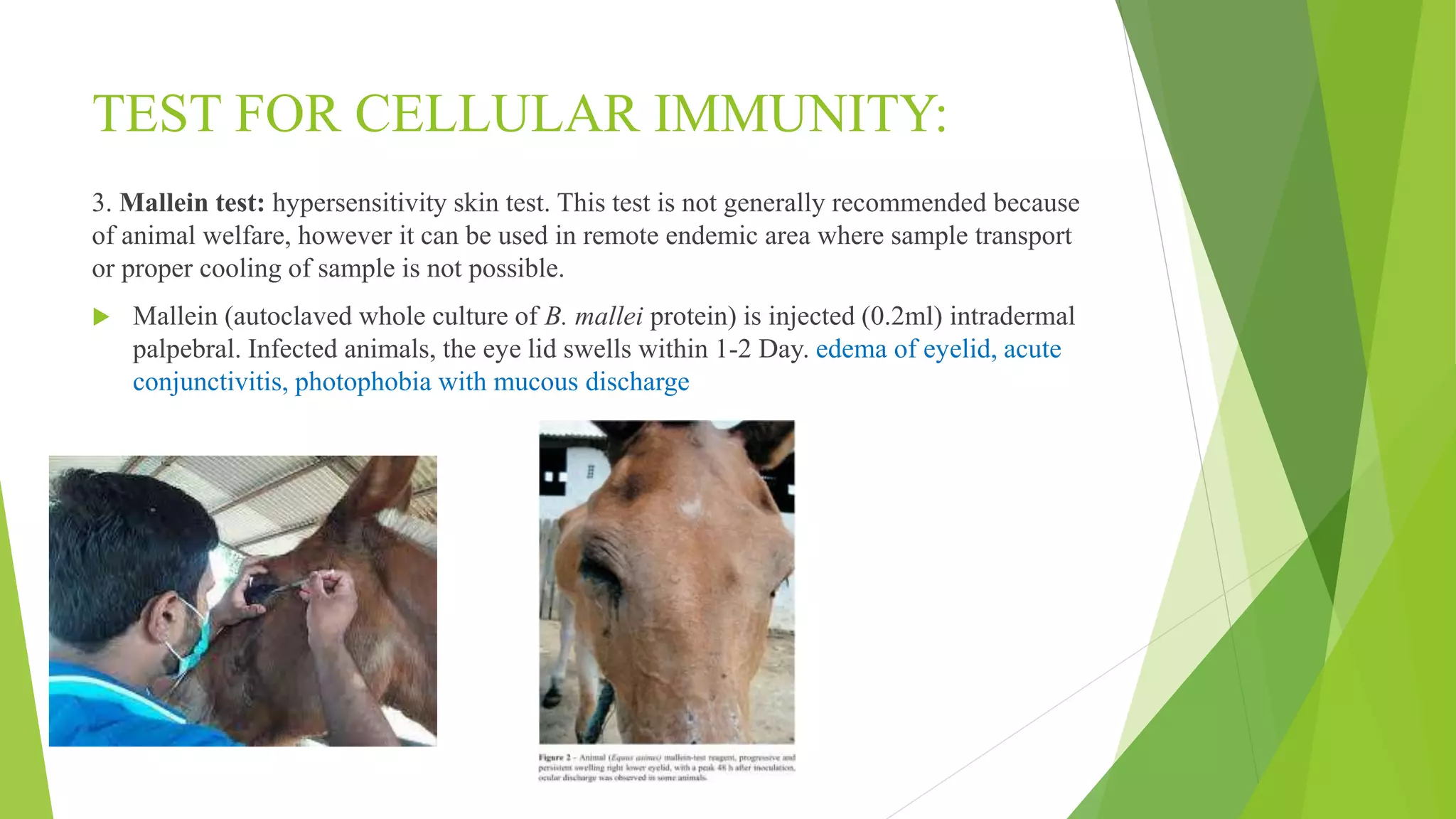
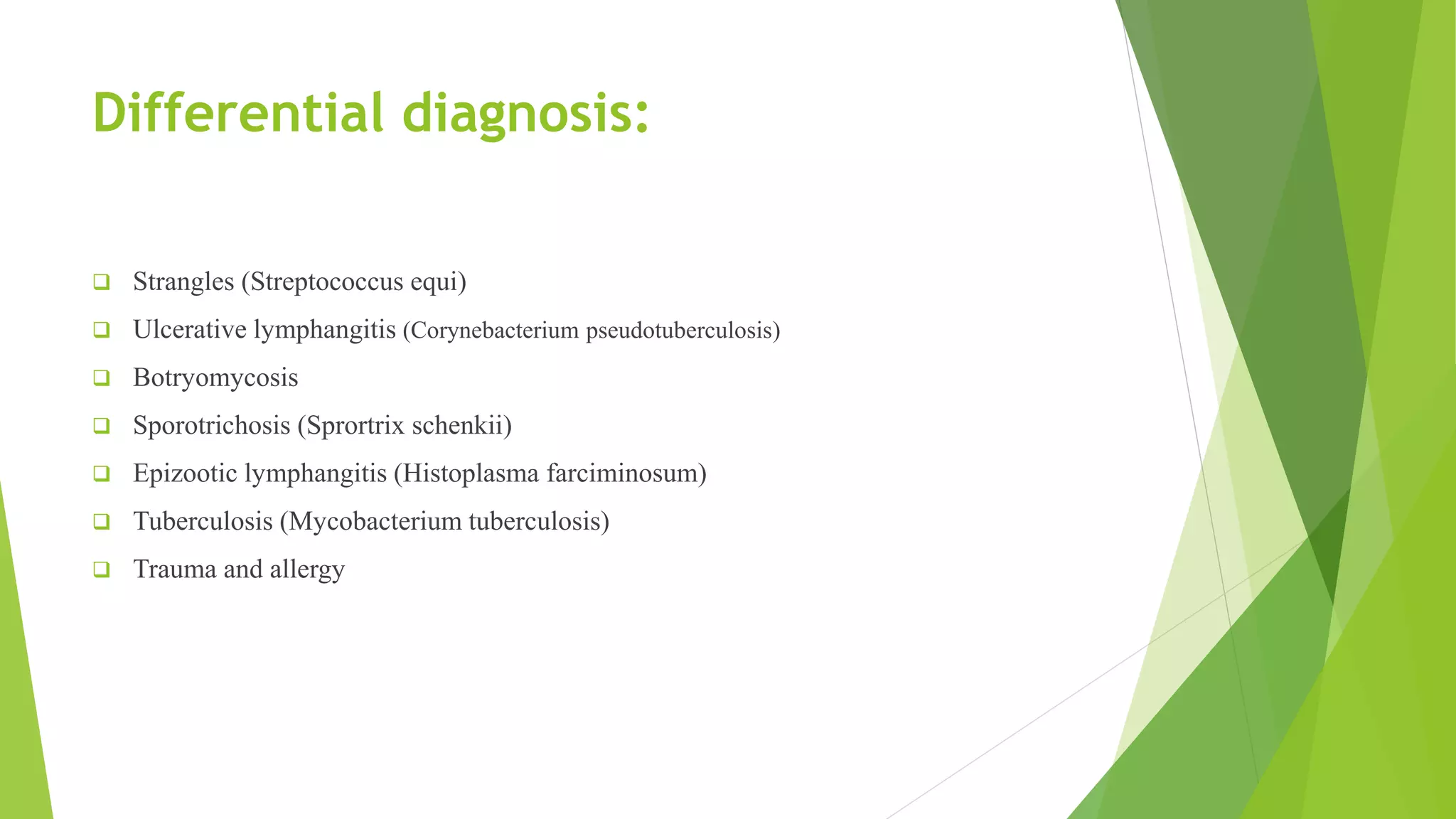
 Mallein (autoclaved whole culture of B. mallei protein) is injected (0.2ml) intradermal
palpebral. Infected animals, the eye lid swells within 1-2 Day. edema of eyelid, acute
conjunctivitis, photophobia with mucous discharge
Differential diagnosis:
 Strangles (Streptococcus equi)
 Ulcerative lymphangitis (Corynebacterium pseudotuberculosis)
 Botryomycosis
 Sporotrichosis (Sprortrix schenkii)
 Epizootic lymphangitis (Histoplasma farciminosum)
 Tuberculosis (Mycobacterium tuberculosis)
 Trauma and allergy
Prevention and control:
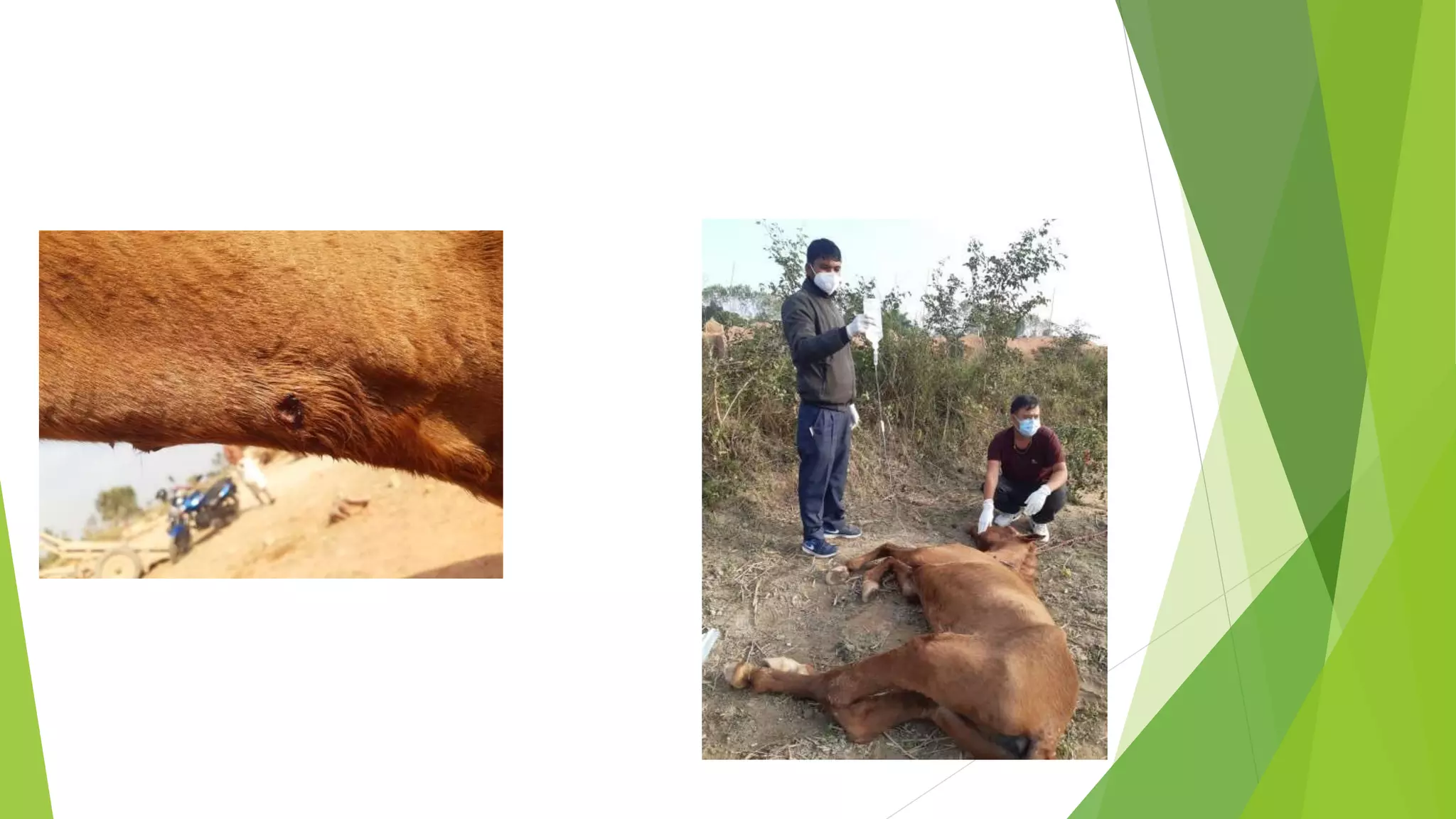
 To date , no treatment with veterinary drugs is capable to cure the disease
 Control of glanders require early detection and diagnostic testing, screening of
apparently normal equid and elimination of positive cases.
 Veterinary certificate is required to transport animals
 Quarantine measures
 Cleaning and disinfection of infected farms
 Destruction by incineration of euthanized animals and any contaminated materials
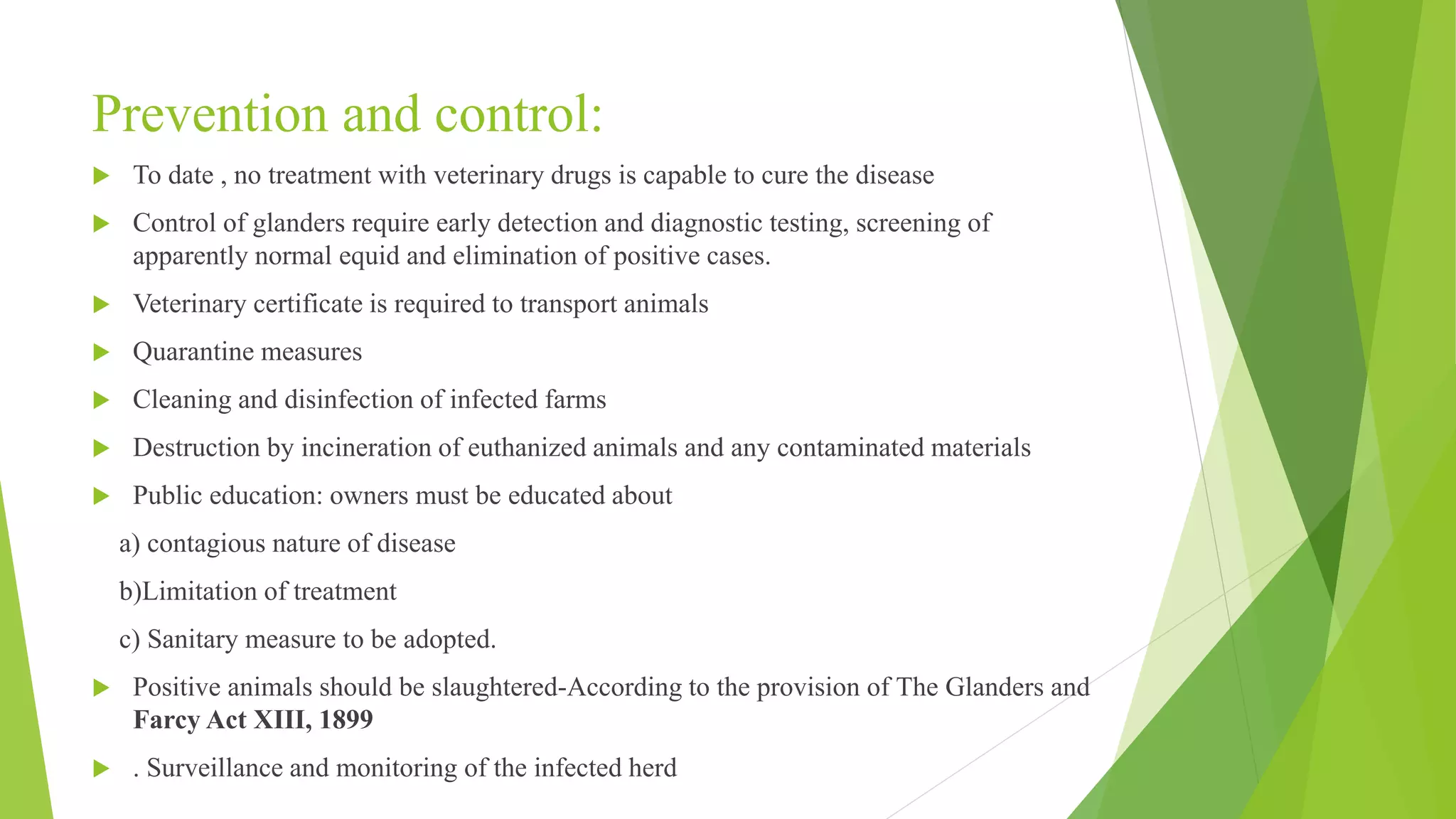
 Public education: owners must be educated about
a) contagious nature of disease
b)Limitation of treatment
c) Sanitary measure to be adopted.
 Positive animals should be slaughtered-According to the provision of The Glanders and
Farcy Act XIII, 1899
 . Surveillance and monitoring of the infected herd
Role of veterinarian on prevention of
glanders
 Create public awareness on glanders
 Surveillance of the glanders
 Quick response on the glanders
 Inform referral vet hospital as soon as possible
 Recommends owners for isolation of the animal
 Sensitize animal owners on bio security
 Coordinate with Community health volunteer(FCHV) inform about it in order to
prevent human from the transmission.
 Keep the records of suspected case.
 IMMEDIATELY notify authorities
 Federal (Area Veterinarian in Charge)
 State (State veterinarian)
 Quarantine
Additional Resources
 World Organization for Animal Health (OIE)
 www.oie.int
 U.S. Department of Agriculture (USDA)
 www.aphis.usda.gov
 Center for Food Security and Public Health
 www.cfsph.iastate.edu
 www.fao.np.com/ Food and agriculture organization of the united nation
 www.dls.gov.np
Thank you

Glander orientation program

  • 1.
    GLANDERS (Zoonotic Disease) Outbreakin Nepal Dr. Manoj karki B.V.Sc.&A.H. (2019) M.V.Sc Microbiology pursuing Synonyms: Farcy; Malleus Organization by: Animal Nepal, kailali Supported by: World Horse Welfare
  • 2.
    Introduction:  Glanders isan infectious and life – threatening disease that mainly affect horses, donkeys, or mules  Caused by Burkholderia mallei. (Previously as Pseudomonas mallei)  Gram negative, non sporulating , non encapsulated rod shape  It is zoonotic disease  Prolonged survival in favorable environments  Inactivated by heat and sunlight (Heating at 55oC/10 min. Sun light for 24 h).
  • 3.
     Survivability:  Contaminatedenvironment- 6 weeks to months  Viable in tap water for at least 1 months  Polysaccharide capsule of bacterium is considered an important virulence factor and enhances survival
  • 4.
    History  3rd CenturyBC  Described by Aristotle  World War I  Suspected use as biological agent to infect Russian horses and mules  Large number of human cases in Russia during and after WWI  It was endemic in Chinese horses and affected 30% ponies.  World War II 1943-44  Japanese infected horses, civilians  U.S. and Russia investigated use as biological weapon  In Asia, it is said to cause high morbidity but low mortality in endemic areas.
  • 5.
    Geographical distribution:  Thedisease has been eradicated in North America, Australia, and Europe.  Glanders remain sporadically or endemic reported in a number of Asian, African, middle eastern and south American,  Dr. Sainbel - the first principal of London veterinary College in 1723 was one of the first reported human cases of glanders.  In India, information on human glanders is scanty despite many reported cases of disease in equines. Dr. S.H. Gaiger (1913-1916), a veterinary pathologist at Punjab Veterinary College, Lahore who contracted the disease while autopsying an infected horse  In April 2010, Bahrain notified the first occurrence of the disease. In brazil the disease reappeared in 2009.  In Nepal glanders first occurrence in 2020-11-17 (Animal Nepal)
  • 7.
    Epidemiology:  Source ofevent or origin of infection: illegal movement of animals  Horses and mules working at brick kilns and tanga pullers have been found sick  Susceptibility to glanders has also been demonstrated in camels, bear, wolves and dogs.  Carniverous may become infected by eating infected meal
  • 8.
    Quantitative data summery:Nepalgunj, Lalitpur and kailali  Species Susceptible Cases Death Equidae 87 26 16 Outbreak: 2020-11-09 first time 1. Nepalgunj -5- MP school tole 2. Godawari, Lalitpur. 3. janaki 8, bhokshi, and janaki 7, makri, Kailali 15 samples were collected but not found due to sample error (2020-11-12) Disease category: OIE- listed
  • 9.
    Diagnostic detail:  Clinicalsigns: yes  Diagnostic nature: diagnostic test and clinical signs  For diagnostic test: Test name Category Test type laboratory SPECIES SAMPLE RESULT REAL- TIME POLYMERASE CHAIN REACTION (PCR) Nucleic acid detection Laboratory test CVL, Tripureshwor, KTM Equidae positive Gene sequencing Genotyping Laboratory test OIE reference laboratory Equidae positive
  • 10.
    Spread:  Contact withtissue or body fluid (mucus) of infected animals  Inhaled or infected aerosols or dust contaminated (grooming equipment) by infected animals.  Poor husbandry and feeding condition as well as transportation  Unsanitary conditions and over crowded stables are risk factor  In human: person to person (rare)
  • 11.
    Host range  Acuteform: donkey and mule with high fever and respiratory signs  Chronic form: horse they may survive for several years  Accidental host: human rare but very fatal  Susceptible host: sheep, camel, goat dog  Swine and cattle: resistant
  • 13.
    Public Health Risk No vaccine exist  Life threatening zoonosis  Animal with clinical disease, asymptomatically infected animals pose a risk to human  In human the disease can take different forms such as Nasal, localized with nodules and abscesses, pulmonary, septicemia with chronic infection. Incubation period-1-14 days to month  In human the untreated acute disease the mortality rate can reach 95 % within 3 weeks.  A cure is possible, however if case are treated rapidly with antibiotics  Transmission to human can be avoided by controlling the disease in animals, avoiding contact with infected animals and by taking precautionary hygienic measures
  • 14.
    Clinical signs: inanimal  The disease causes nodules and ulceration in the respiratory tract, and lungs in animals. A skin form known as ‘Farcy’ also occurs. 3 forms:  Nasal forms: ulcerous nodules in nasal cavity, yellowish green mucopurulent nasal discharge  Pulmonary forms: cough, dyspnea, pneumonia, pulmonary abscess  Cutaneous form or farcy: multiple ulcerative nodules along the lymphatic vessels in hind limb and abdomen. Nodules and ulcers in the nasal conchae in a horse with glanders at PM Nasal discharge in donkey
  • 18.
    Clinical sign inhuman Acute & Chronic form Incubation period-1-14 days to month  The disease causes fever, malaise, fatigue, jaundice, nausea, rheumatic pain in legs and headache  Erysepelous swelling on face and limbs or painful nodules  The nodular eruption is followed by pustular eruptions on the skin of face, legs, arms and other body parts  The nasal mucosa becomes congested and swollen, and conditions like severe pyaemia, metastatic pneumonia, muscular abscessation and diarrhoea set in leading to emaciation and collapse.  In chronic cases, these symptoms last for several days to months
  • 19.
    Diagnosis:  Physical examinationof animals: Cardinal sign and symptoms of disease  Clinical signs alone are not sufficient to obtain a final diagnosis, especially in the first stage of the disease  To confirm the diagnosis, laboratory test are required. 1. Identification of the agent: a) morphology of Burkholderia mallei b) Cultural characteristics c) Identification of B. mallei by PCR: DNA preparation 2. Serological test: complement fixation test (CFT), accurate and reliable serological method a) Antigen preparation b) Enzyme linked immunosorbent assays c) Rose Bengal plate agglutination test (RBT)
  • 20.
     Before collectingor sending any samples, the proper authorities should be contacted  Samples should only be sent under secure conditions and to authorized laboratories to prevent the spread of the disease  Isolation of Burkholderia mallei  Blood, sputum, urine or skin lesions
  • 21.
    TEST FOR CELLULARIMMUNITY: 3. Mallein test: hypersensitivity skin test. This test is not generally recommended because of animal welfare, however it can be used in remote endemic area where sample transport or proper cooling of sample is not possible.  Mallein (autoclaved whole culture of B. mallei protein) is injected (0.2ml) intradermal palpebral. Infected animals, the eye lid swells within 1-2 Day. edema of eyelid, acute conjunctivitis, photophobia with mucous discharge
  • 22.
    Differential diagnosis:  Strangles(Streptococcus equi)  Ulcerative lymphangitis (Corynebacterium pseudotuberculosis)  Botryomycosis  Sporotrichosis (Sprortrix schenkii)  Epizootic lymphangitis (Histoplasma farciminosum)  Tuberculosis (Mycobacterium tuberculosis)  Trauma and allergy
  • 23.
    Prevention and control: To date , no treatment with veterinary drugs is capable to cure the disease  Control of glanders require early detection and diagnostic testing, screening of apparently normal equid and elimination of positive cases.  Veterinary certificate is required to transport animals  Quarantine measures  Cleaning and disinfection of infected farms  Destruction by incineration of euthanized animals and any contaminated materials  Public education: owners must be educated about a) contagious nature of disease b)Limitation of treatment c) Sanitary measure to be adopted.  Positive animals should be slaughtered-According to the provision of The Glanders and Farcy Act XIII, 1899  . Surveillance and monitoring of the infected herd
  • 26.
    Role of veterinarianon prevention of glanders  Create public awareness on glanders  Surveillance of the glanders  Quick response on the glanders  Inform referral vet hospital as soon as possible  Recommends owners for isolation of the animal  Sensitize animal owners on bio security  Coordinate with Community health volunteer(FCHV) inform about it in order to prevent human from the transmission.  Keep the records of suspected case.  IMMEDIATELY notify authorities  Federal (Area Veterinarian in Charge)  State (State veterinarian)  Quarantine
  • 27.
    Additional Resources  WorldOrganization for Animal Health (OIE)  www.oie.int  U.S. Department of Agriculture (USDA)  www.aphis.usda.gov  Center for Food Security and Public Health  www.cfsph.iastate.edu  www.fao.np.com/ Food and agriculture organization of the united nation  www.dls.gov.np
  • 28.