
Strangles
Strangles
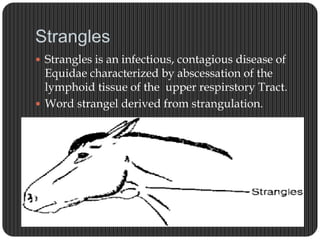
 Strangles is an infectious, contagious disease of
Equidae characterized by abscessation of the
lymphoid tissue of the upper respirstory Tract.
 Word strangel derived from strangulation.
Etiology
 Strangles caused by G +ive capsulated β-
hemolytic Lancefield group C coccus, which is an
obligate parasite and a primary pathogen.
 Organism causes clinical disease in horses,mules
and donkey.
 Streptococcus equi produce high morbidity and
low mortality in susceptible population.
 Horses with less than 5 yr of are more
susceptible.
Transmission
 Transmission occurs via fomites and direct
contact with infectious exudates. Carrier animals
are important for maintenance of the bacteria
between epizootics and initiation of outbreaks on
premises previously free of disease.
 This organism produce typicaly honey dew like
colonies which are hemolytic on blood agar.
 This organism spread from one animal to other
by respiratory tract secretions.
Clinical signs
 Incubation period upto 10 days.
 Acute febrile reaction observe in unexperienced
horses.
 Residual immunity prevent acute febrile
condition.
 Swelling of sub-mandibular and
reteropharyngeal lymph node.
 Animal show dysphagia, respiratory sturtle and
respiratory distress.
Clinical signs
 In untreated animals the disease progress from
pharangeal lymph node to guttral pouch and
start abcessation in guttral pouch.
 Infection metastatize to other organs leads to the
development of bastard strangle.
 Purpura hemorrhagica seen on head and neck
area.
In latter stages discharge becomes muccopurrulent.
Dx
 Disease observe in horses with less than 5 yr of
age.
 In chronic case organism invade guttral pouch
and become chronic shedder.
 Stone like bodies in guttral pouch known as
chondroid bodies.
 Dx based on clinical signs.
Complications
 Most recover without complications .
 Infection metastatize to other body parts ( Bastard
strangle).
 Strangulation of airway.
 Purpura hemorrhagica.
 Muscle disease.
 Decrease milk production in mare.
 Guttral pouch emphysema .
 Laryngeal paralysis.
Rx
 80 lakh pencillin BID
 Doxycycline BID 10mg/kg
 Potassium iodide
Strangels

Strangels

  • 2.
  • 4.
    Strangles  Strangles isan infectious, contagious disease of Equidae characterized by abscessation of the lymphoid tissue of the upper respirstory Tract.  Word strangel derived from strangulation.
  • 5.
    Etiology  Strangles causedby G +ive capsulated β- hemolytic Lancefield group C coccus, which is an obligate parasite and a primary pathogen.  Organism causes clinical disease in horses,mules and donkey.  Streptococcus equi produce high morbidity and low mortality in susceptible population.  Horses with less than 5 yr of are more susceptible.
  • 7.
    Transmission  Transmission occursvia fomites and direct contact with infectious exudates. Carrier animals are important for maintenance of the bacteria between epizootics and initiation of outbreaks on premises previously free of disease.  This organism produce typicaly honey dew like colonies which are hemolytic on blood agar.  This organism spread from one animal to other by respiratory tract secretions.
  • 10.
    Clinical signs  Incubationperiod upto 10 days.  Acute febrile reaction observe in unexperienced horses.  Residual immunity prevent acute febrile condition.  Swelling of sub-mandibular and reteropharyngeal lymph node.  Animal show dysphagia, respiratory sturtle and respiratory distress.
  • 13.
    Clinical signs  Inuntreated animals the disease progress from pharangeal lymph node to guttral pouch and start abcessation in guttral pouch.  Infection metastatize to other organs leads to the development of bastard strangle.  Purpura hemorrhagica seen on head and neck area. In latter stages discharge becomes muccopurrulent.
  • 18.
    Dx  Disease observein horses with less than 5 yr of age.  In chronic case organism invade guttral pouch and become chronic shedder.  Stone like bodies in guttral pouch known as chondroid bodies.  Dx based on clinical signs.
  • 19.
    Complications  Most recoverwithout complications .  Infection metastatize to other body parts ( Bastard strangle).  Strangulation of airway.  Purpura hemorrhagica.  Muscle disease.  Decrease milk production in mare.  Guttral pouch emphysema .  Laryngeal paralysis.
  • 20.
    Rx  80 lakhpencillin BID  Doxycycline BID 10mg/kg  Potassium iodide