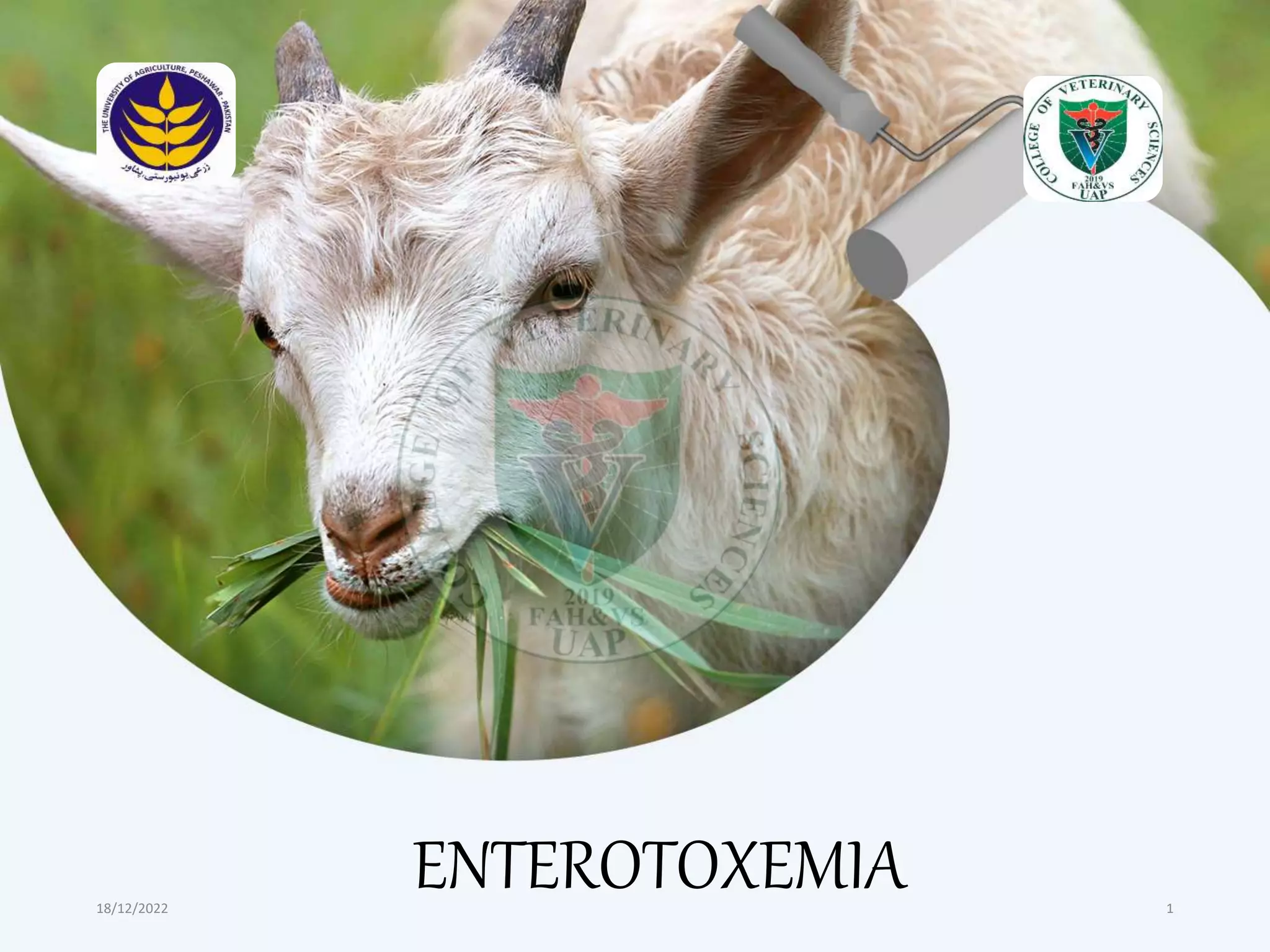
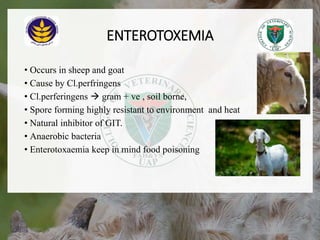
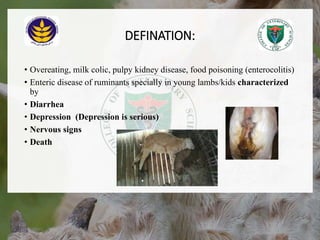
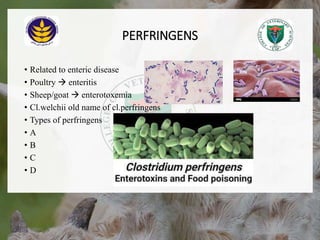
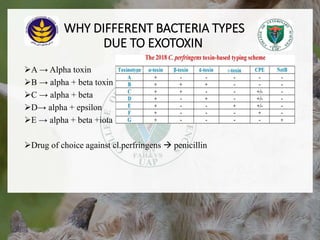
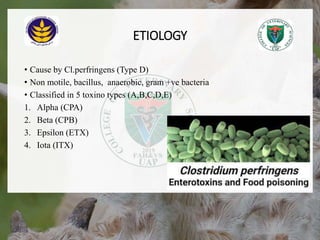
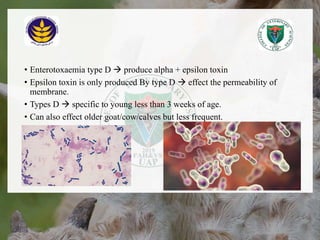
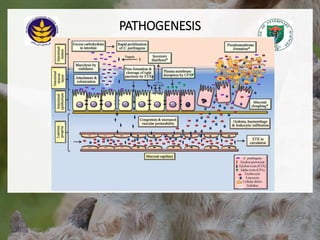
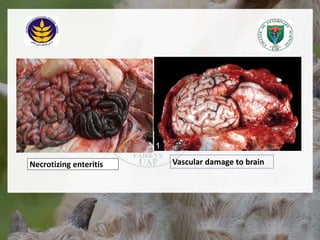
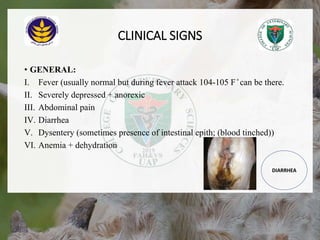
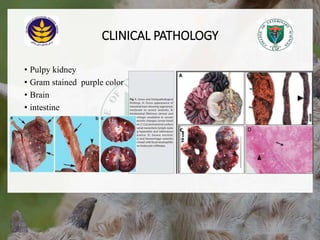
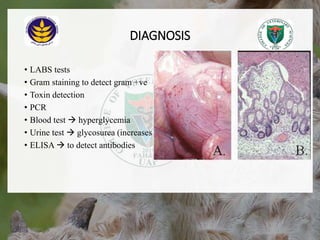
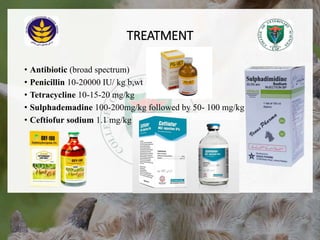
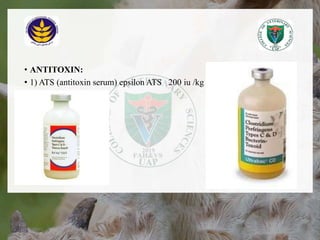
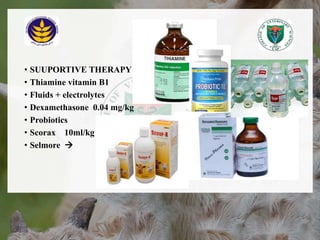
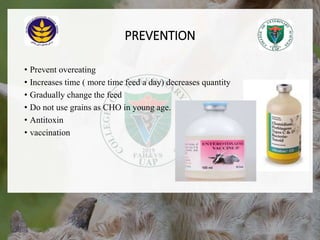
Enterotoxemia is caused by Clostridium perfringens type D bacteria. It occurs commonly in young lambs and kids and is characterized by diarrhea, depression, and nervous signs. The bacteria produces alpha and epsilon toxins that damage the intestinal epithelium, causing necrosis and toxemia. Clinical signs include fever, abdominal pain, diarrhea, and neurological signs such as tremors and convulsions. Treatment involves antibiotics, antitoxin serum, supportive therapy, and prevention through gradual diet changes and vaccination.



![CTEV [ clubfoot] DR ARUN LAL ,DR MOHAMED ASHRAF travancore medical college k...](https://cdn.slidesharecdn.com/ss_thumbnails/ctevclubfootdrarunlaldrmohamedashraftravancoremedicalcollegekollamkeralaindia-260208063247-18fc466c-thumbnail.jpg?width=640&height=640&fit=bounds)

![PERI-PROSTHETIC FRACTURE NAIL-PLATE CONSTRUCT [NPC].pptx](https://cdn.slidesharecdn.com/ss_thumbnails/drarunkumardrmohamedashrafperiprostheticfrasturenail-plateconstructnpc-260209164459-7e9d15a1-thumbnail.jpg?width=640&height=640&fit=bounds)
