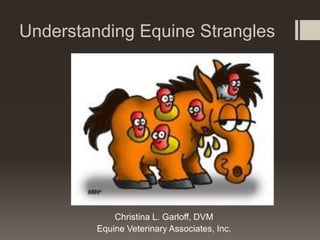
Understanding Equine Strangles
Christina L. Garloff, DVM
Equine Veterinary Associates, Inc.
History
First reported in 1251
Highly contagious
 Young horses most commonly affected
Recurrence at farm common
Most commonly diagnosed contagious disease worldwide
Cause
 Bacterial infection with Streptococcus equi subspecies equi (S. equi)
Location
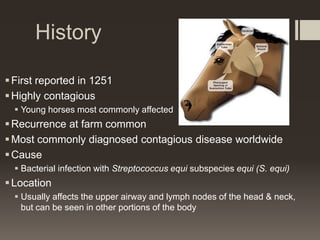
 Usually affects the upper airway and lymph nodes of the head & neck,
but can be seen in other portions of the body
Clinical Signs
 Common:
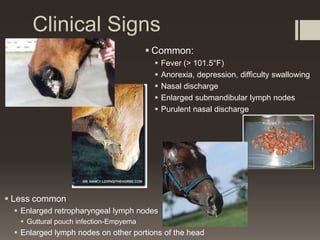
 Fever (> 101.5°F)
 Anorexia, depression, difficulty swallowing
 Nasal discharge
 Enlarged submandibular lymph nodes
 Purulent nasal discharge
 Less common
 Enlarged retropharyngeal lymph nodes
 Guttural pouch infection-Empyema
 Enlarged lymph nodes on other portions of the head
Complications
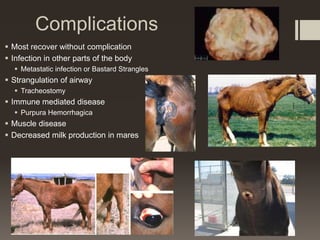
 Most recover without complication
 Infection in other parts of the body
 Metastatic infection or Bastard Strangles
 Strangulation of airway
 Tracheostomy
 Immune mediated disease
 Purpura Hemorrhagica
 Muscle disease
 Decreased milk production in mares
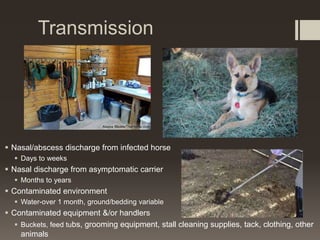
Transmission
 Nasal/abscess discharge from infected horse
 Days to weeks
 Nasal discharge from asymptomatic carrier
 Months to years
 Contaminated environment
 Water-over 1 month, ground/bedding variable
 Contaminated equipment &/or handlers
 Buckets, feed tubs, grooming equipment, stall cleaning supplies, tack, clothing, other
animals
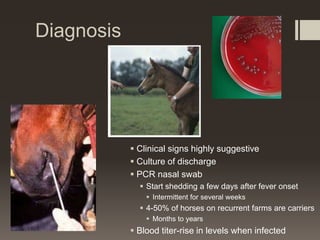
Diagnosis
 Clinical signs highly suggestive
 Culture of discharge
 PCR nasal swab
 Start shedding a few days after fever onset
 Intermittent for several weeks
 4-50% of horses on recurrent farms are carriers
 Months to years
 Blood titer-rise in levels when infected
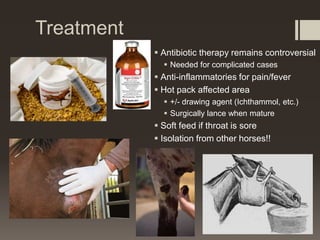
Treatment
 Antibiotic therapy remains controversial
 Needed for complicated cases
 Anti-inflammatories for pain/fever
 Hot pack affected area
 +/- drawing agent (Ichthammol, etc.)
 Surgically lance when mature
 Soft feed if throat is sore
 Isolation from other horses!!
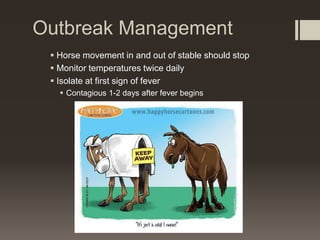
Outbreak Management
 Horse movement in and out of stable should stop
 Monitor temperatures twice daily
 Isolate at first sign of fever
 Contagious 1-2 days after fever begins
Outbreak Management
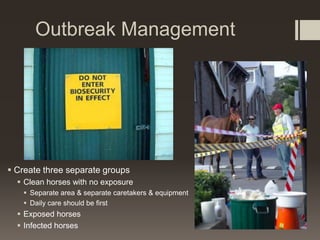
 Create three separate groups
 Clean horses with no exposure
 Separate area & separate caretakers & equipment
 Daily care should be first
 Exposed horses
 Infected horses
Outbreak Management
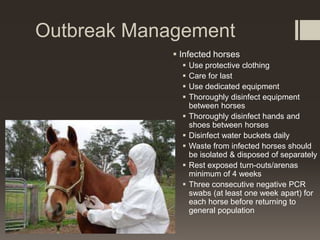
 Infected horses
 Use protective clothing
 Care for last
 Use dedicated equipment
 Thoroughly disinfect equipment
between horses
 Thoroughly disinfect hands and
shoes between horses
 Disinfect water buckets daily
 Waste from infected horses should
be isolated & disposed of separately
 Rest exposed turn-outs/arenas
minimum of 4 weeks
 Three consecutive negative PCR
swabs (at least one week apart) for
each horse before returning to
general population
Vaccination
 Does not guarantee disease prevention
 Intramuscular route
 High rate of vaccine reactions
 Approx 60% effective
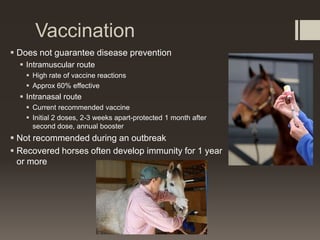
 Intranasal route
 Current recommended vaccine
 Initial 2 doses, 2-3 weeks apart-protected 1 month after
second dose, annual booster
 Not recommended during an outbreak
 Recovered horses often develop immunity for 1 year
or more
Preventative Measures
 Require current health certificates for all new horses
 Obtain Strangles history/require negative PCR test before allowing on property
 Consider vaccination requirement before arrival
 Quarantine new horses for a minimum of 3 weeks before allowing in general population
 Monitor temp daily
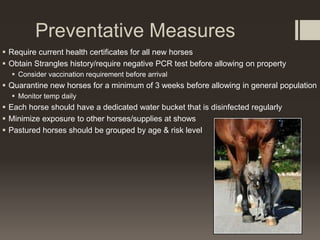
 Each horse should have a dedicated water bucket that is disinfected regularly
 Minimize exposure to other horses/supplies at shows
 Pastured horses should be grouped by age & risk level
Questions?

Equine strangles

  • 1.
    Understanding Equine Strangles ChristinaL. Garloff, DVM Equine Veterinary Associates, Inc.
  • 2.
    History First reported in1251 Highly contagious  Young horses most commonly affected Recurrence at farm common Most commonly diagnosed contagious disease worldwide Cause  Bacterial infection with Streptococcus equi subspecies equi (S. equi) Location  Usually affects the upper airway and lymph nodes of the head & neck, but can be seen in other portions of the body
  • 3.
    Clinical Signs  Common: Fever (> 101.5°F)  Anorexia, depression, difficulty swallowing  Nasal discharge  Enlarged submandibular lymph nodes  Purulent nasal discharge  Less common  Enlarged retropharyngeal lymph nodes  Guttural pouch infection-Empyema  Enlarged lymph nodes on other portions of the head
  • 4.
    Complications  Most recoverwithout complication  Infection in other parts of the body  Metastatic infection or Bastard Strangles  Strangulation of airway  Tracheostomy  Immune mediated disease  Purpura Hemorrhagica  Muscle disease  Decreased milk production in mares
  • 5.
    Transmission  Nasal/abscess dischargefrom infected horse  Days to weeks  Nasal discharge from asymptomatic carrier  Months to years  Contaminated environment  Water-over 1 month, ground/bedding variable  Contaminated equipment &/or handlers  Buckets, feed tubs, grooming equipment, stall cleaning supplies, tack, clothing, other animals
  • 6.
    Diagnosis  Clinical signshighly suggestive  Culture of discharge  PCR nasal swab  Start shedding a few days after fever onset  Intermittent for several weeks  4-50% of horses on recurrent farms are carriers  Months to years  Blood titer-rise in levels when infected
  • 7.
    Treatment  Antibiotic therapyremains controversial  Needed for complicated cases  Anti-inflammatories for pain/fever  Hot pack affected area  +/- drawing agent (Ichthammol, etc.)  Surgically lance when mature  Soft feed if throat is sore  Isolation from other horses!!
  • 8.
    Outbreak Management  Horsemovement in and out of stable should stop  Monitor temperatures twice daily  Isolate at first sign of fever  Contagious 1-2 days after fever begins
  • 9.
    Outbreak Management  Createthree separate groups  Clean horses with no exposure  Separate area & separate caretakers & equipment  Daily care should be first  Exposed horses  Infected horses
  • 10.
    Outbreak Management  Infectedhorses  Use protective clothing  Care for last  Use dedicated equipment  Thoroughly disinfect equipment between horses  Thoroughly disinfect hands and shoes between horses  Disinfect water buckets daily  Waste from infected horses should be isolated & disposed of separately  Rest exposed turn-outs/arenas minimum of 4 weeks  Three consecutive negative PCR swabs (at least one week apart) for each horse before returning to general population
  • 11.
    Vaccination  Does notguarantee disease prevention  Intramuscular route  High rate of vaccine reactions  Approx 60% effective  Intranasal route  Current recommended vaccine  Initial 2 doses, 2-3 weeks apart-protected 1 month after second dose, annual booster  Not recommended during an outbreak  Recovered horses often develop immunity for 1 year or more
  • 12.
    Preventative Measures  Requirecurrent health certificates for all new horses  Obtain Strangles history/require negative PCR test before allowing on property  Consider vaccination requirement before arrival  Quarantine new horses for a minimum of 3 weeks before allowing in general population  Monitor temp daily  Each horse should have a dedicated water bucket that is disinfected regularly  Minimize exposure to other horses/supplies at shows  Pastured horses should be grouped by age & risk level
  • 13.