WHAT IS EPIGENETICS?
the study of changes in gene
  activity that do not cause
  alterations to the genetic code, but
  can still be passed on to next
  generations
HISTORY
-New branch of scientific study


-Conrad Waddington first coined the name of
  Epigenetics, combining the fields of
  developmental Biology and Genetics


-The idea that the methylation of DNA could affect
  gene expression, and that these patterns could
  be heritable, was announced by two groups in
  1975
TECHNIQUES / METHODS
Chromatin Remodeling - genes are
 regulated
Methylation- addition of a methyl group
Acetylation- active transcription
ADVANTAGES
Major ways in which gene expression is
  regulated
Determines the differences between the
  cells in your body
Loss of the modifications often leads to
  cancer
Reprogram cells to different functions
DISADVANTAGES
Hand in hand with stem cell
 research
Controversial
Potentially dangerous side
 effects
FUTURE
Striving to cure Epigenetic diseases such
  as cancer
 The drug azacitidine treats leukemia
Human Genome Project
Doctors reexamining past epigenetic cures
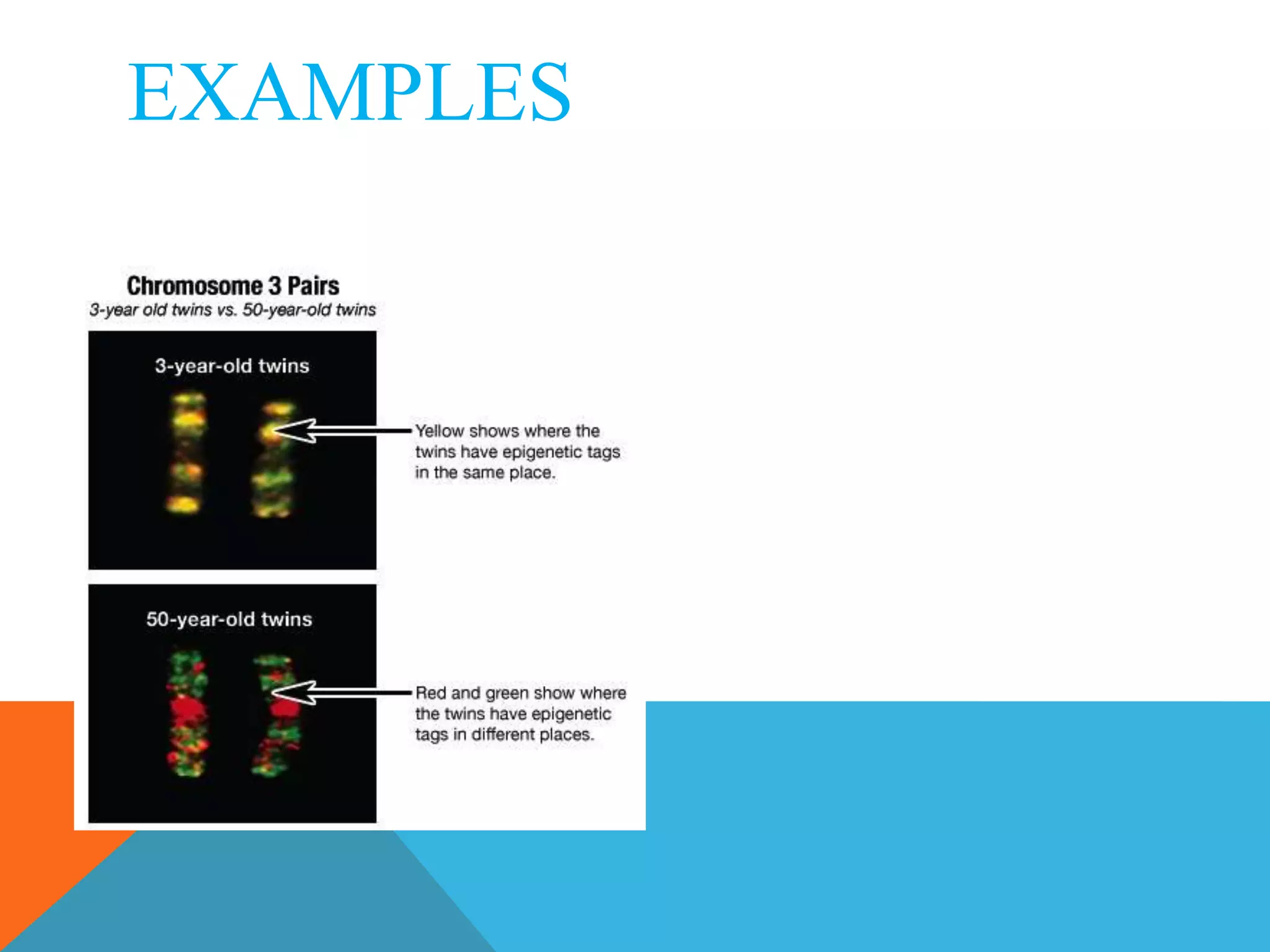
EXAMPLES
EXAMPLES (CONT.)
 identical twins have identical DNA. But , during
their lifetimes there are differences in their
phenotypes. One possible explanation could be
changes in the epigenetic factors that affect genes
and modify gene expression. Twins have some
epigenetic factors that are identical in early life,
but they acquire differences as time passes. It
could be that these differences modify genes in
such a way as to create the phenotype differences
that have been observed.

Epigenetics

  • 2.
    WHAT IS EPIGENETICS? thestudy of changes in gene activity that do not cause alterations to the genetic code, but can still be passed on to next generations
  • 3.
    HISTORY -New branch ofscientific study -Conrad Waddington first coined the name of Epigenetics, combining the fields of developmental Biology and Genetics -The idea that the methylation of DNA could affect gene expression, and that these patterns could be heritable, was announced by two groups in 1975
  • 4.
    TECHNIQUES / METHODS ChromatinRemodeling - genes are regulated Methylation- addition of a methyl group Acetylation- active transcription
  • 5.
    ADVANTAGES Major ways inwhich gene expression is regulated Determines the differences between the cells in your body Loss of the modifications often leads to cancer Reprogram cells to different functions
  • 6.
    DISADVANTAGES Hand in handwith stem cell research Controversial Potentially dangerous side effects
  • 7.
    FUTURE Striving to cureEpigenetic diseases such as cancer  The drug azacitidine treats leukemia Human Genome Project Doctors reexamining past epigenetic cures
  • 8.
  • 9.
    EXAMPLES (CONT.) identicaltwins have identical DNA. But , during their lifetimes there are differences in their phenotypes. One possible explanation could be changes in the epigenetic factors that affect genes and modify gene expression. Twins have some epigenetic factors that are identical in early life, but they acquire differences as time passes. It could be that these differences modify genes in such a way as to create the phenotype differences that have been observed.