Phrase & Clause PPT
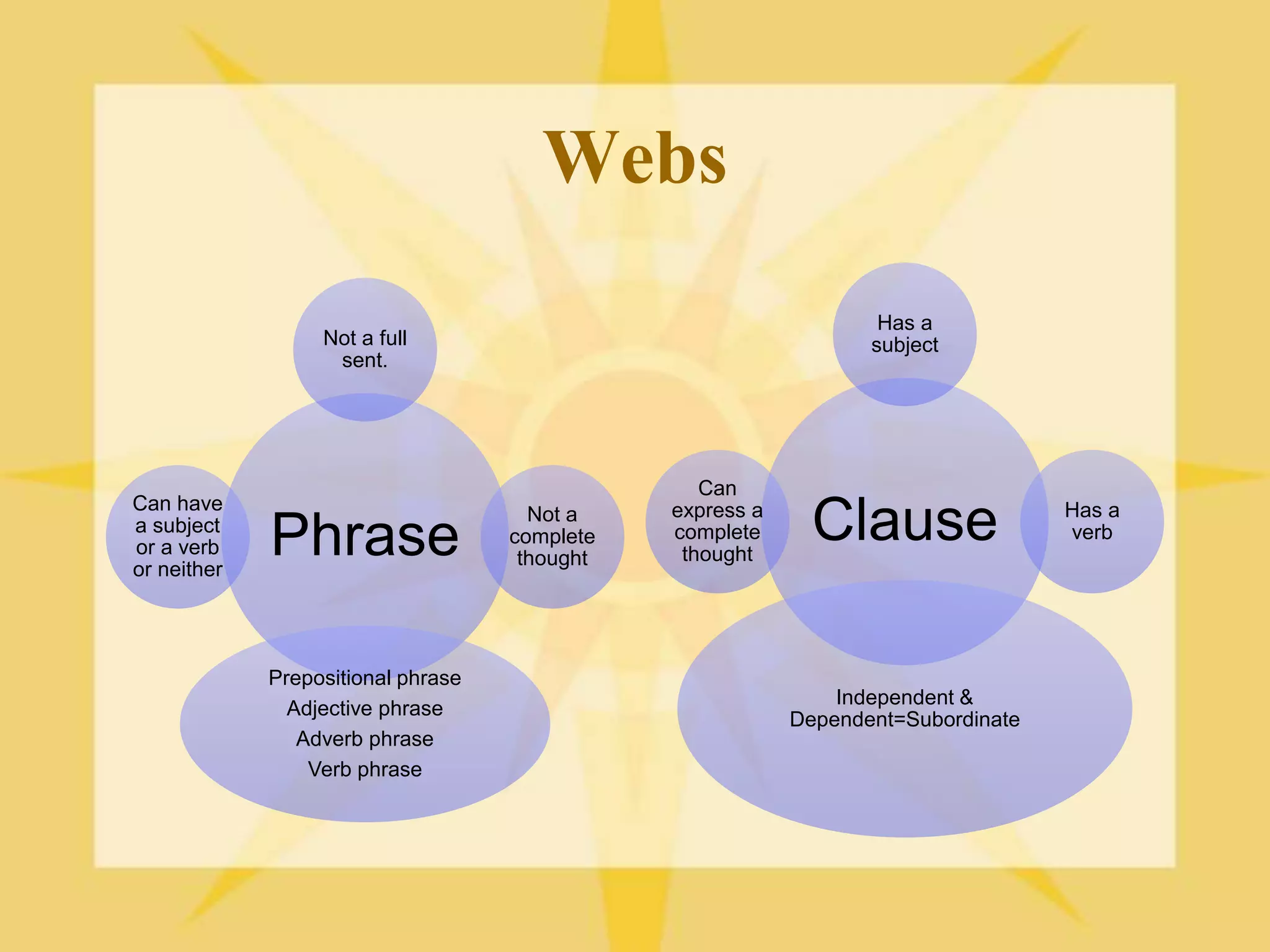
Webs
Phrase
Not a full
sent.
Not a
complete
thought
Prepositional phrase
Adjective phrase
Adverb phrase
Verb phrase
Can have
a subject
or a verb
or neither
Clause
Has a
subject
Has a
verb
Independent &
Dependent=Subordinate
Can
express a
complete
thought
Grammar
 Phrases & Clauses
 Which of the following are phrases and
clauses?
1.In my room—Phrase
2.The cat went under the bed—Clause
3.Until next week P or C—why?
4. Quickly walking to the store P or C—why?
5.Yet they tried—P or C—why?
Phrases & Clauses
 Phrase: group of related words that
does not contain a subject and verb
and is used as a part of speech
 Clause: a group of words that contains
a subject and a verb and is used as
part of a sentence or a sentence by
itself.
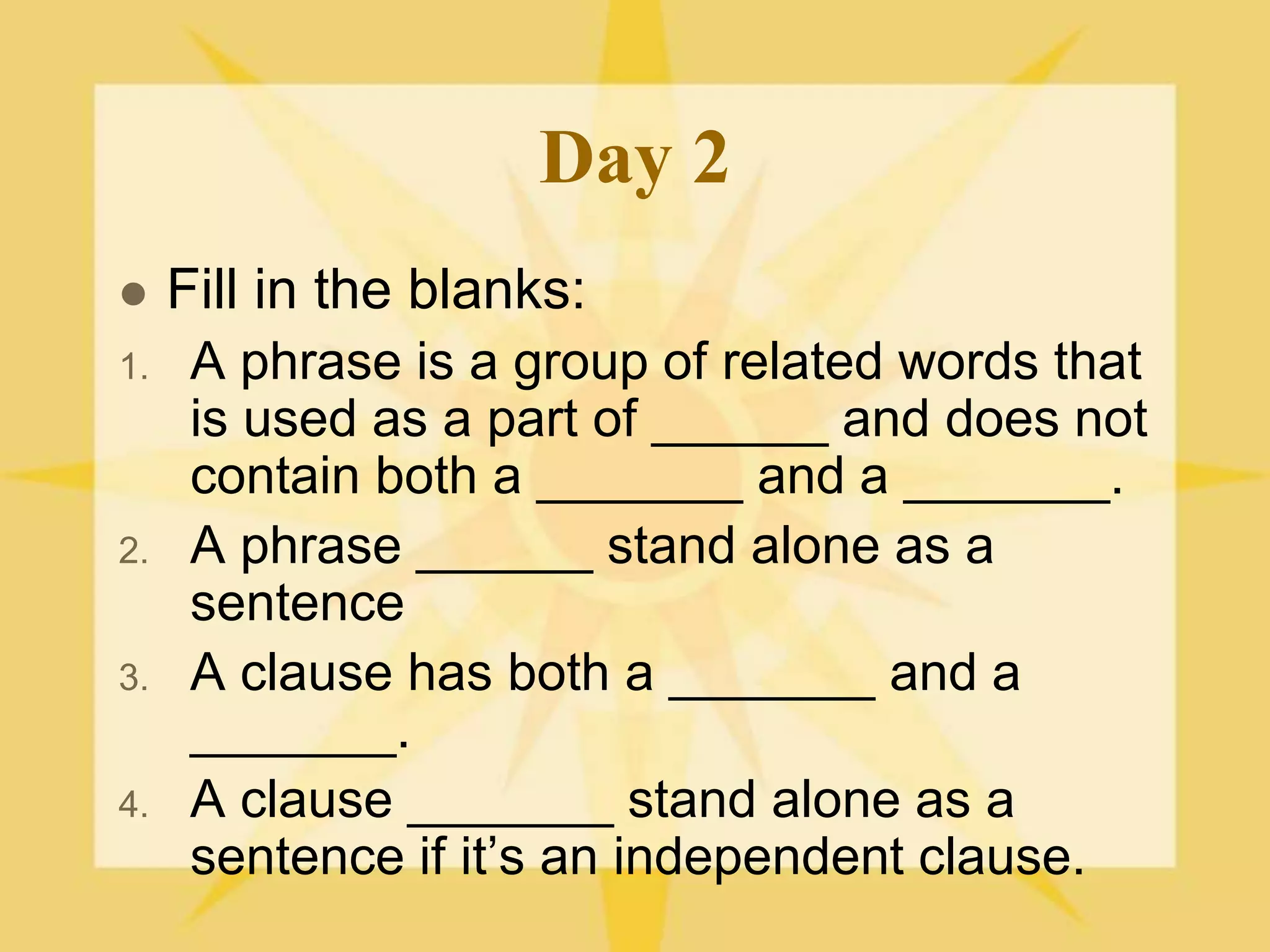
Day 2
 Fill in the blanks:
1. A phrase is a group of related words that
is used as a part of ______ and does not
contain both a _______ and a _______.
2. A phrase ______ stand alone as a
sentence
3. A clause has both a _______ and a
_______.
4. A clause _______ stand alone as a
sentence if it’s an independent clause.
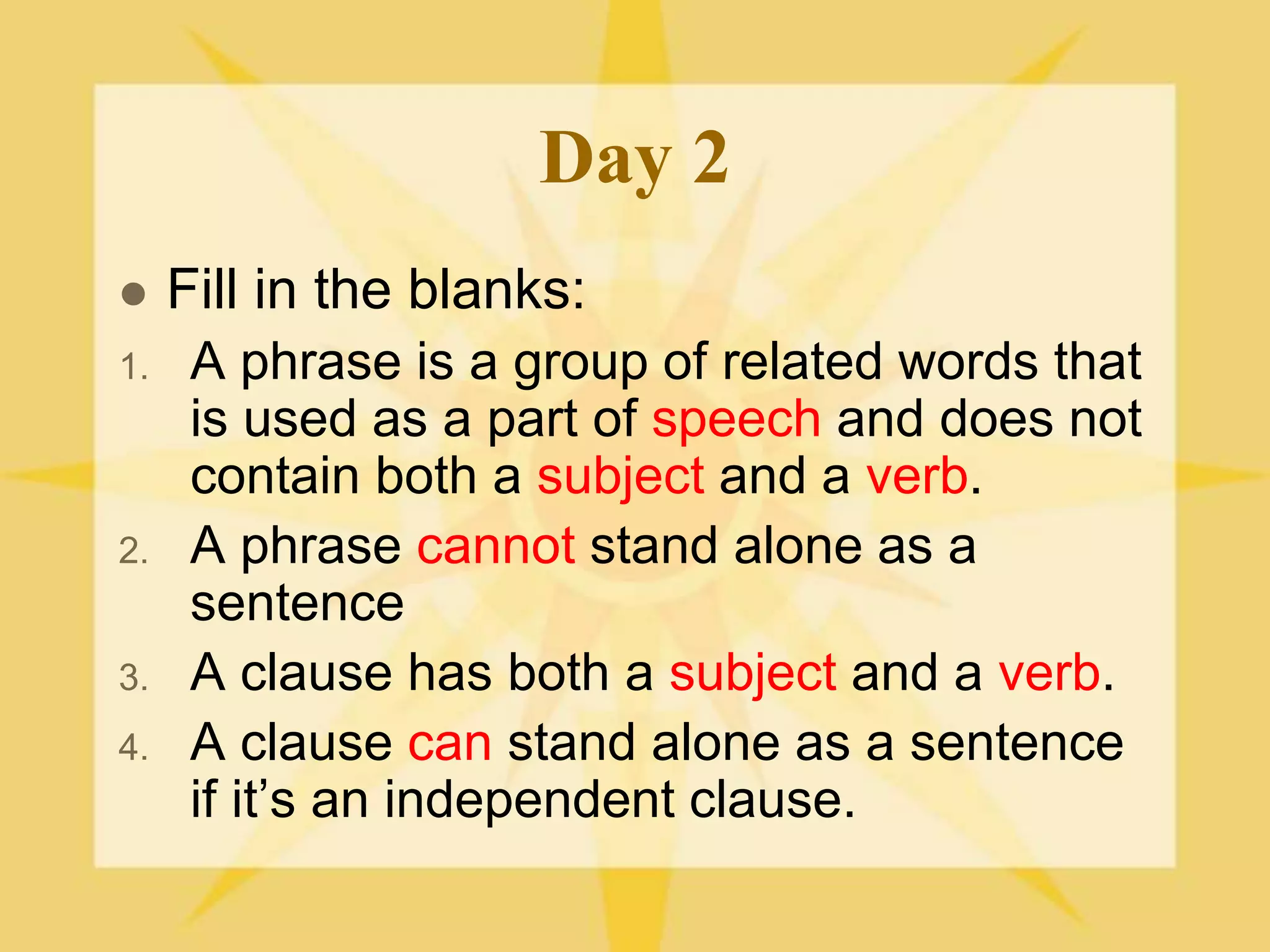
Day 2
 Fill in the blanks:
1. A phrase is a group of related words that
is used as a part of speech and does not
contain both a subject and a verb.
2. A phrase cannot stand alone as a
sentence
3. A clause has both a subject and a verb.
4. A clause can stand alone as a sentence
if it’s an independent clause.
Identifying phrase & clauses
1. The ski lift broke after we got on it.
2. Against the wall.
3. For a while.
4. Tomorrow we will go.
5. Until the end of the week.
6. Have gone running for an hour.
7. Before you know it, it will be summer.
Adjective Phrase
 An ADJECTIVE PHRASE is
prepositional phrase that is used to
modify a noun.
Example:
Adj: Icy chunks fell from the sky.
Adj. phrase: Chunks of ice fell from the
sky.
Adj: I ordered a spaghetti dinner.
Adj. phrase: I ordered a dinner of
spaghetti.
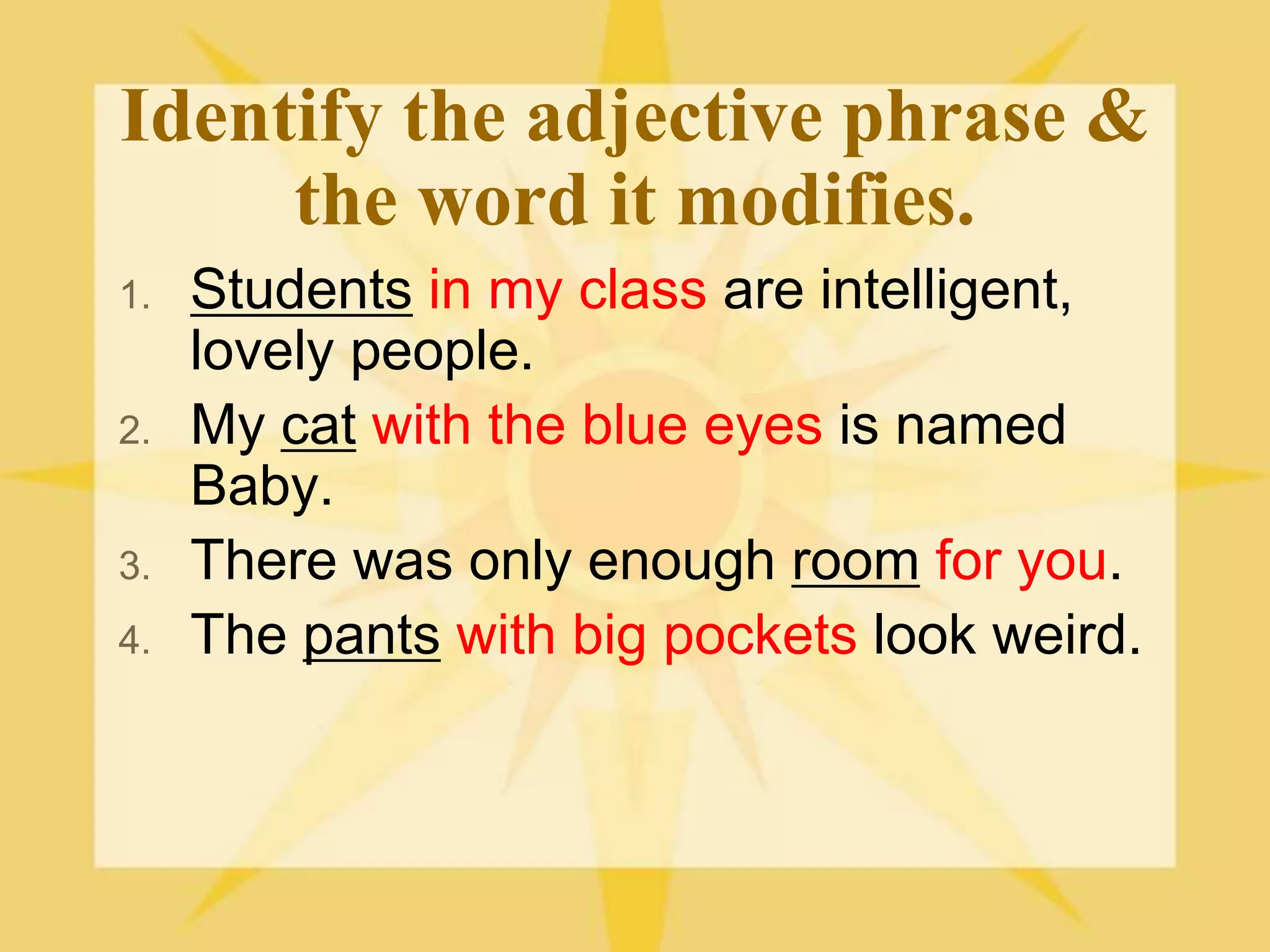
Identify the adjective phrase &
the word it modifies.
1. Students in my class are intelligent,
lovely people.
2. My cat with the blue eyes is named
Baby.
3. There was only enough room for you.
4. The pants with big pockets look weird.
Identify the adjective phrase &
the word it modifies.
1. Students in my class are intelligent,
lovely people.
2. My cat with the blue eyes is named
Baby.
3. There was only enough room for you.
4. The pants with big pockets look weird.
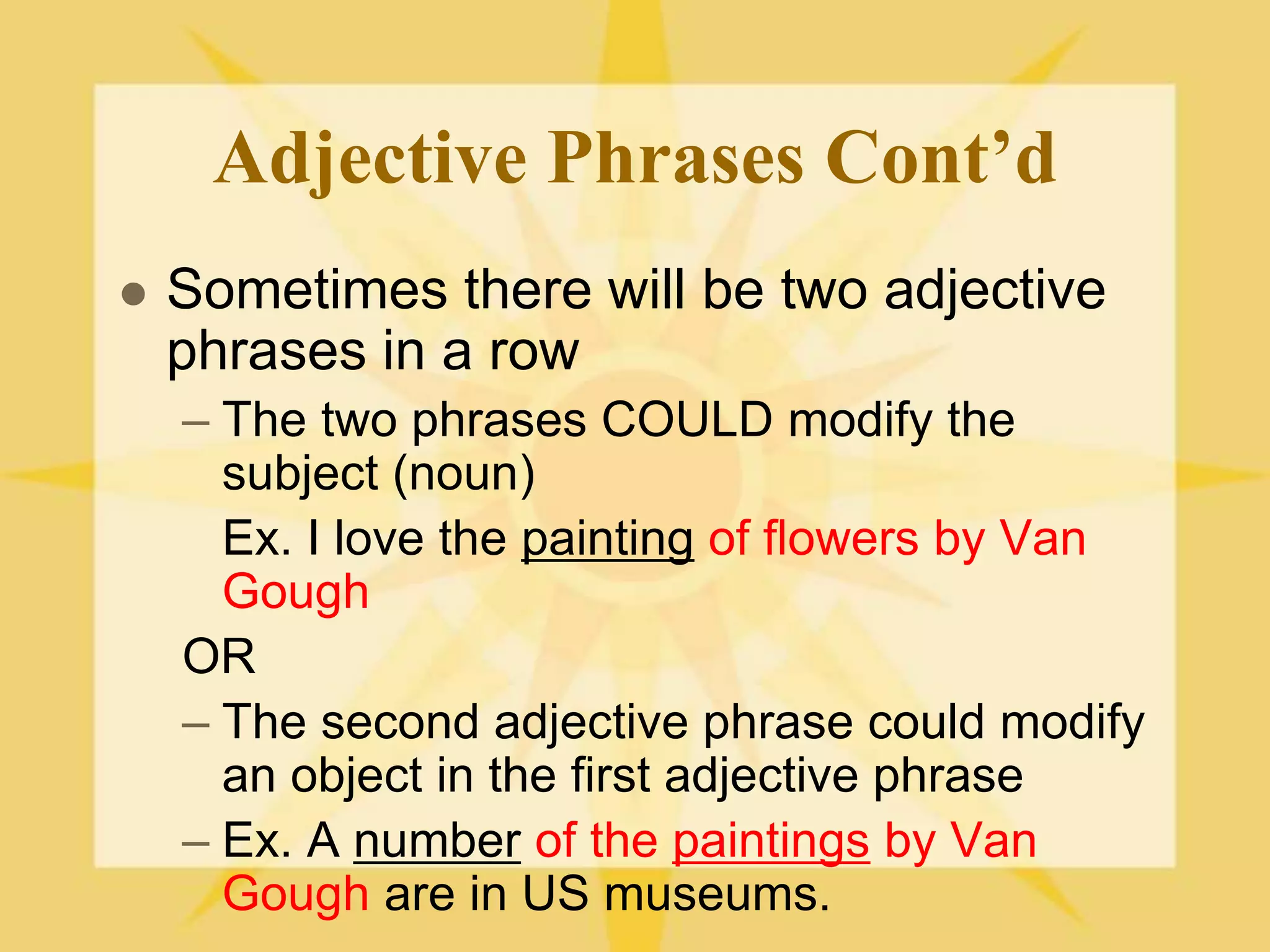
Adjective Phrases Cont’d
 Sometimes there will be two adjective
phrases in a row
– The two phrases COULD modify the
subject (noun)
Ex. I love the painting of flowers by Van
Gough
OR
– The second adjective phrase could modify
an object in the first adjective phrase
– Ex. A number of the paintings by Van
Gough are in US museums.
1. The importance of studying before
tests cannot be denied.
2. The topics of importance in a unit are
usually covered on the study guide.
3. Study guides with review questions on
them help you focus your studying.
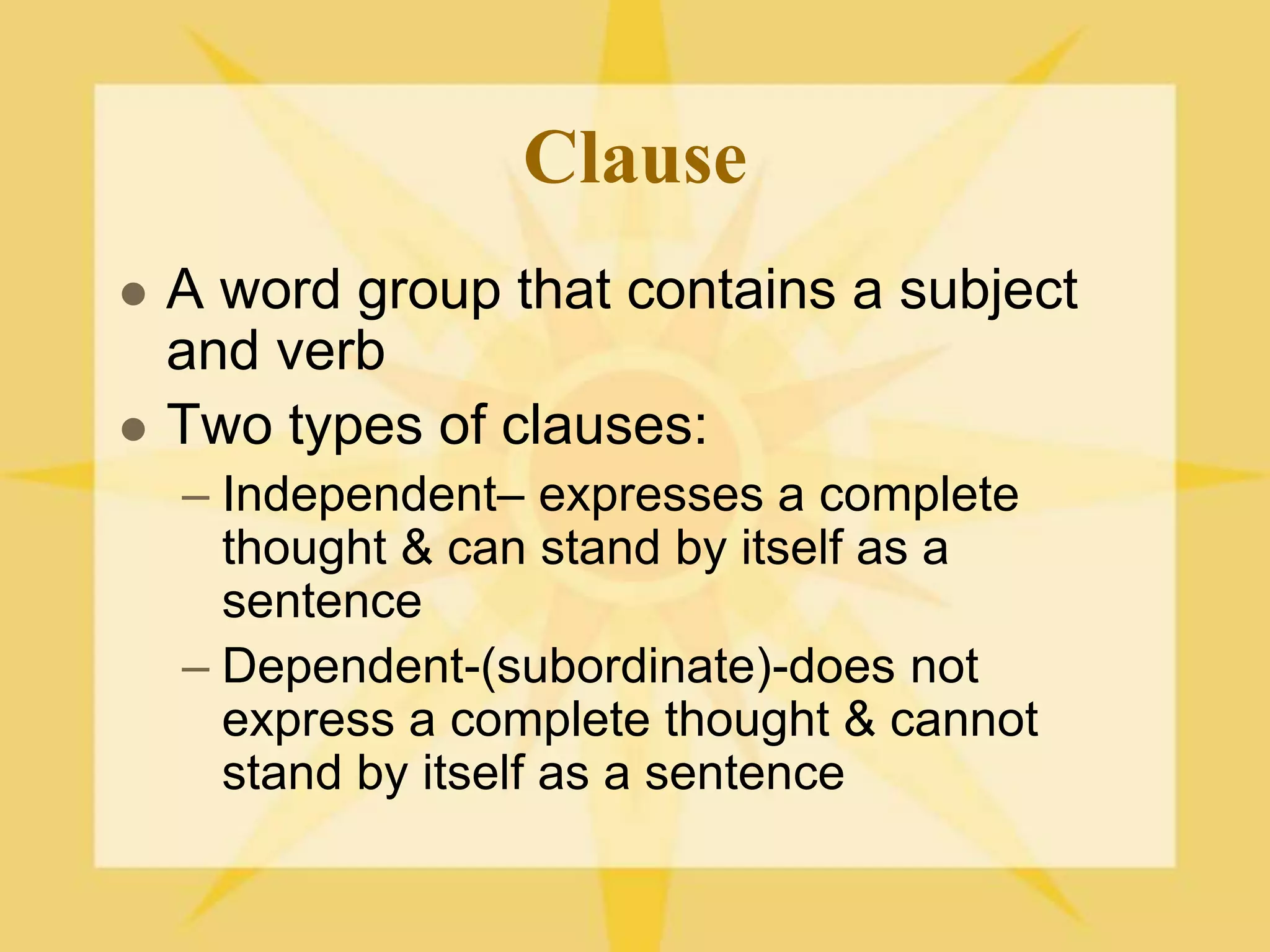
Clause
 A word group that contains a subject
and verb
 Two types of clauses:
– Independent– expresses a complete
thought & can stand by itself as a
sentence
– Dependent-(subordinate)-does not
express a complete thought & cannot
stand by itself as a sentence
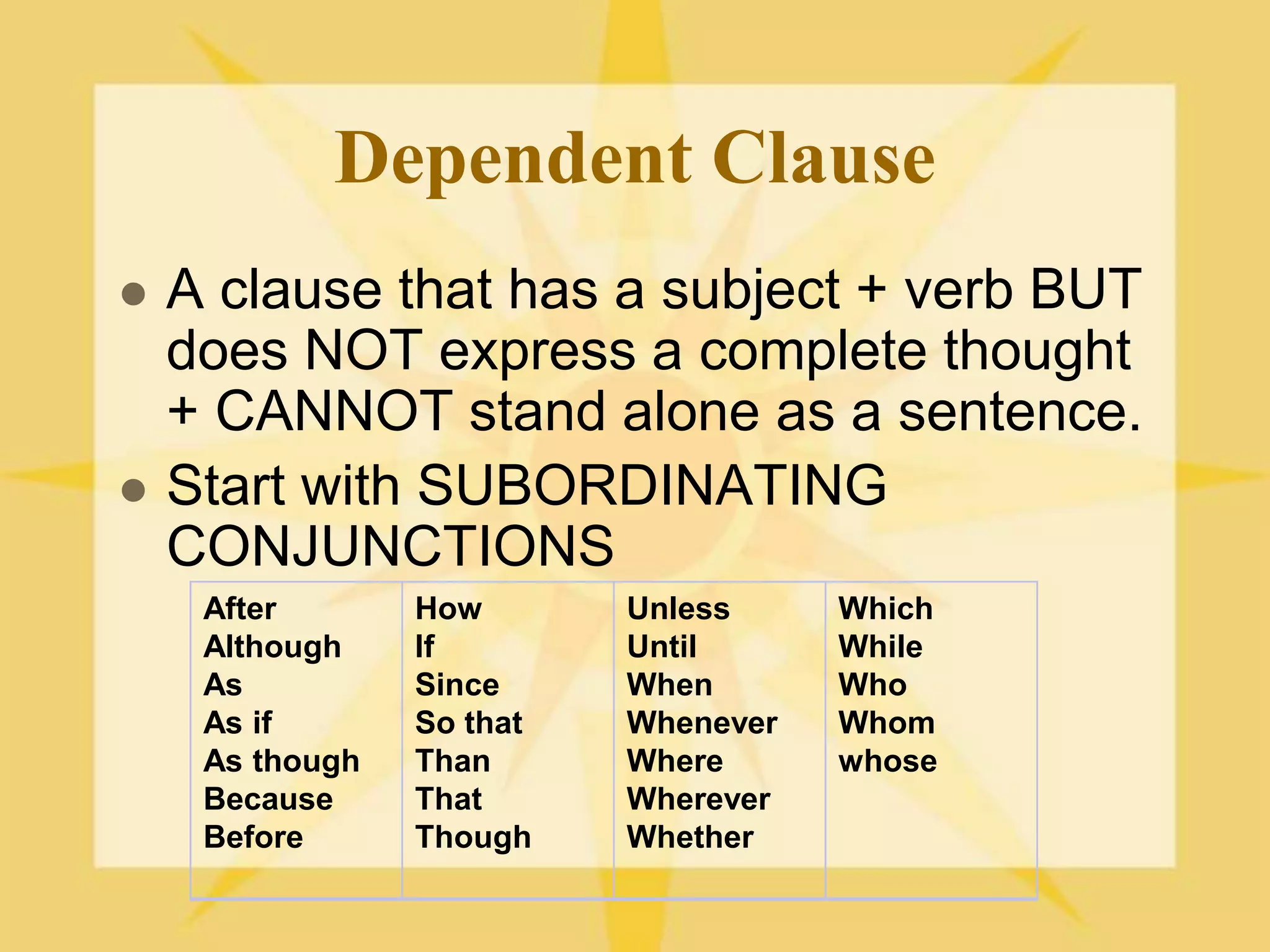
Dependent Clause
 A clause that has a subject + verb BUT
does NOT express a complete thought
+ CANNOT stand alone as a sentence.
 Start with SUBORDINATING
CONJUNCTIONS
After
Although
As
As if
As though
Because
Before
How
If
Since
So that
Than
That
Though
Unless
Until
When
Whenever
Where
Wherever
Whether
Which
While
Who
Whom
whose
Check for Understanding
 Identify the subject & verb & determine
if it’s an independent or dependent
clause:
1. Whose aunt rode on the space shuttle
2. His aunt rode on the space shuttle
3. Where I grew up.
4. I grew up here.
 Write a sub clause for your vocab
words: adjourn, cease, decisive
 Start with a subordinating Conjunction:
After
Although
As
As if
As though
Because
Before
How
If
Since
So that
Than
That
Though
Unless
Until
When
Whenever
Where
Wherever
Whether
Which
While
Who
Whom
whose
Independent Clause
 A clause that has a subject =+ verb +
expresses a complete idea + can stand
by itself as a sentence.

English phrase clause

  • 1.
  • 2.
    Webs Phrase Not a full sent. Nota complete thought Prepositional phrase Adjective phrase Adverb phrase Verb phrase Can have a subject or a verb or neither Clause Has a subject Has a verb Independent & Dependent=Subordinate Can express a complete thought
  • 3.
    Grammar  Phrases &Clauses  Which of the following are phrases and clauses? 1.In my room—Phrase 2.The cat went under the bed—Clause 3.Until next week P or C—why? 4. Quickly walking to the store P or C—why? 5.Yet they tried—P or C—why?
  • 4.
    Phrases & Clauses Phrase: group of related words that does not contain a subject and verb and is used as a part of speech  Clause: a group of words that contains a subject and a verb and is used as part of a sentence or a sentence by itself.
  • 5.
    Day 2  Fillin the blanks: 1. A phrase is a group of related words that is used as a part of ______ and does not contain both a _______ and a _______. 2. A phrase ______ stand alone as a sentence 3. A clause has both a _______ and a _______. 4. A clause _______ stand alone as a sentence if it’s an independent clause.
  • 6.
    Day 2  Fillin the blanks: 1. A phrase is a group of related words that is used as a part of speech and does not contain both a subject and a verb. 2. A phrase cannot stand alone as a sentence 3. A clause has both a subject and a verb. 4. A clause can stand alone as a sentence if it’s an independent clause.
  • 7.
    Identifying phrase &clauses 1. The ski lift broke after we got on it. 2. Against the wall. 3. For a while. 4. Tomorrow we will go. 5. Until the end of the week. 6. Have gone running for an hour. 7. Before you know it, it will be summer.
  • 8.
    Adjective Phrase  AnADJECTIVE PHRASE is prepositional phrase that is used to modify a noun. Example: Adj: Icy chunks fell from the sky. Adj. phrase: Chunks of ice fell from the sky. Adj: I ordered a spaghetti dinner. Adj. phrase: I ordered a dinner of spaghetti.
  • 9.
    Identify the adjectivephrase & the word it modifies. 1. Students in my class are intelligent, lovely people. 2. My cat with the blue eyes is named Baby. 3. There was only enough room for you. 4. The pants with big pockets look weird.
  • 10.
    Identify the adjectivephrase & the word it modifies. 1. Students in my class are intelligent, lovely people. 2. My cat with the blue eyes is named Baby. 3. There was only enough room for you. 4. The pants with big pockets look weird.
  • 11.
    Adjective Phrases Cont’d Sometimes there will be two adjective phrases in a row – The two phrases COULD modify the subject (noun) Ex. I love the painting of flowers by Van Gough OR – The second adjective phrase could modify an object in the first adjective phrase – Ex. A number of the paintings by Van Gough are in US museums.
  • 12.
    1. The importanceof studying before tests cannot be denied. 2. The topics of importance in a unit are usually covered on the study guide. 3. Study guides with review questions on them help you focus your studying.
  • 13.
    Clause  A wordgroup that contains a subject and verb  Two types of clauses: – Independent– expresses a complete thought & can stand by itself as a sentence – Dependent-(subordinate)-does not express a complete thought & cannot stand by itself as a sentence
  • 14.
    Dependent Clause  Aclause that has a subject + verb BUT does NOT express a complete thought + CANNOT stand alone as a sentence.  Start with SUBORDINATING CONJUNCTIONS After Although As As if As though Because Before How If Since So that Than That Though Unless Until When Whenever Where Wherever Whether Which While Who Whom whose
  • 15.
    Check for Understanding Identify the subject & verb & determine if it’s an independent or dependent clause: 1. Whose aunt rode on the space shuttle 2. His aunt rode on the space shuttle 3. Where I grew up. 4. I grew up here.
  • 16.
     Write asub clause for your vocab words: adjourn, cease, decisive  Start with a subordinating Conjunction: After Although As As if As though Because Before How If Since So that Than That Though Unless Until When Whenever Where Wherever Whether Which While Who Whom whose
  • 17.
    Independent Clause  Aclause that has a subject =+ verb + expresses a complete idea + can stand by itself as a sentence.