TDC 1 - Articles
Ana Lia Rea Moreira Salles Pinto e
Luciana Pereira Jardim Ceylão
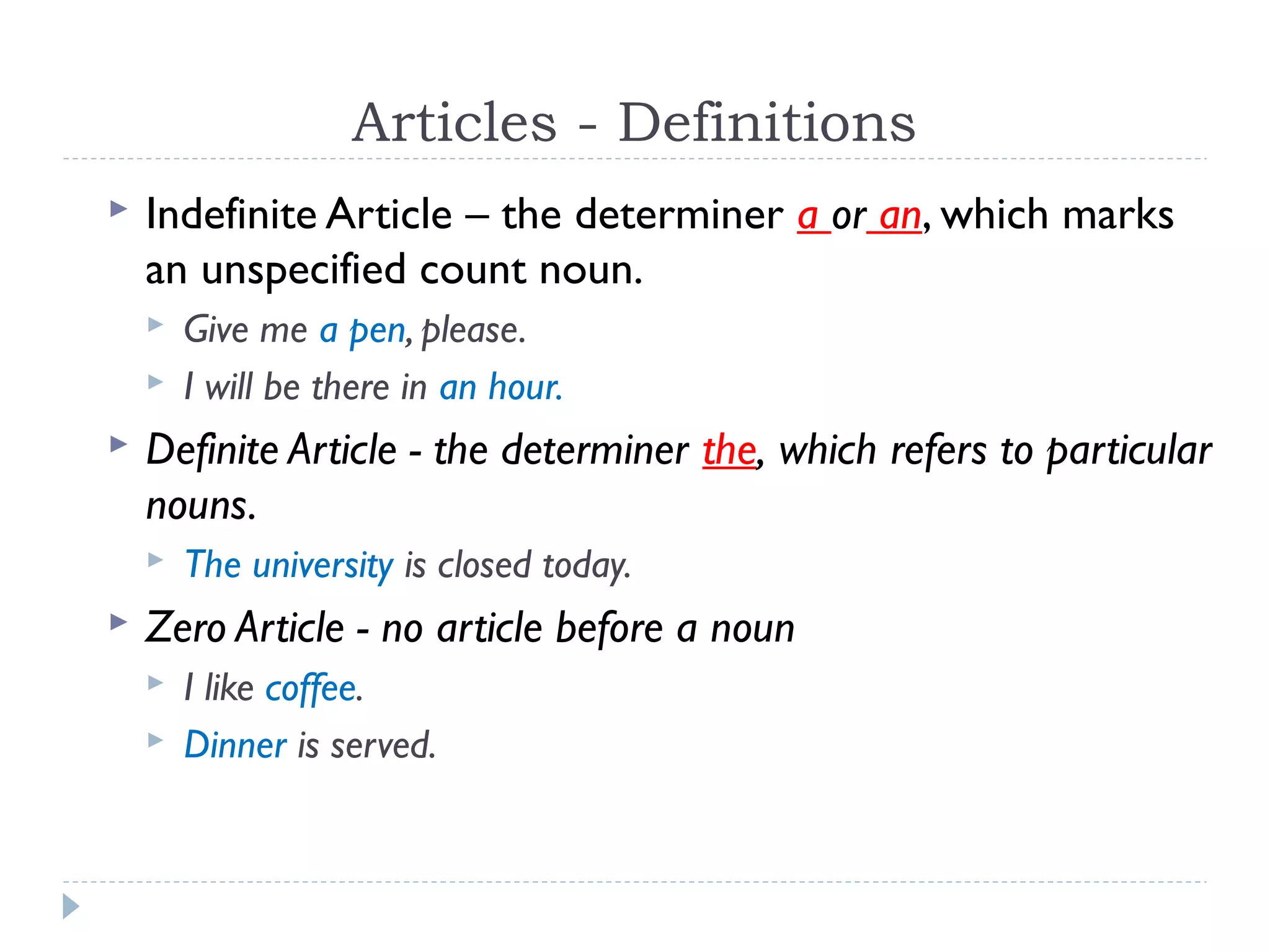
Articles - Definitions
 Indefinite Article – the determiner a or an, which marks
an unspecified count noun.
 Give me a pen, please.
 I will be there in an hour.
 Definite Article - the determiner the, which refers to particular
nouns.
 The university is closed today.
 Zero Article - no article before a noun
 I like coffee.
 Dinner is served.
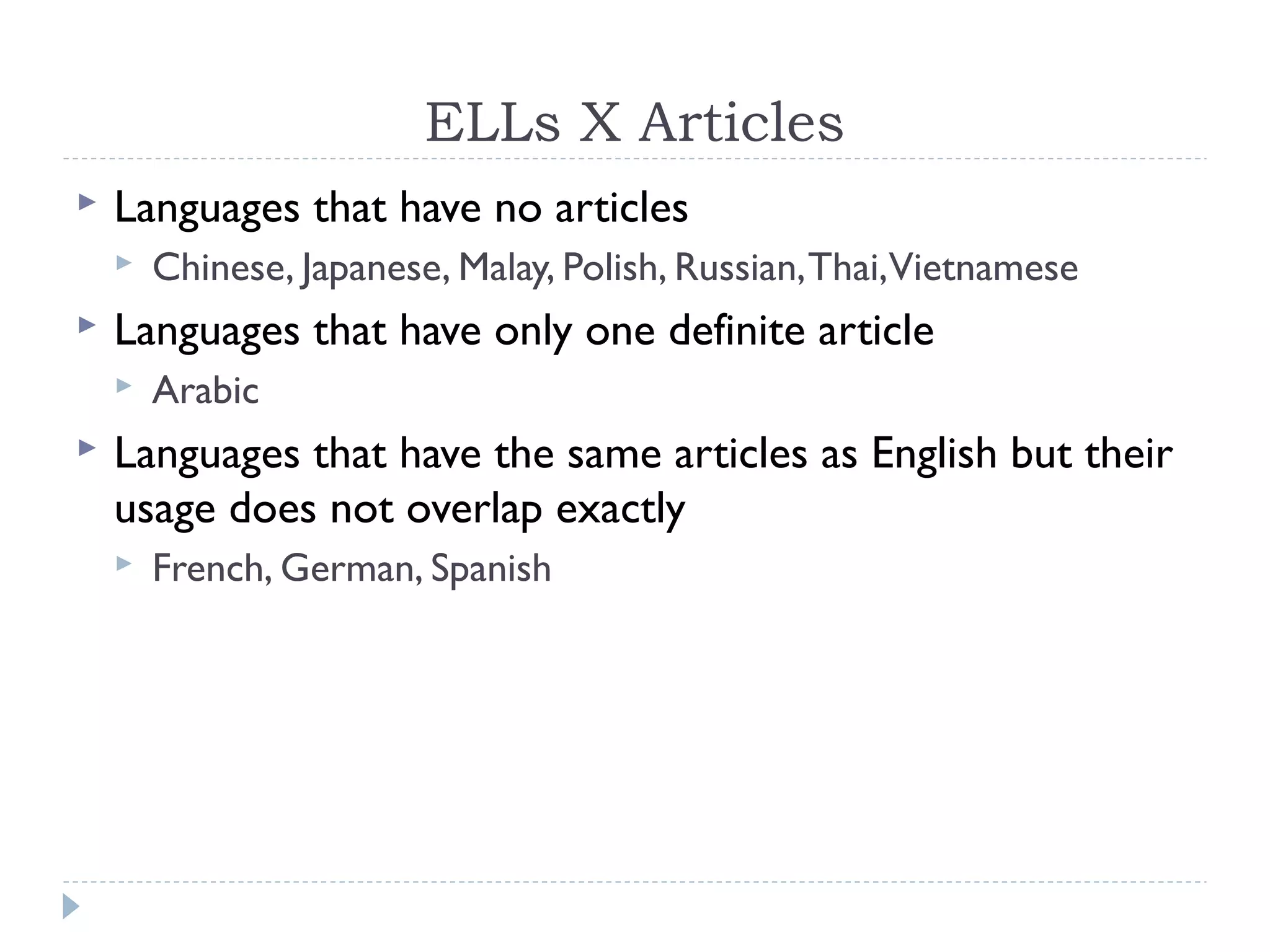
ELLs X Articles
 Languages that have no articles
 Chinese, Japanese, Malay, Polish, Russian,Thai,Vietnamese
 Languages that have only one definite article
 Arabic
 Languages that have the same articles as English but their
usage does not overlap exactly
 French, German, Spanish
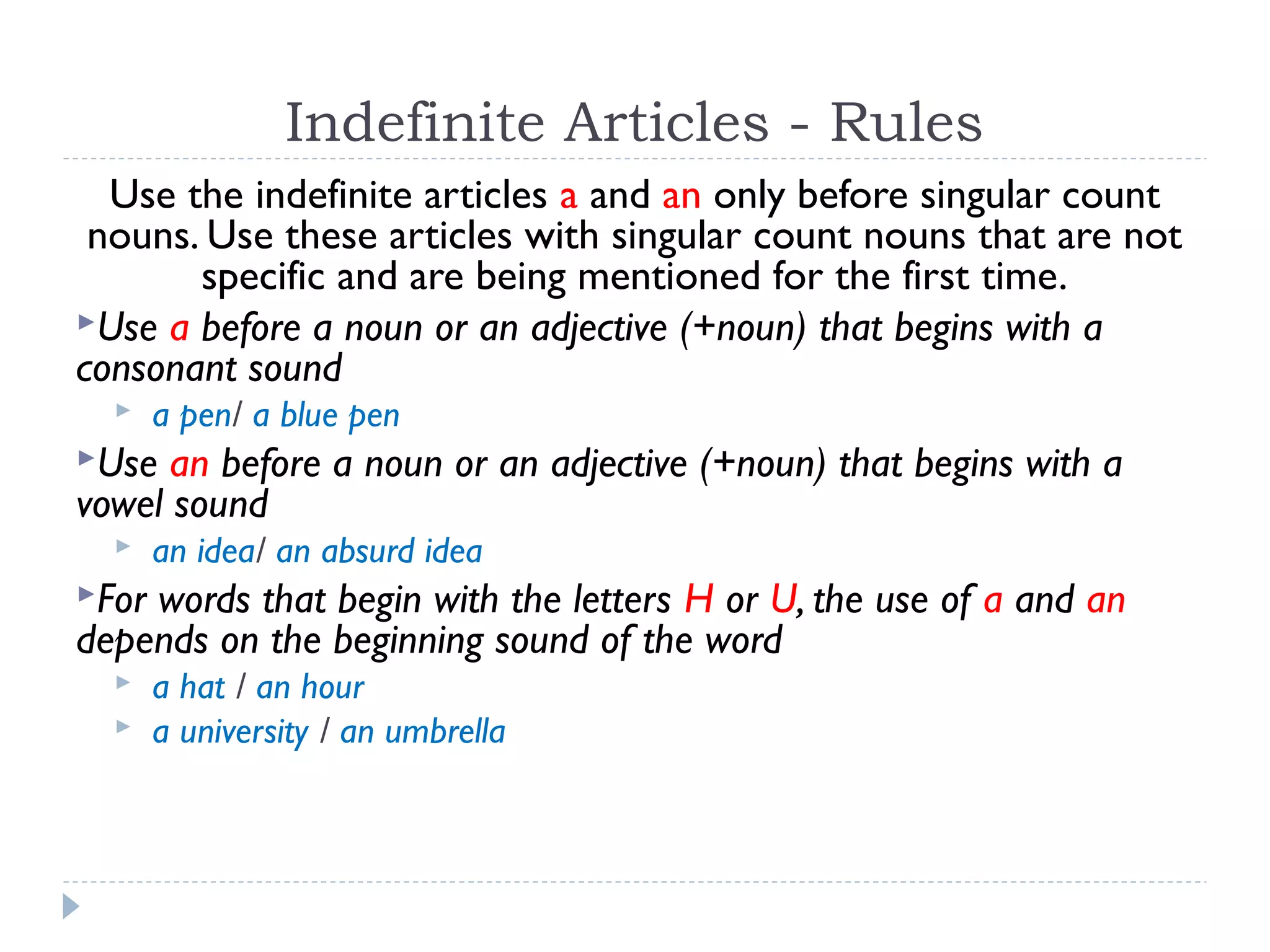
Indefinite Articles - Rules
Use the indefinite articles a and an only before singular count
nouns. Use these articles with singular count nouns that are not
specific and are being mentioned for the first time.
Use a before a noun or an adjective (+noun) that begins with a
consonant sound
 a pen/ a blue pen
Use an before a noun or an adjective (+noun) that begins with a
vowel sound
 an idea/ an absurd idea
For words that begin with the letters H or U, the use of a and an
depends on the beginning sound of the word
 a hat / an hour
 a university / an umbrella
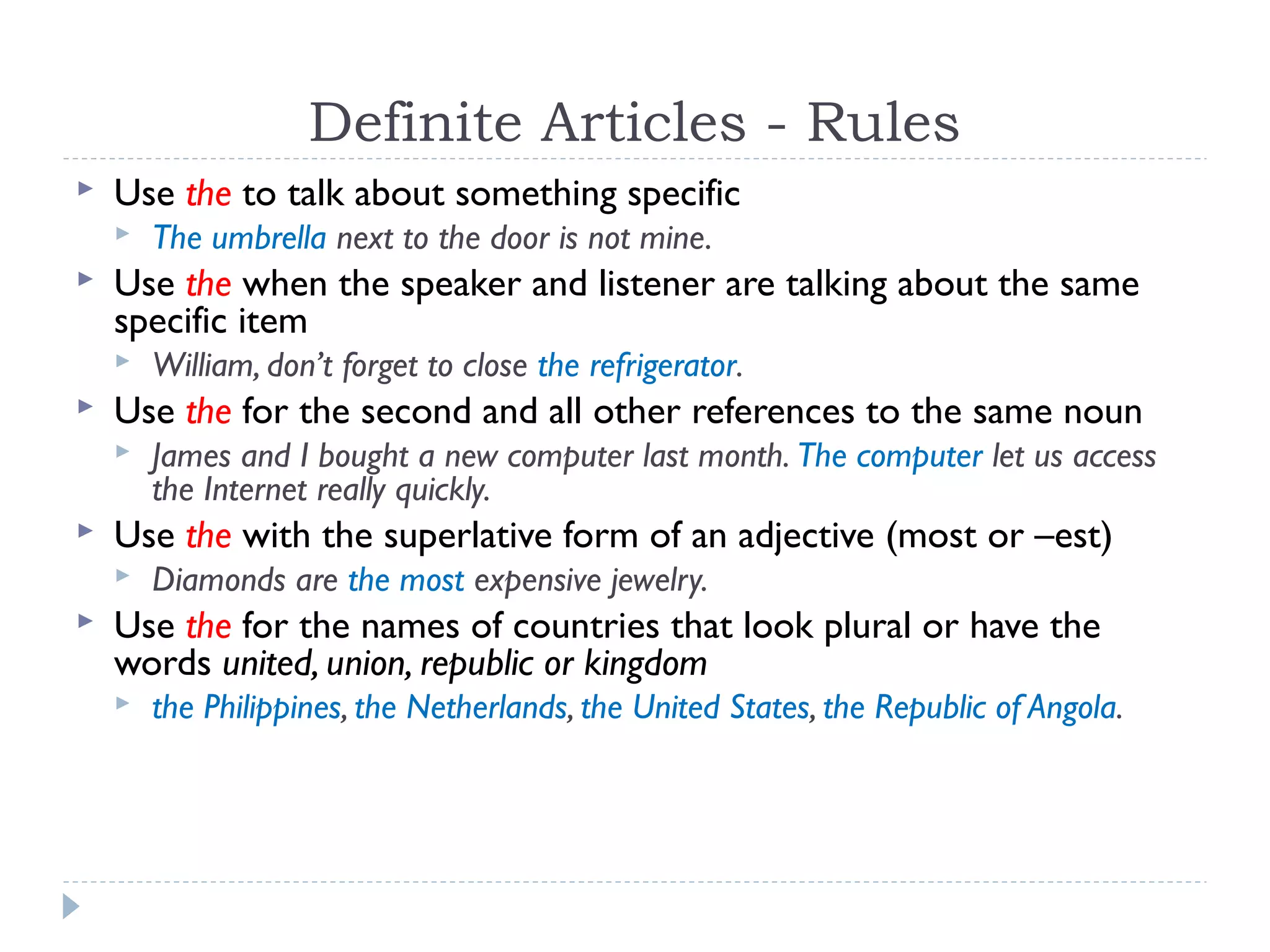
Definite Articles - Rules
 Use the to talk about something specific
 The umbrella next to the door is not mine.
 Use the when the speaker and listener are talking about the same
specific item
 William, don’t forget to close the refrigerator.
 Use the for the second and all other references to the same noun
 James and I bought a new computer last month. The computer let us access
the Internet really quickly.
 Use the with the superlative form of an adjective (most or –est)
 Diamonds are the most expensive jewelry.
 Use the for the names of countries that look plural or have the
words united, union, republic or kingdom
 the Philippines, the Netherlands, the United States, the Republic of Angola.
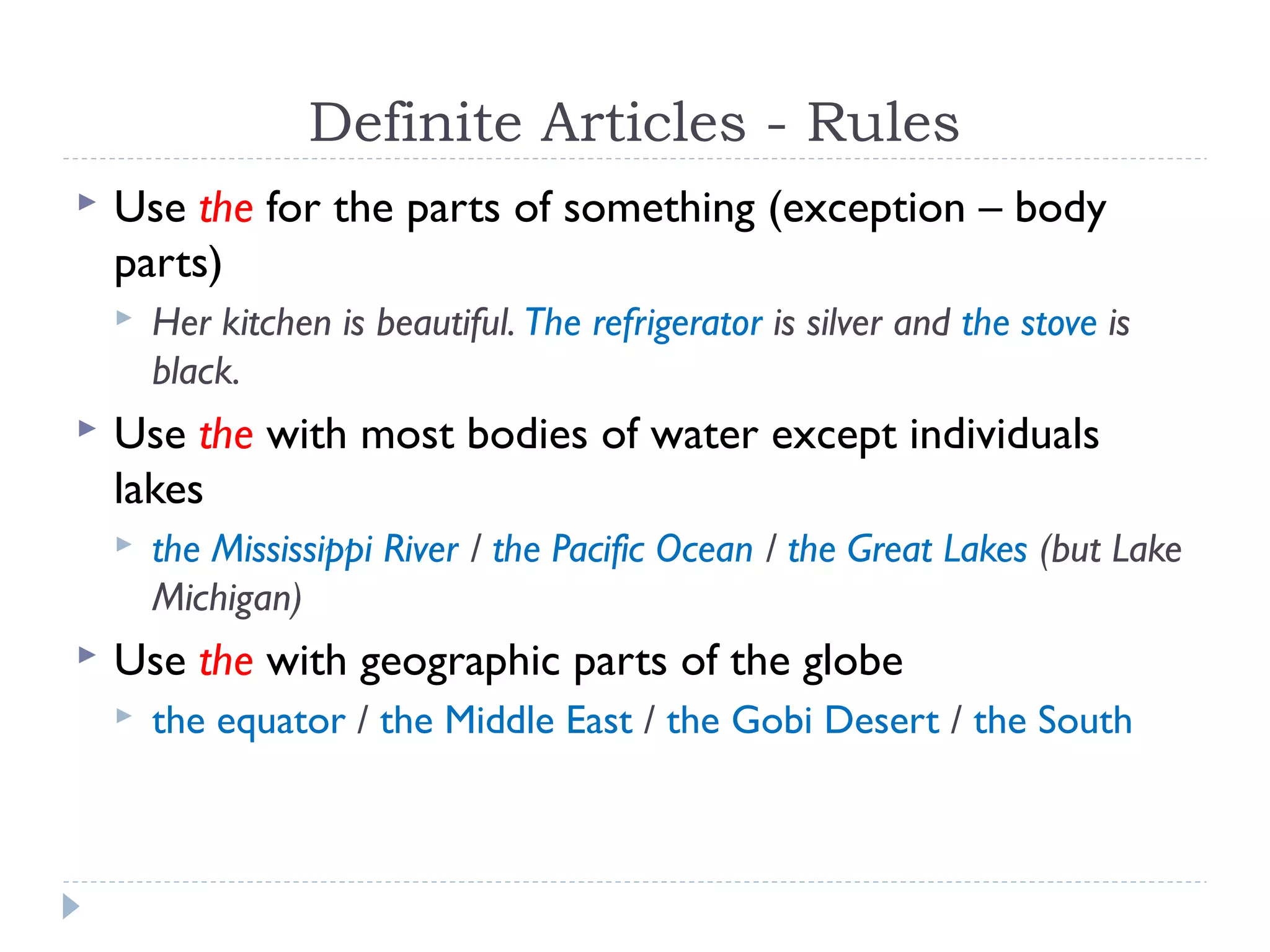
Definite Articles - Rules
 Use the for the parts of something (exception – body
parts)
 Her kitchen is beautiful. The refrigerator is silver and the stove is
black.
 Use the with most bodies of water except individuals
lakes
 the Mississippi River / the Pacific Ocean / the Great Lakes (but Lake
Michigan)
 Use the with geographic parts of the globe
 the equator / the Middle East / the Gobi Desert / the South
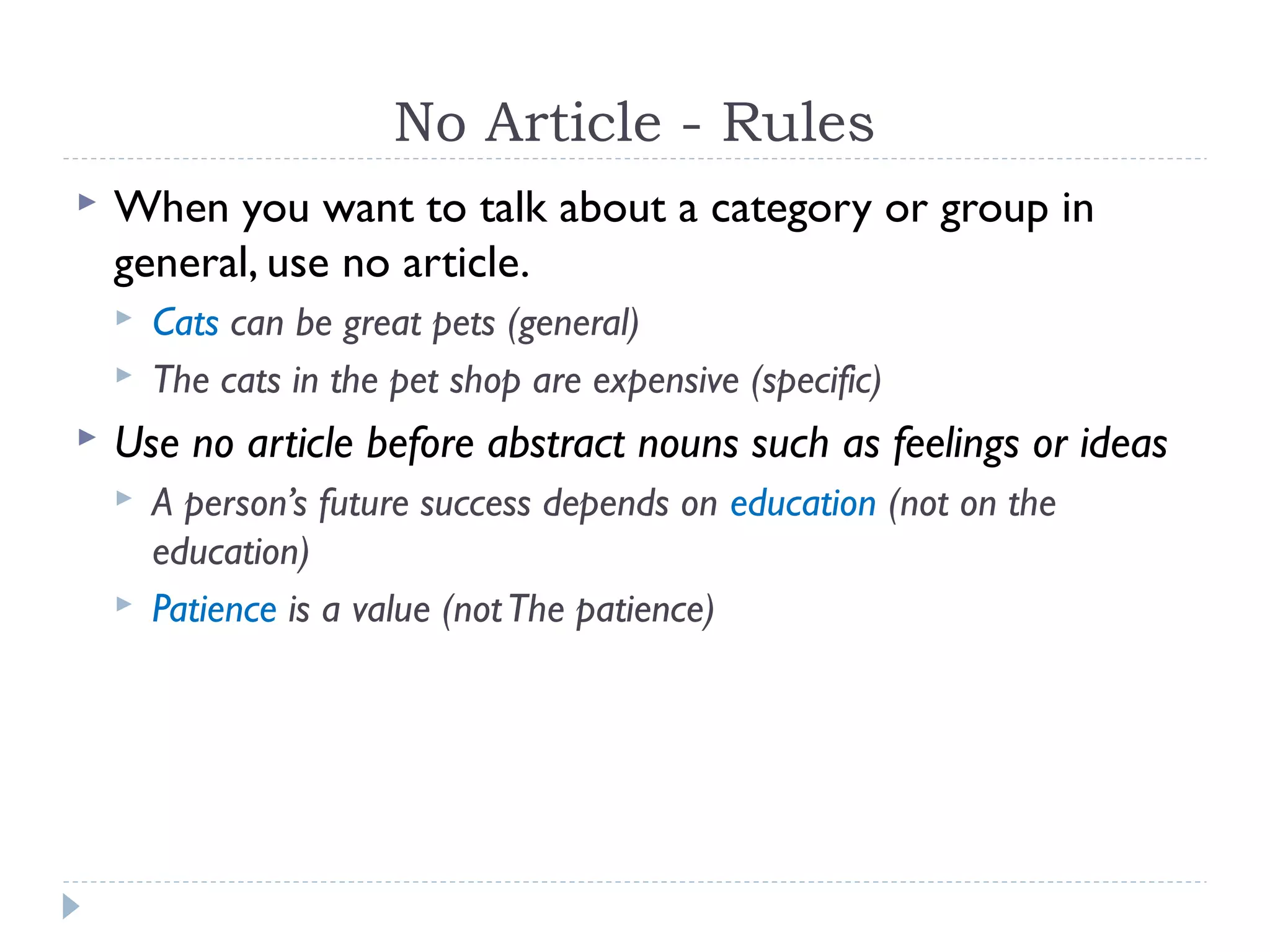
No Article - Rules
 When you want to talk about a category or group in
general, use no article.
 Cats can be great pets (general)
 The cats in the pet shop are expensive (specific)
 Use no article before abstract nouns such as feelings or ideas
 A person’s future success depends on education (not on the
education)
 Patience is a value (notThe patience)
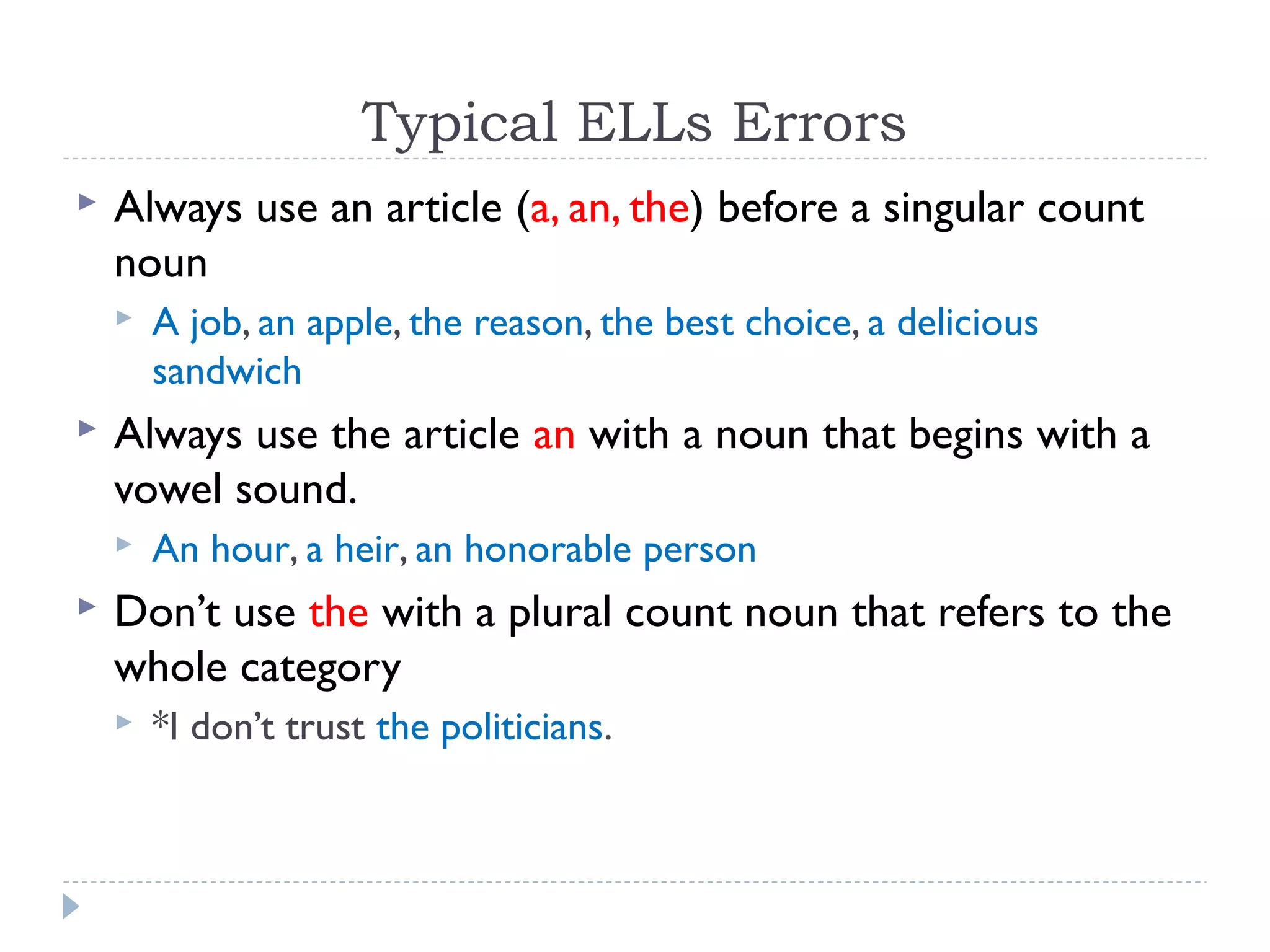
Typical ELLs Errors
 Always use an article (a, an, the) before a singular count
noun
 A job, an apple, the reason, the best choice, a delicious
sandwich
 Always use the article an with a noun that begins with a
vowel sound.
 An hour, a heir, an honorable person
 Don’t use the with a plural count noun that refers to the
whole category
 *I don’t trust the politicians.
Typical ELLs Errors
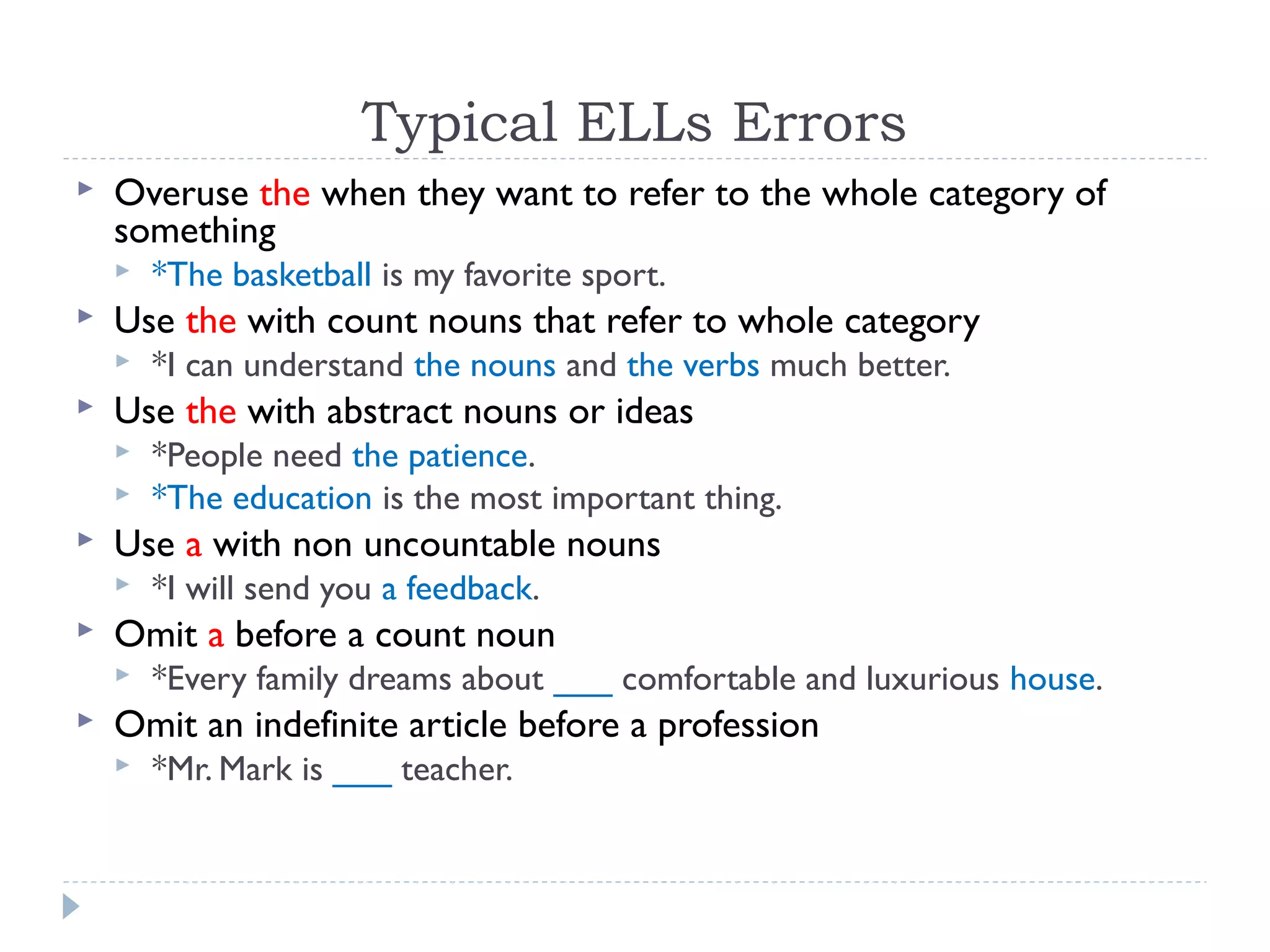
 Overuse the when they want to refer to the whole category of
something
 *The basketball is my favorite sport.
 Use the with count nouns that refer to whole category
 *I can understand the nouns and the verbs much better.
 Use the with abstract nouns or ideas
 *People need the patience.
 *The education is the most important thing.
 Use a with non uncountable nouns
 *I will send you a feedback.
 Omit a before a count noun
 *Every family dreams about ___ comfortable and luxurious house.
 Omit an indefinite article before a profession
 *Mr. Mark is ___ teacher.
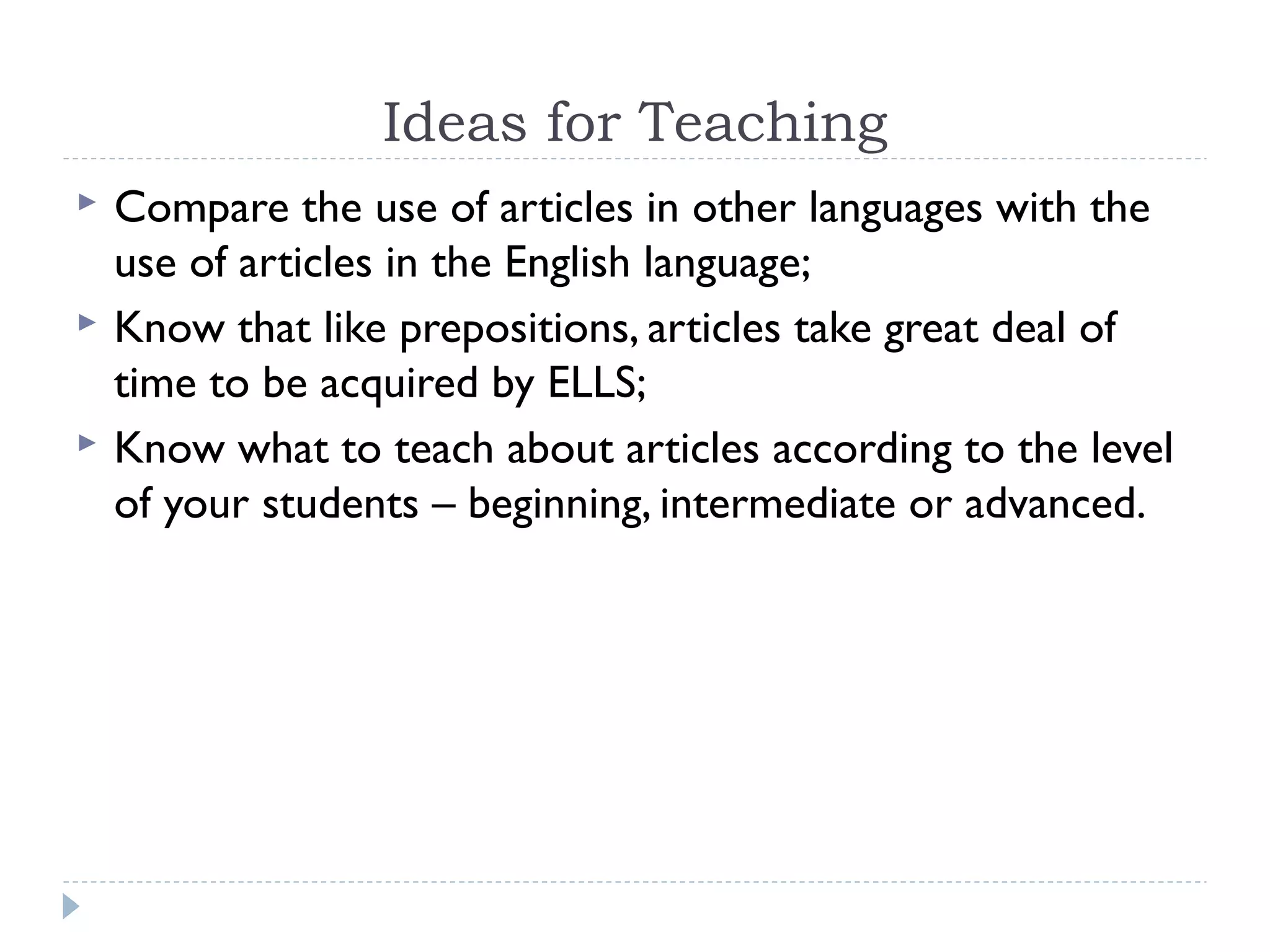
Ideas for Teaching
 Compare the use of articles in other languages with the
use of articles in the English language;
 Know that like prepositions, articles take great deal of
time to be acquired by ELLS;
 Know what to teach about articles according to the level
of your students – beginning, intermediate or advanced.

Ana and luciana's articles

  • 1.
    TDC 1 -Articles Ana Lia Rea Moreira Salles Pinto e Luciana Pereira Jardim Ceylão
  • 2.
    Articles - Definitions Indefinite Article – the determiner a or an, which marks an unspecified count noun.  Give me a pen, please.  I will be there in an hour.  Definite Article - the determiner the, which refers to particular nouns.  The university is closed today.  Zero Article - no article before a noun  I like coffee.  Dinner is served.
  • 3.
    ELLs X Articles Languages that have no articles  Chinese, Japanese, Malay, Polish, Russian,Thai,Vietnamese  Languages that have only one definite article  Arabic  Languages that have the same articles as English but their usage does not overlap exactly  French, German, Spanish
  • 4.
    Indefinite Articles -Rules Use the indefinite articles a and an only before singular count nouns. Use these articles with singular count nouns that are not specific and are being mentioned for the first time. Use a before a noun or an adjective (+noun) that begins with a consonant sound  a pen/ a blue pen Use an before a noun or an adjective (+noun) that begins with a vowel sound  an idea/ an absurd idea For words that begin with the letters H or U, the use of a and an depends on the beginning sound of the word  a hat / an hour  a university / an umbrella
  • 5.
    Definite Articles -Rules  Use the to talk about something specific  The umbrella next to the door is not mine.  Use the when the speaker and listener are talking about the same specific item  William, don’t forget to close the refrigerator.  Use the for the second and all other references to the same noun  James and I bought a new computer last month. The computer let us access the Internet really quickly.  Use the with the superlative form of an adjective (most or –est)  Diamonds are the most expensive jewelry.  Use the for the names of countries that look plural or have the words united, union, republic or kingdom  the Philippines, the Netherlands, the United States, the Republic of Angola.
  • 6.
    Definite Articles -Rules  Use the for the parts of something (exception – body parts)  Her kitchen is beautiful. The refrigerator is silver and the stove is black.  Use the with most bodies of water except individuals lakes  the Mississippi River / the Pacific Ocean / the Great Lakes (but Lake Michigan)  Use the with geographic parts of the globe  the equator / the Middle East / the Gobi Desert / the South
  • 7.
    No Article -Rules  When you want to talk about a category or group in general, use no article.  Cats can be great pets (general)  The cats in the pet shop are expensive (specific)  Use no article before abstract nouns such as feelings or ideas  A person’s future success depends on education (not on the education)  Patience is a value (notThe patience)
  • 8.
    Typical ELLs Errors Always use an article (a, an, the) before a singular count noun  A job, an apple, the reason, the best choice, a delicious sandwich  Always use the article an with a noun that begins with a vowel sound.  An hour, a heir, an honorable person  Don’t use the with a plural count noun that refers to the whole category  *I don’t trust the politicians.
  • 9.
    Typical ELLs Errors Overuse the when they want to refer to the whole category of something  *The basketball is my favorite sport.  Use the with count nouns that refer to whole category  *I can understand the nouns and the verbs much better.  Use the with abstract nouns or ideas  *People need the patience.  *The education is the most important thing.  Use a with non uncountable nouns  *I will send you a feedback.  Omit a before a count noun  *Every family dreams about ___ comfortable and luxurious house.  Omit an indefinite article before a profession  *Mr. Mark is ___ teacher.
  • 10.
    Ideas for Teaching Compare the use of articles in other languages with the use of articles in the English language;  Know that like prepositions, articles take great deal of time to be acquired by ELLS;  Know what to teach about articles according to the level of your students – beginning, intermediate or advanced.