ENDOSPERM AND ITS
TYPES
ENDOSPERM
 Endosperm is the most common nutritive tissue for the
developing embryo in angiosperms.
 In gymnosperms, it represents the female gametophyte whereas
the female gametophyte in angiosperms differentiates before
fertilization and is haploid, the endosperm is the product of
fertilization and is usually triploid.
 After double fertilization the egg is called zygote, and the
fusion product of polars and the second male gamete is termed
Primary endosperm nucleus.
 The only angiosperms that do not form endosperm are the
members of the families Orchidaceae, Podostemaceae and
Trapaceae.
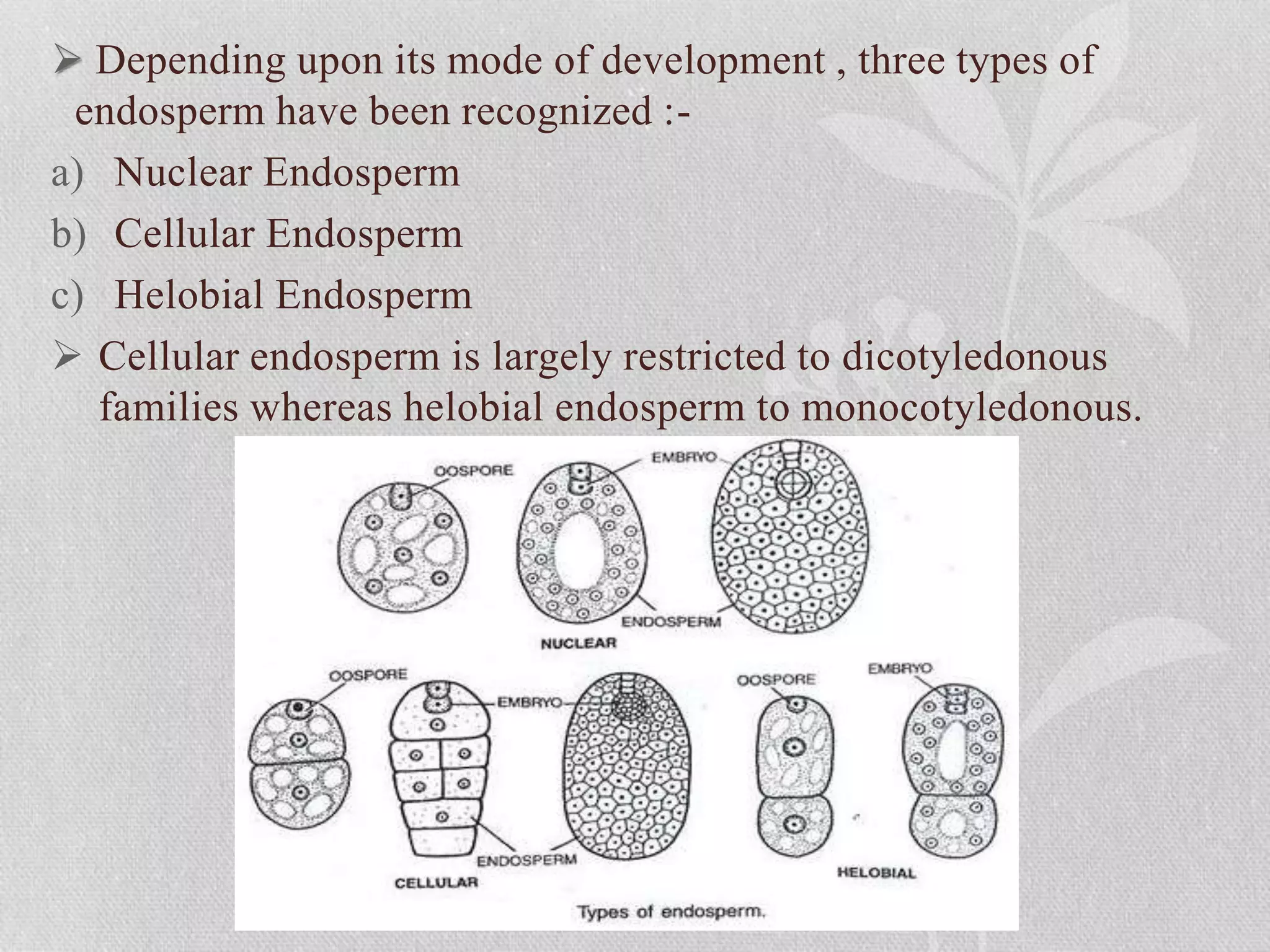
 Depending upon its mode of development , three types of
endosperm have been recognized :-
a) Nuclear Endosperm
b) Cellular Endosperm
c) Helobial Endosperm
 Cellular endosperm is largely restricted to dicotyledonous
families whereas helobial endosperm to monocotyledonous.
Nuclear Endosperm
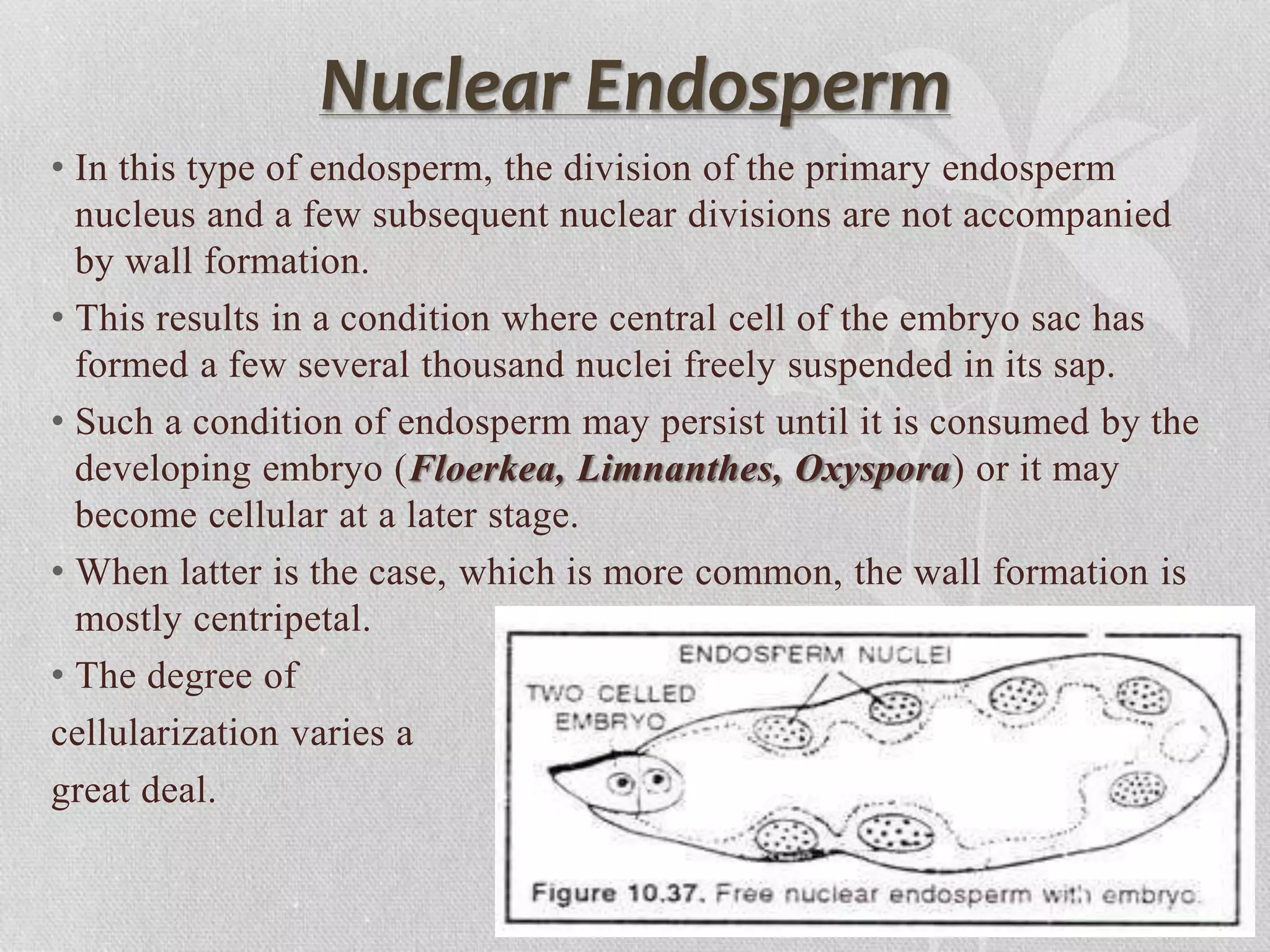
• In this type of endosperm, the division of the primary endosperm
nucleus and a few subsequent nuclear divisions are not accompanied
by wall formation.
• This results in a condition where central cell of the embryo sac has
formed a few several thousand nuclei freely suspended in its sap.
• Such a condition of endosperm may persist until it is consumed by the
developing embryo (Floerkea, Limnanthes, Oxyspora) or it may
become cellular at a later stage.
• When latter is the case, which is more common, the wall formation is
mostly centripetal.
• The degree of
cellularization varies a
great deal.
Examples :-
• Mostly endosperm becomes
completely cellular but in
Phaseolus cellularization
occurs only around the
embryo.
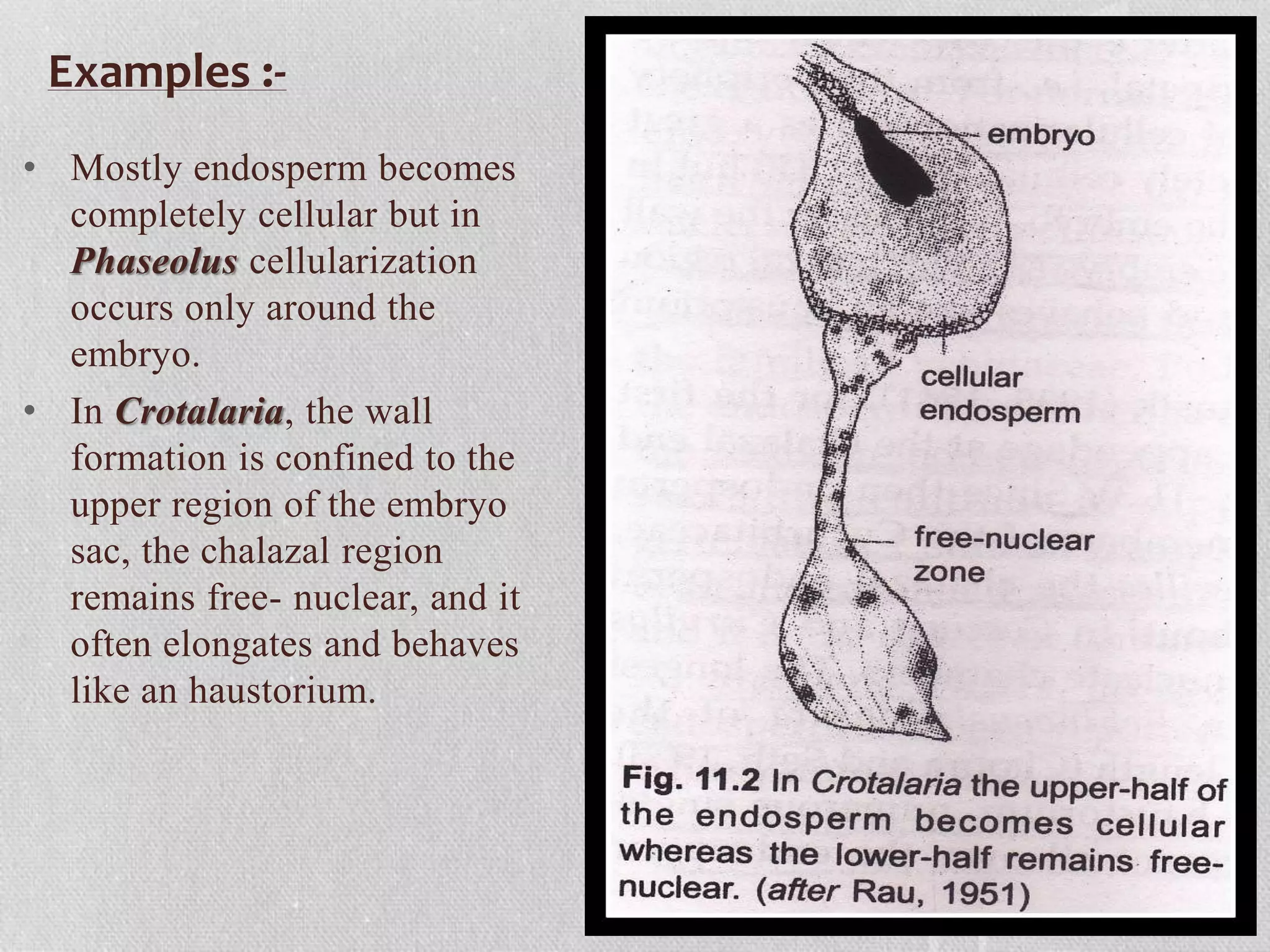
• In Crotalaria, the wall
formation is confined to the
upper region of the embryo
sac, the chalazal region
remains free- nuclear, and it
often elongates and behaves
like an haustorium.
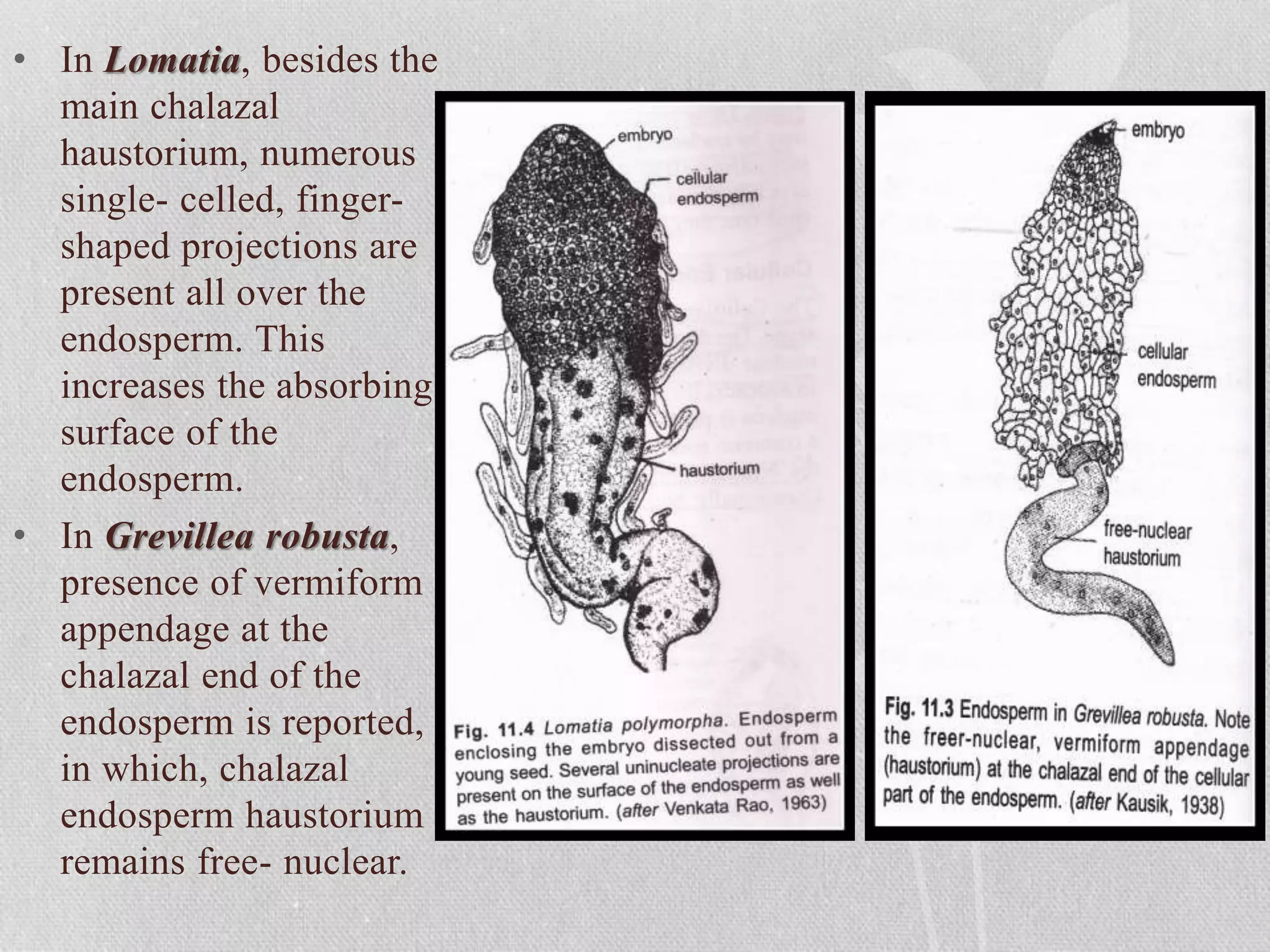
• In Lomatia, besides the
main chalazal
haustorium, numerous
single- celled, finger-
shaped projections are
present all over the
endosperm. This
increases the absorbing
surface of the
endosperm.
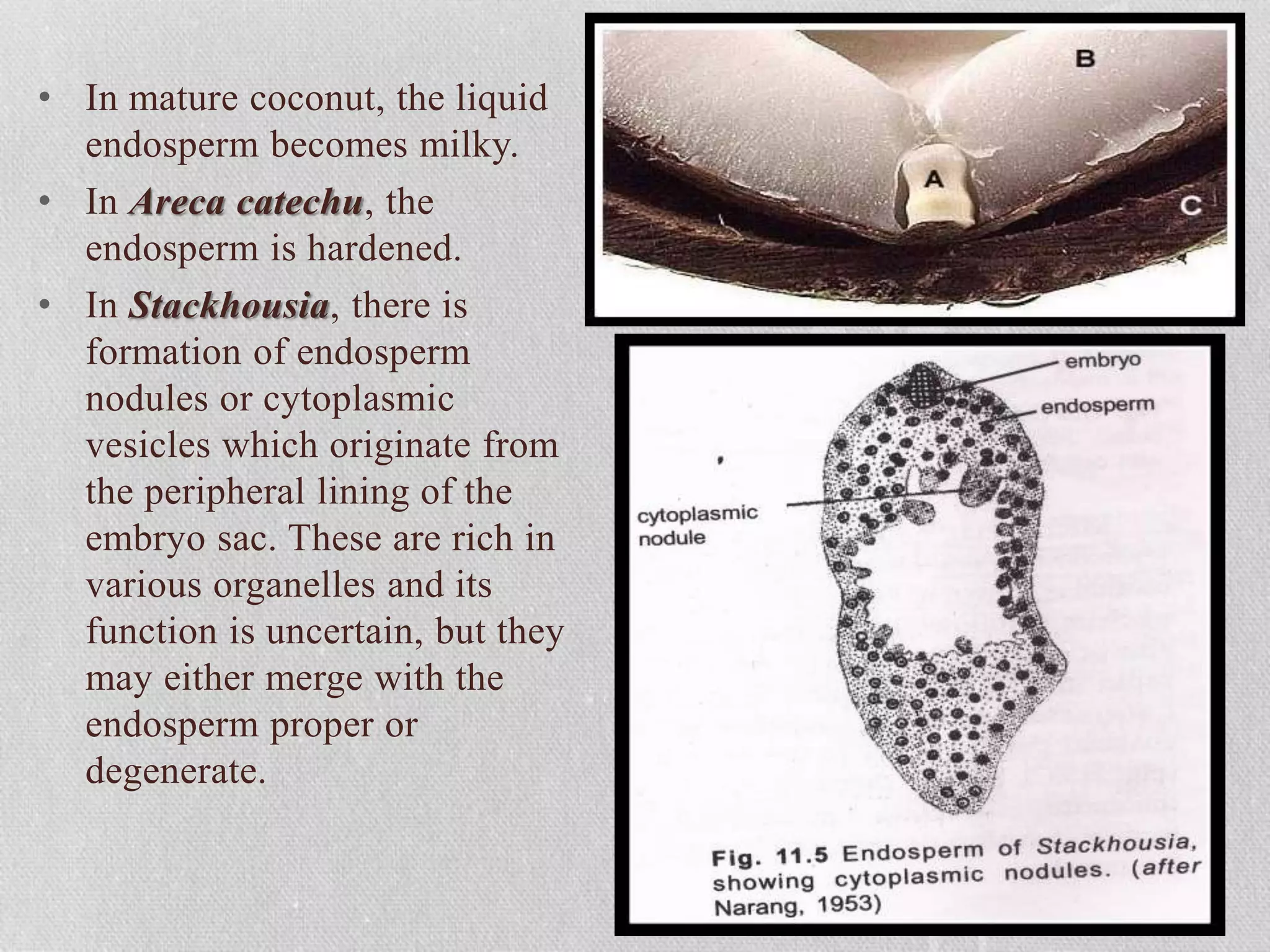
• In Grevillea robusta,
presence of vermiform
appendage at the
chalazal end of the
endosperm is reported,
in which, chalazal
endosperm haustorium
remains free- nuclear.
• In mature coconut, the liquid
endosperm becomes milky.
• In Areca catechu, the
endosperm is hardened.
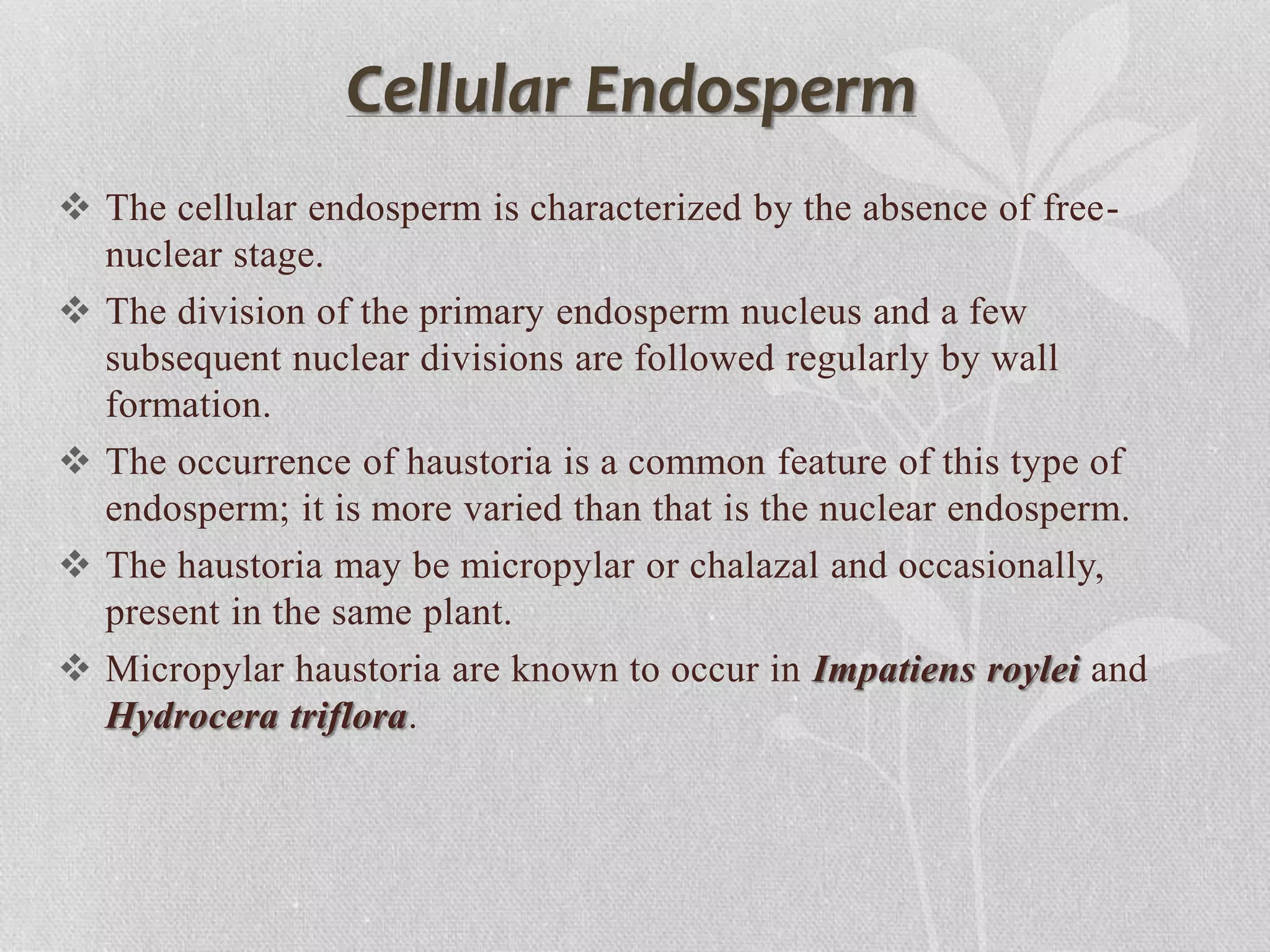
• In Stackhousia, there is
formation of endosperm
nodules or cytoplasmic
vesicles which originate from
the peripheral lining of the
embryo sac. These are rich in
various organelles and its
function is uncertain, but they
may either merge with the
endosperm proper or
degenerate.
Cellular Endosperm
 The cellular endosperm is characterized by the absence of free-
nuclear stage.
 The division of the primary endosperm nucleus and a few
subsequent nuclear divisions are followed regularly by wall
formation.
 The occurrence of haustoria is a common feature of this type of
endosperm; it is more varied than that is the nuclear endosperm.
 The haustoria may be micropylar or chalazal and occasionally,
present in the same plant.
 Micropylar haustoria are known to occur in Impatiens roylei and
Hydrocera triflora.
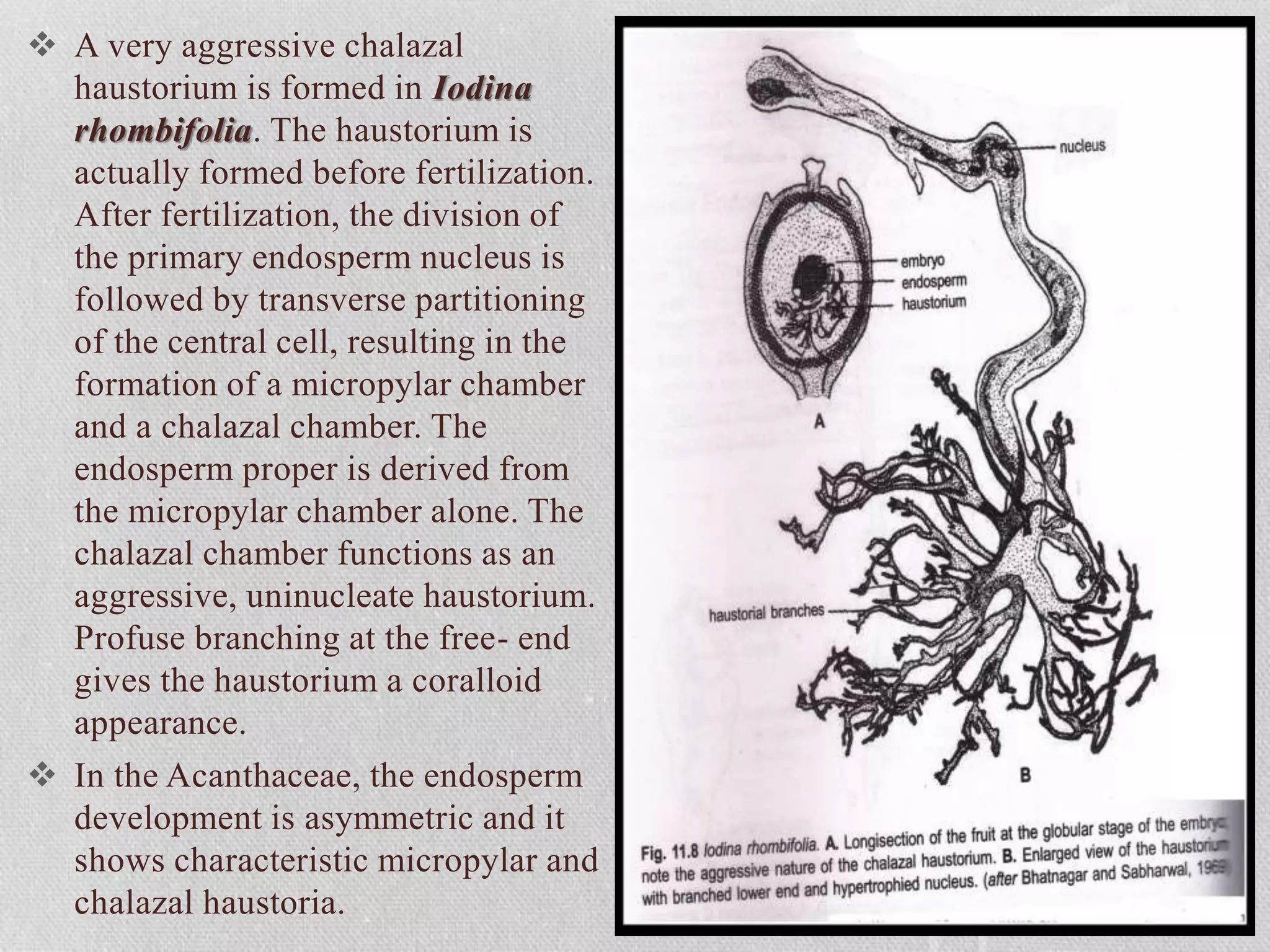
 A very aggressive chalazal
haustorium is formed in Iodina
rhombifolia. The haustorium is
actually formed before fertilization.
After fertilization, the division of
the primary endosperm nucleus is
followed by transverse partitioning
of the central cell, resulting in the
formation of a micropylar chamber
and a chalazal chamber. The
endosperm proper is derived from
the micropylar chamber alone. The
chalazal chamber functions as an
aggressive, uninucleate haustorium.
Profuse branching at the free- end
gives the haustorium a coralloid
appearance.
 In the Acanthaceae, the endosperm
development is asymmetric and it
shows characteristic micropylar and
chalazal haustoria.
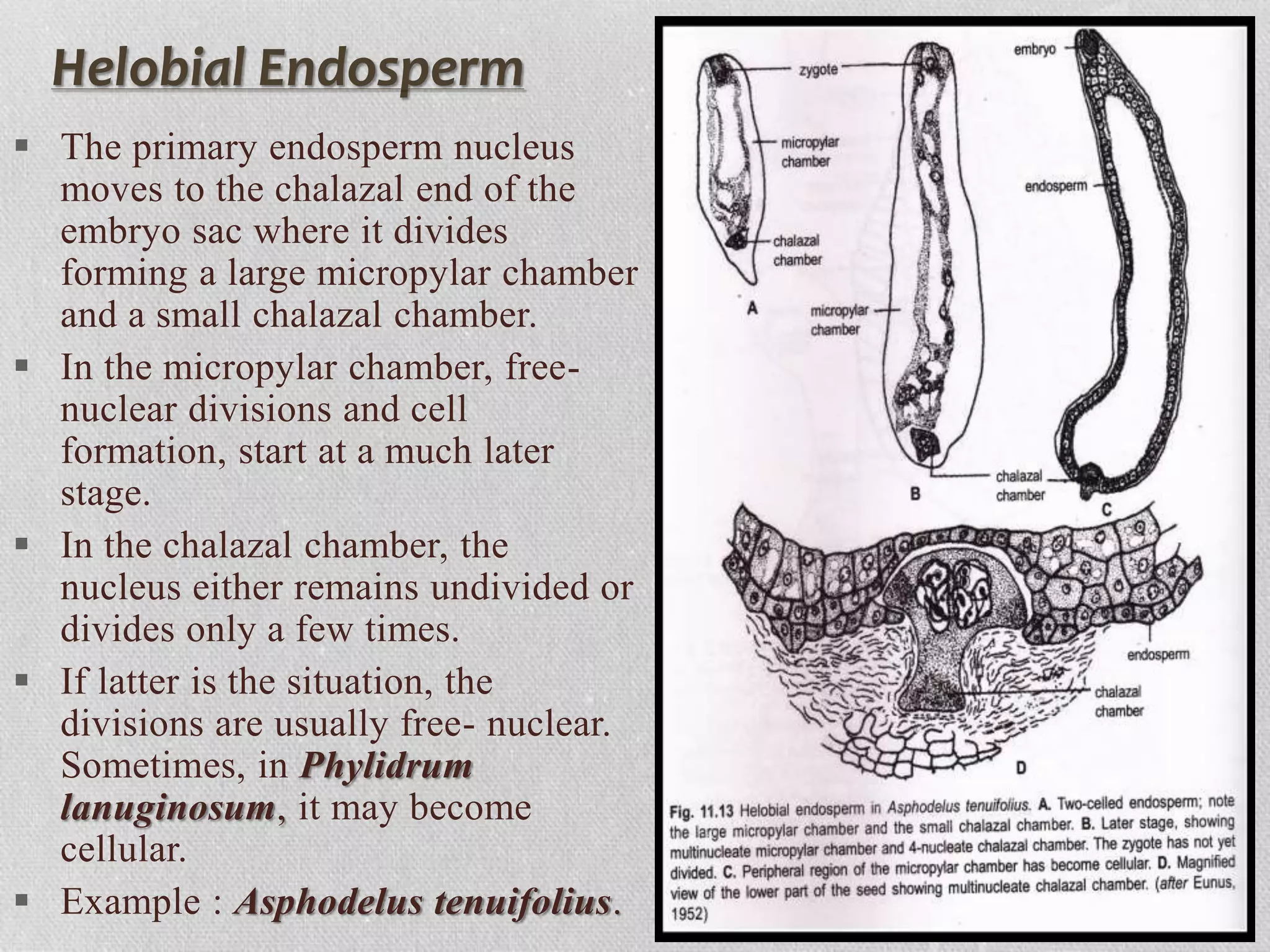
Helobial Endosperm
 The primary endosperm nucleus
moves to the chalazal end of the
embryo sac where it divides
forming a large micropylar chamber
and a small chalazal chamber.
 In the micropylar chamber, free-
nuclear divisions and cell
formation, start at a much later
stage.
 In the chalazal chamber, the
nucleus either remains undivided or
divides only a few times.
 If latter is the situation, the
divisions are usually free- nuclear.
Sometimes, in Phylidrum
lanuginosum, it may become
cellular.
 Example : Asphodelus tenuifolius.
Thank You

Endosperm

  • 1.
  • 2.
    ENDOSPERM  Endosperm isthe most common nutritive tissue for the developing embryo in angiosperms.  In gymnosperms, it represents the female gametophyte whereas the female gametophyte in angiosperms differentiates before fertilization and is haploid, the endosperm is the product of fertilization and is usually triploid.  After double fertilization the egg is called zygote, and the fusion product of polars and the second male gamete is termed Primary endosperm nucleus.  The only angiosperms that do not form endosperm are the members of the families Orchidaceae, Podostemaceae and Trapaceae.
  • 3.
     Depending uponits mode of development , three types of endosperm have been recognized :- a) Nuclear Endosperm b) Cellular Endosperm c) Helobial Endosperm  Cellular endosperm is largely restricted to dicotyledonous families whereas helobial endosperm to monocotyledonous.
  • 4.
    Nuclear Endosperm • Inthis type of endosperm, the division of the primary endosperm nucleus and a few subsequent nuclear divisions are not accompanied by wall formation. • This results in a condition where central cell of the embryo sac has formed a few several thousand nuclei freely suspended in its sap. • Such a condition of endosperm may persist until it is consumed by the developing embryo (Floerkea, Limnanthes, Oxyspora) or it may become cellular at a later stage. • When latter is the case, which is more common, the wall formation is mostly centripetal. • The degree of cellularization varies a great deal.
  • 5.
    Examples :- • Mostlyendosperm becomes completely cellular but in Phaseolus cellularization occurs only around the embryo. • In Crotalaria, the wall formation is confined to the upper region of the embryo sac, the chalazal region remains free- nuclear, and it often elongates and behaves like an haustorium.
  • 6.
    • In Lomatia,besides the main chalazal haustorium, numerous single- celled, finger- shaped projections are present all over the endosperm. This increases the absorbing surface of the endosperm. • In Grevillea robusta, presence of vermiform appendage at the chalazal end of the endosperm is reported, in which, chalazal endosperm haustorium remains free- nuclear.
  • 7.
    • In maturecoconut, the liquid endosperm becomes milky. • In Areca catechu, the endosperm is hardened. • In Stackhousia, there is formation of endosperm nodules or cytoplasmic vesicles which originate from the peripheral lining of the embryo sac. These are rich in various organelles and its function is uncertain, but they may either merge with the endosperm proper or degenerate.
  • 8.
    Cellular Endosperm  Thecellular endosperm is characterized by the absence of free- nuclear stage.  The division of the primary endosperm nucleus and a few subsequent nuclear divisions are followed regularly by wall formation.  The occurrence of haustoria is a common feature of this type of endosperm; it is more varied than that is the nuclear endosperm.  The haustoria may be micropylar or chalazal and occasionally, present in the same plant.  Micropylar haustoria are known to occur in Impatiens roylei and Hydrocera triflora.
  • 9.
     A veryaggressive chalazal haustorium is formed in Iodina rhombifolia. The haustorium is actually formed before fertilization. After fertilization, the division of the primary endosperm nucleus is followed by transverse partitioning of the central cell, resulting in the formation of a micropylar chamber and a chalazal chamber. The endosperm proper is derived from the micropylar chamber alone. The chalazal chamber functions as an aggressive, uninucleate haustorium. Profuse branching at the free- end gives the haustorium a coralloid appearance.  In the Acanthaceae, the endosperm development is asymmetric and it shows characteristic micropylar and chalazal haustoria.
  • 10.
    Helobial Endosperm  Theprimary endosperm nucleus moves to the chalazal end of the embryo sac where it divides forming a large micropylar chamber and a small chalazal chamber.  In the micropylar chamber, free- nuclear divisions and cell formation, start at a much later stage.  In the chalazal chamber, the nucleus either remains undivided or divides only a few times.  If latter is the situation, the divisions are usually free- nuclear. Sometimes, in Phylidrum lanuginosum, it may become cellular.  Example : Asphodelus tenuifolius.
  • 11.