Homeostatic
Systems
and Drugs
Chapter 4
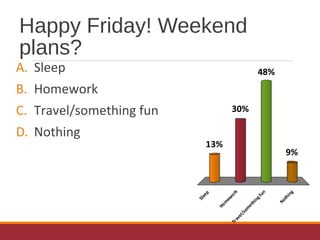
Happy Friday! Weekend
plans?
A. Sleep
B. Homework
C. Travel/something fun
D. Nothing
Sleep
Hom
ew
orkTravel/som
ethingfun
Nothing
13%
9%
48%
30%
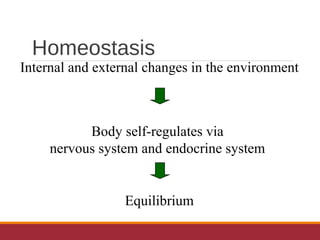
Homeostasis
Internal and external changes in the environment
Body self-regulates via
nervous system and endocrine system
Equilibrium
Introduction to Nervous
Systems
All nervous systems consist of specialized nerve cells called neurons and glia
(supporting cells).
Neurons are responsible for conducting the homeostatic functions of the brain
and other parts of the nervous system by receiving and sending information.
Sending and receiving information is an electrochemical process.
Transfer of Messages by
Neurons
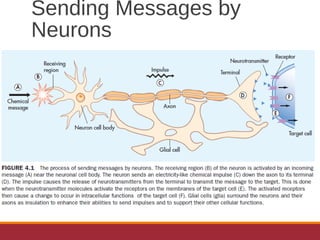
The receiving region of the neuron is affected by a chemical message that
either excites or inhibits it.
Neuronal message:
◦Impulse moves from the receiving region of
the neuron down the axon to the sending
region (terminal).
◦Chemical messengers (neurotransmitters) are
released.
Transfer of Messages by
Neurons (continued)
Neurotransmitters travel and attach to receiving proteins called receptors
on target cells.
Activation of receptors causes a change in the activity of the target cell;
the target cells can be other neurons or cells that make up organs,
muscles, or glands.
Sending Messages by
Neurons
Neurons and
Neurotransmitters
Neurons can send discrete excitatory or inhibitory messages to their target
cells.
Neurons are distinguished by the type of neurotransmitter they release.
Neurotransmitters represent a wide variety of chemical substances and
functions.
◦Example: Dopamine activates the pleasure
center.
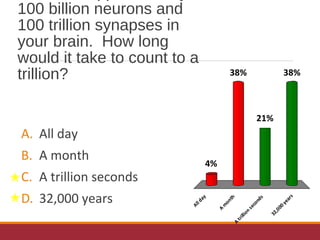
100 billion neurons and
100 trillion synapses in
your brain. How long
would it take to count to a
trillion?
A. All day
B. A month
C. A trillion seconds
D. 32,000 years
Allday
A
m
onth
A
trillion
seconds
32,000years
4%
38%
21%
38%
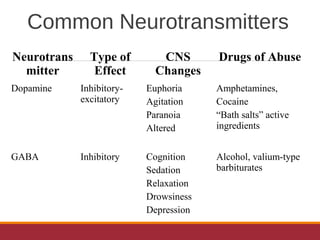
Common Neurotransmitters
Neurotrans
mitter
Type of
Effect
CNS
Changes
Drugs of Abuse
Dopamine Inhibitory-
excitatory
Euphoria
Agitation
Paranoia
Altered
Amphetamines,
Cocaine
“Bath salts” active
ingredients
GABA Inhibitory Cognition
Sedation
Relaxation
Drowsiness
Depression
Alcohol, valium-type
barbiturates
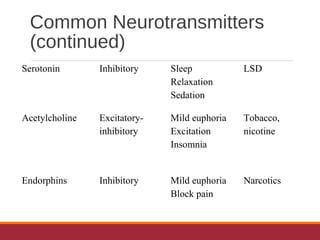
Common Neurotransmitters
(continued)
Serotonin Inhibitory Sleep
Relaxation
Sedation
LSD
Acetylcholine Excitatory-
inhibitory
Mild euphoria
Excitation
Insomnia
Tobacco,
nicotine
Endorphins Inhibitory Mild euphoria
Block pain
Narcotics
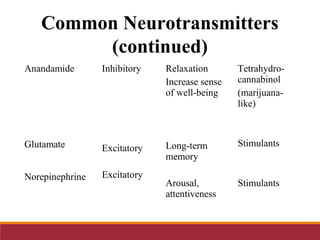
Anandamide
Glutamate
Norepinephrine
Inhibitory
Excitatory
Excitatory
Relaxation
Increase sense
of well-being
Long-term
memory
Arousal,
attentiveness
Tetrahydro-
cannabinol
(marijuana-
like)
Stimulants
Stimulants
Common Neurotransmitters
(continued)
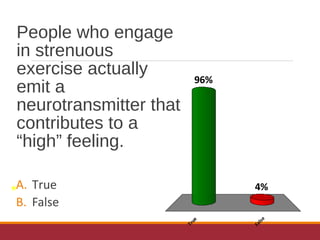
People who engage
in strenuous
exercise actually
emit a
neurotransmitter that
contributes to a
“high” feeling.
A. True
B. False
True
False
4%
96%
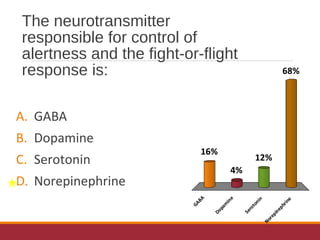
The neurotransmitter
responsible for control of
alertness and the fight-or-flight
response is:
A. GABA
B. Dopamine
C. Serotonin
D. Norepinephrine
GABA
Dopam
ine
Serotonin
Norepinephrine
16%
68%
12%
4%
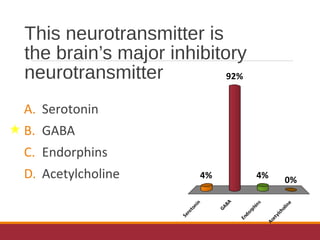
This neurotransmitter is
the brain’s major inhibitory
neurotransmitter
A. Serotonin
B. GABA
C. Endorphins
D. Acetylcholine Serotonin
GABA
Endorphins
Acetylcholine
4% 0%4%
92%
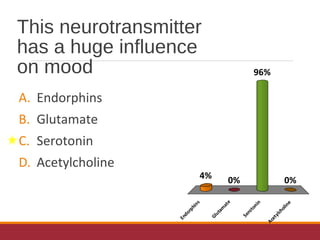
This neurotransmitter
has a huge influence
on mood
A. Endorphins
B. Glutamate
C. Serotonin
D. Acetylcholine
Endorphins
Glutam
ate
Serotonin
Acetylcholine
4% 0%
96%
0%
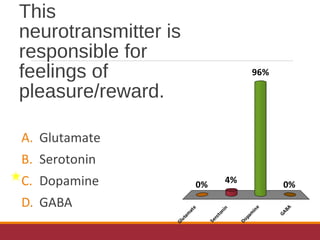
This
neurotransmitter is
responsible for
feelings of
pleasure/reward.
A. Glutamate
B. Serotonin
C. Dopamine
D. GABA
Glutam
ate
Serotonin
Dopam
ine
GABA
0% 0%
96%
4%
Neurons
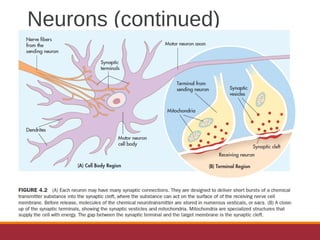
Dendrites are the receiving regions of a neuron’s cell body.
Each neuron in the central nervous system is in close proximity with other
neurons.
Although they are close, neurons never actually touch.
Synapse is the point of communication between one neuron and another.
Synaptic cleft is the gap between neurons at the synapse.
Neurons (continued)
Synapses
Excitatory synapse initiates an impulse in the receiving neuron when
stimulated, causing release of neurotransmitters or increasing activity in
target cell.
Inhibitory synapse diminishes likelihood of an impulse in the receiving
neuron or reduces the activity in other target cells.
Synapses (continued)
A receiving neuron or target cell may have many synapses.
Final cellular activity is a summation of these many excitatory and
inhibitory synaptic signals.
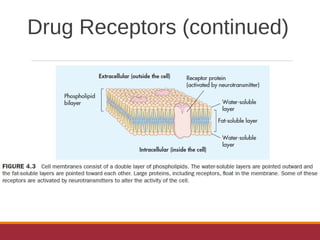
Drug Receptors
The chemical messengers from glands and neurons exert their effects by
interacting with special protein regions in membranes called receptors.
Receptors only interact with molecules that have specific configurations.
Drug Receptors (continued)
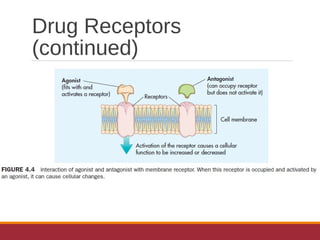
Drug Receptors
(continued)
Agonists: Substances or drugs that activate receptors
Antagonists: Substances or drugs that attach to receptors and prevent
them from being activated
Drug Receptors
(continued)
Neurotransmitters
Many drugs affect the activity of neuro-transmitters by altering their
synthesis, storage, release, or deactivation.
Neurotransmitters frequently altered by drugs of abuse:
◦Acetylcholine
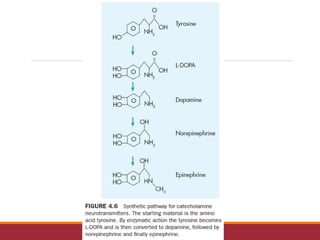
◦Catecholamines
◦Serotonin
◦GABA
◦Endorphins
◦Anandamide
Major Divisions of the Nervous
System
Two major components of the nervous system
◦ Central nervous system (CNS)
◦ Peripheral nervous system (PNS)
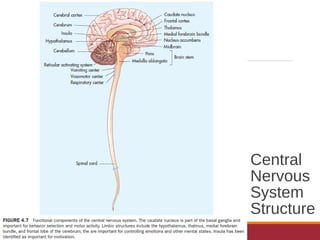
Central Nervous System
CNS includes the brain and the spinal cord
CNS receives information from PNS, evaluates the information, then regulates
muscle and organ activity via PNS Reticular activating system
◦Receives input from all the sensory systems
and cerebral cortex
◦Controls the brain’s state of arousal (sleep vs.
awake)
◦Reticular activating system
Central Nervous System
(continued)
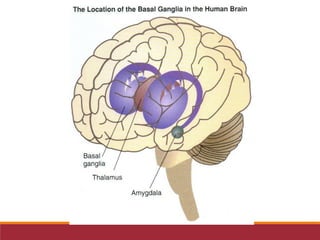
Basal ganglia
◦Controls motor activity
◦Establishes and maintains behaviors
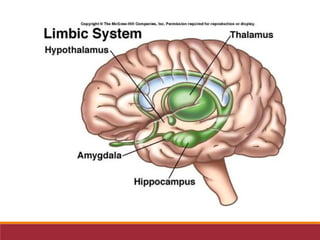
Limbic system
◦Regulates emotional activities, memory,
reward, and endocrine activity
◦Includes the nucleus accumbens, the brain’s
reward center
◦Dopamine
Central Nervous System
(continued)
The cerebral cortex
◦Helps interpret, process, and respond to
information; selects appropriate behavior
and suppresses inappropriate behavior
The hypothalamus
◦Controls endocrine and basic body
functions
Central
Nervous
System
Structure
Peripheral Nervous
System
Consists of input and output nerves
Input to brain and spinal cord
◦Conveys sensory info (pain, pressure,
temperature)
Output: Two types
◦Somatic (control of voluntary muscles)
◦Autonomic (control of unconscious functions)
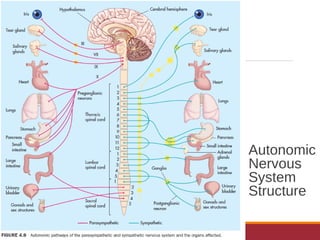
Autonomic Nervous
System
Sympathetic and parasympathetic system
◦These systems work in an antagonistic
fashion to control unconscious, visceral
functions such as breathing and
cardiovascular activity
Sympathetic system
◦Norepinephrine
Parasympathetic system
◦Acetylcholine
Autonomic
Nervous
System
Structure
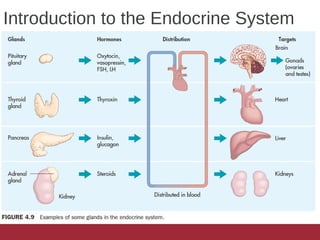
Introduction to the
Endocrine System
The endocrine system consists of secreting glands (e.g., adrenal, thyroid,
pituitary)
These glands produce substances called hormones (e.g., adrenaline, steroids,
insulin, sex hormones)
These substances are information transferring molecules
Introduction to the
Endocrine System
(continued)
Hormones are secreted into the bloodstream and carried by the blood to
all the organs and tissues of the body.
Hormones affect selected tissues that are designed to receive the
information.
Hormones may be highly selective or very general with regard to the cells
or organs they influence.
Introduction to the Endocrine System
The Abuse of Hormones:
Anabolic Steroids
Androgens
◦ Produce growth of muscle mass
◦ Increase body weight
Anabolic steroids
◦ Are structurally related to the male hormone testosterone
◦ Sometimes abused by athletes and body builders to improve strength and
appearances
◦ Controlled as Schedule III substances

Chapter 4 Homeostatic Systems and Drugs

  • 1.
  • 2.
    Happy Friday! Weekend plans? A.Sleep B. Homework C. Travel/something fun D. Nothing Sleep Hom ew orkTravel/som ethingfun Nothing 13% 9% 48% 30%
  • 3.
    Homeostasis Internal and externalchanges in the environment Body self-regulates via nervous system and endocrine system Equilibrium
  • 4.
    Introduction to Nervous Systems Allnervous systems consist of specialized nerve cells called neurons and glia (supporting cells). Neurons are responsible for conducting the homeostatic functions of the brain and other parts of the nervous system by receiving and sending information. Sending and receiving information is an electrochemical process.
  • 5.
    Transfer of Messagesby Neurons The receiving region of the neuron is affected by a chemical message that either excites or inhibits it. Neuronal message: ◦Impulse moves from the receiving region of the neuron down the axon to the sending region (terminal). ◦Chemical messengers (neurotransmitters) are released.
  • 6.
    Transfer of Messagesby Neurons (continued) Neurotransmitters travel and attach to receiving proteins called receptors on target cells. Activation of receptors causes a change in the activity of the target cell; the target cells can be other neurons or cells that make up organs, muscles, or glands.
  • 7.
  • 8.
    Neurons and Neurotransmitters Neurons cansend discrete excitatory or inhibitory messages to their target cells. Neurons are distinguished by the type of neurotransmitter they release. Neurotransmitters represent a wide variety of chemical substances and functions. ◦Example: Dopamine activates the pleasure center.
  • 9.
    100 billion neuronsand 100 trillion synapses in your brain. How long would it take to count to a trillion? A. All day B. A month C. A trillion seconds D. 32,000 years Allday A m onth A trillion seconds 32,000years 4% 38% 21% 38%
  • 10.
    Common Neurotransmitters Neurotrans mitter Type of Effect CNS Changes Drugsof Abuse Dopamine Inhibitory- excitatory Euphoria Agitation Paranoia Altered Amphetamines, Cocaine “Bath salts” active ingredients GABA Inhibitory Cognition Sedation Relaxation Drowsiness Depression Alcohol, valium-type barbiturates
  • 11.
    Common Neurotransmitters (continued) Serotonin InhibitorySleep Relaxation Sedation LSD Acetylcholine Excitatory- inhibitory Mild euphoria Excitation Insomnia Tobacco, nicotine Endorphins Inhibitory Mild euphoria Block pain Narcotics
  • 12.
  • 14.
    People who engage instrenuous exercise actually emit a neurotransmitter that contributes to a “high” feeling. A. True B. False True False 4% 96%
  • 15.
    The neurotransmitter responsible forcontrol of alertness and the fight-or-flight response is: A. GABA B. Dopamine C. Serotonin D. Norepinephrine GABA Dopam ine Serotonin Norepinephrine 16% 68% 12% 4%
  • 16.
    This neurotransmitter is thebrain’s major inhibitory neurotransmitter A. Serotonin B. GABA C. Endorphins D. Acetylcholine Serotonin GABA Endorphins Acetylcholine 4% 0%4% 92%
  • 17.
    This neurotransmitter has ahuge influence on mood A. Endorphins B. Glutamate C. Serotonin D. Acetylcholine Endorphins Glutam ate Serotonin Acetylcholine 4% 0% 96% 0%
  • 18.
    This neurotransmitter is responsible for feelingsof pleasure/reward. A. Glutamate B. Serotonin C. Dopamine D. GABA Glutam ate Serotonin Dopam ine GABA 0% 0% 96% 4%
  • 19.
    Neurons Dendrites are thereceiving regions of a neuron’s cell body. Each neuron in the central nervous system is in close proximity with other neurons. Although they are close, neurons never actually touch. Synapse is the point of communication between one neuron and another. Synaptic cleft is the gap between neurons at the synapse.
  • 20.
  • 21.
    Synapses Excitatory synapse initiatesan impulse in the receiving neuron when stimulated, causing release of neurotransmitters or increasing activity in target cell. Inhibitory synapse diminishes likelihood of an impulse in the receiving neuron or reduces the activity in other target cells.
  • 22.
    Synapses (continued) A receivingneuron or target cell may have many synapses. Final cellular activity is a summation of these many excitatory and inhibitory synaptic signals.
  • 23.
    Drug Receptors The chemicalmessengers from glands and neurons exert their effects by interacting with special protein regions in membranes called receptors. Receptors only interact with molecules that have specific configurations.
  • 24.
  • 25.
    Drug Receptors (continued) Agonists: Substancesor drugs that activate receptors Antagonists: Substances or drugs that attach to receptors and prevent them from being activated
  • 26.
  • 27.
    Neurotransmitters Many drugs affectthe activity of neuro-transmitters by altering their synthesis, storage, release, or deactivation. Neurotransmitters frequently altered by drugs of abuse: ◦Acetylcholine ◦Catecholamines ◦Serotonin ◦GABA ◦Endorphins ◦Anandamide
  • 29.
    Major Divisions ofthe Nervous System Two major components of the nervous system ◦ Central nervous system (CNS) ◦ Peripheral nervous system (PNS)
  • 30.
    Central Nervous System CNSincludes the brain and the spinal cord CNS receives information from PNS, evaluates the information, then regulates muscle and organ activity via PNS Reticular activating system ◦Receives input from all the sensory systems and cerebral cortex ◦Controls the brain’s state of arousal (sleep vs. awake) ◦Reticular activating system
  • 31.
    Central Nervous System (continued) Basalganglia ◦Controls motor activity ◦Establishes and maintains behaviors Limbic system ◦Regulates emotional activities, memory, reward, and endocrine activity ◦Includes the nucleus accumbens, the brain’s reward center ◦Dopamine
  • 33.
    Central Nervous System (continued) Thecerebral cortex ◦Helps interpret, process, and respond to information; selects appropriate behavior and suppresses inappropriate behavior The hypothalamus ◦Controls endocrine and basic body functions
  • 36.
  • 37.
    Peripheral Nervous System Consists ofinput and output nerves Input to brain and spinal cord ◦Conveys sensory info (pain, pressure, temperature) Output: Two types ◦Somatic (control of voluntary muscles) ◦Autonomic (control of unconscious functions)
  • 38.
    Autonomic Nervous System Sympathetic andparasympathetic system ◦These systems work in an antagonistic fashion to control unconscious, visceral functions such as breathing and cardiovascular activity Sympathetic system ◦Norepinephrine Parasympathetic system ◦Acetylcholine
  • 39.
  • 40.
    Introduction to the EndocrineSystem The endocrine system consists of secreting glands (e.g., adrenal, thyroid, pituitary) These glands produce substances called hormones (e.g., adrenaline, steroids, insulin, sex hormones) These substances are information transferring molecules
  • 41.
    Introduction to the EndocrineSystem (continued) Hormones are secreted into the bloodstream and carried by the blood to all the organs and tissues of the body. Hormones affect selected tissues that are designed to receive the information. Hormones may be highly selective or very general with regard to the cells or organs they influence.
  • 42.
    Introduction to theEndocrine System
  • 43.
    The Abuse ofHormones: Anabolic Steroids Androgens ◦ Produce growth of muscle mass ◦ Increase body weight Anabolic steroids ◦ Are structurally related to the male hormone testosterone ◦ Sometimes abused by athletes and body builders to improve strength and appearances ◦ Controlled as Schedule III substances

Editor's Notes

  • #4 Homeostasis: Humans must maintain their internal environment within certain limits Temperature Acidity Water content Sodium content Glucose concentrations Other physical and chemical factors Nerve cells (neurons) Analyze and transmit information Over 100 billion neurons in system Four defined regions Cell body Dendrites Axon Presynaptic terminals Stimulation of receptors by psychoactive drugs can activate or inhibit a neuron Glial cells (Glia) Provide firmness and structure to the brain Get nutrients into the system Eliminate waste Form myelin Create the blood-brain barrier Communicate with other glia & neurons SYNAPSE brain cells do not actually touch. The small gap is called the synapse. When we talk about connections between brain cells, we are referring to the synapse. When a neuron is stimulated and fires, the electrical impulse travels down the axon, the myelin sheath working as an insulator, and is converted to a chemical message at the presynaptic terminals. This chemical travels across the synapse and is taken up by the receiving neuron. The chemical may cause the next neuron to fire (excitatory) or to stay at rest (inhibitory). At the ends of axons are saclike vesicles containing neurotransmitters which cross the synapse to receptor sites Chemicals in the receptor sites generate electrical impulses Drugs that influencing the release, storage, and synthesis of neurotransmitters are classified as presynaptic Drugs affecting neurotransmitters after they cross the synapse are classified as postsynaptic
  • #10 C is correct, but it’s the lazy answer! Gives you an idea of how much activity there really is in your brain. Sidenote: When a baby is born, they have all the neurons they will ever have, but fewer connections between them *(synapses). Through experience, synapses grow/brain cells connect. By the time they are three years old, children have twice as many connections as an adult. These connections are pruned away from age 10 through adolescence.
  • #11 Several tutorials and films as resources on Canvas Break students up into 7 groups, assign each a neurotransmitter, give package of information. Each group reports back to class on what they learned about their assigned neurotransmitter. Catecholamines Epinephrine, dopamine, and norepinephrine Reabsorbed by the neuron that makes them (reuptake) Increase causes stimulation; decrease causes depression Amphetamines and cocaine initially increase catecholamines, followed by depletion Dopamine levels are influenced by marijuana, nicotine, heroin, and amphetamines Epinephrine released in fight-flight-fright syndrome Mescaline and MDMA (Ecstasy) reduce norepinephrine Dopamine (excitatory) Found in basal ganglia and other regions – behavior & emotions, including pleasure Nigrostriatal dopamine pathway Related to muscle rigidity Mesolimbic dopamine pathway Related to psychotic behavior Possible component of the “reward” properties of drugs GABA (Gamma-amino butyric acid) (inhibitory) Found in most regions of the brain Inhibitory neurotransmitter, sleep, anxiety Gamma-aminobutyric acid (GABA) Inhibits nerve impulses from being sent from one neuron to another Alcohol stimulates GABA, producing relaxation and feelings of decreased inhibition Barbiturates and minor tranquilizers also increase the action of GABA
  • #12 Serotonin (inhibitory or excitatory) Found in the brain stem raphe nuclei May have a role in impulsivity, aggression, depression, control of food, and alcohol intake Hallucinogenic drugs influence serotonin pathways Serotonin Inhibitory neurotransmitter in the upper brain stem (tryptaminergic neurons) Helps regulate pain, sensory perception, eating, sleep, and body temperature Excessive reabsorption results in depression (antidepressant drugs SSRIs) Related to hallucinations, psychosis, obsessive-compulsive disorder, aggression or violence Amino acid tryptophan is needed to synthesize serotonin in tryptaminergic neurons Acetylcholine (ACH) Synthesized from choline and acetyl coenzyme A Cholinergic neurons are linked to specific behaviors Excitatory neurotransmitter in skeletal muscles Inhibitory neurotransmitter in heart muscle Reduced ACH receptors associated with Alzheimer’s Anticholinergic hallucinogens interfere with ACH Cholinesterase inhibitors such as nerve gas Acetylcholine (excitatory) Found in the cerebral cortex & basal ganglia Involved in Alzheimer’s disease, learning, memory storage, movement Endorphins (inhibitory) Opioid-like chemical occurring naturally in the brain Play a role in pain relief Peptides Substances in which amino acid sequences are linked Modulate the activity of transmitters Natural endorphins have opiate-like properties High levels of endorphins in the brain (enkaphalins) could be a factor in morphine dependency Chronic alcohol use impairs endorphin production
  • #13 Norepinephrine (excitatory & inhibitory) Regulates level of arousal and attentiveness, memory May play a role in initiation of food intake (appetite) Glutamate (excitatory) Found in most regions of the brain Excitatory neurotransmitter, involved in long-term memory
  • #15 Endorphins, “runner’s high”
  • #22 VIDEO is on Canvas Action potential = a brief electrical signal transmitted along the axon Neurotransmitters are the “messengers” Resting action potential is caused by uneven distribution of ions Action potential occurs when sodium ions move across channels Blocking channels prevents the action potential and disrupts communication between neurons https://www.youtube.com/watch?v=HnKMB11ih2o
  • #23 https://www.youtube.com/watch?v=XGINQ7xhPkM
  • #26 https://www.youtube.com/watch?v=uXREQnFGHGA Video is available on Canvas At the ends of axons are saclike vesicles containing neurotransmitters which cross the synapse to receptor sites Chemicals in the receptor sites generate electrical impulses Drugs that influencing the release, storage, and synthesis of neurotransmitters are classified as presynaptic Drugs affecting neurotransmitters after they cross the synapse are classified as postsynaptic Neurotransmitters linked to addiction include dopamine, norepinephrine, GABA, and serotonin Some drugs increase activity and excitation nerve cells (e.g. caffeine) Sedative-hypnotic drugs make nerve cells less sensitive Many nerve cells contain autoreceptors that alter the synthesis of neurotransmitters (e.g. LSD) Alter neurotransmitter availability Agonists - Mimic neurotransmitters Antagonists = Occupy neurotransmitter and prevent its activation Interference with reuptake Video: https://www.youtube.com/watch?v=uXREQnFGHGA
  • #28 http://learn.genetics.utah.edu/content/addiction/rewardbehavior/ Dopamine Pathways Dopamine is the neurotransmitter used by the reward pathway (also called the mesolimbic pathway, which is closely linked with the mesocortical pathway). But there are two other important pathways in the brain that use dopamine: the nigrostriatal pathway and the tuberoinfundibular pathway. Generally, drugs that affect dopamine levels affect all three of these pathways. Nigrostriatal pathway: Substantia nigra to striatum Motor control Death of neurons in this pathway is linked to Parkinson's Disease Mesolimbic and Mesocortical pathways: Ventral tegmental area to nucleus accumbens, amygdala, hippocampus, and prefrontal cortex Memory, motivation, emotion, reward, desire, and addiction Dysfunction is connected to hallucinations and schizophrenia Tuberoinfundibular pathway: Hypothalamus to pituitary gland Hormone regulation, nurturing behavior, pregnancy, sensory processes Dopamine and another neurotransmitter called serotonin are released by just a small number of neurons in the brain. But each of these neurons connects to thousands of other neurons in many areas of the brain, giving them a great deal of influence over complex processes. Serotonin Pathways Serotonin is another neurotransmitter affected by many drugs of abuse, including cocaine, amphetamines, LSD, and alcohol. Serotonin is made by neurons in the Raphe nuclei. These neurons reach and dump serotonin onto almost the entire brain, as well as the spinal cord. Serotonin plays a role in many brain processes, including body temperature regulation, sleep, mood, appetite, and pain. Problems with the serotonin pathway are linked to obsessive-compulsive disorder, anxiety disorders, and depression. Most prescription drugs used to treat depression today work by increasing serotonin levels in the brain. Glutamate and GABA: A System in Balance Glutamate and GABA (gamma-aminobutyric acid) are the brain's most plentiful neurotransmitters. Over half of all brain synapses use glutamate, and 30-40% use GABA. Since GABA is inhibitory and glutamate is excitatory, both neurotransmitters work together to control many processes, including the brain's overall level of excitation. Many of the drugs of abuse change the balance of glutamate or GABA, exerting tranquilizing or stimulating effects on the brain. Drugs that increase GABA or decrease glutamate are depressants. Those that decrease GABA or increase glutamate are tranquilizers or stimulants. Alcohol decreases glutamate activity. PCP, or "angel dust," increases glutamate activity. Caffeine increases glutamate activity and inhibits GABA release. Alcohol increases GABA activity. Tranquilizers increase GABA activity. GABA and glutamate regulate action potential traffic. GABA, an inhibitory neurotransmitter, stops action potentials. Glutamate, an excitatory neurotransmitter, starts action potentials or keeps them going.
  • #29 Neurotransmitter precursors are found circulating in the blood supply Uptake: Selected precursors are taken up by cells, a process requiring energy Synthesis: Precursors are changed (synthesized) into neurotransmitters through the action of enzymes Storage: Neurotransmitters are stored in small vesicles When the action potential arrives, neurotransmitters are released into the synapse Released neurotransmitters bind with receptors on the membrane of the next neuron Neurotransmitters may have excitatory or inhibitory effects Once a signal has been sent, neurotransmitters are removed from the synapse; may return or be metabolized Most drugs affect brain activity by increasing or decreasing the activity of various neurotransmitters Neurotransmitters enable the brain to receive, process, and respond to information by carrying impulses from one neuron to the next
  • #31 Somatic nervous system Carries sensory information into the central nervous system Carries motor (movement) information back out to the peripheral nerves Controls voluntary actions Acetylcholine is the neurotransmitter at neuromuscular junctions Sensory information Voluntary actions Autonomic nervous system (ANS) Monitors and controls the body’s internal environment and involuntary functions Many psychoactive drugs affect the brain and the autonomic nervous system Two branches often act in opposition Sympathetic branch - “Fight or flight” Parasympathetic branch which is responsible for helping to regulate a variety of body functions, including heart rate, breathing, sweating, and digestion. Central nervous system (CNS) Consists of the brain and the spinal cord Has many functions including Integration of information Learning and memory Coordination of activity Peripheral nervous system (PNS) Consists of the somatic and autonomic nervous systems Somatic nervous system Part of the nervous system that controls movement of the skeletal muscles Autonomic nervous system (ANS) Part of the peripheral nervous system that is automatic and involuntary The autonomic nervous system (ANS) regulates blood pressure, gastrointestinal and urinary functioning, body temperature, sweating, and other involuntary bodily functions Divided into two branches which work in opposition: Sympathetic nervous system reacts to situations that require fighting or fleeing (fight-flight-fright syndrome) Parasympathetic nervous system allows the body to achieve a resting state Drugs that mimic actions of the sympathetic system are called sympathomimetics Examples: Amphetamines, cocaine, and caffeine Drugs that mimic actions of the parasympathetic system are called parasympathomimetics Examples: Nicotine and the hallucinogen Amanita muscaria
  • #32 Somatic nervous system Carries sensory information into the central nervous system Carries motor (movement) information back out to the peripheral nerves Controls voluntary actions Acetylcholine is the neurotransmitter at neuromuscular junctions Sensory information Voluntary actions Autonomic nervous system (ANS) Monitors and controls the body’s internal environment and involuntary functions Many psychoactive drugs affect the brain and the autonomic nervous system Two branches often act in opposition Sympathetic branch - “Fight or flight” Parasympathetic branch which is responsible for helping to regulate a variety of body functions, including heart rate, breathing, sweating, and digestion. Central nervous system (CNS) Consists of the brain and the spinal cord Has many functions including Integration of information Learning and memory Coordination of activity Peripheral nervous system (PNS) Consists of the somatic and autonomic nervous systems Somatic nervous system Part of the nervous system that controls movement of the skeletal muscles Autonomic nervous system (ANS) Part of the peripheral nervous system that is automatic and involuntary The autonomic nervous system (ANS) regulates blood pressure, gastrointestinal and urinary functioning, body temperature, sweating, and other involuntary bodily functions Divided into two branches which work in opposition: Sympathetic nervous system reacts to situations that require fighting or fleeing (fight-flight-fright syndrome) Parasympathetic nervous system allows the body to achieve a resting state Drugs that mimic actions of the sympathetic system are called sympathomimetics Examples: Amphetamines, cocaine, and caffeine Drugs that mimic actions of the parasympathetic system are called parasympathomimetics Examples: Nicotine and the hallucinogen Amanita muscaria
  • #33 There are two tutorials on Canvas Also http://outreach.mcb.harvard.edu/animations/brainanatomy.swf Cerebral cortex outermost layer of the brain, there is a motor cortex, a sensory cortex and the cerebral cortex contains higher mental processes such as reasoning and language. Cerebral cortex Part of the cerebrum involved in intellectual functioning Affects speech, motor movement, sensory perception, hearing, vision, sensory discrimination, memory, language, reasoning, abstract reasoning, and personality Affected by almost all psychoactive drugs Cerebrum The cerebrum, also known as the telencephalon, is the largest and most highly developed part of the human brain. It encompasses about two-thirds of the brain mass and lies over and around most of the structures of the brain. The outer portion (1.5mm to 5mm) of the cerebrum is covered by a thin layer of gray tissue called the cerebral cortex. The cerebrum is divided into right and left hemispheres that are connected by the corpus callosum. Cerebellum: In Latin, the word cerebellum means little brain. The cerebellum is the area of the hindbrain that controls motor movement coordination, balance, equilibrium and muscle tone. Basal ganglia subcortical brain structures controlling muscle tone Basal ganglia Part of the central nervous system which maintains involuntary motor control Regulates abilities to stand, walk, run, carry, throw, and lift Parkinson’s disease destroys the basal ganglia Drugs prescribed for schizophrenia can precipitate Parkinson’s-like behavior China white (fentanyl) has been linked to brain damage similar to Parkinson’s disease Hypothalamus a structure found near the bottom of the forebrain. It participates in the regulation of hunger, thirst, sexual behavior and aggressionHypothalamus Gland situated near the base of the brain Maintains homeostasis Controls the pituitary gland, which regulates hormones that affect stress, aggressiveness, heart rate, hunger, thirst, consciousness, body temperature, blood pressure, and sexual behavior Linked to behavioral and chemical dependencies from alcohol to gambling to obesity Limbic system connected structures (amygdala, hippocampus) responsible for emotion, memory for location and level of physical activity. Together with the hypothalamus allows for more behavioral control at a more primitive level than the cerebral cortex Limbic system Part of the central nervous system that plays a key role in memory and emotion Consists of many diverse structures in the cerebral hemispheres Cocaine affects neurotransmitters in the limbic system, creating intense feelings of excitement and joy Depressants reduce electrical activity in the limbic system, producing feelings of tranquility and relaxation Midbrain, pons, and medulla – connects the larger structures of the brain to the spinal cord. Cell bodies in this area play important roles in sensory and motor reflexes as well as coordinated control of complex movements. Most of the brain’s neurotransmitters are produced here by relatively few neurons. Brain stem lower brain stem contains vomiting center and rate of respiration/breathing The brain stem is located at the point where the brain and spinal cord join It consists of the medulla oblongata, pons, and midbrain Regulates functions such as breathing, heartbeat, dilation of the pupil of the eye, blood pressure, and the vomiting reflex Drugs affecting the brain stem include alcohol and opiates Pituitary gland The pituitary gland is a pea-sized gland located in the center of the skull, inferior to the hypothalamus of the brain and posterior to the bridge of the nose. It is an important link between the nervous and endocrine systems and releases many hormones which affect growth, sexual development, metabolism and human reproduction. Periventricular System Composed of nerve cells above and to either side of the hypothalamus Implicated in punishment or avoidance behavior Coupled with the MBF in that stimulation of one inhibits the other Reticular Activating System The functions of the reticular activating system are many and varied. Among other functions, it contributes to the control of sleep, walking, sex, eating, and elimination. Perhaps the most important function of the RAS is its control of consciousness; it is believed to control sleep, wakefulness, and the ability to consciously focus attention on something. In addition, the RAS acts as a filter, dampening down the effect of repeated stimuli such as loud noises, helping to prevent the senses from being overloaded. Reticular Activating System (RAS) Part of the central nervous system Affects sleep, attention, and arousal Shuts down during sleep Many drugs, including barbiturates, LSD, alcohol, and amphetamines, affect the RAS extensively Stimulants activate the RAS Medial Forebrain Bundle The medial forebrain bundle is a collection of long projections of nerve cells called axons that plays an important role in the reward system. A collection of structures in the brain, the reward system is involved in producing pleasurable effects in order to regulate human behavior. For this reason, the medial forebrain bundle is sometimes referred to as the reward circuit. Medical researchers believe that this area is one of the primary circuits that affects human behavior. Medial forebrain bundle (MFB) Serves as a communication route between the limbic system and the brain stem Affects pleasure and reward Sensation of orgasm originates here Amphetamines and cocaine produce intense euphoria
  • #34 Basal ganglia subcortical brain structures controlling muscle tone Basal ganglia Part of the central nervous system which maintains involuntary motor control Regulates abilities to stand, walk, run, carry, throw, and lift Parkinson’s disease destroys the basal ganglia Drugs prescribed for schizophrenia can precipitate Parkinson’s-like behavior China white (fentanyl) has been linked to brain damage similar to Parkinson’s disease The thalamus is a small structure within the brain located just above the brain stem between the cerebral cortex and the midbrain and has extensive nerve connections to both. The main function of the thalamus is to relay motor and sensory signals to the cerebral cortex. It also regulates sleep, alertness and wakefulness.
  • #36 Limbic system connected structures (amygdala, hippocampus) responsible for emotion, memory for location and level of physical activity. Together with the hypothalamus allows for more behavioral control at a more primitive level than the cerebral cortex Limbic system Part of the central nervous system that plays a key role in memory and emotion Consists of many diverse structures in the cerebral hemispheres Cocaine affects neurotransmitters in the limbic system, creating intense feelings of excitement and joy Depressants reduce electrical activity in the limbic system, producing feelings of tranquility and relaxation The thalamus is a small structure within the brain located just above the brain stem between the cerebral cortex and the midbrain and has extensive nerve connections to both. The main function of the thalamus is to relay motor and sensory signals to the cerebral cortex. It also regulates sleep, alertness and wakefulness. Function Of The Amygdala The amygdala is responsible for the perception of emotions (anger, fear, sadness, etc.) as well as the controlling aggression. The amygdala helps to store memories of events and emotions so that an individual may be able to recognize similar events in the future. For example, if you have ever suffered a dog bite, then the amygdalae may help in processing that event and, therefore, increase your fear or alertness around dogs. The size of the amygdala is positively correlated with increased aggression and physical behavior. The hippocampus is a small organ located within the brain's medial temporal lobe and forms an important part of the limbic system, the region that regulates emotions. The hippocampus is associated mainly with memory, in particular long-term memory. The organ also plays an important role in spatial navigation. Damage to the hippocampus can lead to loss of memory and difficulty in establishing new memories. In Alzheimer's disease, the hippocampus is one of the first regions of the brain to be affected, leading to the confusion and loss of memory so commonly seen in the early stages of the disease.
  • #37 Reticular Activating System The functions of the reticular activating system are many and varied. Among other functions, it contributes to the control of sleep, walking, sex, eating, and elimination. Perhaps the most important function of the RAS is its control of consciousness; it is believed to control sleep, wakefulness, and the ability to consciously focus attention on something. In addition, the RAS acts as a filter, dampening down the effect of repeated stimuli such as loud noises, helping to prevent the senses from being overloaded. Reticular Activating System (RAS) Part of the central nervous system Affects sleep, attention, and arousal Shuts down during sleep Many drugs, including barbiturates, LSD, alcohol, and amphetamines, affect the RAS extensively Stimulants activate the RAS