WHAT IS
FEEDBACK
MECHANISM?
Most body systems maintain
homeostasis by using feedback
mechanisms. When the brain
receives messages from the body
about an internal change in one
of its systems, it works to restore
the system to its normal state.
The levels of hormones in the
body are controlled by feedback.
It is important that the amount of
hormones in the body is kept at
FEEDBACK MECHANISM
 a physiological regulation
system in a living body that
works to return the body to
its normal internal state
the process through which
the level of one substance
influences the level of
another substance
Feedback mechanisms
in menstrual cycle:
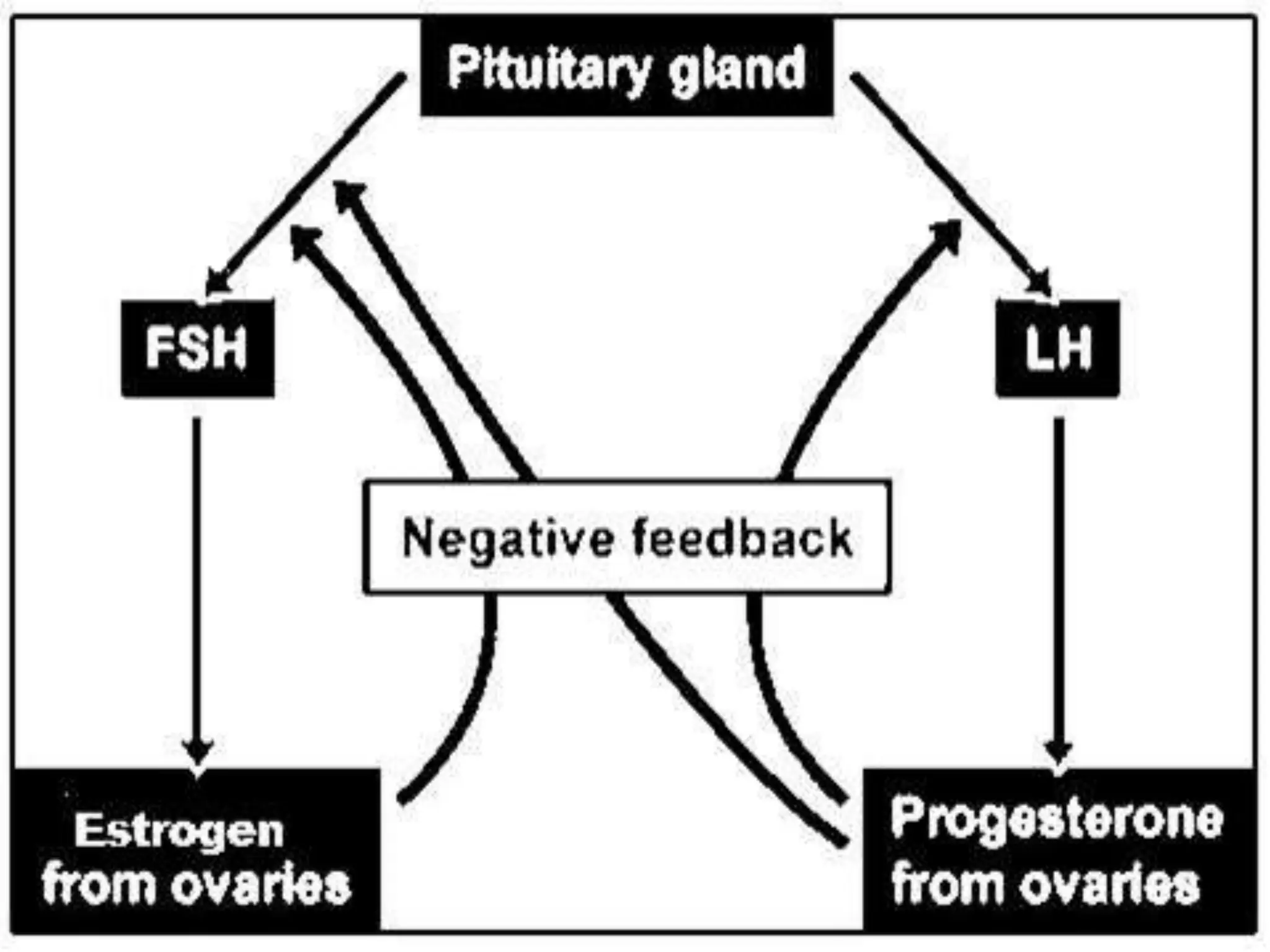
1. Follicle stimulating
hormone (FSH)
stimulates the ovaries to
release estrogen. High
levels of estrogen then
prevent the further
production of FSH.
Feedback mechanisms in
menstrual cycle:
2. Estrogen also stimulates
the release of luteinizing
hormone (LH) from the
pituitary gland, which in turn
controls the production of
progesterone. High levels of
progesterone then inhibit
the further release of LH.
HOMEOSTASIS
Homeostasis is the state
reached when each part of
the body is functioning in
equilibrium with other parts.
This is attained through
the regulation of the bodily
functions by the endocrine
and nervous systems.
Both the nervous system and the
endocrine system are important in
enabling the body to maintain
homeostasis.
Homeostasis depends on the ability
of different systems in your body to
communicate with one another.
To maintain homeostasis,
messages must be generated,
delivered, interpreted, and acted
upon by your body.
The nervous system and the
endocrine system are the
communication networks that allow
you to respond to changes in your
environment countless times each
TO ACHIEVE HOMEOSTASIS, THE
NERVOUS SYSTEM AND THE
ENDOCRINE SYSTEM MAINTAIN A
NORMAL RANGE OF THE
FOLLOWING VARIABLES:
a. Body temperature,
b. Amount of water in the
body,
c. Amount of metabolic waste
in the cell,
d. Blood calcium levels,
e. Hormones in the blood
WHAT IS A NEGATIVE
FEEDBACK
MECHANISM? WHAT
IS A POSITIVE
FEEDBACK
MECHANISM?
NEGATIVE FEEDBACK
MECHANISM
the body responds in
such a way as to reverse
the direction of change.
a stimulus causes the
release of a substance
whose effects then
inhibit further release
POSITIVE FEEDBACK
MECHANISM
Positive feedback is the
opposite of negative
feedback in that it
encourages a physiological
process or amplifies the
action of a system.
feedback mechanism.pptx

feedback mechanism.pptx

  • 2.
  • 3.
    Most body systemsmaintain homeostasis by using feedback mechanisms. When the brain receives messages from the body about an internal change in one of its systems, it works to restore the system to its normal state. The levels of hormones in the body are controlled by feedback. It is important that the amount of hormones in the body is kept at
  • 4.
    FEEDBACK MECHANISM  aphysiological regulation system in a living body that works to return the body to its normal internal state the process through which the level of one substance influences the level of another substance
  • 5.
    Feedback mechanisms in menstrualcycle: 1. Follicle stimulating hormone (FSH) stimulates the ovaries to release estrogen. High levels of estrogen then prevent the further production of FSH.
  • 6.
    Feedback mechanisms in menstrualcycle: 2. Estrogen also stimulates the release of luteinizing hormone (LH) from the pituitary gland, which in turn controls the production of progesterone. High levels of progesterone then inhibit the further release of LH.
  • 8.
  • 9.
    Homeostasis is thestate reached when each part of the body is functioning in equilibrium with other parts. This is attained through the regulation of the bodily functions by the endocrine and nervous systems.
  • 10.
    Both the nervoussystem and the endocrine system are important in enabling the body to maintain homeostasis. Homeostasis depends on the ability of different systems in your body to communicate with one another. To maintain homeostasis, messages must be generated, delivered, interpreted, and acted upon by your body. The nervous system and the endocrine system are the communication networks that allow you to respond to changes in your environment countless times each
  • 11.
    TO ACHIEVE HOMEOSTASIS,THE NERVOUS SYSTEM AND THE ENDOCRINE SYSTEM MAINTAIN A NORMAL RANGE OF THE FOLLOWING VARIABLES: a. Body temperature, b. Amount of water in the body, c. Amount of metabolic waste in the cell, d. Blood calcium levels, e. Hormones in the blood
  • 12.
    WHAT IS ANEGATIVE FEEDBACK MECHANISM? WHAT IS A POSITIVE FEEDBACK MECHANISM?
  • 13.
    NEGATIVE FEEDBACK MECHANISM the bodyresponds in such a way as to reverse the direction of change. a stimulus causes the release of a substance whose effects then inhibit further release
  • 15.
    POSITIVE FEEDBACK MECHANISM Positive feedbackis the opposite of negative feedback in that it encourages a physiological process or amplifies the action of a system.