BY: -
PRAMOD KUMAR
M.SC. NURSING 1ST YEAR
ENDOCRINE SYSTEM
GLANDS:
An organ which secretes
particular chemical substances
for use in the body or for
discharge into the surroundings.
 There are three types of
glands in our body:
 Endocrine glands
 Exocrine glands
 Heterocrine glands
EXOCRINE GLANDS
Exocrine glands are glands that secrete their
products into ducts
EXAMPLE:
 Sweat glands
 Salivary glands
 Mammary glands
 Stomach
 Liver
ENDOCRINE GLANDS
Glands that secrete their product (hormones)
directly into the blood rather than through a duct
EXAMPLE:
 Pituitary gland
 Pancreas
 Thyroid gland
 Adrenal glands
HETEROCRINE GLANDS
These are glands that perform both exocrine and
endocrine functions. For example pancreas
ENDOCRINE SYSTEM
 Consists of glands and
Group of capillaries which
Facilitates diffusion of hormones to
Bloodstream
 They are commonly referred as the
ductless glands, because the
hormones secreted directly into
bloodstream
Endocrine system continue…
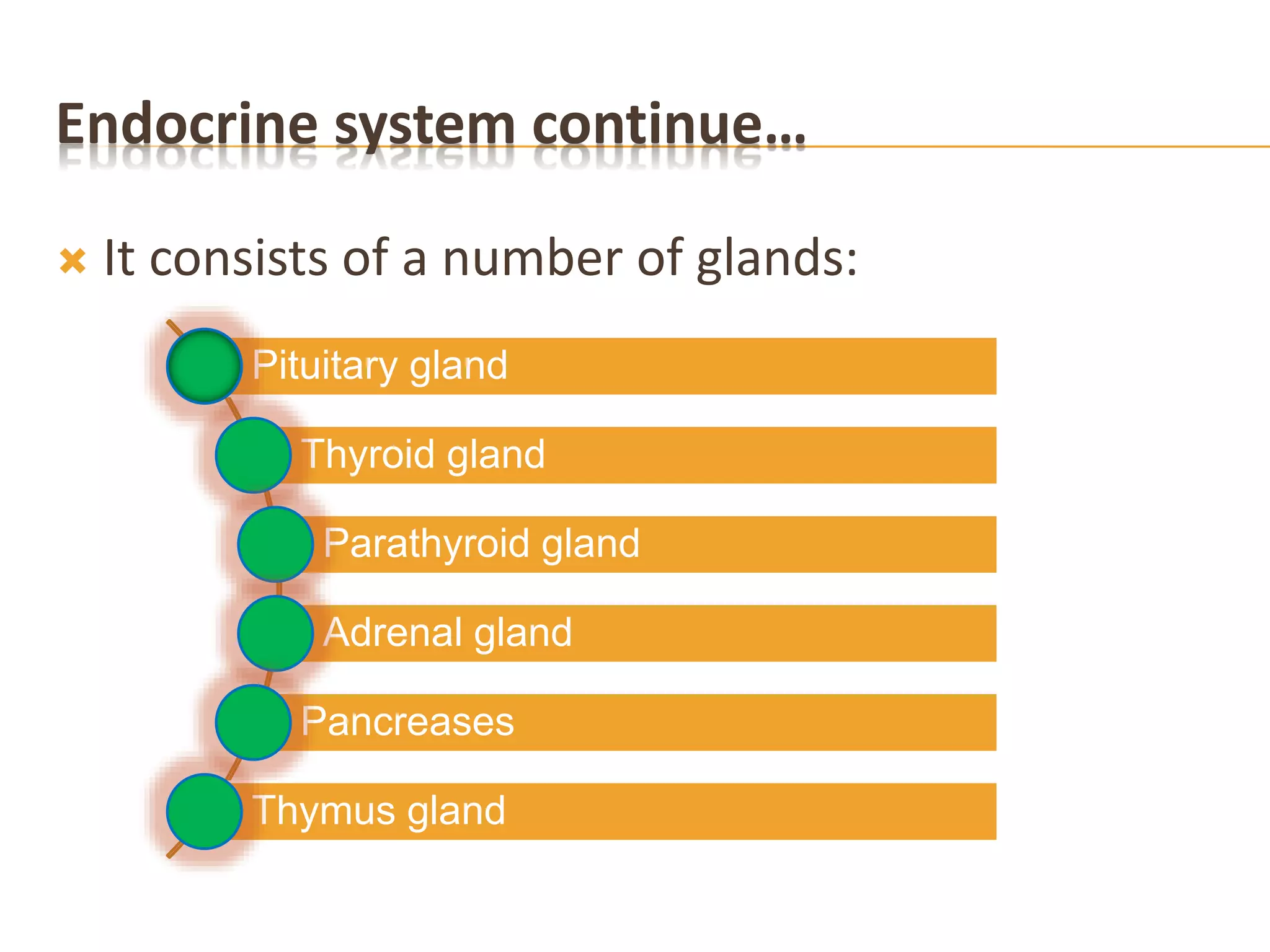
 It consists of a number of glands:
Pituitary gland
Thyroid gland
Parathyroid gland
Adrenal gland
Pancreases
Thymus gland
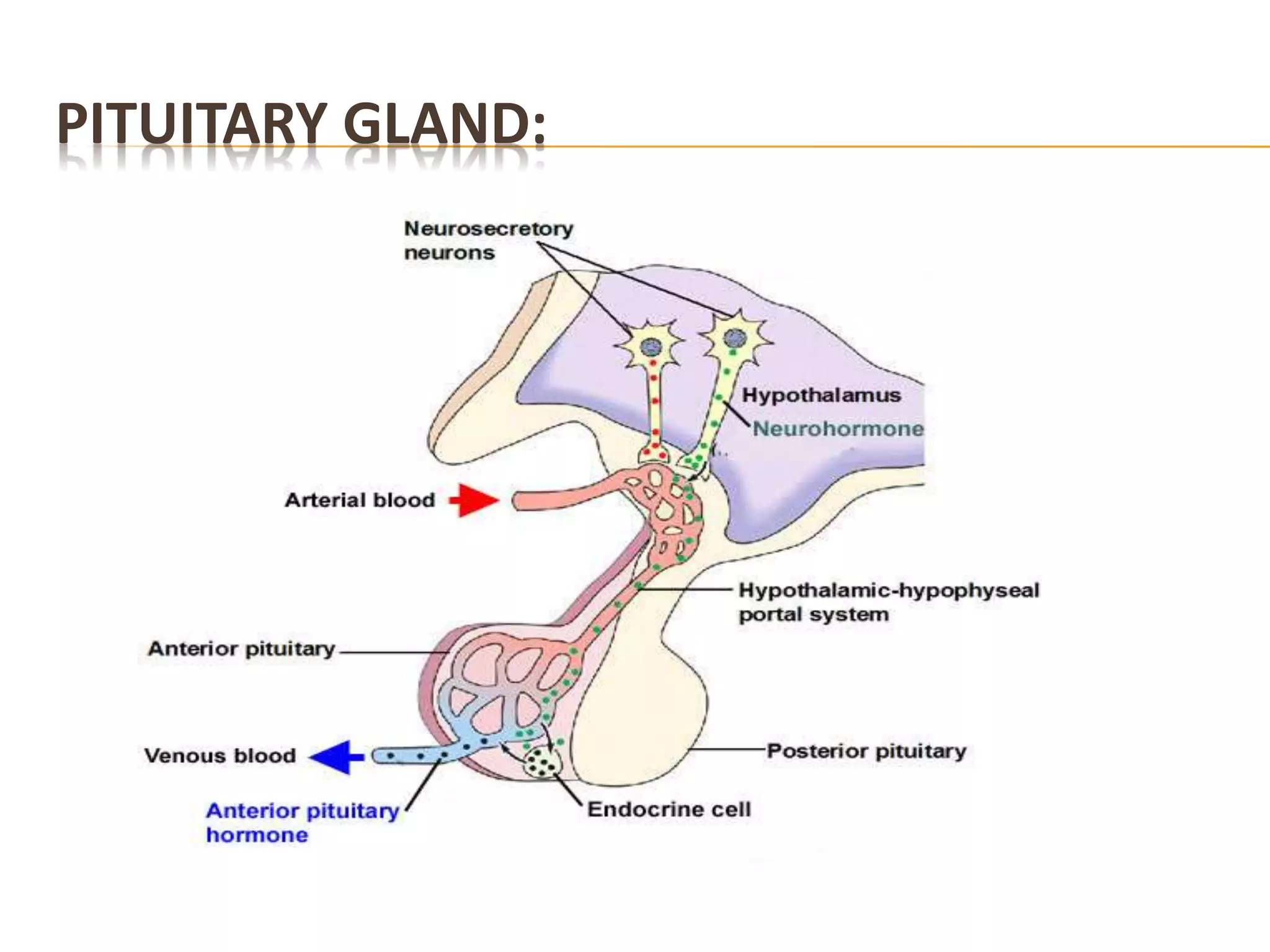
PITUITARY GLAND:
pituitary gland continue…
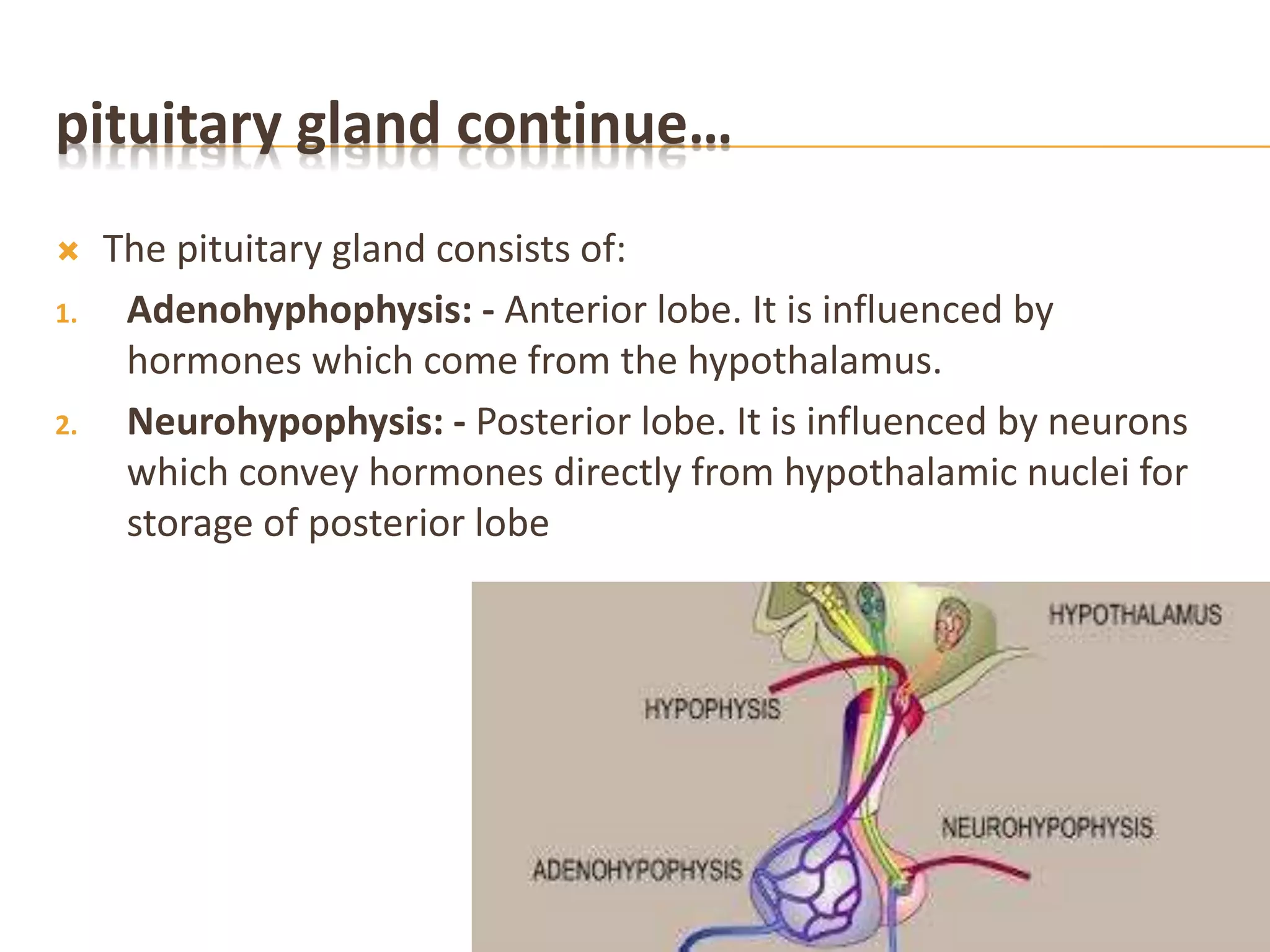
 The pituitary gland consists of:
1. Adenohyphophysis: - Anterior lobe. It is influenced by
hormones which come from the hypothalamus.
2. Neurohypophysis: - Posterior lobe. It is influenced by neurons
which convey hormones directly from hypothalamic nuclei for
storage of posterior lobe
HORMONES:
Anterior lobe:
 Growth hormone (GH)
 Prolactin
 Thyroid stimulating hormone (TSH)
 Adrenocorticotrophic hormone (ACTH)
 Follicle stimulating hormone (FSH)
 Luteinizing hormone (LH)
Intermediate lobe:
 A and B melanocyte stimulating hormone
Posterior lobe:
1. Vasopressin (ADH)
2. oxytocin
ANTERIOR PITUITARY
GROWTH HORMONE (GH):
Action of growth hormone
1. Stimulating of growth of bones, cartilage and connective
tissue:
 Somatomedins are synthesized
in the liver, in response to
stimulation by the GH
 The effects of GH on skeletal
growth are mediated by
somatomedins
action of GH continue…
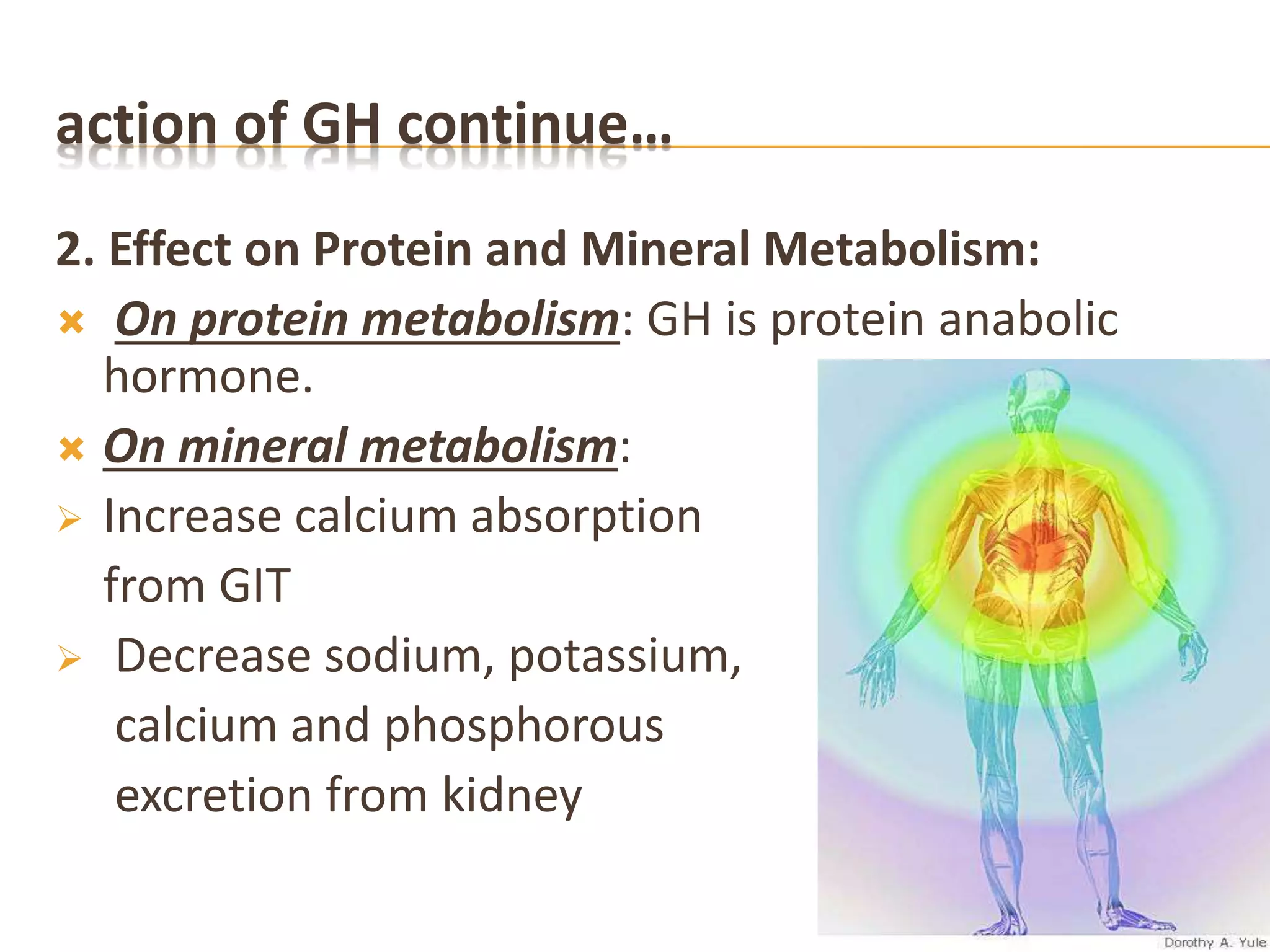
2. Effect on Protein and Mineral Metabolism:
 On protein metabolism: GH is protein anabolic
hormone.
 On mineral metabolism:
 Increase calcium absorption
from GIT
 Decrease sodium, potassium,
calcium and phosphorous
excretion from kidney
action of GH continue…
3. Effect on carbohydrate and fat metabolism:
 On carbohydrate-
GH is diabetogenic, because
it produce hyperglycemia
 On fat metabolism-
GH has catabolic effect i.e.
Increases mobilization of
fats from adipose tissues
CONTROL OF GROWTH HORMONE
The release of GH is primary under the control of two
hypothalamic hormones:
 GH releasing hormone
 GH inhibiting hormone
Stimuli increases GH
Secretions by stimulating GHRH release. E.g. during
exercise and stress
Stimuli decrease GH secretion by release of GHIH also
called Somatostatin
DISEASES RELATED TO GROWTH HORMONE
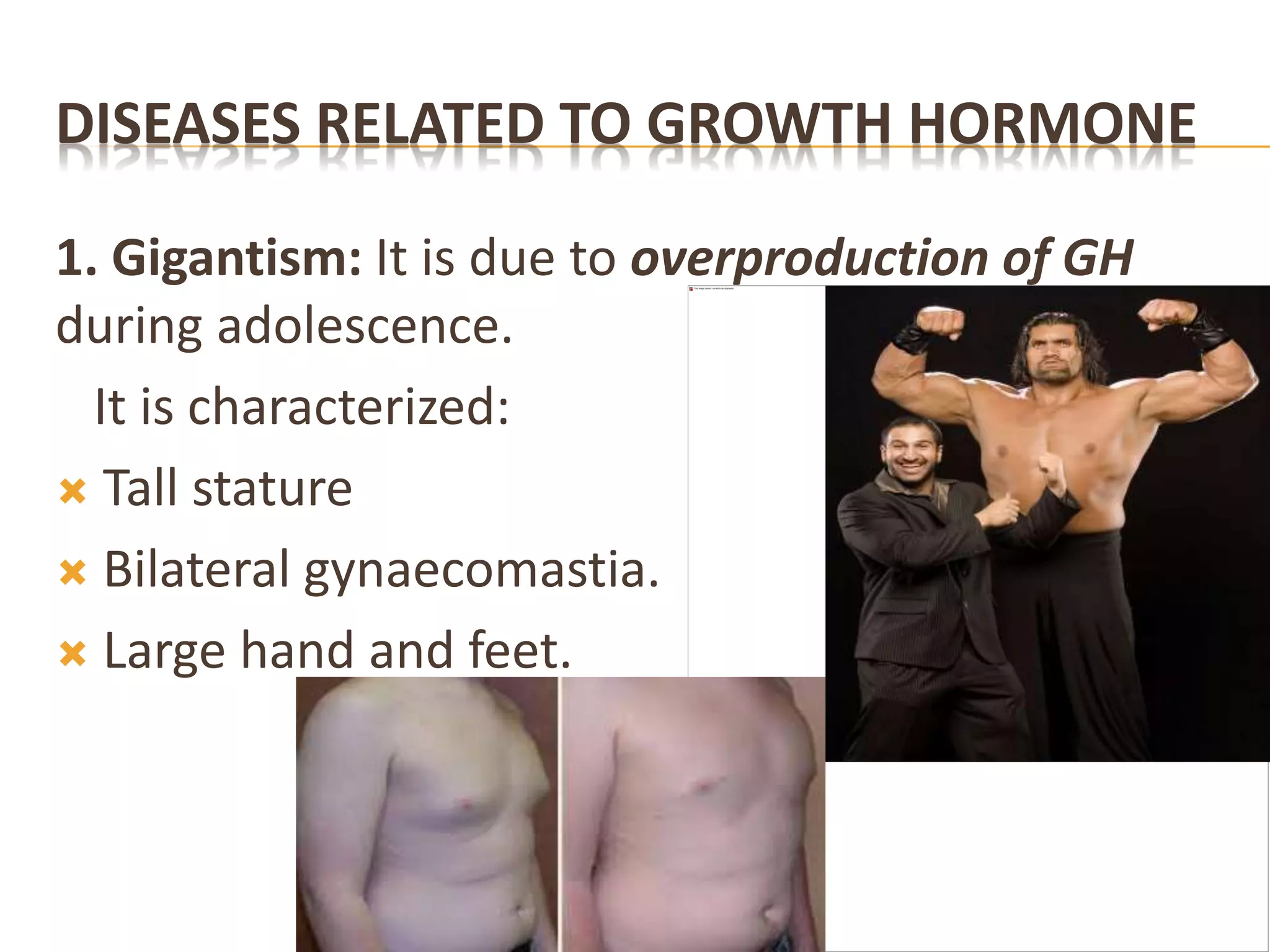
1. Gigantism: It is due to overproduction of GH
during adolescence.
It is characterized:
 Tall stature
 Bilateral gynaecomastia.
 Large hand and feet.
diseases continue…
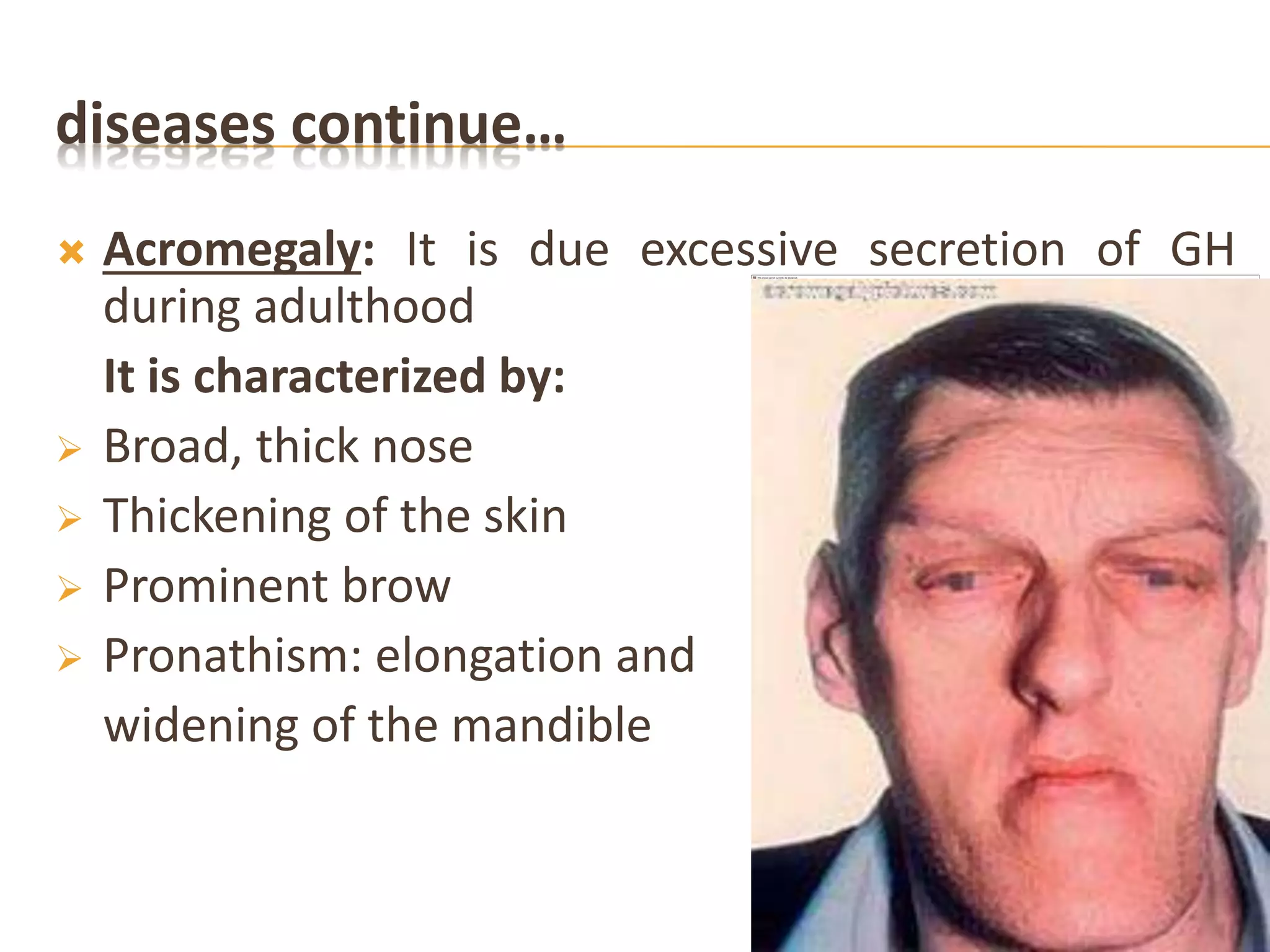
 Acromegaly: It is due excessive secretion of GH
during adulthood
It is characterized by:
 Broad, thick nose
 Thickening of the skin
 Prominent brow
 Pronathism: elongation and
widening of the mandible
diseases continue…
3. Dwarfism: Deficiency of GH secretion.
 Shortness of stature
 Small genitalia
 Delicate extremities.
Hormones of anterior pituitary continue…
2. Prolactin:
Actions of prolactin:
 Prolactin plays an important
role in the development of
the mammary gland and
in milk synthesis.
prolactin continue…
Control of prolactin secretion:
A. Stimulating factors:
They act via stimulating
Prolactin releasing factor.
e.g. Exercise, emotional
stress, pregnancy and
breast feeding.
continue…
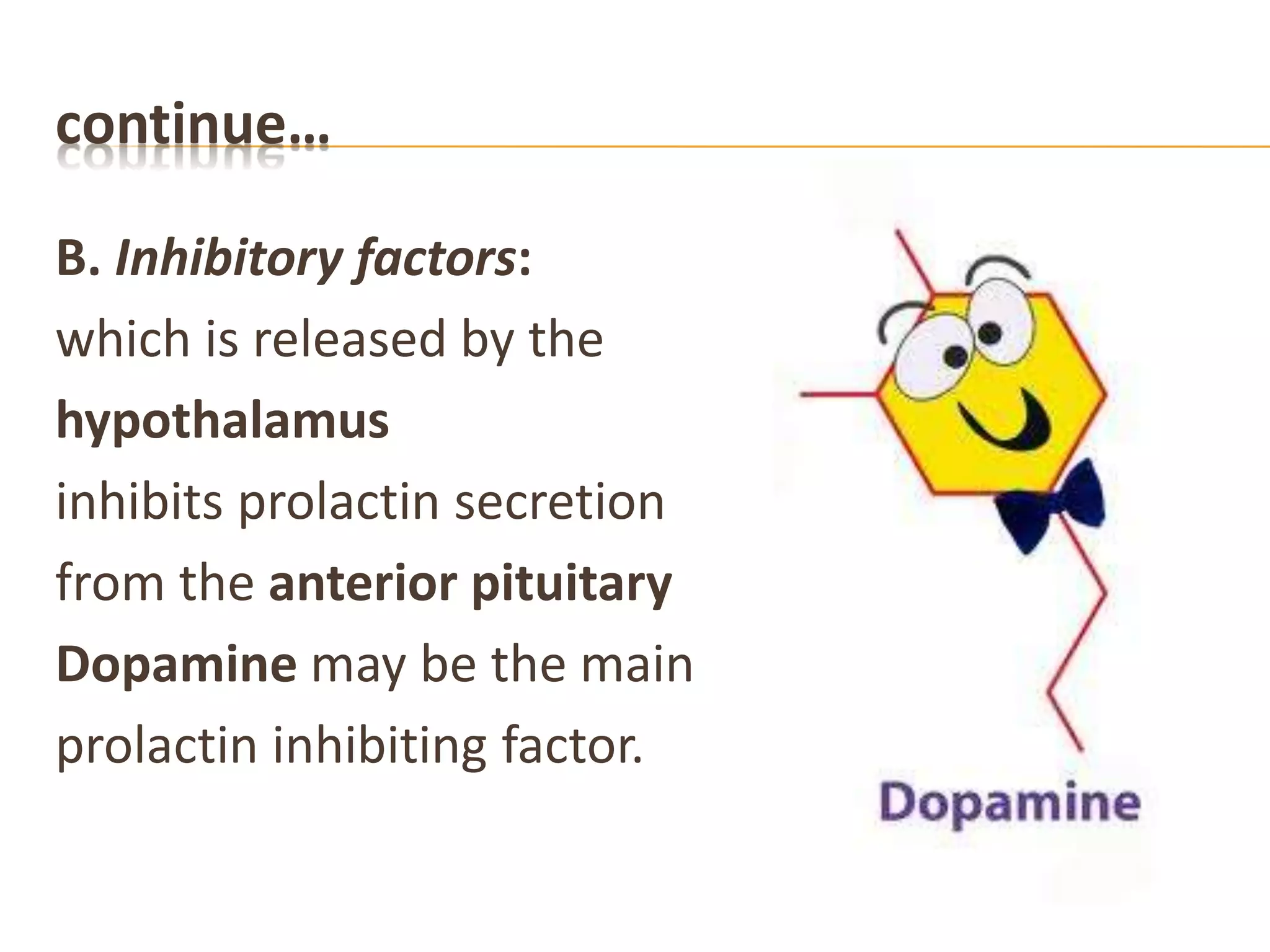
B. Inhibitory factors:
which is released by the
hypothalamus
inhibits prolactin secretion
from the anterior pituitary
Dopamine may be the main
prolactin inhibiting factor.
Hormones of anterior pituitary continue…
3.Thyroid-stimulating hormone(TSH) :
It stimulates the thyroid gland to produce:
 Thyroxin (T4), and
 Triiodothyronine (T3)
Hormones of anterior pituitary continue…
4. ADRENOCORTICOTROPHIC HORMONE(ACTH):
 It is secreted by the anterior pituitary gland.
 It is often produced
in response to
biological stress.
 Its principal effects
are increased
production and
release of corticosteroids.
Hormones of anterior pituitary continue…
5. FOLLICLE STIMULATING HORMONE(FSH):
 It is synthesized and secreted
by anterior pituitary gland
 FSH regulates the development,
growth, pubertal maturation
and reproductive processes
of the body
Hormones of anterior pituitary continue…
6. LUTEINIZING HORMONE(LH):
 It is a hormone produced by the anterior pituitary
gland.
 In females, an acute rise of LH
triggers ovulation and
development of
the corpus luteum
 In males, it stimulates the
production of testosterone
INTERMEDIATE LOBE
intermediate lobe continue…
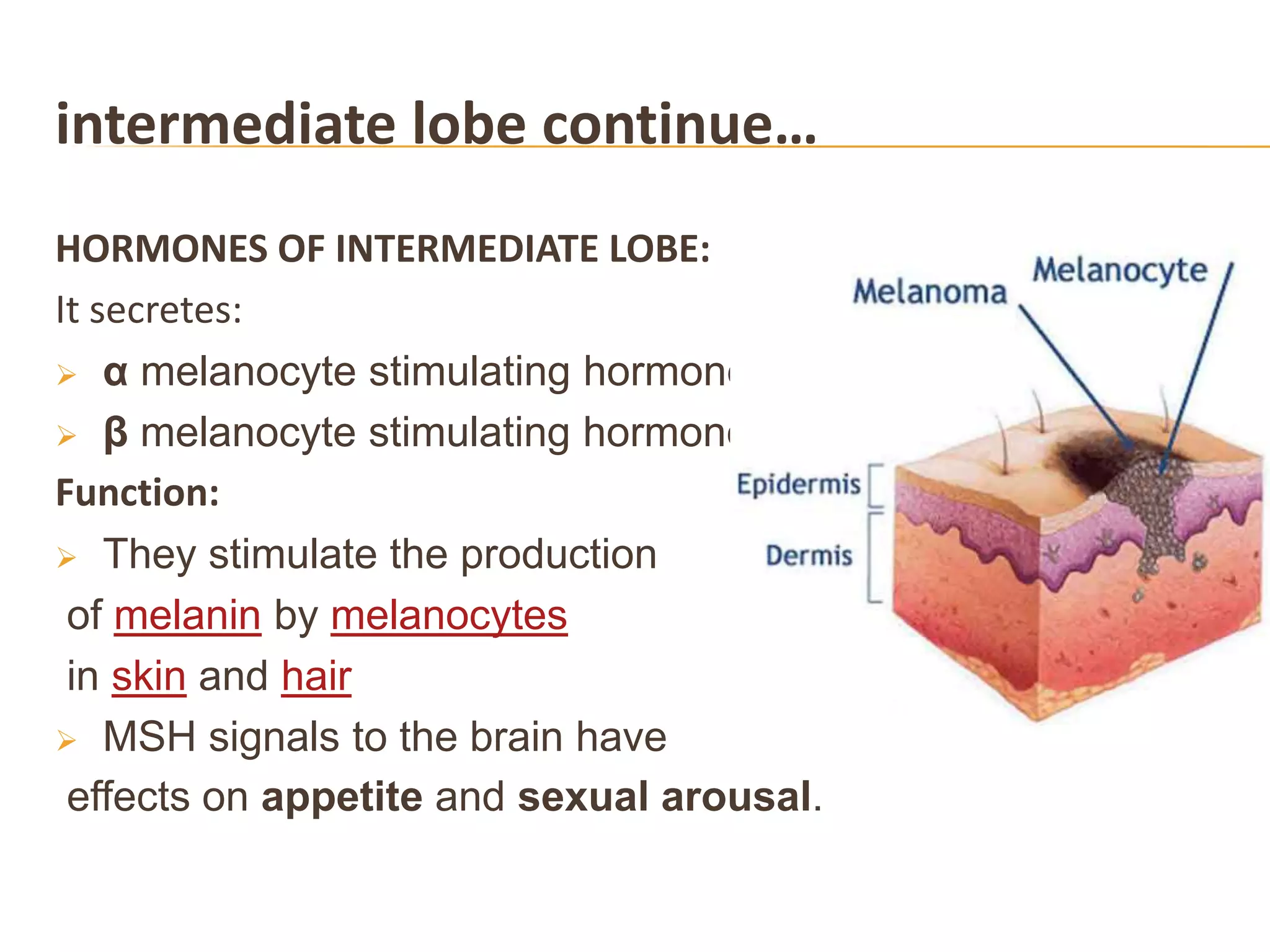
HORMONES OF INTERMEDIATE LOBE:
It secretes:
 α melanocyte stimulating hormone
 β melanocyte stimulating hormone
Function:
 They stimulate the production
of melanin by melanocytes
in skin and hair
 MSH signals to the brain have
effects on appetite and sexual arousal.
POSTERIOR PITUITARY:
HORMONES OF POSTERIOR PITUITARY:
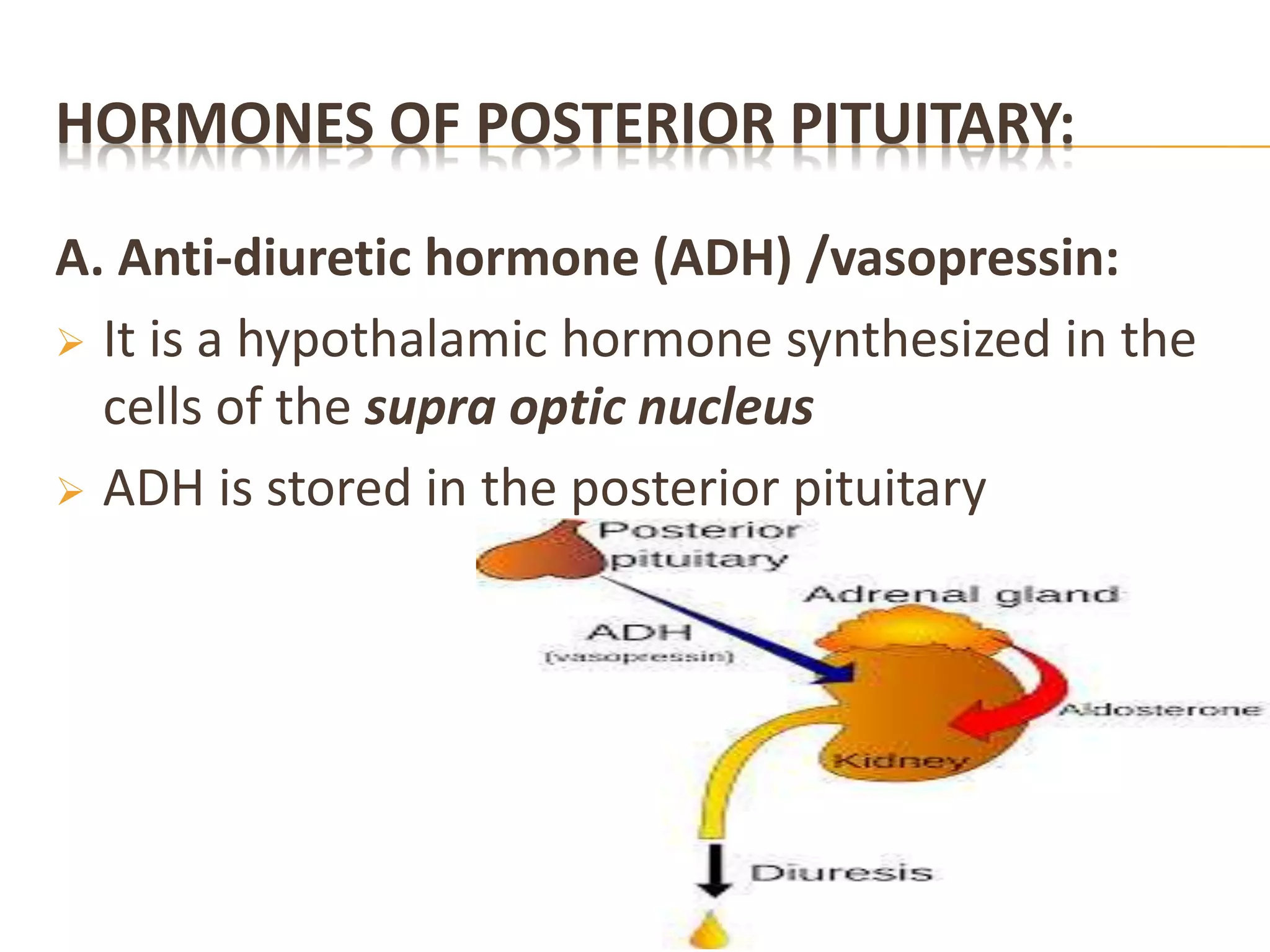
A. Anti-diuretic hormone (ADH) /vasopressin:
 It is a hypothalamic hormone synthesized in the
cells of the supra optic nucleus
 ADH is stored in the posterior pituitary
ADH continue…
Functions of ADH:
Its two primary functions-
 To retain water in the body
 To constrict blood vessel.
DISEASES RELATED TO ADH:
 Diabetes Insipidus:
It is a condition characterized by-
 Excessive thirst
 Excretion of large amounts
of severely diluted urine
diseases continue…
 Polyuria:
It is the excessive or abnormally
large production of urine
(at least 2.5 or 3L /in adults)
Hormones of posterior pituitary continue…
B. OXYTOCIN: -
 Oxytocin is synthesized in the hypothalamus
 Stored in the posterior lobe of pituitary gland
oxytocin continue…
Action of oxytocin:
 Oxytocin stimulates contraction of mammary
gland to produce milk.
 Stimulate contraction
of the smooth muscles
of the uterus
THYROID GLAND
Thyroid gland continue…
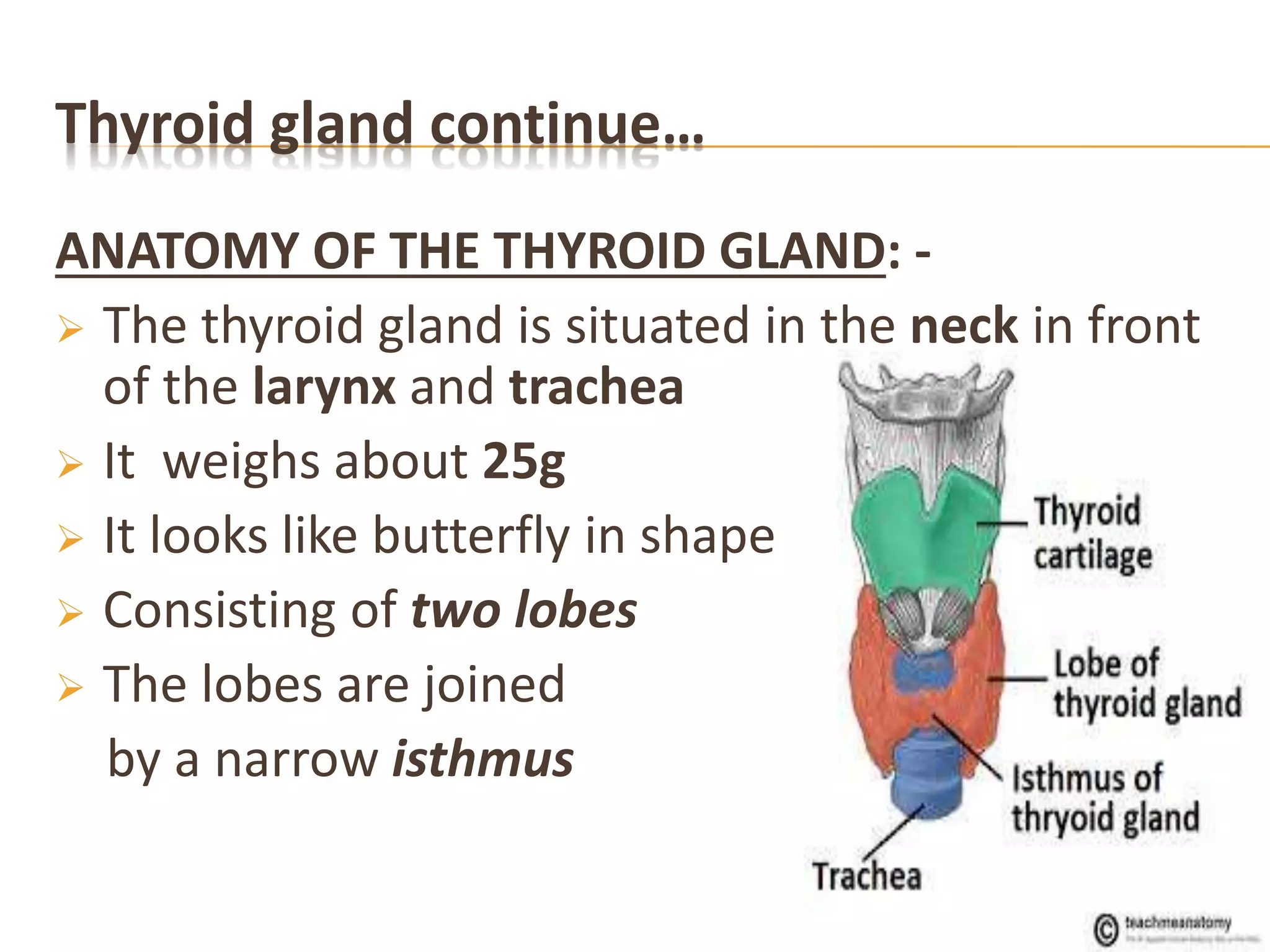
ANATOMY OF THE THYROID GLAND: -
 The thyroid gland is situated in the neck in front
of the larynx and trachea
 It weighs about 25g
 It looks like butterfly in shape
 Consisting of two lobes
 The lobes are joined
by a narrow isthmus
THYROID HORMONES
 Triiodothyronine (T3):
It affects almost every physiological process in the body:
 Growth and development,
 Metabolism,
 Body temperature, and
 Heart rate
 Thyroxin (T4):
 Controls development and maturation
 Excess thyroxin results rapid development
 Deficiency of thyroxin results in delayed development
hormones continue…
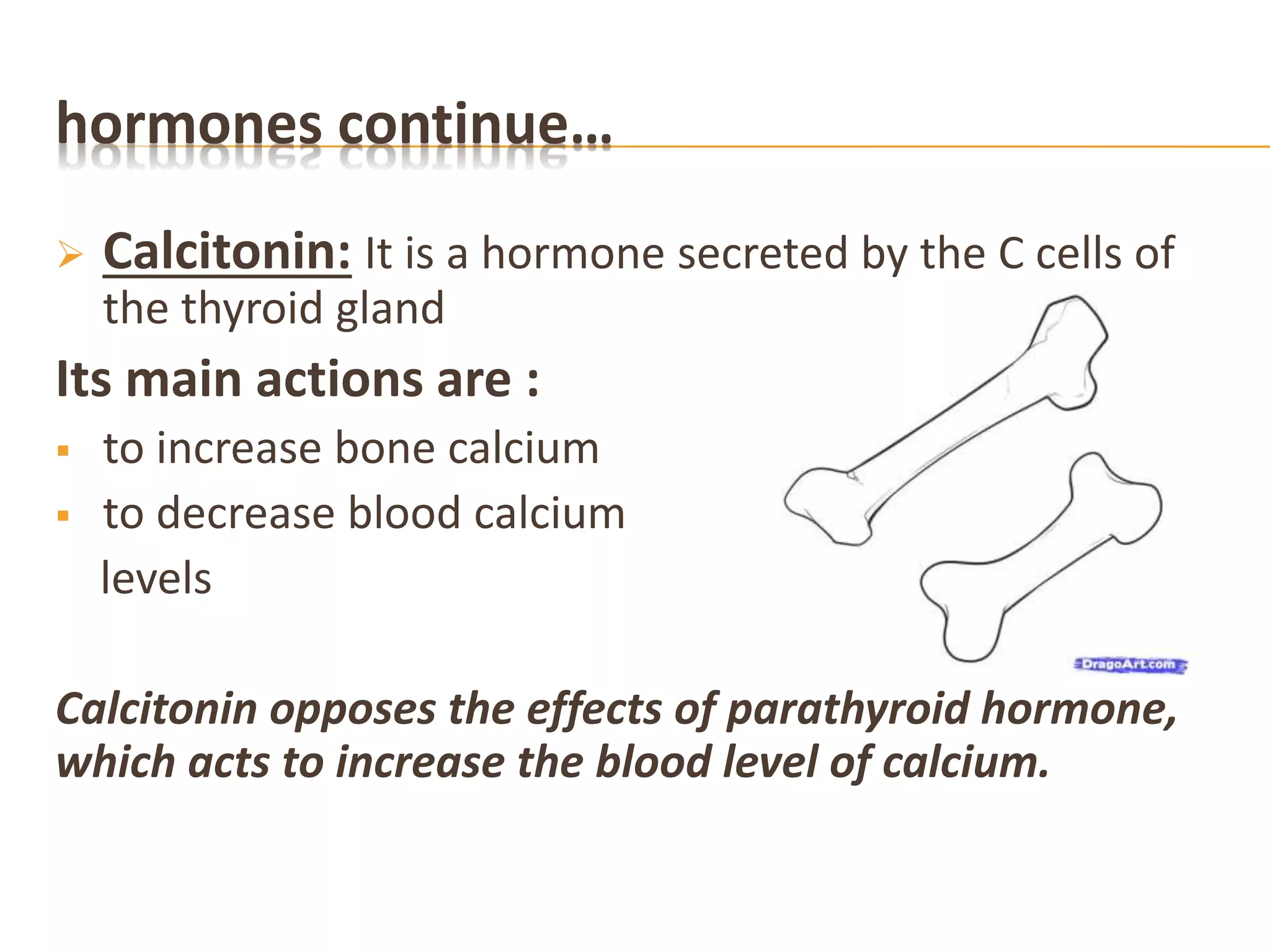
 Calcitonin: It is a hormone secreted by the C cells of
the thyroid gland
Its main actions are :
 to increase bone calcium
 to decrease blood calcium
levels
Calcitonin opposes the effects of parathyroid hormone,
which acts to increase the blood level of calcium.
Thyroid gland continue…
Thyroid is not absolutely
essential for life,
but its removal in adults leads to :
 Poor resistance to cold
 Mental and physical slowing.
and in children’s:
 Mental retardation
 Dwarfism
REGULATION OF THYROID SECRETION
Thyroid stimulating hormone (TSH) controls the regulation of
thyroid hormones.
 The release of TSH by the
anterior lobe of the pituitary,
is regulated by the hypothalamus
via negative feedback mechanism.
It is a reaction that causes a decrease
in function. It occurs in response
to some kind of stimulus.
DISEASES RELATED TO THYROID GLAND
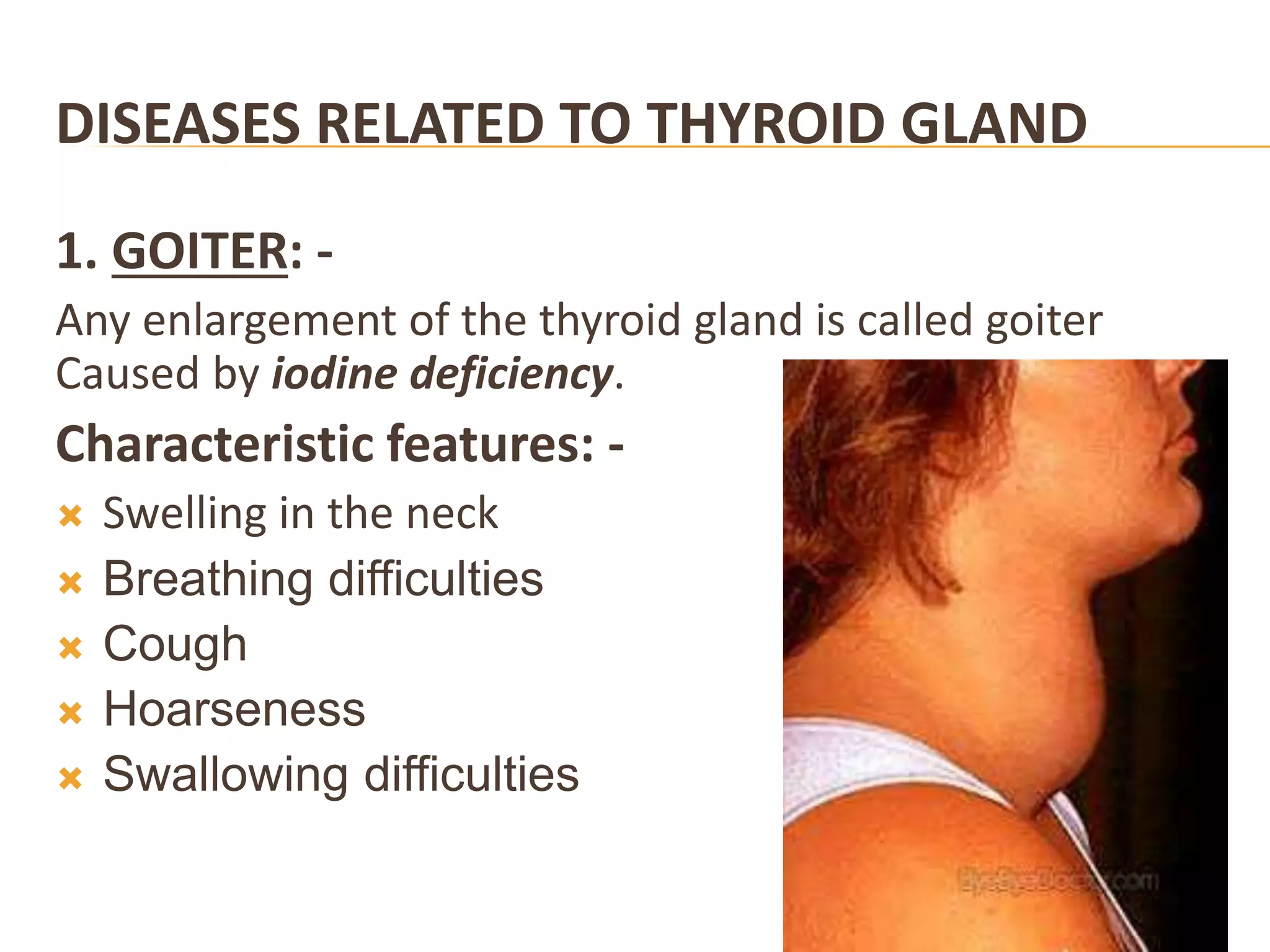
1. GOITER: -
Any enlargement of the thyroid gland is called goiter
Caused by iodine deficiency.
Characteristic features: -
 Swelling in the neck
 Breathing difficulties
 Cough
 Hoarseness
 Swallowing difficulties
diseases continue…
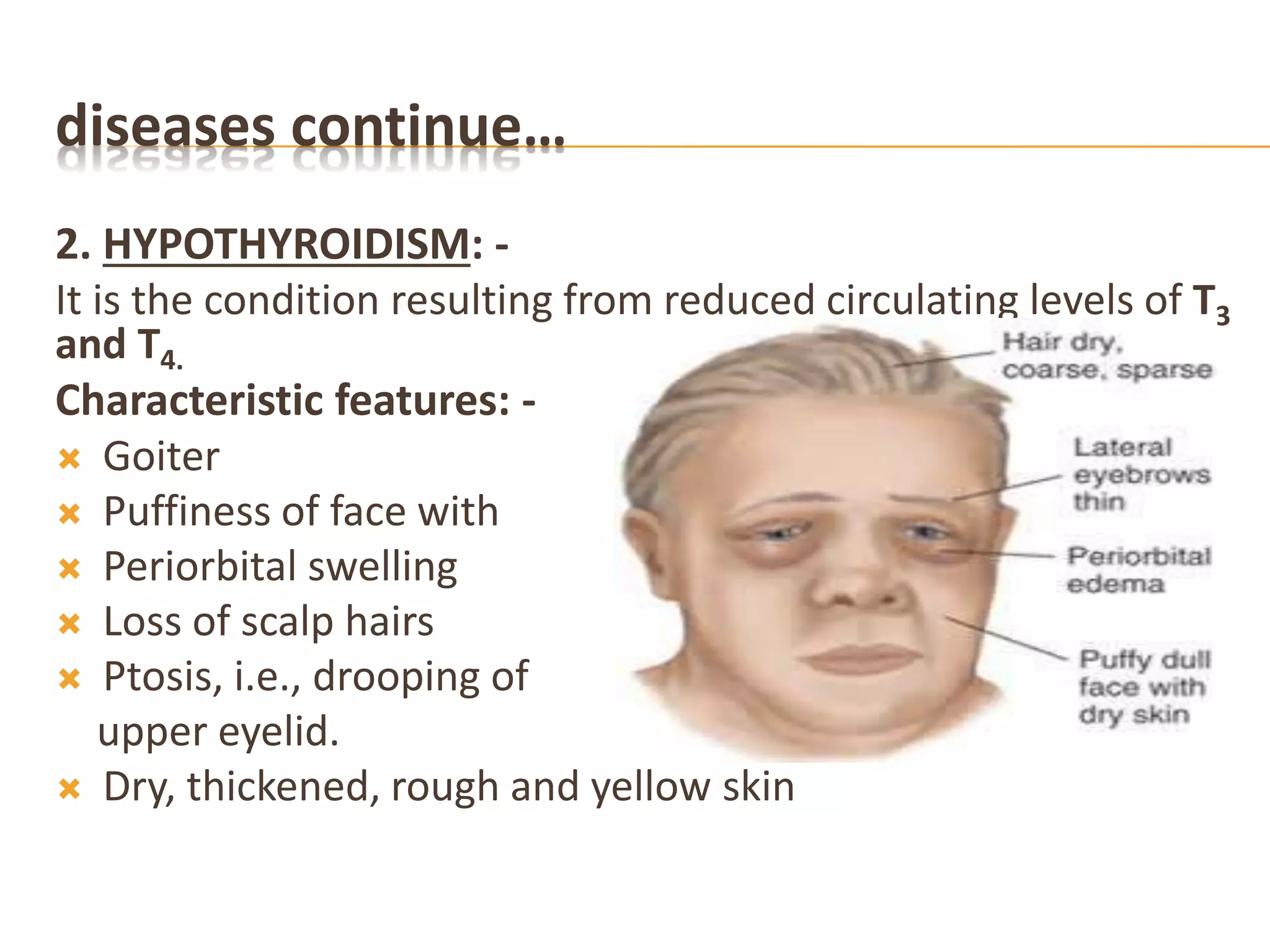
2. HYPOTHYROIDISM: -
It is the condition resulting from reduced circulating levels of T3
and T4.
Characteristic features: -
 Goiter
 Puffiness of face with
 Periorbital swelling
 Loss of scalp hairs
 Ptosis, i.e., drooping of
upper eyelid.
 Dry, thickened, rough and yellow skin
diseases continue…
3. HYPERTHYROIDISM/GRAVES DISEASE: -
It is the condition resulting from increased circulating level
of T3 and T4
Characteristic features: -
 Moderate enlargement
of thyroid gland
 Exophthalmos(Lid retraction)
PARATHYROID GLANDS
 In humans there are
4 parathyroid glands
 Parathyroid glands are
essential for life,
as their removal can
cause death from
asphyxia
FUNCTION OF PARATHYROID HORMONE
 Parathyroid glands contains chief cells which secrete
parathyroid hormone.
 The main function of
parathyroid hormone
is to increase the
blood calcium level
DISEASES RELATED TO PARATHYROID GLAND
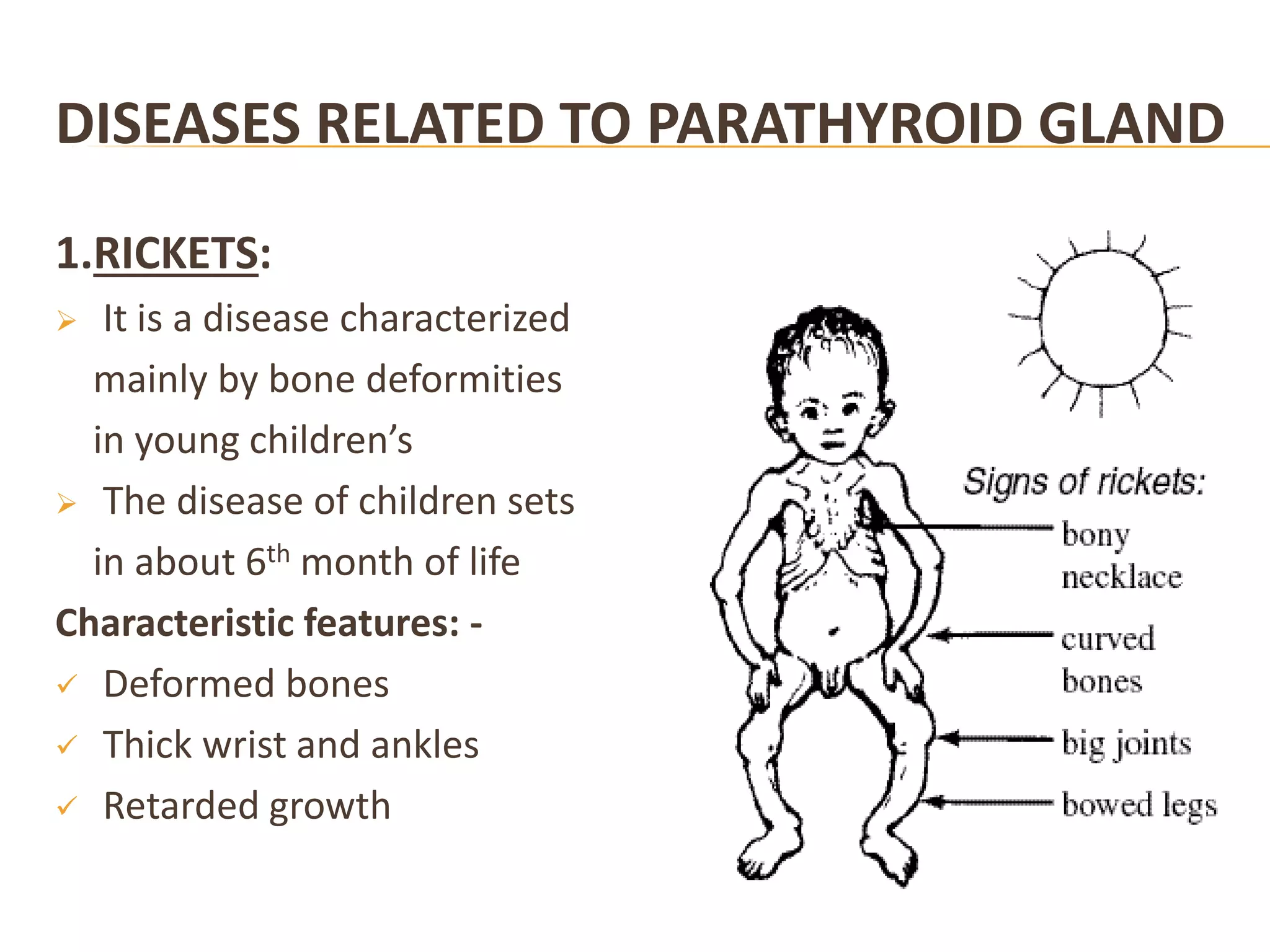
1.RICKETS:
 It is a disease characterized
mainly by bone deformities
in young children’s
 The disease of children sets
in about 6th month of life
Characteristic features: -
 Deformed bones
 Thick wrist and ankles
 Retarded growth
diseases continue…
2. OSTEOMALACIA: -
 This is due to inadequate
absorption of calcium
due to deficiency of Vitamin D
and Calcium in the diet
 The disease is limited to females,
usually appears after multiple
pregnancies and lactation.
diseases continue…
3.HYPOPARATHYROIDISM:
It is an abnormally low level of calcium in the blood
 Characteristic features: -
 Psychiatric disturbance
 Par aesthesia
 Development of cataract
diseases continue…
4. HYPERPARATHYROIDISM: -
Excessive secretion of parathyroid hormone.
Characteristic features: -
 Formation of renal calculi
 Polyuria
 Polydipsia
 Anorexia
 Muscle weakness
 General fatigue
 Calcification of soft tissue
PANCREASE
ANATOMY OF PANCREASES
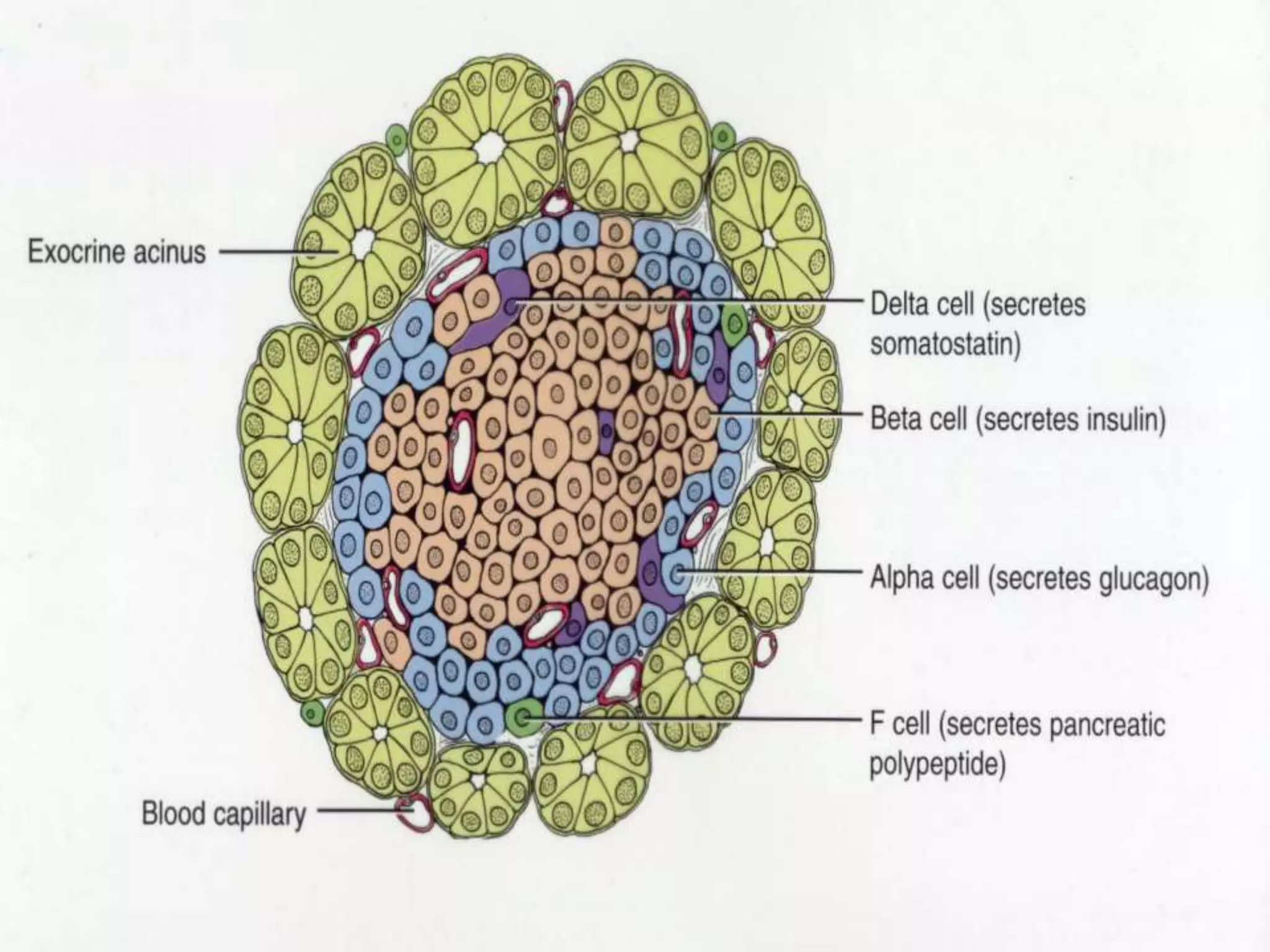
There are approximately 0.5 to 1.5 million Islets of Langerhans
There are four types of cells:
 70-80% beta- cells secrete Insulin
 15-20%, alpha –cells secrete Glucagon
 1-8% delta- cells secrete
Somatostatin and gastrin
 1-2% f- cells. These cells secrete
pancreatic polypeptide which decreases
the absorption of food from the GIT
PANCREATIC HORMONES
1. INSULIN:
Actions:
 On carbohydrate metabolism:
 Insulin increases the glucose
entry into most of body cells
 Insulin produce hypoglycemia
 On protein metabolism:
 Insulin promotes amino-acid uptake
 It decrease protein breakdown
 It promotes protein synthesis especially in muscles
DISEASES RELATED TO INSULIN: -
DIABETES MELLITUS
 It is a group of metabolic diseases
in which there are high blood sugar
over a prolonged period.
 This high blood sugar produces
the symptoms of
 frequent urination,
 increased thirst, and
 increased hunger.
hormones continue…
2. GLUCAGON: -
Glucagon act mostly on the liver and adipose tissues where it
antagonizes the actions of insulin
 Stimulate glycogenolysis
 Promotes gluconeogenesis
hormones continue…
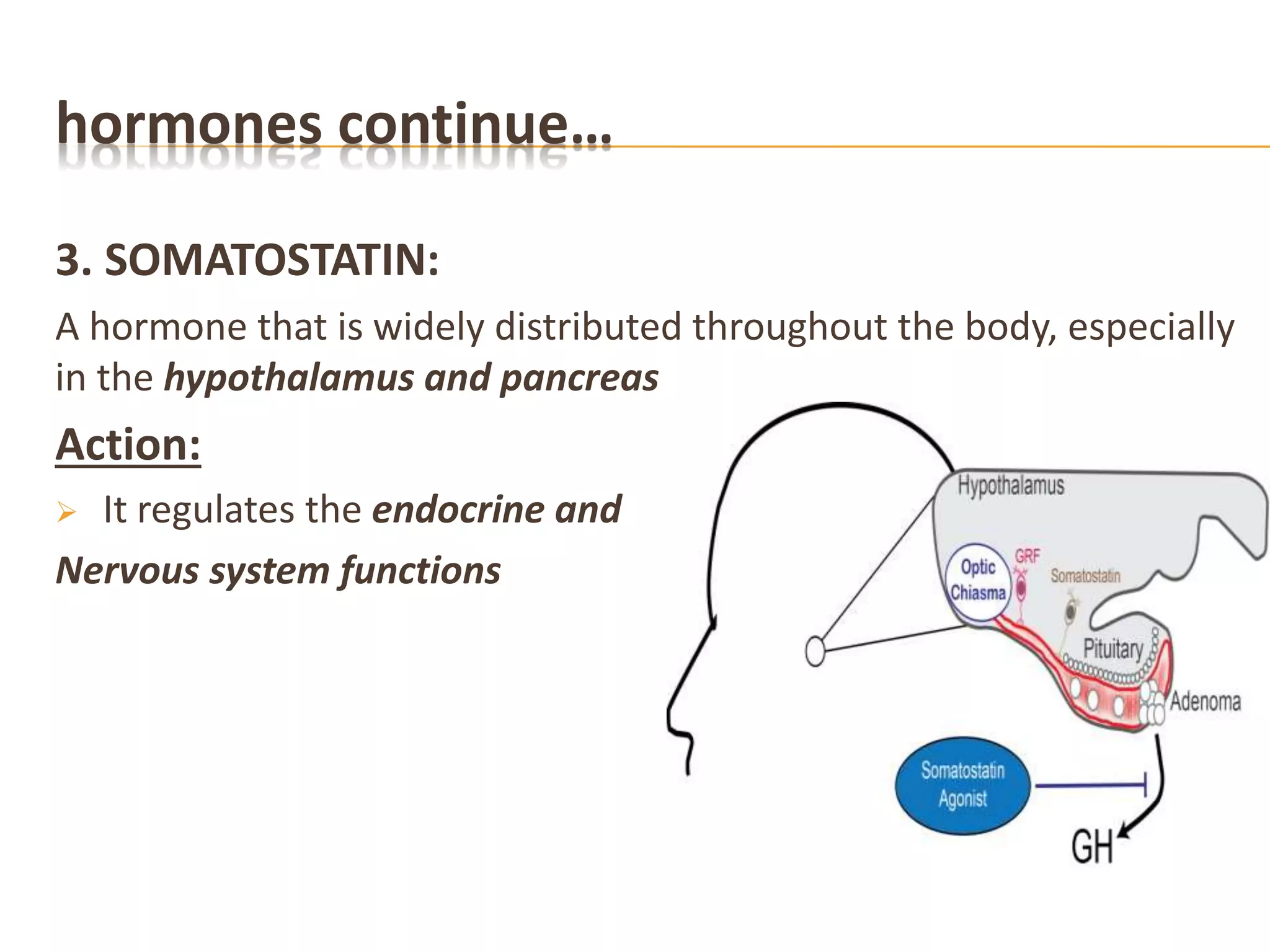
3. SOMATOSTATIN:
A hormone that is widely distributed throughout the body, especially
in the hypothalamus and pancreas
Action:
 It regulates the endocrine and
Nervous system functions
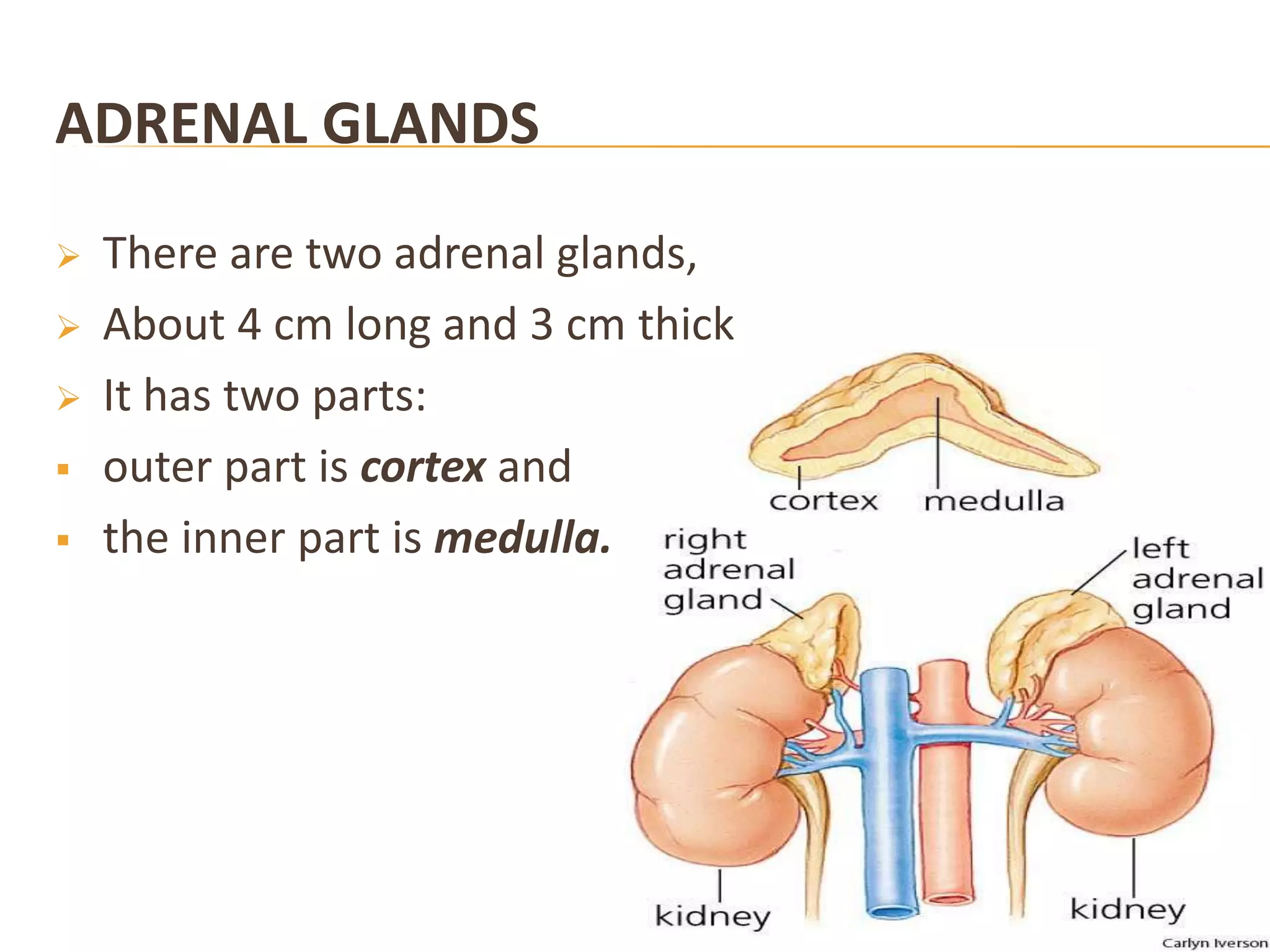
ADRENAL GLANDS
 There are two adrenal glands,
 About 4 cm long and 3 cm thick
 It has two parts:
 outer part is cortex and
 the inner part is medulla.
adrenal glands continue…
1. ADRENAL CORTEX: -
 It produces three hormones:
 Glucocorticoids
 Mineralocorticoids
 Sex hormones (androgens)
These are collectively called
as adrenocorticoids
adrenal cortex continue…
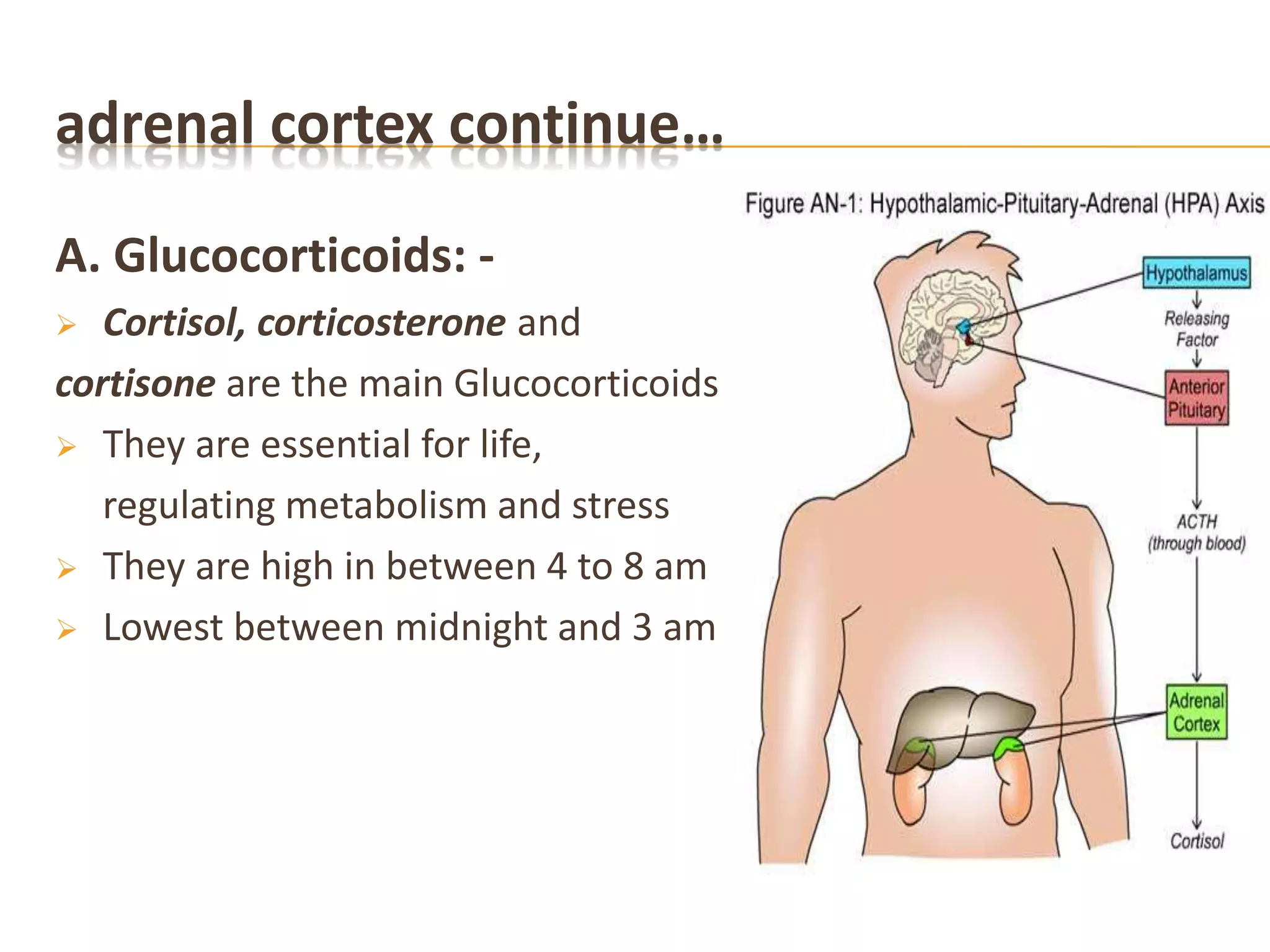
A. Glucocorticoids: -
 Cortisol, corticosterone and
cortisone are the main Glucocorticoids
 They are essential for life,
regulating metabolism and stress
 They are high in between 4 to 8 am
 Lowest between midnight and 3 am
glucocorticoids continue…
Effects:
 Gluconeogenesis (formation of new sugar)
 Lipolysis (breakdown of triglycerides
into fatty acids and glycerol for
energy production).
In pathology and pharmacology:
 Have an anti-inflammatory action.
 Suppress the immune response.
 Suppress the response of tissue to injury.
 Delay wound healing.
adrenal glands continue…
B. Mineralocorticoids (aldosterone): -
 Aldosterone is the
main mineralocorticoids
 It maintains
Water and electrolyte balance
adrenal glands continue…
C. Sex hormones: -
 Androgens are the main sex hormones
 They contribute to the onset of puberty
DISORDERS OF ADRENAL CORTEX
1. Cushing’s syndrome: -
It is caused due to hyper secretion of glucocorticoids
Characteristic features:
 Pain in face, neck and abdomen
 Pathological fractures
 Diminished protein synthesis
 Suppression of growth
 Hypertension
 Menstrual disturbance
 Peptic ulcers
disorders of adrenal cortex
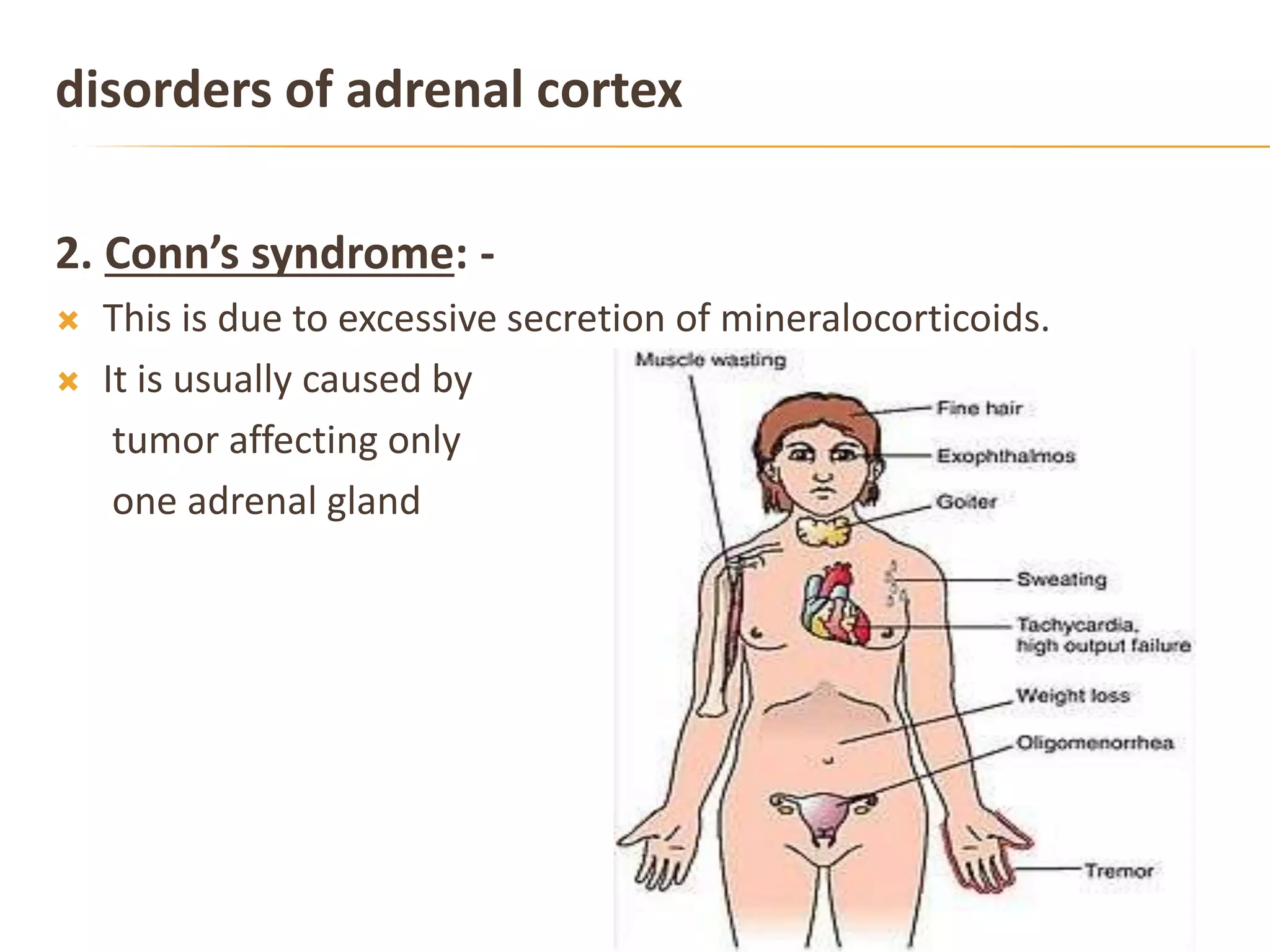
2. Conn’s syndrome: -
 This is due to excessive secretion of mineralocorticoids.
 It is usually caused by
tumor affecting only
one adrenal gland
disorders of adrenal cortex
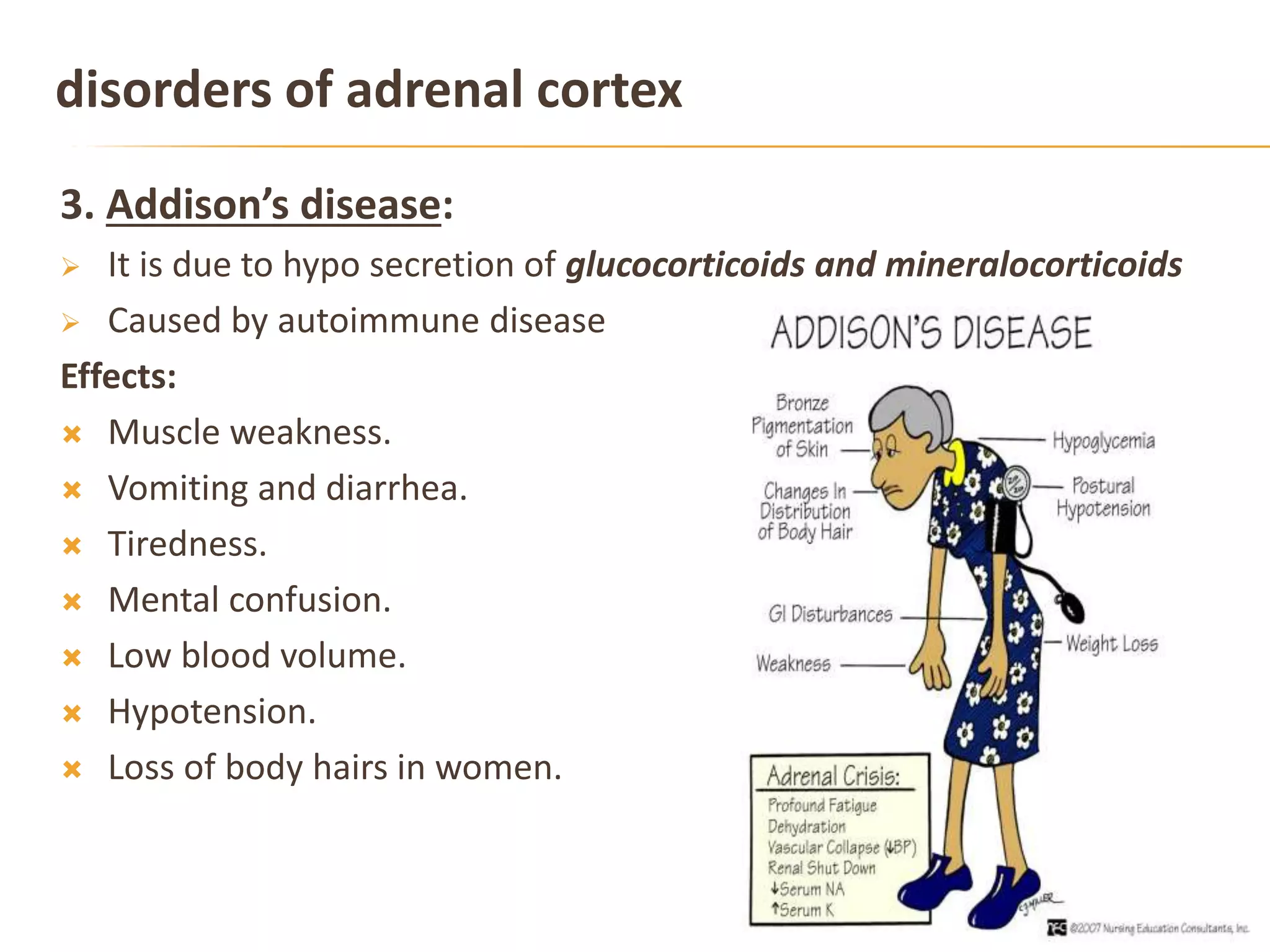
3. Addison’s disease:
 It is due to hypo secretion of glucocorticoids and mineralocorticoids
 Caused by autoimmune disease
Effects:
 Muscle weakness.
 Vomiting and diarrhea.
 Tiredness.
 Mental confusion.
 Low blood volume.
 Hypotension.
 Loss of body hairs in women.
adrenal glands continue…
2. ADRENAL MEDULLA: -
 It is surrounded by the cortex
 It produces two hormones
 adrenaline and
 noradrenaline.
adrenal medulla continue…
Adrenaline and noradrenaline:
 Noradrenaline and adrenaline are released into the blood
 They are structurally very similar and have similar effects
 Together they potentiate by:
 Increasing heart rate
 Increasing blood pressure
 Increasing metabolic rate
 Dilating the pupils
DISORDERS OF ADRENAL MEDULLA: -
The effects of excess adrenaline and
noradrenaline are: -
 Hypertension
 Hyperglycemia
 Raised metabolic rate
 Nervousness
 Headache
THYMUS GLAND
Thymus is located in the anterior part of the upper mediastinum
 At birth it weighs 10-12 gms
 During childhood and adolescence 20-30 gms
 During old age it weighs 3-6 gms
thymus gland continue…
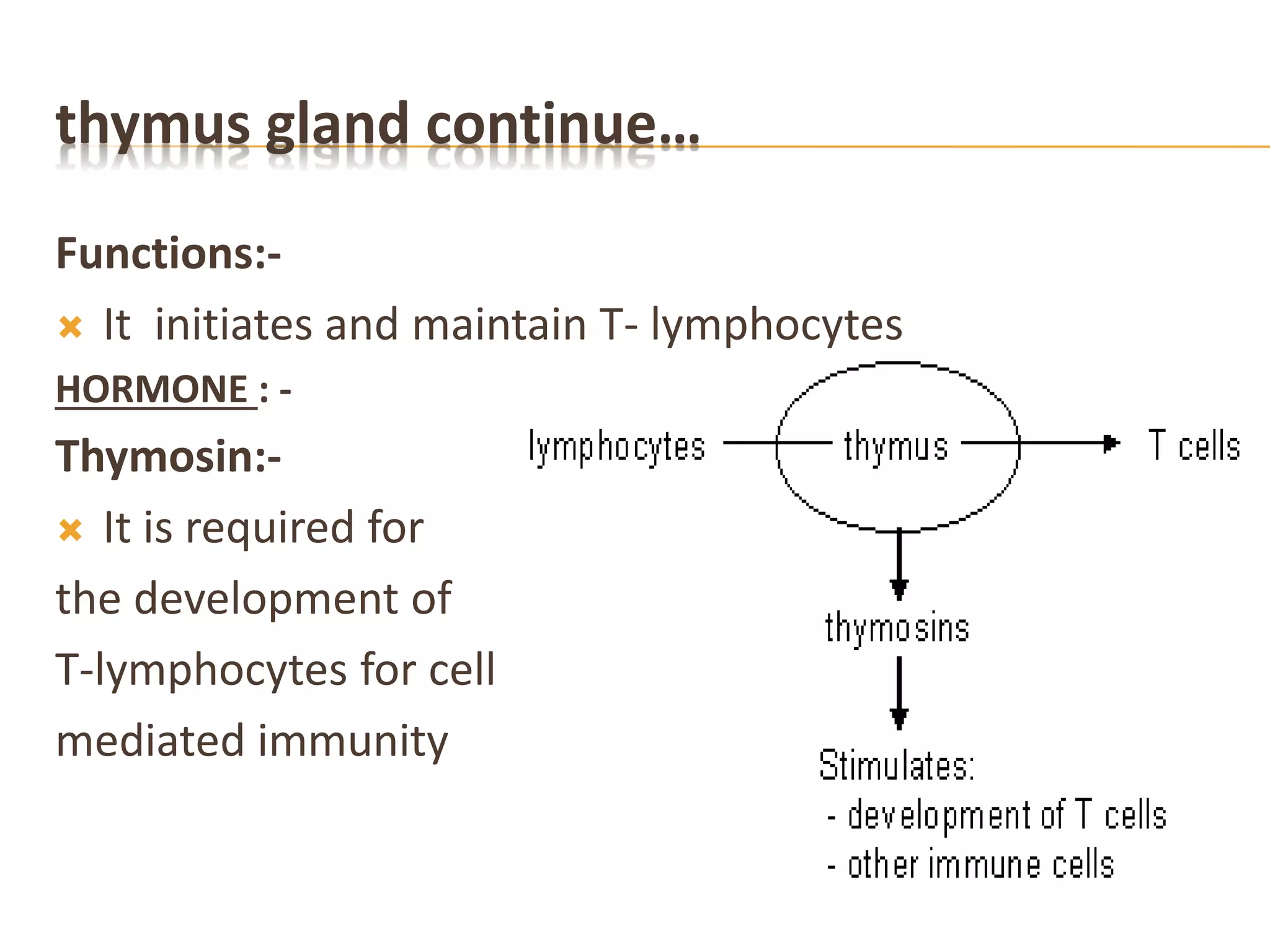
Functions:-
 It initiates and maintain T- lymphocytes
HORMONE : -
Thymosin:-
 It is required for
the development of
T-lymphocytes for cell
mediated immunity
CONCLUSION
In endocrine system we use to study and get knowledge
about:
 various glands of our body
 Hormones secreted by them
 Their various functions
So it is very necessary to study for :
 Implementing the gained knowledge clinical area
 For the better and quality nursing care
SUMMARY
So we discussed about the endocrine system and why
it is important to us
In which we also studied about various gland:
 Pituitary gland
 Thyroid gland
 Parathyroid
 Adrenal glands
 Pancreas
 Thymus gland
Their location, function and disorders
RECAPTUALISATION
 Define glands and their types?
 Enlist the hormones secreted by anterior
pituitary?
 What is negative feedback mechanism?
 Define gynacomastia?
 What is gycogenolysis?
Endocrine ppt

Endocrine ppt

  • 1.
    BY: - PRAMOD KUMAR M.SC.NURSING 1ST YEAR ENDOCRINE SYSTEM
  • 2.
    GLANDS: An organ whichsecretes particular chemical substances for use in the body or for discharge into the surroundings.  There are three types of glands in our body:  Endocrine glands  Exocrine glands  Heterocrine glands
  • 3.
    EXOCRINE GLANDS Exocrine glandsare glands that secrete their products into ducts EXAMPLE:  Sweat glands  Salivary glands  Mammary glands  Stomach  Liver
  • 4.
    ENDOCRINE GLANDS Glands thatsecrete their product (hormones) directly into the blood rather than through a duct EXAMPLE:  Pituitary gland  Pancreas  Thyroid gland  Adrenal glands
  • 5.
    HETEROCRINE GLANDS These areglands that perform both exocrine and endocrine functions. For example pancreas
  • 6.
    ENDOCRINE SYSTEM  Consistsof glands and Group of capillaries which Facilitates diffusion of hormones to Bloodstream  They are commonly referred as the ductless glands, because the hormones secreted directly into bloodstream
  • 7.
    Endocrine system continue… It consists of a number of glands: Pituitary gland Thyroid gland Parathyroid gland Adrenal gland Pancreases Thymus gland
  • 8.
  • 9.
    pituitary gland continue… The pituitary gland consists of: 1. Adenohyphophysis: - Anterior lobe. It is influenced by hormones which come from the hypothalamus. 2. Neurohypophysis: - Posterior lobe. It is influenced by neurons which convey hormones directly from hypothalamic nuclei for storage of posterior lobe
  • 10.
    HORMONES: Anterior lobe:  Growthhormone (GH)  Prolactin  Thyroid stimulating hormone (TSH)  Adrenocorticotrophic hormone (ACTH)  Follicle stimulating hormone (FSH)  Luteinizing hormone (LH) Intermediate lobe:  A and B melanocyte stimulating hormone Posterior lobe: 1. Vasopressin (ADH) 2. oxytocin
  • 11.
  • 12.
    GROWTH HORMONE (GH): Actionof growth hormone 1. Stimulating of growth of bones, cartilage and connective tissue:  Somatomedins are synthesized in the liver, in response to stimulation by the GH  The effects of GH on skeletal growth are mediated by somatomedins
  • 13.
    action of GHcontinue… 2. Effect on Protein and Mineral Metabolism:  On protein metabolism: GH is protein anabolic hormone.  On mineral metabolism:  Increase calcium absorption from GIT  Decrease sodium, potassium, calcium and phosphorous excretion from kidney
  • 14.
    action of GHcontinue… 3. Effect on carbohydrate and fat metabolism:  On carbohydrate- GH is diabetogenic, because it produce hyperglycemia  On fat metabolism- GH has catabolic effect i.e. Increases mobilization of fats from adipose tissues
  • 15.
    CONTROL OF GROWTHHORMONE The release of GH is primary under the control of two hypothalamic hormones:  GH releasing hormone  GH inhibiting hormone Stimuli increases GH Secretions by stimulating GHRH release. E.g. during exercise and stress Stimuli decrease GH secretion by release of GHIH also called Somatostatin
  • 16.
    DISEASES RELATED TOGROWTH HORMONE 1. Gigantism: It is due to overproduction of GH during adolescence. It is characterized:  Tall stature  Bilateral gynaecomastia.  Large hand and feet.
  • 17.
    diseases continue…  Acromegaly:It is due excessive secretion of GH during adulthood It is characterized by:  Broad, thick nose  Thickening of the skin  Prominent brow  Pronathism: elongation and widening of the mandible
  • 18.
    diseases continue… 3. Dwarfism:Deficiency of GH secretion.  Shortness of stature  Small genitalia  Delicate extremities.
  • 19.
    Hormones of anteriorpituitary continue… 2. Prolactin: Actions of prolactin:  Prolactin plays an important role in the development of the mammary gland and in milk synthesis.
  • 20.
    prolactin continue… Control ofprolactin secretion: A. Stimulating factors: They act via stimulating Prolactin releasing factor. e.g. Exercise, emotional stress, pregnancy and breast feeding.
  • 21.
    continue… B. Inhibitory factors: whichis released by the hypothalamus inhibits prolactin secretion from the anterior pituitary Dopamine may be the main prolactin inhibiting factor.
  • 22.
    Hormones of anteriorpituitary continue… 3.Thyroid-stimulating hormone(TSH) : It stimulates the thyroid gland to produce:  Thyroxin (T4), and  Triiodothyronine (T3)
  • 23.
    Hormones of anteriorpituitary continue… 4. ADRENOCORTICOTROPHIC HORMONE(ACTH):  It is secreted by the anterior pituitary gland.  It is often produced in response to biological stress.  Its principal effects are increased production and release of corticosteroids.
  • 24.
    Hormones of anteriorpituitary continue… 5. FOLLICLE STIMULATING HORMONE(FSH):  It is synthesized and secreted by anterior pituitary gland  FSH regulates the development, growth, pubertal maturation and reproductive processes of the body
  • 25.
    Hormones of anteriorpituitary continue… 6. LUTEINIZING HORMONE(LH):  It is a hormone produced by the anterior pituitary gland.  In females, an acute rise of LH triggers ovulation and development of the corpus luteum  In males, it stimulates the production of testosterone
  • 26.
  • 27.
    intermediate lobe continue… HORMONESOF INTERMEDIATE LOBE: It secretes:  α melanocyte stimulating hormone  β melanocyte stimulating hormone Function:  They stimulate the production of melanin by melanocytes in skin and hair  MSH signals to the brain have effects on appetite and sexual arousal.
  • 28.
  • 29.
    HORMONES OF POSTERIORPITUITARY: A. Anti-diuretic hormone (ADH) /vasopressin:  It is a hypothalamic hormone synthesized in the cells of the supra optic nucleus  ADH is stored in the posterior pituitary
  • 30.
    ADH continue… Functions ofADH: Its two primary functions-  To retain water in the body  To constrict blood vessel.
  • 31.
    DISEASES RELATED TOADH:  Diabetes Insipidus: It is a condition characterized by-  Excessive thirst  Excretion of large amounts of severely diluted urine
  • 32.
    diseases continue…  Polyuria: Itis the excessive or abnormally large production of urine (at least 2.5 or 3L /in adults)
  • 33.
    Hormones of posteriorpituitary continue… B. OXYTOCIN: -  Oxytocin is synthesized in the hypothalamus  Stored in the posterior lobe of pituitary gland
  • 34.
    oxytocin continue… Action ofoxytocin:  Oxytocin stimulates contraction of mammary gland to produce milk.  Stimulate contraction of the smooth muscles of the uterus
  • 35.
  • 36.
    Thyroid gland continue… ANATOMYOF THE THYROID GLAND: -  The thyroid gland is situated in the neck in front of the larynx and trachea  It weighs about 25g  It looks like butterfly in shape  Consisting of two lobes  The lobes are joined by a narrow isthmus
  • 37.
    THYROID HORMONES  Triiodothyronine(T3): It affects almost every physiological process in the body:  Growth and development,  Metabolism,  Body temperature, and  Heart rate  Thyroxin (T4):  Controls development and maturation  Excess thyroxin results rapid development  Deficiency of thyroxin results in delayed development
  • 38.
    hormones continue…  Calcitonin:It is a hormone secreted by the C cells of the thyroid gland Its main actions are :  to increase bone calcium  to decrease blood calcium levels Calcitonin opposes the effects of parathyroid hormone, which acts to increase the blood level of calcium.
  • 39.
    Thyroid gland continue… Thyroidis not absolutely essential for life, but its removal in adults leads to :  Poor resistance to cold  Mental and physical slowing. and in children’s:  Mental retardation  Dwarfism
  • 40.
    REGULATION OF THYROIDSECRETION Thyroid stimulating hormone (TSH) controls the regulation of thyroid hormones.  The release of TSH by the anterior lobe of the pituitary, is regulated by the hypothalamus via negative feedback mechanism. It is a reaction that causes a decrease in function. It occurs in response to some kind of stimulus.
  • 41.
    DISEASES RELATED TOTHYROID GLAND 1. GOITER: - Any enlargement of the thyroid gland is called goiter Caused by iodine deficiency. Characteristic features: -  Swelling in the neck  Breathing difficulties  Cough  Hoarseness  Swallowing difficulties
  • 42.
    diseases continue… 2. HYPOTHYROIDISM:- It is the condition resulting from reduced circulating levels of T3 and T4. Characteristic features: -  Goiter  Puffiness of face with  Periorbital swelling  Loss of scalp hairs  Ptosis, i.e., drooping of upper eyelid.  Dry, thickened, rough and yellow skin
  • 43.
    diseases continue… 3. HYPERTHYROIDISM/GRAVESDISEASE: - It is the condition resulting from increased circulating level of T3 and T4 Characteristic features: -  Moderate enlargement of thyroid gland  Exophthalmos(Lid retraction)
  • 44.
    PARATHYROID GLANDS  Inhumans there are 4 parathyroid glands  Parathyroid glands are essential for life, as their removal can cause death from asphyxia
  • 45.
    FUNCTION OF PARATHYROIDHORMONE  Parathyroid glands contains chief cells which secrete parathyroid hormone.  The main function of parathyroid hormone is to increase the blood calcium level
  • 46.
    DISEASES RELATED TOPARATHYROID GLAND 1.RICKETS:  It is a disease characterized mainly by bone deformities in young children’s  The disease of children sets in about 6th month of life Characteristic features: -  Deformed bones  Thick wrist and ankles  Retarded growth
  • 47.
    diseases continue… 2. OSTEOMALACIA:-  This is due to inadequate absorption of calcium due to deficiency of Vitamin D and Calcium in the diet  The disease is limited to females, usually appears after multiple pregnancies and lactation.
  • 48.
    diseases continue… 3.HYPOPARATHYROIDISM: It isan abnormally low level of calcium in the blood  Characteristic features: -  Psychiatric disturbance  Par aesthesia  Development of cataract
  • 49.
    diseases continue… 4. HYPERPARATHYROIDISM:- Excessive secretion of parathyroid hormone. Characteristic features: -  Formation of renal calculi  Polyuria  Polydipsia  Anorexia  Muscle weakness  General fatigue  Calcification of soft tissue
  • 50.
  • 51.
    ANATOMY OF PANCREASES Thereare approximately 0.5 to 1.5 million Islets of Langerhans There are four types of cells:  70-80% beta- cells secrete Insulin  15-20%, alpha –cells secrete Glucagon  1-8% delta- cells secrete Somatostatin and gastrin  1-2% f- cells. These cells secrete pancreatic polypeptide which decreases the absorption of food from the GIT
  • 52.
    PANCREATIC HORMONES 1. INSULIN: Actions: On carbohydrate metabolism:  Insulin increases the glucose entry into most of body cells  Insulin produce hypoglycemia  On protein metabolism:  Insulin promotes amino-acid uptake  It decrease protein breakdown  It promotes protein synthesis especially in muscles
  • 53.
    DISEASES RELATED TOINSULIN: - DIABETES MELLITUS  It is a group of metabolic diseases in which there are high blood sugar over a prolonged period.  This high blood sugar produces the symptoms of  frequent urination,  increased thirst, and  increased hunger.
  • 54.
    hormones continue… 2. GLUCAGON:- Glucagon act mostly on the liver and adipose tissues where it antagonizes the actions of insulin  Stimulate glycogenolysis  Promotes gluconeogenesis
  • 55.
    hormones continue… 3. SOMATOSTATIN: Ahormone that is widely distributed throughout the body, especially in the hypothalamus and pancreas Action:  It regulates the endocrine and Nervous system functions
  • 56.
    ADRENAL GLANDS  Thereare two adrenal glands,  About 4 cm long and 3 cm thick  It has two parts:  outer part is cortex and  the inner part is medulla.
  • 57.
    adrenal glands continue… 1.ADRENAL CORTEX: -  It produces three hormones:  Glucocorticoids  Mineralocorticoids  Sex hormones (androgens) These are collectively called as adrenocorticoids
  • 58.
    adrenal cortex continue… A.Glucocorticoids: -  Cortisol, corticosterone and cortisone are the main Glucocorticoids  They are essential for life, regulating metabolism and stress  They are high in between 4 to 8 am  Lowest between midnight and 3 am
  • 59.
    glucocorticoids continue… Effects:  Gluconeogenesis(formation of new sugar)  Lipolysis (breakdown of triglycerides into fatty acids and glycerol for energy production). In pathology and pharmacology:  Have an anti-inflammatory action.  Suppress the immune response.  Suppress the response of tissue to injury.  Delay wound healing.
  • 60.
    adrenal glands continue… B.Mineralocorticoids (aldosterone): -  Aldosterone is the main mineralocorticoids  It maintains Water and electrolyte balance
  • 61.
    adrenal glands continue… C.Sex hormones: -  Androgens are the main sex hormones  They contribute to the onset of puberty
  • 62.
    DISORDERS OF ADRENALCORTEX 1. Cushing’s syndrome: - It is caused due to hyper secretion of glucocorticoids Characteristic features:  Pain in face, neck and abdomen  Pathological fractures  Diminished protein synthesis  Suppression of growth  Hypertension  Menstrual disturbance  Peptic ulcers
  • 63.
    disorders of adrenalcortex 2. Conn’s syndrome: -  This is due to excessive secretion of mineralocorticoids.  It is usually caused by tumor affecting only one adrenal gland
  • 64.
    disorders of adrenalcortex 3. Addison’s disease:  It is due to hypo secretion of glucocorticoids and mineralocorticoids  Caused by autoimmune disease Effects:  Muscle weakness.  Vomiting and diarrhea.  Tiredness.  Mental confusion.  Low blood volume.  Hypotension.  Loss of body hairs in women.
  • 65.
    adrenal glands continue… 2.ADRENAL MEDULLA: -  It is surrounded by the cortex  It produces two hormones  adrenaline and  noradrenaline.
  • 66.
    adrenal medulla continue… Adrenalineand noradrenaline:  Noradrenaline and adrenaline are released into the blood  They are structurally very similar and have similar effects  Together they potentiate by:  Increasing heart rate  Increasing blood pressure  Increasing metabolic rate  Dilating the pupils
  • 67.
    DISORDERS OF ADRENALMEDULLA: - The effects of excess adrenaline and noradrenaline are: -  Hypertension  Hyperglycemia  Raised metabolic rate  Nervousness  Headache
  • 68.
    THYMUS GLAND Thymus islocated in the anterior part of the upper mediastinum  At birth it weighs 10-12 gms  During childhood and adolescence 20-30 gms  During old age it weighs 3-6 gms
  • 69.
    thymus gland continue… Functions:- It initiates and maintain T- lymphocytes HORMONE : - Thymosin:-  It is required for the development of T-lymphocytes for cell mediated immunity
  • 70.
    CONCLUSION In endocrine systemwe use to study and get knowledge about:  various glands of our body  Hormones secreted by them  Their various functions So it is very necessary to study for :  Implementing the gained knowledge clinical area  For the better and quality nursing care
  • 71.
    SUMMARY So we discussedabout the endocrine system and why it is important to us In which we also studied about various gland:  Pituitary gland  Thyroid gland  Parathyroid  Adrenal glands  Pancreas  Thymus gland Their location, function and disorders
  • 72.
    RECAPTUALISATION  Define glandsand their types?  Enlist the hormones secreted by anterior pituitary?  What is negative feedback mechanism?  Define gynacomastia?  What is gycogenolysis?