 A structure which makes hormones in the body is called
endocrine glands.
 They are also called ductless glands because they do not
have ducts to secrete their hormones.
 A group of endocrine glands which produces various
hormones is called an endocrine system. It is also called
hormonal system.
 Endocrine system helps in coordinating the activities of our
body.
 Hypothalamus
 Pituitary gland
 Thyroid gland
 Parathyroid
 Thymus
 Pancreas
 Adrenal gland
 Testes
 Ovaries
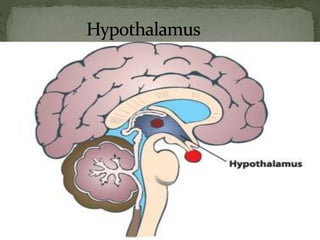
 The hypothalamus is a portion of the brain that contains a
number of small nuclei with a variety of functions.
 One of the most important functions of the hypothalamus
is to link the nervous system to the endocrine system via
the pituitary gland.
 The hypothalamus is responsible for
certain metabolic processes and other activities of
the autonomic nervous system.
 It synthesizes and secretes certain neurohormones, often
called releasing hormones or hypothalamic hormones, and
these in turn stimulate or inhibit the secretion
of pituitary hormones.
 The hypothalamus controls body temperature, hunger,
fatigue, sleep, etc.
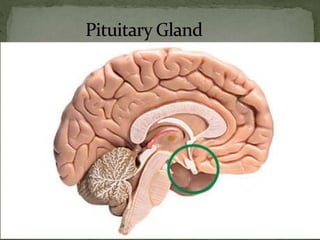
 The pituitary gland, or hypophysis, is an endocrine
gland about the size of a pea and weighing 0.5 grams in
humans.
 It is composed of three lobes: anterior, intermediate,
and posterior.
 Growth
 Blood pressure
 Some aspects of pregnancy and childbirth including stimulation
of uterine contractions during childbirth
 Breast milk production
 Sex organ functions in both males and females
 Thyroid gland function
 The conversion of food into energy (metabolism)
 Water and osmolarity regulation in the body
 Water balance via the control of reabsorption of water by
the kidneys
 Temperature regulation
 Pain relief
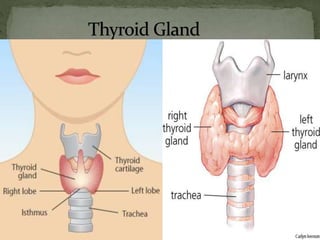
 The thyroid gland or just thyroid is one of the
largest endocrine glands and consists of two
connected lobes.
 Each lobe is about 5 cm long, 3 cm wide and 2 cm thick.
 The thyroid gland is a butterfly-shaped organ.
 The thyroid gland is found in the neck, below the thyroid
cartilage (which forms “Adam’s apple”).
 It secretes throxine hormone also called T4
 The thyroid also produces calcitonin, which plays a role
in calcium homeostasis.
 The thyroid gland controls how quickly the body uses
energy, makes proteins, and controls how sensitive the
body is to other hormones.
 These hormones regulate the growth and rate of function
of many other systems in the body.
 Thyroid hormones act throughout the body, influencing
metabolism, growth and development, and body
temperature.
 During infancy and childhood, adequate thyroid hormone
is crucial for brain development
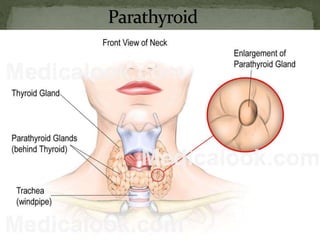
 There are four parathyroid glands, and they are each about
the size of a grain of rice.
 Though they’re located near each other, the parathyroid
glands are not related to the thyroid gland.
 Parathyroid hormone (PTH) has a very powerful influence
on the cells of your bones by causing them to release their
calcium into the bloodstream.
 Parathyroid hormone regulates the body’s calcium levels.
 The parathyroid essentially helps the nervous and
muscular systems function properly.
 Calcium is the primary element that causes muscles to
contract, and calcium levels are very important to the
normal conduction of electrical currents along nerves.
 The most common disease of parathyroid glands is
hyperparathyroidism, which is characterized by excess
PTH hormone.
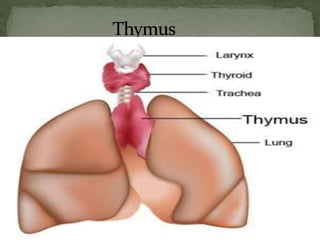
 The thymus is a specialized organ of the immune system.
 The thymus is composed of two identical lobes and is
located anatomically in the anterior superior mediastinum,
in front of the heart and behind the sternum.
 each lobe of the thymus can be divided into a
central medulla and a peripheral cortex which is
surrounded by an outer capsule.
 The thymus is largest and most active during the neonatal
and pre-adolescent periods.
 The thymus produces and secretes thymosin.
 Helping the body protect itself against autoimmunity,
which occurs when the immune system turns against
itself.
 The thymus plays a vital role in the lymphatic system (your
body’s defence network) and endocrine system.
 Protects the body from certain threats, including viruses
and infections.
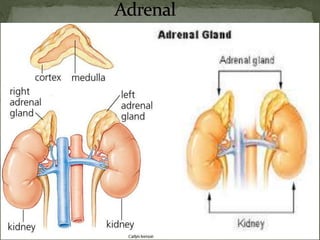
 The adrenal glands are two glands that sit on top of your
kidneys that are made up of two distinct parts- The adrenal
cortex and The adrenal medulla.
 They are also known as suprarenal glands.
 The adrenal glands are two, triangular-shaped organs that
measure about 1.5 inches in height and 3 inches in length.
 The adrenal cortex and the adrenal medulla have very
different functions. One of the main distinctions between
them is that the hormones released by the adrenal cortex
are necessary for life; those secreted by the adrenal medulla
are not.
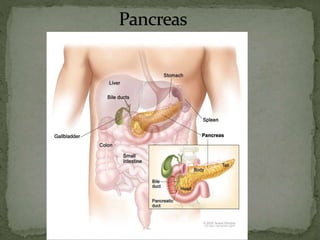
 The pancreas is unique in that it’s both an endocrine and
exocrine gland. In other words, the pancreas has the dual
function of secreting hormones into blood (endocrine) and
secreting enzymes through ducts (exocrine).
 The pancreas is a 6 inch-long flattened gland that lies deep
within the abdomen, between the stomach and the spine.
It is connected to the duodenum, which is part of the small
intestine.
 It secretes insulin.
 The pancreas maintains the body’s blood glucose (sugar)
balance.
 Primary hormones of the pancreas include insulin and
glucagon, and both regulate blood glucose.
 Diabetes is the most common disorder associated with the
pancreas.
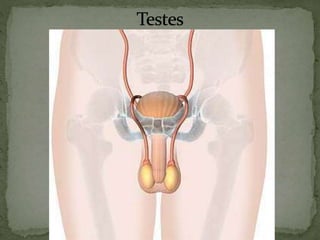
 The testes (or testicles) are a pair of sperm-producing
organs that maintain the health of the male reproductive
system.
 The testes are twin oval-shaped organs about the size of a
large grape.
 They are located within the scrotum, which is the loose
pouch of skin that hangs outside the body behind the
penis.
 The testes secrete testosterone, which is necessary for
proper physical development in boys.
 In adulthood, testosterone maintains libido, muscle
strength, and bone density.
 Disorders of the testes are caused by too little testosterone
production.
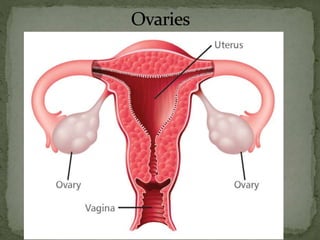
 The ovaries are oval shaped and about the size of a large
grape.
 They are located on opposite ends of the pelvic wall, on
either side of the uterus.
 The ovaries are each attached to the fimbria (tissue that
connects the ovaries to the fallopian tube).
 Ovaries produce and release two groups of sex hormones—
progesterone and oestrogen.
 The ovaries maintain the health of the female reproductive
system.
 Diseases associated with the ovaries include ovarian cysts,
ovarian cancer, menstrual cycle disorders, and polycystic
ovarian syndrome.

Endocrine glands

  • 2.
     A structurewhich makes hormones in the body is called endocrine glands.  They are also called ductless glands because they do not have ducts to secrete their hormones.  A group of endocrine glands which produces various hormones is called an endocrine system. It is also called hormonal system.  Endocrine system helps in coordinating the activities of our body.
  • 3.
     Hypothalamus  Pituitarygland  Thyroid gland  Parathyroid  Thymus  Pancreas  Adrenal gland  Testes  Ovaries
  • 5.
     The hypothalamusis a portion of the brain that contains a number of small nuclei with a variety of functions.  One of the most important functions of the hypothalamus is to link the nervous system to the endocrine system via the pituitary gland.
  • 6.
     The hypothalamusis responsible for certain metabolic processes and other activities of the autonomic nervous system.  It synthesizes and secretes certain neurohormones, often called releasing hormones or hypothalamic hormones, and these in turn stimulate or inhibit the secretion of pituitary hormones.  The hypothalamus controls body temperature, hunger, fatigue, sleep, etc.
  • 8.
     The pituitarygland, or hypophysis, is an endocrine gland about the size of a pea and weighing 0.5 grams in humans.  It is composed of three lobes: anterior, intermediate, and posterior.
  • 9.
     Growth  Bloodpressure  Some aspects of pregnancy and childbirth including stimulation of uterine contractions during childbirth  Breast milk production  Sex organ functions in both males and females  Thyroid gland function  The conversion of food into energy (metabolism)  Water and osmolarity regulation in the body  Water balance via the control of reabsorption of water by the kidneys  Temperature regulation  Pain relief
  • 11.
     The thyroidgland or just thyroid is one of the largest endocrine glands and consists of two connected lobes.  Each lobe is about 5 cm long, 3 cm wide and 2 cm thick.  The thyroid gland is a butterfly-shaped organ.  The thyroid gland is found in the neck, below the thyroid cartilage (which forms “Adam’s apple”).  It secretes throxine hormone also called T4  The thyroid also produces calcitonin, which plays a role in calcium homeostasis.
  • 12.
     The thyroidgland controls how quickly the body uses energy, makes proteins, and controls how sensitive the body is to other hormones.  These hormones regulate the growth and rate of function of many other systems in the body.  Thyroid hormones act throughout the body, influencing metabolism, growth and development, and body temperature.  During infancy and childhood, adequate thyroid hormone is crucial for brain development
  • 14.
     There arefour parathyroid glands, and they are each about the size of a grain of rice.  Though they’re located near each other, the parathyroid glands are not related to the thyroid gland.  Parathyroid hormone (PTH) has a very powerful influence on the cells of your bones by causing them to release their calcium into the bloodstream.
  • 15.
     Parathyroid hormoneregulates the body’s calcium levels.  The parathyroid essentially helps the nervous and muscular systems function properly.  Calcium is the primary element that causes muscles to contract, and calcium levels are very important to the normal conduction of electrical currents along nerves.  The most common disease of parathyroid glands is hyperparathyroidism, which is characterized by excess PTH hormone.
  • 17.
     The thymusis a specialized organ of the immune system.  The thymus is composed of two identical lobes and is located anatomically in the anterior superior mediastinum, in front of the heart and behind the sternum.  each lobe of the thymus can be divided into a central medulla and a peripheral cortex which is surrounded by an outer capsule.  The thymus is largest and most active during the neonatal and pre-adolescent periods.  The thymus produces and secretes thymosin.
  • 18.
     Helping thebody protect itself against autoimmunity, which occurs when the immune system turns against itself.  The thymus plays a vital role in the lymphatic system (your body’s defence network) and endocrine system.  Protects the body from certain threats, including viruses and infections.
  • 20.
     The adrenalglands are two glands that sit on top of your kidneys that are made up of two distinct parts- The adrenal cortex and The adrenal medulla.  They are also known as suprarenal glands.  The adrenal glands are two, triangular-shaped organs that measure about 1.5 inches in height and 3 inches in length.
  • 21.
     The adrenalcortex and the adrenal medulla have very different functions. One of the main distinctions between them is that the hormones released by the adrenal cortex are necessary for life; those secreted by the adrenal medulla are not.
  • 23.
     The pancreasis unique in that it’s both an endocrine and exocrine gland. In other words, the pancreas has the dual function of secreting hormones into blood (endocrine) and secreting enzymes through ducts (exocrine).  The pancreas is a 6 inch-long flattened gland that lies deep within the abdomen, between the stomach and the spine. It is connected to the duodenum, which is part of the small intestine.  It secretes insulin.
  • 24.
     The pancreasmaintains the body’s blood glucose (sugar) balance.  Primary hormones of the pancreas include insulin and glucagon, and both regulate blood glucose.  Diabetes is the most common disorder associated with the pancreas.
  • 26.
     The testes(or testicles) are a pair of sperm-producing organs that maintain the health of the male reproductive system.  The testes are twin oval-shaped organs about the size of a large grape.  They are located within the scrotum, which is the loose pouch of skin that hangs outside the body behind the penis.
  • 27.
     The testessecrete testosterone, which is necessary for proper physical development in boys.  In adulthood, testosterone maintains libido, muscle strength, and bone density.  Disorders of the testes are caused by too little testosterone production.
  • 29.
     The ovariesare oval shaped and about the size of a large grape.  They are located on opposite ends of the pelvic wall, on either side of the uterus.  The ovaries are each attached to the fimbria (tissue that connects the ovaries to the fallopian tube).  Ovaries produce and release two groups of sex hormones— progesterone and oestrogen.
  • 30.
     The ovariesmaintain the health of the female reproductive system.  Diseases associated with the ovaries include ovarian cysts, ovarian cancer, menstrual cycle disorders, and polycystic ovarian syndrome.

Editor's Notes