ENDOCRINE
GLANDS
Endocrine system
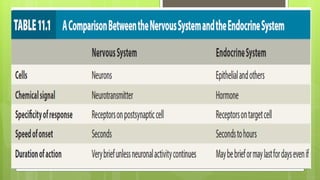
 The endocrine system maintains homeostasis by
releasing chemicals called hormones.
 It controls prolonged or continuous processes
such as growth and development, reproduction,
and metabolism.
Hormone
 are chemical substances that are secreted by
endocrine cells into the extracellular fluids and
regulate the metabolic activity of other cells in the
body
The Chemistry of Hormones
 Amino acid-based hormones
 Proteins
 Peptides
 Amines
 Steroids – made from cholesterol
 Prostaglandins – made from highly active lipids
Effect of Hormones
 1. Changes in plasma membrane permeability or
electrical state
 2. Synthesis of proteins or certain regulatory molecules
(such as enzymes) in the cell
 3. Activation or inactivation of enzymes
 4. Stimulation of mitosis
 5. Promotion of secretory activity
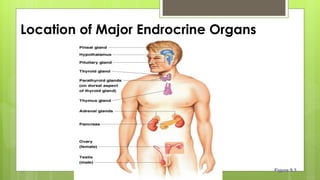
Location of Major Endrocrine Organs
Figure 9.3
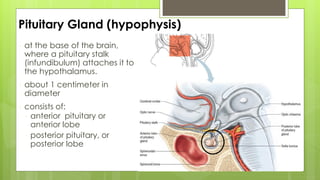
Pituitary Gland (hypophysis)
 at the base of the brain,
where a pituitary stalk
(infundibulum) attaches it to
the hypothalamus.
 about 1 centimeter in
diameter
 consists of:
 anterior pituitary or
anterior lobe
 posterior pituitary, or
posterior lobe
Pituitary - Hypothalamus Relationship
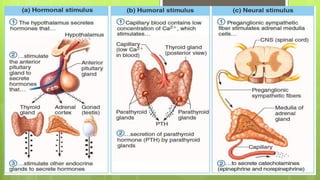
 Release of hormones is controlled by releasing and
inhibiting hormones produced by the hypothalamus
 Hypothlamus produces two hormones that are transorted
to neurosecretory cells of the posterior pituitary
 The poterior pituitary is not strictly an endocrine gland,
but does release hormones
Intermediate lobe-(pars intermedia)
 In the fetus, a narrow region develops between the
anterior and posterior lobes of the pituitary gland.
 produces melanocyte-stimulating hormone (MSH)-
regulates the synthesis of melanin—the pigment in skin
and in parts of the eyes and brain.
 In most adults, this intermediate lobe is no longer a distinct
structure, but its secretory cells persist in the two remaining
lobe
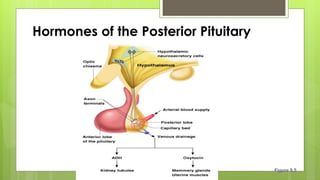
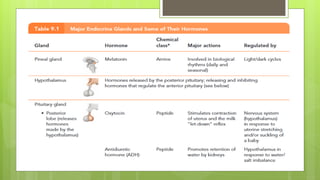
Hormones of the Posterior Pituitary
Figure 9.5
Hormones of the Posterior Pituitary
Oxytocin
 Stimulates contractions of the uterus during labor
 Causes milk ejection
Antidiuretic hormone (ADH)
 Can inhibit urine production
 In large amounts, causes vasoconstriction leading to
increased blood pressure (vasopressin)
Anterior Pituitary Hormones
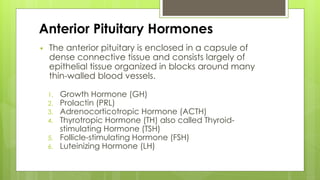
 The anterior pituitary is enclosed in a capsule of
dense connective tissue and consists largely of
epithelial tissue organized in blocks around many
thin-walled blood vessels.
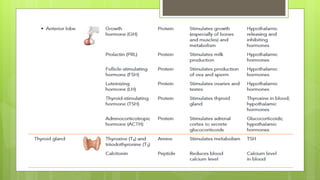
1. Growth Hormone (GH)
2. Prolactin (PRL)
3. Adrenocorticotropic Hormone (ACTH)
4. Thyrotropic Hormone (TH) also called Thyroid-
stimulating Hormone (TSH)
5. Follicle-stimulating Hormone (FSH)
6. Luteinizing Hormone (LH)
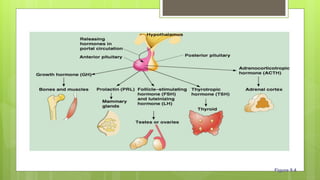
Hormones of the Anterior Pituitary
Figure 9.4
Growth hormone (GH)
o stimulates cells to enlarge and divide more frequently
o enhances the movement of amino acids across cell
membranes
o speeds the rate at which cells utilize carbohydrates and
fat
o effect on amino acids is important in stimulating growth
Prolactin (PRL)
Stimulates and maintains milk production
following childbirth
Function in males is unknown
Adrenocorticotropic hormone (ACTH)
Regulates endocrine activity of the adrenal
cortex
Thyroid-stimulating hormone (TSH)
Influences growth and activity of the thyroid
Follicle-stimulating hormone (FSH)
Stimulates follicle development in ovaries
Stimulates sperm development in testes
Luteinizing hormone (LH)
Triggers ovulation
Causes ruptured follicle to become the corpus
luteum
LH stimulates testosterone production by the
interstitial cells of the testes.
Clinical Correlates
Diabetes Insipidus
o Hyposecretion of ADH leads to a condition of
excessive urine output called diabetes insipidus
o People with this problem are continually thirsty and
drink huge amounts of water.
Pituitary dwarfism
o Insufficient secretion of growth hormone (GH) during
childhood limits growth
o Body parts are normally proportioned
o mental development is normal—the individual is just very
small. typically, hormone therapy can stimulate some
growth
Gigantism
o Oversecretion of GH
during childhood
o height may exceed 8 feet
o this rare condition is usually
a result of a pituitary gland
tumor
o oversecretion of other
pituitary hormones
o a person with gigantism
often has several
metabolic disturbances
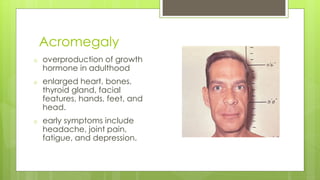
Acromegaly
o overproduction of growth
hormone in adulthood
o enlarged heart, bones,
thyroid gland, facial
features, hands, feet, and
head.
o early symptoms include
headache, joint pain,
fatigue, and depression.
Sterility
o Hyposecretion of FSH or LH leads to sterility in both males
and females.
o Hypersecretion does not appear to cause any problems.
However, some drugs used to promote fertility stimulate
the release of the gonadotropic hormones, and multiple
births.
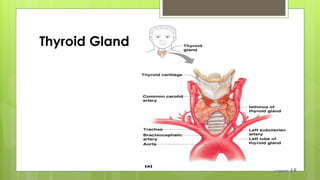
Thyroid Gland
 Found at the base of the throat
 Consists of two lobes and a connecting isthmus
 Produces two hormones
 Thyroid hormone
 Calcitonin
Thyroid Gland
Figure 9.6
Thyroid Hormone
Major metabolic hormone
Composed of two active iodine-containing hormones
 Thyroxine (T4) – secreted by thyroid follicles
 Triiodothyronine (T3) – conversion of T4 at target tissues
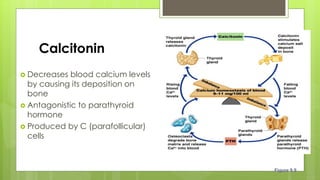
Calcitonin
 Decreases blood calcium levels
by causing its deposition on
bone
 Antagonistic to parathyroid
hormone
 Produced by C (parafollicular)
cells
Figure 9.9
Clinical Correlates
Goiter
o A goiter is an enlargement of the thyroid gland that
results when the diet is deficient in iodine.
o Simple goiter is uncommon in the United States today
because most of our salt is iodized, but it is still a problem
in some other areas of the world.
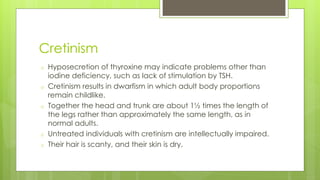
Cretinism
o Hyposecretion of thyroxine may indicate problems other than
iodine deficiency, such as lack of stimulation by TSH.
o Cretinism results in dwarfism in which adult body proportions
remain childlike.
o Together the head and trunk are about 1½ times the length of
the legs rather than approximately the same length, as in
normal adults.
o Untreated individuals with cretinism are intellectually impaired.
o Their hair is scanty, and their skin is dry.
Myxedema
o Hypothyroidism occurring in adults results in myxedema,
which is characterized by both physical and mental
sluggishness (however, mental impairment does not
occur).
o Other signs are puffiness of the face, fatigue, poor muscle
tone, low body temperature (the person is always cold),
obesity, and dry skin.
Graves’ Disease
o Hyperthyroidism generally results from a tumor of the
thyroid gland.
o Extreme overproduction of thyroxine results in a high
basal metabolic rate, intolerance of heat, rapid
heartbeat, weight loss, nervous and agitated behavior,
and a general inability to relax.
o the thyroid gland enlarges and the eyes may bulge, or
protrude anteriorly (a condition called exophthalmos)
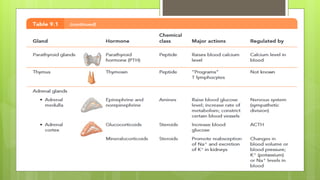
Parathyroid Glands
 Tiny masses on the posterior of the thyroid
 Secrete parathyroid hormone
 which is the most important regulator of calcium ion (Ca 2+)
homeostasis of the blood.
 Stimulate osteoclasts to remove calcium from bone
 Stimulate the kidneys and intestine to absorb more calcium
 Raise calcium levels in the blood
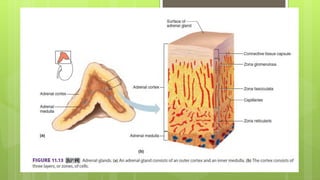
Adrenal Glands
o Are closely associated with the kidneys.
o sits atop each kidney like a cap
o embedded in the mass of adipose tissue that
encloses the kidney
Structure of the Glands
o very vascular ; two parts
o adrenal medulla - central portion is the and
o adrenal cortex - cortical or outer
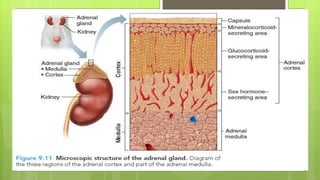
Hormones of the Adrenal Cortex
 Mineralocorticoids (mainly aldosterone)
 Produced in outer adrenal cortex
 Regulate mineral content in blood, water, and electrolyte balance
 Target organ is the kidney
 Production stimulated by renin and aldosterone
 Production inhibited by atrial natriuretic peptide
 Glucocorticoids (including cortisone and cortisol)
 Produced in the middle layer of the adrenal cortex
 Promote normal cell metabolism
 Help resist long-term stressors
 Released in response to increased blood levels of ACTH
 Sex hormones
 Produced in the inner layer of the adrenal cortex
 Androgens (male) and some estrogen (female)
Clinical Correlates
Addison’s Disease
o A generalized hyposecretion of all the adrenal cortex
hormones leads to Addison’s disease, characterized by a
peculiar bronze tone of the skin.
o Because aldosterone levels are low, sodium and water
are lost from the body, which leads to problems with
electrolyte and water balance.
Hyperaldosteronism
 Excessive water and sodium are retained, leading to high
blood pressure and edema. Potassium is lost to such an
extent that the activity of the heart and nervous system
may be disrupted.
Cushing’s Syndrome
 Excessive glucocorticoids result in a swollen “moon face”
and the appearance of a “buffalo hump” of fat on the
upper back.
 Other common and undesirable effects include high
blood pressure, hyperglycemia (steroid diabetes),
weakening of the bones (as protein is withdrawn to be
converted to glucose), and severe depression of the
immune system.
Masculinization
 Hypersecretion of the sex hormones leads to
masculinization, regardless of sex.
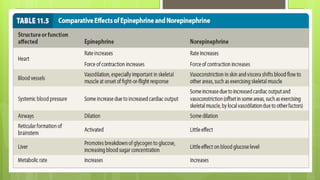
Hormones of the Adrenal Medulla
 Produces two similar hormones (catecholamines)
 Epinephrine
 Norepinephrine
 These hormones prepare the body to deal with short-term
stress
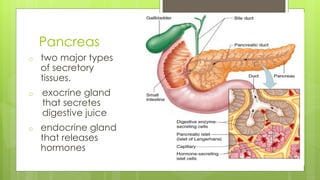
Pancreas
o two major types
of secretory
tissues.
o exocrine gland
that secretes
digestive juice
o endocrine gland
that releases
hormones
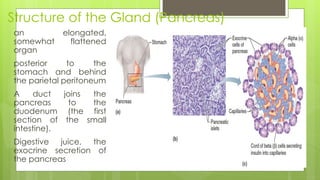
Structure of the Gland (Pancreas)
 an elongated,
somewhat flattened
organ
 posterior to the
stomach and behind
the parietal peritoneum
 A duct joins the
pancreas to the
duodenum (the first
section of the small
intestine).
 Digestive juice, the
exocrine secretion of
the pancreas
Glucagon
o stimulates the liver to break down glycogen
o convert certain noncarbohydrates, such as amino
acids, into glucose,
o raising blood sugar concentration
o elevates blood glucose than does epinephrine
Insulin
o stimulates the liver to form glycogen from glucose
o decrease blood glucose concentration.
o promotes transport of amino acids into cells
o increases the rate of protein synthesis
o stimulates adipose cells to synthesize and store fat.
o beta cells release insulin
o Insulin helps prevent too high a blood glucose
concentration by promoting glycogen formation in
the liver
o entrance of glucose into adipose and muscle cells
o When glucose concentration falls, such as between
meals or during the night, insulin secretion decreases
Clinical Correlates
Diabetes Mellitus
o Without insulin, blood levels of glucose (which normally
range from 80 to 120 mg/100 ml of blood) rise to
dramatically high levels (for example, 600 mg/100 ml of
blood).
o In such instances, glucose begins to spill into the urine
because the kidney tubule cells cannot reabsorb it fast
enough. As glucose flushes from the body, water follows,
leading to dehydration.
 The three cardinal signs of diabetes mellitus are
 (1) polyuria — excessive urination to flush out the glucose
and ketones;
 (2) polydipsia — excessive thirst resulting from water loss; and
 (3) polyphagia — hunger due to inability to use sugars and
the loss of fat and proteins from the body.
Pineal Gland
Found on the third ventricle of the brain
Secretes melatonin
 Helps establish the body’s wake and sleep cycles
 May have other as-yet-unsubstantiated functions
Thymus
Located posterior to the sternum
Largest in infants and children
Produces thymosin
 Matures some types of white blood cells
 Important in developing the immune system
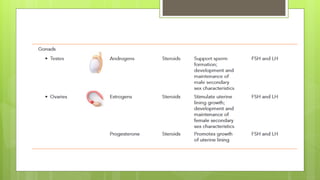
Hormones of the Ovaries
Estrogens
Produced by Graafian follicles or the placenta
Stimulates the development of secondary female
characteristics
Matures female reproductive organs
Helps prepare the uterus to receive a fertilized egg
Helps maintain pregnancy
Prepares the breasts to produce milk
Progesterone
 Produced by the corpus luteum
 Acts with estrogen to bring about the menstrual
cycle
 Helps in the implantation of an embryo in the
uterus
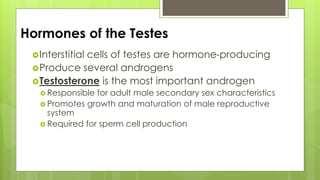
Hormones of the Testes
Interstitial cells of testes are hormone-producing
Produce several androgens
Testosterone is the most important androgen
 Responsible for adult male secondary sex characteristics
 Promotes growth and maturation of male reproductive
system
 Required for sperm cell production
chapter ANATOMY AND PHYSIOLOGY -9 (2).pdf

chapter ANATOMY AND PHYSIOLOGY -9 (2).pdf

  • 1.
  • 2.
    Endocrine system  Theendocrine system maintains homeostasis by releasing chemicals called hormones.  It controls prolonged or continuous processes such as growth and development, reproduction, and metabolism.
  • 3.
    Hormone  are chemicalsubstances that are secreted by endocrine cells into the extracellular fluids and regulate the metabolic activity of other cells in the body
  • 4.
    The Chemistry ofHormones  Amino acid-based hormones  Proteins  Peptides  Amines  Steroids – made from cholesterol  Prostaglandins – made from highly active lipids
  • 5.
    Effect of Hormones 1. Changes in plasma membrane permeability or electrical state  2. Synthesis of proteins or certain regulatory molecules (such as enzymes) in the cell  3. Activation or inactivation of enzymes  4. Stimulation of mitosis  5. Promotion of secretory activity
  • 8.
    Location of MajorEndrocrine Organs Figure 9.3
  • 9.
    Pituitary Gland (hypophysis) at the base of the brain, where a pituitary stalk (infundibulum) attaches it to the hypothalamus.  about 1 centimeter in diameter  consists of:  anterior pituitary or anterior lobe  posterior pituitary, or posterior lobe
  • 10.
    Pituitary - HypothalamusRelationship  Release of hormones is controlled by releasing and inhibiting hormones produced by the hypothalamus  Hypothlamus produces two hormones that are transorted to neurosecretory cells of the posterior pituitary  The poterior pituitary is not strictly an endocrine gland, but does release hormones
  • 11.
    Intermediate lobe-(pars intermedia) In the fetus, a narrow region develops between the anterior and posterior lobes of the pituitary gland.  produces melanocyte-stimulating hormone (MSH)- regulates the synthesis of melanin—the pigment in skin and in parts of the eyes and brain.  In most adults, this intermediate lobe is no longer a distinct structure, but its secretory cells persist in the two remaining lobe
  • 12.
    Hormones of thePosterior Pituitary Figure 9.5
  • 13.
    Hormones of thePosterior Pituitary Oxytocin  Stimulates contractions of the uterus during labor  Causes milk ejection Antidiuretic hormone (ADH)  Can inhibit urine production  In large amounts, causes vasoconstriction leading to increased blood pressure (vasopressin)
  • 14.
    Anterior Pituitary Hormones The anterior pituitary is enclosed in a capsule of dense connective tissue and consists largely of epithelial tissue organized in blocks around many thin-walled blood vessels. 1. Growth Hormone (GH) 2. Prolactin (PRL) 3. Adrenocorticotropic Hormone (ACTH) 4. Thyrotropic Hormone (TH) also called Thyroid- stimulating Hormone (TSH) 5. Follicle-stimulating Hormone (FSH) 6. Luteinizing Hormone (LH)
  • 15.
    Hormones of theAnterior Pituitary Figure 9.4
  • 16.
    Growth hormone (GH) ostimulates cells to enlarge and divide more frequently o enhances the movement of amino acids across cell membranes o speeds the rate at which cells utilize carbohydrates and fat o effect on amino acids is important in stimulating growth
  • 17.
    Prolactin (PRL) Stimulates andmaintains milk production following childbirth Function in males is unknown
  • 18.
    Adrenocorticotropic hormone (ACTH) Regulatesendocrine activity of the adrenal cortex
  • 19.
    Thyroid-stimulating hormone (TSH) Influencesgrowth and activity of the thyroid
  • 20.
    Follicle-stimulating hormone (FSH) Stimulatesfollicle development in ovaries Stimulates sperm development in testes
  • 21.
    Luteinizing hormone (LH) Triggersovulation Causes ruptured follicle to become the corpus luteum LH stimulates testosterone production by the interstitial cells of the testes.
  • 22.
  • 23.
    Diabetes Insipidus o Hyposecretionof ADH leads to a condition of excessive urine output called diabetes insipidus o People with this problem are continually thirsty and drink huge amounts of water.
  • 24.
    Pituitary dwarfism o Insufficientsecretion of growth hormone (GH) during childhood limits growth o Body parts are normally proportioned o mental development is normal—the individual is just very small. typically, hormone therapy can stimulate some growth
  • 25.
    Gigantism o Oversecretion ofGH during childhood o height may exceed 8 feet o this rare condition is usually a result of a pituitary gland tumor o oversecretion of other pituitary hormones o a person with gigantism often has several metabolic disturbances
  • 26.
    Acromegaly o overproduction ofgrowth hormone in adulthood o enlarged heart, bones, thyroid gland, facial features, hands, feet, and head. o early symptoms include headache, joint pain, fatigue, and depression.
  • 27.
    Sterility o Hyposecretion ofFSH or LH leads to sterility in both males and females. o Hypersecretion does not appear to cause any problems. However, some drugs used to promote fertility stimulate the release of the gonadotropic hormones, and multiple births.
  • 28.
    Thyroid Gland  Foundat the base of the throat  Consists of two lobes and a connecting isthmus  Produces two hormones  Thyroid hormone  Calcitonin
  • 29.
  • 30.
    Thyroid Hormone Major metabolichormone Composed of two active iodine-containing hormones  Thyroxine (T4) – secreted by thyroid follicles  Triiodothyronine (T3) – conversion of T4 at target tissues
  • 31.
    Calcitonin  Decreases bloodcalcium levels by causing its deposition on bone  Antagonistic to parathyroid hormone  Produced by C (parafollicular) cells Figure 9.9
  • 32.
  • 33.
    Goiter o A goiteris an enlargement of the thyroid gland that results when the diet is deficient in iodine. o Simple goiter is uncommon in the United States today because most of our salt is iodized, but it is still a problem in some other areas of the world.
  • 34.
    Cretinism o Hyposecretion ofthyroxine may indicate problems other than iodine deficiency, such as lack of stimulation by TSH. o Cretinism results in dwarfism in which adult body proportions remain childlike. o Together the head and trunk are about 1½ times the length of the legs rather than approximately the same length, as in normal adults. o Untreated individuals with cretinism are intellectually impaired. o Their hair is scanty, and their skin is dry.
  • 35.
    Myxedema o Hypothyroidism occurringin adults results in myxedema, which is characterized by both physical and mental sluggishness (however, mental impairment does not occur). o Other signs are puffiness of the face, fatigue, poor muscle tone, low body temperature (the person is always cold), obesity, and dry skin.
  • 36.
    Graves’ Disease o Hyperthyroidismgenerally results from a tumor of the thyroid gland. o Extreme overproduction of thyroxine results in a high basal metabolic rate, intolerance of heat, rapid heartbeat, weight loss, nervous and agitated behavior, and a general inability to relax. o the thyroid gland enlarges and the eyes may bulge, or protrude anteriorly (a condition called exophthalmos)
  • 37.
    Parathyroid Glands  Tinymasses on the posterior of the thyroid  Secrete parathyroid hormone  which is the most important regulator of calcium ion (Ca 2+) homeostasis of the blood.  Stimulate osteoclasts to remove calcium from bone  Stimulate the kidneys and intestine to absorb more calcium  Raise calcium levels in the blood
  • 38.
    Adrenal Glands o Areclosely associated with the kidneys. o sits atop each kidney like a cap o embedded in the mass of adipose tissue that encloses the kidney Structure of the Glands o very vascular ; two parts o adrenal medulla - central portion is the and o adrenal cortex - cortical or outer
  • 41.
    Hormones of theAdrenal Cortex  Mineralocorticoids (mainly aldosterone)  Produced in outer adrenal cortex  Regulate mineral content in blood, water, and electrolyte balance  Target organ is the kidney  Production stimulated by renin and aldosterone  Production inhibited by atrial natriuretic peptide
  • 42.
     Glucocorticoids (includingcortisone and cortisol)  Produced in the middle layer of the adrenal cortex  Promote normal cell metabolism  Help resist long-term stressors  Released in response to increased blood levels of ACTH
  • 43.
     Sex hormones Produced in the inner layer of the adrenal cortex  Androgens (male) and some estrogen (female)
  • 44.
  • 45.
    Addison’s Disease o Ageneralized hyposecretion of all the adrenal cortex hormones leads to Addison’s disease, characterized by a peculiar bronze tone of the skin. o Because aldosterone levels are low, sodium and water are lost from the body, which leads to problems with electrolyte and water balance.
  • 46.
    Hyperaldosteronism  Excessive waterand sodium are retained, leading to high blood pressure and edema. Potassium is lost to such an extent that the activity of the heart and nervous system may be disrupted.
  • 47.
    Cushing’s Syndrome  Excessiveglucocorticoids result in a swollen “moon face” and the appearance of a “buffalo hump” of fat on the upper back.  Other common and undesirable effects include high blood pressure, hyperglycemia (steroid diabetes), weakening of the bones (as protein is withdrawn to be converted to glucose), and severe depression of the immune system.
  • 48.
    Masculinization  Hypersecretion ofthe sex hormones leads to masculinization, regardless of sex.
  • 49.
    Hormones of theAdrenal Medulla  Produces two similar hormones (catecholamines)  Epinephrine  Norepinephrine  These hormones prepare the body to deal with short-term stress
  • 51.
    Pancreas o two majortypes of secretory tissues. o exocrine gland that secretes digestive juice o endocrine gland that releases hormones
  • 52.
    Structure of theGland (Pancreas)  an elongated, somewhat flattened organ  posterior to the stomach and behind the parietal peritoneum  A duct joins the pancreas to the duodenum (the first section of the small intestine).  Digestive juice, the exocrine secretion of the pancreas
  • 53.
    Glucagon o stimulates theliver to break down glycogen o convert certain noncarbohydrates, such as amino acids, into glucose, o raising blood sugar concentration o elevates blood glucose than does epinephrine
  • 54.
    Insulin o stimulates theliver to form glycogen from glucose o decrease blood glucose concentration. o promotes transport of amino acids into cells o increases the rate of protein synthesis o stimulates adipose cells to synthesize and store fat.
  • 55.
    o beta cellsrelease insulin o Insulin helps prevent too high a blood glucose concentration by promoting glycogen formation in the liver o entrance of glucose into adipose and muscle cells o When glucose concentration falls, such as between meals or during the night, insulin secretion decreases
  • 56.
  • 57.
    Diabetes Mellitus o Withoutinsulin, blood levels of glucose (which normally range from 80 to 120 mg/100 ml of blood) rise to dramatically high levels (for example, 600 mg/100 ml of blood). o In such instances, glucose begins to spill into the urine because the kidney tubule cells cannot reabsorb it fast enough. As glucose flushes from the body, water follows, leading to dehydration.
  • 58.
     The threecardinal signs of diabetes mellitus are  (1) polyuria — excessive urination to flush out the glucose and ketones;  (2) polydipsia — excessive thirst resulting from water loss; and  (3) polyphagia — hunger due to inability to use sugars and the loss of fat and proteins from the body.
  • 59.
    Pineal Gland Found onthe third ventricle of the brain Secretes melatonin  Helps establish the body’s wake and sleep cycles  May have other as-yet-unsubstantiated functions
  • 60.
    Thymus Located posterior tothe sternum Largest in infants and children Produces thymosin  Matures some types of white blood cells  Important in developing the immune system
  • 61.
    Hormones of theOvaries Estrogens Produced by Graafian follicles or the placenta Stimulates the development of secondary female characteristics Matures female reproductive organs Helps prepare the uterus to receive a fertilized egg Helps maintain pregnancy Prepares the breasts to produce milk
  • 62.
    Progesterone  Produced bythe corpus luteum  Acts with estrogen to bring about the menstrual cycle  Helps in the implantation of an embryo in the uterus
  • 63.
    Hormones of theTestes Interstitial cells of testes are hormone-producing Produce several androgens Testosterone is the most important androgen  Responsible for adult male secondary sex characteristics  Promotes growth and maturation of male reproductive system  Required for sperm cell production