Embedded
System
K.Senthil
Embedded System
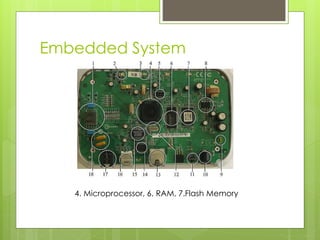
4. Microprocessor, 6. RAM, 7.Flash Memory
Embedded System
 Embedded System is a Computer System
with dedicated function that is present
inside large electrical or mechanical
system.
 The common properties of embedded
system are low power consumption and
low cost of hardware because it is limited
to perform single task.
 It is based on Microprocessor or
Microcontroller.
Varieties of Embedded System
 consumer,
 cooking,
 industrial,
 automotive,
 medical,
 commercial ,
 military applications.
Varieties of Embedded System
 consumer,
 cooking,
 industrial,
 automotive,
 medical,
 commercial ,
 military applications.
Characteristics
 Embedded System are designed to do
some specific task.
 Embedded system is not always stand
alone device.
 Program written for embedded system is
called as firmware and stored in ROM.
User Interface
 User Interface ranges from No Interface to
dedicated User Interface that looks like
Stand alone System.
 Standard Interfaces are buttons, Multi
Color LED, Graphic Character LCD with
Menu.
Processors
 Microprocessor
 Processor with dedicated connections for
ROM, RAM and Flash
 Microcontroller
 Everything included in the chip
Peripherals
 Embedded System talks with outside
world through peripherals
 RS 232
 USB
 MultiMedia Cards
 Networks
 ADC/DAC
Tools to write program
 Developers use compilers, assembler,
debugger.
 In Circuit Debugger is used to check
circuit.
Reliability
 Embedded systems reside in large
machines so it should be tested more
carefully against errors.
 Reliability can be assured using following
techniques
 Watch Dog
 Sub System
 Limp Nodes
 Hypervisor

Embedded systems

  • 1.
  • 2.
    Embedded System 4. Microprocessor,6. RAM, 7.Flash Memory
  • 3.
    Embedded System  EmbeddedSystem is a Computer System with dedicated function that is present inside large electrical or mechanical system.  The common properties of embedded system are low power consumption and low cost of hardware because it is limited to perform single task.  It is based on Microprocessor or Microcontroller.
  • 4.
    Varieties of EmbeddedSystem  consumer,  cooking,  industrial,  automotive,  medical,  commercial ,  military applications.
  • 5.
    Varieties of EmbeddedSystem  consumer,  cooking,  industrial,  automotive,  medical,  commercial ,  military applications.
  • 6.
    Characteristics  Embedded Systemare designed to do some specific task.  Embedded system is not always stand alone device.  Program written for embedded system is called as firmware and stored in ROM.
  • 7.
    User Interface  UserInterface ranges from No Interface to dedicated User Interface that looks like Stand alone System.  Standard Interfaces are buttons, Multi Color LED, Graphic Character LCD with Menu.
  • 8.
    Processors  Microprocessor  Processorwith dedicated connections for ROM, RAM and Flash  Microcontroller  Everything included in the chip
  • 9.
    Peripherals  Embedded Systemtalks with outside world through peripherals  RS 232  USB  MultiMedia Cards  Networks  ADC/DAC
  • 10.
    Tools to writeprogram  Developers use compilers, assembler, debugger.  In Circuit Debugger is used to check circuit.
  • 11.
    Reliability  Embedded systemsreside in large machines so it should be tested more carefully against errors.  Reliability can be assured using following techniques  Watch Dog  Sub System  Limp Nodes  Hypervisor