 To Introduce embedded system.
 To introduce embedded system design
process.
 Discuss the recent trends.
 Major application areas.
 It can be described as one consisting a
processor, associated peripherals, and
software used for a specific purpose.
 It performs a well defined task (in contrast
with desktop PC’s)
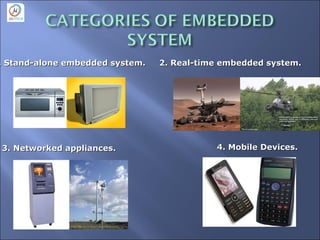
. Stand-alone embedded system.. Stand-alone embedded system. 2. Real-time embedded system.2. Real-time embedded system.
3. Networked appliances.3. Networked appliances. 4. Mobile Devices.4. Mobile Devices.
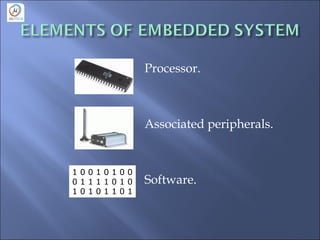
1) Processor.
1) Associated peripherals.
1) Software.
1 0 0 1 0 1 0 0
0 1 1 1 1 0 1 0
1 0 1 0 1 1 0 1
• Microprocessor.
• Microcontroller.
• Digital signal processor.
1. Protocol converters.
2. Communication interfaces.
3. Drivers (For driving heavy loads).
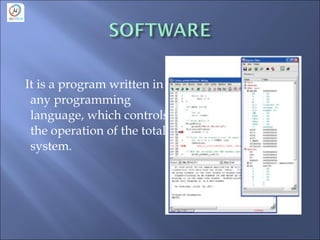
It is a program written in
any programming
language, which controls
the operation of the total
system.
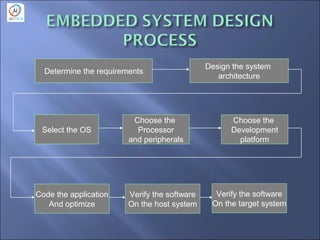
Determine the requirements
Design the system
architecture
Select the OS
Choose the
Processor
and peripherals
Choose the
Development
platform
Code the application
And optimize
Verify the software
On the host system
Verify the software
On the target system
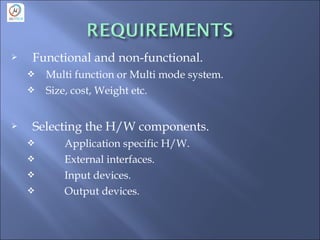
 Functional and non-functional.
 Multi function or Multi mode system.
 Size, cost, Weight etc.
 Selecting the H/W components.
 Application specific H/W.
 External interfaces.
 Input devices.
 Output devices.
System architecture depends on,
 Whether the system is real time.
 Whether OS needs to be embedded.
 Size, Cost, Power consumption etc.
If OS needed we can select,
 Real time OS (such as RTLinux,Vx Works,
VRTX, pSOS, QNX etc.).
 Non-real time OS ( such as Windows CE,
embedded Windows XP etc).
We can select any one of the following,
 Microprocessor
8085,8086,Pentium
 Microcontroller
MCS-51,PIC,AVR,MSP430
 Digital Signal Processor
dsPIC,Blackfin,Sharc,TigerSharc
 The hardware platform.
 The operating system.
 The programming language.
 The development tools.
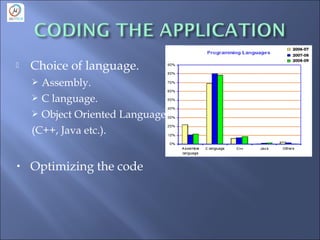
 Choice of language.
 Assembly.
 C language.
 Object Oriented Languages
(C++, Java etc.).
• Optimizing the code
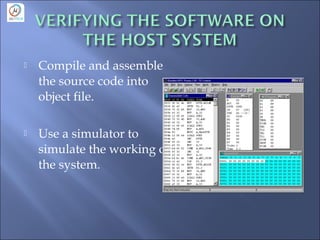
 Compile and assemble
the source code into
object file.
 Use a simulator to
simulate the working of
the system.
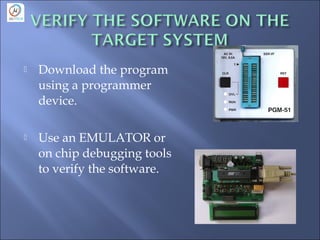
 Download the program
using a programmer
device.
 Use an EMULATOR or
on chip debugging tools
to verify the software.
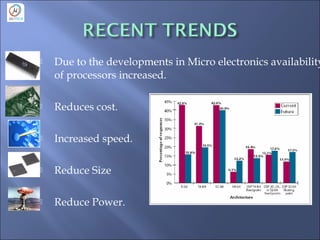
 Due to the developments in Micro electronics availability
of processors increased.
 Reduces cost.
 Increased speed.
 Reduce Size
 Reduce Power.
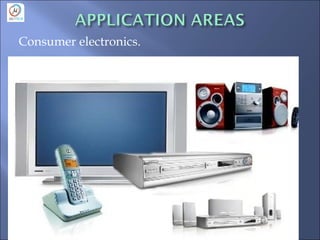
Consumer electronics.
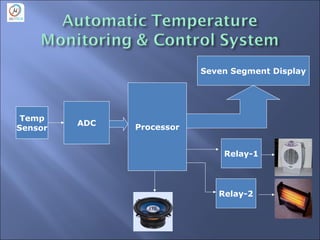
Processor
ADC
Temp
Sensor
Seven Segment Display
Relay-1
Relay-2
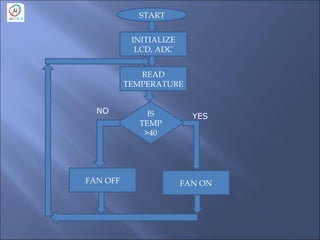
START
INITIALIZE
LCD, ADC
READ
TEMPERATURE
IS
TEMP
>40
YES
NO
FAN ONFAN OFF
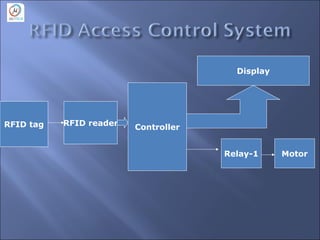
Controller
RFID readerRFID tag
Display
Relay-1 Motor
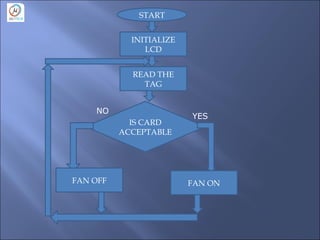
START
INITIALIZE
LCD
READ THE
TAG
IS CARD
ACCEPTABLE
YES
NO
FAN ONFAN OFF
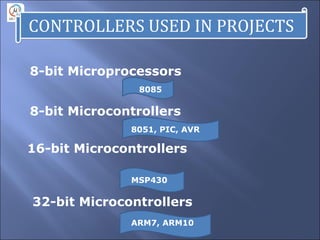
CONTROLLERS USED IN PROJECTSCONTROLLERS USED IN PROJECTS
8-bit Microcontrollers
8-bit Microprocessors
16-bit Microcontrollers
32-bit Microcontrollers
8085
8051, PIC, AVR
MSP430
ARM7, ARM10
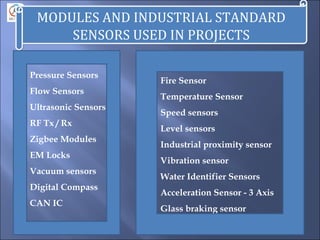
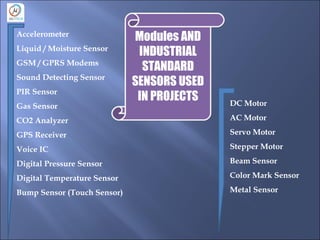
MODULES AND INDUSTRIAL STANDARD
SENSORS USED IN PROJECTS
MODULES AND INDUSTRIAL STANDARD
SENSORS USED IN PROJECTS
Color Sensors
Pressure Sensors
Flow Sensors
Ultrasonic Sensors
RF Tx / Rx
Zigbee Modules
EM Locks
Vacuum sensors
Digital Compass
CAN IC
MEMS IC
Fire Sensor
Temperature Sensor
Speed sensors
Level sensors
Industrial proximity sensor
Vibration sensor
Water Identifier Sensors
Acceleration Sensor - 3 Axis
Glass braking sensor
Force Sensor
Modules AND
INDUSTRIAL
STANDARD
SENSORS USED
IN PROJECTS
Modules AND
INDUSTRIAL
STANDARD
SENSORS USED
IN PROJECTS
Accelerometer
Liquid / Moisture Sensor
GSM / GPRS Modems
Sound Detecting Sensor
PIR Sensor
Gas Sensor
CO2 Analyzer
GPS Receiver
Voice IC
Digital Pressure Sensor
Digital Temperature Sensor
Bump Sensor (Touch Sensor)
DC Motor
AC Motor
Servo Motor
Stepper Motor
Beam Sensor
Color Mark Sensor
Metal Sensor
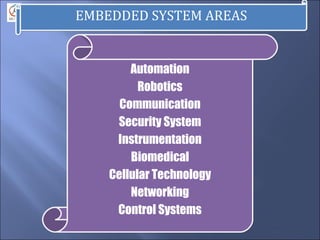
EMBEDDED SYSTEM AREASEMBEDDED SYSTEM AREAS
Automation
Robotics
Communication
Security System
Instrumentation
Biomedical
Cellular Technology
Networking
Control Systems
Automation
Robotics
Communication
Security System
Instrumentation
Biomedical
Cellular Technology
Networking
Control Systems
DSP & DIPDSP & DIP
MATLAB
LabVIEW
ARM
MATLAB
LabVIEW
ARM
DSP & DIPDSP & DIP
Communication
Cryptography
Image Processing
DSP
Biomedical
Filters
Steganography
Transform
Communication
Cryptography
Image Processing
DSP
Biomedical
Filters
Steganography
Transform
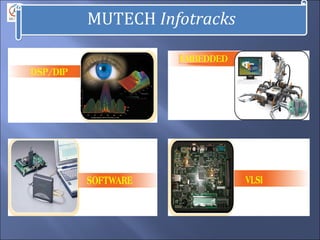
MUTECH InfotracksMUTECH Infotracks
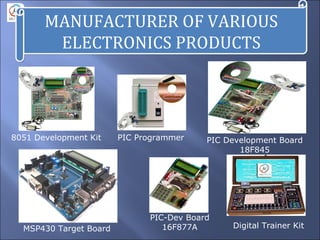
MANUFACTURER OF VARIOUS
ELECTRONICS PRODUCTS
MANUFACTURER OF VARIOUS
ELECTRONICS PRODUCTS
Digital Trainer Kit
8051 Development Kit PIC Development Board
18F845
PIC Programmer
MSP430 Target Board
PIC-Dev Board
16F877A
Ph: 9562 24 92 93
rayeesrosario@gmail.com
Embedded system design process

Embedded system design process

  • 3.
     To Introduceembedded system.  To introduce embedded system design process.  Discuss the recent trends.  Major application areas.
  • 4.
     It canbe described as one consisting a processor, associated peripherals, and software used for a specific purpose.  It performs a well defined task (in contrast with desktop PC’s)
  • 5.
    . Stand-alone embeddedsystem.. Stand-alone embedded system. 2. Real-time embedded system.2. Real-time embedded system. 3. Networked appliances.3. Networked appliances. 4. Mobile Devices.4. Mobile Devices.
  • 6.
    1) Processor. 1) Associatedperipherals. 1) Software. 1 0 0 1 0 1 0 0 0 1 1 1 1 0 1 0 1 0 1 0 1 1 0 1
  • 7.
  • 8.
    1. Protocol converters. 2.Communication interfaces. 3. Drivers (For driving heavy loads).
  • 9.
    It is aprogram written in any programming language, which controls the operation of the total system.
  • 10.
    Determine the requirements Designthe system architecture Select the OS Choose the Processor and peripherals Choose the Development platform Code the application And optimize Verify the software On the host system Verify the software On the target system
  • 11.
     Functional andnon-functional.  Multi function or Multi mode system.  Size, cost, Weight etc.  Selecting the H/W components.  Application specific H/W.  External interfaces.  Input devices.  Output devices.
  • 12.
    System architecture dependson,  Whether the system is real time.  Whether OS needs to be embedded.  Size, Cost, Power consumption etc.
  • 13.
    If OS neededwe can select,  Real time OS (such as RTLinux,Vx Works, VRTX, pSOS, QNX etc.).  Non-real time OS ( such as Windows CE, embedded Windows XP etc).
  • 14.
    We can selectany one of the following,  Microprocessor 8085,8086,Pentium  Microcontroller MCS-51,PIC,AVR,MSP430  Digital Signal Processor dsPIC,Blackfin,Sharc,TigerSharc
  • 15.
     The hardwareplatform.  The operating system.  The programming language.  The development tools.
  • 16.
     Choice oflanguage.  Assembly.  C language.  Object Oriented Languages (C++, Java etc.). • Optimizing the code
  • 17.
     Compile andassemble the source code into object file.  Use a simulator to simulate the working of the system.
  • 18.
     Download theprogram using a programmer device.  Use an EMULATOR or on chip debugging tools to verify the software.
  • 19.
     Due tothe developments in Micro electronics availability of processors increased.  Reduces cost.  Increased speed.  Reduce Size  Reduce Power.
  • 20.
  • 30.
  • 31.
  • 32.
  • 33.
  • 34.
    CONTROLLERS USED INPROJECTSCONTROLLERS USED IN PROJECTS 8-bit Microcontrollers 8-bit Microprocessors 16-bit Microcontrollers 32-bit Microcontrollers 8085 8051, PIC, AVR MSP430 ARM7, ARM10
  • 35.
    MODULES AND INDUSTRIALSTANDARD SENSORS USED IN PROJECTS MODULES AND INDUSTRIAL STANDARD SENSORS USED IN PROJECTS Color Sensors Pressure Sensors Flow Sensors Ultrasonic Sensors RF Tx / Rx Zigbee Modules EM Locks Vacuum sensors Digital Compass CAN IC MEMS IC Fire Sensor Temperature Sensor Speed sensors Level sensors Industrial proximity sensor Vibration sensor Water Identifier Sensors Acceleration Sensor - 3 Axis Glass braking sensor Force Sensor
  • 36.
    Modules AND INDUSTRIAL STANDARD SENSORS USED INPROJECTS Modules AND INDUSTRIAL STANDARD SENSORS USED IN PROJECTS Accelerometer Liquid / Moisture Sensor GSM / GPRS Modems Sound Detecting Sensor PIR Sensor Gas Sensor CO2 Analyzer GPS Receiver Voice IC Digital Pressure Sensor Digital Temperature Sensor Bump Sensor (Touch Sensor) DC Motor AC Motor Servo Motor Stepper Motor Beam Sensor Color Mark Sensor Metal Sensor
  • 37.
    EMBEDDED SYSTEM AREASEMBEDDEDSYSTEM AREAS Automation Robotics Communication Security System Instrumentation Biomedical Cellular Technology Networking Control Systems Automation Robotics Communication Security System Instrumentation Biomedical Cellular Technology Networking Control Systems
  • 38.
    DSP & DIPDSP& DIP MATLAB LabVIEW ARM MATLAB LabVIEW ARM
  • 39.
    DSP & DIPDSP& DIP Communication Cryptography Image Processing DSP Biomedical Filters Steganography Transform Communication Cryptography Image Processing DSP Biomedical Filters Steganography Transform
  • 40.
  • 41.
    MANUFACTURER OF VARIOUS ELECTRONICSPRODUCTS MANUFACTURER OF VARIOUS ELECTRONICS PRODUCTS Digital Trainer Kit 8051 Development Kit PIC Development Board 18F845 PIC Programmer MSP430 Target Board PIC-Dev Board 16F877A
  • 42.
    Ph: 9562 2492 93 rayeesrosario@gmail.com