Applications of Embedded Systems
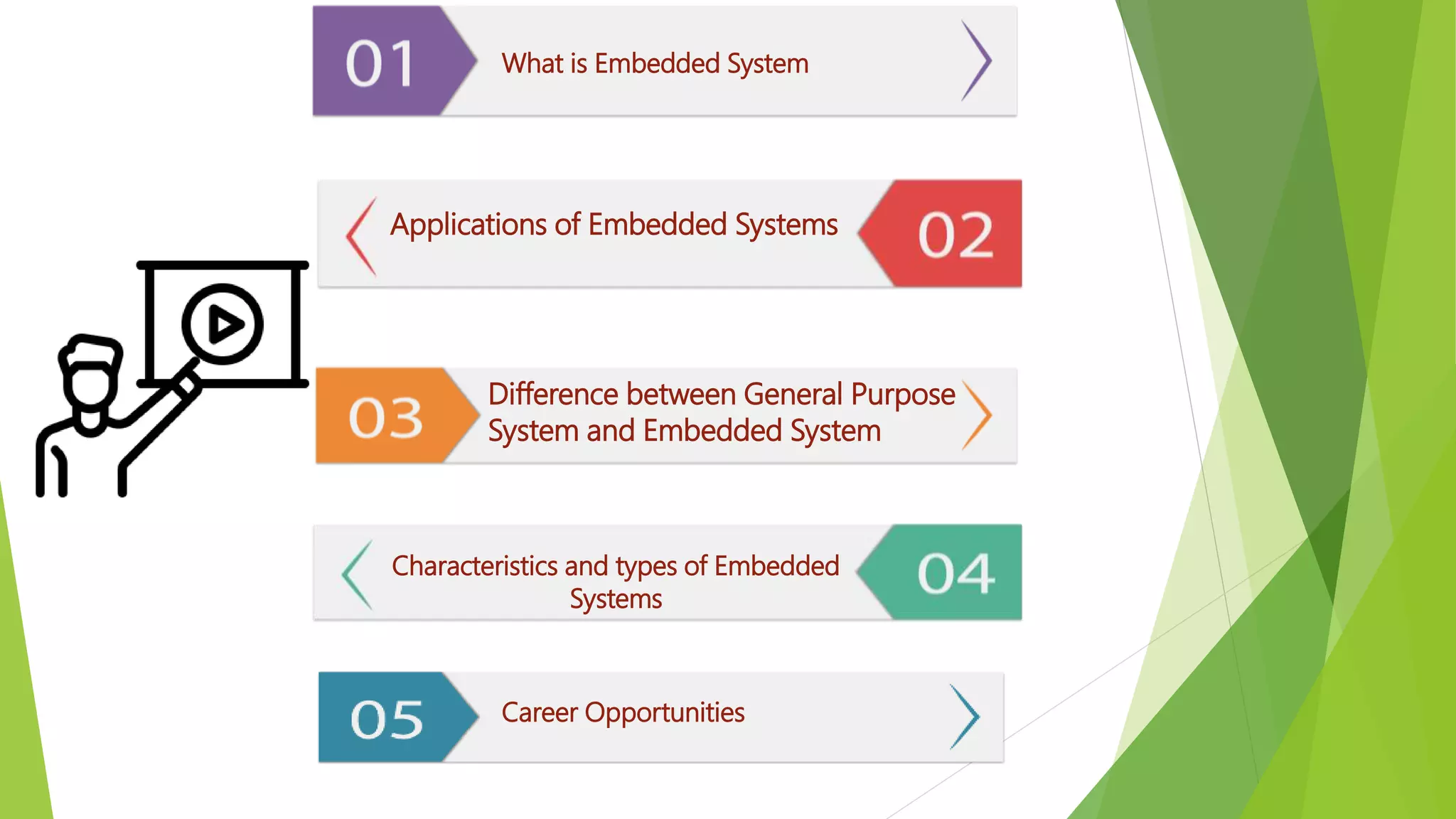
Difference between General Purpose
System and Embedded System
Characteristics and types of Embedded
Systems
What is Embedded System
Career Opportunities
Embedded System
Digital Camera
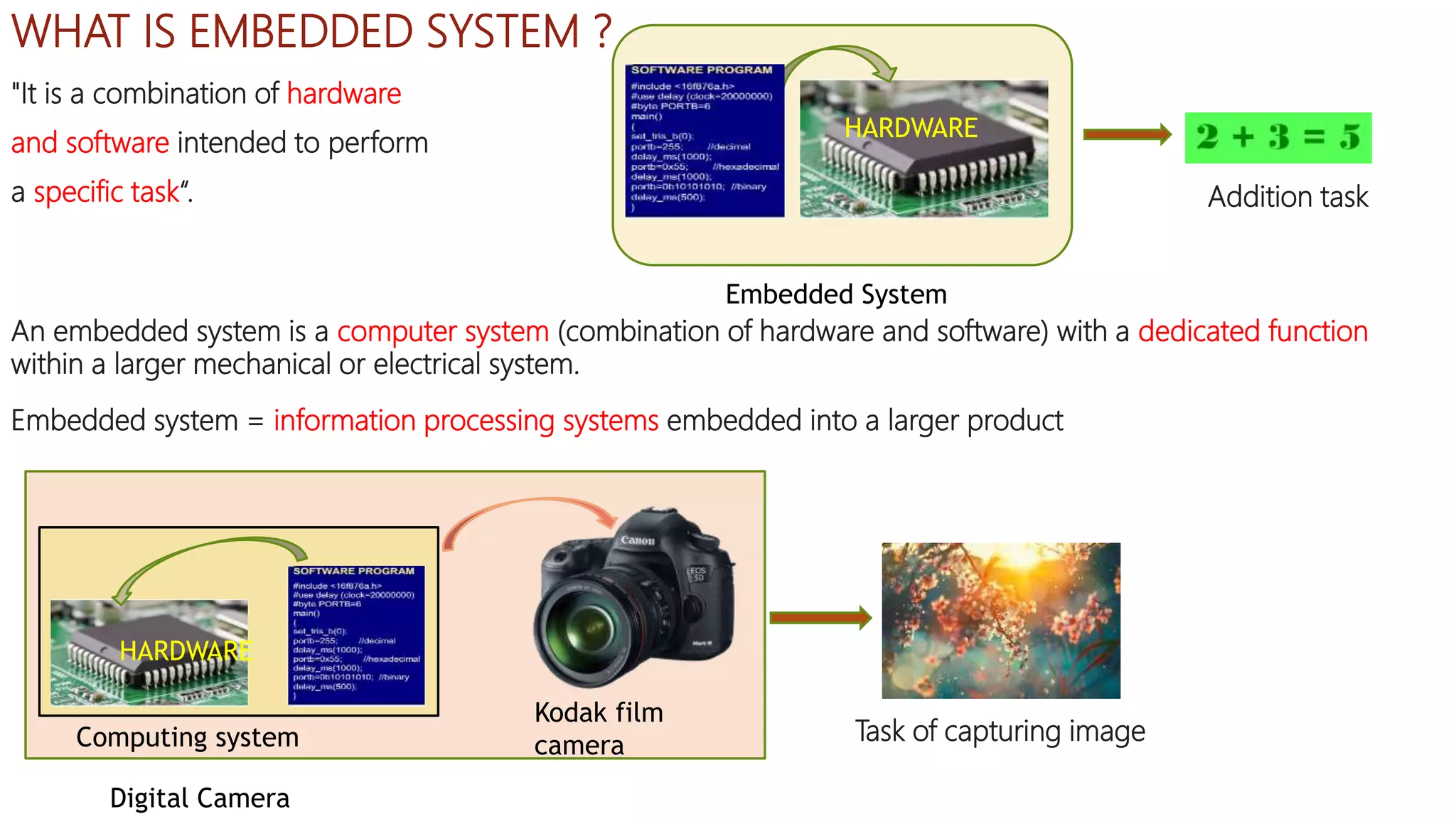
WHAT IS EMBEDDED SYSTEM ?
HARDWARE
"It is a combination of hardware
and software intended to perform
a specific task“.
An embedded system is a computer system (combination of hardware and software) with a dedicated function
within a larger mechanical or electrical system.
Embedded system = information processing systems embedded into a larger product
HARDWARE
Computing system
Kodak film
camera
Task of capturing image
Addition task
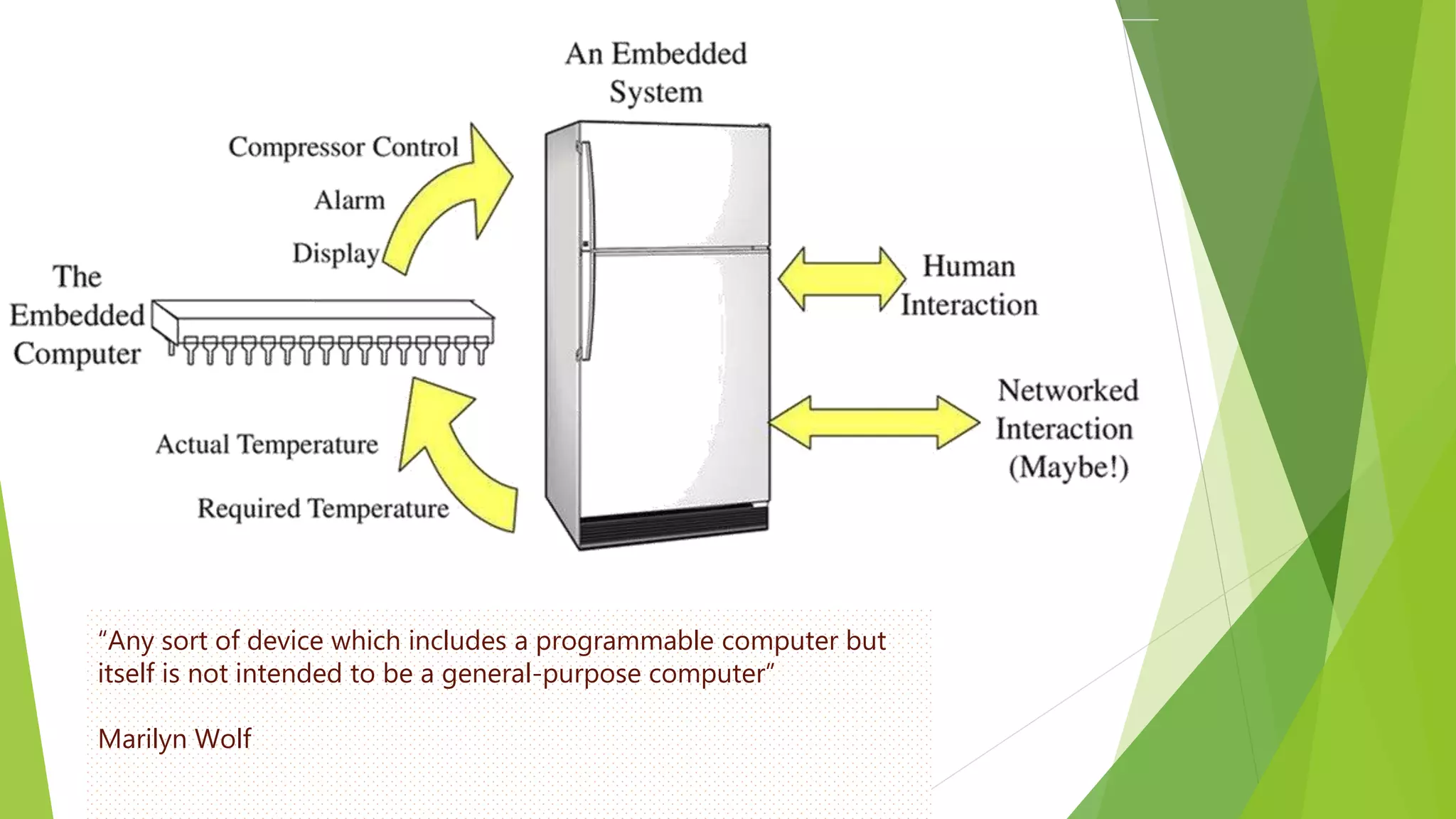
“Any sort of device which includes a programmable computer but
itself is not intended to be a general-purpose computer”
Marilyn Wolf
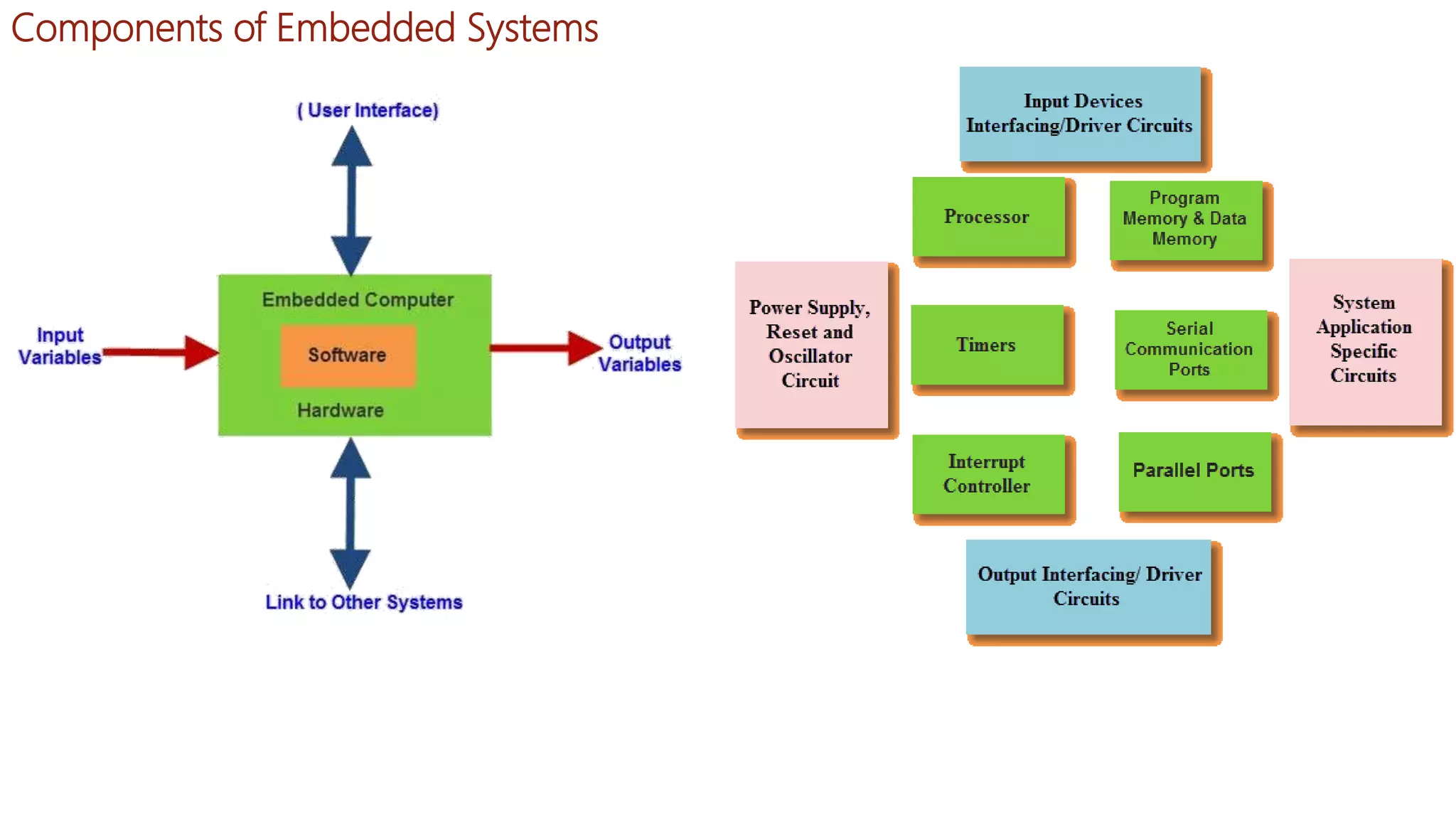
Components of Embedded Systems
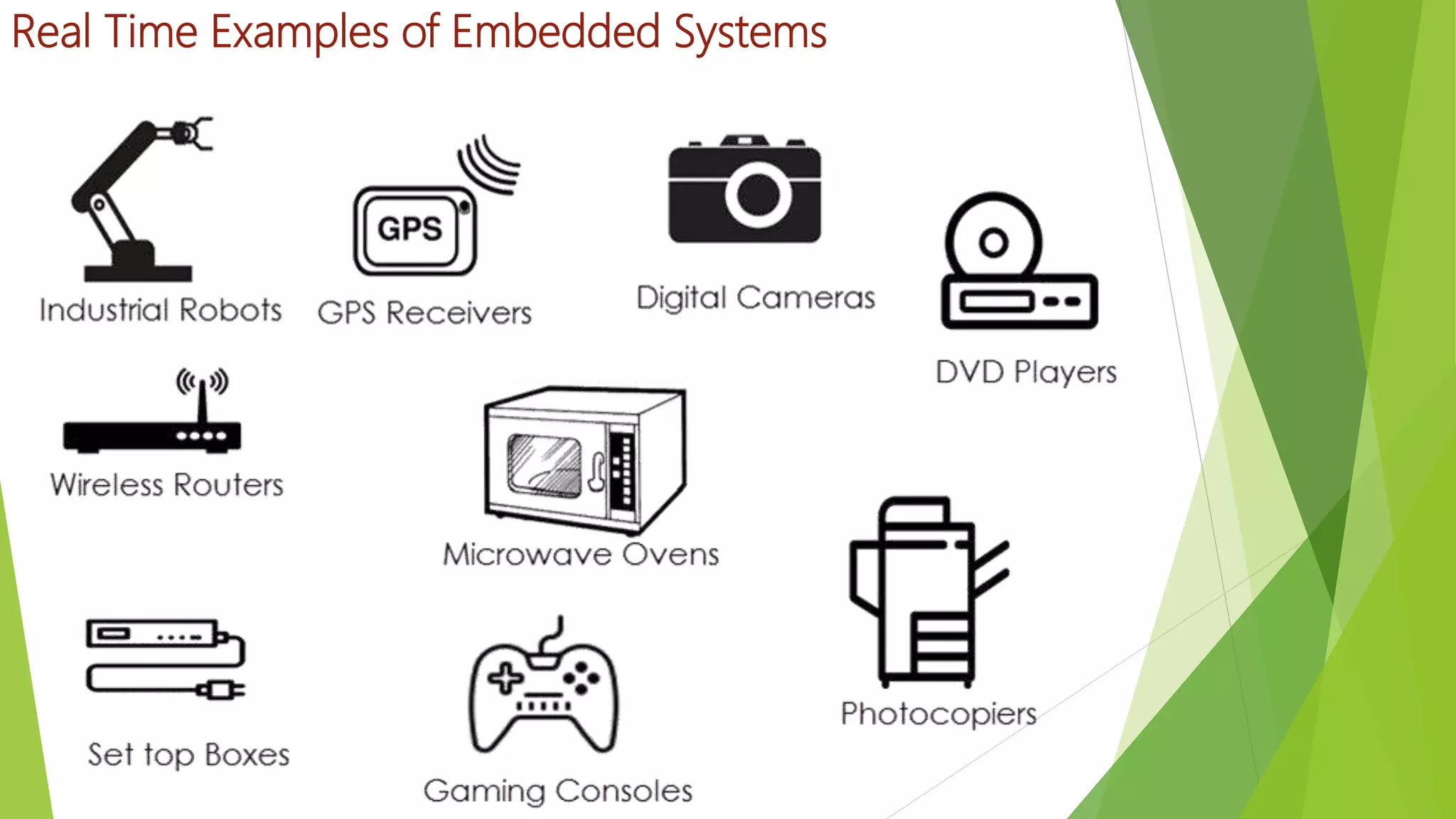
Real Time Examples of Embedded Systems
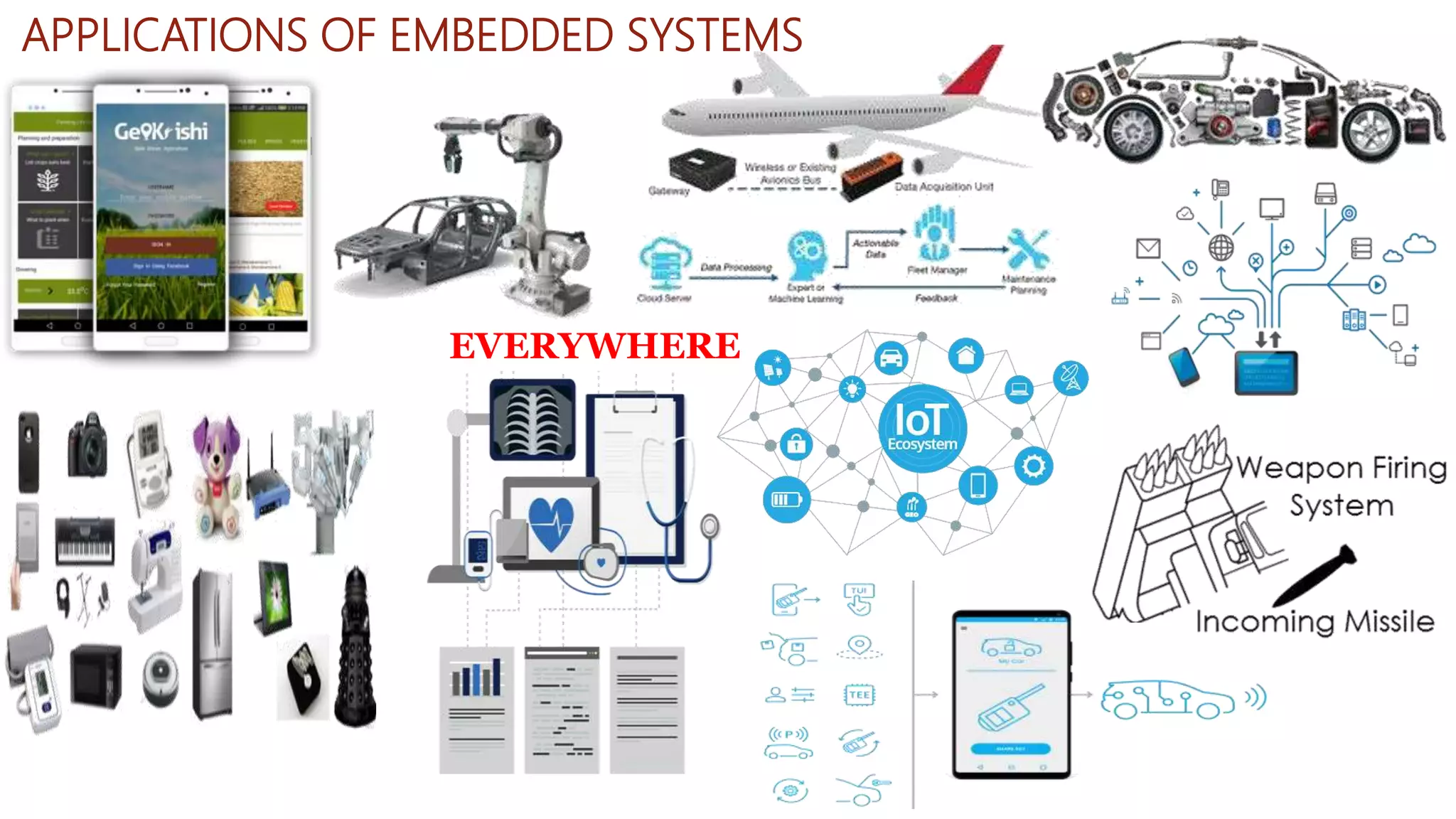
APPLICATIONS OF EMBEDDED SYSTEMS
EVERYWHERE
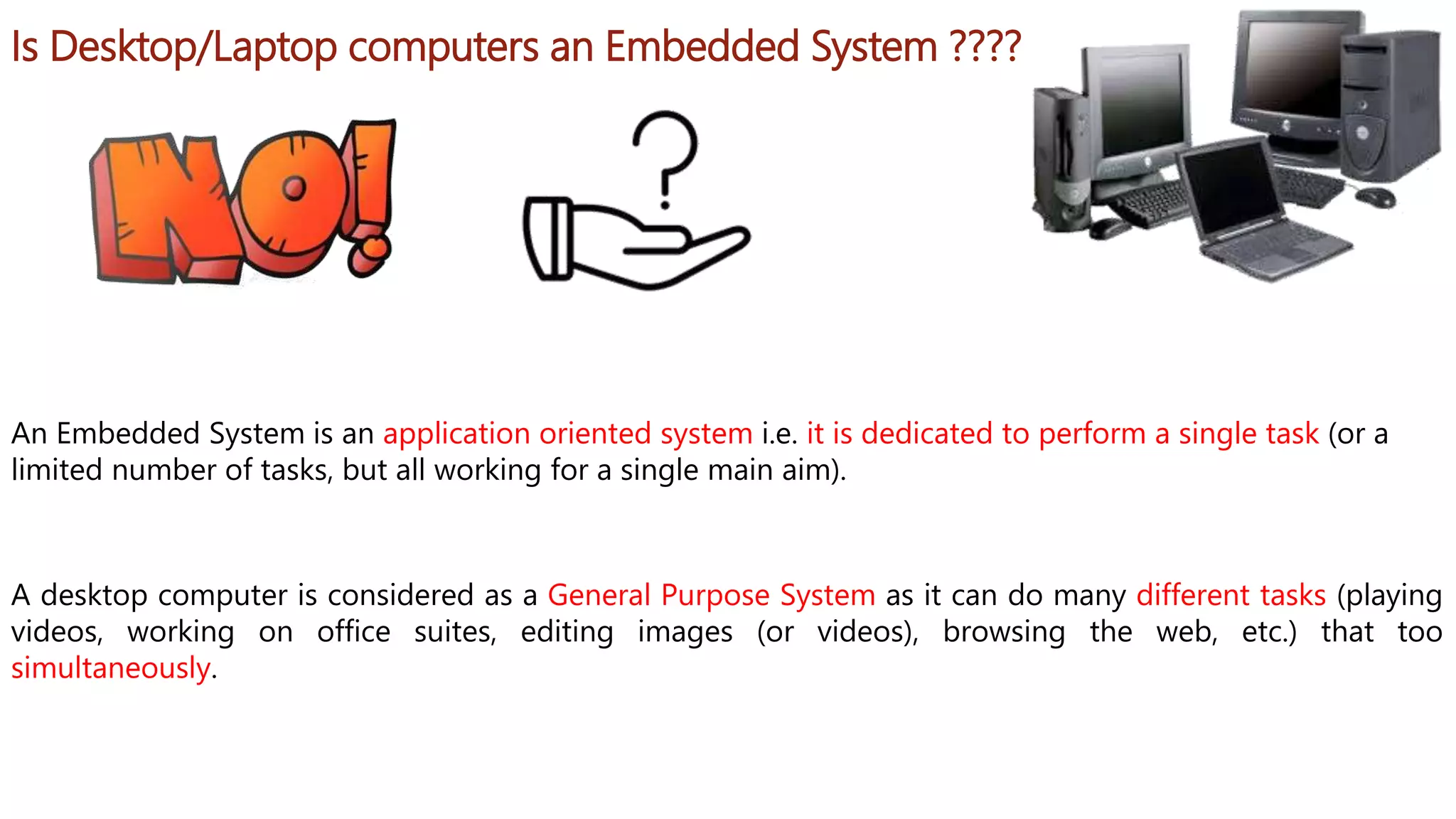
Is Desktop/Laptop computers an Embedded System ????
A desktop computer is considered as a General Purpose System as it can do many different tasks (playing
videos, working on office suites, editing images (or videos), browsing the web, etc.) that too
simultaneously.
An Embedded System is an application oriented system i.e. it is dedicated to perform a single task (or a
limited number of tasks, but all working for a single main aim).
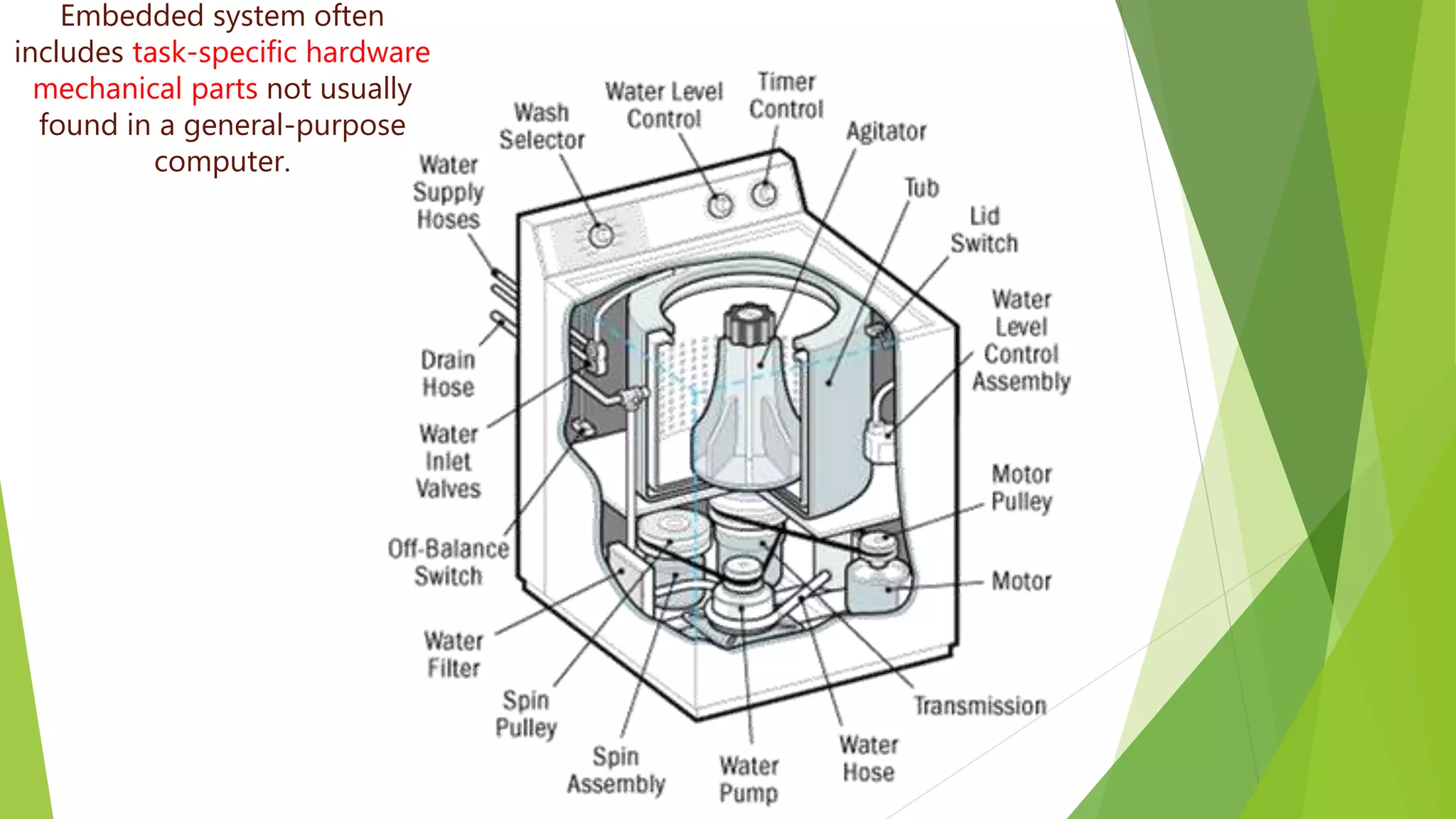
Embedded system often
includes task-specific hardware
mechanical parts not usually
found in a general-purpose
computer.
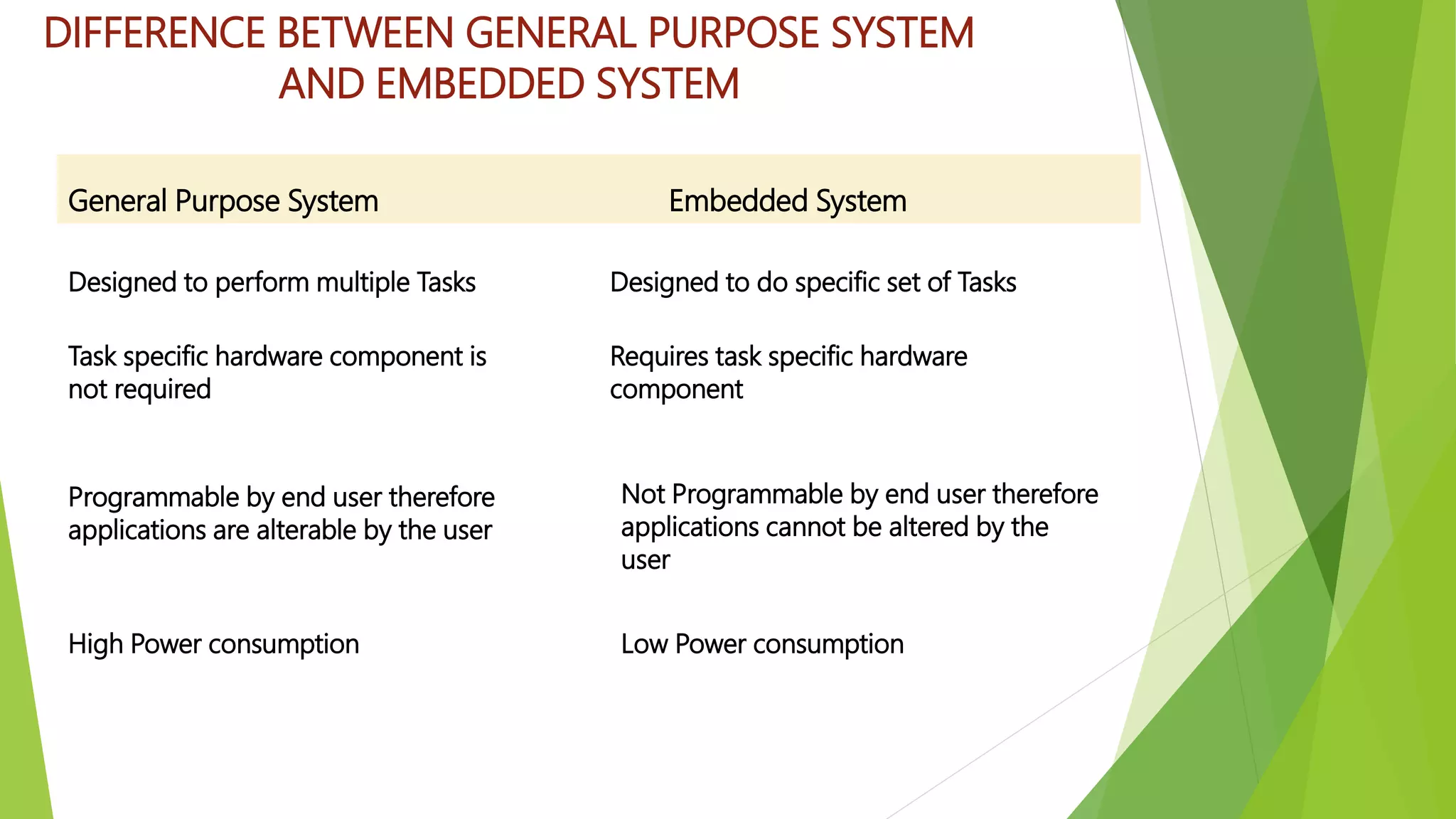
DIFFERENCE BETWEEN GENERAL PURPOSE SYSTEM
AND EMBEDDED SYSTEM
General Purpose System Embedded System
Designed to perform multiple Tasks Designed to do specific set of Tasks
Task specific hardware component is
not required
Requires task specific hardware
component
High Power consumption Low Power consumption
Programmable by end user therefore
applications are alterable by the user
Not Programmable by end user therefore
applications cannot be altered by the
user
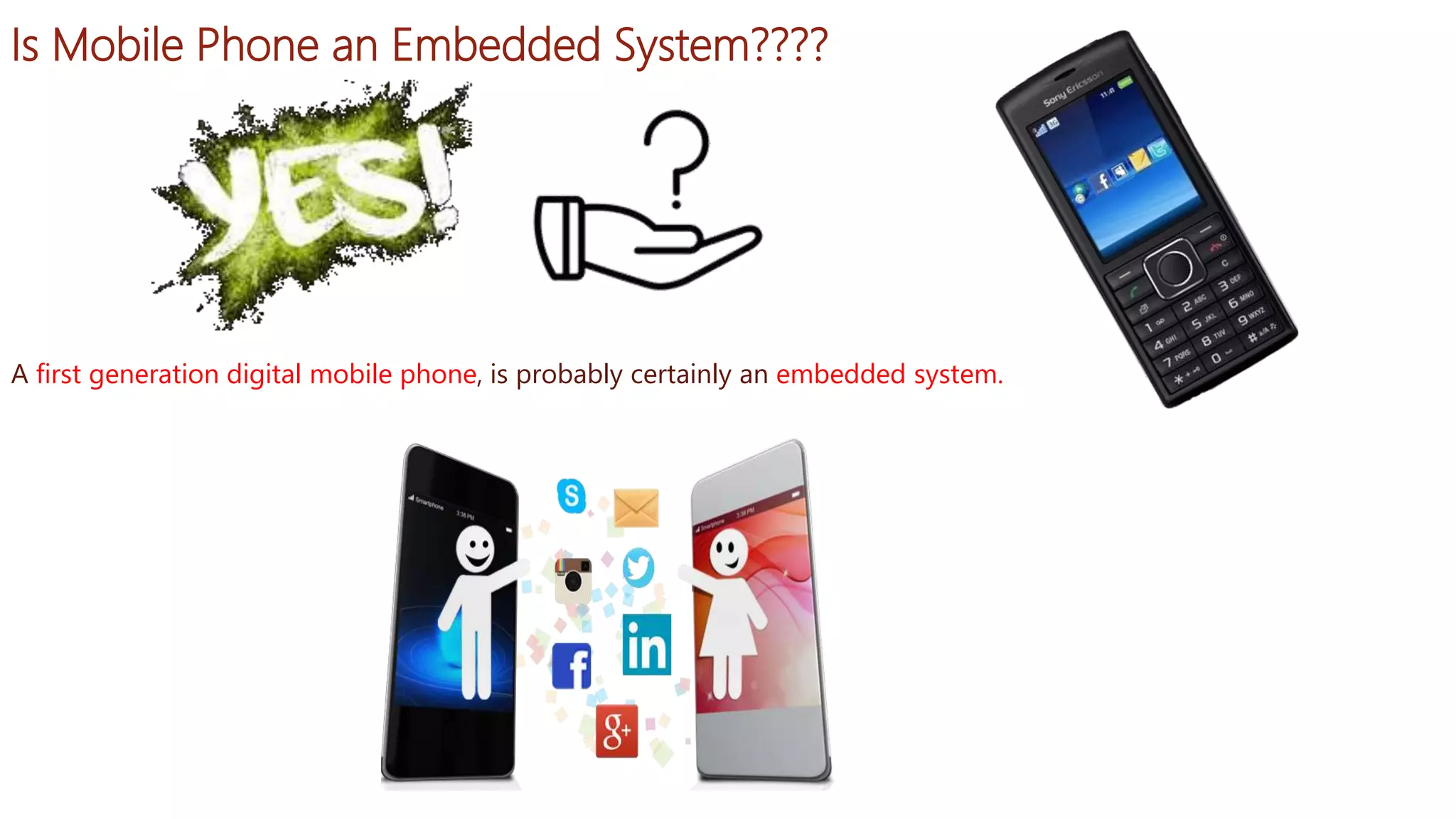
Is Mobile Phone an Embedded System????
A first generation digital mobile phone, is probably certainly an embedded system.
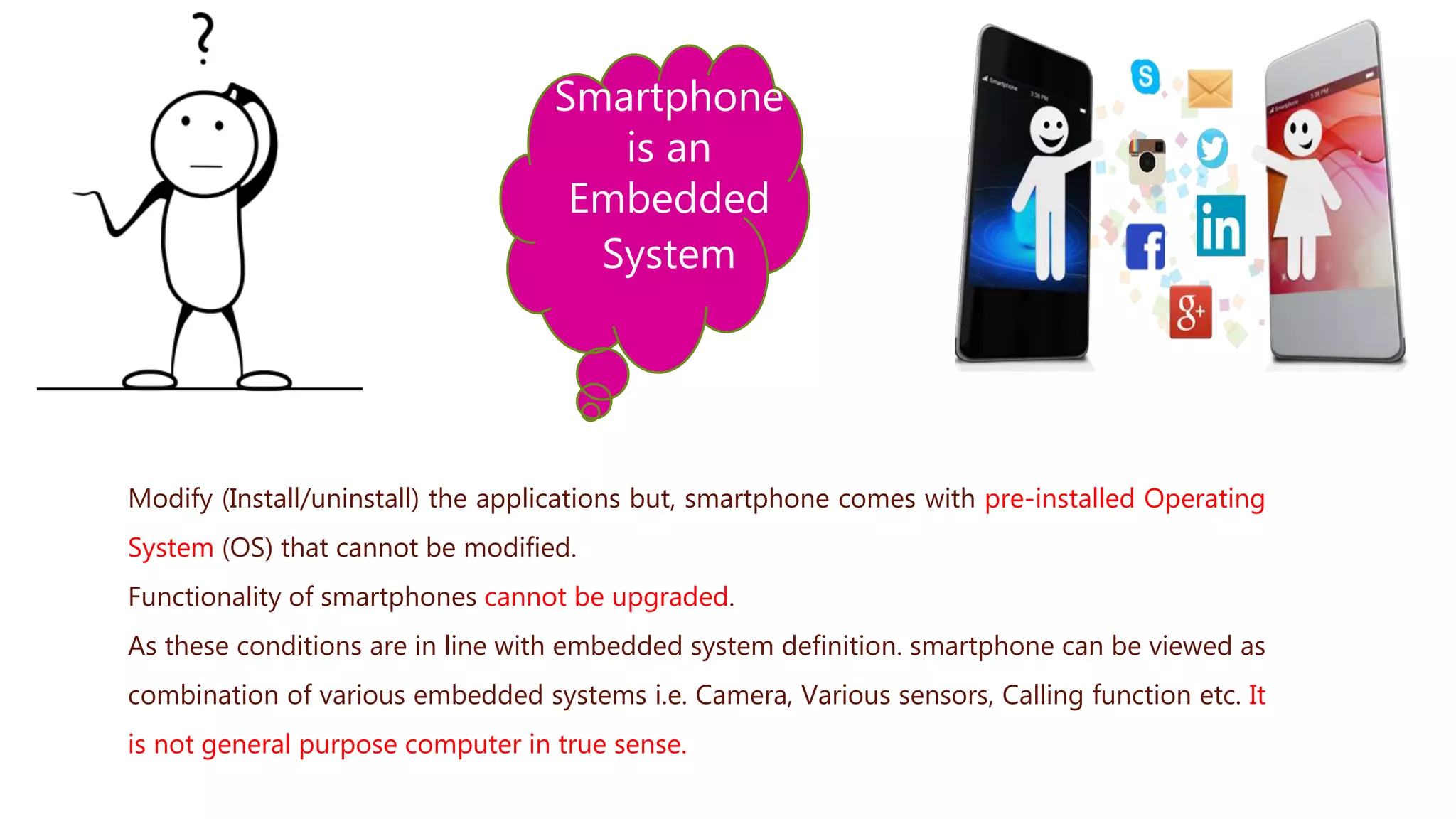
Modify (Install/uninstall) the applications but, smartphone comes with pre-installed Operating
System (OS) that cannot be modified.
Functionality of smartphones cannot be upgraded.
As these conditions are in line with embedded system definition. smartphone can be viewed as
combination of various embedded systems i.e. Camera, Various sensors, Calling function etc. It
is not general purpose computer in true sense.
Smartphone
is an
Embedded
System
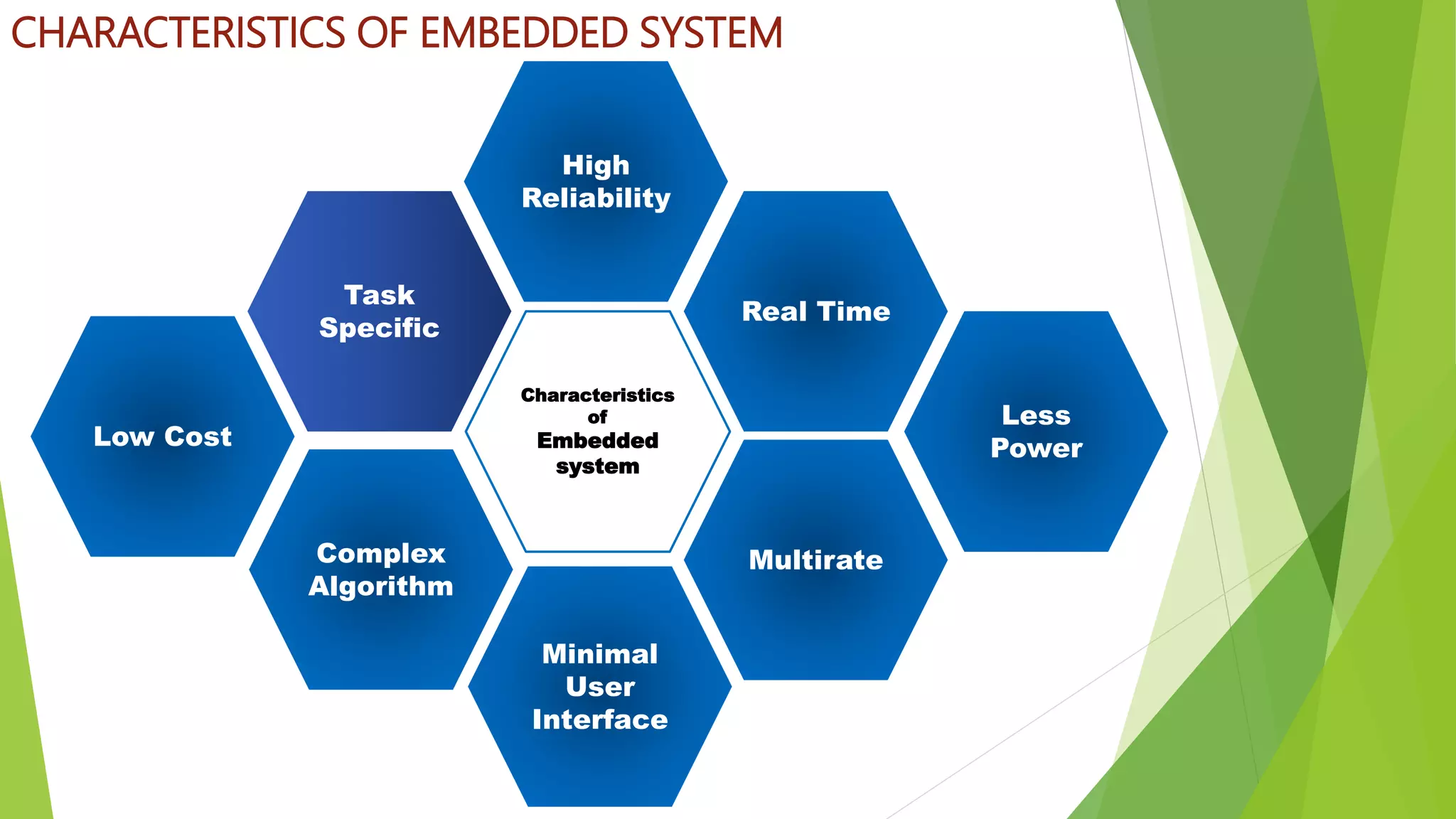
CHARACTERISTICS OF EMBEDDED SYSTEM
High
Reliability
Characteristics
of
Embedded
system
Minimal
User
Interface
Complex
Algorithm
Multirate
Real Time
Task
Specific
Low Cost
Less
Power
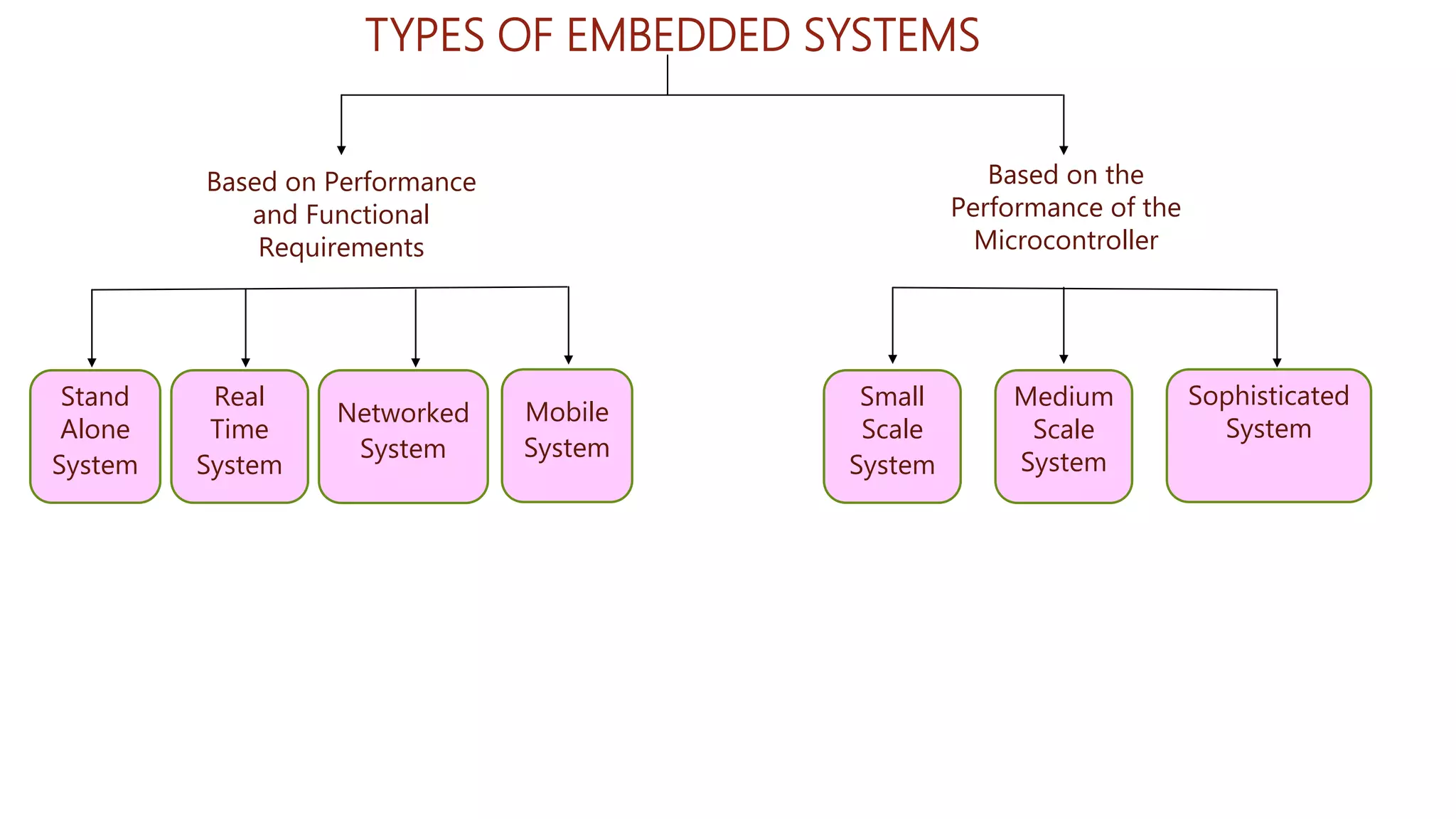
TYPES OF EMBEDDED SYSTEMS
Based on Performance
and Functional
Requirements
Based on the
Performance of the
Microcontroller
Real
Time
System
Stand
Alone
System
Networked
System
Mobile
System
Small
Scale
System
Medium
Scale
System
Sophisticated
System
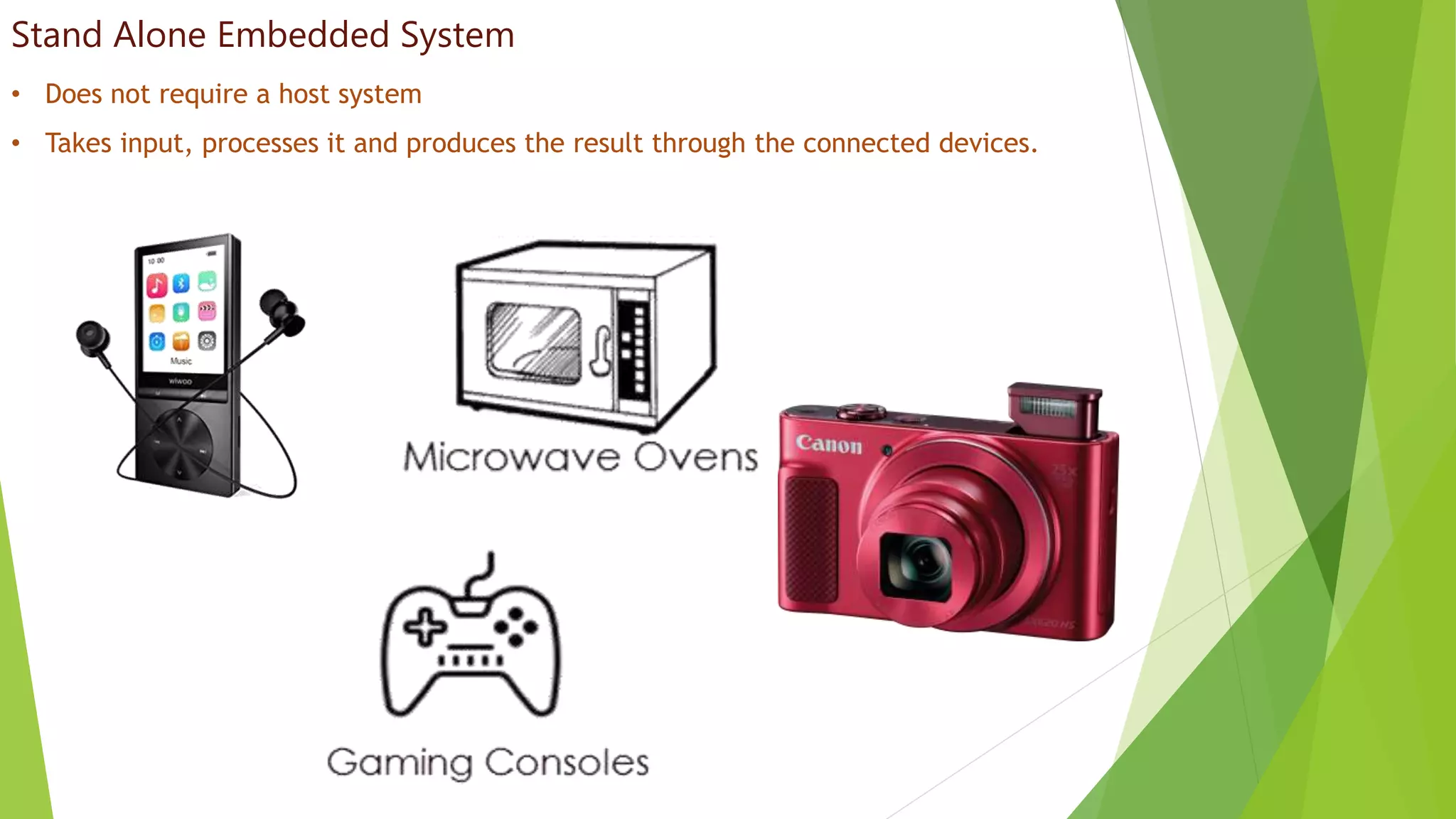
Stand Alone Embedded System
• Does not require a host system
• Takes input, processes it and produces the result through the connected devices.
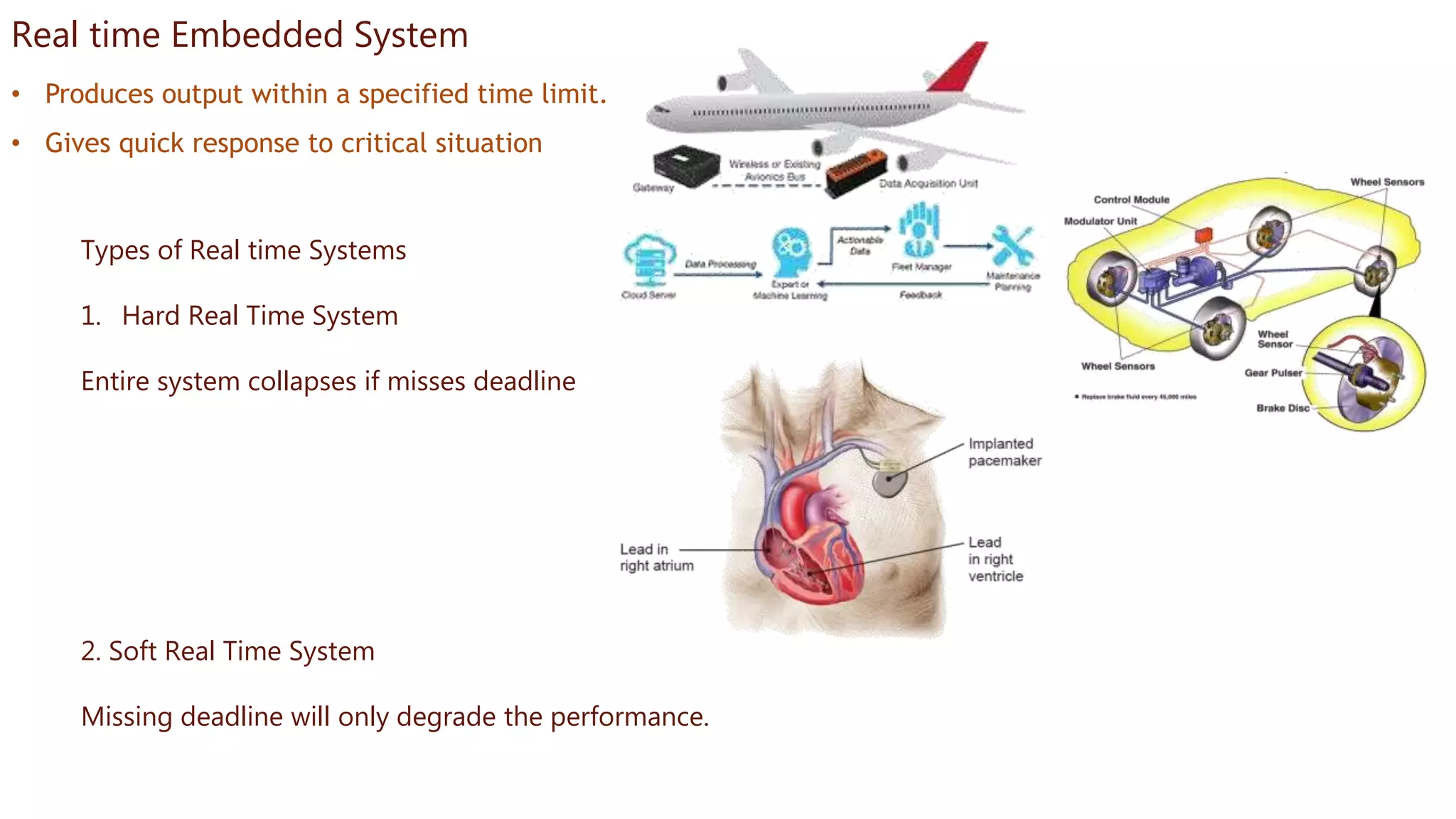
Real time Embedded System
• Produces output within a specified time limit.
• Gives quick response to critical situation
Types of Real time Systems
1. Hard Real Time System
Entire system collapses if misses deadline
2. Soft Real Time System
Missing deadline will only degrade the performance.
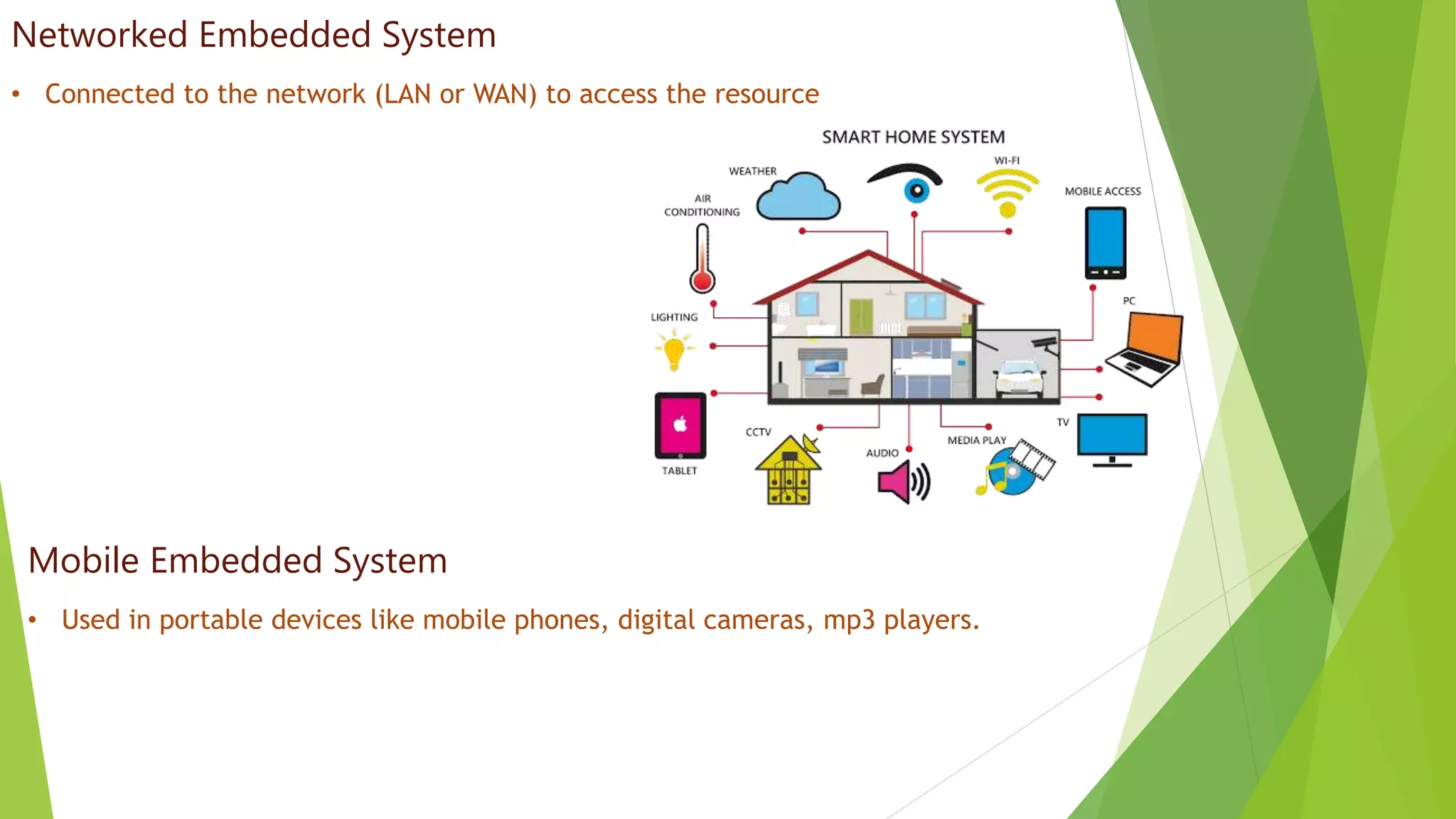
Networked Embedded System
• Connected to the network (LAN or WAN) to access the resource
Mobile Embedded System
• Used in portable devices like mobile phones, digital cameras, mp3 players.
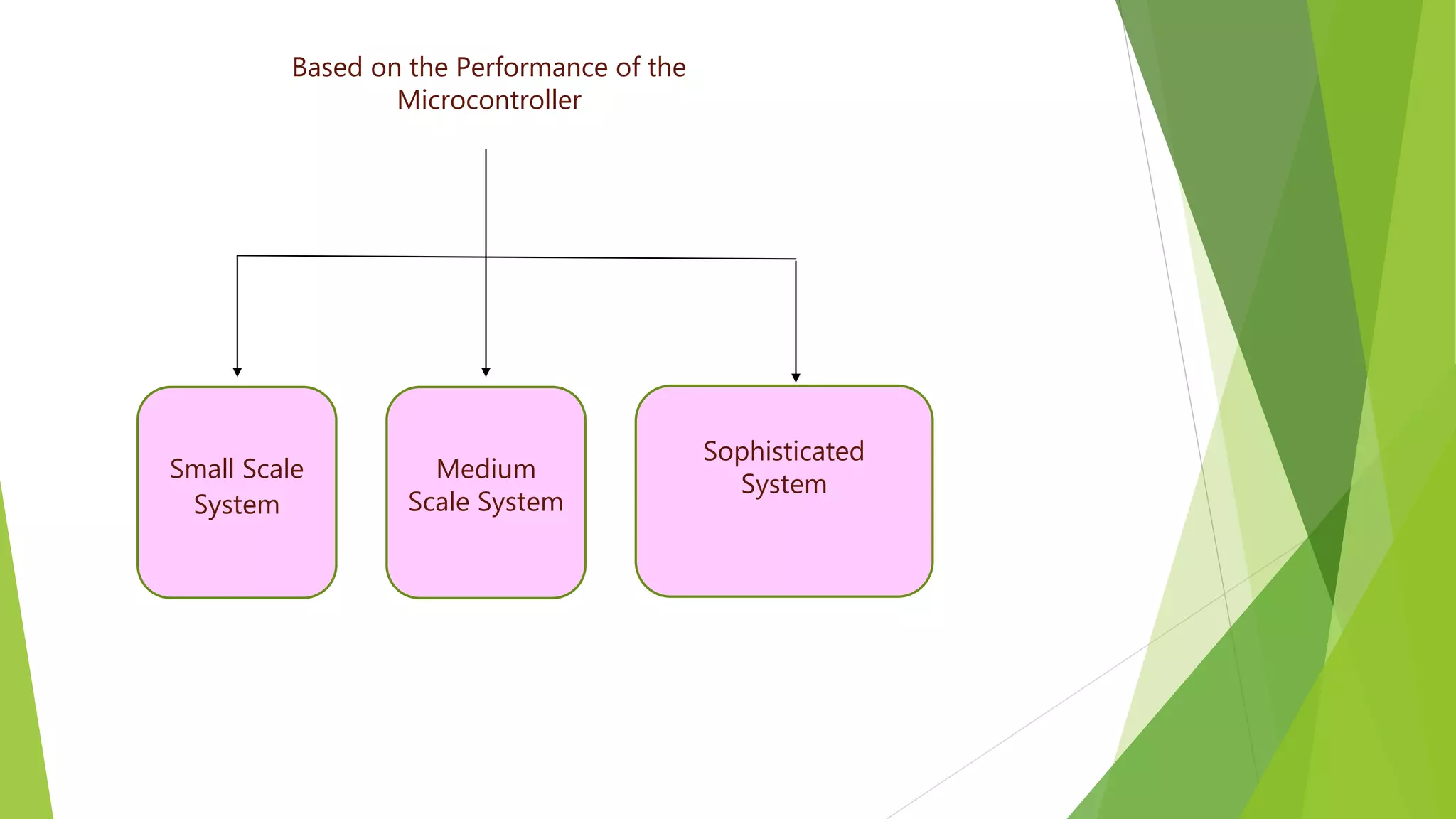
Based on the Performance of the
Microcontroller
Small Scale
System
Medium
Scale System
Sophisticated
System
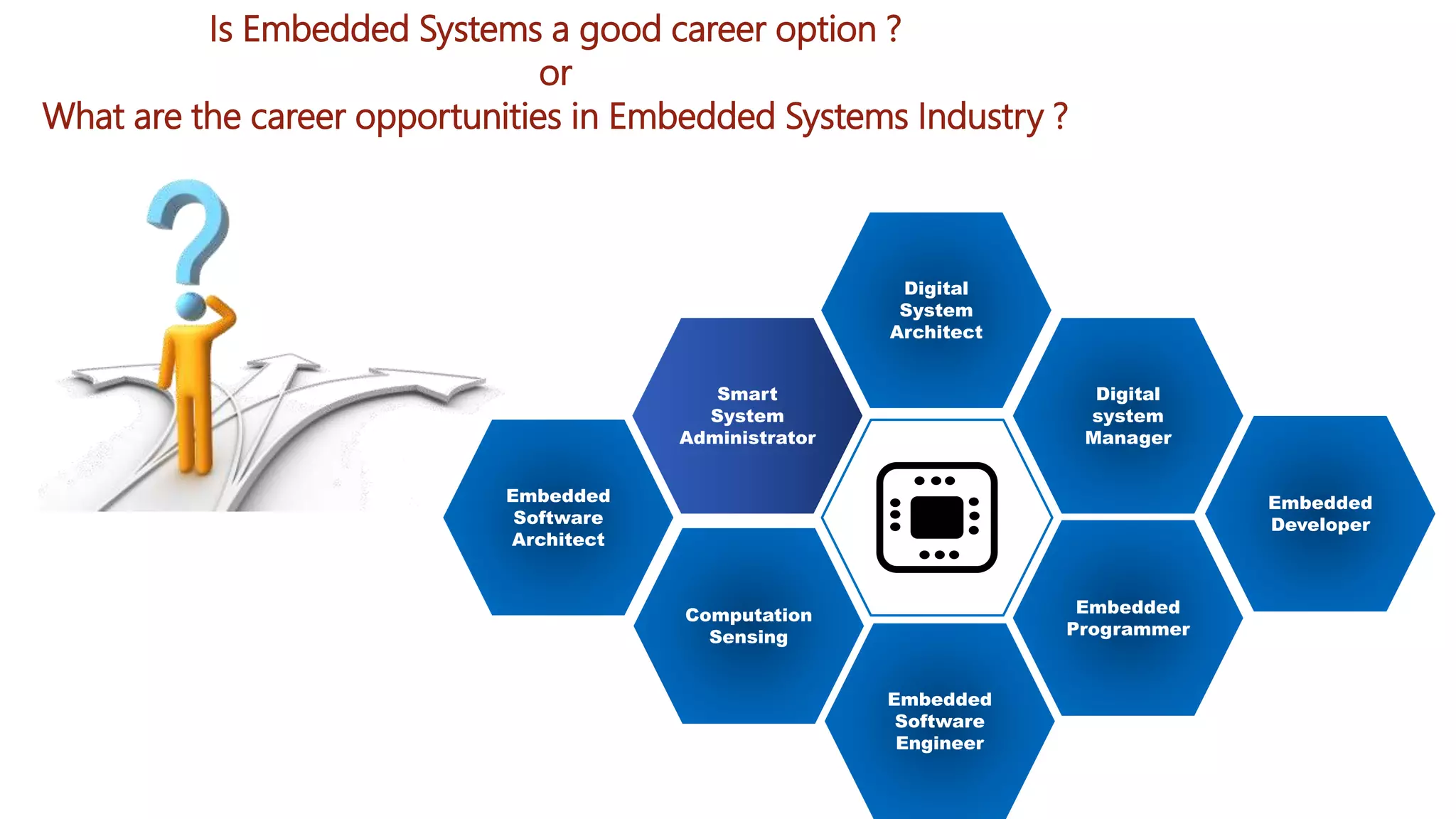
Is Embedded Systems a good career option ?
or
What are the career opportunities in Embedded Systems Industry ?
Embedded
Software
Engineer
Computation
Sensing
Embedded
Programmer
Digital
system
Manager
Smart
System
Administrator
Digital
System
Architect
Embedded
Software
Architect
Embedded
Developer
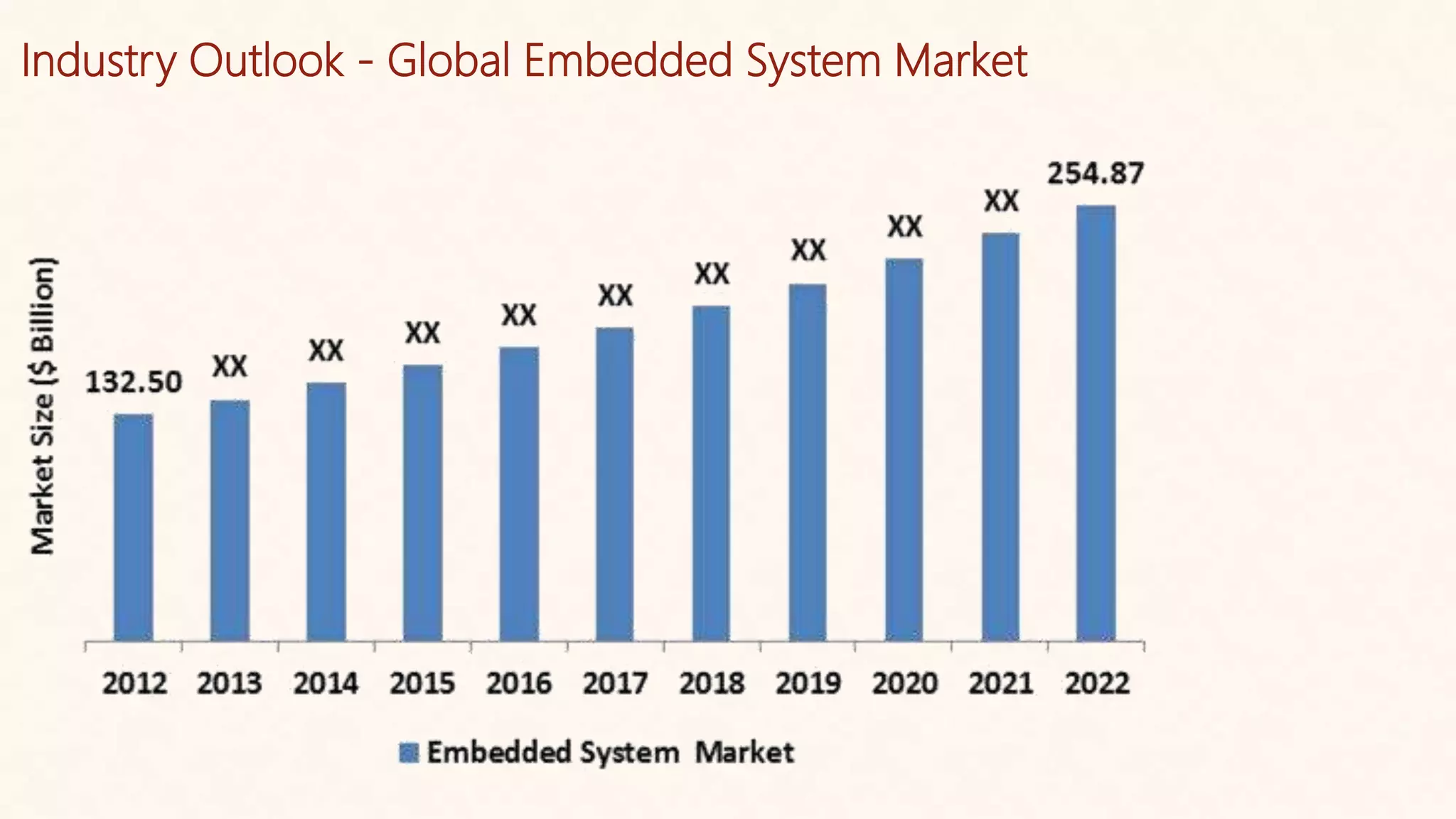
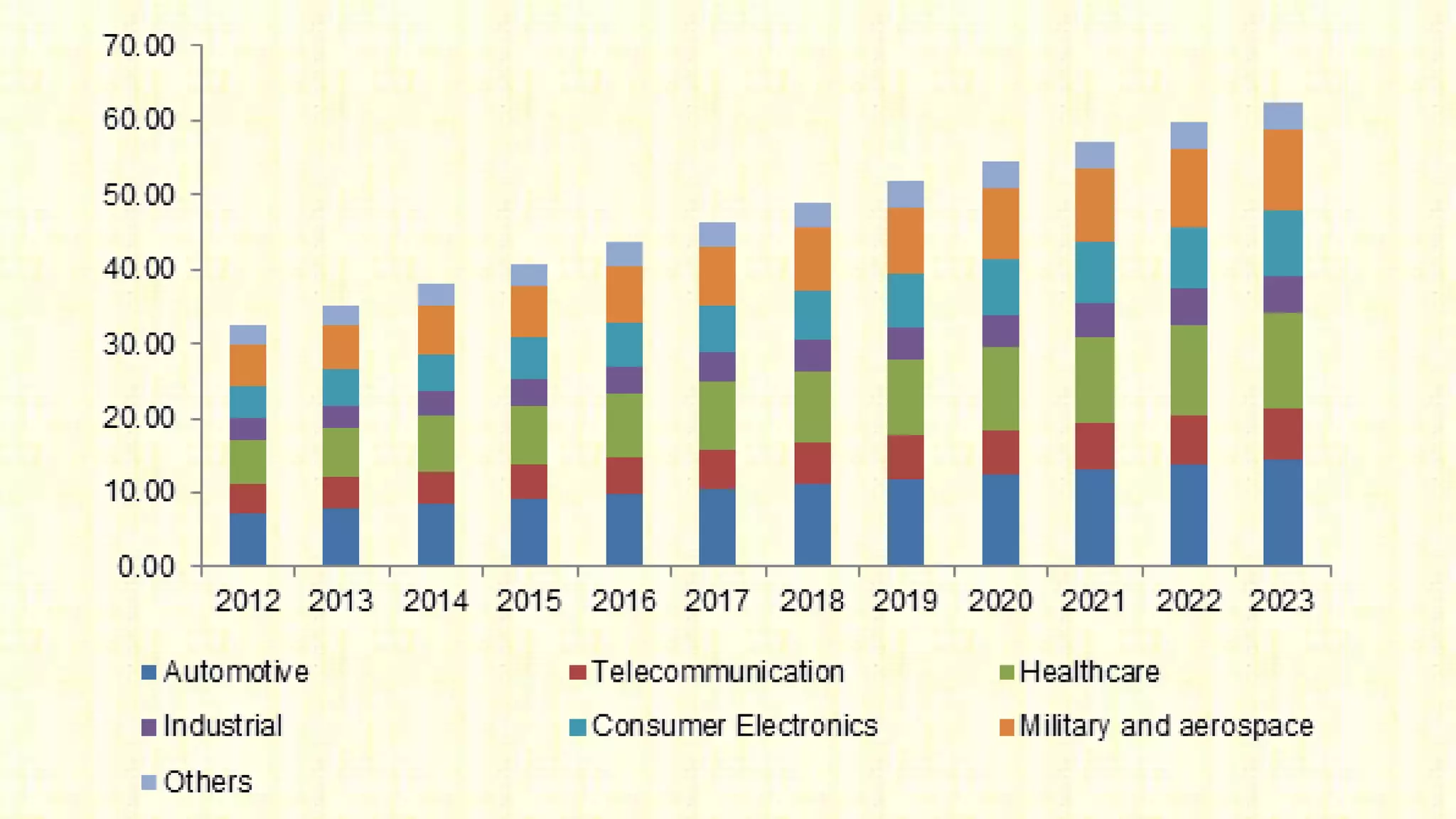
Industry Outlook - Global Embedded System Market
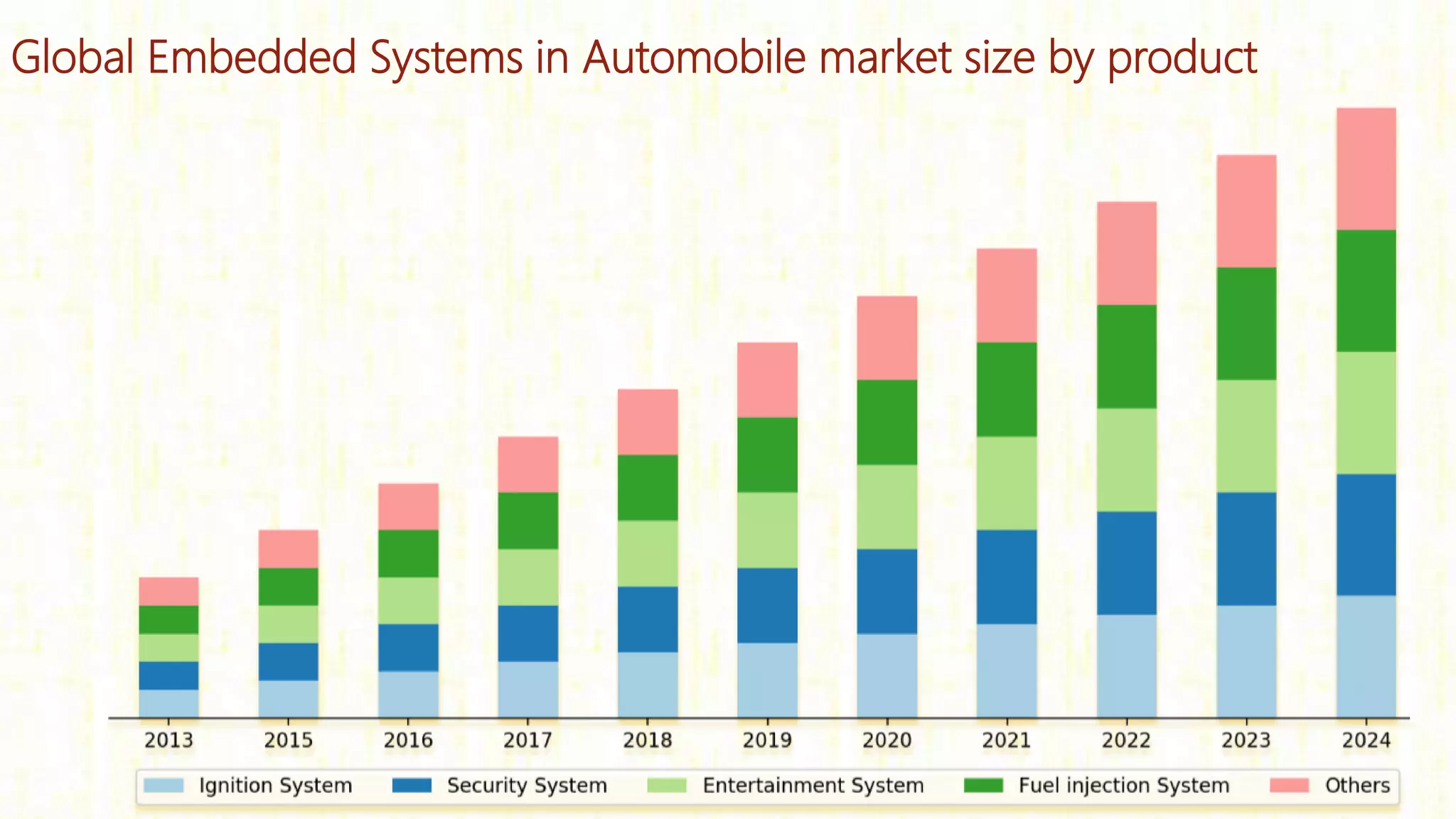
Global Embedded Systems in Automobile market size by product
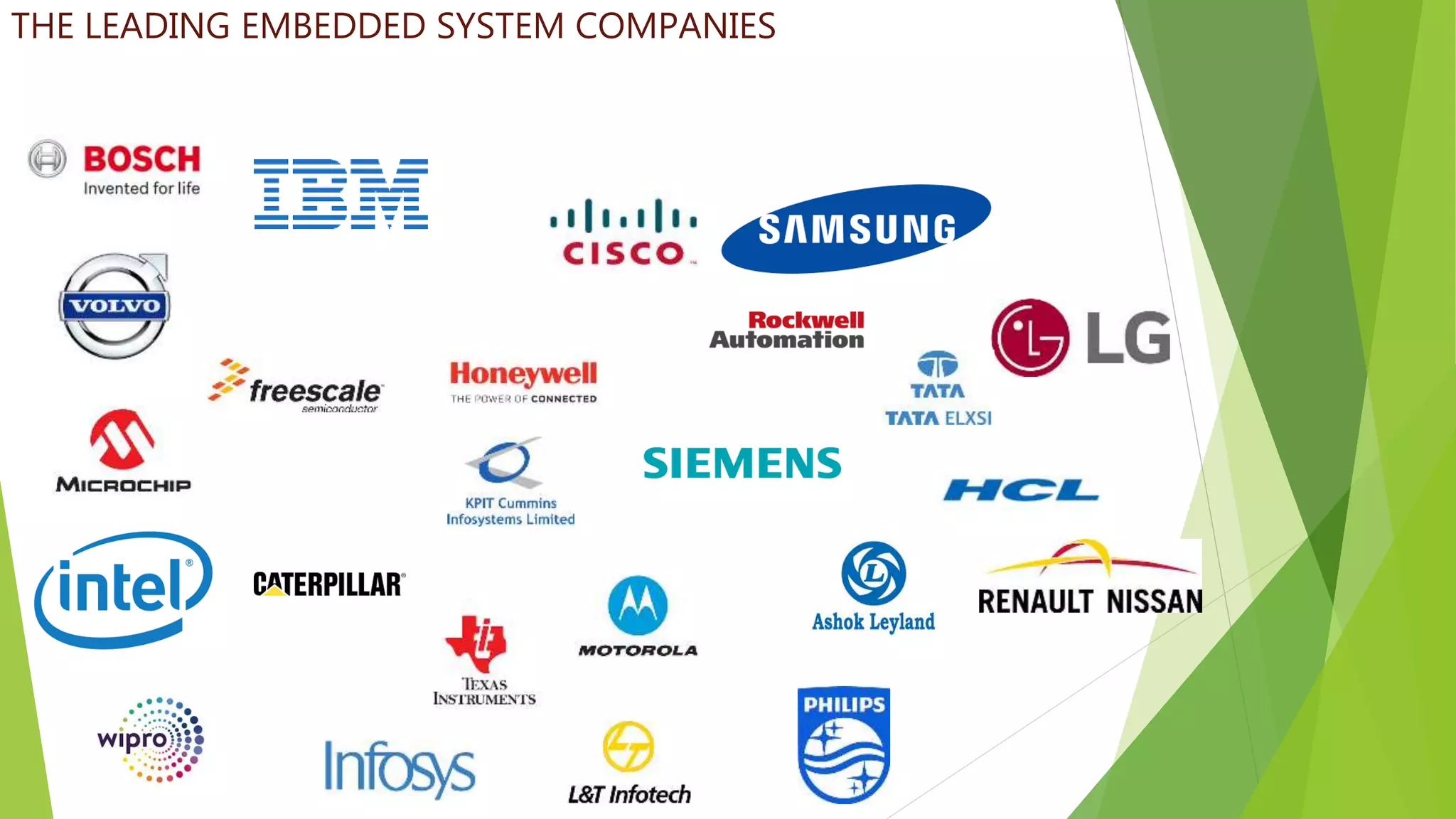
THE LEADING EMBEDDED SYSTEM COMPANIES
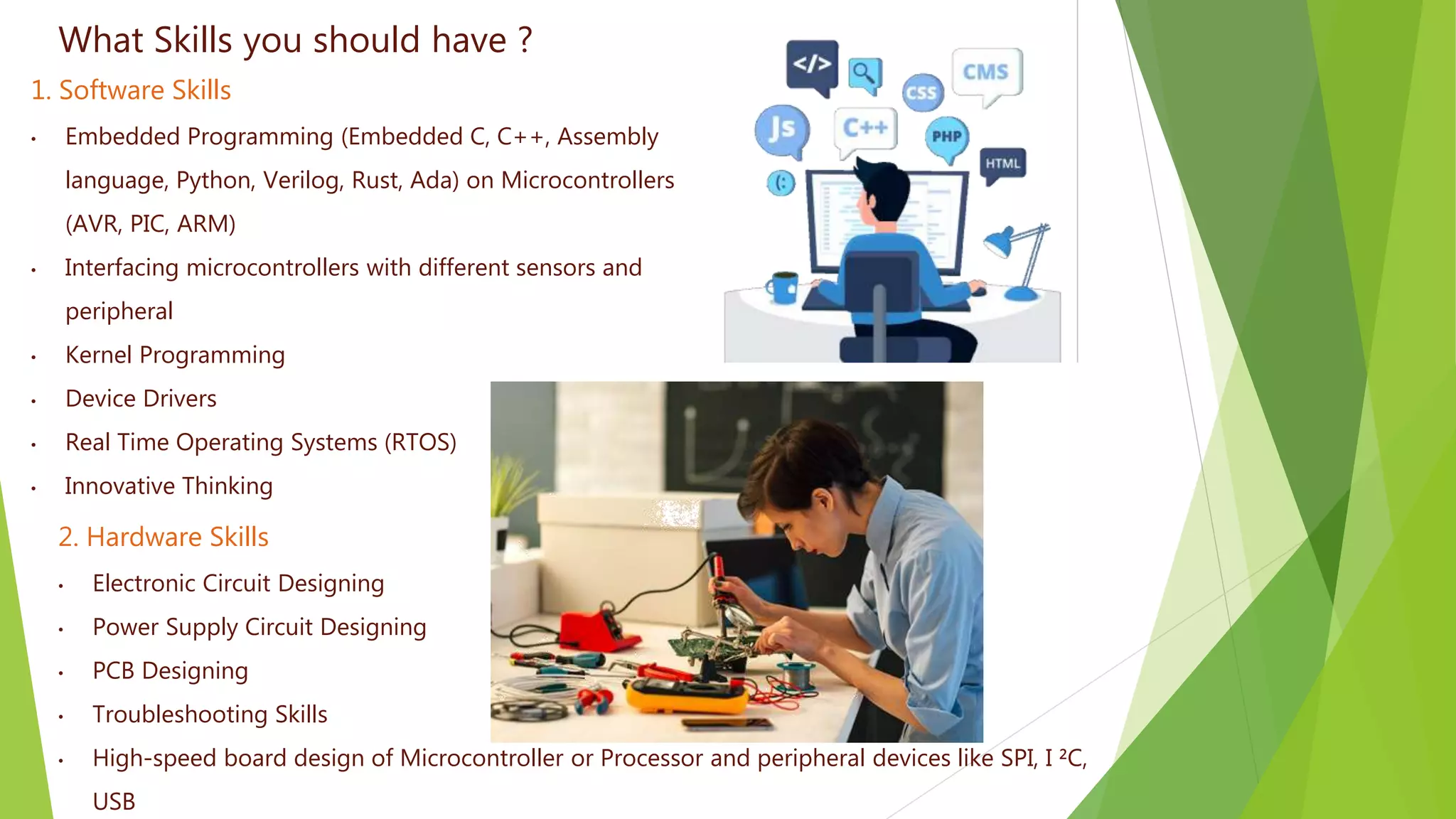
What Skills you should have ?
2. Hardware Skills
• Electronic Circuit Designing
• Power Supply Circuit Designing
• PCB Designing
• Troubleshooting Skills
• High-speed board design of Microcontroller or Processor and peripheral devices like SPI, I ²C,
USB
1. Software Skills
• Embedded Programming (Embedded C, C++, Assembly
language, Python, Verilog, Rust, Ada) on Microcontrollers
(AVR, PIC, ARM)
• Interfacing microcontrollers with different sensors and
peripheral
• Kernel Programming
• Device Drivers
• Real Time Operating Systems (RTOS)
• Innovative Thinking
3. Other Skills
Learning new microcontroller interfacing yourself
Learning new hardware yourself
Reading Datasheets
Documentation as per company norms
Working in a Team
Completing Work in Deadlines
Making Reports as per the Company Requirement
1. Marilyn Wolf, ―Computers as Components - Principles of Embedded
Computing System Design‖, Third Edition ―Morgan Kaufmann Publisher (An
imprint from Elsevier), 2012. (UNIT I, II, III, V)
1. 2. Jane W.S.Liu,‖ Real Time Systems‖, Pearson Education, Third Indian Reprint,
2003.(UNIT IV)
TEXT BOOKS
Embedded system introduction

Embedded system introduction

  • 2.
    Applications of EmbeddedSystems Difference between General Purpose System and Embedded System Characteristics and types of Embedded Systems What is Embedded System Career Opportunities
  • 3.
    Embedded System Digital Camera WHATIS EMBEDDED SYSTEM ? HARDWARE "It is a combination of hardware and software intended to perform a specific task“. An embedded system is a computer system (combination of hardware and software) with a dedicated function within a larger mechanical or electrical system. Embedded system = information processing systems embedded into a larger product HARDWARE Computing system Kodak film camera Task of capturing image Addition task
  • 4.
    “Any sort ofdevice which includes a programmable computer but itself is not intended to be a general-purpose computer” Marilyn Wolf
  • 5.
  • 6.
    Real Time Examplesof Embedded Systems
  • 7.
    APPLICATIONS OF EMBEDDEDSYSTEMS EVERYWHERE
  • 8.
    Is Desktop/Laptop computersan Embedded System ???? A desktop computer is considered as a General Purpose System as it can do many different tasks (playing videos, working on office suites, editing images (or videos), browsing the web, etc.) that too simultaneously. An Embedded System is an application oriented system i.e. it is dedicated to perform a single task (or a limited number of tasks, but all working for a single main aim).
  • 9.
    Embedded system often includestask-specific hardware mechanical parts not usually found in a general-purpose computer.
  • 10.
    DIFFERENCE BETWEEN GENERALPURPOSE SYSTEM AND EMBEDDED SYSTEM General Purpose System Embedded System Designed to perform multiple Tasks Designed to do specific set of Tasks Task specific hardware component is not required Requires task specific hardware component High Power consumption Low Power consumption Programmable by end user therefore applications are alterable by the user Not Programmable by end user therefore applications cannot be altered by the user
  • 11.
    Is Mobile Phonean Embedded System???? A first generation digital mobile phone, is probably certainly an embedded system.
  • 12.
    Modify (Install/uninstall) theapplications but, smartphone comes with pre-installed Operating System (OS) that cannot be modified. Functionality of smartphones cannot be upgraded. As these conditions are in line with embedded system definition. smartphone can be viewed as combination of various embedded systems i.e. Camera, Various sensors, Calling function etc. It is not general purpose computer in true sense. Smartphone is an Embedded System
  • 13.
    CHARACTERISTICS OF EMBEDDEDSYSTEM High Reliability Characteristics of Embedded system Minimal User Interface Complex Algorithm Multirate Real Time Task Specific Low Cost Less Power
  • 14.
    TYPES OF EMBEDDEDSYSTEMS Based on Performance and Functional Requirements Based on the Performance of the Microcontroller Real Time System Stand Alone System Networked System Mobile System Small Scale System Medium Scale System Sophisticated System
  • 15.
    Stand Alone EmbeddedSystem • Does not require a host system • Takes input, processes it and produces the result through the connected devices.
  • 16.
    Real time EmbeddedSystem • Produces output within a specified time limit. • Gives quick response to critical situation Types of Real time Systems 1. Hard Real Time System Entire system collapses if misses deadline 2. Soft Real Time System Missing deadline will only degrade the performance.
  • 17.
    Networked Embedded System •Connected to the network (LAN or WAN) to access the resource Mobile Embedded System • Used in portable devices like mobile phones, digital cameras, mp3 players.
  • 18.
    Based on thePerformance of the Microcontroller Small Scale System Medium Scale System Sophisticated System
  • 19.
    Is Embedded Systemsa good career option ? or What are the career opportunities in Embedded Systems Industry ? Embedded Software Engineer Computation Sensing Embedded Programmer Digital system Manager Smart System Administrator Digital System Architect Embedded Software Architect Embedded Developer
  • 20.
    Industry Outlook -Global Embedded System Market
  • 22.
    Global Embedded Systemsin Automobile market size by product
  • 23.
    THE LEADING EMBEDDEDSYSTEM COMPANIES
  • 24.
    What Skills youshould have ? 2. Hardware Skills • Electronic Circuit Designing • Power Supply Circuit Designing • PCB Designing • Troubleshooting Skills • High-speed board design of Microcontroller or Processor and peripheral devices like SPI, I ²C, USB 1. Software Skills • Embedded Programming (Embedded C, C++, Assembly language, Python, Verilog, Rust, Ada) on Microcontrollers (AVR, PIC, ARM) • Interfacing microcontrollers with different sensors and peripheral • Kernel Programming • Device Drivers • Real Time Operating Systems (RTOS) • Innovative Thinking
  • 25.
    3. Other Skills Learningnew microcontroller interfacing yourself Learning new hardware yourself Reading Datasheets Documentation as per company norms Working in a Team Completing Work in Deadlines Making Reports as per the Company Requirement
  • 26.
    1. Marilyn Wolf,―Computers as Components - Principles of Embedded Computing System Design‖, Third Edition ―Morgan Kaufmann Publisher (An imprint from Elsevier), 2012. (UNIT I, II, III, V) 1. 2. Jane W.S.Liu,‖ Real Time Systems‖, Pearson Education, Third Indian Reprint, 2003.(UNIT IV) TEXT BOOKS