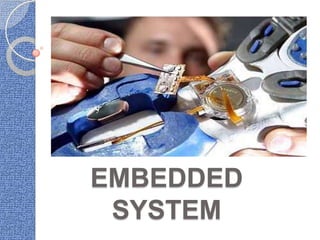

EMBEDDED
SYSTEM
INTRODUCTION
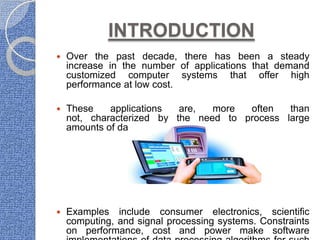
 Over the past decade, there has been a steady
increase in the number of applications that demand
customized computer systems that offer high
performance at low cost.
 These applications are, more often than
not, characterized by the need to process large
amounts of data in real time.
 Examples include consumer electronics, scientific
computing, and signal processing systems. Constraints
on performance, cost and power make software
 Definition for: Embedded System
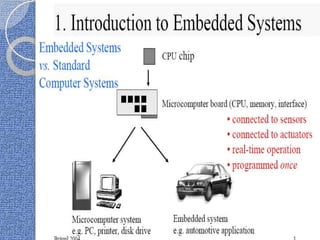
 A combination of hardware and software
which together form a component of a larger
machine.
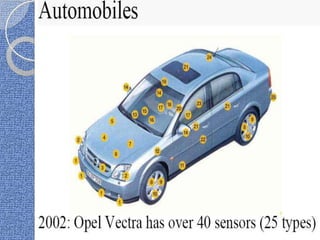
 An example of an embedded system is a
microprocessor that controls an automobile
engine.
 An embedded system is designed to run on
its own without human intervention, and may
be required to respond to events in real time.
EMBEDDED SYSTEMS : THE
DESIGN
 A system can be defined as a group of devices or
artificial objects or an organization forming a network
especially for distributing something or serving a
common purpose .
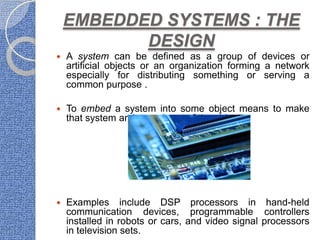
 To embed a system into some object means to make
that system an integral part of the object.
 Examples include DSP processors in hand-held
communication devices, programmable controllers
installed in robots or cars, and video signal processors
in television sets.
EMBEDDED SYSTEM LIFE
CYCLE
Component acquisition
 Because an embedded system may
be more application-driven than a
typical technology-driven desktop
computer design, there may be more
leeway in component selection.
System certification
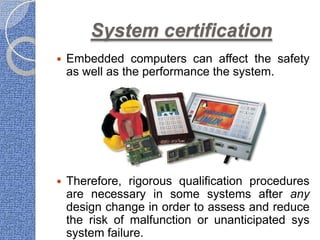
 Embedded computers can affect the safety
as well as the performance the system.
 Therefore, rigorous qualification procedures
are necessary in some systems after any
design change in order to assess and reduce
the risk of malfunction or unanticipated sys
system failure.
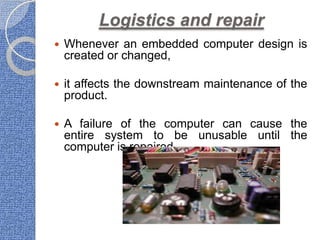
Logistics and repair
 Whenever an embedded computer design is
created or changed,
 it affects the downstream maintenance of the
product.
 A failure of the computer can cause the
entire system to be unusable until the
computer is repaired.
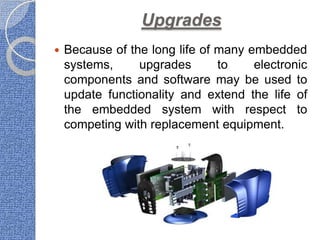
Upgrades
 Because of the long life of many embedded
systems, upgrades to electronic
components and software may be used to
update functionality and extend the life of
the embedded system with respect to
competing with replacement equipment.
EMBEDDED INTERNET:
 Used in everything from consumer electronics to
industrial equipment, embedded systems —
small, specialized computer systems stored on a single
microprocessor — are playing a major role in the
growth of the Internet and the boom of wireless
communication channels.
 Due in part to embedded systems, more and more
consumer products and industrial equipment are
becoming Internet-friendly.
Application
s Areas
EMBEDDED SYSTEMS:
APPLICATIONS
Military
 Communications,
 radar,
Automotive
 Engine control,
 brake control,
 vibration analysis,
 cellular telephones,
 digital
 radio,
 air bags,
 driver navigation systems
Medical
 Hearing aids,
 patient monitoring,
 ultrasound equipment,
 image processing,
 Topography .
Telecommunications
 Echo cancellation, facsimile, speaker
phones, personal communication
 systems (PCS), video
conferencing, packet switching, data
encryption,
Consumer
 Radar detectors, power tools, digital TV,
music synthesizers, toys,
 Video games, telephones, answering
machines, personal digital assistants,
paging
Industrial
 Robotics, numeric control, security
access, visual inspection, lathe control,
 computer aided manufacturing (CAM),
noise cancellation.
REFRENCES
Wikipedi
a
Embedded system seminar

Embedded system seminar

  • 2.
  • 3.
    INTRODUCTION  Over thepast decade, there has been a steady increase in the number of applications that demand customized computer systems that offer high performance at low cost.  These applications are, more often than not, characterized by the need to process large amounts of data in real time.  Examples include consumer electronics, scientific computing, and signal processing systems. Constraints on performance, cost and power make software
  • 5.
     Definition for:Embedded System  A combination of hardware and software which together form a component of a larger machine.  An example of an embedded system is a microprocessor that controls an automobile engine.  An embedded system is designed to run on its own without human intervention, and may be required to respond to events in real time.
  • 6.
    EMBEDDED SYSTEMS :THE DESIGN  A system can be defined as a group of devices or artificial objects or an organization forming a network especially for distributing something or serving a common purpose .  To embed a system into some object means to make that system an integral part of the object.  Examples include DSP processors in hand-held communication devices, programmable controllers installed in robots or cars, and video signal processors in television sets.
  • 7.
  • 8.
    Component acquisition  Becausean embedded system may be more application-driven than a typical technology-driven desktop computer design, there may be more leeway in component selection.
  • 9.
    System certification  Embeddedcomputers can affect the safety as well as the performance the system.  Therefore, rigorous qualification procedures are necessary in some systems after any design change in order to assess and reduce the risk of malfunction or unanticipated sys system failure.
  • 10.
    Logistics and repair Whenever an embedded computer design is created or changed,  it affects the downstream maintenance of the product.  A failure of the computer can cause the entire system to be unusable until the computer is repaired.
  • 11.
    Upgrades  Because ofthe long life of many embedded systems, upgrades to electronic components and software may be used to update functionality and extend the life of the embedded system with respect to competing with replacement equipment.
  • 12.
    EMBEDDED INTERNET:  Usedin everything from consumer electronics to industrial equipment, embedded systems — small, specialized computer systems stored on a single microprocessor — are playing a major role in the growth of the Internet and the boom of wireless communication channels.  Due in part to embedded systems, more and more consumer products and industrial equipment are becoming Internet-friendly.
  • 13.
  • 14.
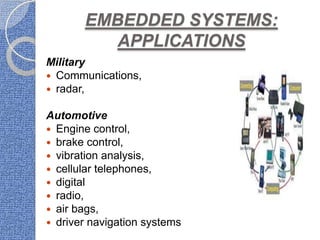
    EMBEDDED SYSTEMS: APPLICATIONS Military  Communications, radar, Automotive  Engine control,  brake control,  vibration analysis,  cellular telephones,  digital  radio,  air bags,  driver navigation systems
  • 15.
    Medical  Hearing aids, patient monitoring,  ultrasound equipment,  image processing,  Topography . Telecommunications  Echo cancellation, facsimile, speaker phones, personal communication  systems (PCS), video conferencing, packet switching, data encryption,
  • 16.
    Consumer  Radar detectors,power tools, digital TV, music synthesizers, toys,  Video games, telephones, answering machines, personal digital assistants, paging Industrial  Robotics, numeric control, security access, visual inspection, lathe control,  computer aided manufacturing (CAM), noise cancellation.
  • 18.