Downloaded 14 times
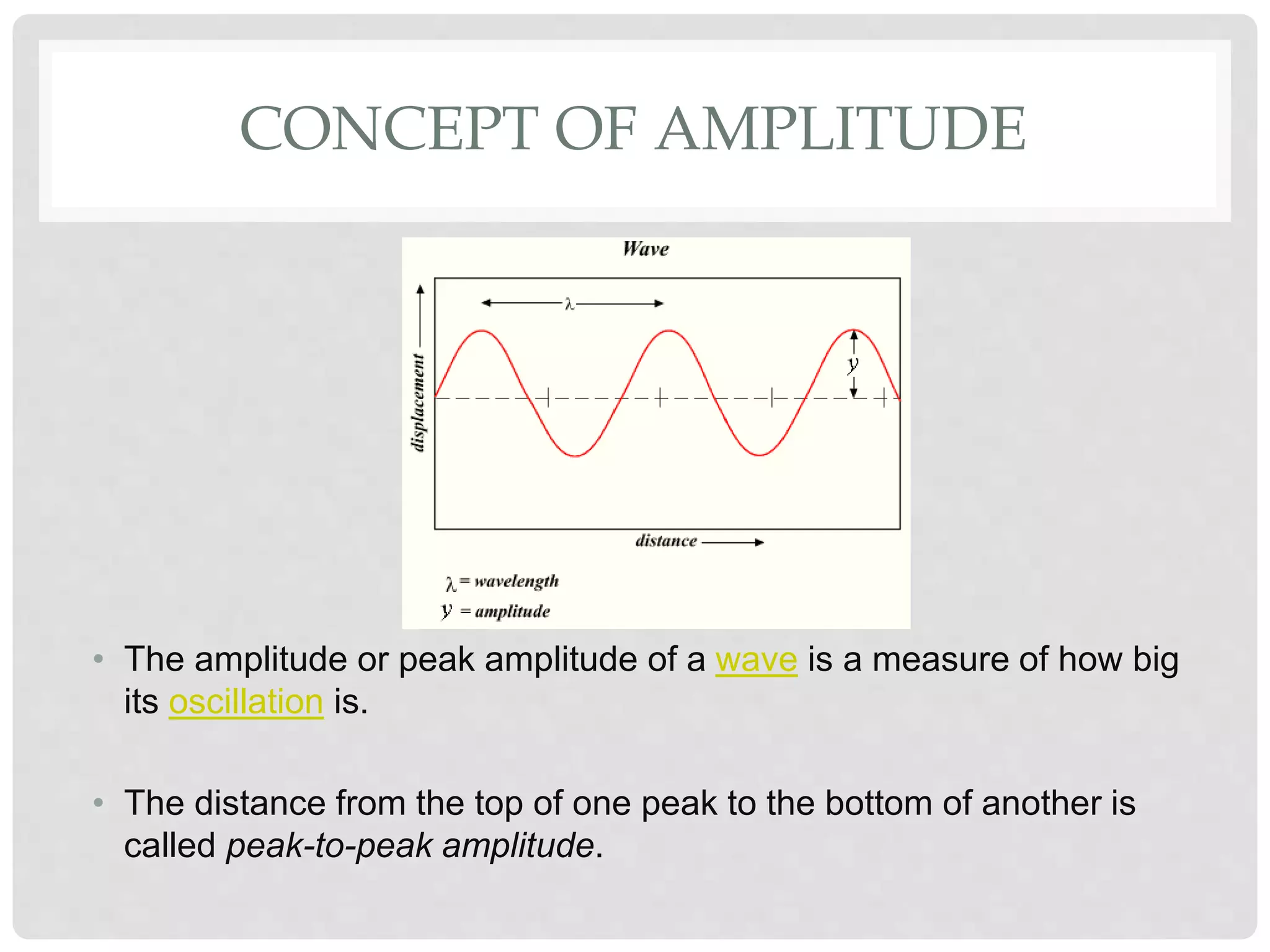
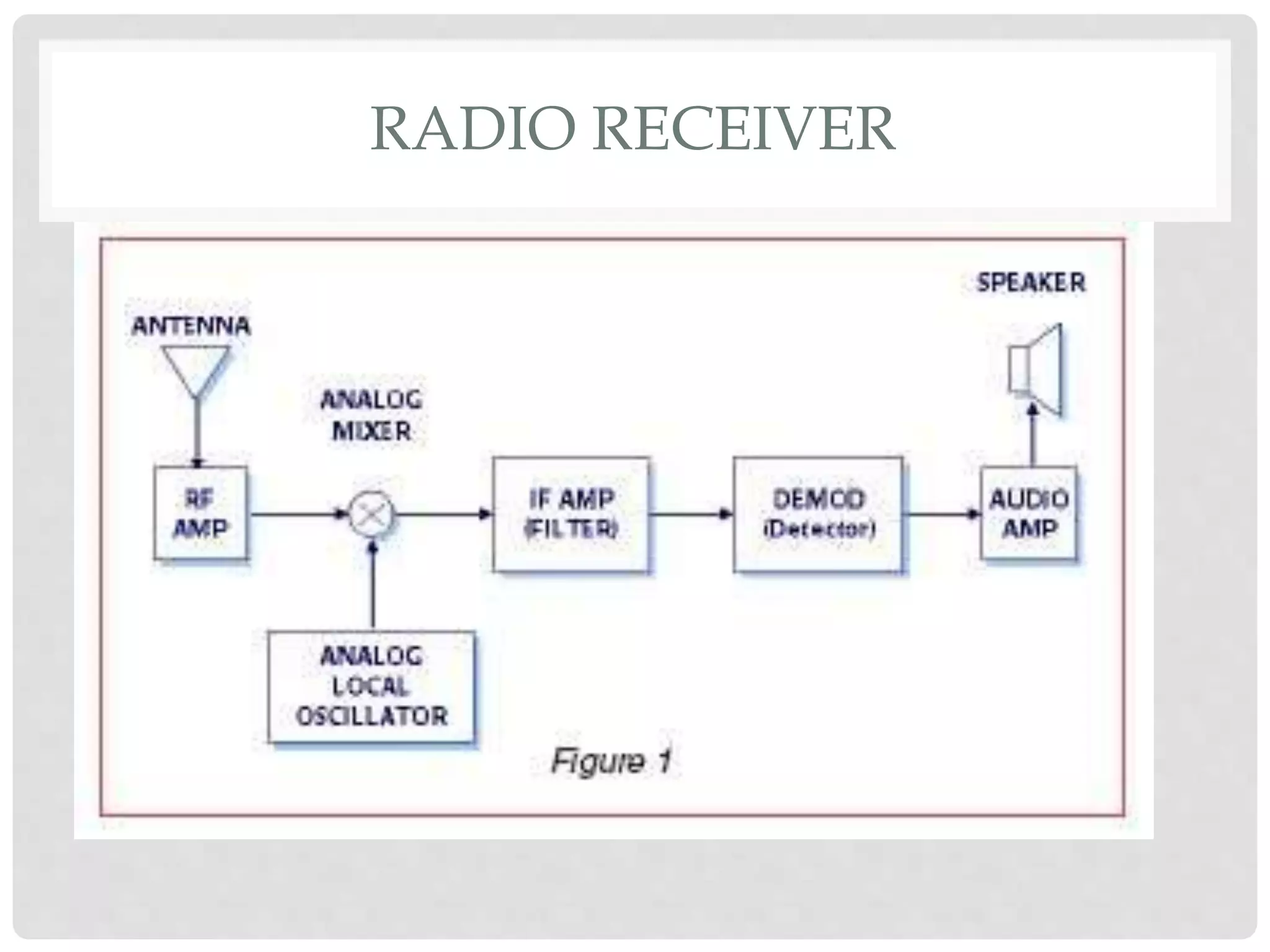
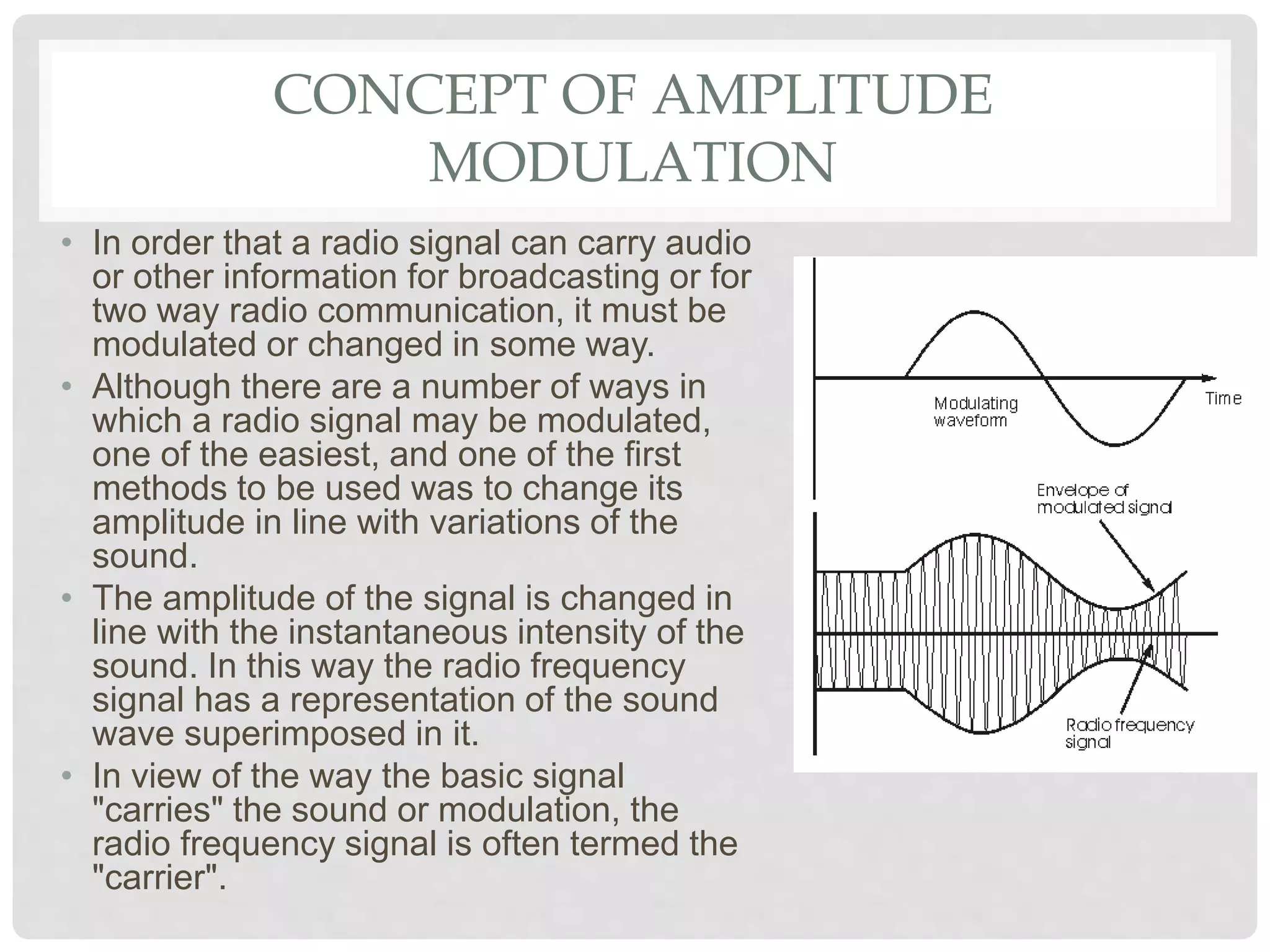
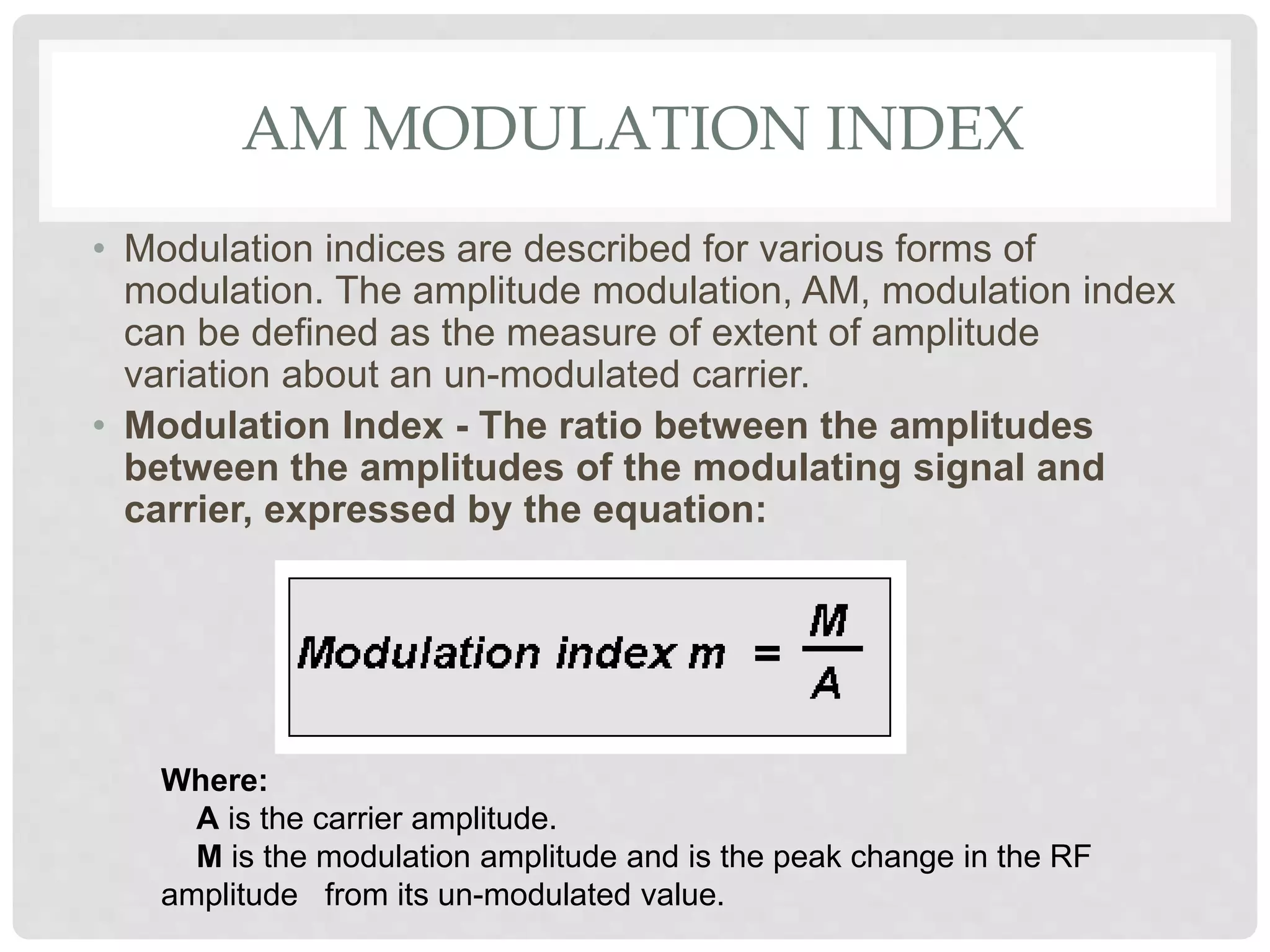
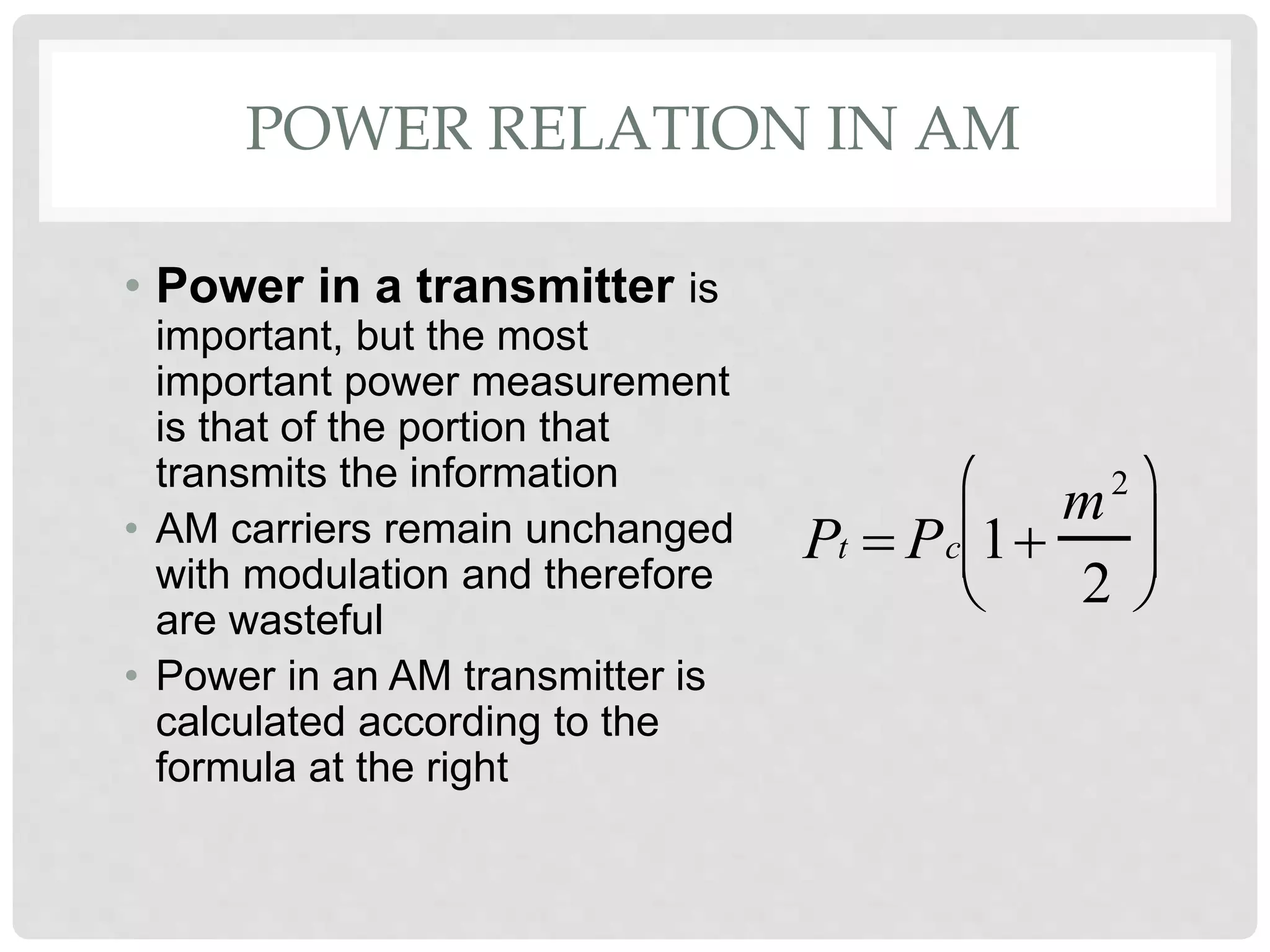
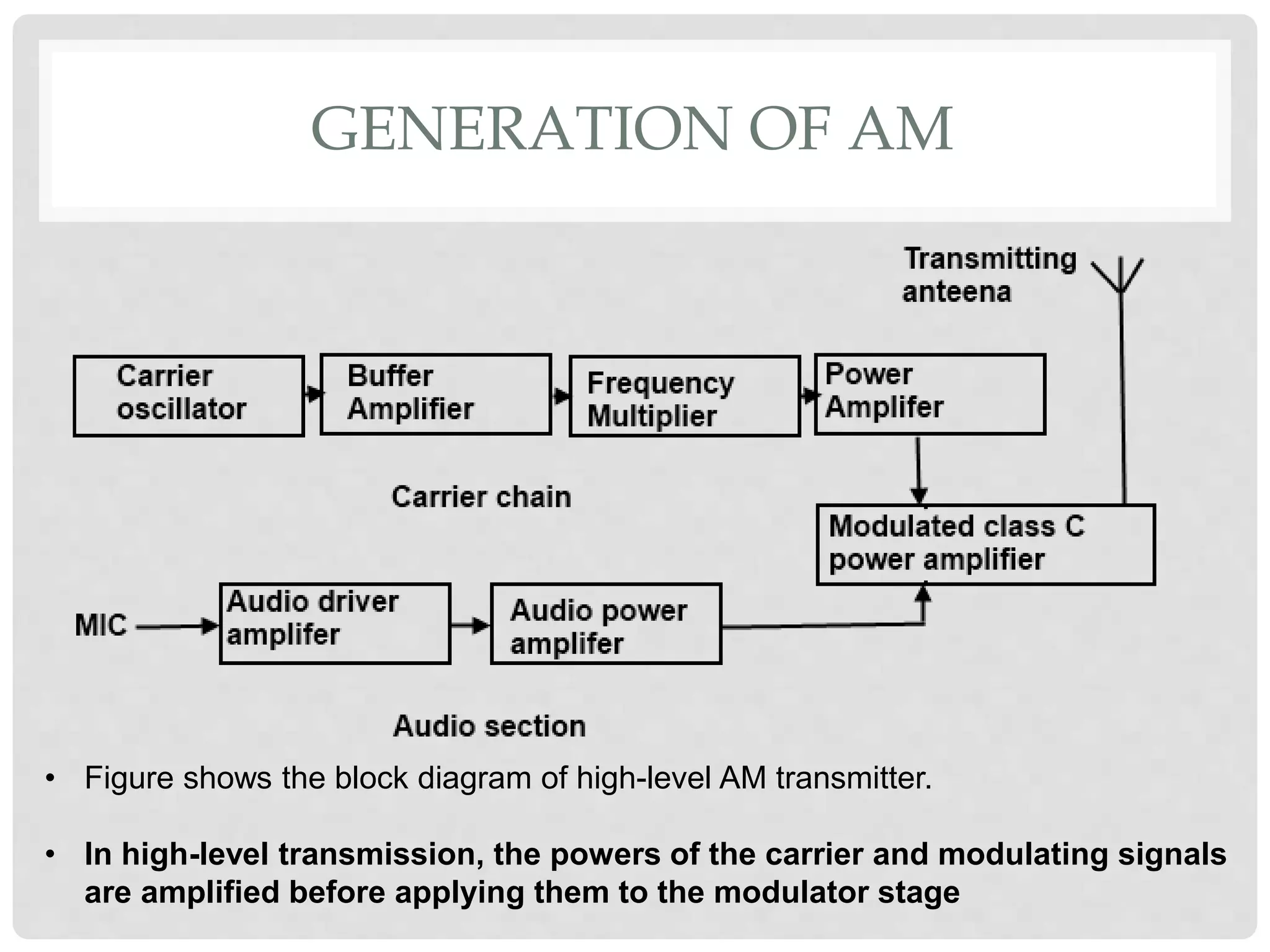
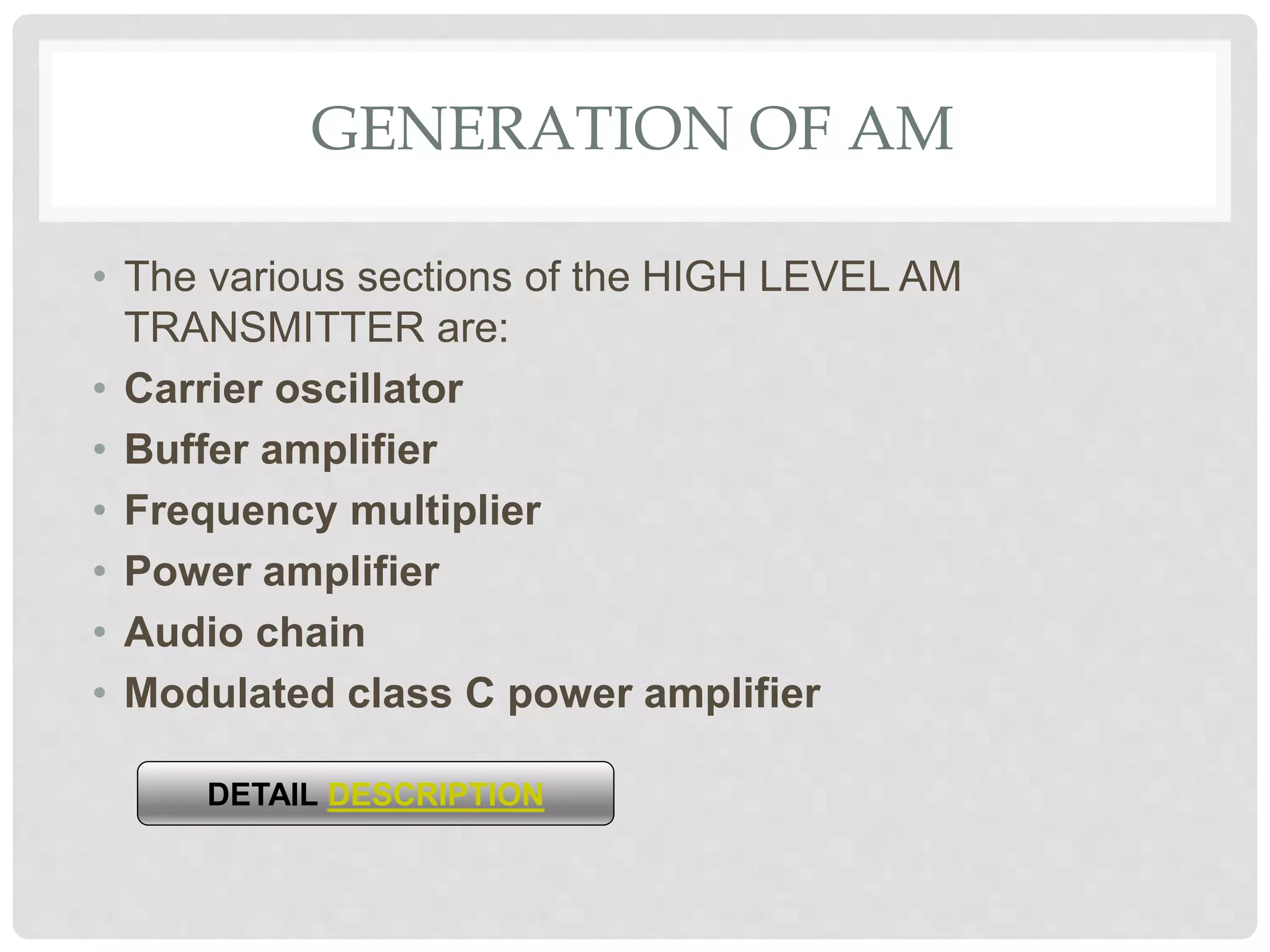
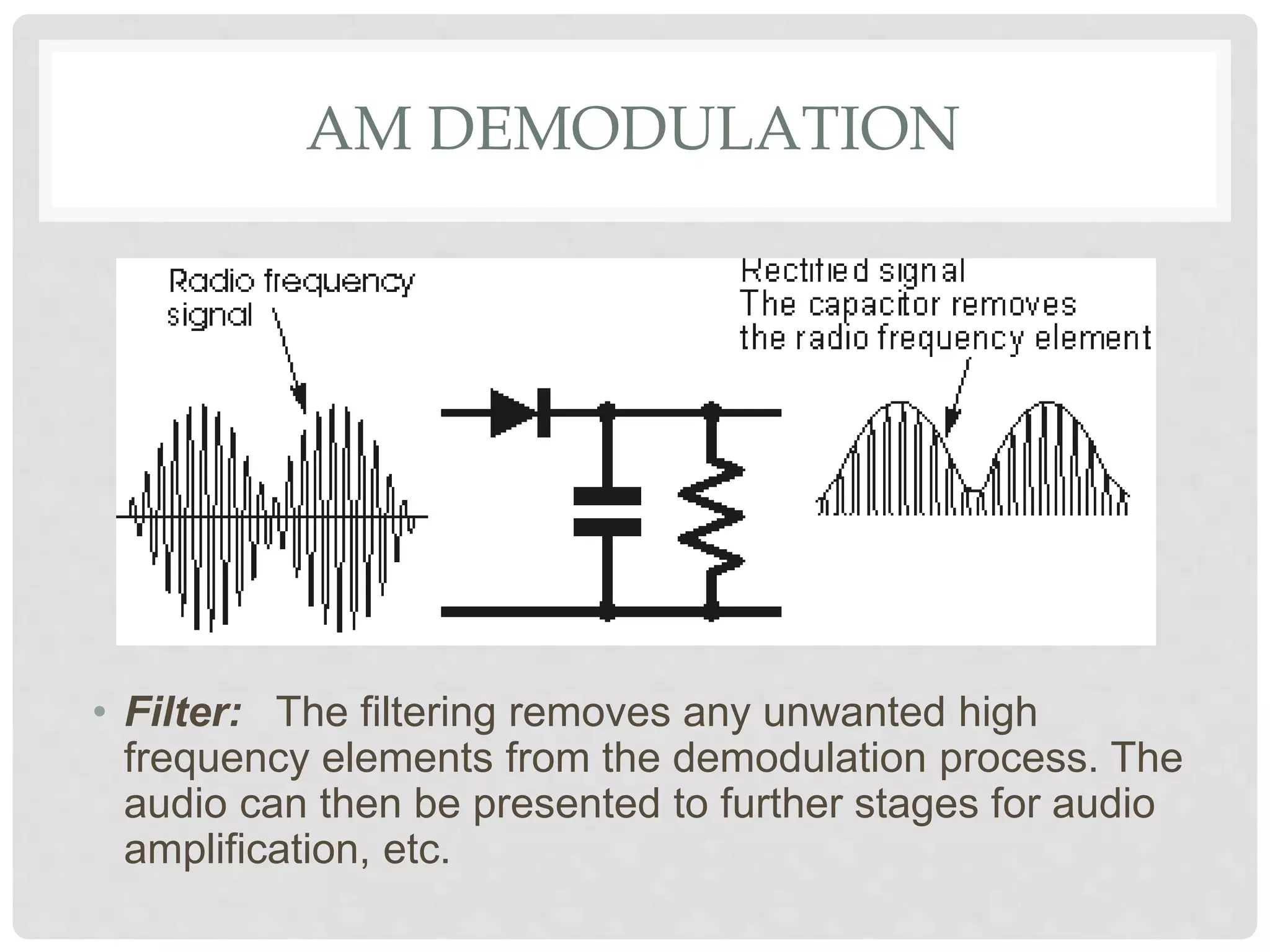
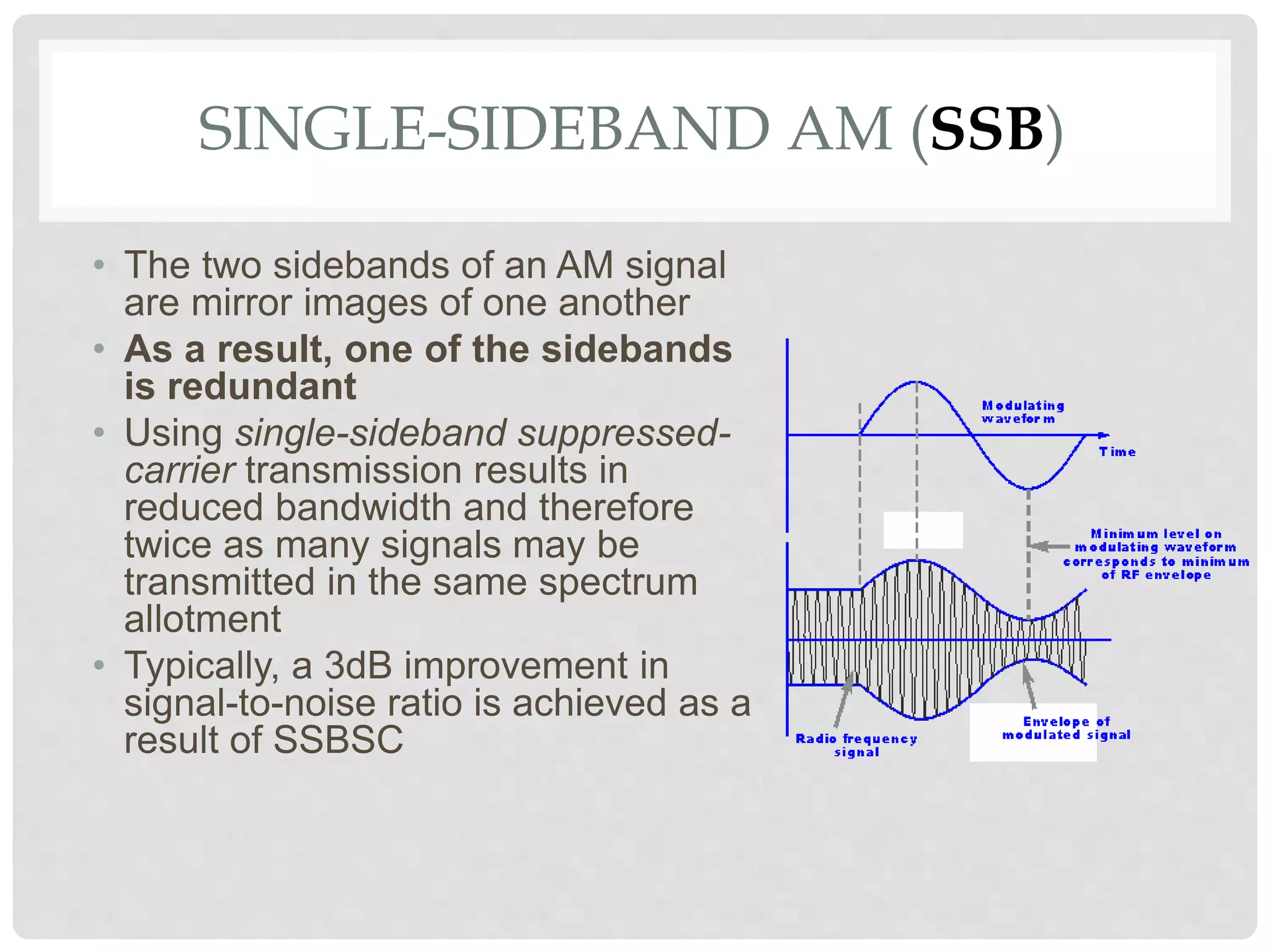
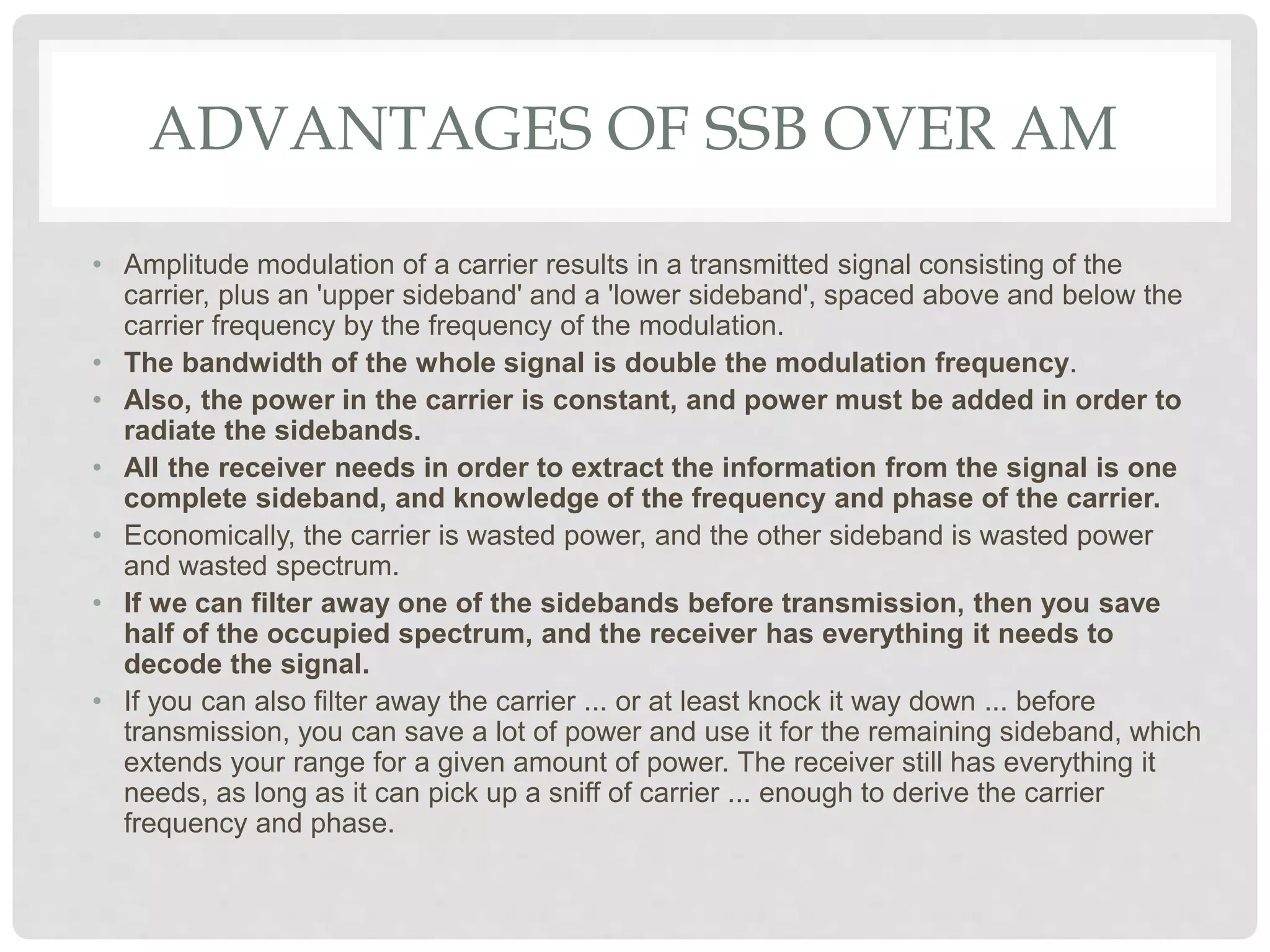
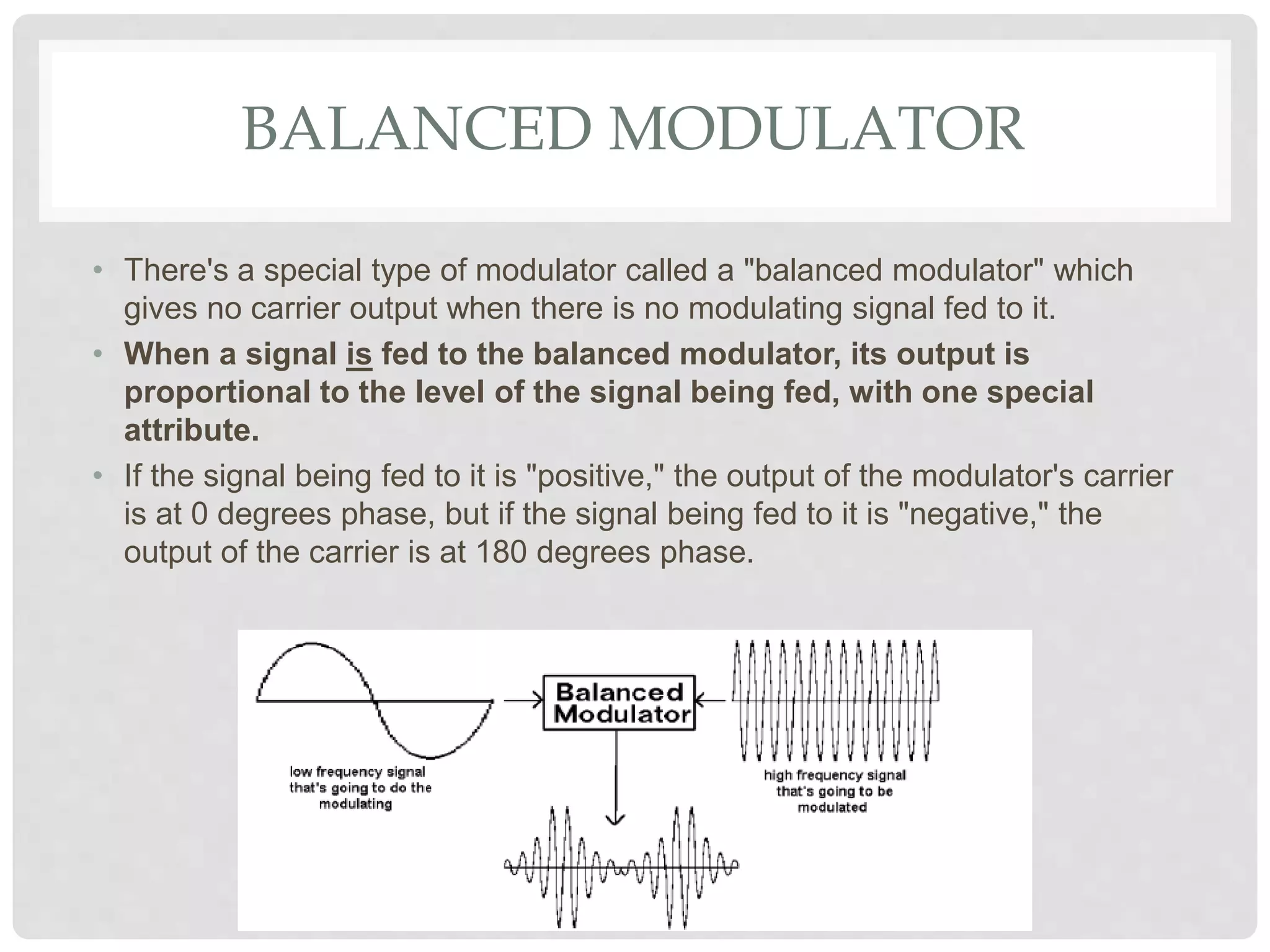
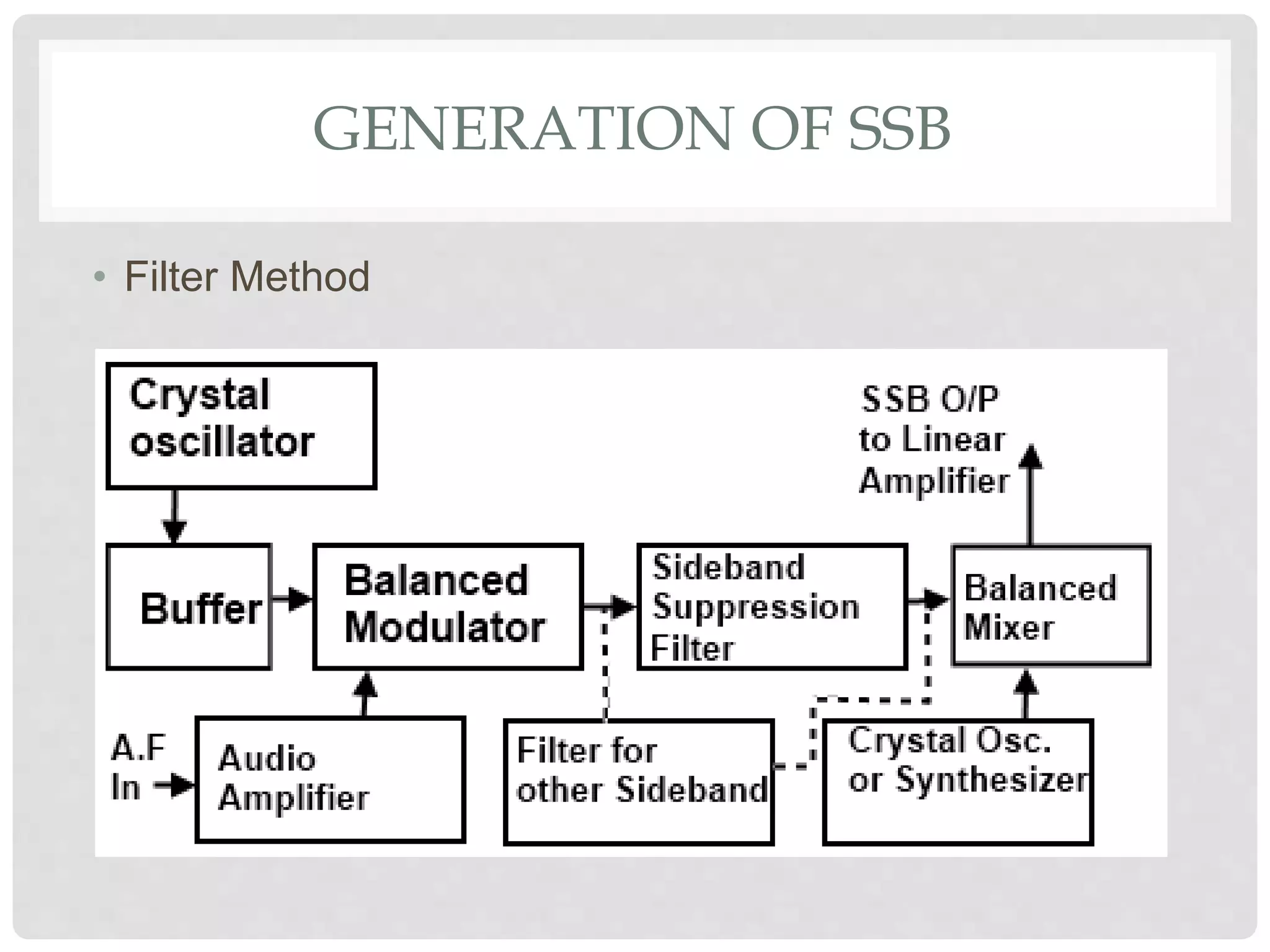
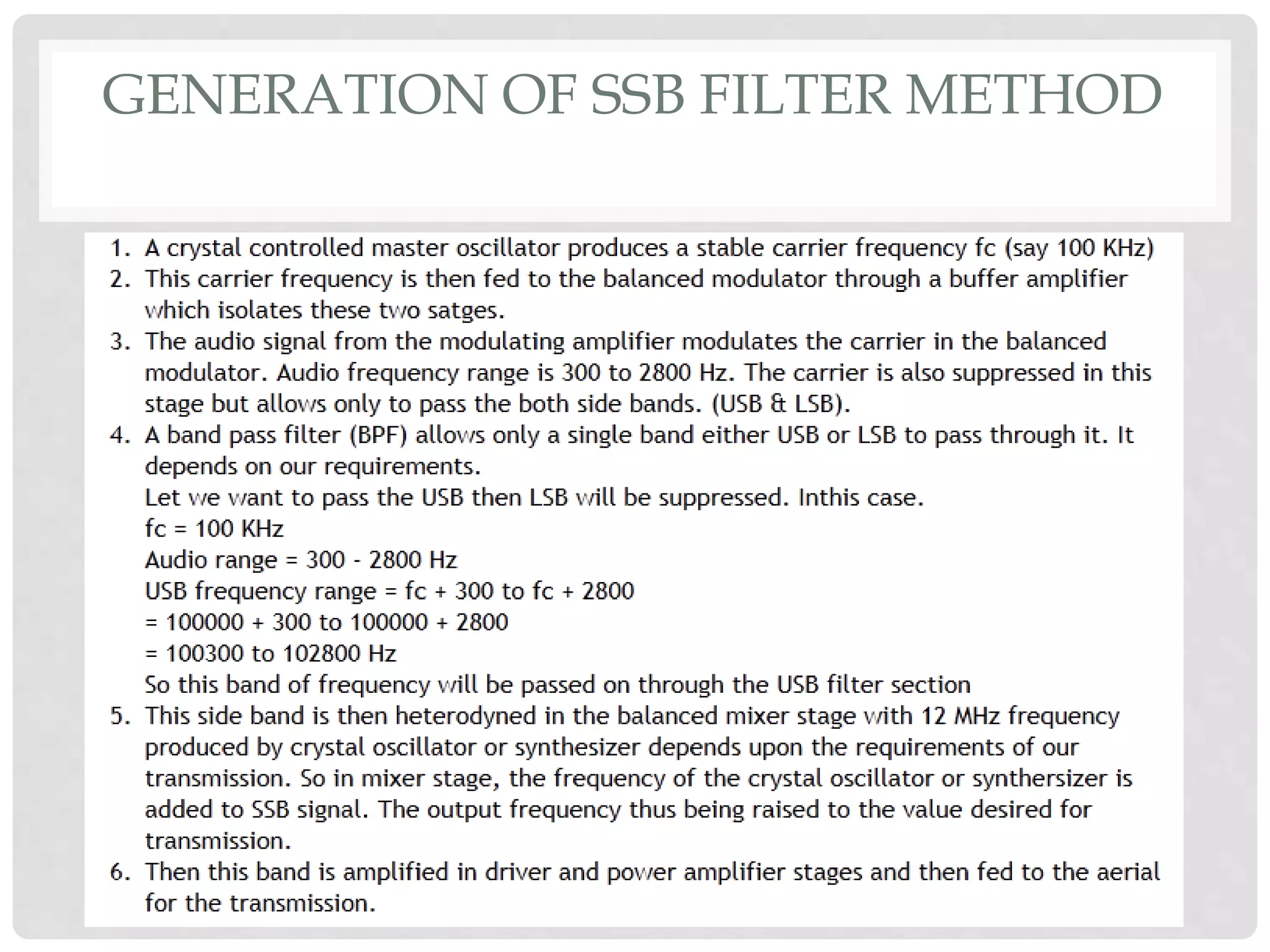
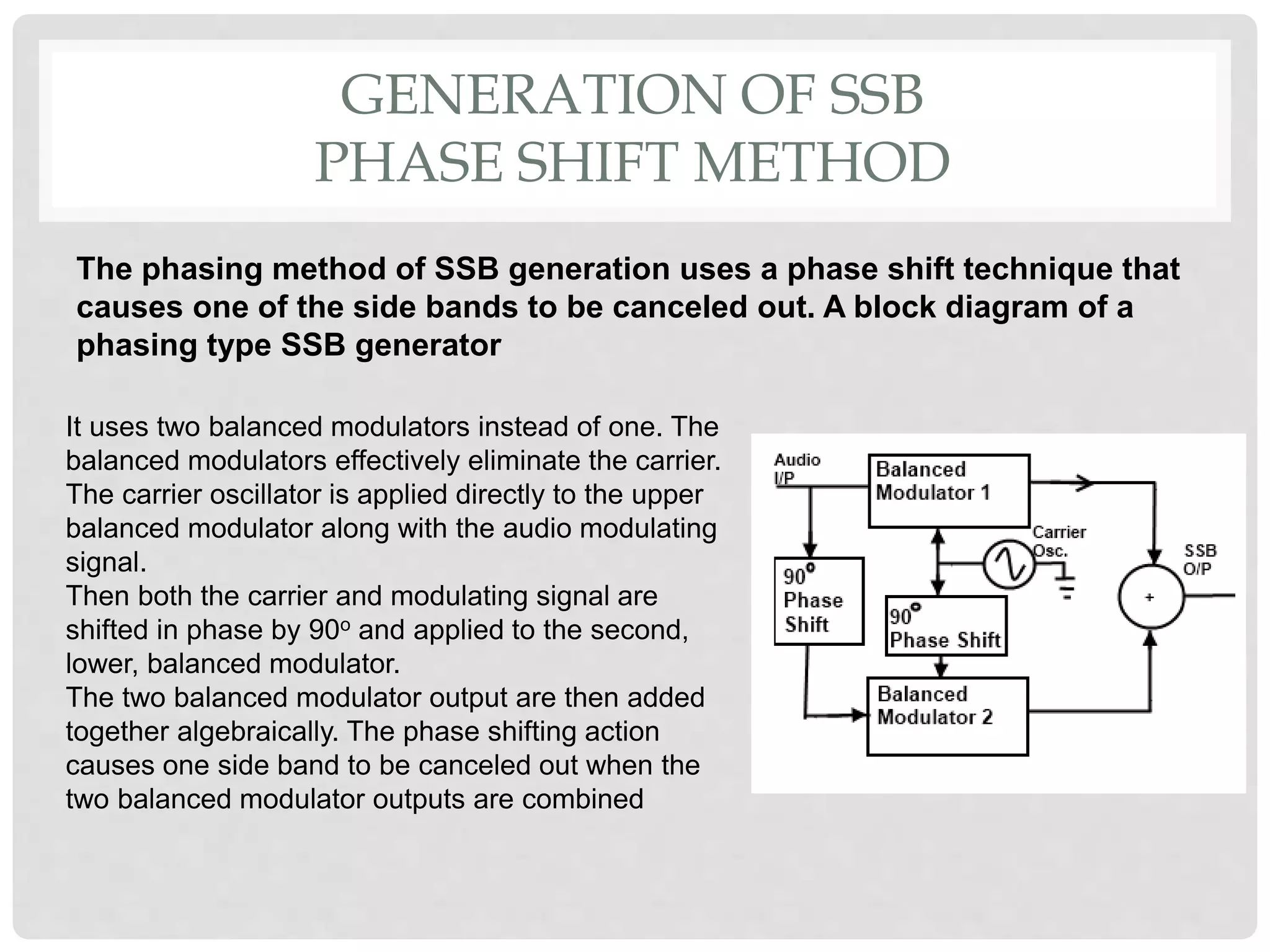

- Amplitude modulation (AM) is a technique used to encode information such as audio onto a radio frequency carrier wave by varying the wave's amplitude. The amplitude of the carrier wave is increased and decreased based on the instantaneous intensity of the sound being represented. - There are two main methods for generating AM signals - high-level modulation and low-level modulation. High-level uses power amplification before modulation while low-level modulates a lower power signal. - Single-sideband modulation improves spectrum efficiency by transmitting only one sideband along with a reduced carrier. It provides a 3dB improvement in signal-to-noise ratio over AM.


