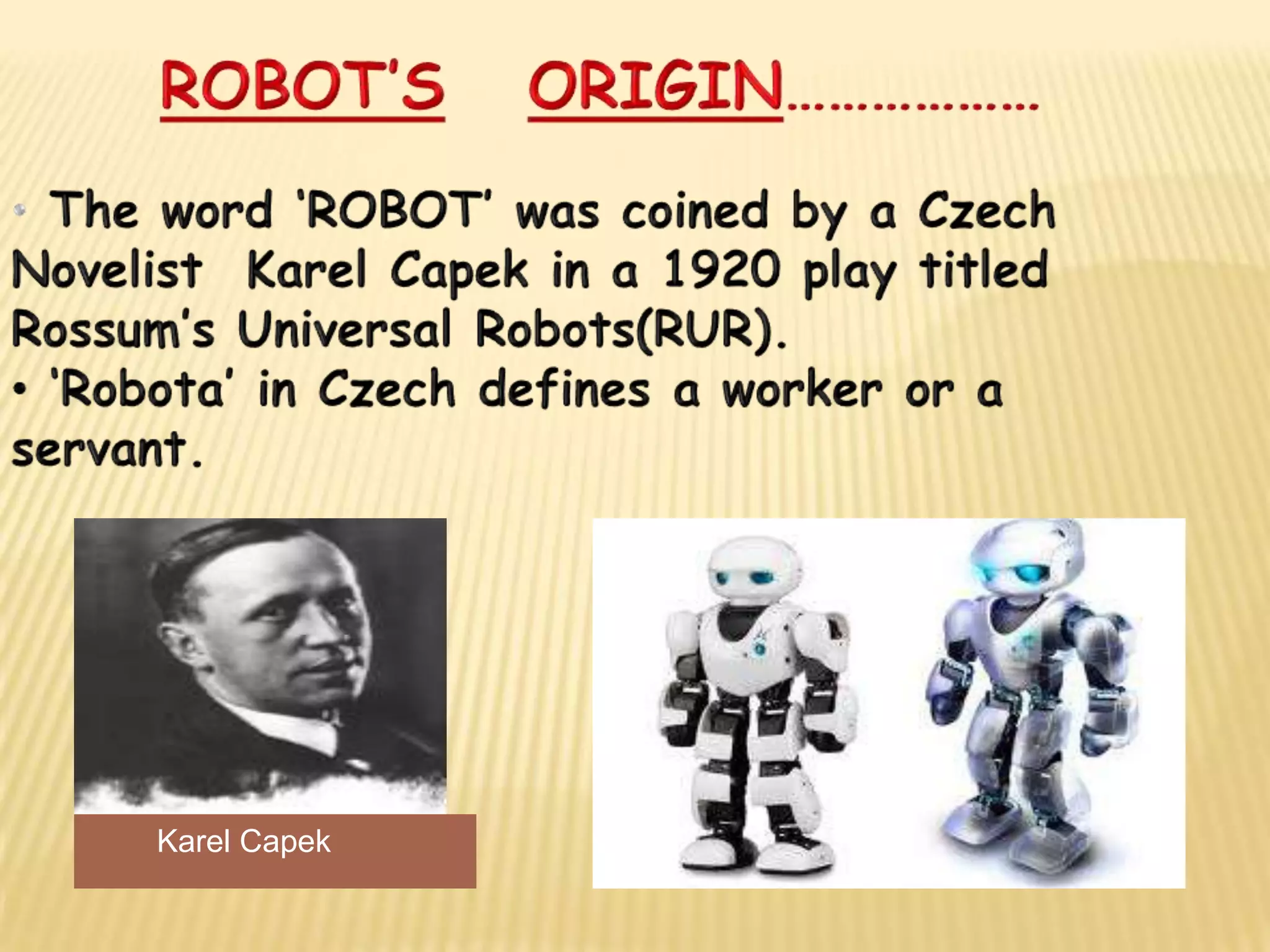
Karel Capek
ROBOT MOTORS

ELECTRIC MOTOR:
                An electric motor is an electro chemical
   device that converts electrical energy into mechanical
   energy.
• Electric motors are driven by DC current.
• They are most commonly used in hobbyist robot
   applications.

TYPES OF MOTORS:
1. Brushed DC motors:
• Motor controller is used to rotate the motor in two
   directions.
• It is quite expensive.
• Pulse-width modulation.
• Gear reducer is used to reduce speed and increase
   torque
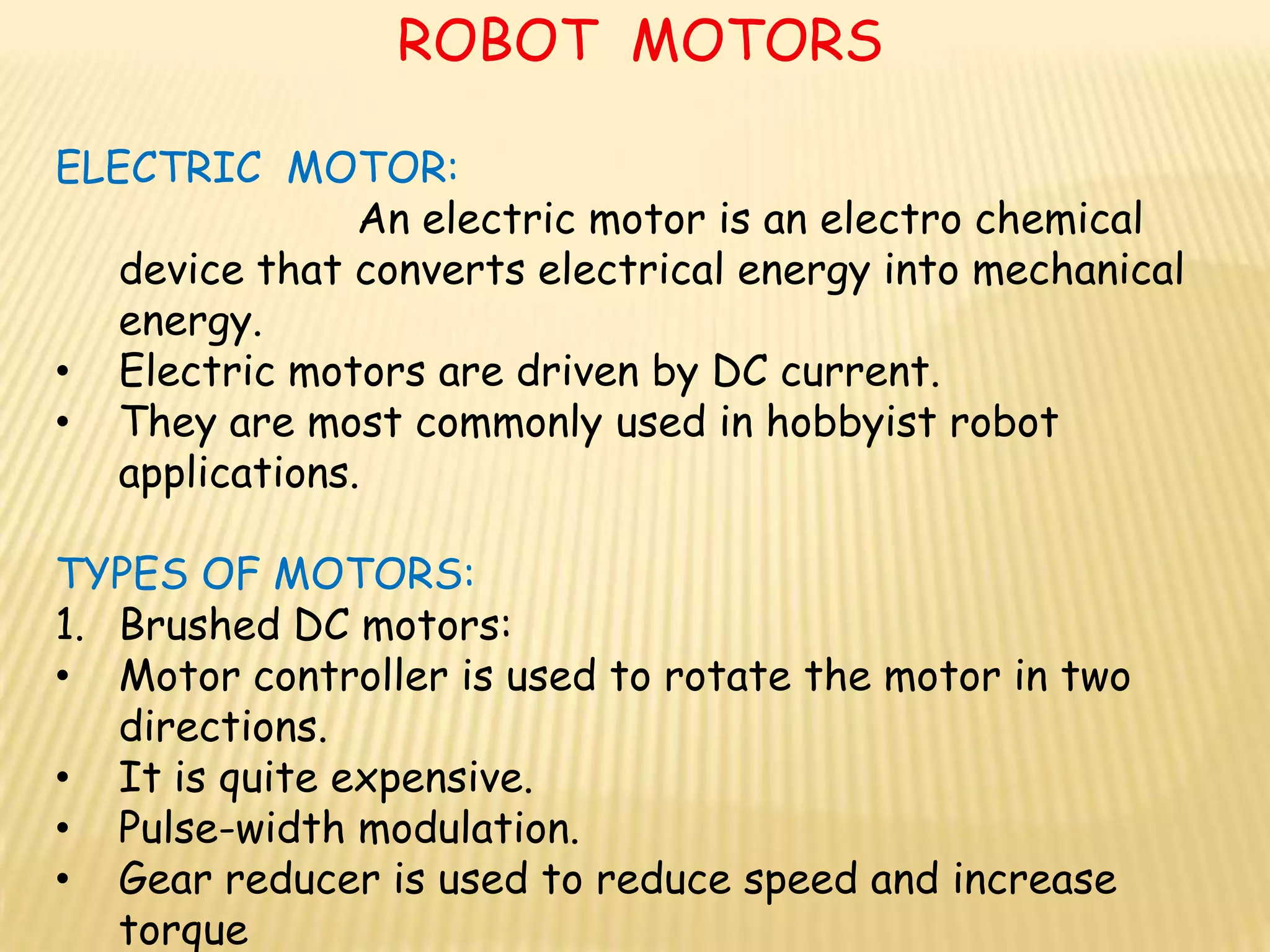
2. Brushless DC motors:
•Electronic speed control unit is used.
•Still, these are widely used in RC community because they
offer greater reliability, torque and have other good
characteristics.


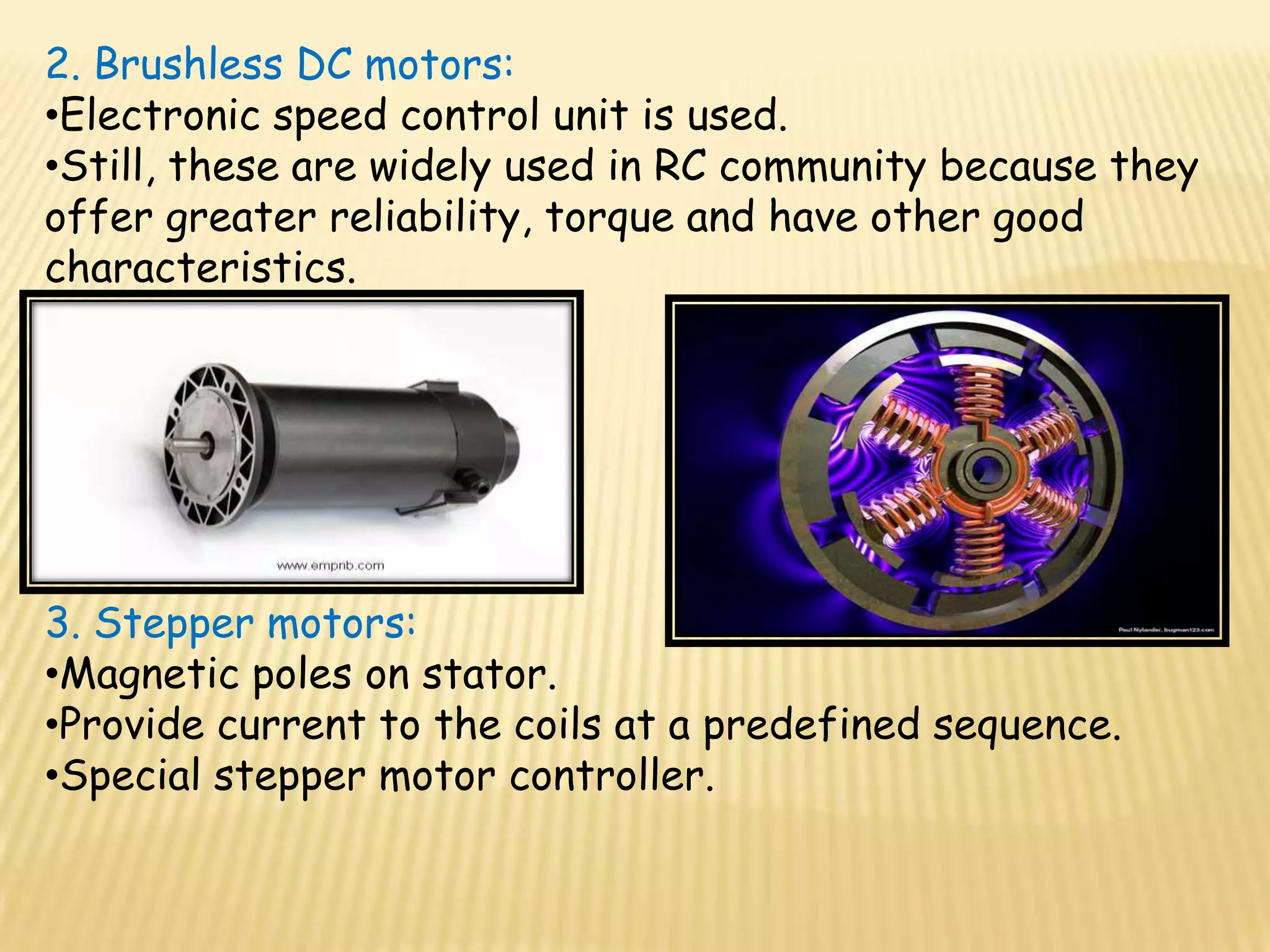
3. Stepper motors:
•Magnetic poles on stator.
•Provide current to the coils at a predefined sequence.
•Special stepper motor controller.
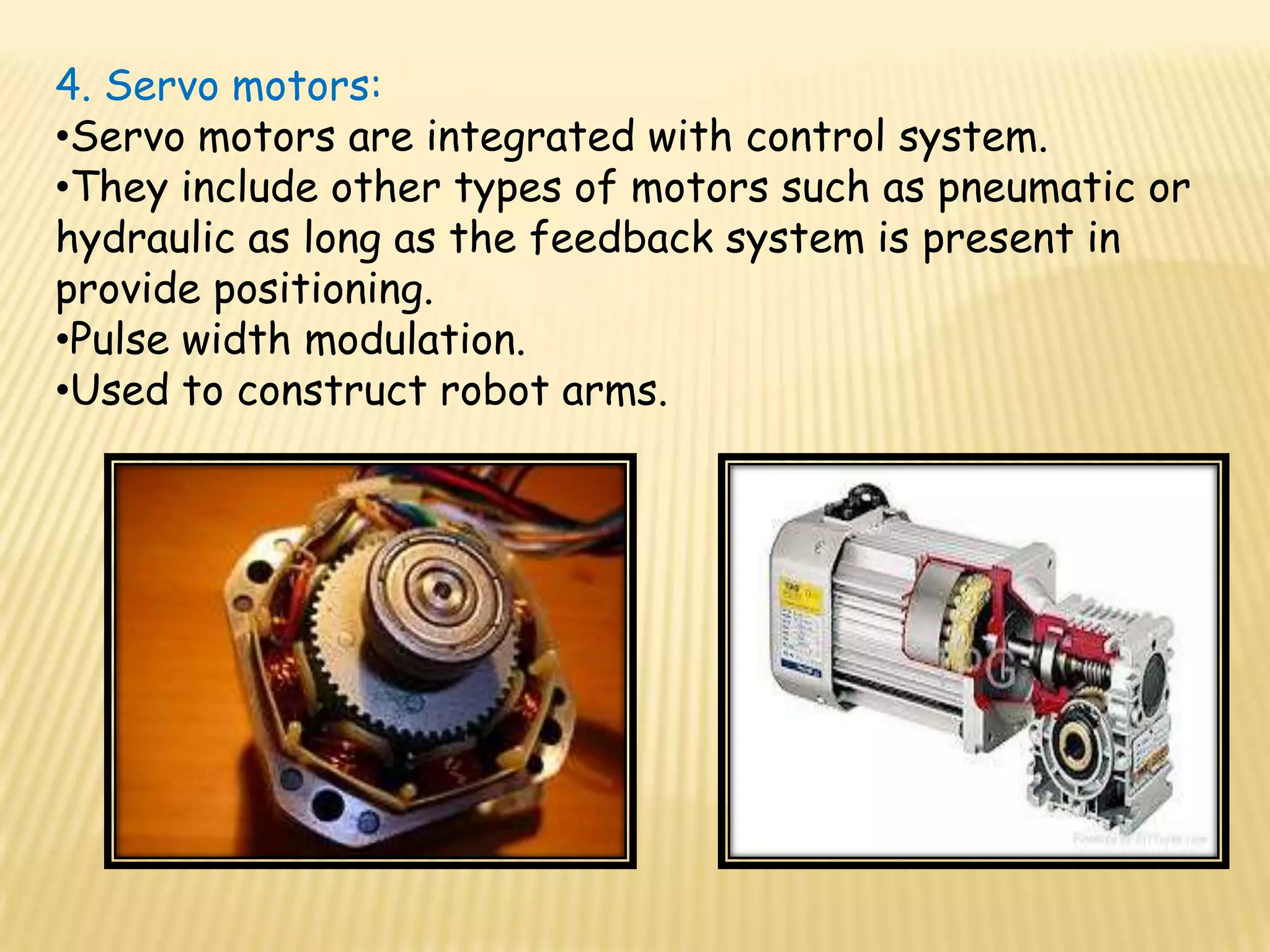
4. Servo motors:
•Servo motors are integrated with control system.
•They include other types of motors such as pneumatic or
hydraulic as long as the feedback system is present in
provide positioning.
•Pulse width modulation.
•Used to construct robot arms.
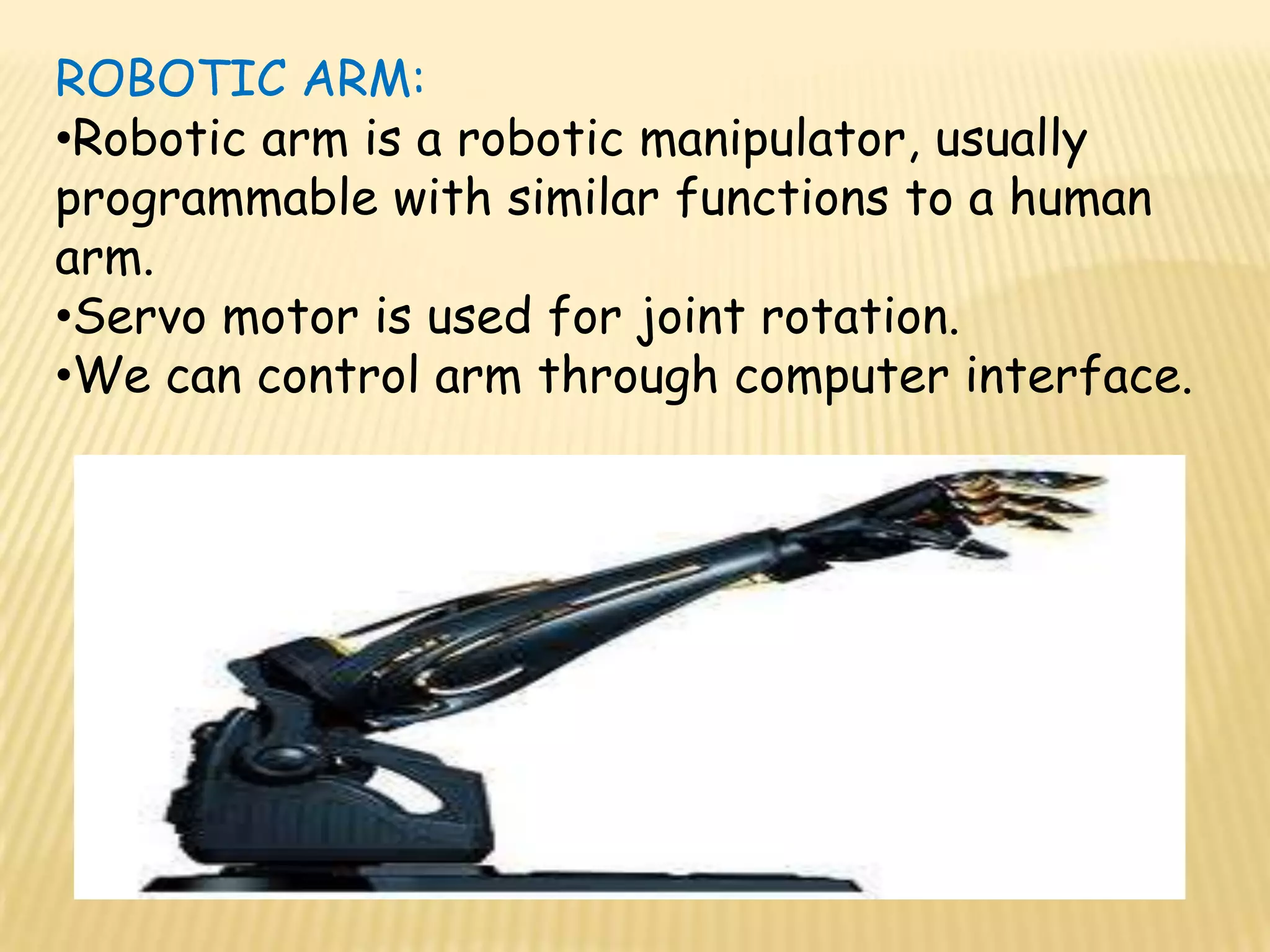
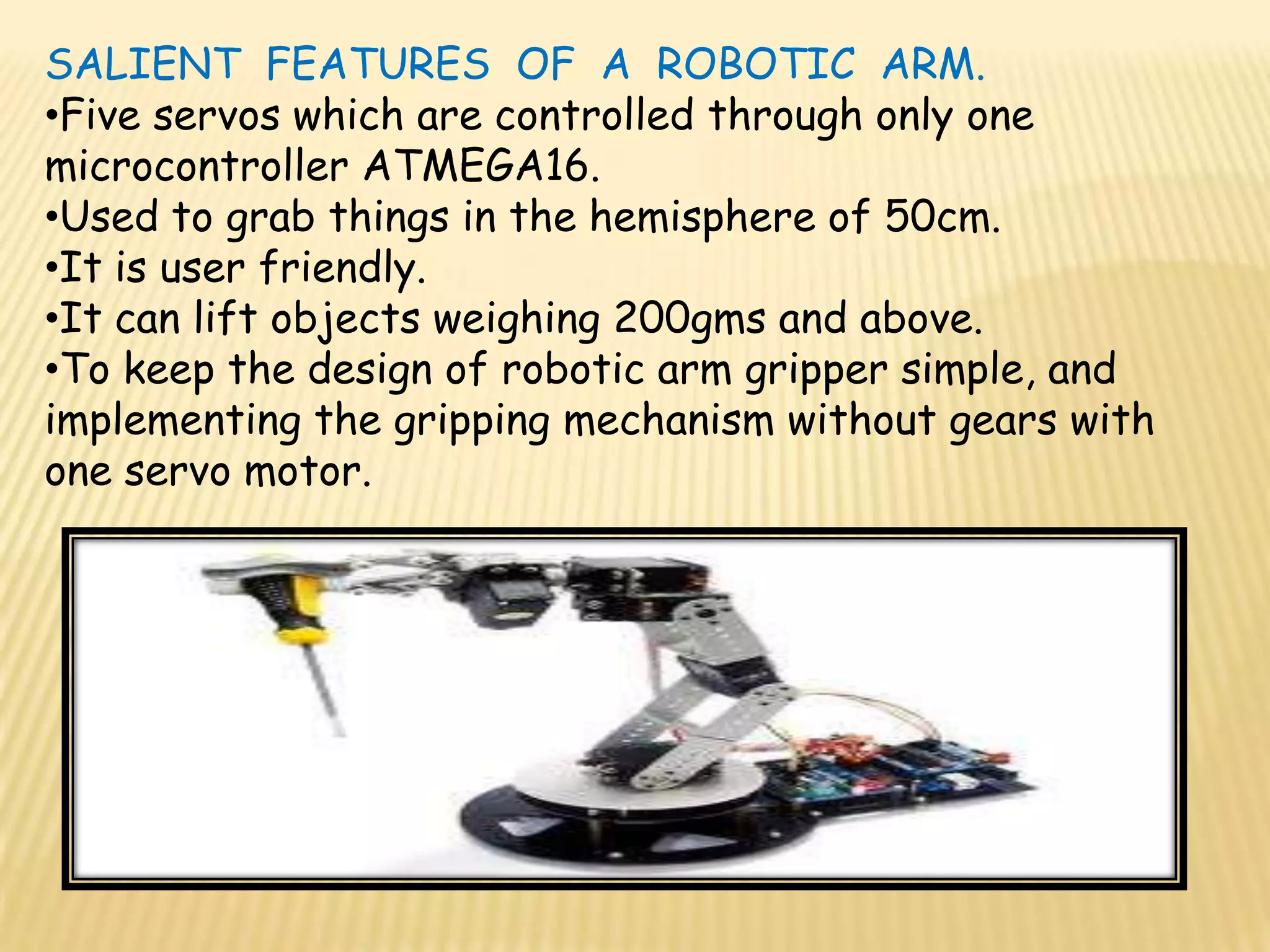
ROBOTIC ARM:
•Robotic arm is a robotic manipulator, usually
programmable with similar functions to a human
arm.
•Servo motor is used for joint rotation.
•We can control arm through computer interface.
SALIENT FEATURES OF A ROBOTIC ARM.
•Five servos which are controlled through only one
microcontroller ATMEGA16.
•Used to grab things in the hemisphere of 50cm.
•It is user friendly.
•It can lift objects weighing 200gms and above.
•To keep the design of robotic arm gripper simple, and
implementing the gripping mechanism without gears with
one servo motor.
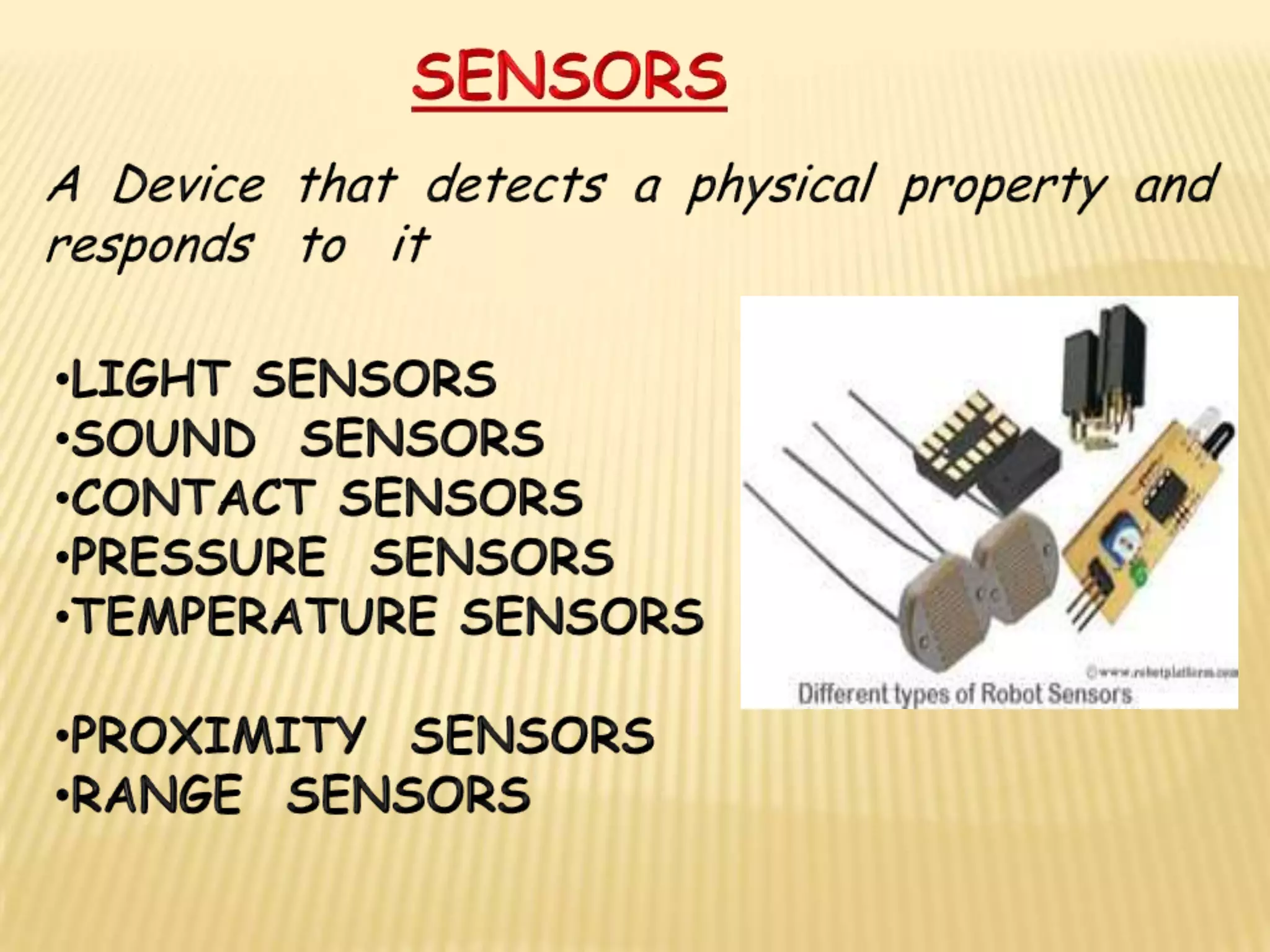
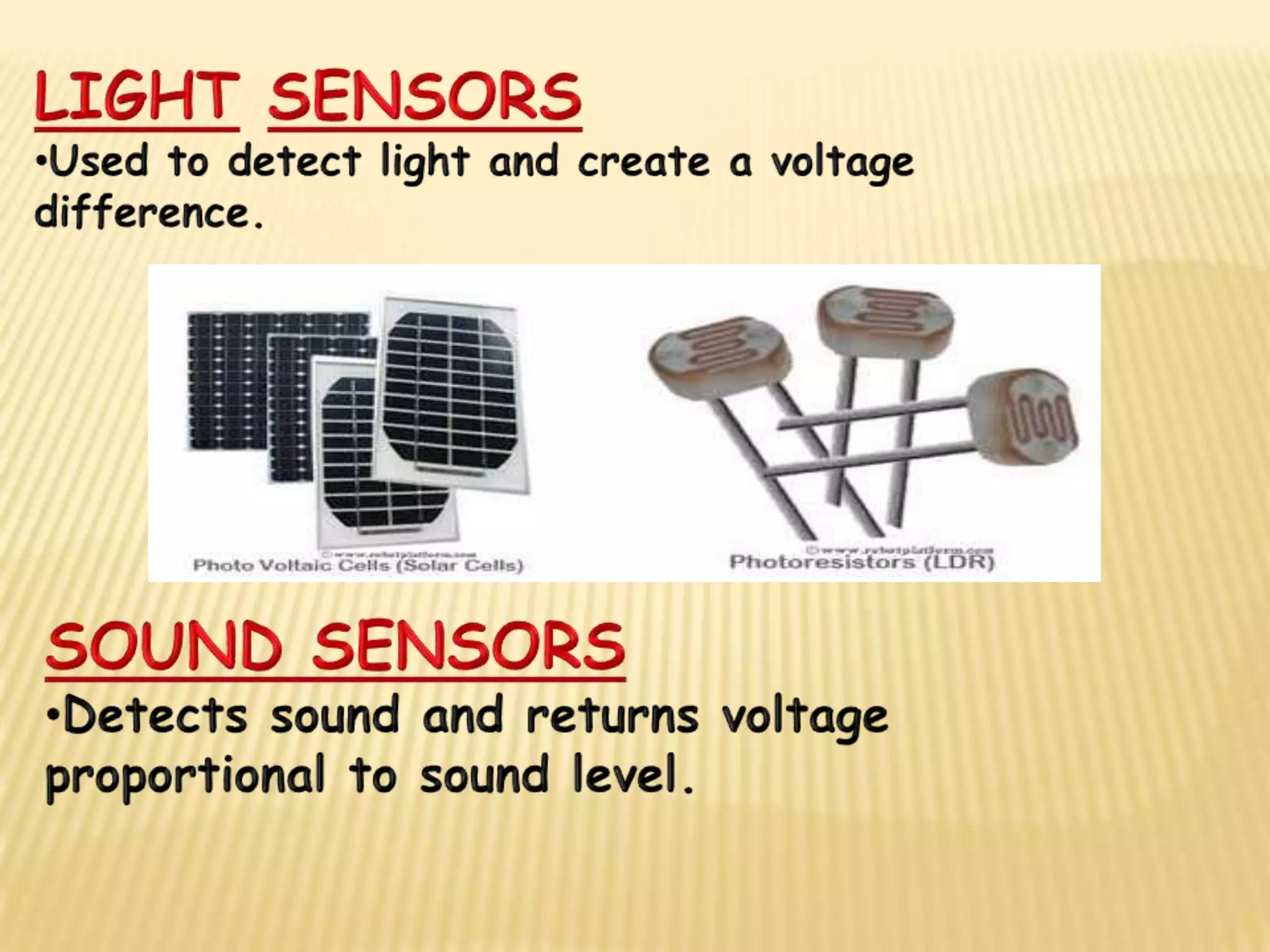
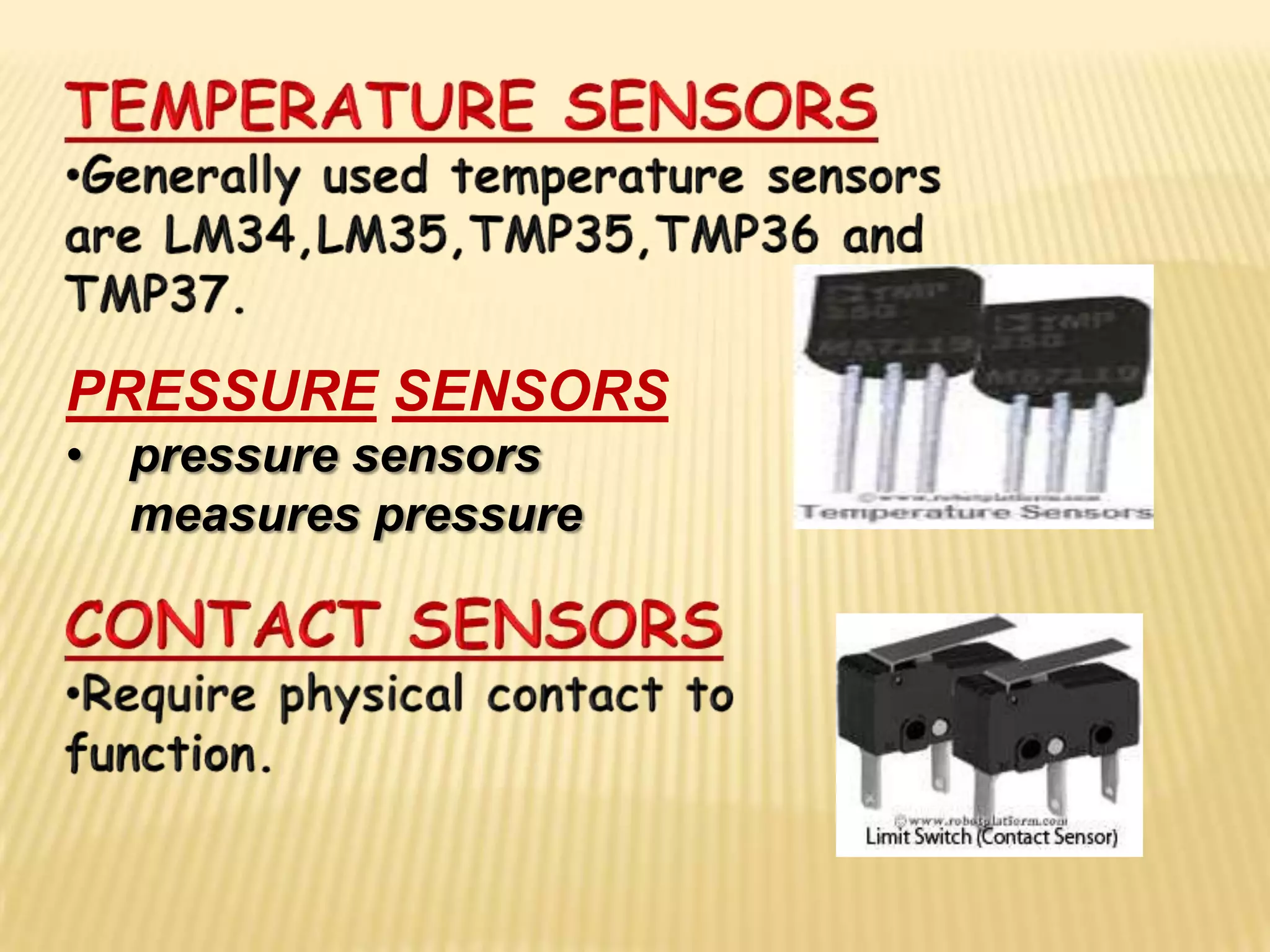
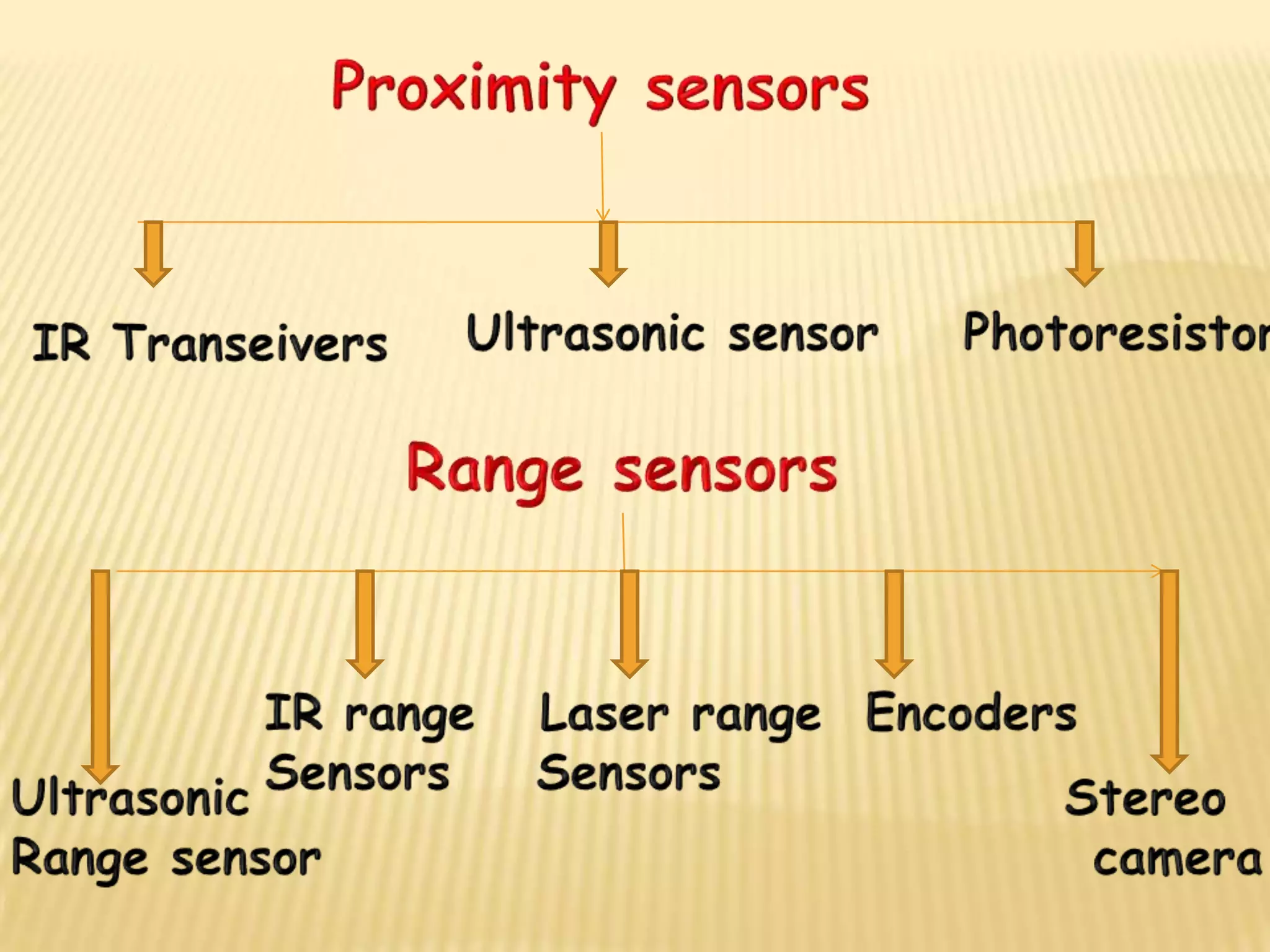
PRESSURE SENSORS
• pressure sensors
  measures pressure
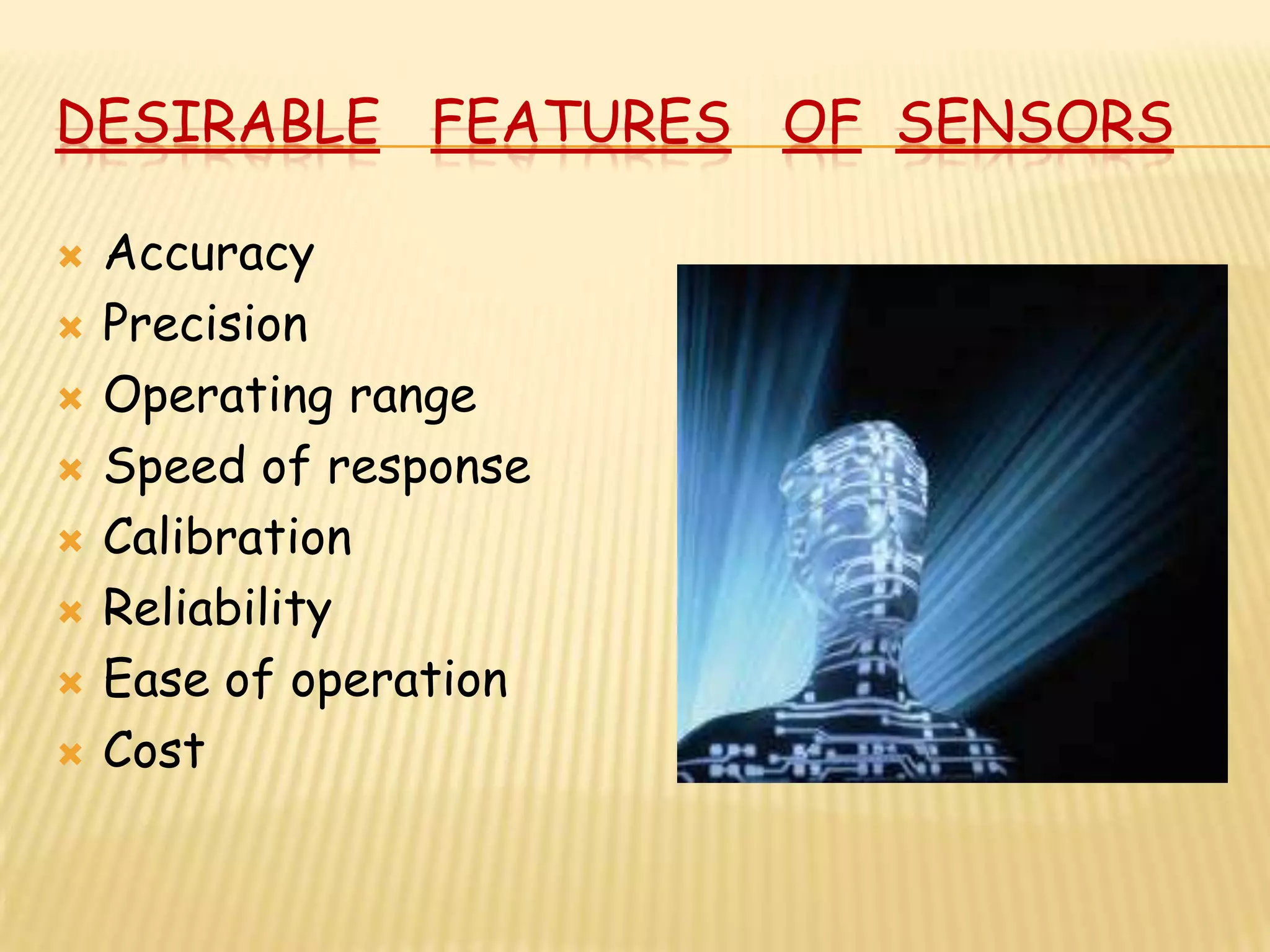
DESIRABLE FEATURES OF SENSORS

   Accuracy
   Precision
   Operating range
   Speed of response
   Calibration
   Reliability
   Ease of operation
   Cost
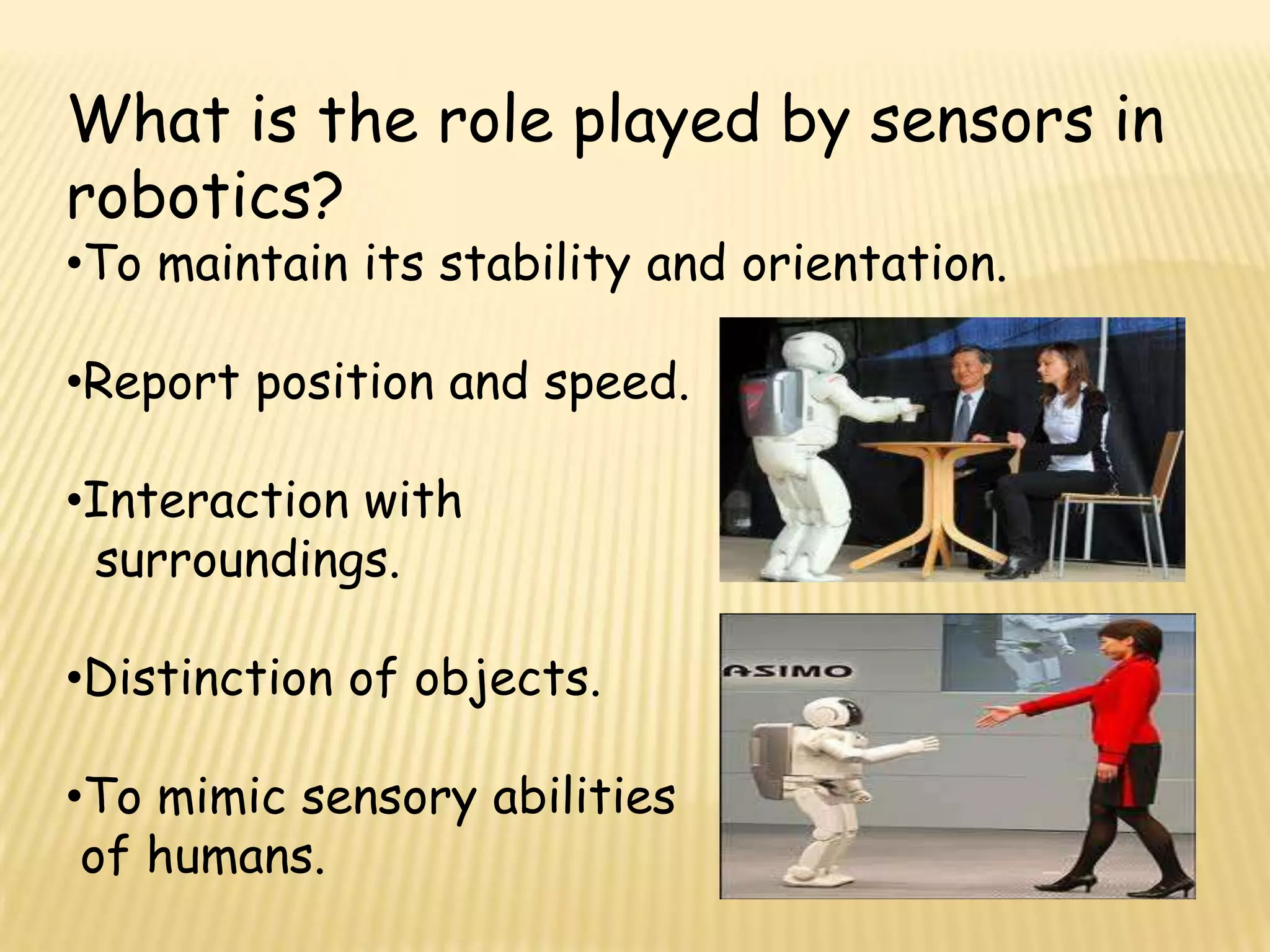
What is the role played by sensors in
robotics?
•To maintain its stability and orientation.

•Report position and speed.

•Interaction with
 surroundings.

•Distinction of objects.

•To mimic sensory abilities
 of humans.
VOLTAGE           REGULATION
 What is a voltage regulator?
A device designed to automatically maintain constant
  voltage level.

TYPES OF VOLTAGE REGULATORS
1) Electronic voltage regulators.
2) Electrochemical regulators.
3) Coil-rotation AC voltage regulator.
4) Active regulators- linear, switching and
                                          SCR.
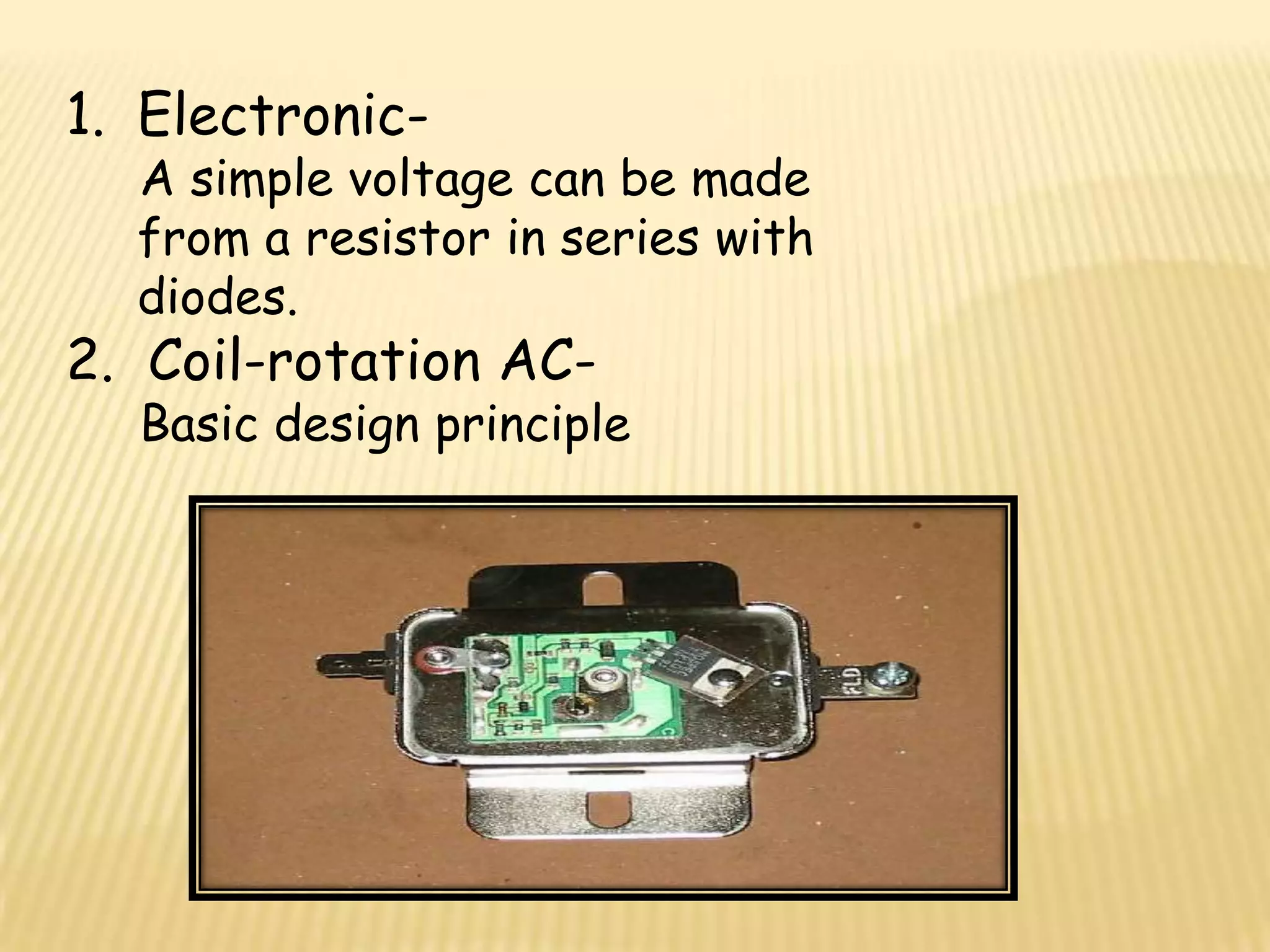
1. Electronic-
  A simple voltage can be made
  from a resistor in series with
  diodes.
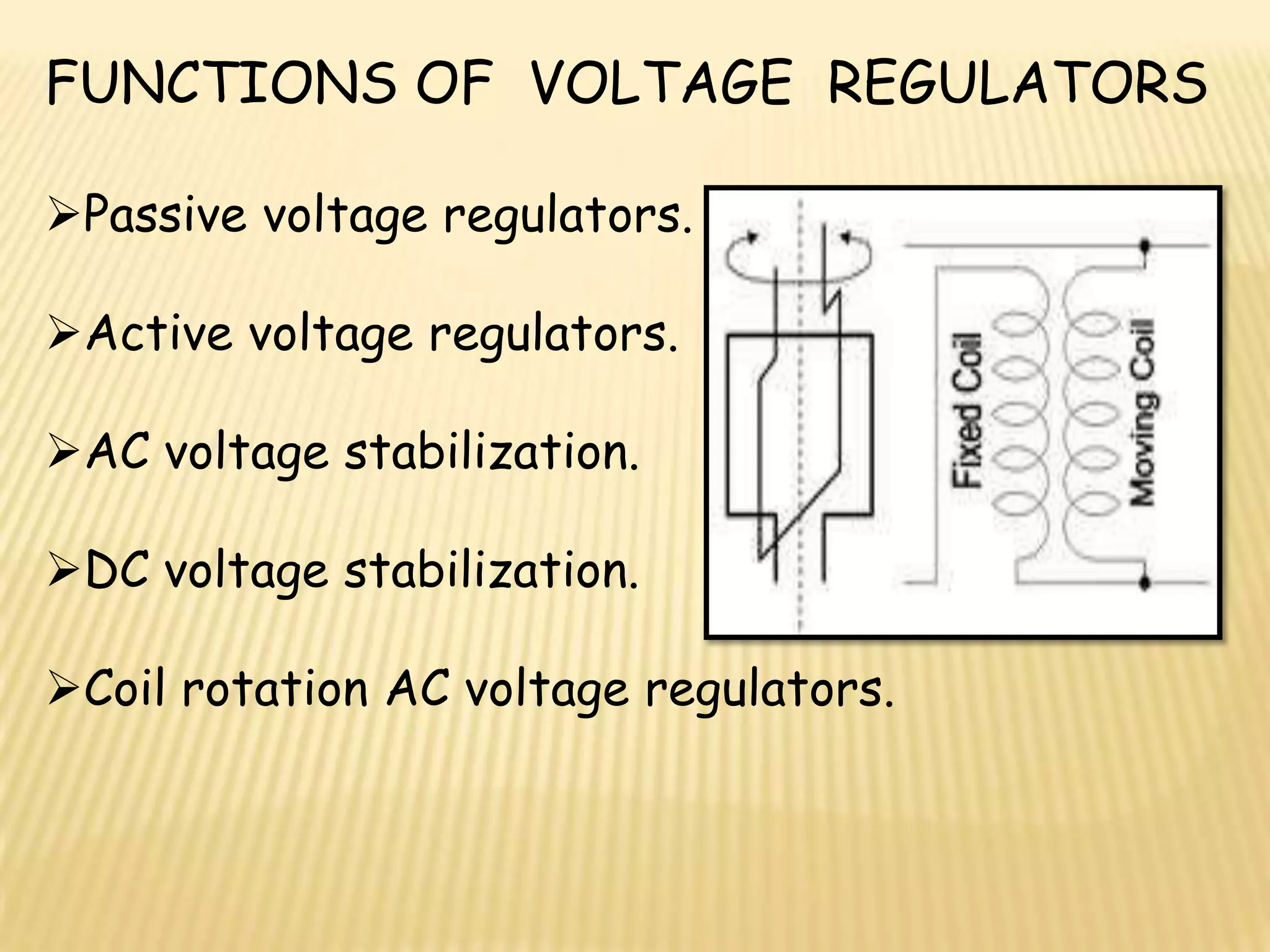
2. Coil-rotation AC-
  Basic design principle
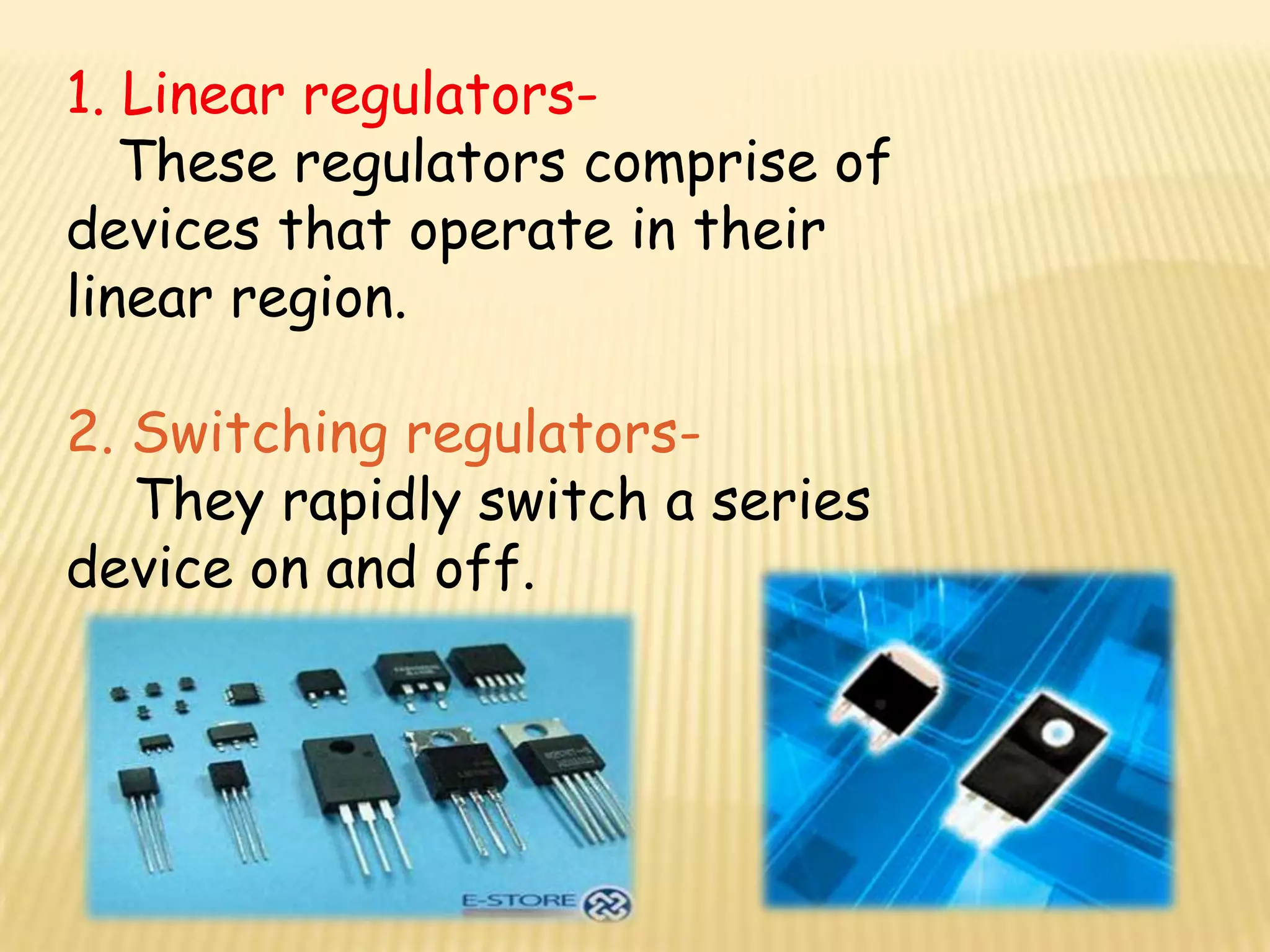
1. Linear regulators-
   These regulators comprise of
devices that operate in their
linear region.

2. Switching regulators-
   They rapidly switch a series
device on and off.
FUNCTIONS OF VOLTAGE REGULATORS

Passive voltage regulators.

Active voltage regulators.

AC voltage stabilization.

DC voltage stabilization.

Coil rotation AC voltage regulators.
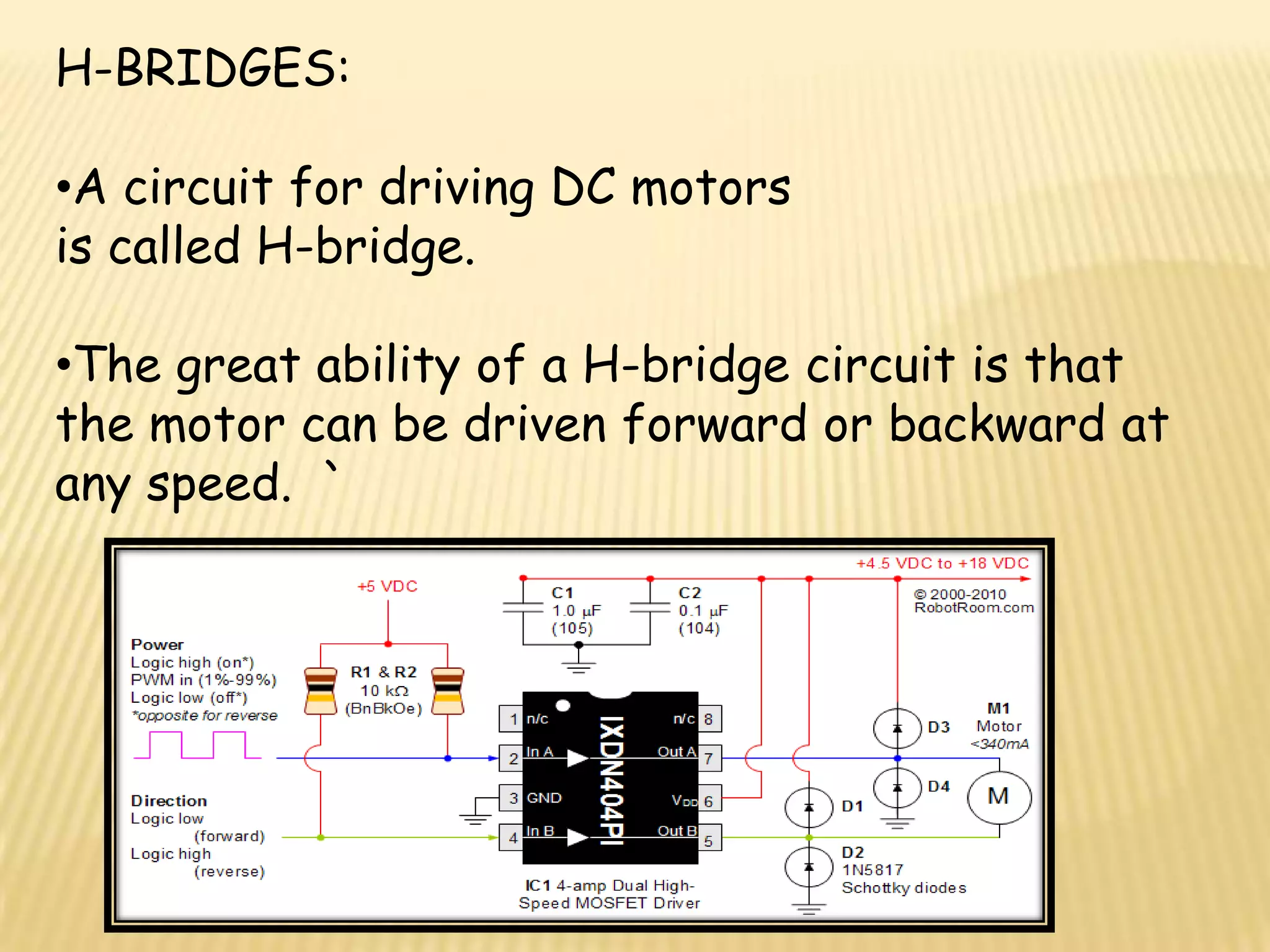
H-BRIDGES:

•A circuit for driving DC motors
is called H-bridge.

•The great ability of a H-bridge circuit is that
the motor can be driven forward or backward at
any speed. `
POWER REGULATION

•   Supply a minimum required amount of power
            POWER=VOLTAGE*CURRENT
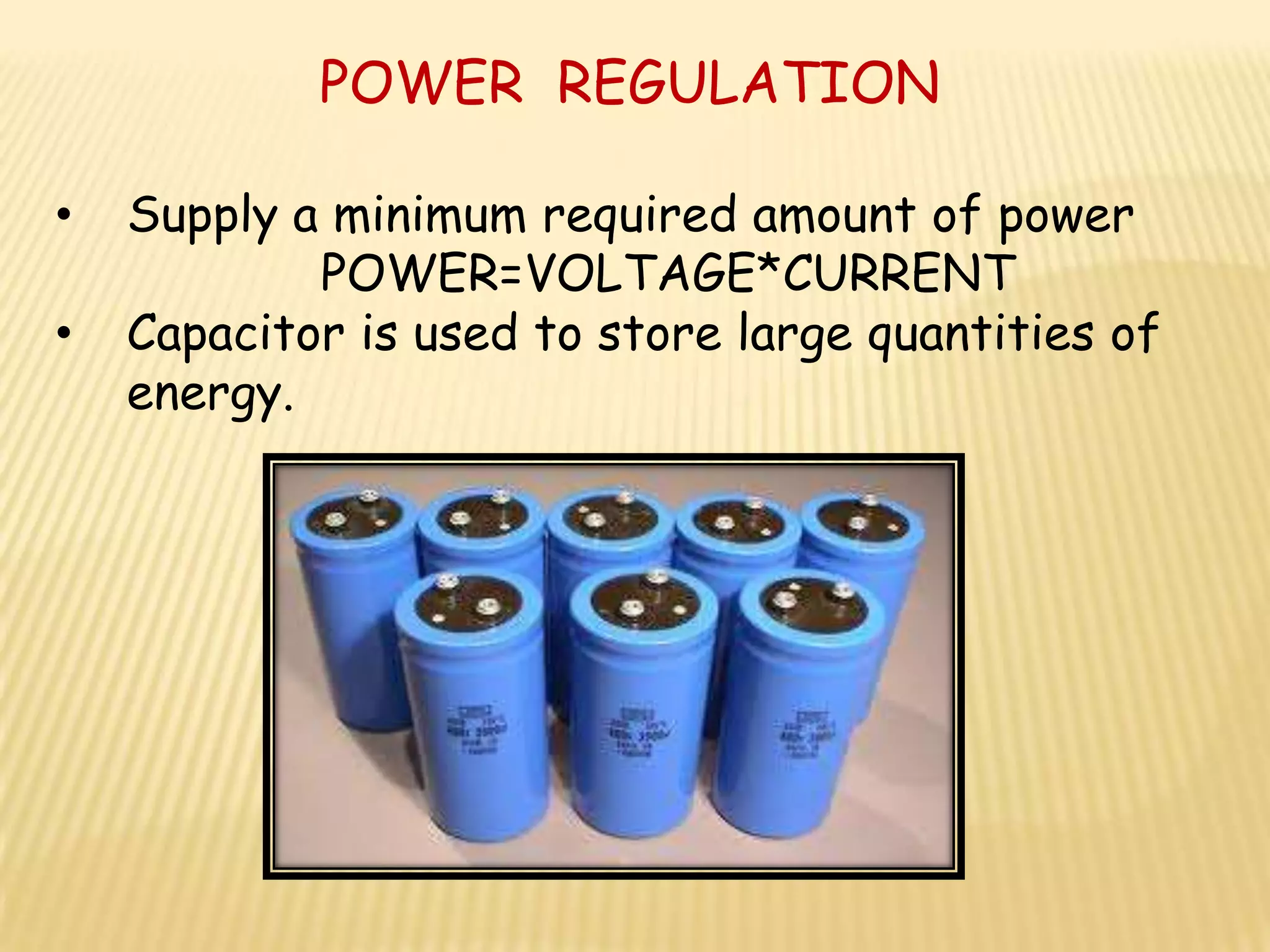
•   Capacitor is used to store large quantities of
    energy.
FUTURE         OF        ROBOTICS

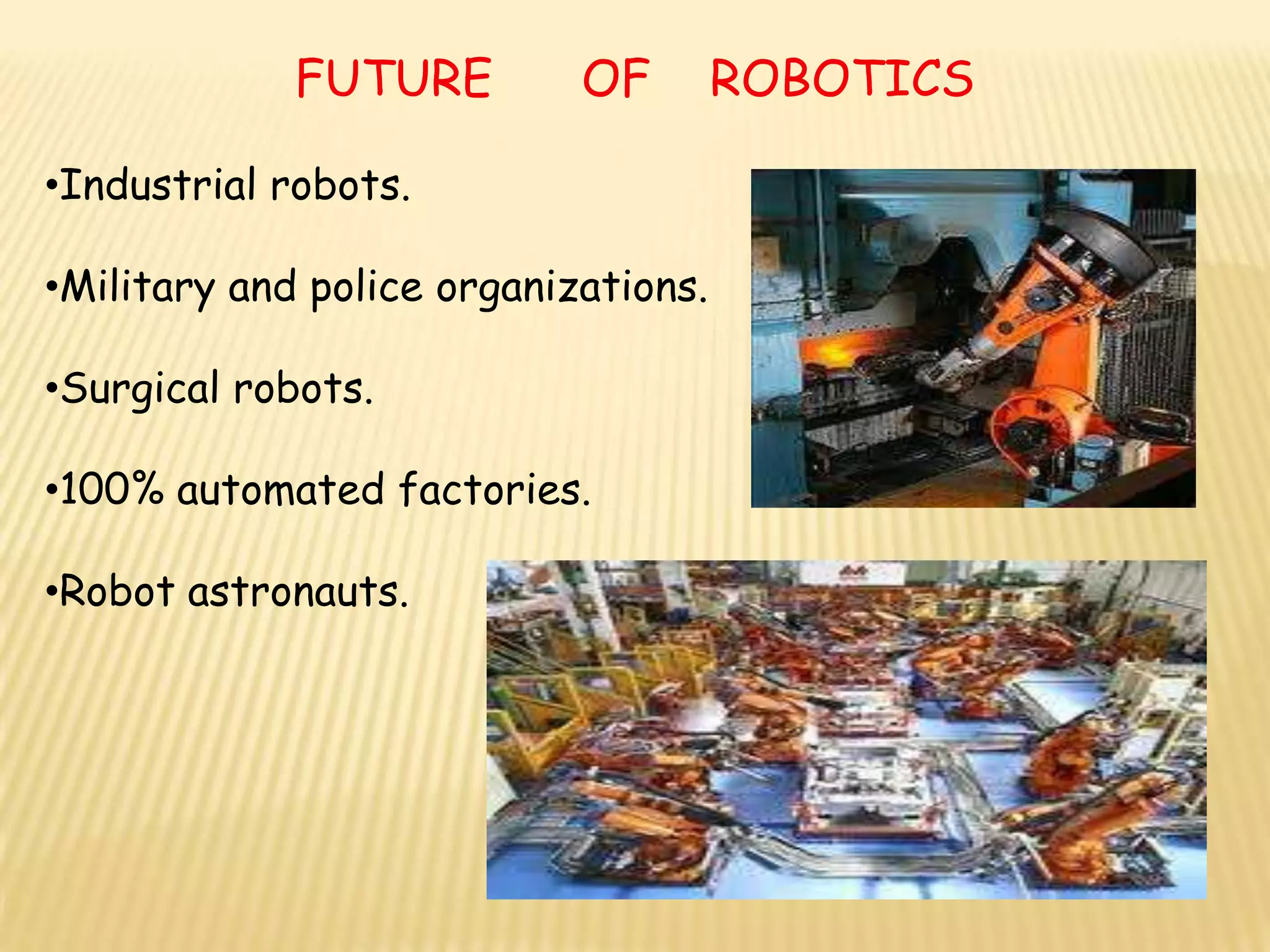
•Industrial robots.

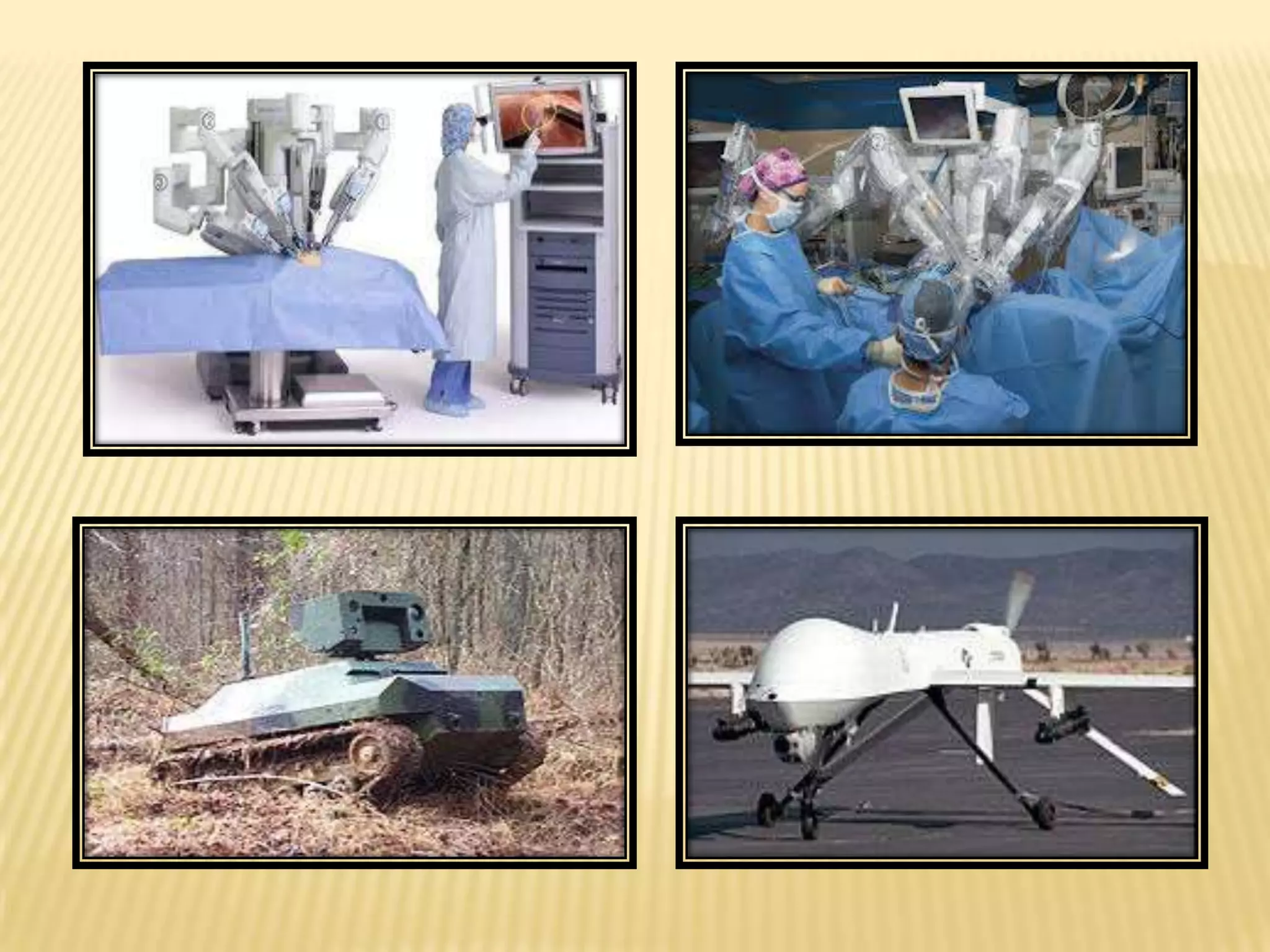
•Military and police organizations.

•Surgical robots.

•100% automated factories.

•Robot astronauts.
electronics and robotics

electronics and robotics

  • 2.
  • 5.
    ROBOT MOTORS ELECTRIC MOTOR: An electric motor is an electro chemical device that converts electrical energy into mechanical energy. • Electric motors are driven by DC current. • They are most commonly used in hobbyist robot applications. TYPES OF MOTORS: 1. Brushed DC motors: • Motor controller is used to rotate the motor in two directions. • It is quite expensive. • Pulse-width modulation. • Gear reducer is used to reduce speed and increase torque
  • 6.
    2. Brushless DCmotors: •Electronic speed control unit is used. •Still, these are widely used in RC community because they offer greater reliability, torque and have other good characteristics. 3. Stepper motors: •Magnetic poles on stator. •Provide current to the coils at a predefined sequence. •Special stepper motor controller.
  • 7.
    4. Servo motors: •Servomotors are integrated with control system. •They include other types of motors such as pneumatic or hydraulic as long as the feedback system is present in provide positioning. •Pulse width modulation. •Used to construct robot arms.
  • 8.
    ROBOTIC ARM: •Robotic armis a robotic manipulator, usually programmable with similar functions to a human arm. •Servo motor is used for joint rotation. •We can control arm through computer interface.
  • 9.
    SALIENT FEATURES OFA ROBOTIC ARM. •Five servos which are controlled through only one microcontroller ATMEGA16. •Used to grab things in the hemisphere of 50cm. •It is user friendly. •It can lift objects weighing 200gms and above. •To keep the design of robotic arm gripper simple, and implementing the gripping mechanism without gears with one servo motor.
  • 12.
    PRESSURE SENSORS • pressuresensors measures pressure
  • 14.
    DESIRABLE FEATURES OFSENSORS  Accuracy  Precision  Operating range  Speed of response  Calibration  Reliability  Ease of operation  Cost
  • 15.
    What is therole played by sensors in robotics? •To maintain its stability and orientation. •Report position and speed. •Interaction with surroundings. •Distinction of objects. •To mimic sensory abilities of humans.
  • 20.
    VOLTAGE REGULATION  What is a voltage regulator? A device designed to automatically maintain constant voltage level. TYPES OF VOLTAGE REGULATORS 1) Electronic voltage regulators. 2) Electrochemical regulators. 3) Coil-rotation AC voltage regulator. 4) Active regulators- linear, switching and SCR.
  • 21.
    1. Electronic- A simple voltage can be made from a resistor in series with diodes. 2. Coil-rotation AC- Basic design principle
  • 22.
    1. Linear regulators- These regulators comprise of devices that operate in their linear region. 2. Switching regulators- They rapidly switch a series device on and off.
  • 23.
    FUNCTIONS OF VOLTAGEREGULATORS Passive voltage regulators. Active voltage regulators. AC voltage stabilization. DC voltage stabilization. Coil rotation AC voltage regulators.
  • 24.
    H-BRIDGES: •A circuit fordriving DC motors is called H-bridge. •The great ability of a H-bridge circuit is that the motor can be driven forward or backward at any speed. `
  • 25.
    POWER REGULATION • Supply a minimum required amount of power POWER=VOLTAGE*CURRENT • Capacitor is used to store large quantities of energy.
  • 26.
    FUTURE OF ROBOTICS •Industrial robots. •Military and police organizations. •Surgical robots. •100% automated factories. •Robot astronauts.

Editor's Notes