--by Pragmatists
   Introduction
   Origin of electronics
   Benefits
   Drawbacks
   Developments in electronics
   Advantages in present electronics
   Disadvantages with present technology
   Upcoming technology
   Pros and cons of electronics
   conclusions
   What is electronics?
    -Use of electricity for measurement ,
     control , communications , computing
     and similar applications.
   Use of electronics in daily life
    -Alarms , lights , calculators ,
     televisions , computers , telephones ,
     fridges ,microwave ovens , etc.
   Thomas Alva Edison’s invention of bulb.

   Valve technology-
      -developed by Sir J A Fleming
      -triode valve developed by Lee de
        Forest
      -further development led to
        introduction of radio , television and
        early form of computer
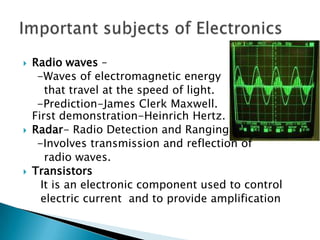
   Radio waves –
     -Waves of electromagnetic energy
       that travel at the speed of light.
     -Prediction-James Clerk Maxwell.
    First demonstration-Heinrich Hertz.
   Radar- Radio Detection and Ranging
     -Involves transmission and reflection of
       radio waves.
   Transistors
      It is an electronic component used to control
      electric current and to provide amplification
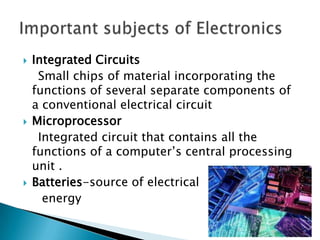
   Integrated Circuits
     Small chips of material incorporating the
    functions of several separate components of
    a conventional electrical circuit
   Microprocessor
     Integrated circuit that contains all the
    functions of a computer’s central processing
    unit .
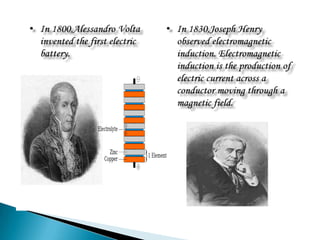
   Batteries-source of electrical
      energy
   Time conservation
   Work made easy
   Heavy jobs reduced
   Storage of information
   Access to information when needed
   Telecommunication
   Processing time
   Machine based working
   Very less features
   Bulky gadgets
   Require pre-knowledge about gadgets
   Development of integrated circuits
   Wide applications of microprocessors
    digital watches , hand –held computers and
    electronic gaming.
   Development in digitalization of audio
    signals- measuring amplitude of signal at
    short intervals.
   Medical Electronics-progressed from
    computerized axial tomography and the use
    of C-scanners
   VLSI Circuits (Very Large Scale Integrated)
   Broadband Communication Systems
   Typewriters-replaced by Computers which are
    networked-can communicate with one another
   Old fashioned roll of stamps replaced-automatic
    electronic mailing machines
   Developments in computer systems-introduction
    of tablet-mini size handy computer
   Printing made easy        Internet-connects all
   Several copies of          over the world
    documents                 www-Huge resource of
   Photostat machines         information
                              Mobile devices with
   Hand held tape
                               technological
    recorders
                               advancements
   Computer writing-         Benefits of tracking
    more effective-tools       system , digital maps
    for spelling and          Technology in
    grammar                    education
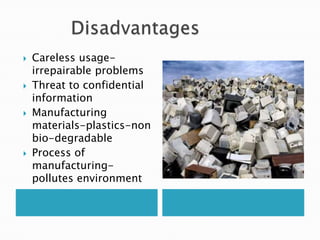
   Careless usage-
    irrepairable problems
   Threat to confidential
    information
   Manufacturing
    materials-plastics-non
    bio-degradable
   Process of
    manufacturing-
    pollutes environment
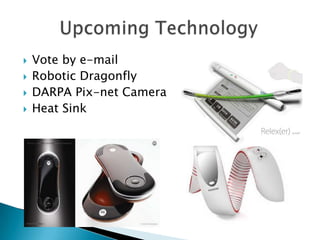
   Vote by e-mail
   Robotic Dragonfly
   DARPA Pix-net Camera
   Heat Sink
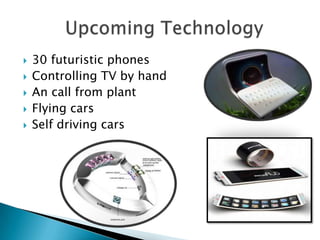
   30 futuristic phones
   Controlling TV by hand
   An call from plant
   Flying cars
   Self driving cars
   Sharing televised pictures , conversations
    , graphics , circuits and interactive software.
   People-auditory impairment-communicate
    easily.
   Some jobs-conducted from home.
   Acquiring a job-easy-official proceedings-
    forwarded from home.
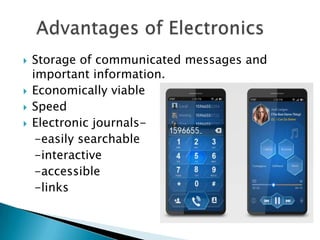
   Storage of communicated messages and
    important information.
   Economically viable
   Speed
   Electronic journals-
     -easily searchable
     -interactive
     -accessible
     -links
   Security issues-hackers.
   Computers-affected by viruses.
   Difficulties-processing bulky data-providing
    feedback.
   Duplication of electronic data.
   Problems-’e-mail privacy’.
   Cyber addiction
 Electronic gadgets-part of our daily life.
 Overcome many difficulties-make tasks easy.
 Advantages as well as disadvantages
  associated with electronics.
 Precautions must be taken while using
  technological equipments.
 New technologies-which can
  overcome present
  disadvantages
   Akhila         Aditya
   Divya          Naveen
   Harshika       Rakshith
                   Srikanth
   Hema
                   Sumanth
   Keerthana

Electronics past,present and future

  • 1.
  • 2.
    Introduction  Origin of electronics  Benefits  Drawbacks  Developments in electronics  Advantages in present electronics  Disadvantages with present technology  Upcoming technology  Pros and cons of electronics  conclusions
  • 3.
    What is electronics? -Use of electricity for measurement , control , communications , computing and similar applications.  Use of electronics in daily life -Alarms , lights , calculators , televisions , computers , telephones , fridges ,microwave ovens , etc.
  • 4.
    Thomas Alva Edison’s invention of bulb.  Valve technology- -developed by Sir J A Fleming -triode valve developed by Lee de Forest -further development led to introduction of radio , television and early form of computer
  • 5.
    Radio waves – -Waves of electromagnetic energy that travel at the speed of light. -Prediction-James Clerk Maxwell. First demonstration-Heinrich Hertz.  Radar- Radio Detection and Ranging -Involves transmission and reflection of radio waves.  Transistors It is an electronic component used to control electric current and to provide amplification
  • 6.
    Integrated Circuits Small chips of material incorporating the functions of several separate components of a conventional electrical circuit  Microprocessor Integrated circuit that contains all the functions of a computer’s central processing unit .  Batteries-source of electrical energy
  • 11.
    Time conservation  Work made easy  Heavy jobs reduced  Storage of information  Access to information when needed  Telecommunication
  • 12.
    Processing time  Machine based working  Very less features  Bulky gadgets  Require pre-knowledge about gadgets
  • 13.
    Development of integrated circuits  Wide applications of microprocessors digital watches , hand –held computers and electronic gaming.  Development in digitalization of audio signals- measuring amplitude of signal at short intervals.  Medical Electronics-progressed from computerized axial tomography and the use of C-scanners
  • 14.
    VLSI Circuits (Very Large Scale Integrated)  Broadband Communication Systems  Typewriters-replaced by Computers which are networked-can communicate with one another  Old fashioned roll of stamps replaced-automatic electronic mailing machines  Developments in computer systems-introduction of tablet-mini size handy computer
  • 15.
    Printing made easy  Internet-connects all  Several copies of over the world documents  www-Huge resource of  Photostat machines information  Mobile devices with  Hand held tape technological recorders advancements  Computer writing-  Benefits of tracking more effective-tools system , digital maps for spelling and  Technology in grammar education
  • 16.
    Careless usage- irrepairable problems  Threat to confidential information  Manufacturing materials-plastics-non bio-degradable  Process of manufacturing- pollutes environment
  • 17.
    Vote by e-mail  Robotic Dragonfly  DARPA Pix-net Camera  Heat Sink
  • 18.
    30 futuristic phones  Controlling TV by hand  An call from plant  Flying cars  Self driving cars
  • 19.
    Sharing televised pictures , conversations , graphics , circuits and interactive software.  People-auditory impairment-communicate easily.  Some jobs-conducted from home.  Acquiring a job-easy-official proceedings- forwarded from home.
  • 20.
    Storage of communicated messages and important information.  Economically viable  Speed  Electronic journals- -easily searchable -interactive -accessible -links
  • 21.
    Security issues-hackers.  Computers-affected by viruses.  Difficulties-processing bulky data-providing feedback.  Duplication of electronic data.  Problems-’e-mail privacy’.  Cyber addiction
  • 22.
     Electronic gadgets-partof our daily life.  Overcome many difficulties-make tasks easy.  Advantages as well as disadvantages associated with electronics.  Precautions must be taken while using technological equipments.  New technologies-which can overcome present disadvantages
  • 23.
    Akhila  Aditya  Divya  Naveen  Harshika  Rakshith  Srikanth  Hema  Sumanth  Keerthana