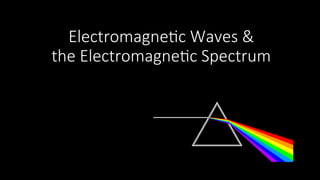
Electromagnetic Waves &
the Electromagnetic Spectrum
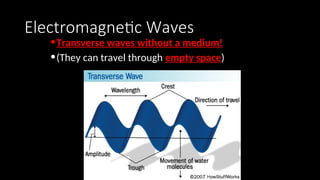
Electromagnetic Waves
•Transverse waves without a medium!
•(They can travel through empty space)
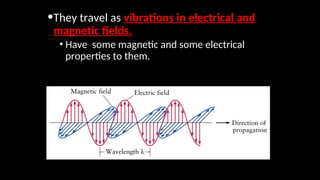
•They travel as vibrations in electrical and
magnetic fields.
• Have some magnetic and some electrical
properties to them.
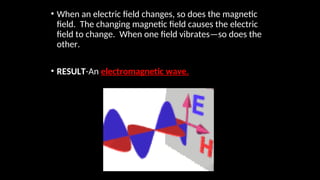
• When an electric field changes, so does the magnetic
field. The changing magnetic field causes the electric
field to change. When one field vibrates—so does the
other.
• RESULT-An electromagnetic wave.
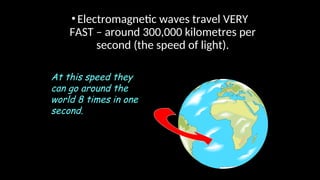
•Electromagnetic waves travel VERY
FAST – around 300,000 kilometres per
second (the speed of light).
At this speed they
can go around the
world 8 times in one
second.
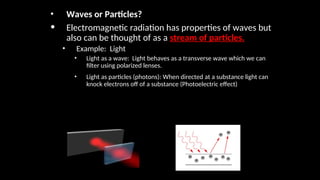
• Waves or Particles?
• Electromagnetic radiation has properties of waves but
also can be thought of as a stream of particles.
• Example: Light
• Light as a wave: Light behaves as a transverse wave which we can
filter using polarized lenses.
• Light as particles (photons): When directed at a substance light can
knock electrons off of a substance (Photoelectric effect)
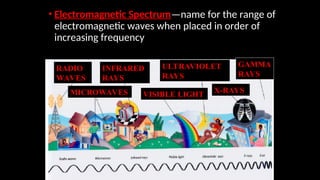
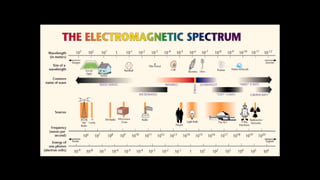
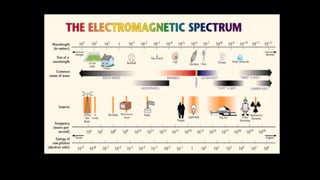
• Electromagnetic Spectrum—name for the range of
electromagnetic waves when placed in order of
increasing frequency
RADIO
WAVES
MICROWAVES
INFRARED
RAYS
VISIBLE LIGHT
ULTRAVIOLET
RAYS
X-RAYS
GAMMA
RAYS
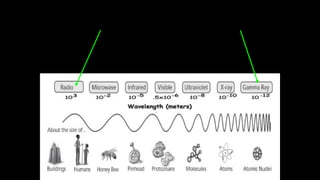
Notice the wavelength is
long (Radio waves) and gets shorter (Gamma Rays)
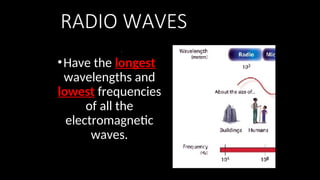
RADIO WAVES
•Have the longest
wavelengths and
lowest frequencies
of all the
electromagnetic
waves.
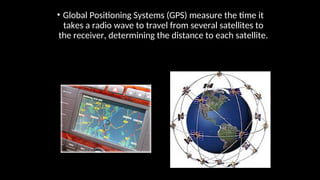
• Global Positioning Systems (GPS) measure the time it
takes a radio wave to travel from several satellites to
the receiver, determining the distance to each satellite.
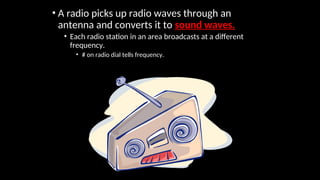
• A radio picks up radio waves through an
antenna and converts it to sound waves.
• Each radio station in an area broadcasts at a different
frequency.
• # on radio dial tells frequency.
MRI
(MAGNETIC RESONACE IMAGING)
Uses Short wave radio waves with a
magnet to create an image.
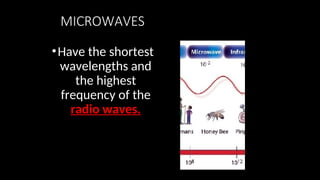
MICROWAVES
•Have the shortest
wavelengths and
the highest
frequency of the
radio waves.
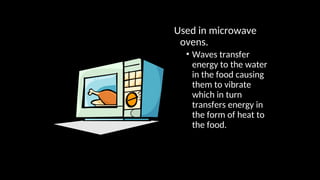
Used in microwave
ovens.
• Waves transfer
energy to the water
in the food causing
them to vibrate
which in turn
transfers energy in
the form of heat to
the food.
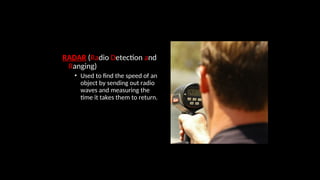
RADAR (Radio Detection and
Ranging)
• Used to find the speed of an
object by sending out radio
waves and measuring the
time it takes them to return.
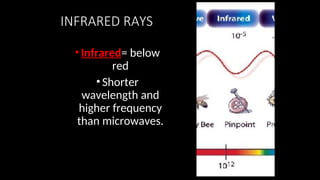
INFRARED RAYS
•Infrared= below
red
•Shorter
wavelength and
higher frequency
than microwaves.
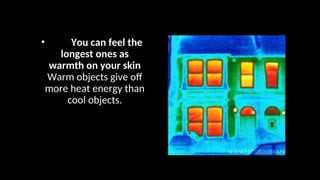
• You can feel the
longest ones as
warmth on your skin
Warm objects give off
more heat energy than
cool objects.
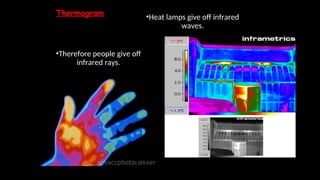
Thermogram—a picture that shows regions of different
temperatures in the body. Temperatures are calculated
by the amount of infrared radiation given off.
•Therefore people give off
infrared rays.
•Heat lamps give off infrared
waves.
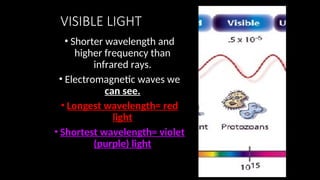
VISIBLE LIGHT
• Shorter wavelength and
higher frequency than
infrared rays.
• Electromagnetic waves we
can see.
• Longest wavelength= red
light
• Shortest wavelength= violet
(purple) light
When light enters
a new medium it
bends (refracts).
Each wavelength
bends a different
amount allowing
white light to
separate into it’s
various colors
ROYGBIV.
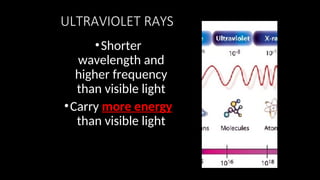
ULTRAVIOLET RAYS
•Shorter
wavelength and
higher frequency
than visible light
•Carry more energy
than visible light
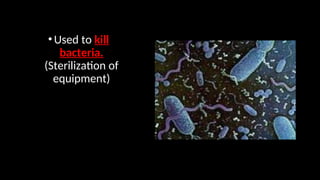
•Used to kill
bacteria.
(Sterilization of
equipment)
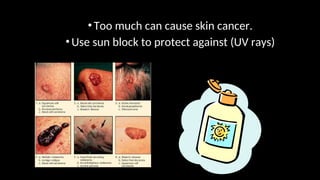
•Too much can cause skin cancer.
•Use sun block to protect against (UV rays)
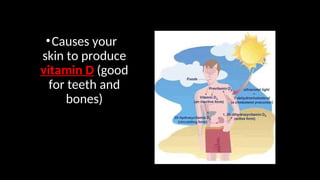
•Causes your
skin to produce
vitamin D (good
for teeth and
bones)
X- RAYS
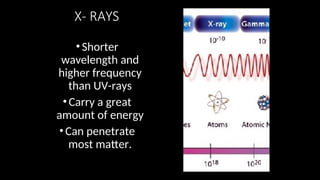
•Shorter
wavelength and
higher frequency
than UV-rays
•Carry a great
amount of energy
•Can penetrate
most matter.
Bones and teeth absorb x-rays. (The light part
of an x-ray image indicates a place where the x-
ray was absorbed)
Too much exposure
can cause cancer
(lead vest at
dentist protects
organs from
unnecessary
exposure)
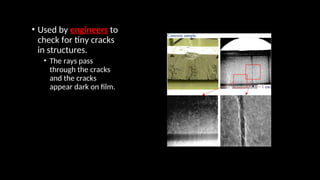
• Used by engineers to
check for tiny cracks
in structures.
• The rays pass
through the cracks
and the cracks
appear dark on film.
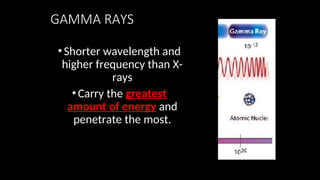
GAMMA RAYS
•Shorter wavelength and
higher frequency than X-
rays
•Carry the greatest
amount of energy and
penetrate the most.
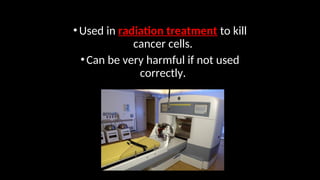
•Used in radiation treatment to kill
cancer cells.
•Can be very harmful if not used
correctly.
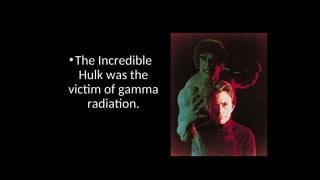
•The Incredible
Hulk was the
victim of gamma
radiation.
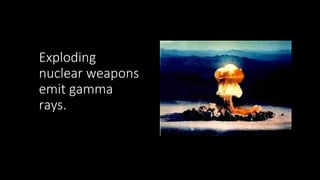
Exploding
nuclear weapons
emit gamma
rays.
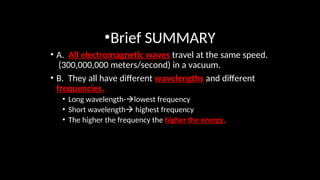
•Brief SUMMARY
• A. All electromagnetic waves travel at the same speed.
(300,000,000 meters/second) in a vacuum.
• B. They all have different wavelengths and different
frequencies.
• Long wavelength-lowest frequency
• Short wavelength highest frequency
• The higher the frequency the higher the energy.
electromagnetic-spectrum grade 10 lesson.ppt

electromagnetic-spectrum grade 10 lesson.ppt

  • 1.
    Electromagnetic Waves & theElectromagnetic Spectrum
  • 2.
    Electromagnetic Waves •Transverse waveswithout a medium! •(They can travel through empty space)
  • 3.
    •They travel asvibrations in electrical and magnetic fields. • Have some magnetic and some electrical properties to them.
  • 4.
    • When anelectric field changes, so does the magnetic field. The changing magnetic field causes the electric field to change. When one field vibrates—so does the other. • RESULT-An electromagnetic wave.
  • 5.
    •Electromagnetic waves travelVERY FAST – around 300,000 kilometres per second (the speed of light). At this speed they can go around the world 8 times in one second.
  • 6.
    • Waves orParticles? • Electromagnetic radiation has properties of waves but also can be thought of as a stream of particles. • Example: Light • Light as a wave: Light behaves as a transverse wave which we can filter using polarized lenses. • Light as particles (photons): When directed at a substance light can knock electrons off of a substance (Photoelectric effect)
  • 7.
    • Electromagnetic Spectrum—namefor the range of electromagnetic waves when placed in order of increasing frequency RADIO WAVES MICROWAVES INFRARED RAYS VISIBLE LIGHT ULTRAVIOLET RAYS X-RAYS GAMMA RAYS
  • 8.
    Notice the wavelengthis long (Radio waves) and gets shorter (Gamma Rays)
  • 10.
    RADIO WAVES •Have thelongest wavelengths and lowest frequencies of all the electromagnetic waves.
  • 11.
    • Global PositioningSystems (GPS) measure the time it takes a radio wave to travel from several satellites to the receiver, determining the distance to each satellite.
  • 12.
    • A radiopicks up radio waves through an antenna and converts it to sound waves. • Each radio station in an area broadcasts at a different frequency. • # on radio dial tells frequency.
  • 13.
    MRI (MAGNETIC RESONACE IMAGING) UsesShort wave radio waves with a magnet to create an image.
  • 14.
    MICROWAVES •Have the shortest wavelengthsand the highest frequency of the radio waves.
  • 15.
    Used in microwave ovens. •Waves transfer energy to the water in the food causing them to vibrate which in turn transfers energy in the form of heat to the food.
  • 16.
    RADAR (Radio Detectionand Ranging) • Used to find the speed of an object by sending out radio waves and measuring the time it takes them to return.
  • 17.
  • 18.
    • You canfeel the longest ones as warmth on your skin Warm objects give off more heat energy than cool objects.
  • 19.
    Thermogram—a picture thatshows regions of different temperatures in the body. Temperatures are calculated by the amount of infrared radiation given off. •Therefore people give off infrared rays. •Heat lamps give off infrared waves.
  • 20.
    VISIBLE LIGHT • Shorterwavelength and higher frequency than infrared rays. • Electromagnetic waves we can see. • Longest wavelength= red light • Shortest wavelength= violet (purple) light
  • 21.
    When light enters anew medium it bends (refracts). Each wavelength bends a different amount allowing white light to separate into it’s various colors ROYGBIV.
  • 22.
    ULTRAVIOLET RAYS •Shorter wavelength and higherfrequency than visible light •Carry more energy than visible light
  • 23.
  • 24.
    •Too much cancause skin cancer. •Use sun block to protect against (UV rays)
  • 25.
    •Causes your skin toproduce vitamin D (good for teeth and bones)
  • 26.
    X- RAYS •Shorter wavelength and higherfrequency than UV-rays •Carry a great amount of energy •Can penetrate most matter.
  • 27.
    Bones and teethabsorb x-rays. (The light part of an x-ray image indicates a place where the x- ray was absorbed)
  • 28.
    Too much exposure cancause cancer (lead vest at dentist protects organs from unnecessary exposure)
  • 29.
    • Used byengineers to check for tiny cracks in structures. • The rays pass through the cracks and the cracks appear dark on film.
  • 30.
    GAMMA RAYS •Shorter wavelengthand higher frequency than X- rays •Carry the greatest amount of energy and penetrate the most.
  • 31.
    •Used in radiationtreatment to kill cancer cells. •Can be very harmful if not used correctly.
  • 32.
    •The Incredible Hulk wasthe victim of gamma radiation.
  • 33.
  • 34.
    •Brief SUMMARY • A.All electromagnetic waves travel at the same speed. (300,000,000 meters/second) in a vacuum. • B. They all have different wavelengths and different frequencies. • Long wavelength-lowest frequency • Short wavelength highest frequency • The higher the frequency the higher the energy.